
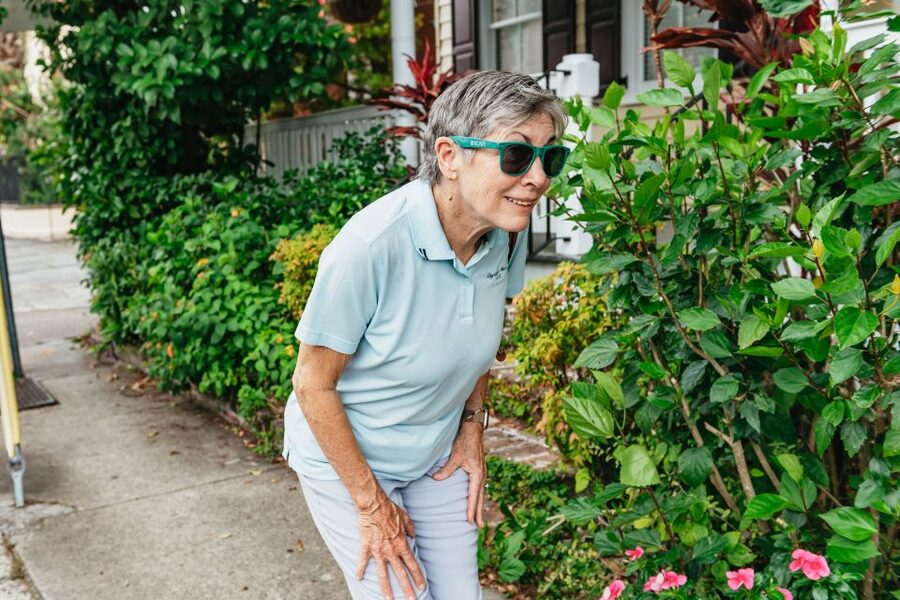
Reviewed · CHARLESTON TOURS
Charleston: Old Walled City Historical Walking Tour
Charleston’s past is written into its streets, churches, graveyards, and brightly painted homes. This two-hour walk through the old walled city gives you a useful first look at the places that shaped Charleston, from its colonial beginnings and pirate era to war, disease, fire, hurricanes, and the great earthquake.
I like the local perspective, especially when the guide is a seventh-generation Charlestonian such as Bruce, or a longtime guide such as Alfie, who has led tours since 1982. I also like the range of the storytelling: you are not getting only pretty architecture, but hard subjects and turning points that explain why the city looks and feels the way it does today.
The main drawback is the pace. You cover a fair amount of ground on foot, and some guides deliver a great deal of information in two hours. If you have trouble hearing, staying close to the guide matters, since a few visitors found that voices could become softer while walking.
Key points to know before you go

- Charleston’s old cobblestone streets: Meet at the corner of Meeting Street and Chalmers Street, then walk into the heart of the historic district.
- A broad historical sweep: Expect stories about colonial growth, piracy, rice planters, fires, epidemics, sieges, bombardments, hurricanes, and an earthquake.
- Many important sights in two hours: The route includes the French Quarter, Dock Street Theatre, Old Exchange, Waterfront Park, Rainbow Row, historic houses, and St. Michael’s Episcopal Church.
- Guides make the difference: Al, Bruce, Eric, Alfie, Bob, Judi, Kent, and others have been praised for humor, local insight, patience, and strong storytelling.
- Good value at $30: You get a live guide and a focused introduction to central Charleston without paying separate admission to enter the sights.
- Come prepared to walk: Comfortable shoes, water, sunscreen, and weather-appropriate clothing are essential.
Why this walk is a smart first look at Charleston
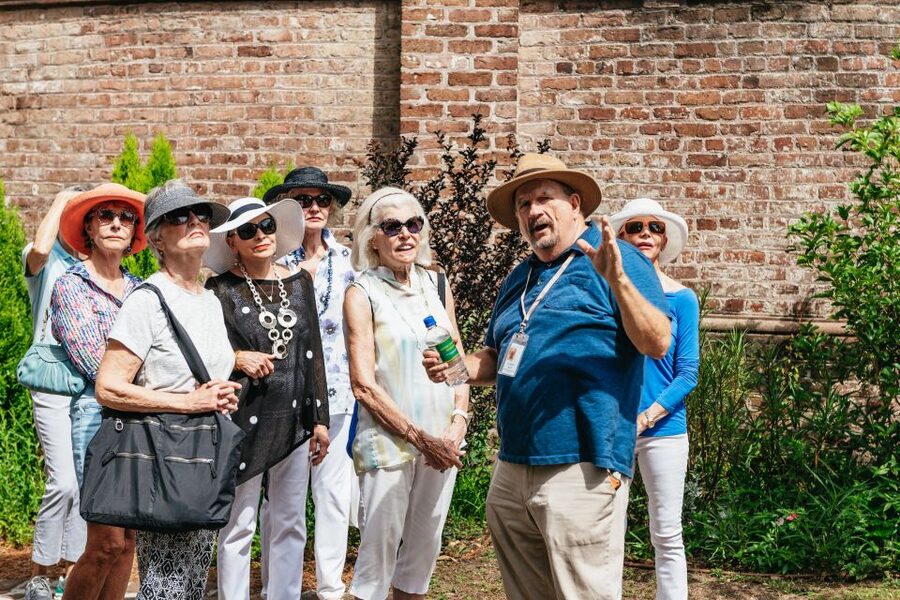
I would put this tour near the beginning of a Charleston visit. The route gives you a sense of the historic center before you spend time exploring individual houses, churches, museums, and restaurants on your own.
Charleston can look easy to understand at first. Walk a few blocks and you see pastel homes, ironwork, steeples, and old brick buildings. But the story underneath is complicated. Wealth came from rice cultivation and enslaved labor. The city faced repeated destruction from fire, storms, epidemics, military attacks, and an earthquake.
A good guide connects those facts to the buildings around you. Instead of seeing a handsome colonial house as just a backdrop for photographs, you begin to ask who built it, who lived there, how money was made, and what happened when Charleston was tested.
The strongest guides also add personal memory. Al is repeatedly praised for his humor and local insight. Bruce is described as a seventh-generation Charlestonian with inside details about the city and its famous residents. Eric has been praised for linking stories to people in the group, making the walk feel more like a conversation than a lecture.
Guide assignments can vary, so you cannot book a particular personality based on the information provided. Still, the repeated praise for Al, Bruce, Eric, and Alfie suggests that the experience depends heavily on the individual guide, as any walking tour does.
More Historical Tours in Charleston
- Charleston’s Old South Carriage Historic Horse & Carriage Tour
★ 5.0 · 10,023 reviews - Historic Charleston Guided Sightseeing Walking Tour
★ 5.0 · 6,216 reviews - Charleston Horse-Drawn Carriage Tour: Explore Historic Charleston
★ 5.0 · 3,561 reviews
Starting on Chalmers Street and entering the French Quarter
You meet on the sidewalk at Meeting Street and Chalmers Street, near the cobblestones and Shop Historic Charleston. This is a useful location because you begin close to several of the city’s most recognizable historic areas.
The first major part of the walk is the French Quarter, where you spend about 50 minutes seeing streets, churches, homes, storefronts, and public buildings. This is the longest section of the route, and rightly so. It gives the guide room to explain Charleston’s early development while pointing out how different building periods sit side by side.
Expect a mixture of sightseeing and stops for explanation. You may pause for photographs, then gather close while the guide describes a building or event. The cobblestones are attractive but uneven, so watch your footing rather than looking only at the upper floors.
This section is also where the tour’s range becomes clear. You hear about colonial roots, rapid growth, piracy, rice planters, and the forces that made Charleston an important port. The guide also brings in legends and local stories, which help break up the dates and names.
I would listen for the connections between prosperity and hardship. Charleston’s elegant streets tell only part of the story, and the tour is at its best when it explains both the beauty and the cost behind them.
Dock Street Theatre and Charleston’s public life
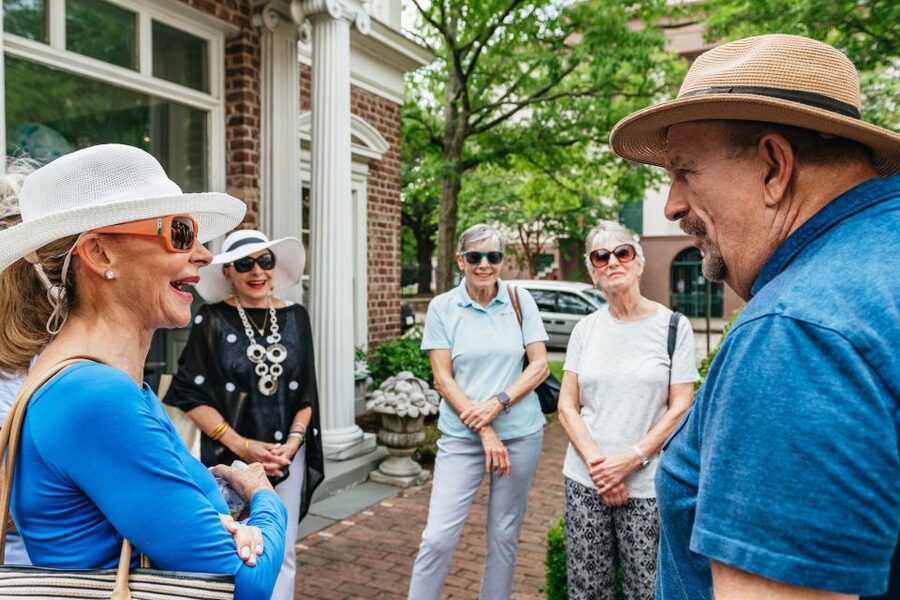
The walk continues to Dock Street Theatre for about 15 minutes. This stop adds a cultural layer to the tour, showing that Charleston’s old center was not only a place of commerce, worship, and government.
The theater also helps vary the route. You are not simply moving from one historic home to another. Instead, the guide uses a public building to explain the city’s social life and the role of performance and gathering in Charleston’s past.
This is a photo stop and walk-by visit rather than a promise of a full indoor theater tour. If you want to see the interior, check separately for entry options, since the walking tour includes a professional guide but does not list attraction admission.
The Old Exchange and Provost Dungeon
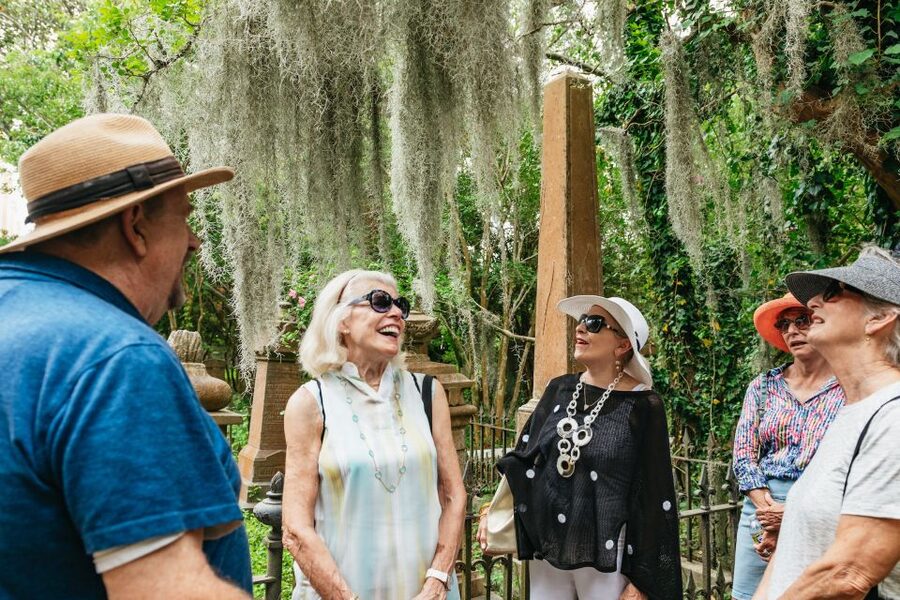
The Old Exchange and Provost Dungeon receives roughly 12 minutes. It is one of the most useful stops for understanding Charleston’s political and military past.
Here, the guide can place the city’s colonial government, wartime experience, and changing fortunes into a larger story. The mention of the Provost Dungeon also signals the darker side of the building’s history. This is not only an architectural photo stop.
The tour does not include a separate admission to the Old Exchange, so think of this as an exterior visit and historical explanation within the walk. That is enough to give you context, but it will not replace a full museum visit if you want to explore the building at length.
More Walking Tours in Charleston
- Ghosts of Charleston Night-Time Walking Tour with Unitarian Church Graveyard
★ 4.5 · 2,835 reviews - Hidden Alleyways and Historic Sites Small-Group Walking Tour
★ 5.0 · 2,335 reviews - Highlights of Charleston Guided Walking Tour
★ 5.0 · 2,206 reviews - Charleston Haunted Booze and Boos Ghost Walking Tour
★ 5.0 · 1,569 reviews
Waterfront Park and Charleston’s changing edge
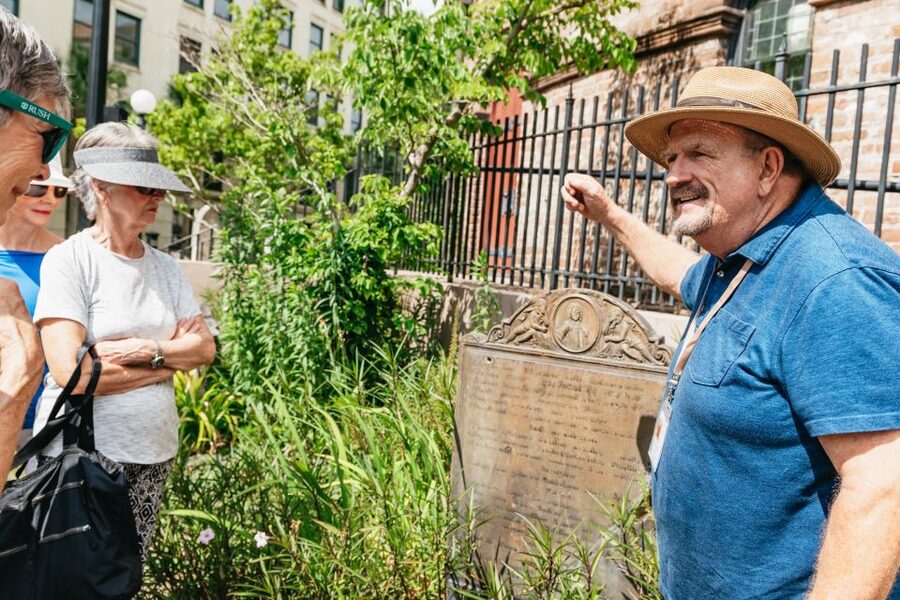
Waterfront Park takes about 15 minutes and adds open views to a route that otherwise moves through narrow historic streets. It is a welcome pause, especially in warm weather, though the tour remains active rather than becoming a long rest stop.
The water also helps you understand Charleston’s position as a port city. The city’s growth, trade, storms, sieges, and bombardments all make more sense when you consider its relationship with the harbor.
The walk includes scenic views along the way, but this is still a history tour rather than a waterfront cruise or nature outing. You are there to see the setting and hear how it fits into Charleston’s story.
Rainbow Row and the appeal of the old streets
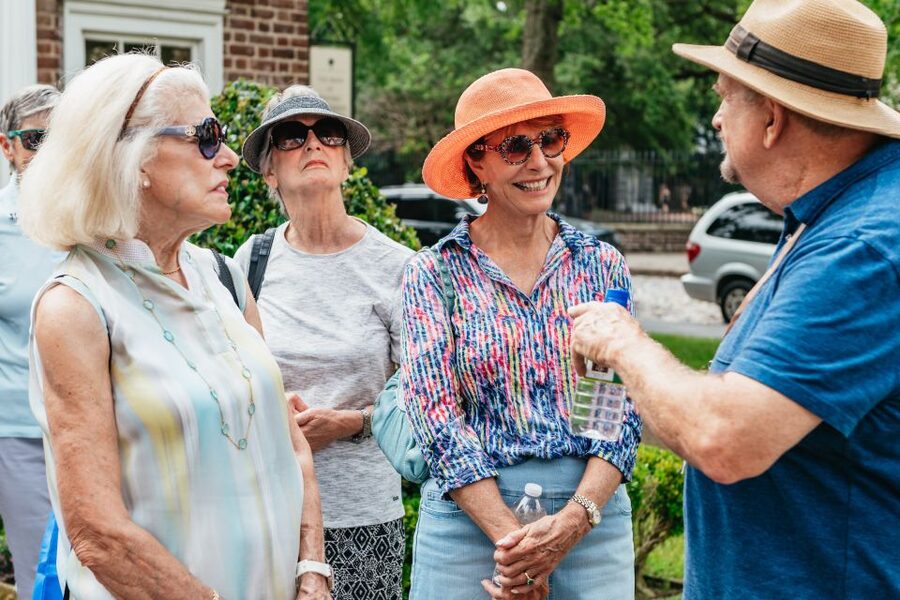
Rainbow Row is a short stop, about seven minutes, but it is one of the most recognizable views on the route. The row of colorful historic houses gives you the classic Charleston photograph, with pastel facades packed closely along the street.
The value here is not just the picture. The guide helps place these homes within the city’s wider architectural story, including the contrast between pre-colonial and post-colonial buildings mentioned throughout the walk.
Because the stop is brief, you should have your camera ready. Do not expect a long architectural seminar here. The guide has many other subjects to cover, and Rainbow Row works best as a quick visual pause within the larger story.
Historic homes and the Heyward-Washington House
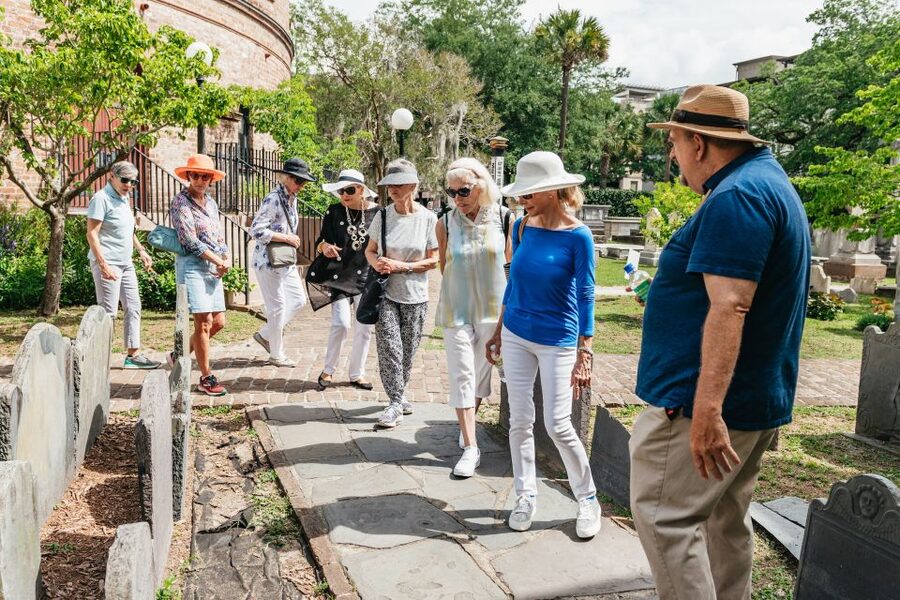
The route includes the Heyward-Washington House for about five minutes, along with other historic homes seen from the street. This gives you a close look at the domestic side of Charleston’s past.
The short timing means you are not taking a full interior tour of the house. Instead, you get an explanation of the property and its place among the city’s old residences. The guide can also connect the house to the people who lived in Charleston and the social world created by wealth, status, and politics.
This was one of the parts I would pay close attention to, since the architecture tour element has been especially well received. You learn how to notice more than paint color and shutters. Look for the details the guide points out, then use that knowledge during the rest of your stay.
Tombstones, churches, and St. Michael’s
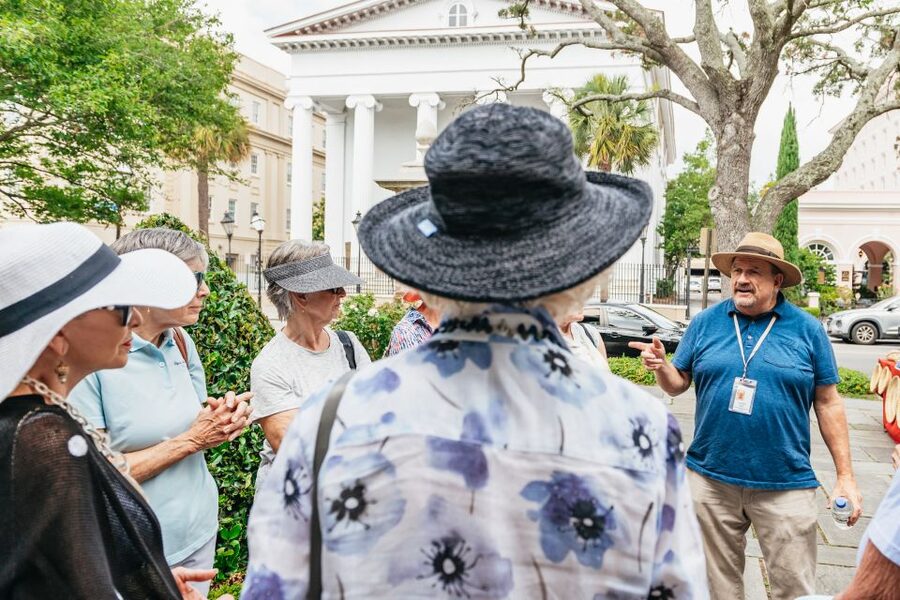
The itinerary includes another Charleston sightseeing stop for about 12 minutes, followed by St. Michael’s Episcopal Church for another 12-minute visit. Churches are central to Charleston’s visual identity, and their graveyards add a more personal record of the city’s past.
One unusual feature of the tour is its attention to symbols on tombstones. Those carvings give the guide a way to talk about mortality, belief, status, and the people who lived through Charleston’s many difficult periods.
St. Michael’s gives you a final major church stop before returning to the meeting point. As with the other listed sights, the tour offers a guided visit and photo opportunity, not a guarantee of full interior access.
Religious buildings also help you see how much Charleston changed over time. A church can suggest continuity, but the surrounding stories reveal disruption from fires, epidemics, war, storms, and the earthquake.
The disasters that shaped the city
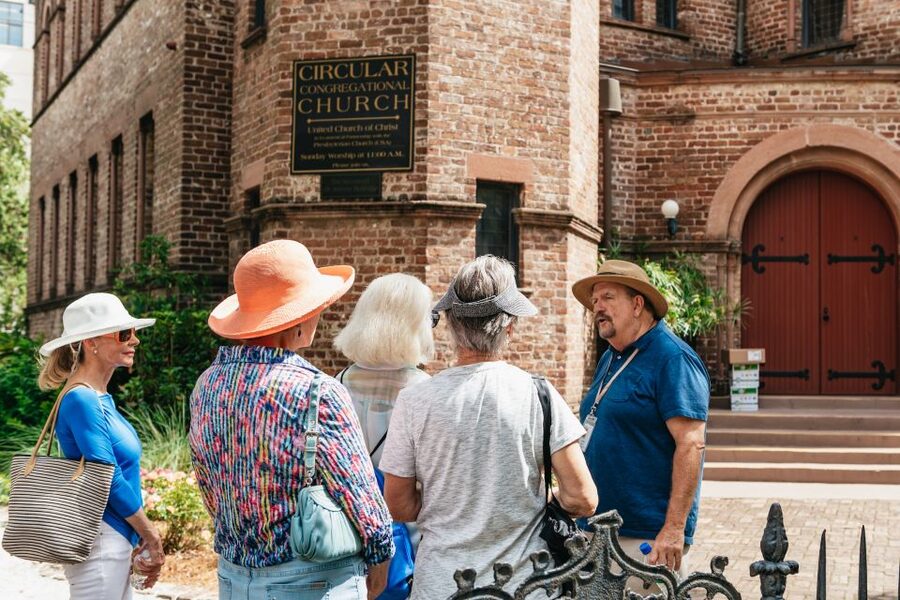
Many city walks focus on grand houses and leave the disasters as a footnote. This tour gives them a central place, which is one of its best features.
You hear about seven major fires, hurricanes, epidemics, sieges, bombardments, and a devastating earthquake. That list explains why Charleston contains layers of rebuilding and why old buildings should not be read as untouched pieces of the past.
The disaster stories also make the city feel more human. You hear not only about dates and damage, but about the moments that altered Charleston’s course. A guide’s storytelling matters here, and the most praised guides are the ones who make these events easy to follow without turning the walk into a dry classroom session.
The treatment of difficult subjects is another strength. One guide was specifically praised for not avoiding hard topics while remaining honest and sensitive. That matters in Charleston, where any serious account of wealth, architecture, and public life must also address enslavement and the unequal society that supported much of the city’s growth.
How much ground you cover in two hours
Two hours is a useful length for a first introduction. You see a lot without committing half a day, and the return to Shop Historic Charleston makes it easy to continue sightseeing afterward.
Still, this is not a slow amble. You move among several neighborhoods and make repeated stops. The walk was described as manageable rather than strenuous, but it involves a substantial amount of walking, and cobblestones can make the route more tiring.
Wear comfortable shoes with reliable grip. Bring water and sunscreen, and dress for the weather. A guide may choose a shadier path when possible, but you should not count on shade or cool conditions throughout the walk.
If you are hard of hearing, stay close to the guide and ask for a louder voice when needed. A few comments indicate that some guides may trail off or lower their voices while walking. Small groups are easier to hear, and past departures have sometimes been very small, even consisting of only two people.
The tour can also work for families. One guide was praised for being patient and kind with children, and another adjusted the route for a traveler using a wheelchair. That said, the route includes cobblestones and substantial walking, so you should discuss mobility needs before booking rather than assume every section will be easy.
The value of $30 per person
At $30 per person, this is a fair price for a two-hour guided orientation in central Charleston. You pay for a live professional guide, not for a bundle of attraction admissions, so the value rests on the quality of the narration and the route.
For a first visit, I think the cost is justified if you want historical context. You see major landmarks on your own, but you may miss the stories that connect them. A good guide can save you from spending your first day simply photographing facades without knowing why they matter.
The value is also strong for repeat visitors. One long-time Charleston resident joined the walk and still found new places and stories. That is a good sign for anyone who already knows the famous streets but wants more local detail.
It is less useful if you dislike guided walks, want to enter every building, or prefer to explore at your own pace. You will spend much of the two hours listening at outdoor stops, and the route cannot cover every part of Charleston’s historic center.
The option to reserve now and pay later keeps your plans flexible. You can also cancel up to 24 hours in advance for a full refund, which is helpful when weather or changing plans may affect a walking day.
Who will enjoy this Charleston walk
I would recommend it most strongly to first-time visitors who want a clear sense of place before exploring on their own. It also suits history fans, architecture lovers, and anyone who enjoys local stories more than a simple list of dates.
The tour is a good fit for couples, families with children who can manage the walking, and repeat visitors looking for details beyond the usual postcard sights. A small group can make the experience especially personal, though group size is not fixed.
You should think twice if heat, uneven streets, or long periods on your feet are a serious concern. You should also choose a quieter position near the guide if hearing every word is important.
Should you book the Old Walled City Historical Walking Tour?
Book it if you want Charleston explained by a guide who can move from architecture to piracy, from churchyards to earthquakes, and from famous residents to the city’s painful subjects. The strongest reason to go is the chance to hear local voices such as Al, Bruce, Eric, or Alfie, though the guide you receive may differ.
At $30, it is a sensible introduction and a useful way to get your bearings early in a visit. Bring water, wear good shoes, stay close enough to hear, and expect a brisk two hours rather than a leisurely stroll.
FAQ
How long is the Old Walled City Historical Walking Tour?
The tour lasts two hours.
How much does the tour cost?
The price is $30 per person.
Where does the tour meet?
Meet on the sidewalk at the corner of Meeting Street and Chalmers Street, near the cobblestone street and Shop Historic Charleston.
What language is the tour conducted in?
The live tour guide speaks English.
What sights are included?
The route includes the French Quarter, Dock Street Theatre, the Old Exchange and Provost Dungeon, Waterfront Park, Rainbow Row, the Heyward-Washington House, St. Michael’s Episcopal Church, and other historic streets and buildings.
How much walking is involved?
The tour involves a substantial amount of walking through Charleston’s historic center, including cobblestone streets.
What should I bring?
Bring comfortable shoes, sunscreen, water, and clothing suited to the weather.
More Historic Sites in Charleston
- Charleston Harbor History Day-Time or Sunset Boat Cruise
★ 4.5 · 2,788 reviews - Charleston: Daytime or Sunset Historic Harbor Cruise
★ 4.5 · 1,352 reviews - Charleston historical walking tour with a Professor of History at The Citadel
★ 5.0 · 1,284 reviews - Charleston: Historical Downtown Tour by Horse-drawn Carriage
★ 4.8 · 1,009 reviews
Newly listed in Charleston
- Boone Hall Plantation Admission & Tour with Transportation from Charleston★ 4.5 · 455 reviews
- Charleston: Downtown Horse-Drawn Carriage Tour★ 4.8 · 459 reviews
- Charleston Horse & Carriage Historic Sightseeing Tour★ 4.5 · 460 reviews
- Charleston Ghosts of Liberty Guided Walking Tour★ 4.5 · 473 reviews
- Charleston Ghost & Dungeon Night-Time Walking Tour with Entry to Provost Dungeon★ 4.0 · 479 reviews
- Charleston Haunted Jail Night-Time Walking Tour with Admission to Old City Jail★ 4.5 · 570 reviews
- Charleston Harbor Luxury Dinner Cruise with Live Music★ 4.0 · 607 reviews
- Afternoon Schooner Sightseeing Dolphin Cruise on Charleston Harbor★ 4.5 · 620 reviews
Charleston Tours, compared.
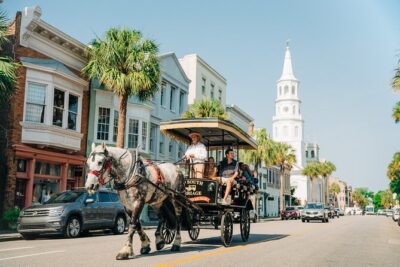
Charleston’s Old South Carriage Historic Horse & Carriage Tour
Read our review →
Historic Charleston Guided Sightseeing Walking Tour
Read our review →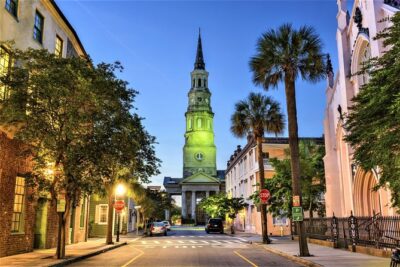
Haunted Evening Horse and Carriage Tour of Charleston
Read our review →
Charleston Horse-Drawn Carriage Tour: Explore Historic Charleston
Read our review →
Fort Sumter Admission and Self-Guided Tour with Roundtrip Ferry
Read our review →
Ghosts of Charleston Night-Time Walking Tour with Unitarian Church Graveyard
Read our review →
Charleston Harbor History Day-Time or Sunset Boat Cruise
Read our review →
Hidden Alleyways and Historic Sites Small-Group Walking Tour
Read our review →Browse the lists this tour appears in