

Reviewed · CHARLESTON TOURS
Charleston historical walking tour with a Professor of History at The Citadel
Charleston’s past comes into focus on foot with Eric Lager, Ph.D., a history professor at The Citadel. Over roughly three hours, he links streets, churches, squares, theaters, and old government buildings to the people and conflicts that shaped South Carolina. This is a serious history walk, not a quick roll call of dates.
I like the 12-person limit, which gives you a fair chance to hear the guide and ask detailed questions. I also like the route’s range, from the 1712 Pink House and French Huguenot Church to the Civil War story at the Battery. The main consideration is pace: you cover a lot of ground and absorb a great deal of information, so this suits curious walkers more than anyone seeking a light, leisurely stroll.
Key points to know before you book
- A real history lesson: Eric Lager draws on his work as a Citadel history professor and covers Charleston from the colonial period through the Civil War and beyond.
- Small group by design: The tour is capped at 12 people, making it easier to hear, ask questions, and speak with the guide.
- Thirteen meaningful stops: You see major sites in the French Quarter, the old civic center, and along the Battery.
- Fort Sumter from shore: You view the place where the first shots of the Civil War were fired, but you do not take a boat to the fort.
- Three hours on city streets: Wear comfortable shoes and be ready for a moderate level of walking.
- Good early-trip choice: The route helps you understand Charleston and can point you toward places to explore later on your own.
A history class that happens to move through Charleston
The special feature here is not simply the number of sights. It is the effort to connect them. Charleston can sometimes feel like a collection of pretty facades, pastel homes, church steeples, and cobbled lanes. A strong guide shows you how those pieces fit together.
Eric Lager’s background matters if you want more than surface facts. The tour reaches into American and European 19th-century history, South Carolina politics, religion, architecture, and the Civil War. You can ask questions as you go, and the small group makes that exchange practical rather than awkward.
The content is dense. You may hear about four centuries of people, buildings, and disputes in a single morning or afternoon. That is a strength for history fans, but it also means you should not expect every stop to receive a long, museum-style presentation. The experience works best when you enjoy making connections and keeping a few questions in mind.
I would book it near the beginning of a Charleston visit. Once you understand the old city’s major themes, later walks through the French Quarter or along the Battery become far more meaningful.
More Historical Tours in Charleston
- Charleston’s Old South Carriage Historic Horse & Carriage Tour
★ 5.0 · 10,023 reviews - Historic Charleston Guided Sightseeing Walking Tour
★ 5.0 · 6,216 reviews - Charleston Horse-Drawn Carriage Tour: Explore Historic Charleston
★ 5.0 · 3,561 reviews
Starting at Mills House and Dock Street Theater
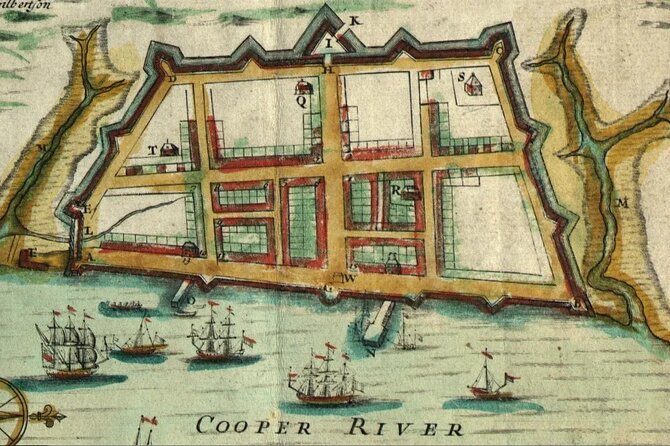
The meeting point is at 108 Meeting Street, by Mills House Charleston, Curio Collection by Hilton. The hotel is more than a convenient landmark. Its story reaches into the early period of the American Civil War, giving the tour an immediate reminder that Charleston’s grand buildings were tied to national crisis, not just local charm.
From there, the walk continues to Dock Street Theater. The site is connected with the first theater built in North America and with some memorable characters from Charleston’s past. This is a useful early stop because it brings culture and public life into the story. Charleston’s history was shaped not only in churches and government rooms, but also in places where people gathered to watch, socialize, and be seen.
Each stop is relatively short, about 10 minutes. That keeps the route moving, though you should expect the guide to add context while walking between sites. You are not spending three hours inside buildings. The streets themselves are the classroom.
The Pink House and Charleston’s early architecture
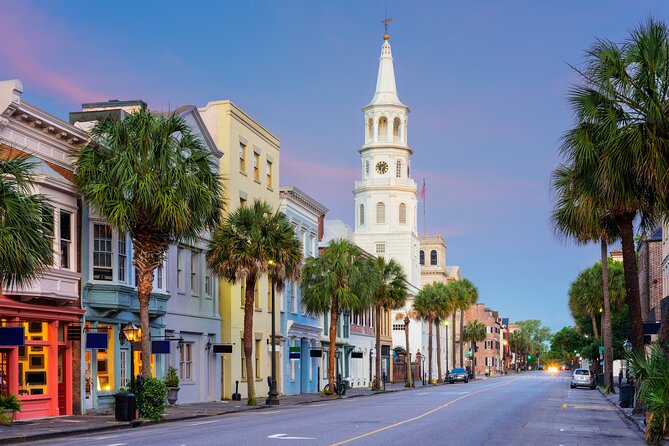
The Pink House Gallery is one of the oldest buildings in Charleston, dating to about 1712. Its small scale and age offer a useful contrast to the larger public buildings later in the walk. Here, you get a close look at the city’s early built environment rather than only hearing about it in the abstract.
The stop lasts about five minutes, so think of it as a focused exterior visit rather than a full house tour. Admission is free for this part of the experience, and the value comes from seeing the building in its setting and understanding its place in Charleston’s early development.
For anyone interested in architecture, this is one of the route’s quieter but important moments. You begin to notice how much of Charleston’s story survives in walls, proportions, materials, and street patterns.
Washington Square and the old civic center
Washington Square gives the walking tour room to breathe. The historic square contains several monuments and provides a setting for discussing the people and public events tied to Charleston’s civic life.
The stop lasts about 15 minutes, one of the longer pauses on the route. That matters because a square can be hard to interpret without guidance. You might see monuments and landscaped space, but the guide can explain why the place was created, what it commemorates, and how it fits into the city’s changing political story.
Next comes Charleston City Hall. The building has had several lives, first serving as a meat market and bank before becoming City Hall. That change is a compact lesson in urban growth. Buildings often outlast the purpose for which they were built, and this one lets you see how Charleston adapted important central spaces over time.
The Charleston County Courthouse adds another layer. The site was once the old South Carolina statehouse, so the stop connects local government with the wider political life of the state. If you enjoy political history, these two buildings are especially useful because they show how power was organized and displayed.
More Walking Tours in Charleston
- Ghosts of Charleston Night-Time Walking Tour with Unitarian Church Graveyard
★ 4.5 · 2,835 reviews - Hidden Alleyways and Historic Sites Small-Group Walking Tour
★ 5.0 · 2,335 reviews - Highlights of Charleston Guided Walking Tour
★ 5.0 · 2,206 reviews - Charleston Haunted Booze and Boos Ghost Walking Tour
★ 5.0 · 1,569 reviews
St. Michael’s Church and Charleston’s religious story
St. Michael’s Church was completed in 1761 and is Charleston’s oldest church edifice. Its age alone makes it worth stopping for, but the larger value is the chance to consider how religion shaped the city’s institutions, social divisions, and public identity.
The visit lasts about 10 minutes and is an exterior history stop. You should not assume that admission to the church is part of the walking tour. The experience is built around the streets and public views, not extended interior visits.
The route also includes the French Huguenot Church, described as the first church built in the Gothic Revival style. This brings Charleston’s immigrant and religious history into sharper focus. The French Huguenots were an important part of the city’s story, and their presence helps explain why Charleston cannot be understood through one tradition or one group alone.
I appreciate this pairing of churches. St. Michael’s points to an older colonial institution, while the French Huguenot Church highlights a distinct community and architectural style. Together, they make religion part of the main story rather than a decorative side note.
Two houses, two very different kinds of history
The Heyward-Washington House marks the visit of George Washington to Charleston in 1791. You see where he stayed, which gives a familiar national figure a specific address in the city.
Admission to the house is not included, so the walking tour should be treated as an introduction rather than a house museum visit. If the building captures your interest, you can decide later if you want to return and pay for entry separately.
The Old Exchange and Provost Dungeon provides another concentrated stop. It was the last public building built by the British in North America, and the Constitution was ratified there in 1788. The site also carries the darker association of the provost dungeon.
Only about five minutes are allocated here. That is enough to place the building in the larger story, but not enough for a long interior exploration. The route’s strength is breadth, and these short stops show the tradeoff clearly. You see many important places, but the guide must keep moving.
Walking through the French Quarter
The French Quarter receives about 15 minutes, allowing you to take in its streets, buildings, and overall character. This is one of the parts of Charleston that many people want to see, but a guide adds value by explaining why the district looks and feels as it does.
The name is not just a marketing label. The nearby French Huguenot Church helps connect the quarter to the city’s French Protestant community and to Charleston’s wider pattern of migration and settlement. The tour also shows how architecture, religion, commerce, and politics overlap in a small area.
This is a good place to slow your eyes down. Look beyond the best-known facades. Notice the relationship between churches, public buildings, narrow streets, and older houses. The guide’s commentary can help you read those details rather than simply photograph them.
Hibernian Hall and the road toward disunion
Hibernian Hall is tied to the building where the seeds of disunion were sown. It also provides a chance to discuss America’s connection to Greek Revival architecture.
That combination makes the stop especially useful. Architecture here is not treated as a neutral style. Public buildings send political messages, and the people who gathered in them helped shape the country’s direction. The stop connects design, civic life, and the growing conflict that eventually led to the Civil War.
Admission is not included, and the tour does not promise an extended interior visit. Still, the exterior setting gives the guide a solid platform for explaining why Charleston became such an important place in the national crisis.
The Battery and the view toward Fort Sumter
The walk ends at 39 East Battery, near the Rainbow Row area. This is a strong finish because the Battery brings together Charleston’s harbor views, historic homes, and Civil War memory.
From the shoreline, you look toward Fort Sumter National Monument, where the first shots of the Civil War were fired. The tour does not go out to the fort. That distinction is important. If you want to walk inside Fort Sumter, you need a separate boat excursion, while this experience gives you the setting and historical explanation from the Charleston side.
The ending also leaves you in a useful part of town for further exploring. You are near the iconic Rainbow Row section and the Battery itself, so you can continue on your own after the guide finishes. Since the route ends there rather than returning to Meeting Street, plan your day with that final location in mind.
What $40 buys you
At $40 per person, the main purchase is expert interpretation, not admission tickets or transport. All tour fees and taxes are included, but bottled water, private transportation, and entry to the Heyward-Washington House, Old Exchange and Provost Dungeon, and Hibernian Hall are not.
For a three-hour walk with a maximum of 12 people, the price is reasonable if you value depth and conversation. A larger, cheaper group may cover similar streets, but you are less likely to get direct answers or hear every word clearly. Here, the small format is central to the value.
I would not choose this tour only to collect photographs. I would choose it if you want to understand why a building matters, how Charleston’s politics changed, and how local events fit into American history. The many five-star comments focus on Eric Lager’s command of the subject, humor, friendliness, and willingness to answer questions. Those qualities are especially important on a talk-heavy walk.
Walking conditions, weather, and timing
The experience requires a moderate level of physical fitness. You will be outside for about three hours, moving between stops through the historic center. Comfortable shoes are sensible, and you should bring your own water since bottled water is not provided.
Weather matters. The experience requires good weather, and a cancellation for poor conditions brings the choice of another date or a full refund. This is not a museum lecture where rain or heat matters little. The quality of the walk depends on being able to hear, move, and focus outdoors.
The route is offered in English and uses a mobile ticket. Service animals are allowed, and the meeting point is near public transportation. You receive confirmation at booking, while the walking route itself requires no private vehicle.
Who will get the most from this walk?
I would recommend it most strongly to:
- People who want political, religious, architectural, and military history in one tour
- History buffs who enjoy asking detailed questions
- First-time visitors who want a clear framework for Charleston
- Solo visitors and couples who prefer a small group
- People who want to see the French Quarter and Battery while learning what they are looking at
It may be less suitable if you want a relaxed stroll with only a few entertaining facts. The content is packed, and the guide covers a broad span from the pre-Revolutionary era to the Civil War and later periods. You need to enjoy listening while walking.
The tour can also suit repeat visitors. The buildings may be familiar, but the political and social connections may not be. One local participant found it stronger than other similar walks, which says something about its usefulness even for people who already know Charleston’s streets.
Should you book Charleston History Walk by Eric Lager?
Book it if you want Charleston explained by a working history professor rather than reduced to postcard lines. The strongest reasons are the 12-person cap, the chance to ask questions, the wide range of subjects, and Eric Lager’s ability to connect architecture and place with national events.
Skip it if your priority is going inside every building, visiting Fort Sumter itself, or avoiding three hours of walking. You will need separate admission for several sites, and Fort Sumter is viewed from the Battery rather than visited.
For most history-minded visitors, I would take this early in the trip. At $40, it offers a strong return in context and orientation, then leaves you at the Battery with the rest of Charleston ready to explore.
FAQ
Where does the Charleston history walking tour start?
The tour starts at 108 Meeting Street, Charleston, South Carolina 29401, USA, at Mills House Charleston, Curio Collection by Hilton.
Where does the tour end?
It ends at 39 East Battery, near the Rainbow Row section of Charleston and the Battery.
How long does the tour last?
The walking tour lasts approximately three hours.
How large is the group?
The group is limited to a maximum of 12 travelers.
Who leads the tour?
The tour is led by Eric Lager, Ph.D., a professor of history at The Citadel.
Is Fort Sumter visited during the tour?
No. You view Fort Sumter National Monument from the Battery on Charleston Harbor. The tour does not travel out to the fort.
Are admission tickets included?
All fees and taxes are included, but admission is not included for the Heyward-Washington House, Old Exchange and Provost Dungeon, and Hibernian Hall.
Is transportation provided?
No. Private transportation is not included. The tour is a walking experience, and the meeting point is near public transportation.
What is the cancellation policy?
You can cancel at least 24 hours before the experience start time for a full refund. Cancellations or changes made less than 24 hours before the start time are not refunded or accepted. If poor weather cancels the tour, you are offered another date or a full refund.
More Historic Sites in Charleston
- Charleston Harbor History Day-Time or Sunset Boat Cruise
★ 4.5 · 2,788 reviews - Charleston: Daytime or Sunset Historic Harbor Cruise
★ 4.5 · 1,352 reviews - Charleston: Historical Downtown Tour by Horse-drawn Carriage
★ 4.8 · 1,009 reviews - Undiscovered Charleston: Half Day Food, Wine & History Tour with Cooking Class
★ 5.0 · 948 reviews
Newly listed in Charleston
- Boone Hall Plantation Admission & Tour with Transportation from Charleston★ 4.5 · 455 reviews
- Charleston: Downtown Horse-Drawn Carriage Tour★ 4.8 · 459 reviews
- Charleston Horse & Carriage Historic Sightseeing Tour★ 4.5 · 460 reviews
- Charleston Ghosts of Liberty Guided Walking Tour★ 4.5 · 473 reviews
- Charleston Ghost & Dungeon Night-Time Walking Tour with Entry to Provost Dungeon★ 4.0 · 479 reviews
- Charleston Haunted Jail Night-Time Walking Tour with Admission to Old City Jail★ 4.5 · 570 reviews
- Charleston Harbor Luxury Dinner Cruise with Live Music★ 4.0 · 607 reviews
- Afternoon Schooner Sightseeing Dolphin Cruise on Charleston Harbor★ 4.5 · 620 reviews
Charleston Tours, compared.
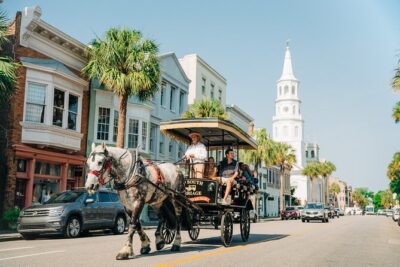
Charleston’s Old South Carriage Historic Horse & Carriage Tour
Read our review →
Historic Charleston Guided Sightseeing Walking Tour
Read our review →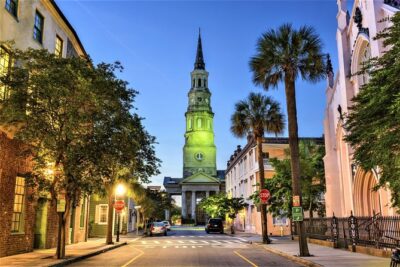
Haunted Evening Horse and Carriage Tour of Charleston
Read our review →
Charleston Horse-Drawn Carriage Tour: Explore Historic Charleston
Read our review →
Fort Sumter Admission and Self-Guided Tour with Roundtrip Ferry
Read our review →
Ghosts of Charleston Night-Time Walking Tour with Unitarian Church Graveyard
Read our review →
Charleston Harbor History Day-Time or Sunset Boat Cruise
Read our review →
Hidden Alleyways and Historic Sites Small-Group Walking Tour
Read our review →Browse the lists this tour appears in