
Reviewed · GETTYSBURG TOURS
Gettysburg Battlefield Self-Guided Driving Audio Tour
Gettysburg is easiest to understand when you can see the ground as the story unfolds. This self-guided driving tour takes you along the official battlefield route, from McPherson’s Ridge and the Railroad Cut to Little Round Top, Pickett’s Charge, and the National Cemetery. More than 60 audio stories fill in the troop movements, personal tales, and hard choices behind the monuments.
I like two things right away: you control the pace, and one $16.99 purchase covers the whole car, up to four people. I also like that the tour works offline after you download it, a useful safeguard in a place where you should be looking at fields and memorials, not hunting for a signal. The main caution is the app. GPS timing can be fussy, especially at the start, so follow the setup instructions carefully and keep to the marked route and speed limit.
Key points to know before you go
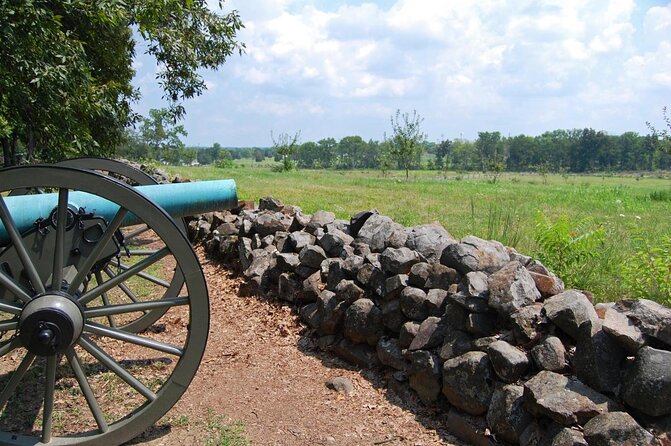
- A 19-mile official route: Follow the battlefield auto road through the major sites of all three days of fighting.
- More than 60 audio stories: Narration covers battle plans, soldiers, monuments, farms, and lesser-known details.
- $16.99 per car: The price covers a group of up to four, not each individual passenger.
- Offline after download: Install the Action Tour Guide app and tour content while you have strong Wi-Fi or cellular service.
- Flexible timing: Allow about two to four hours if you want time for stops, photos, monuments, and optional side trips.
- Lifetime access: The tour has no expiry, so you can pause it, return another day, or use it again on a future visit.
What this Gettysburg audio tour is really like
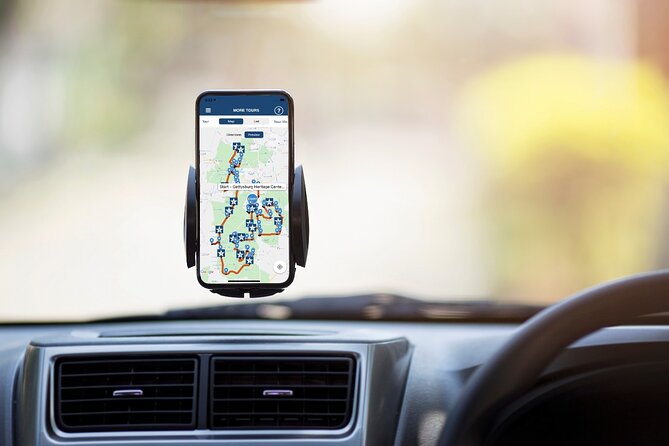
This is not a bus tour with a fixed departure time, and no guide meets you in the parking lot. You arrive at the starting point, open the Action Tour Guide app, and let GPS trigger the narration as you move from one location to the next.
You can begin at the Gettysburg Heritage Center parking area on Steinwehr Avenue or at the National Park Visitor Center. The Heritage Center is a sensible first stop because the tour recommends visiting its museum before setting out. Admission is not included, so treat it as an optional paid addition rather than part of the $16.99 tour.
The route itself is more than 19 miles and usually takes one to two hours of driving and listening. In real use, plan on two to four hours if you stop to read monuments, walk short distances, take pictures, or make the optional detour to the Eisenhower National Historic Site.
The narration follows the battle in chronological order. That matters. Gettysburg can otherwise feel like a long parade of statues and stone walls. Here, the first day leads into the second, then the third, so you can track how the Union and Confederate positions changed.
More to weigh up across the USA
- History and Hauntings of Salem Guided Walking Tour
★ 5.0 · 14,564 reviews - New York in One Day Guided Sightseeing Tour
★ 5.0 · 13,166 reviews - Chicago River: 1.5-Hour Guided Architecture Cruise
★ 4.8 · 8,046 reviews
Getting the app ready before you reach the battlefield
The biggest practical issue is not the history. It is getting the technology ready.
After booking, you receive setup instructions and a password by email and text. Search your messages for audio tour if you do not see them quickly. Download the separate Action Tour Guide app, enter the password, and download the tour while you have a strong connection.
Once onsite, open the app at your chosen starting point. If more than one version appears, select the tour with the starting point and direction you plan to use. The first story should begin when you reach its GPS location, and later stories play as you follow the route.
Connect your phone to the car stereo by Bluetooth, USB, or AUX. Apple CarPlay supports the audio playback, though the map display is not yet available through CarPlay. Android Auto support is still listed as forthcoming. An iPhone with iOS 15 or later, an Android device running version 9 or later, or an iPad or tablet with GPS and cellular service is recommended.
I would practice with the app before leaving the parking lot. A few people have had trouble getting the starting point to line up, while others found the tour worked smoothly once it was synchronized. Keep the phone location services active, follow the road signs, obey the speed limit, and avoid skipping ahead in the route.
McPherson’s Ridge and the opening fight
The first battlefield stops set the tone. At McPherson’s Ridge, the narration places you at dawn on July 1, as Union and Confederate forces collide and commanders move regiments into position.
This is a good example of why an audio tour helps. You are looking over an open ridge, but the action is no longer just an abstract date in a textbook. The narration asks you to picture units arriving, forming lines, and trying to hold ground.
Next comes the Railroad Cut, an unlikely setting for a major clash on the first day. The story turns toward battle strategy and the decisions made by commanders on both sides. These opening stops are brief, often around five minutes, so you can listen from the car or get out for a closer look without losing a large block of time.
The Eternal Light Peace Memorial follows. Its Maine granite base and Alabama limestone pillar symbolize the reunited country. It gives the tour an early reminder that Gettysburg is not only about who advanced or retreated. It is also about the United States trying to define what unity would mean after the war.
Oak Ridge, Battlefield Sallie, and the end of Day One
At Oak Ridge Observation Tower, the narration returns to the first day, now in the afternoon. Union soldiers are trying to slow the Confederate advance, and the tower offers broad views across the fields. If it is open during your visit, the elevated view helps you read the ground in a way that is difficult from road level.
The tour then passes the monument to the 11th Pennsylvania Volunteer Infantry. Look for the dog carved on the base. This is Sallie, the regiment’s mascot, who accompanied the soldiers through much of the Civil War.
That small detail is one of the tour’s pleasures. Along with troop movements, you get personal stories and side notes that make the memorials easier to remember. The narration also explains the role of drummers and military music, a useful bit of context that could easily be missed if you drove the loop without commentary.
The route continues past the North Carolina Memorial and Virginia Monument as evening closes over the first day. The narration considers the Union losses, the ground surrendered, and the plans taking shape as both armies prepare for what comes next.
A different kind of day, same corner of the map:
- NYC: SUMMIT One Vanderbilt Tickets
★ 4.7 · 51,195 reviews - NYC: 9/11 Memorial & Museum Timed-Entry Ticket
★ 4.8 · 31,428 reviews - NYC: Empire State Building Tickets – Observatory & Museum
★ 4.7 · 25,757 reviews - NYC: Empire State Building Observation Deck Tickets
★ 4.7 · 22,072 reviews
Day Two from Seminary Ridge to Little Round Top
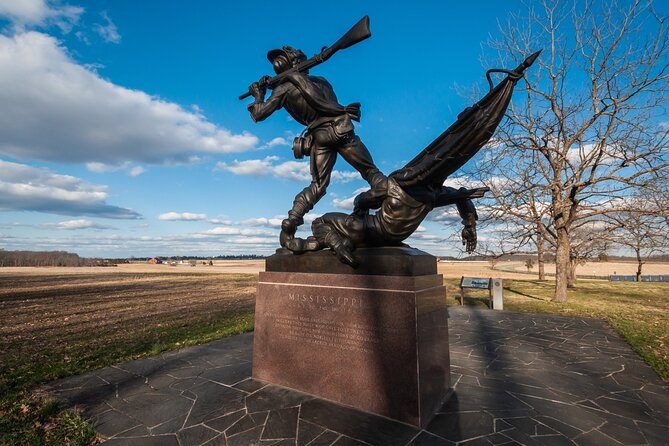
At the fifth auto tour stop, the story moves into the second day. Pickett’s Charge began from this area on the third day, but the tour saves that famous episode for later. For now, you follow the buildup as both armies organize and test their positions.
The Longstreet Observation Tower offers another useful viewpoint over the second day’s fighting. An optional detour leads to the Eisenhower National Historic Site, the former retreat of President Dwight Eisenhower, which overlooks the battlefield. The detour adds interest for visitors who want more than the core Civil War route, but it also takes time. If you have only two hours, you may want to stay with the main road.
At Warfield Ridge, Confederate troops prepare to attack a Union position defended by specially trained marksmen. The narration makes this more than a stop at a stone monument. You get the tactical problem: one side needs to move forward, while the other needs to hold a strategic point.
Little Round Top is one of the best-known locations on the tour. Union troops held this hill by a narrow margin during the second day. As the road passes around it, the narration brings in the Valley of Death and the fierce fighting around the rocky slopes.
The nearby Devil’s Den section adds another layer. Confederate sharpshooters used the volcanic rocks for cover, firing on Union soldiers from protected positions. You may find the site more powerful if you get out and look carefully at how the rocks create shelter and sightlines. The audio can play from the car, but this is one place where a short walk adds real value.
The Wheat Field, Peach Orchard, and two abandoned farms

The ninth auto tour stop leads toward the Wheat Field, another major second-day fight. The narration follows the pressure on Union defenders and includes the unusual story of Union soldier JJ Purman.
Next comes the Peach Orchard, where the battle continued through shifting attacks and failed plans. Gettysburg’s names can sound gentle, but the audio steadily connects each farm, field, and ridge to the violence that took place there.
The Abraham Trostle Farm offers a particularly human detail. The Trostle family fled so quickly that dinner remained on the table. It is a small image, but it helps you remember that civilians lived among these fields and had to abandon their homes when the armies arrived.
At Plum Run, the story follows soldiers escaping the fighting near the Peach Orchard. Then the route reaches the George Weikert Farm, which was hastily evacuated and later turned into a battlefield hospital. Here the narration explains military doctors and the physical effects of war.
These farm stops are important because they keep the tour from becoming only a military study. You hear about civilians, wounded soldiers, medical care, and homes turned into emergency spaces.
Pennsylvania’s monument and the fight for Culp’s Hill

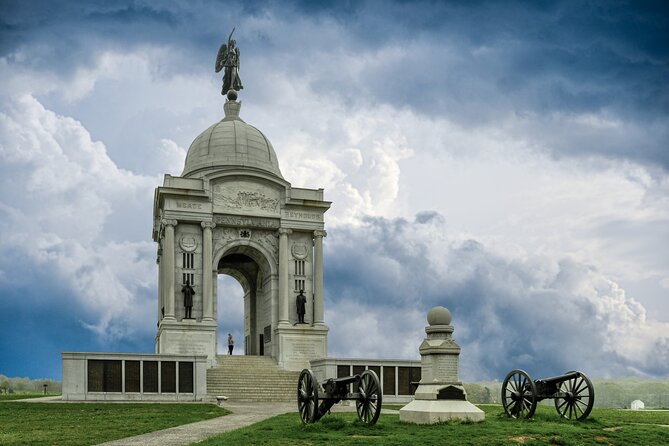
The Pennsylvania Memorial honors nearly 35,000 Pennsylvania soldiers who fought at Gettysburg. The narration gives the monument a strong local meaning: these men were defending their own state, not just fighting for a distant political cause.
At Spangler’s Spring, a small wooded site receives attention before the route continues to Culp’s Hill Tower. Union and Confederate troops fought for control of this strategic position, and the Union held it through the evening.
East Cemetery Hill brings Day Two to a close. Night did not end the tension. Confederate forces attempted a nighttime raid after failing to take Culp’s Hill, bringing the Union close to a serious defeat. The story here is one of persistence, skill, and luck, with the battle still unsettled as darkness spreads.
This chronological pause is useful. You finish the second day with a clear sense that the outcome was not inevitable. The next morning still carries real uncertainty.
The third day and Pickett’s Charge
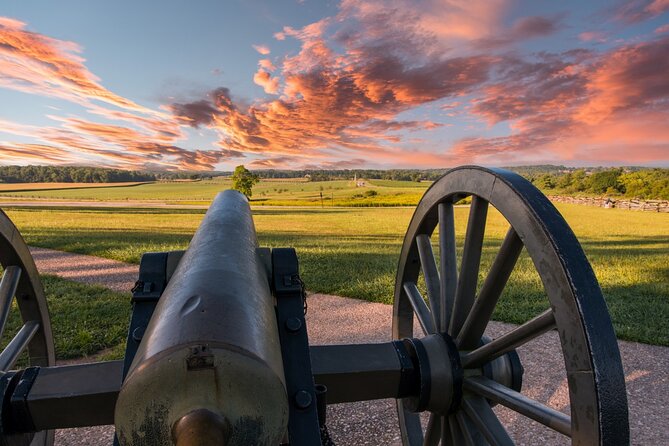
The final day begins at Gettysburg National Military Park, where the tour places the battle in its larger setting. Lee’s second invasion of the North had ended here, and the battle became known as the High Water Mark of the Rebellion.
At the fifteenth auto tour stop, the narration finally reaches Pickett’s Charge. From the rise, you look over the open ground Confederate troops had to cross toward Union defenses. The distance helps explain why the charge became such a defining moment.
The tour also identifies the high-water mark, the farthest point reached by the Confederate advance. This is a place where you should stop the car, take your time, and look across the field before continuing. The audio gives you the sequence, while the view helps you grasp the exposure and scale.
The final stop is the National Cemetery. The tour ends near the graves of Union soldiers who died defending their cause, then turns to Abraham Lincoln’s Gettysburg Address. Lincoln’s speech was brief because he believed the attention belonged to the soldiers who had sacrificed their lives.
It is an appropriate ending, and you should not rush it. The cemetery gives the route a quieter tone after the movement and noise of the battle stories.
Price, timing, and who gets the best value
At $16.99 for up to four people, this is inexpensive compared with a private battlefield tour or a per-person guided excursion. A family or group of four pays less than $4.25 per person, while even a couple gets a low-cost introduction to the entire auto route.
The value comes from flexibility as much as content. You can pause for lunch, stop longer at a favorite monument, skip a story, or return later. The access is described as lifetime, with no expiry, so you are not forced to complete the route in one visit.
You should still budget more than the advertised one to two hours if you want to explore. The drive can be completed quickly, but the battlefield rewards patience. Add time for the Heritage Center, the observation towers, the farms, Little Round Top, the cemetery, and the Eisenhower detour.
This format suits independent visitors, families, couples, camper van users, and anyone who dislikes being hurried. It is also useful for repeat visitors who already know the main road and want added stories.
It is less suitable if you want a live historian beside you, detailed personal discussion, or help choosing sites according to your interests. The narration cannot answer a question in real time. Also, if your phone or GPS gives trouble, you may need to stop and reset the app.
What I would do for the smoothest visit
I would download the tour before reaching Gettysburg, then test the audio connection in the starting parking lot. I would begin at the Heritage Center or National Park Visitor Center rather than trying to join the route halfway through.
I would keep the phone mounted where the driver can leave it alone, let a passenger handle the app, and use the car stereo rather than a phone speaker. I would also carry a charging cable, since GPS and audio can use power over several hours.
Follow the official route and the speed limit. The GPS stories are designed to trigger at set points, and moving too fast, taking an unintended turn, or starting away from the recommended location can put the narration out of sync.
Allow extra time in October or during any visit when you want to linger among the monuments. The route is scenic at any time, but the point is not simply to circle the battlefield. Stop, read the inscriptions, and use the audio to connect each place to the wider battle.
Should you book the Gettysburg driving tour?
I would book it if you want a low-cost, private way to understand Gettysburg without surrendering control of your day. The chronological route is well chosen, the audio covers the major sites, and the side stories give personality to places that might otherwise blur together.
I would not book it as a substitute for a personal guide if you need conversation or expert help on demand. The app also requires a little preparation, and GPS timing is the one weak spot.
For most independent visitors, though, the price is hard to argue with. Download it properly, start at the correct point, keep to the route, and give yourself at least three hours. You will have room for the major battlefield stories, a few meaningful walks, and the quiet final stop at the cemetery.
FAQ
Where does the Gettysburg self-guided driving tour start?
You can begin at the Gettysburg Heritage Center parking lot at 297 Steinwehr Avenue or at the National Park Visitor Center. The tour is self-guided, so no one meets you at the starting point.
Where does the tour end?
The final stop is the National Cemetery area at 125 Taneytown Road. This is also where the tour discusses Lincoln’s Gettysburg Address.
How long does the tour take?
The driving route takes about one to two hours, but you should allow two to four hours if you stop at monuments, take pictures, walk around, or visit optional sites.
How much does the tour cost?
The price is $16.99 per group of up to four people. You purchase one tour for the car rather than paying separately for each person.
Is admission to museums and attractions included?
No. Attraction passes, entry tickets, and reservations are not included. Admission to the Gettysburg Heritage Center is also not included.
Does the tour require cellular service?
You must download the app and tour content while connected to strong Wi-Fi or cellular service. After downloading, the audio and maps work offline.
How does the audio begin?
Open the Action Tour Guide app at the starting point and enter the first story location. GPS triggers the audio, and later stories play as you follow the route.
Can I pause and resume the tour?
Yes. You can pause the tour, take breaks, explore side trips, skip sections, and return to it later. The tour access has no expiry.
Is the tour available in languages other than English?
No. The tour is offered in English.
More Audio Tours in the USA
- Los Angeles: Hop-On Hop-Off Bus Tour with Audio Guide
★ 3.7 · 2,030 reviews - City Sightseeing Hop-On Hop-Off Bus Tour with Audio Guide
★ 3.0 · 1,083 reviews - Medieval Torture Museum Ticket with Audio Guide and Ghost Hunting
★ 5.0 · 962 reviews - Joshua Tree National Park Self-Guided Driving Audio Tour
★ 4.5 · 762 reviews
Newly listed in the USA
- The Maui Butterfly Farm Tour★ 5.0 · 446 reviews
- NON BUS 4 Winery Traverse City Wine Tour on Old Mission Peninsula★ 5.0 · 445 reviews
- New England Aquarium Admission Ticket in Boston★ 4.0 · 446 reviews
- New Orleans City Tour and Steamboat Natchez Harbor Jazz Cruise★ 4.0 · 446 reviews
- Alpaca and Llama Farm Tour★ 5.0 · 446 reviews
- Small-Group Laura and Whitney Plantation Tour from New Orleans★ 4.5 · 446 reviews
- Dreaded Dead Descent of the District: DC Ghost Tour★ 4.0 · 446 reviews
- Cañon City: Royal Gorge Bridge & Park Entry Ticket & Gondola★ 4.5 · 448 reviews
Gettysburg Tours, compared.
2-Hour Gettysburg Battlefield Guided History Bus Tour with a National Park Guide
Read our review →
Civil War Ghosts: Echoes of the Fallen Gettysburg Ghost Tour
Read our review →
Gettysburg: Horse-Drawn Carriage Battlefield Tour
Read our review →
Gettysburg: Ghost Hunt Tour with Ghost Hunting Equipment
Read our review →Civil War Ghosts: Echoes of the Fallen Gettysburg Ghost Tour
Read our review →Browse the lists this tour appears in