
Reviewed · GETTYSBURG TOURS
Civil War Ghosts: Echoes of the Fallen Gettysburg Ghost Tour
The most interesting part of Civil War Ghosts: Echoes of the Fallen Gettysburg Ghost Tour is its setting. Gettysburg is not a purpose-built haunted attraction. Its ghost stories grow from actual wartime deaths, civilian suffering, makeshift hospitals, sniper positions, and homes caught in the fighting. You walk through the town while your guide connects those events to reported paranormal activity.
I like two things here. First, the tour gives you a useful introduction to Gettysburg’s Civil War story without requiring a full battlefield excursion. Second, the central meeting point and short walking route make it an easy evening activity. Guides such as Amber, Richard, Linda, Michala, Aurora, and Jim have been praised for mixing strong storytelling with historical detail.
The main consideration is simple: you stay outside the buildings. If you expect to enter haunted inns and homes, this tour may disappoint. It is best understood as a guided history walk with ghost stories, not an investigation where you test each haunting yourself.
Key Points Before You Book
- Eight historic locations: The route includes the Brickhouse Inn, Witness Tree, Farnsworth House, Jennie Wade House, Rupp House, and other sites tied to Gettysburg’s wartime past.
- History comes first: The strongest part of the tour is often the account of soldiers and civilians affected by the battle.
- Outdoor viewing only: You see the buildings and locations from public areas rather than touring their interiors.
- Roughly one hour: The advertised duration is about 60 minutes, though some tours have lasted closer to 90 minutes or included extra stops.
- Small enough to follow: The group can reach a maximum of 35 people, so guide volume and positioning matter.
- Good value at $32: You receive a live guide, researched stories, and a compact introduction to Gettysburg without paying for transportation or a longer full-day tour.
Why Gettysburg Makes a Strong Ghost Tour Setting
Gettysburg’s ghost stories work because the history is so close at hand. The 1863 battle brought enormous loss to a small Pennsylvania town, and many homes became shelters, hospitals, firing positions, or temporary places of refuge. The tour uses that physical setting to explain why certain buildings acquired reputations for strange sounds, apparitions, and lingering presences.
I appreciate that this approach gives the supernatural material a frame. You are not simply told that a building is haunted. You hear why it mattered during the battle, who was connected to it, and how later reports became part of local lore.
The tone can vary with the guide. Amber has been praised for her passion and theatrical presentation, including a period-style dress she made herself. Richard has earned praise for humor and enthusiasm, while Linda has used photographs on her phone to add visual detail. Jim has been singled out for explaining both the site’s history and its paranormal stories.
Guide quality matters on a walking tour. A good storyteller can make an ordinary street corner feel connected to the events of 1863. One weak point reported on some departures is low volume or a guide who offers only basic information. Stay close to the guide, especially in a larger group, and speak up if you cannot hear.
More ghost walks around the USA:
- Chicago: Gangsters and Ghosts Walking Tour
★ 5.0 · 7,155 reviews - Salem’s Best Ghost Tour
★ 4.5 · 4,186 reviews - Haunted Evening Horse and Carriage Tour of Charleston
★ 4.5 · 3,678 reviews
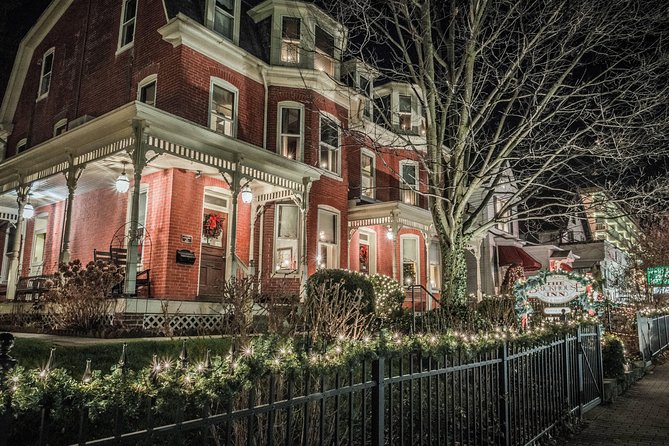
Starting at the Brickhouse Inn on Baltimore Street
The tour begins at 452 Baltimore Street, near the Brickhouse Inn Bed and Breakfast. This building was formerly known as the Old Welty House and is linked to Confederate sharpshooters who used the second floor and attic as a firing position during the battle.
That detail immediately shows how the tour works. You look at a present-day inn, then picture its upper rooms occupied by soldiers watching the streets below. The reported hauntings connected to the building are attributed to those soldiers, whose presence is said to linger in the house.
The stop is brief, listed at about seven minutes. That keeps the walk moving, but it also means you should not expect a long architectural tour or an interior visit. The building’s role as a sniper position provides the substance, while the ghost story supplies the chill.
Parking requires care here. Do not use the Brickhouse Inn’s parking lot. It is reserved for overnight guests, and vehicles may be towed. Use available street parking or side streets behind the inn instead.
The Witness Tree and Gettysburg’s Everyday Streets
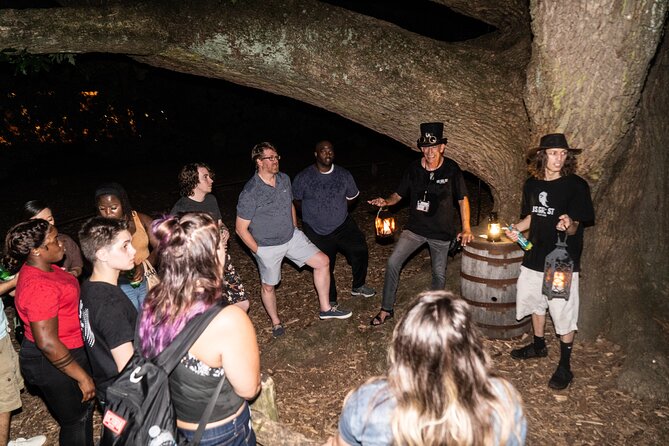
The Witness Tree on Baltimore Street offers a quieter kind of stop. This old tree was present during the fighting and is associated with the memory of the battle. The story is less about a single dramatic death inside a room and more about the idea of a natural object that has remained in place while the town changed around it.
Some accounts connect whispers in the leaves with the voices of people lost during those days. You may find this stop more atmospheric than frightening. The tree gives the guide a chance to slow down and consider how much violence took place in ordinary streets that now carry modern traffic and pedestrians.
The stop lasts about eight minutes. That is enough time for the guide to explain the site and for you to take in the contrast between the calm street and its wartime past. The tour’s outdoor format works well here because the tree itself is the focus.
The Farnsworth House and the Sniper Stories
The Farnsworth House is one of Gettysburg’s best-known haunted buildings. During the battle, Confederate snipers used the property, tying the house to the same dangerous pattern introduced at the Brickhouse Inn.
The paranormal stories here often center on the intensity of the fighting. Reports of eerie sensations and ghostly encounters are linked to combat that reached into and around the house. Your guide may use the location to explain how a family home could become part of a military position within a matter of hours.
This is another exterior stop, listed at roughly seven minutes. You will get more from it if you focus on the physical relationship between the building and the street. Look at the windows and upper levels as the guide explains how a sniper might have viewed the approach.
If you have already toured the Farnsworth House during the day, this stop can add a different layer without repeating a full interior visit. If you have not, remember that the ghost tour does not replace an indoor house tour.
More to weigh up across the USA
- 2-Hour Gettysburg Battlefield Guided History Bus Tour with a National Park Guide
★ 4.5 · 2,201 reviews - Gettysburg Battlefield Self-Guided Driving Audio Tour
★ 4.5 · 910 reviews - Gettysburg: Horse-Drawn Carriage Battlefield Tour
★ 4.8 · 896 reviews - Echoes of War All Ages Ghost Tour
★ 5.0 · 658 reviews
The Former Orphanage at 777 Baltimore Street
At 777 Baltimore Street, the story shifts away from battlefield soldiers and toward children. The National Soldiers Orphanage Homestead was later associated with an abusive matron during the 1870s. The reported spirits here are said to be those of children who suffered in the building.
This is one of the more troubling stories on the route, and it gives the tour a wider time frame. Gettysburg’s painful past did not end when the fighting stopped. The aftermath brought wounded soldiers, bereaved families, displaced children, and institutions shaped by the hardships of the period.
The listed stop takes about eight minutes. I find this kind of story useful because it reminds you that a Civil War ghost tour is not only about dramatic battlefield deaths. It can also address the long, difficult years that followed.
The subject may be too grim for very young children, so families should consider the group’s comfort level. The tour is marketed as family-friendly in its reviews, but the stories can involve death, abuse, and suffering.
East Cemetery Hill After Dark
East Cemetery Hill was the scene of fierce fighting during the Battle of Gettysburg. It is also one of the route’s more naturally somber settings, since the cemetery and surrounding ground connect directly to remembrance and burial.
The ghost story involves shadowy figures resembling soldiers emerging from the cemetery after dark. Here, the atmosphere does much of the work. A cemetery at night needs little embellishment, but the historical explanation keeps the mood from becoming cheap or theatrical.
The stop is scheduled for about seven minutes. Listen for the guide’s explanation of the fighting before judging the paranormal claim. The value of this stop lies in the combination of place, darkness, and documented wartime loss.
This is also a point where practical comfort matters. Gettysburg weather can make a short walk feel longer, especially in humidity. Wear shoes with good support, bring water, and remain aware of uneven walking conditions.
The Hall of Presidents Site at 789 Baltimore Street
The location at 789 Baltimore Street is now associated with the Hall of Presidents Museum, but the tour focuses on an earlier and darker use of the site. During the Civil War, the ground reportedly served as a makeshift burial area.
That history gives the location its paranormal connection. The idea is not tied to one famous ghost, but to people buried in a place that was never intended to be a permanent cemetery. The site illustrates how quickly Gettysburg’s streets and buildings were forced into wartime service.
The stop is listed at roughly eight minutes. It may appeal to you if you prefer ghost stories that grow from a specific historical circumstance rather than from a generalized haunted-house claim.
Because you are outside, you should not expect to inspect museum displays or wax figures. The guide’s account is the reason to stop here, not an admission to the museum.
The Jennie Wade House and a Civilian Tragedy
The Jennie Wade House tells one of Gettysburg’s most personal stories. Jennie Wade was sheltering inside when a Confederate sniper’s stray bullet killed her. Her death connects the battle directly to a civilian home and to the danger faced by residents who had no role in the fighting.
The reported hauntings at the house are associated with the grief and violence of that event. This stop tends to be more emotionally affecting than a simple soldier ghost story because it centers on a young civilian caught in the battle.
The guide usually has only about seven minutes here, so the account must be concise. Pay attention to the house’s position in relation to the street and the surrounding buildings. The details make clear that civilians in Gettysburg were not safely removed from the battlefield.
You can visit the Jennie Wade House separately if you want an indoor tour, but that is not part of this walking experience. This distinction is important when comparing it with paid house museums or longer battlefield programs.
The Rupp House and the Battle Inside a Home
The final listed stop is the Rupp House History Center. During the fighting, John Rupp took refuge in the basement while the battle unfolded upstairs. The house became part of the conflict rather than a protected place away from it.
The paranormal stories connected to the Rupp House include apparitions and other unsettling activity associated with people who died there. The basement detail gives the stop a strong human point of view. Instead of imagining the battle from a soldier’s position, you picture a civilian hiding below the noise and danger.
The stop is scheduled for about eight minutes. It completes the tour’s pattern of moving between military action, civilian fear, and later ghost lore.
The walk ends back at the starting point. That is convenient if you parked nearby or plan to continue exploring central Gettysburg on foot.
How Much History Versus Paranormal Content
You should book this tour for a blend of history and ghost stories, not for nonstop paranormal investigation. Several departures have been described as more historical than supernatural, with the guide explaining the Civil War setting and then discussing why the location may be haunted.
That balance is a strength if you are visiting Gettysburg for the first time. You get an orientation to several central buildings and sites, and the stories may help you notice details during later independent walks.
It can be a drawback if you want a highly theatrical ghost program. The tour does not promise equipment, indoor investigations, or personal encounters with spirits. You hear documented accounts of hauntings and paranormal activity, but no activity is guaranteed.
I would also keep an open mind about the word documented. It means the tour presents recorded accounts and local stories, not that every supernatural claim has been scientifically proven. The experience works best when you enjoy folklore alongside the historical record.
Walking Time, Group Size, and Guide Style
The official duration is about one hour, with a maximum group size of 35 people. The listed stops total several minutes each, and some departures have run closer to an hour and a half or added four extra stops. Build a little flexibility into your evening rather than scheduling something immediately afterward.
The route is a walking tour through town, with no motorized transportation. A moderate level of fitness is recommended. One departure was comfortable for a person with a bad knee, while another person noted that bringing a small stool or chair could help if standing is difficult.
Your guide assignment can shape the evening. Amber, Richard, Linda, Michala, Aurora, Jim, Sherrie, Taylor, and Dan have all been praised for different strengths, including clear explanations, humor, research, enthusiasm, and a good walking pace. You cannot select a specific guide from the information provided, so treat those names as examples of the range of presentations you may receive.
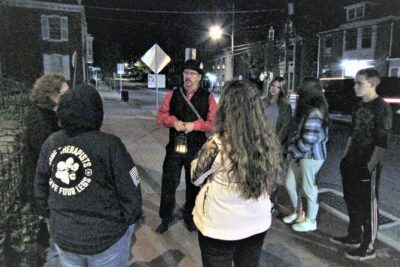
A few practical habits help. Arrive early enough to find the meeting point, remain near the guide, and ask questions when the group pauses. If you cannot hear clearly, say so. One guide received criticism for speaking too softly, and that problem is harder to fix once the group has spread out.
Is $32 a Fair Price?
At $32 per person, this is a reasonable price for a one-hour guided walk in a major historic destination. You are paying for the guide’s preparation, live narration, researched Civil War accounts, and the convenience of reaching several sites in a single route.
The value is strongest if you are new to Gettysburg or want a compact evening activity. The tour can serve as a useful first look before a longer battlefield visit, museum admission, or daytime house tour. One person enjoyed it enough to extend a Gettysburg stay, which says something about its ability to spark further interest.
The value is weaker if you expect building admission. Dinner, transportation, and tips are not included, and the route views the properties from outside. If indoor access is your priority, compare this walk with a house museum tour or another program that clearly includes entry.
Free cancellation is available when you cancel at least 24 hours before the start time. Cancellations within 24 hours are not refunded, and last-minute changes are not accepted.
Who Should Book This Gettysburg Walk
I would recommend it to you if you enjoy history with a spooky edge, want a short activity in town, or prefer stories tied to real places. Families with older children can use it as an accessible introduction to the battle’s civilian impact, though some subjects are grim.
It also suits solo visitors and couples who want a guided walk without committing to a full day. The English narration and mobile ticket keep the setup simple, while the central meeting point makes it easy to fit into a larger Gettysburg itinerary.
I would hesitate if you need a fully accessible seated tour, since the activity involves walking and standing. Service animals are allowed, and the route is near public transportation, but the information does not promise step-free access at every location.
Should You Book Civil War Ghosts?
Book this tour if you want solid Gettysburg context with paranormal stories and you are comfortable viewing historic buildings from the sidewalk. The best guides make the town feel immediate, using the sites to explain how soldiers and civilians lived through the battle and its aftermath.
Skip it if you want to enter haunted homes, conduct a ghost hunt, or guarantee a supernatural encounter. At $32, it is a fair and useful walking introduction, especially early in your visit. Just wear comfortable shoes, protect your ears from group noise, and leave room in your schedule in case the walk runs longer than the advertised hour.
FAQ
Where does the tour begin?
The tour begins at 452 Baltimore Street, Gettysburg, Pennsylvania 17325.
Where does the tour end?
The activity ends back at the meeting point.
How long does the tour last?
The advertised duration is approximately one hour. Some departures have lasted about an hour and a half or included additional stops.
How much does the tour cost?
The listed price is $32 per person.
Is transportation included?
No. The tour is a walking activity, and motorized transportation is not included.
Does the tour enter the historic buildings?
No. The route focuses on exterior locations and storytelling from outside the buildings.
What language is the tour offered in?
The tour is offered in English.
How many people can join the tour?
The maximum group size is 35 people.
Is parking available at the Brickhouse Inn?
You should not park in the Brickhouse Inn parking lot because it is reserved for overnight guests and vehicles may be towed. Street parking and spaces on nearby side streets are available.
What happens if I cancel?
You receive a full refund when you cancel at least 24 hours before the start time. Cancellations or changes made within 24 hours are not accepted, and the amount paid is not refunded.
Newly listed in the USA
- The Maui Butterfly Farm Tour★ 5.0 · 446 reviews
- NON BUS 4 Winery Traverse City Wine Tour on Old Mission Peninsula★ 5.0 · 445 reviews
- New England Aquarium Admission Ticket in Boston★ 4.0 · 446 reviews
- New Orleans City Tour and Steamboat Natchez Harbor Jazz Cruise★ 4.0 · 446 reviews
- Alpaca and Llama Farm Tour★ 5.0 · 446 reviews
- Small-Group Laura and Whitney Plantation Tour from New Orleans★ 4.5 · 446 reviews
- Dreaded Dead Descent of the District: DC Ghost Tour★ 4.0 · 446 reviews
- Cañon City: Royal Gorge Bridge & Park Entry Ticket & Gondola★ 4.5 · 448 reviews
Gettysburg Tours, compared.
2-Hour Gettysburg Battlefield Guided History Bus Tour with a National Park Guide
Read our review →
Gettysburg: Horse-Drawn Carriage Battlefield Tour
Read our review →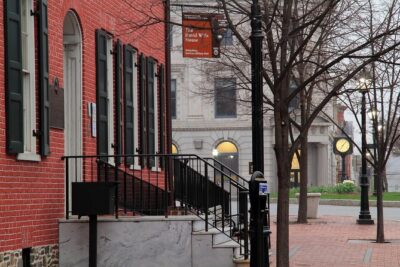
Gettysburg: Ghost Hunt Tour with Ghost Hunting Equipment
Read our review →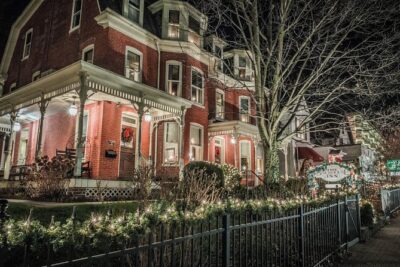
Civil War Ghosts: Echoes of the Fallen Gettysburg Ghost Tour
Read our review →Browse the lists this tour appears in