
Reviewed · GETTYSBURG TOURS
2-Hour Gettysburg Battlefield Guided History Bus Tour with a National Park Guide
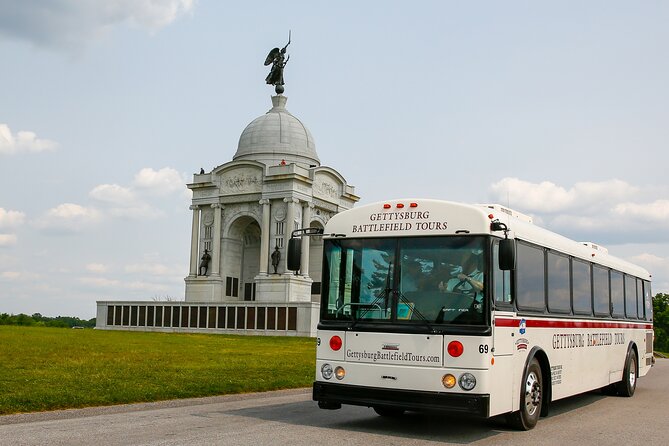
Gettysburg makes far more sense when you can see the hills, roads, and open fields where the battle unfolded. This two-hour bus tour takes you from the Gettysburg Tour Center to major sites such as Devil’s Den, Little Round Top, and the ground connected with Pickett’s Charge, while a licensed guide explains how the three-day fight developed.
I like the comfortable air-conditioned coach, especially in winter or wet weather, and I like the chronological storytelling. Guides such as John, Christine, Christina, and Paul have been praised for making troop movements and battle decisions easier to follow. The main drawback is that two hours can feel packed, and one guide has been criticized for giving too many facts and using a microphone that was too loud.
Key things to know before you book
- A clear battlefield overview: You see several of Gettysburg’s most important locations without walking the entire park.
- A chronological explanation: The strongest guides connect the three days in order, helping you understand cause and effect.
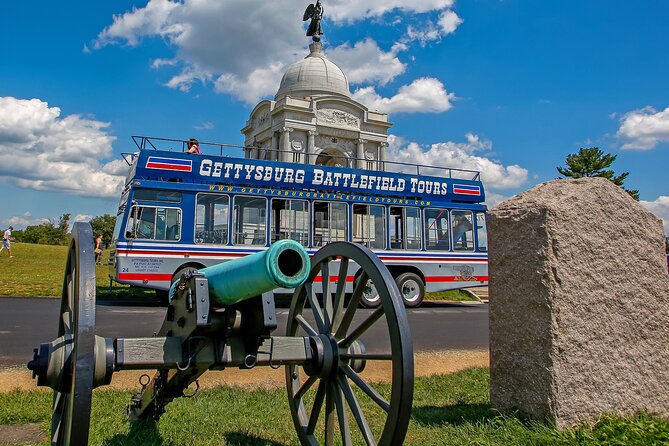
- Comfortable transport: The air-conditioned coach has large windows and returns to the Gettysburg Tour Center.
- Some time outside the bus: Stops may let you step onto the fields and view monuments, though this is not a long walking tour.
- A good first activity in Gettysburg: The tour gives you enough context to make later visits to the museum, cemetery, or individual monuments more meaningful.
- A $43 history lesson: The price is reasonable if you want an efficient introduction, but a serious Civil War student may want more time at each site.
Why a bus tour helps at Gettysburg
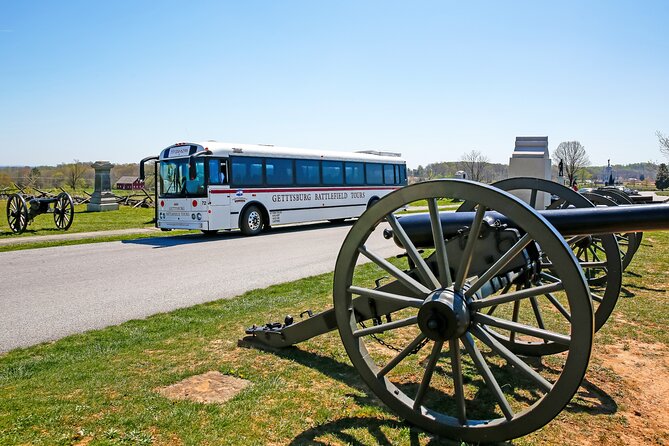
Gettysburg National Military Park is large, and the important places are spread across roads, ridges, fields, and rocky ground. You can drive it yourself, but the map does not explain why one hill mattered more than another or how a line of soldiers moved across an apparently simple field.
This is where the bus format earns its keep. You can watch the countryside through broad windows while the guide points out positions and explains the phases of the battle. You are not spending your energy navigating, checking road names, or deciding which monument to find next.
The coach also makes the tour practical in poor weather. The activity operates in all weather conditions, so you should dress properly for the season, but the heated or cooled bus gives you a sheltered base between stops. In December and January, the quiet setting and warm bus can be especially appealing. In warmer months, air conditioning is more than a minor comfort.
The tradeoff is pace. Gettysburg rewards slow looking, and two hours gives you a broad introduction rather than a close study of every regiment, monument, and skirmish. Think of this as an efficient orientation, not a complete visit to the park.
More national park trips around the USA:
- Miami: Everglades National Park Airboat Tour & Wildlife Show
★ 4.5 · 7,296 reviews - Discover Rocky Mountain National Park
★ 5.0 · 3,419 reviews - Mt. Rainier National Park Highlights Tour
★ 5.0 · 3,156 reviews
Starting at 778 Baltimore Street
The tour begins at the Gettysburg Tour Center, 778 Baltimore Street, Gettysburg, Pennsylvania. You meet the guide and group there, then return to the same spot at the end.
That central meeting point is useful if you are already spending time in town. There is no hotel pickup or drop-off, so plan to reach the Baltimore Street address on your own. The activity uses a mobile ticket, which keeps the arrival process simple, but you still need to allow time to find the tour center and be ready before departure.
The group can include up to 40 people. That is large enough to create a proper coach-tour feel, but not so large that the experience becomes an arena presentation. Your experience will depend partly on where you sit and how clearly the guide’s microphone carries.
The driver and guide roles may be handled by different people. Names that have received particular praise include John, Paul, Christine, Christina, Cheryl, and Stacey, but the specific staff member is not guaranteed. The best guides do more than recite dates. They explain why commanders chose certain ground and how the terrain affected the fighting.
The three-day battle in plain view
The Battle of Gettysburg was the Union victory that stopped Robert E. Lee’s second major invasion of the North. It became a turning point in the Civil War and is often called the High Water Mark of the Rebellion.
You do not need to arrive as a Civil War expert. The guide’s job is to establish the setting, explain the opening movements, and show how the battle shifted over three days. The useful part is seeing the relationship between the places rather than treating them as isolated stops.
From the bus, you can begin to grasp the scale of the field. A ridge may look modest from the road, yet its height and position could control movement across the open ground below. A stone wall, rocky outcrop, or road junction could become a defensive anchor. The guide uses these visible features to turn a list of names into a sequence of decisions.
The battle also has a larger national meaning. Its enormous loss of life affected families, soldiers, and the town itself for years. Gettysburg later gave Abraham Lincoln the setting for the Gettysburg Address, which added another layer to the site’s place in American memory.
A good guide keeps this context connected to the ground beneath you. That is why the tour can be worthwhile even if you have studied the battle before. Seeing the distances and slopes often corrects assumptions formed from books or classroom diagrams.
Devil’s Den and the rocky ground

Devil’s Den is a striking rock formation below Little Round Top. It is one of the places where the physical setting helps explain why the battle was so difficult and dangerous.
The rocks can be explored by the whole family, although the bus tour itself is not presented as a long hike. If your group is able to get off at this location, you may have a chance to stand among the formations and look across the ground that soldiers had to cross or defend.
This stop gives the tour a change of texture. Much of Gettysburg is open field and broad views. Devil’s Den is more enclosed and irregular, with rocks that break up movement and sightlines. You can better understand how soldiers used natural features for cover and why fighting here was not simply a matter of marching in a straight line.
The practical point is to wear sensible clothing and shoes. The activity runs in all weather, and outdoor stops remain outdoor stops. Do not expect a lengthy personal exploration during the two-hour route, but even a brief step off the coach can help fix the location in your mind.
More to weigh up across the USA
- NYC: Circle Line 2h Harbor Lights Cruise Skip-The-Box-Office
★ 4.6 · 8,222 reviews - 2-Hour Exotic Car Driving Experience in Las Vegas
★ 5.0 · 2,870 reviews - Rock Springs 2-Hour Glass Bottom Guided Kayak Eco Tour
★ 5.0 · 2,459 reviews - 2-hour Outer Banks Wild Horse Tour by 4WD Truck
★ 5.0 · 2,449 reviews
Little Round Top and the view from above
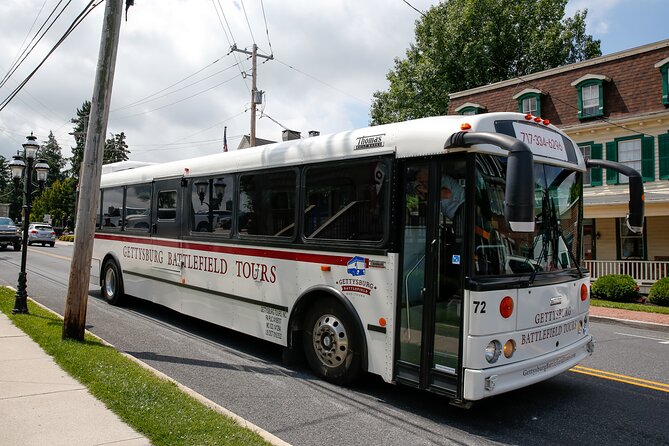
Little Round Top provides a high view over the battlefield. From the top, you can look down across the open ground and see why elevated positions mattered so much.
The tour may stop at a scenic location such as this, where you can see a monument at the top of the hill and the field below. The exact amount of time outside the bus is important to keep in mind. Some participants have enjoyed getting off several times, while the route description makes clear that stops can vary.
This is one of the places where the guide’s explanations matter most. A hill is easy to admire without understanding its military value. Pointing out the ground below, the guide can help you picture the distance between the armies and the problems faced by commanders trying to hold or take high ground.
Views also make Gettysburg easier to remember. Dates and names fade quickly, but a ridge overlooking a broad field gives you a mental picture to carry through the rest of your visit. If you later explore the park independently, you will have a better sense of how the pieces relate.
Pickett’s Charge and the open field
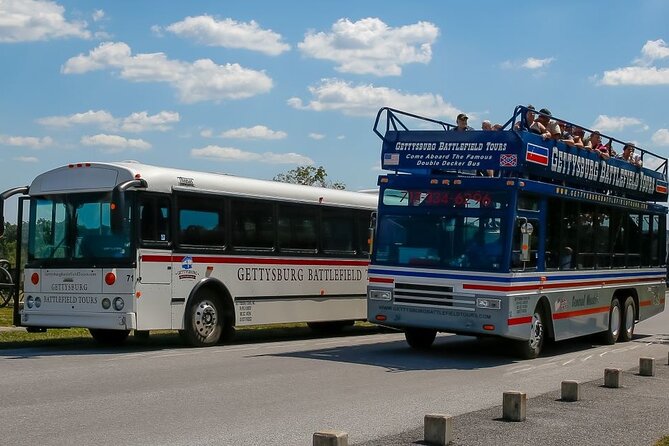
The ground linked with Pickett’s Charge is among the most sobering parts of the tour. Standing at the edge of a large open space, you can look across the distance between the two armies and consider what an advance across that ground required.
The guide explains the action as part of the battle’s wider sequence rather than presenting it as a separate spectacle. That matters because Pickett’s Charge was not the whole Battle of Gettysburg. It was one dramatic phase in a three-day fight, and it makes the most sense after you understand what had already happened.
The openness of the field is the point. There are few places to hide, and the distance is much easier to judge in person than on a printed map. The tour can connect the view with the battle’s outcome and with Gettysburg’s reputation as the High Water Mark of the Rebellion.
This stop may also change the tone of the visit. The tour is educational, but it is not only about tactics. Tens of thousands of people were killed, wounded, or affected by the battle. A guide who handles that human cost well gives you room to reflect instead of rushing from one military fact to the next.
What the guide adds to the experience
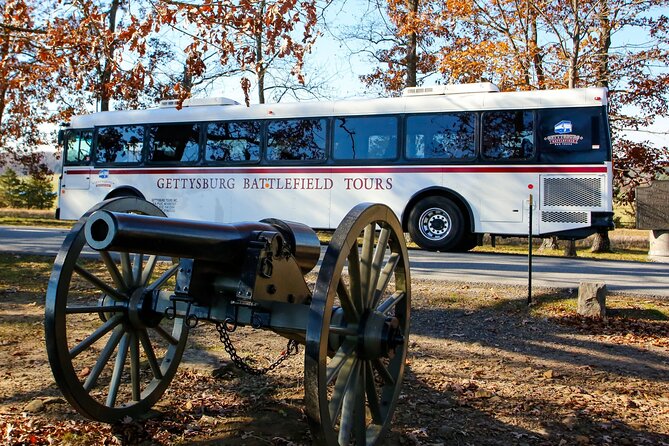
The quality of the narration is the main factor in this tour. A clean bus and a good route help, but your guide determines whether the battle feels understandable or becomes a pile of names.
Several guides have been singled out for clear, engaging delivery. John has been praised for his command of the battlefield and for answering questions. Paul has been especially effective when telling the story in chronological order. Christine and Christina have been noted for lively explanations, while guides and drivers such as Cheryl and Stacey have been credited with making the ride smooth and pleasant.
I would listen for three things as the tour begins. First, does the guide establish the overall timeline? Second, does the narration connect the terrain to military choices? Third, does the guide explain the human cost without turning the subject into entertainment?
The best approach is to ask a question if the pace allows. The tour is in English, and the group may be as large as 40 people, so there may not be time for a personal conversation at every stop. Still, questions can help you make sense of a family regiment, a monument, or a specific location that matters to you.
There is one real caution. One participant found the presentation overloaded with facts and said the microphone was painfully loud. This will not be every departure, but it is a fair reminder that a two-hour tour can become tiring if the guide speaks too quickly or tries to cover too much. If the sound is uncomfortable, say so promptly to the staff.
Comfort, timing, and what to bring
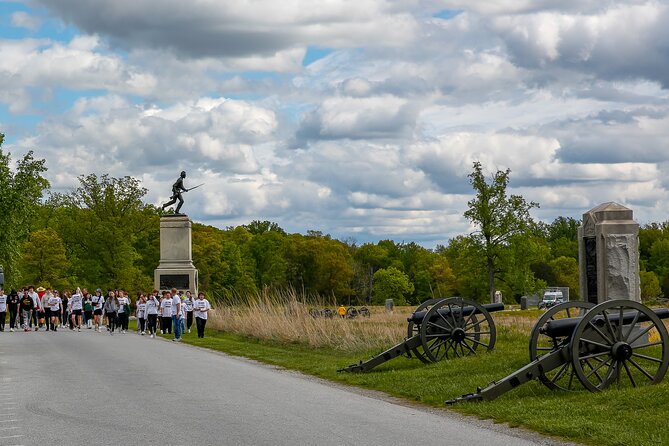
The tour lasts about two hours. That is long enough to cover the main story without requiring an entire day, and short enough to fit before or after other Gettysburg activities.
The bus is air-conditioned, clean, and described as comfortable. Large windows help with views of monuments and fields. Bring a bottle of water and a small snack, as some participants have done, especially if you are scheduling the tour between meals.
You should dress for changing conditions because the activity runs in all weather. The coach protects you from much of the cold, heat, or rain, but scenic stops may expose you to the elements. Comfortable shoes are sensible if you expect to walk around Devil’s Den or other outdoor locations.
The activity allows service animals, and most people can participate. It is still worth remembering that this is a coach tour with outdoor stops, not a fully indoor attraction. The amount of walking and the exact stops can vary.
Is $43 a fair price?
At $43 per person, the tour offers a practical way to get an organized introduction to a very large historic site. The price includes the driver or guide, the guided battlefield tour, and transportation by air-conditioned coach.
I see the value in three areas. You save the time and effort of planning a route through the park. You get an explanation of the battle while looking at the actual ground. You also get a useful first framework for deciding which parts of Gettysburg deserve a longer visit later.
The price is less compelling if you already know the battlefield well and prefer to set your own pace. A private guide or a self-guided route could offer more time at a particular regiment’s monument or family connection. The group size, maximum 40, also means this is not a personal tour.
For a first visit, however, $43 is a sensible purchase. It is especially useful for families, couples, and people with limited time who want more than a quick drive past monuments. I would treat it as the first layer of a Gettysburg visit, not the last word.
Who should take this Gettysburg tour?
I recommend this bus tour most strongly for first-time visitors, families, older adults who prefer limited walking, and anyone who wants the broad story before exploring alone. It also suits people who enjoy history but do not want to spend hours reading every roadside marker.
It is a good choice if weather is uncertain. The coach gives you a comfortable way to cover the park even when conditions are not ideal, though you still need outdoor clothing.
Civil War enthusiasts may enjoy it as a refresher, particularly if the guide explains the terrain well. If you have a narrow research goal, such as locating a particular ancestor or colonel’s monument, take notes during the route and use the tour to find the area. One participant used the information from the bus tour to return later and locate a family member’s monument.
You may want something else if you prefer long walks, quiet study, or a highly customized route. Two hours moves at a steady pace, and the narration may contain more facts than you can absorb in one sitting.
Booking, cancellation, and planning advice
This experience is often reserved about 20 days ahead, so booking early is sensible during busy periods. Confirmation is normally issued at booking. If you reserve within two days of the departure, confirmation can take up to 48 hours and depends on availability.
You can cancel for a full refund up to 24 hours before the start time. Changes or cancellations made inside that 24-hour window are not accepted for a refund. If poor weather forces the operator to cancel, you will be offered another date or a full refund.
I would schedule the bus tour early in your Gettysburg visit. It gives you a map in your head and helps later stops feel connected. If you have a full day, pair it with other historical sites in town or return to a battlefield location that deserves more time.
The final call: book it or skip it?
Book this tour if you want a comfortable, affordable introduction to Gettysburg with a guide who can explain the battle in order and relate the action to the hills and fields around you. The strongest departures bring the past into focus without requiring you to arrive with a military background.
Skip it if you already know the battlefield in detail or want to spend your entire visit walking and studying individual monuments. For most first-time visitors, though, the combination of a $43 price, a two-hour schedule, air-conditioned transport, and access to key sites makes this a smart first step.
FAQ
Where does the Gettysburg Battlefield bus tour start?
The tour starts at the Gettysburg Tour Center, 778 Baltimore Street, Gettysburg, Pennsylvania 17325.
Where does the tour end?
The activity ends back at the Gettysburg Tour Center, the same location where it begins.
How long does the tour last?
The tour lasts approximately two hours.
What is included in the $43 price?
The price includes the driver or guide, the guided Gettysburg Battlefield history tour, and transportation by air-conditioned coach bus.
Is hotel pickup included?
No. Hotel pickup and drop-off are not included. You must reach the Gettysburg Tour Center on your own.
Which Gettysburg sites can I see?
The route includes significant battlefield areas and may include Devil’s Den, Little Round Top, the location connected with Pickett’s Charge, and other scenic sites or monuments.
Does the bus stop so I can get off?
The guide may stop at scenic locations, and the tour can include opportunities to get off the bus. The exact stops may vary.
Can I cancel for a refund?
Yes. You can cancel at least 24 hours before the start time for a full refund. Cancellations or changes made less than 24 hours before the start time are not refunded.
More Historic Sites in the USA
- New York City: American Museum of Natural History Ticket
★ 4.5 · 15,447 reviews - History and Hauntings of Salem Guided Walking Tour
★ 5.0 · 14,564 reviews - Charleston’s Old South Carriage Historic Horse & Carriage Tour
★ 5.0 · 10,023 reviews - Beneath The Streets Underground History Tour
★ 4.5 · 8,006 reviews
Newly listed in the USA
- The Maui Butterfly Farm Tour★ 5.0 · 446 reviews
- NON BUS 4 Winery Traverse City Wine Tour on Old Mission Peninsula★ 5.0 · 445 reviews
- New England Aquarium Admission Ticket in Boston★ 4.0 · 446 reviews
- New Orleans City Tour and Steamboat Natchez Harbor Jazz Cruise★ 4.0 · 446 reviews
- Alpaca and Llama Farm Tour★ 5.0 · 446 reviews
- Small-Group Laura and Whitney Plantation Tour from New Orleans★ 4.5 · 446 reviews
- Dreaded Dead Descent of the District: DC Ghost Tour★ 4.0 · 446 reviews
- Cañon City: Royal Gorge Bridge & Park Entry Ticket & Gondola★ 4.5 · 448 reviews
Gettysburg Tours, compared.

Civil War Ghosts: Echoes of the Fallen Gettysburg Ghost Tour
Read our review →
Gettysburg: Horse-Drawn Carriage Battlefield Tour
Read our review →
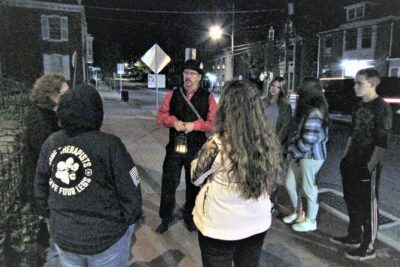
Gettysburg: Ghost Hunt Tour with Ghost Hunting Equipment
Read our review →Civil War Ghosts: Echoes of the Fallen Gettysburg Ghost Tour
Read our review →Browse the lists this tour appears in