
Reviewed · SEATTLE TOURS
The Museum of Flight Entrance Ticket
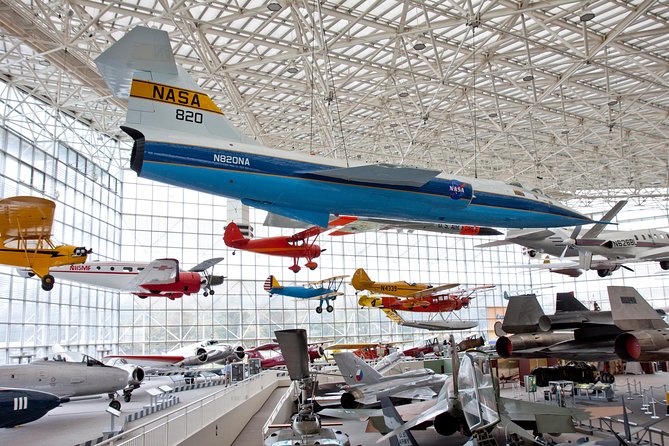
The most striking part of Seattle’s Museum of Flight is its scale. This is not a small room of aircraft behind ropes. It spreads across a 23-acre campus at Seattle’s oldest airport, with six buildings and more than 160 airplanes and spacecraft. You can walk through historic aircraft, stand beneath a B-52, peer into a Boeing 747 cockpit, and trace the story from early flight to space travel. I especially like the Great Gallery, where a six-story glass building places dozens of aircraft overhead, and the chance to board famous machines such as Concorde and Air Force One. My main caution is simple: the advertised shuttle trainer may not be open, so confirm its current status before booking if that is your main reason for going.
I also like how well this works for mixed groups. Children get hands-on displays and flight simulators, while adults can spend hours reading about Boeing, wartime aviation, presidential aircraft, and the space program. The $29 admission is a sound deal if you give the museum three or more hours, but it is less attractive if you only have time for a quick visit because the campus is spread out and the extra-cost activities are not included.
Key points to know before you go
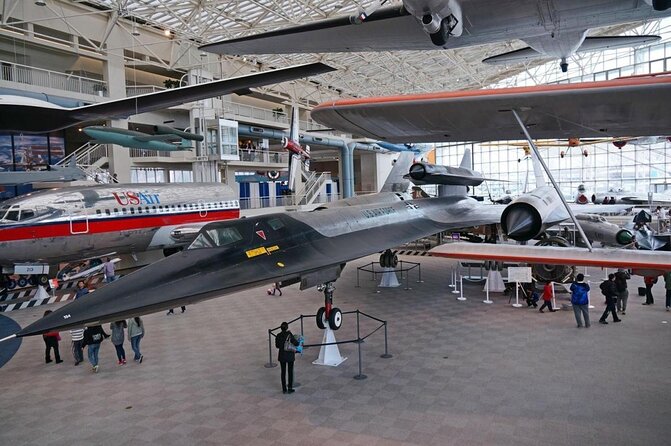
- More than 160 aircraft and spacecraft fill six buildings on a 23-acre campus at Seattle’s oldest airport.
- The Great Gallery rises six stories and displays 43 aircraft, including a rare M-21 Blackbird and Cold War-era fighters.
- Board historic aircraft such as Concorde, former Air Force One planes, the Boeing 747 development aircraft, and a Boeing 787 cockpit.
- Plan for at least three hours, though aviation fans can easily spend most of a day here.
- Simulators and the 3D movie cost extra, so bring room in your budget if you want more than the standard admission.
- The shuttle trainer’s availability can change, and it has reportedly been closed for an extended period.
Why this Seattle museum deserves half a day
Seattle is closely tied to Boeing, so the Museum of Flight gives you more than a general collection of old airplanes. It places the city’s industrial story beside the broader story of flight. You see how aircraft design changed, how military needs shaped technology, and how the dream of flight moved from fragile early machines to spacecraft.
The museum is also unusually easy to enjoy without being an aviation expert. You can simply admire the size and shape of the aircraft, or stop to read the technical and historical material. I would give yourself two hours only if your schedule is tight. Three hours is a better minimum, and four to five hours makes sense if you want to read carefully, use interactive stations, or add a simulator.
The admission price is $29 per person. That works well for a major museum with this many aircraft and buildings, particularly if you treat it as a half-day outing. The value improves if you are interested in Boeing, military history, space exploration, or hands-on family activities. It is not an all-inclusive ticket, though. Simulators and the flight-themed 3D movie require separate payment.
More museums around Seattle:
- NYC: 9/11 Memorial & Museum Timed-Entry Ticket
★ 4.8 · 31,428 reviews - NYC: Empire State Building Tickets – Observatory & Museum
★ 4.7 · 25,757 reviews - New York City: American Museum of Natural History Ticket
★ 4.5 · 15,447 reviews
Starting in the Great Gallery
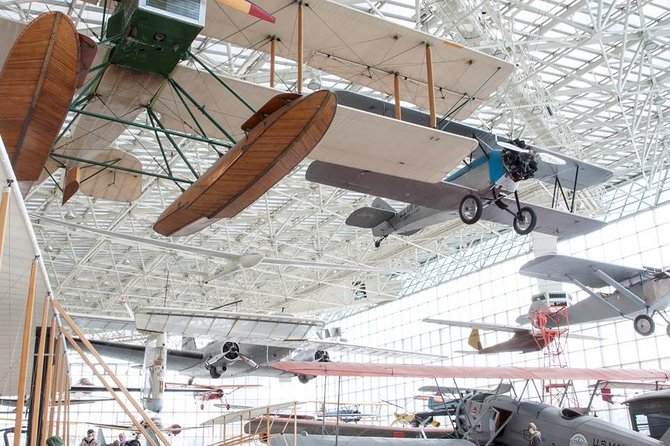
The Great Gallery is a natural place to get your bearings. Its six-story glass structure gives the museum an airy, dramatic setting, with 43 aircraft suspended or displayed across the space. Instead of seeing airplanes one at a time in cramped rooms, you get a sense of their size, engineering, and changing design.
Look for the rare M-21 Blackbird spy plane and the jet fighters associated with the Korean and Vietnam wars. These displays are especially useful if you want to understand the jump from propeller aircraft to high-speed military jets. The gallery also helps younger visitors, since the aircraft are visually impressive even before they start reading the signs.
The building includes interactive elements and flight simulators. These can turn a quiet museum visit into a more active outing, but they are not part of the $29 admission. If you are visiting with children, decide early whether the simulators matter to your group so you can plan the extra cost and time.
The original Boeing factory and Seattle’s aircraft story
One of the museum’s six buildings is the original Boeing Aircraft factory, often called the Red Barn. This is one of the most meaningful parts of the visit because it connects the museum to Seattle’s aviation identity. The story here is not only about machines. It is about the early development of a company that would help define the region.
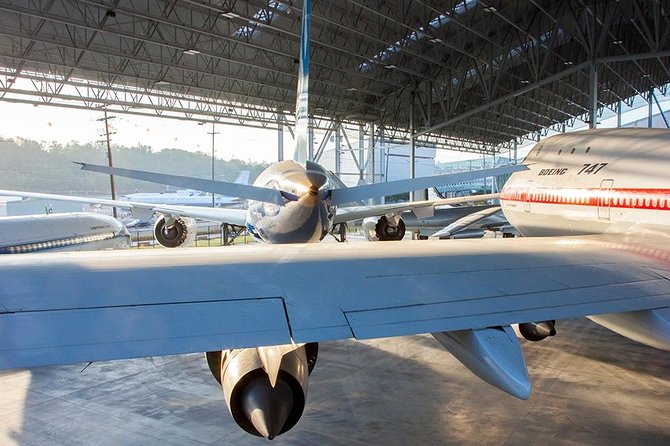
The Red Barn is particularly worthwhile if you enjoy seeing how an aircraft business began. The museum’s Boeing displays continue that story with major development aircraft, including the first flight-worthy Boeing 747, the 747 development aircraft, and the 787 Dreamliner. You can compare the shape, cockpit design, and passenger-era technology across several generations.
The chance to enter aircraft makes the collection feel less distant. A cockpit is easier to understand when you can look at the controls from inside rather than viewing them through glass. The Boeing 747 cockpit and 787 cockpit are good examples of how quickly aviation changed from mechanical-looking panels to modern flight systems.
Walking through Concorde, Air Force One, and other aircraft
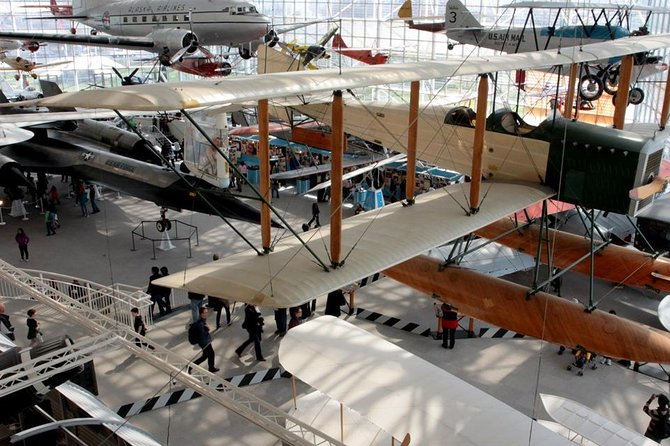
The museum’s aircraft you can enter are among its strongest features. Concorde gives you a close look at supersonic passenger travel, while former Air Force One aircraft show how presidential travel once worked. These are not just photo stops. They help you think about the practical side of aviation: cramped working spaces, limited room, and the equipment required to keep people flying safely.
You can also see the Boeing 747 development aircraft, a sailplane, an Aerocar, and the human-powered MacCready Gossamer Albatross II. The collection moves between very different approaches to flight. One aircraft represents the power and reach of the jet age, while another depends on delicate design and human energy.
Amelia Earhart’s aircraft is represented by a faithful replica of the plane associated with her disappearance. That display adds a human element to the museum. It is about risk, exploration, and the limits of what pilots and aircraft could do at the time.
The aircraft spread means you will walk quite a bit. One section requires crossing the T. Evans Wyckoff Memorial Bridge to reach additional displays, including World War I and World War II aircraft. That walk is part of the experience, but it can make a quick two-hour visit feel rushed.
More to weigh up across Seattle
- Seattle: Space Needle & Chihuly Garden and Glass Ticket
★ 4.7 · 1,890 reviews - Space Needle and Chihuly Garden and Glass Combination Ticket
★ 4.5 · 1,551 reviews - NYC: SUMMIT One Vanderbilt Tickets
★ 4.7 · 51,195 reviews - NYC: Empire State Building Observation Deck Tickets
★ 4.7 · 22,072 reviews
Warplanes, presidential aircraft, and the weight of history
The military displays cover more than aircraft design. They also show the human cost of conflict. A B-52 bomber associated with the Vietnam War is displayed with the names of those who died, giving the aircraft a solemn context that a simple technical label would not provide.
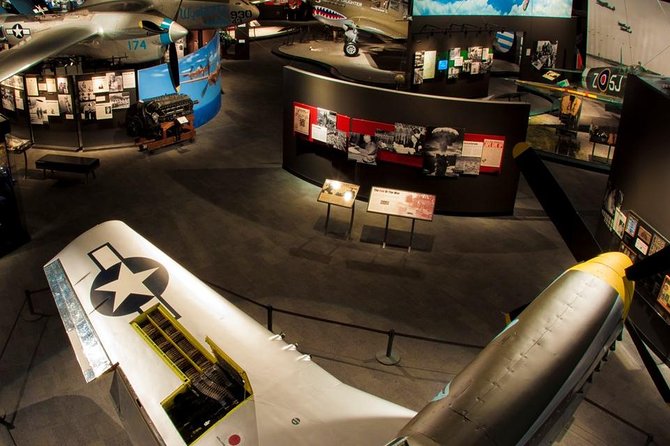
The World War I and World War II aircraft are especially useful for families and students. You can see how quickly aircraft changed between the early decades of powered flight and the jet age. The museum presents these machines from both American and opposing perspectives, which gives aviation enthusiasts a broader way to study the technology and its use.
The presidential aircraft provide another angle. Earlier Air Force One planes can look surprisingly basic by modern standards. That contrast helps you see how much aircraft interiors, communications, and onboard systems have changed.
I would not rush through this section. It is easy to focus only on the famous names, but the smaller displays often explain why a particular aircraft mattered. If you have an interest in twentieth-century history, this area alone can add an hour to your visit.
Space exploration and the shuttle trainer question
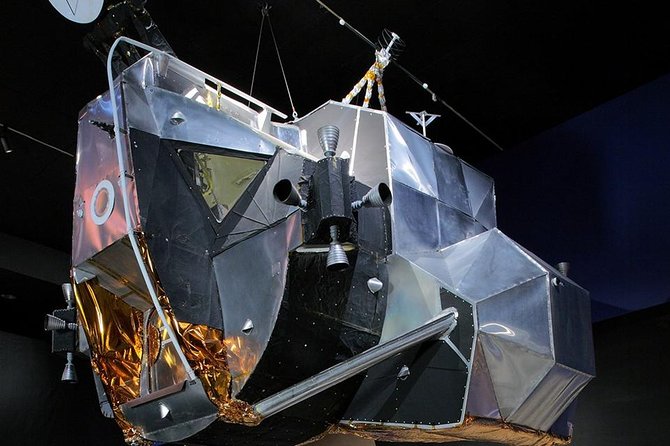
The museum also reaches beyond Earth. Its space displays cover spaceflight technology, mission artifacts, and the challenges of human exploration. A free tour of the Moon landing may be available, and a flight-themed 3D movie is offered in the museum’s theater for an added charge.
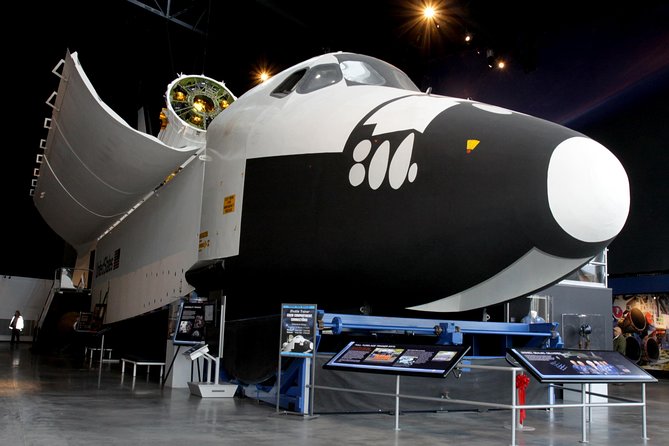
The full-size Space Shuttle Orbiter trainer is promoted as a major attraction. It is the type of mockup used to train astronauts before missions, and seeing a full-scale training vehicle up close can be valuable because it shows the shuttle as a working environment rather than an abstract spacecraft.
However, availability is the key issue. The shuttle trainer deck has reportedly been closed since the pandemic and may not have reopened. The information for this admission still highlights it, so I would not book solely for access to the trainer. Ask about its current status when you arrive, or contact the museum before your visit if this is your top priority.
That uncertainty does not cancel the value of the space section. It simply means you should treat the trainer as a possible bonus rather than a guaranteed part of the ticket.
Hands-on exhibits for children and curious adults
The museum is a good choice when your group has different attention spans. Children can use interactive displays, try flight-related activities, and watch aircraft from close range. Adults can spend more time with the Boeing story, military collections, and space exhibits.
The hands-on approach matters because aircraft can otherwise be difficult for children to appreciate. A large plane behind a barrier may hold their attention for only a few minutes. A simulator or interactive exhibit gives them something to do and helps explain the forces and controls involved in flight.
The museum is also clean and has restrooms throughout the site, which is useful on a long family visit. If you are going with children, bring snacks and water. The campus is large, and walking between buildings can become tiring, especially on a warm day. A restaurant is available, and the gift center has a wide selection of items.
The museum works in rainy weather because much of the collection is indoors. Some outdoor areas and the bridge are more enjoyable when conditions are clear, but bad weather does not remove the main reason to visit.
The bridge view and the outdoor aircraft
Do not skip the T. Evans Wyckoff Memorial Bridge when the weather is clear. From here, you can look toward Seattle-Tacoma International Airport and Mount Rainier. The view connects the museum’s historic aircraft with the modern working world of commercial aviation.
You may also see aircraft outside the main galleries, including large machines that need more room than an indoor hall allows. The bridge crossing is practical as well as scenic because it leads to additional exhibits. Wear comfortable shoes and expect the visit to involve steady walking.
The views are not guaranteed. Clouds can hide Mount Rainier, and airport conditions change. Still, the bridge gives you a useful pause between exhibit areas and a chance to look at aircraft in motion rather than only on display.
How long should you spend at the Museum of Flight?
The advertised visit length is two to three hours, but I would treat that as a minimum for a focused visit rather than a complete tour. Two hours can work if you move briskly and choose the main halls. Three hours lets you see the major aircraft and read some of the displays.
Plan four to five hours if you want to:
- Explore all six buildings
- Read the Boeing and military displays
- Board several aircraft
- Spend time with the interactive exhibits
- Visit the outdoor sections and bridge
- Add a simulator or 3D movie
- Stop for food
Aviation enthusiasts could spend a full day here, and the scale may justify returning on a second visit. The museum is large enough that trying to see every label in one pass can become tiring. I suggest choosing a few priorities before you enter, then allowing time for unexpected finds.
Admission, timing, and practical planning
The museum is open daily from 10 a.m. to 5 p.m. The admission voucher is presented at the museum entrance, and confirmation is provided when you book. Tickets are commonly secured in advance, with bookings often made about 17 days before the visit, so advance purchase is sensible during a busy Seattle trip.
The museum is near public transportation, and service animals are allowed. Most people can take part, although the amount of walking and the distance between buildings are worth considering if anyone in your group tires easily.
Because the campus is broad, arriving earlier gives you more flexibility. A late arrival can still work, but you may find yourself hurrying through the last building before the 5 p.m. closing time. Give yourself extra time if you want the 3D movie or a simulator.
You can cancel for a full refund up to 24 hours before the experience start time. Changes or cancellations made within 24 hours are not accepted for a refund. If poor weather causes the experience to be canceled, you are offered another date or a full refund.
Who should book this admission?
I would book this for anyone with an interest in aviation, space, engineering, military history, or Boeing. It is also a strong family activity because the collection offers enough variety for children and adults. You do not need technical knowledge to enjoy the aircraft, but curious visitors will get more from the detailed displays.
The museum is less suitable if you have only a short gap between Seattle activities. Two hours will show you plenty, but the campus is too large to feel fully explored in a rushed visit. The separate charges for simulators and the 3D movie also mean the final cost may be higher than admission alone.
Should you book The Museum of Flight?
Yes, if you can spare at least three hours. The $29 ticket gives you access to an unusually large collection, and the chance to enter aircraft such as Concorde, Air Force One, and Boeing prototypes makes the visit more engaging than a standard display-only museum.
Book with realistic expectations about the shuttle trainer, since access may still be limited. Then focus on the Great Gallery, the Red Barn, the Boeing aircraft, the military halls, and the bridge view. Pack water, wear comfortable shoes, and consider adding a simulator only if your group wants an active flight experience.
For a Seattle itinerary, this is one of the better choices for a rainy afternoon or a serious half-day outing. Give it time, and the ticket is well spent.
FAQ
How much does admission to The Museum of Flight cost?
Admission costs $29 per person.
How long does a visit take?
The suggested visit lasts about two to three hours, but you should allow at least three hours for the main collection. Aviation enthusiasts may spend four to five hours or a full day.
What are the museum’s opening hours?
The museum is open Monday through Sunday from 10 a.m. to 5 p.m. during the stated 2026 operating period.
Are flight simulators included with admission?
No. Simulator tickets can be purchased at the museum after arrival.
Is the 3D movie included?
No. The flight-themed 3D movie has an additional cost.
Is the Space Shuttle trainer open?
Its availability can change. The shuttle trainer deck has reportedly been closed for an extended period, so check its current status before your visit if it is a priority.
Can I cancel the ticket for a refund?
Yes. You can cancel at least 24 hours before the experience start time for a full refund. Cancellations or changes made less than 24 hours before the start time are not refunded.
Newly listed in Seattle
- Seattle Sailing Harbor Tour★ 4.5 · 473 reviews
- From Seattle: Round Trip by High Speed Ferry to Victoria, BC★ 4.0 · 479 reviews
- Seattle Coffee Tour: Capitol Hill Cafes, Tastings & Local Stories★ 5.0 · 489 reviews
- Sinister Sins, Scandal, and Shadows: Seattle Ghost Tour★ 4.5 · 490 reviews
- Leavenworth Exclusive Tour from Seattle★ 4.5 · 492 reviews
- One-Way Transfer: Pier 91 to Airport★ 4.5 · 522 reviews
- Mt. Rainier highlights – old forest, falls and glaciers★ 5.0 · 564 reviews
- Haunted Seattle Booze and Boos Ghost Walking Tour★ 5.0 · 572 reviews
Seattle Tours, compared.



Space Needle & Chihuly Garden and Glass Ticket
Read our review →
Browse the lists this tour appears in