
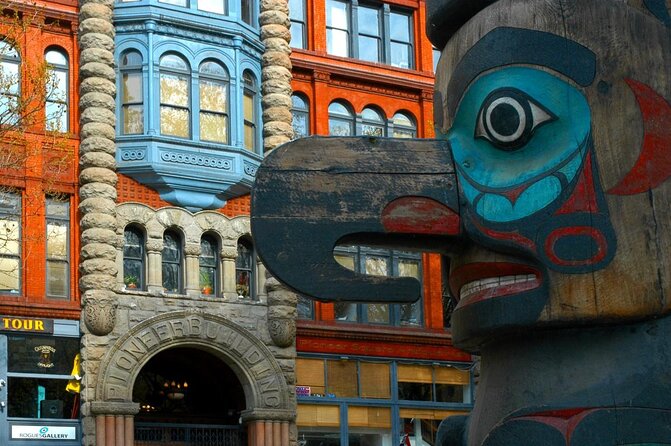
Reviewed · SEATTLE TOURS
Beneath The Streets Underground History Tour
Seattle’s first downtown is hiding under your feet. On the Beneath The Streets Underground History Tour, you walk through old passageways beneath Pioneer Square and see how Seattle’s original street level was buried after the city’s early rebuilding. The best part is the connection between the city above and the forgotten spaces below.
I like the mix of clear local history and lively storytelling, especially when guides such as David, Patti, Imogen, and Sarah add humor and personal detail. I also like the manageable one-hour length and the small-group limit of 20 people. The main catch is simple: this is not an hour spent entirely underground. You walk about four blocks, use three flights of stairs, and spend time above street level between the three underground areas.
Key points to know before you book
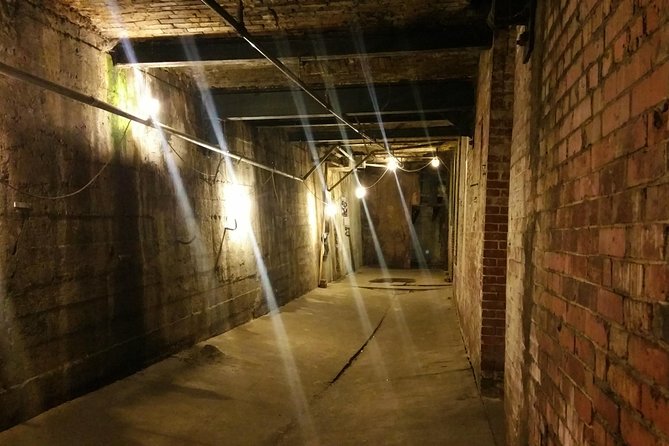
- Seattle’s old street level: See three underground passageways built in the 1890s beneath modern Pioneer Square.
- A guide-led history lesson: Expect stories about the Great Fire, Skid Row, the Klondike Gold Rush, and Coast Salish peoples.
- More above ground than expected: The underground spaces are separate, so the tour moves outdoors between them.
- One hour at a steady pace: You cover about half a mile, or 0.8 kilometers, with stairs and uneven surfaces.
- Strong value for history fans: At $29.03 per person, the tour offers a focused introduction to Seattle’s beginnings.
- Easy to fit into a day: Several departure times are offered, and the tour ends near Occidental Square.
Why Seattle built a city beneath itself
To understand the underground, you first need to picture early Seattle. The tour focuses on the city’s birth in the 1890s, when Pioneer Square was the southwest corner of the young settlement and the center of daily life.
Seattle’s early streets did not look or function like the streets you see today. After major changes to the city, sections of the original sidewalks and storefront fronts ended up below the modern street level. The result is a strange but useful history lesson: you can look at today’s Pioneer Square, then descend and see traces of the earlier city below it.
I find this approach more useful than treating the underground as a spooky attraction with a few old walls. The real story is about urban decisions, fires, street construction, business, migration, and the rapid growth of a port city. The underground spaces give you something to look at, but the guide’s explanation gives those spaces meaning.
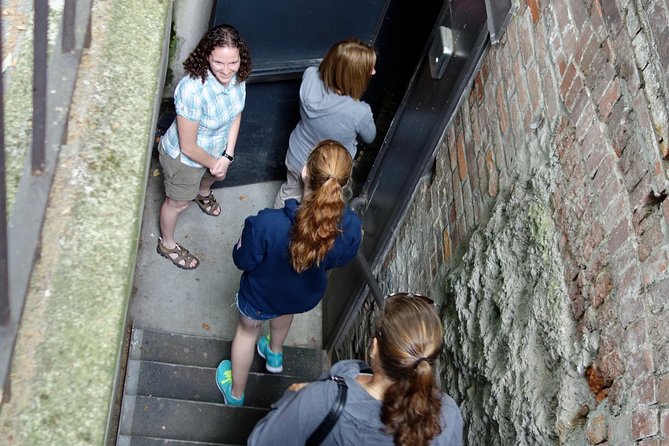
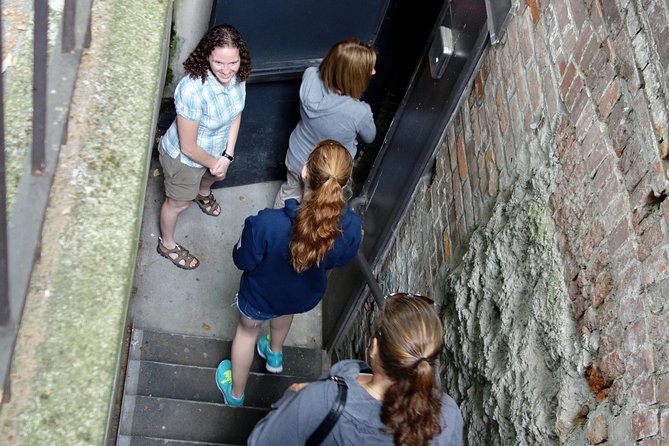
The route covers about four city blocks. You move at a leisurely pace, but the ground is not perfectly smooth, and there are three flights of stairs, going up and down each flight during the tour. Wear sturdy, comfortable shoes. In winter, bring a warm layer that covers you well, since the tour moves between enclosed underground areas and outdoor sidewalks.
More historic sites around Seattle:
- New York City: American Museum of Natural History Ticket
★ 4.5 · 15,447 reviews - History and Hauntings of Salem Guided Walking Tour
★ 5.0 · 14,564 reviews - Charleston’s Old South Carriage Historic Horse & Carriage Tour
★ 5.0 · 10,023 reviews
Starting at 102 Cherry Street
The tour begins at 102 Cherry Street, near Pioneer Street. This meeting point puts you right in the old Pioneer Square district, where the street grid and historic buildings help frame the story before you head below.
Your guide introduces the original neighborhood and the people who lived here before Seattle became a major American city. The Coast Salish peoples, a group of related Indigenous communities connected by language and culture, are part of the tour’s account of the area’s first inhabitants.
That inclusion matters. Seattle’s story did not begin with the arrival of settlers in the 1890s. A useful city tour should explain both the Indigenous presence that came before the modern city and the forces that reshaped the area afterward. The guides receive continuing instruction through workshops involving cultural traditions, history specialists, and Native Tribal members, which supports a more careful presentation of this subject.
The exact balance of topics can vary with the guide. That is part of the charm, but it also means the tour is not delivered as a tightly fixed script. David has been praised for linking what happened above the streets with what happened below them. Patti is known for bringing energy and humor to the underground story. Imogen’s theatrical style can make old scenes easier to picture. Sarah has been described as especially experienced with the tour’s subject.
You should not book expecting the same delivery each time. You should book expecting a guide who has room to explain, answer questions, and shape the hour around the group.
Three underground passageways in Pioneer Square
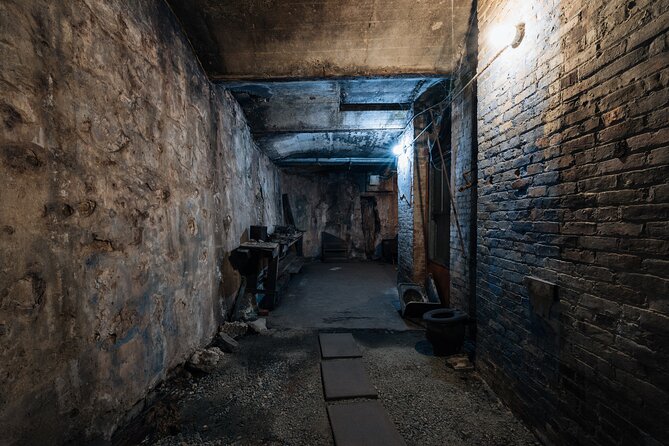
The central portion takes you through three underground passageways originally constructed in the 1890s. These spaces extend across roughly three blocks of historic Pioneer Square, though they are not one continuous underground city.
That point is important. Seattle’s underground areas are separate. You return to the surface to move between them, which explains why part of the tour takes place above ground. If you expect a nonstop subterranean walk, you may feel shortchanged. If you see the sidewalks as part of the story, the route makes more sense.
Below street level, you can compare the older city with the modern neighborhood above. The tour helps you imagine how storefronts, sidewalks, and street activity related to the original layout. It is less about entering a vast maze and more about seeing specific preserved sections that reveal how Seattle changed.
The underground spaces are not described as filthy or threatening. They are historic remnants, and the conditions can include uneven surfaces and stairs. One person with claustrophobia found the route comfortable, but you should still consider your own mobility and comfort with enclosed areas.
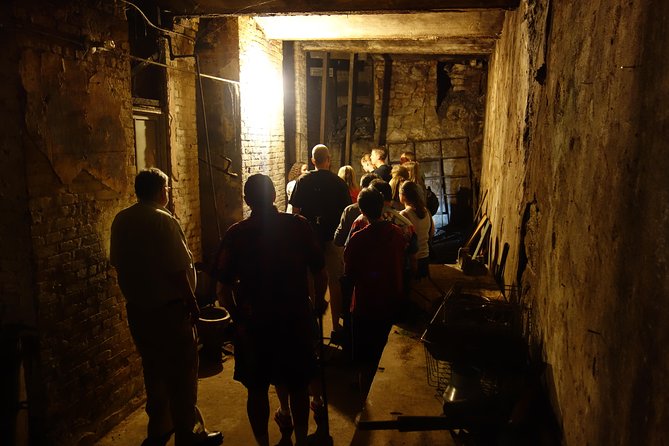
The small group size helps here. With no more than 20 people, it is easier to hear the guide and keep the group moving through narrow sections. This is also why I would choose a scheduled tour over trying to make sense of Pioneer Square alone. The old levels are not always obvious from the sidewalk.
From the Great Fire to a raised city
One of the main stories concerns the events that changed Seattle’s physical shape. The tour explains how the city moved from its early form to the streets and buildings you see today, including the role of rebuilding and altered street levels.
The Great Fire is part of that account. Rather than presenting the fire as an isolated disaster, the tour places it within Seattle’s wider growth. A city can rebuild in ways that solve immediate problems while creating new layers for future generations. In Pioneer Square, those layers became visible below the modern sidewalks.
This is where a good guide makes a real difference. Dry facts about construction are easy to forget. A guide who can describe the older street level, the rebuilding process, and the people using those streets turns the underground into a sequence of choices and consequences.
The tour also discusses 1890s architecture. Look up as well as down. Pioneer Square’s historic buildings and street layout are part of the evidence, not just scenery between underground stops. The above-ground portions help you understand how the neighborhood works as a real district today, rather than a sealed museum.
More to weigh up across Seattle
- Chef Guided Food Tour of Pike Place Market
★ 5.0 · 3,733 reviews - Mt. Rainier National Park Highlights Tour
★ 5.0 · 3,156 reviews - Seattle: Guided Underground Walking Tour
★ 4.6 · 2,144 reviews - Seattle’s Original Guided Harbor Cruise
★ 4.5 · 2,077 reviews
The Klondike Gold Rush and Seattle’s lucky break
Seattle played a crucial role in the rush to the Yukon gold fields. The tour explains how the stampede toward the Klondike affected the city and helped push it into a new period of growth.
This section is especially useful if you plan to visit the Klondike Gold Rush National Historical Park nearby. The tour can give you the street-level context first, and the free museum can then add exhibits and a theater presentation. I would pair the two if your schedule allows, since the museum was specifically recommended during the tour experience and adds another layer to the story.
The gold rush did not simply bring adventure seekers through Seattle. It also created demand for supplies, transportation, lodging, services, and publicity. The city benefited from its position and learned how to present itself as the natural gateway north.
That makes the topic broader than a tale about prospectors. You are learning how Seattle used a major regional event to build its reputation and economy. The underground spaces show an older city in transition, while the gold rush story explains why that transition accelerated.
Skid Row, working streets, and the less polished past
The tour covers Skid Row, described as a rough, deteriorated urban area that served as Pioneer Square’s main street. This is an important counterweight to the polished image of historic Seattle.
Old neighborhoods were working places, not just postcard views. They included lodging houses, businesses, poverty, vice, labor, and people passing through. The tour’s discussion of Skid Row helps you see Pioneer Square as a district shaped by ordinary pressures and hard living, not only by elegant architecture.
The guides use humor, but the humor is paired with factual detail. That balance is one reason this format works for families, couples, solo visitors, and even younger children. A seven-year-old was able to enjoy the tour, while history-focused adults can ask for more detail.
Still, the experience is better for someone who likes stories than for someone seeking a dramatic attraction. You will hear a lot of explanation while walking. The underground sections are visually interesting, but the tour’s value comes mainly from understanding how the neighborhood developed.
How the guides shape the experience
The strongest part of this tour is the human delivery. The guides are not locked into a word-for-word script, so the tone can vary. That gives the hour a natural feel, though it also means one departure may feel more animated than another.
David has been praised for humor and for explaining both the streets above and the spaces below. Patti brings enthusiasm and a strong sense of place. Imogen uses an actor’s instinct for creating pictures of the past. Sarah is an experienced guide who enjoys sharing the city’s story. Other guides may bring their own approach.
I like that the company invests in ongoing workshops about cultural traditions and local history. That suggests the subject is treated as more than a collection of entertaining anecdotes. You still should keep your expectations realistic: this is a short walking tour, not an academic seminar.
The best guides make the tour personal without losing the thread. They answer questions, add context, and use humor to keep the pace moving. Several tour experiences have been praised for feeling lively rather than mechanical. That matters in an enclosed setting where a long lecture could quickly become tiring.
Is $29.03 a fair price for one hour?
At $29.03 per person, the price is fair if you value a focused introduction to Seattle’s past and prefer a guide to explain what you are seeing. You are paying for access to three historic underground areas, a professional guide, and a structured walk through Pioneer Square.
The value is strongest for a first visit to Seattle, a family wanting an easy history activity, or a local who knows the modern district but has never explored its older levels. It is also a good way to start a day, since the tour lasts about an hour and ends at Occidental Square.
The value is weaker if your only goal is maximum time underground. One dissatisfied experience centered on the amount of above-ground walking and talking. That criticism is reasonable, and you should account for it before booking.
I would think of this as a Pioneer Square history walk with underground access, not as a full underground expedition. That wording better matches the actual experience and makes the price easier to judge.
Who should book this Pioneer Square walk?
I would recommend it to:
- You if you enjoy city history, architecture, and local stories.
- Families with older children who can manage stairs and uneven ground.
- First-time Seattle visitors who want context before exploring downtown alone.
- Locals who want a fresh look at Pioneer Square.
- Anyone interested in the Great Fire, the Klondike Gold Rush, or the city’s early development.
- People who enjoy guides with humor and room for questions.
I would hesitate if you have trouble with three flights of stairs or are expecting a fully underground route. The pace is leisurely, but the group covers about half a mile and moves between separate spaces.
The tour is offered in English, and a mobile ticket is provided. Service animals are allowed, public transportation is nearby, and most people can participate. It runs in rain or shine, so dress for Seattle’s weather. Poor weather can lead to cancellation, with a different date or full refund offered.
You need at least two people for the tour to operate. If only one person signs up, a full refund is provided. For your own cancellation, you can receive a full refund if you cancel at least 24 hours before the start time. Changes or cancellations inside that window are not accepted for a refund.
Should you book Beneath The Streets?
Book this tour if you want the story behind Seattle’s underground spaces, not just a quick look at old walls. The guides bring together the Coast Salish past, 1890s construction, the Great Fire, Skid Row, and the Klondike Gold Rush in a compact route through Pioneer Square.
I would book it early in a Seattle visit, then continue with the nearby Klondike museum and more time above ground in Pioneer Square. Choose comfortable shoes, plan for stairs, and expect outdoor walking between the underground sections.
Skip it if you want nearly the full hour below street level. For everyone else, the $29.03 fee buys a useful, entertaining introduction to the city beneath the city, with enough character to make the old streets easier to picture.
FAQ
Where does the Beneath The Streets tour begin?
The tour begins at 102 Cherry Street, Seattle, Washington 98104, near Pioneer Street.
Where does the tour end?
The tour ends at the Union Truast Building at 119 South Main Street, Seattle, Washington 98104, near Occidental Square.
How long does the tour last?
The tour lasts approximately one hour.
How much walking is involved?
You walk about four blocks, or roughly half a mile, at a leisurely pace during the hour.
Are there stairs on the tour?
Yes. The route includes three flights of stairs, with movement up and down each flight. Some surfaces are uneven.
Is the tour entirely underground?
No. The three underground areas are not connected, so you walk above ground between them. The tour covers both modern Pioneer Square and the older levels below it.
What happens if the tour is canceled because of poor weather?
You will be offered a different date or a full refund if the experience is canceled because of poor weather.
Newly listed in Seattle
- Seattle Sailing Harbor Tour★ 4.5 · 473 reviews
- The Museum of Flight Entrance Ticket★ 5.0 · 477 reviews
- From Seattle: Round Trip by High Speed Ferry to Victoria, BC★ 4.0 · 479 reviews
- Seattle Coffee Tour: Capitol Hill Cafes, Tastings & Local Stories★ 5.0 · 489 reviews
- Sinister Sins, Scandal, and Shadows: Seattle Ghost Tour★ 4.5 · 490 reviews
- Leavenworth Exclusive Tour from Seattle★ 4.5 · 492 reviews
- One-Way Transfer: Pier 91 to Airport★ 4.5 · 522 reviews
- Mt. Rainier highlights – old forest, falls and glaciers★ 5.0 · 564 reviews
Seattle Tours, compared.


Space Needle & Chihuly Garden and Glass Ticket
Read our review →

Browse the lists this tour appears in