
Reviewed · PHILADELPHIA TOURS
The Constitutional Walking Tour of Philadelphia
Philadelphia’s founding story comes alive on this brisk walk through Independence National Historical Park. In just 1.25 miles, you’ll see the places tied to the Declaration of Independence, the Constitution, the early presidency, Benjamin Franklin, and the birth of the United States.
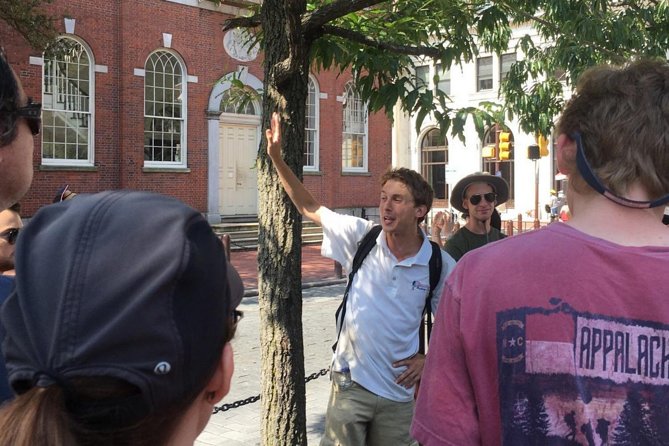
I like two things right away: the route packs more than 20 historic sights into 75 minutes, and the guides bring different strengths to the walk. PJ, Connor, Will, Avi, John, Michael, and others are praised for clear storytelling, friendly answers, and a steady pace. The main consideration is important: you see the buildings from outside, rather than going inside Independence Hall or the Liberty Bell Center.
Key points to know before booking
- A fast introduction to Philadelphia’s founding district: The 1.25-mile route links 20-plus sites in a compact part of the city.
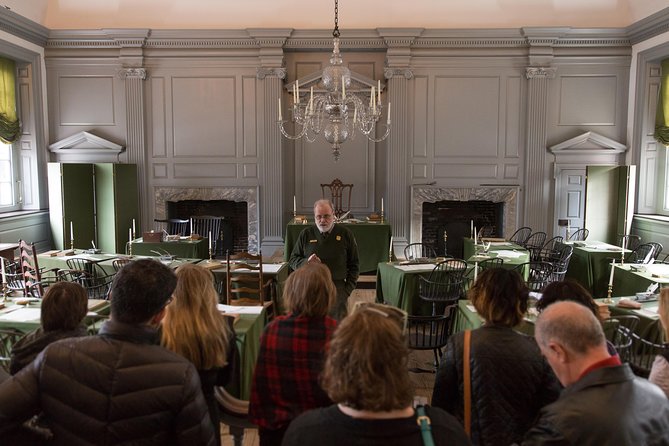
- Outdoor views of the Liberty Bell and Independence Hall: The tour points out both landmarks, but admission inside is not included.
- Strong guides make the difference: Connor, PJ, Will, Avi, John, and Michael are among the guides praised for their clear explanations and warm approach.
- A good first-day orientation: Use the walk to decide which museums, churches, and historic buildings deserve a longer visit.
- Expect a brisk pace: There are stops to catch your breath, but few places to sit, so wear comfortable shoes.
- Rain or shine, for up to 40 people: Check in outside the National Constitution Center 15 minutes early and dress for the forecast.
Philadelphia’s founding story in 75 minutes
This is an orientation walk, not a full tour of every landmark. That distinction matters. You move from one important site to the next while your guide explains how Philadelphia served as the nation’s early capital and how its streets became the setting for major decisions.
I like the way the route connects political ideas to physical places. You are not simply looking at old facades. You are seeing where Washington and Adams lived as president, where Jefferson wrote the Declaration of Independence, where Congress met, and where early American debates took shape.
The walk is listed at 75 minutes, though the actual pace and stopping time can vary slightly. You cover a lot of ground in a short period, so you should expect a broad account rather than long talks at each stop. That makes it useful early in your Philadelphia visit, especially if you want to return later to the sites that catch your interest.
The group can reach 40 people. That is manageable, but street noise, wind, and a fast speaking style can make it harder to hear at times. Smaller groups may feel easier for questions and conversation. If your guide is speaking quickly, move closer to the front.
More walking tours around Philadelphia:
- Philadelphia Old City Historic Walking Tour with 10+ Top Sites
★ 5.0 · 2,020 reviews - History and Hauntings of Salem Guided Walking Tour
★ 5.0 · 14,564 reviews - New Orleans Premier Ghost, Voodoo and Vampire Walking Tour
★ 4.5 · 12,856 reviews
Starting outside the National Constitution Center
Meet outside the main entrance of the National Constitution Center at 525 Arch Street. Look for the three large stone benches directly outside the entrance. This point is worth noting because the museum itself is not the meeting place.
Check in 15 minutes before departure. The tour ends back at the same location, which simplifies your plans if you want to visit the Constitution Center afterward or continue exploring Independence National Historical Park on your own.
The opening stop takes about three minutes and sets the tone for the walk. Your guide introduces the area and explains why this section of Philadelphia is often called America’s most historic area. You do not receive admission to the National Constitution Center as part of the $30 tour price.
The President’s House and Declaration House
The first short stops bring the early presidency and the Declaration of Independence into view.
At the open-air President’s House site, you learn about the building where George Washington and John Adams lived while Philadelphia served as the United States capital from 1790 to 1800. The site helps correct the common impression that the White House was always the center of presidential life. In the nation’s early years, Philadelphia filled that role.
Next comes Declaration House, also called the Graff House. This is associated with Thomas Jefferson’s stay while he wrote the Declaration of Independence. The stop is brief, about two minutes, but it gives you a physical setting for a document often encountered only as text in a classroom.
These early stops work best as context. Do not expect a long indoor presentation. Your guide points out the locations and supplies the story, then keeps the group moving.
The Liberty Bell Center and Independence Hall
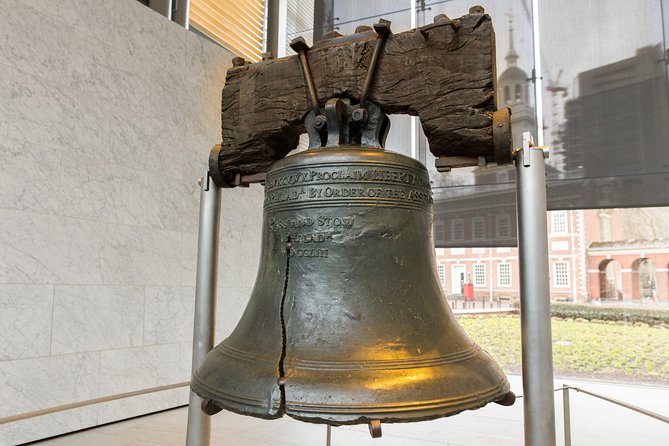
The Liberty Bell Center is one of the tour’s main moments. You see the building and learn why the bell became such a powerful symbol of American freedom. The route gives you an up-close outdoor view, but the bell’s interior display is not part of this walking tour.
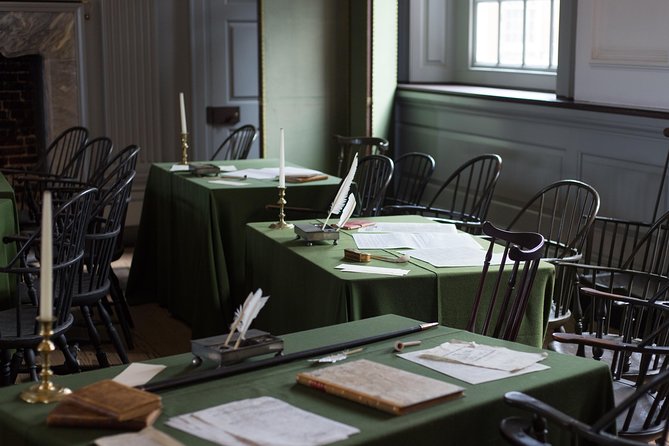
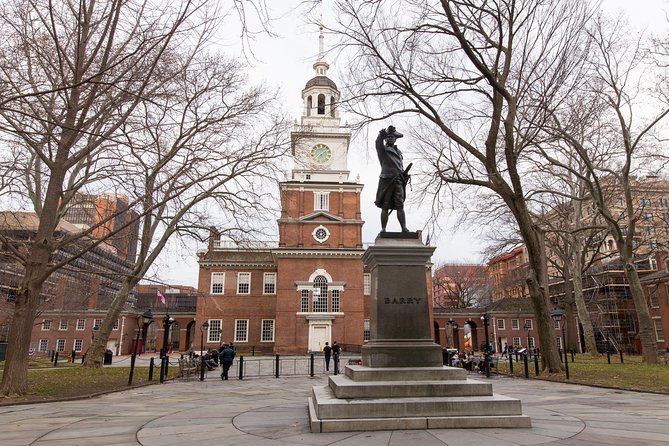
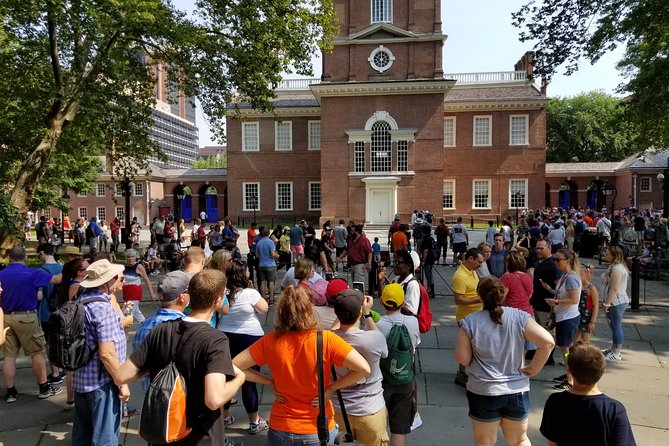
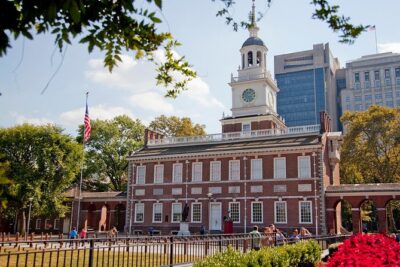
Independence Hall follows. Built in 1732 as the Pennsylvania State House, it is the place most closely tied to the Declaration of Independence and the United States Constitution. Your guide explains its role as the birthplace of the nation, but you do not enter the building during this 75-minute walk.
This is the point where expectations matter most. The tour description highlights the Liberty Bell and Independence Hall because they are key stops, not because it includes their interior exhibits. Security screening can take time, and Independence Hall requires timed admission arranged separately. If going inside is a priority, plan those visits on your own and allow extra time.
I would use the walking tour first, then decide which landmark deserves your remaining time. The route gives you the setting and basic story. A separate visit gives you the rooms, exhibits, and longer interpretation.
More to weigh up across Philadelphia
- Dark Philly Adult Night Tour
★ 5.0 · 4,241 reviews - Revolution and the Founders: History Tour of Philadelphia
★ 5.0 · 2,944 reviews - Philadelphia Hop-On Hop-Off City Tour
★ 4.0 · 2,347 reviews - 2.5 Hour Philadelphia History Tour with Washington War Tent Show
★ 5.0 · 924 reviews
Congress Hall, Old City Hall, and The Signer
The route then follows the political story into the buildings around Independence Square.
Congress Hall served as the United States Capitol from 1790 to 1800, when Philadelphia was the national capital. It was originally built as the Philadelphia County Court House between 1787 and 1789. The stop helps you picture a young federal government still operating from adapted colonial buildings.
Old City Hall adds another layer. It was once home to the United States Supreme Court. Seeing the former court site near the old Capitol makes the district feel less like a collection of isolated landmarks and more like a working national center.
You also stop at The Signer, a statue inspired by George Clymer. It is a small detail compared with Independence Hall, but these brief markers give the guide room to introduce lesser-known people connected to the founding period.
Each stop lasts only a few minutes. You get the basic role of each building, not a full architectural or legal lecture. That is useful for orientation, but anyone looking for detailed interpretation should plan extra time elsewhere.
The American Philosophical Society and Library Hall
At the American Philosophical Society Museum, you hear about the oldest scholarly society in the United States. Its presence in this district points to a side of the founding era often missed on a standard political tour: early America was also shaped by scientific inquiry, debate, and the exchange of ideas.
Library Hall represents another important institution. It was the nation’s first public library and later served as the former Library of Congress. The stop connects Benjamin Franklin’s world to the growth of American civic life. Libraries were not just places for storing books. They helped create a public space for learning and discussion.
The guide has only two minutes at each location, so listen for the reason each site matters. You will not get every name, date, or interior detail. Instead, you leave with a map of the district’s intellectual landmarks and a better sense of what to revisit.
The Second Bank and Carpenters’ Hall
The Second Bank of the United States brings finance into the story. It was one of the world’s most influential financial institutions and now serves as a portrait gallery. The tour explains its place in early national debates and points out the building’s classical design.
Carpenters’ Hall shifts the focus back to political organization. It is associated with the First Continental Congress and with the formation of an American identity before independence. The short stop works well because it broadens the story beyond the Declaration and Constitution. The founding of the country involved meetings, disputes, trade, banking, and practical decisions as well as famous speeches.
The Second Bank and Carpenters’ Hall are close enough to fit naturally into the walk. You can see why this district rewards walking. Important places sit within a few blocks, but without a guide, you could easily pass them without understanding their role.
New Hall, the First Bank, and Franklin Court
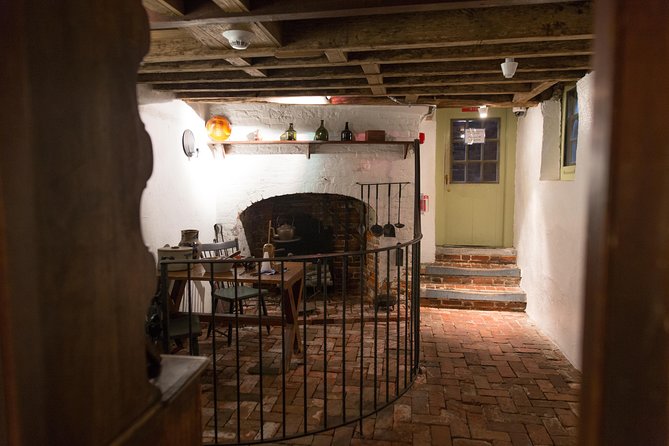
New Hall Military Museum adds the military side of early American history. The tour uses the site to explain the role of the armed forces in the young republic. It is a short stop, but it helps keep the walk from becoming a parade of political buildings.
The First Bank of the United States follows. Its creation sparked one of the first major constitutional debates, making it a useful example of how the new government tested the meaning of its powers. This is one of the stops where a guide’s explanation adds real value. The building alone cannot tell you why a bank became a national political controversy.
Franklin Court receives the longest stop on the route, about five minutes. It marks Benjamin Franklin’s home and includes the only Colonial-themed post office. Franklin’s influence reaches across the entire walk, from the American Philosophical Society to the library and the political life of Philadelphia.
Franklin Court is also a natural place to slow down mentally. The tour moves quickly, but Franklin’s career links science, printing, diplomacy, public service, and civic projects. If one figure interests you most, this is a good site to revisit after the walk.
Christ Church and Betsy Ross House
Christ Church has been an active parish since 1695 and is often called the Nation’s Church. The guide points out its role in early American religious and civic life. It is a useful reminder that Philadelphia’s founding story was not only conducted in government buildings.
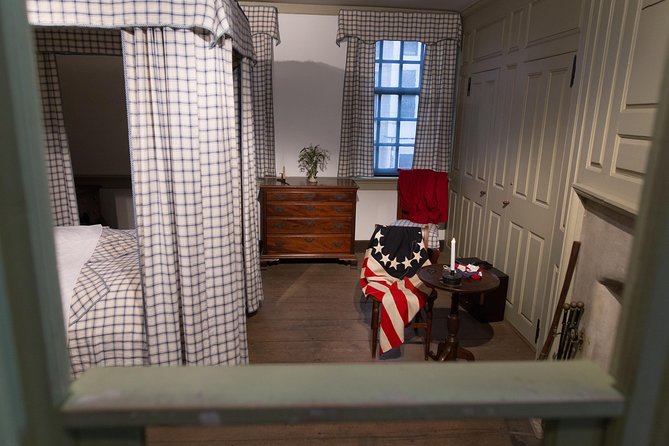
The Betsy Ross House is one of the most familiar names on the route. The site is associated with the sewing of the first Stars and Stripes. The guide gives you the basic story and location, while a separate visit allows more time to consider the tradition and interpretation connected with Ross.
Both stops are brief, around two to three minutes. That is enough to place them on your mental map, but not enough for a detailed discussion of church history or the evidence surrounding every Betsy Ross story. Take the guide’s introduction as a starting point, then decide what you want to explore further.
Arch Street Meeting House and Franklin’s burial place
The Arch Street Meeting House introduces the Society of Friends, commonly known as the Quakers. This stop adds a religious and social dimension to the district. Philadelphia’s early identity was shaped in part by Quaker values, institutions, and community life.
The final stop is Christ Church Burial Ground, the resting place of Benjamin Franklin. Franklin’s grave is one of the most recognizable burial sites in Philadelphia, and the cemetery also contains the remains of other important figures from the founding period.
The tour ends back at the National Constitution Center. By this point, you have crossed a compact area filled with political, religious, financial, scientific, and military connections. You may not remember every stop in detail, but you will know where the main pieces fit.
What the $30 price really buys you
At $30 per person, this tour is reasonably priced if you want a live introduction and a clear route through the historic district. You are paying for 75 minutes of guided explanation, not admission to museums or historic interiors.
The value is strongest when you are new to Philadelphia. A guide can point out more than 20 sites and explain why they matter before you spend additional money on the buildings that interest you most. That can prevent a first visit from becoming a random walk between famous names.
The value is weaker if you expect a full access tour. You will not go inside Independence Hall, the Liberty Bell Center, or the other buildings on the route. Food and drinks are also not included.
I see this as an efficient first look rather than the entire Philadelphia history experience. Pair it with one or two indoor visits afterward, and the price makes better sense.
Pace, weather, and practical comfort
The route is an easy walk in distance, but it is still a walking tour. Wear tennis shoes or other comfortable footwear. Bring water, especially on a sunny day, and consider a hat and light clothing in warm weather.
There are stopping points where you can catch your breath, but few places to sit. Cold weather does not cancel the tour. It operates in rain or shine, and guides have led walks in rain and temperatures in the low 30s. Dress for the forecast rather than hoping conditions improve.
Traffic, wind, and nearby street noise can affect how clearly you hear. Stay near the guide and ask questions when needed. Guides such as Connor, PJ, Will, Avi, John, and Michael have been praised for their warmth, facts, and willingness to discuss the subject. The experience can vary with the individual guide, and one less effective guide may rely too much on performance or deliver fewer details.
Most people can participate, but the route still calls for steady walking. The group may include up to 40 people, so anyone who wants a quiet, highly detailed experience may prefer a private tour or a longer format.
Who should book this Philadelphia walk?
I would recommend it for first-time visitors, families with older children, and anyone who wants a quick framework for the historic district. It also suits locals or repeat visitors who want to connect familiar buildings to a larger national story.
The tour is especially helpful if you have limited time. In 75 minutes, you can identify the Liberty Bell, Independence Hall, Franklin Court, Carpenters’ Hall, Betsy Ross House, the First and Second Banks, and many other sites without planning the route yourself.
I would be cautious if you want extensive indoor access, long stops, or a slow architectural tour. Do not book it expecting to see the Liberty Bell up close inside or to tour Independence Hall. Arrange those admissions separately, and use this walk to understand where everything is.
Free cancellation is available if you cancel at least 24 hours before the start time. The tour is usually booked about 12 days ahead, so reserve early if your Philadelphia schedule is fixed.
Should you book it?
Book this tour if you want a lively, efficient introduction to Philadelphia’s founding district and understand that it is outdoors. The best guides turn a short walk into a useful lesson, with Connor, PJ, Will, Avi, John, and Michael among the names associated with strong storytelling and helpful answers.
Skip it if your main goal is indoor admission to Independence Hall or the Liberty Bell Center. For everyone else, the tour is a practical first step: walk the district, note the sites that catch your attention, then return for the longer visits that the 75-minute route cannot provide.
FAQ
How long is the Constitutional Walking Tour of Philadelphia?
The tour lasts approximately 75 minutes.
How far do you walk?
The route covers about 1.25 miles through Philadelphia’s historic district.
Where does the tour begin?
It begins outside the National Constitution Center at 525 Arch Street, Philadelphia, Pennsylvania 19106. Meet directly outside the main entrance by the three large stone benches.
Where does the tour end?
The tour ends back at the National Constitution Center meeting point.
Do I need to arrive early?
Yes. Check in 15 minutes before the scheduled departure time.
Does the tour go inside Independence Hall?
No. The tour is an outdoor overview, so Independence Hall is viewed from outside. Admission is not included.
Can I go inside the Liberty Bell Center during the tour?
No. The tour stops at the Liberty Bell Center but does not include admission or an interior visit.
Are admission tickets to the historic sites included?
No. Admission to the historic sites is not included, and fees vary by site.
Does the tour operate in bad weather?
Yes. The tour operates rain or shine, so dress for the weather.
What is the group size?
The tour can have a maximum of 40 travelers.
What does the tour cost?
The listed price is $30 per person.
Is the tour offered in English?
Yes. The tour is offered in English and includes a mobile ticket.
Can I cancel for a full refund?
Yes, if you cancel at least 24 hours before the experience start time. Cancellations or changes made less than 24 hours before the start time are not accepted for a refund.
Newly listed in Philadelphia
- Philadelphia: Revolution and The Founders History Tour★ 4.6 · 450 reviews
- Flavors of Philly Food Tour★ 5.0 · 505 reviews
- Double Decker Hop-On Hop-Off City Sightseeing Philadelphia (1, 2, or 3-Day)★ 4.0 · 562 reviews
- Philadelphia 2 Hour Electric Cart Tour★ 5.0 · 633 reviews
- BYOB Historically Hilarious Trolley Tour of Philadelphia★ 5.0 · 657 reviews
- Philadelphia: Double-Decker Hop-on Hop-off Sightseeing Tour★ 4.4 · 868 reviews
- 2.5 Hour Philadelphia History Tour with Washington War Tent Show★ 5.0 · 924 reviews
- Center City Philadelphia Food Tour with Reading Market★ 5.0 · 861 reviews
Philadelphia Tours, compared.
Revolution and the Founders: History Tour of Philadelphia
Read our review →
Philadelphia Old City Historic Walking Tour with 10+ Top Sites
Read our review →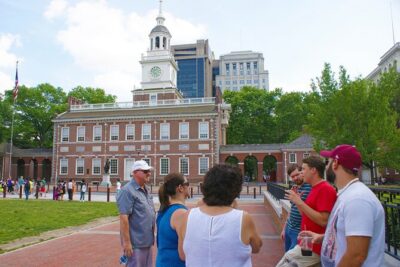
2.5 Hour Philadelphia History Tour with Washington War Tent Show
Read our review →

Center City Philadelphia Food Tour with Reading Market
Read our review →
BYOB Historically Hilarious Trolley Tour of Philadelphia
Read our review →Browse the lists this tour appears in