
Reviewed · PHILADELPHIA TOURS
2.5 Hour Philadelphia History Tour with Washington War Tent Show
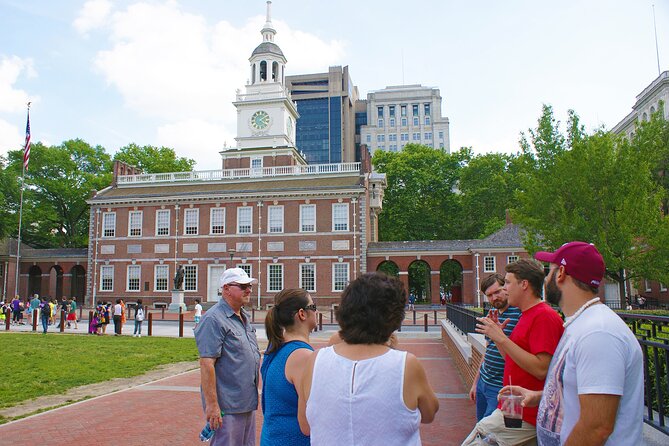
Philadelphia’s best Revolutionary War story is not confined to one grand building. It unfolds across a few compact blocks, where you can move from Independence Hall to the Liberty Bell, then from Benjamin Franklin’s grave to the narrow brick homes of Elfreth’s Alley. The most unusual stop is George Washington’s War Tent, presented inside the Museum of the American Revolution.
I like the small group of no more than 12 because it gives you room to ask questions and hear the guide clearly. I also like the tour’s honest approach to famous figures: Betsy Ross, the Liberty Bell, and the Founding Fathers are not treated as cardboard heroes. The main drawback is that most landmarks are viewed from the outside, and you do not enter the Liberty Bell Center during the walk.
Key points to know before you book
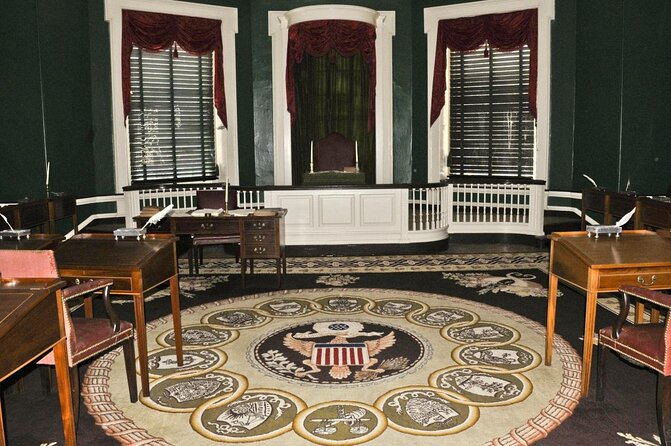
- Washington’s actual War Tent: See a presentation featuring the tent used by George Washington for much of the Revolutionary War.
- A compact Old City route: Visit Independence Hall, Congress Hall, Carpenters’ Hall, Elfreth’s Alley, Betsy Ross House, Franklin’s grave, and more.
- Small groups matter: The maximum group size is 12, making it easier to ask questions and keep up with the guide.
- Museum value after the walk: Your $45 ticket includes the tent presentation and a discounted ticket for the rest of the Museum of the American Revolution.
- A useful first-day tour: The route gives you a clear map of Philadelphia’s historic center, helping you choose where to return later.
- Plan for a brisk walk: The tour lasts about two and a half hours and covers many stops, with most buildings seen from outside.
Washington’s War Tent gives the tour its special focus
Many Philadelphia walking tours circle the same familiar landmarks. This one adds a worthwhile indoor stop at the Museum of the American Revolution, where you see a presentation centered on the tent George Washington used during much of the war.
That detail changes the feel of the tour. Independence Hall can seem formal and distant, especially when you are standing outside with a crowd. A field tent, by contrast, suggests the practical side of the war: movement, uncertainty, long campaigns, and the fact that Washington’s command was often carried out far from polished government rooms.
The presentation lasts about 20 minutes. It is not a substitute for the full museum, but it gives you a focused introduction to the collection and the war itself. After the walking tour, you can use a discounted ticket to explore the rest of the museum at a time of your choice. That is a useful arrangement if you want both a guided overview and a longer museum visit.
The discount adds value to the $45 price, but only if you have enough time and interest to return to the museum galleries. If your Philadelphia schedule is already packed, treat the tent presentation as the main indoor feature rather than assuming you will see the entire museum.
More historic sites around Philadelphia:
- Revolution and the Founders: History Tour of Philadelphia
★ 5.0 · 2,944 reviews - Philadelphia Old City Historic Walking Tour with 10+ Top Sites
★ 5.0 · 2,020 reviews - Philadelphia: Revolution and The Founders History Tour
★ 4.6 · 450 reviews
Starting at the Signer in Independence National Historical Park
The meeting point is Signer’s Garden, at the statue known as The Signer, near Chestnut Street. The statue represents the people who signed the Declaration of Independence and the Constitution, along with the broader idea of civic freedom.
It is a fitting place to begin because the tour quickly moves from symbols to specific streets and buildings. Your guide can establish the basic political story before taking you through the places where that story unfolded.
The opening stop is brief, about five minutes. Arrive ready to walk rather than expecting a long introduction. The tour is conducted in English, and a mobile ticket is accepted.
From here, you enter the central zone of Independence National Historical Park. In roughly 20 minutes, the guide points out Independence Hall, Congress Hall, and Old City Hall while explaining how the area helped shape Philadelphia, the United States, and democratic government beyond America.
Independence Hall, Congress Hall, and Old City Hall
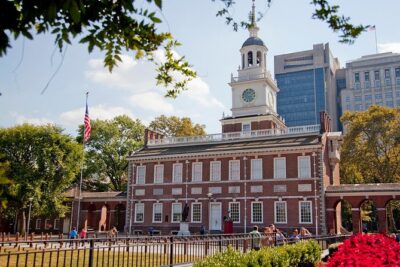
Independence Hall is the visual centerpiece of the route. It is the building associated with the Declaration of Independence and the Constitutional Convention, and it appears on the $100 bill. On this tour, you circle the building and discuss its debates, political ideals, disputes, and compromises from the outside.
That distinction matters. The tour does not include an interior visit to Independence Hall, so you should not book it as a replacement for an official building tour. Instead, you get a useful orientation to the exterior and the surrounding civic space.
Congress Hall sits beside Independence Hall and served as the first home of the United States Congress. The guide explains how the young nation operated here after independence. Old City Hall adds another piece to the picture, showing how national and local government functions occupied the same small part of Philadelphia.
I like this grouping because it helps you see the founding period as an active working city, not just a collection of isolated monuments. The stops are short, about 10 minutes each, so the guide needs to keep the story moving. If you want every political detail, take notes and return later.
The Liberty Bell, including the myths around it
The Liberty Bell Center is one of Philadelphia’s most popular sights, but this tour discusses it from outside. You learn about the bell’s changing meaning and its use by abolitionists, women’s suffrage activists, and the civil rights movement.
The guide also sorts out some of the myths surrounding the bell. That is valuable because the object is often reduced to one famous crack and a single patriotic message. Its later use as a symbol of reform gives it a broader story.
You do not enter the Liberty Bell venue as part of the tour. If an interior visit or close-up photograph is important to you, plan to go before or after the walk. One guide specifically advised allowing time for that extra visit, which is practical advice for anyone with only a few hours in the city.
More to weigh up across Philadelphia
- From Miami: Everglades Airboat, Wildlife Show & Bus Transfer
★ 4.2 · 8,622 reviews - Miami: Everglades National Park Airboat Tour & Wildlife Show
★ 4.5 · 7,296 reviews - The Haygoods: Branson’s Most Popular Show
★ 5.0 · 7,232 reviews - Oahu: The Magical Mystery Show! at Hilton Waikiki Beach Hotel
★ 5.0 · 2,754 reviews
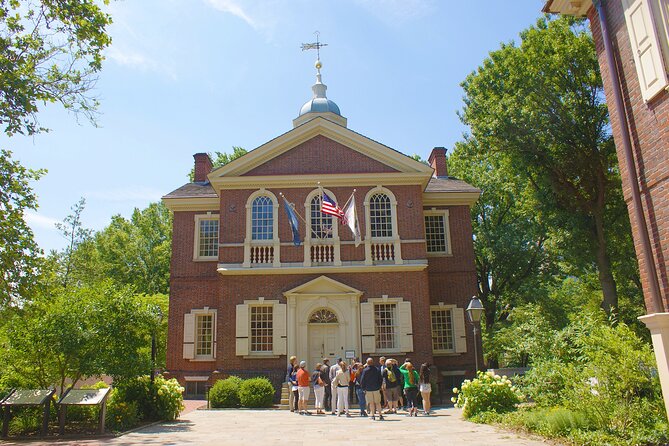
Carpenters’ Hall and the first Continental Congress
Carpenters’ Hall is viewed from outside, but it deserves more than a passing glance. It hosted the First Continental Congress and is also tied to the early political development of Pennsylvania.
The building helps connect the Revolution to the events that came before the Declaration of Independence. Delegates were still trying to decide how the colonies should respond to British policy, and meetings like this helped turn protest into organized political action.
The stop lasts about 10 minutes. The exterior is attractive, but the real value comes from the guide’s explanation of what happened inside and why the meeting mattered. If you return later, you can explore more on your own, but the tour gives you a clear reason to put Carpenters’ Hall on your list.
Elfreth’s Alley shows Philadelphia’s everyday side
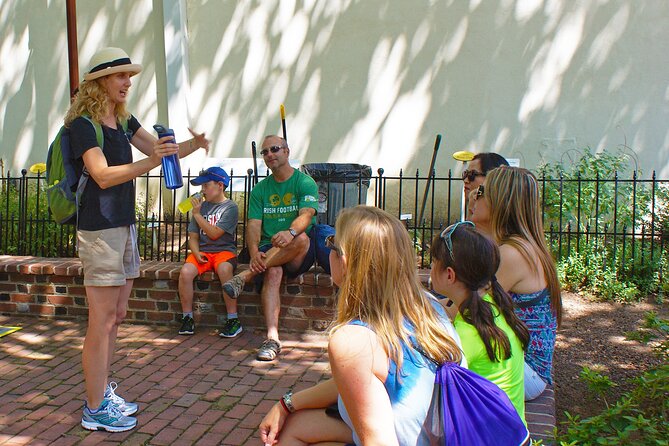
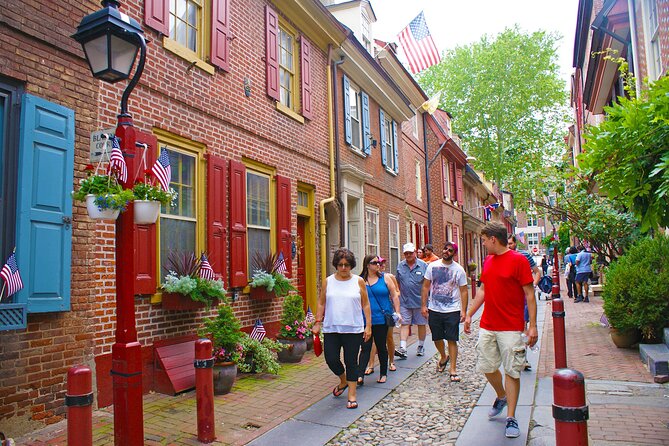
After the public buildings and national symbols, Elfreth’s Alley offers a change of scale. This narrow residential street dates to the early 1700s and is described as the oldest continuously occupied residential street in the United States.
Its importance is not only its age. The small brick houses, tight spacing, and uneven details show how ordinary urban life looked in early Philadelphia. You are no longer looking at a hall where famous men made speeches. You are looking at the kind of street where working families lived, worked, and raised children.
The stop lasts about 10 minutes, enough for an introduction and photographs. Since it remains a residential area, keep your visit respectful and follow the guide’s lead. The narrow street can also make it harder to gather the whole group, so stay close.
Betsy Ross House and the useful correction of old legends
The route passes the Betsy Ross House, associated with the seamstress who is said to have sewn the first American flag. The guide discusses the uncertainty and later storytelling surrounding that claim rather than presenting it as settled fact.
That treatment is one of the tour’s strengths. Philadelphia’s founding stories have often been polished into simple legends. A good guide can explain what is documented, what is debated, and why a story became popular even when the evidence is limited.
The house itself is not included as an interior visit. You get the historical setting and the story, then continue along the route. If you have a strong interest in Betsy Ross, you can decide later if the paid house visit is worth adding.
Franklin’s grave and the President’s House site
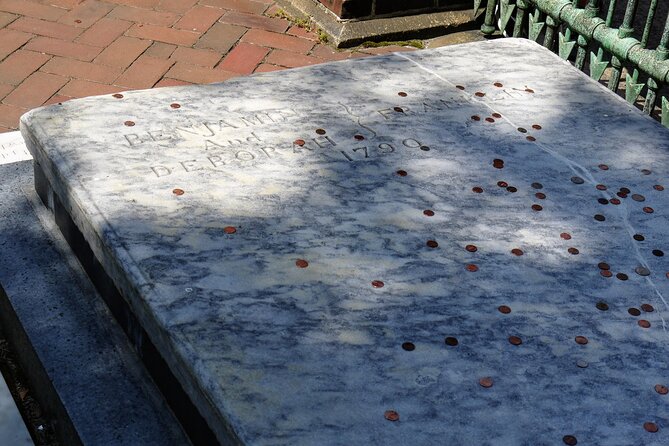
The walk passes Benjamin Franklin’s grave on Arch Street. Franklin is one of the city’s most famous figures, known for his work as an inventor, printer, writer, diplomat, and political thinker.
Seeing the burial site takes only about 10 minutes, but it adds a personal note to the larger political story. Franklin was not simply a name attached to a street or a museum. He lived in this city, worked here, and helped connect Philadelphia to the wider Atlantic world.
The final listed stop is the President’s House site, where George Washington and John Adams lived during their presidencies. The site also examines the enslaved people who lived there and remains an active archaeological location.
This is an important correction to the polished Founding Fathers story. The early republic depended on ideals of liberty while slavery remained part of the social and economic system. Including that contradiction gives the tour more balance and helps you understand why the nation’s founding is both inspiring and contested.
The tour ends in Old City, a central location in the historic district. You are well placed to continue sightseeing, find a meal, or return to a museum.
What the guides add to the walk
The tour uses several guides, so your exact experience depends partly on who leads your group. Guides praised for their strong presentations include Tom, PJ, Adam, Caroline Hodash, David, John, Carla, Donato, Maria Gorshin, Pat, Peter, Laura, Alex, and PK.
The recurring qualities are clear: guides explain dates and events, answer questions, add local stories, and keep the pace lively. Tom is described as especially animated. John has a reputation for detailed answers, extensive historical trivia, and keeping children interested. Caroline is noted for clear communication and thoughtful context, while Maria Gorshin is praised for patient answers and vivid descriptions of life in the 1700s.
You should not expect every guide to deliver the exact same script. That can be a benefit. A small group lets the guide respond to your interests, and several guides have offered restaurant ideas or suggestions for other places to visit.
The best use of your guide is to ask questions as you go. Ask what is documented, what is legend, and which museums or buildings deserve more of your limited time. On a short visit, that advice can be as useful as the historical facts.
Is $45 a fair price?
At $45 per person, this is not the cheapest way to see Old City. You are paying for a 2.5-hour guided walk, a small group capped at 12, the Washington tent presentation, and a discounted Museum of the American Revolution ticket.
The value is strongest for a first visit. In one morning or afternoon, you get a broad introduction to the historic district, learn where the main sites are, and receive enough context to choose your next stops. A donation to a local nonprofit historic organization is also included.
The price is less appealing if you want interior access to several buildings. Independence Hall, the Liberty Bell Center, Carpenters’ Hall, Betsy Ross House, Congress Hall, and Old City Hall are mainly exterior stops on this experience. You may need separate tickets or extra visits for the interiors.
Group discounts are available, which may help families or larger parties. The standard group maximum is 12, keeping the experience more personal than a large coach or crowd-based walk.
Pace, clothing, and planning advice
This is a city walking tour, so wear comfortable shoes and expect to remain outdoors for much of the 2.5 hours. Weather can change the experience since many stops are outside and several buildings are viewed from the street.
The route covers many sites in a fairly short time. That is good for orientation, but it can feel full if you want long pauses at every building. Families can manage it, and one guide kept children engaged with stories and questions, but younger children may still find the steady walking demanding.
Most people can take part, service animals are allowed, and the starting point is near public transportation. The tour is offered in English. It is often booked about 31 days ahead, so reserve early if your Philadelphia dates are fixed.
Free cancellation is available up to 24 hours before the start time. Changes or cancellations within 24 hours are not accepted for a refund.
Who should book this Philadelphia history tour?
I would choose this tour if you are visiting Philadelphia for the first time, have limited time, or want a clear introduction before tackling the museums on your own. It is also a good fit for history fans who enjoy connecting famous landmarks with less polished stories about slavery, political conflict, and changing national symbols.
Families can benefit from the short explanations, varied stops, and approachable guides. Couples and solo visitors will appreciate the small group and the chance to ask questions without shouting over a crowd.
I would think twice if your top priority is entering Independence Hall or the Liberty Bell Center. You will need to arrange those visits separately. I would also avoid booking it immediately after another long walking tour, since this route covers a lot of ground.
Should you book it?
Book it if you want the main Revolutionary sites explained by a local guide and like the idea of seeing Washington’s War Tent as part of the experience. The combination of outdoor landmarks, Old City streets, and a focused museum presentation gives you more depth than a simple monument checklist.
Skip it if you prefer to move slowly, read every museum panel, or arrange all interior admissions yourself. For most first-time visitors, though, the $45 cost is fair, especially when you use the discounted museum entry afterward. Think of it as a strong orientation to Philadelphia’s historic core, not a complete replacement for the city’s major museums and building tours.
FAQ
How long is the Philadelphia history tour?
The walking tour lasts approximately 2 hours and 30 minutes.
How much does the tour cost?
The listed price is $45 per person. Group discounts are available.
What is the maximum group size?
The tour allows a maximum of 12 travelers, creating a small-group experience.
Does the tour include the Museum of the American Revolution?
The tour includes entry for the presentation featuring George Washington’s War Tent. Afterward, you can receive discounted admission to see the rest of the museum at a time of your choice.
Do you enter Independence Hall and the Liberty Bell Center?
The tour views Independence Hall from outside and discusses the Liberty Bell from outside the Liberty Bell Center. Separate admission is not included for those interior visits.
Where does the tour start and end?
The tour starts at The Signer statue in Signer’s Garden, at 434 to 498 Chestnut Street, Philadelphia. It ends in Old City, in the central Historic District.
Can I cancel for a refund?
You can cancel up to 24 hours before the experience start time for a full refund. Cancellations or changes made within 24 hours are not accepted for a refund.
Newly listed in Philadelphia
- Philadelphia: Revolution and The Founders History Tour★ 4.6 · 450 reviews
- Flavors of Philly Food Tour★ 5.0 · 505 reviews
- Double Decker Hop-On Hop-Off City Sightseeing Philadelphia (1, 2, or 3-Day)★ 4.0 · 562 reviews
- Philadelphia 2 Hour Electric Cart Tour★ 5.0 · 633 reviews
- BYOB Historically Hilarious Trolley Tour of Philadelphia★ 5.0 · 657 reviews
- Philadelphia: Double-Decker Hop-on Hop-off Sightseeing Tour★ 4.4 · 868 reviews
- The Constitutional Walking Tour of Philadelphia★ 4.5 · 902 reviews
- Center City Philadelphia Food Tour with Reading Market★ 5.0 · 861 reviews
Philadelphia Tours, compared.
Revolution and the Founders: History Tour of Philadelphia
Read our review →
Philadelphia Old City Historic Walking Tour with 10+ Top Sites
Read our review →
The Constitutional Walking Tour of Philadelphia
Read our review →

Center City Philadelphia Food Tour with Reading Market
Read our review →
BYOB Historically Hilarious Trolley Tour of Philadelphia
Read our review →Browse the lists this tour appears in