
Reviewed · PHILADELPHIA TOURS
Revolution and the Founders: History Tour of Philadelphia
Philadelphia’s founding story comes alive best on foot, where a few city blocks connect the Liberty Bell, Independence Hall, Benjamin Franklin’s home, early banks, meeting halls, and the streets once used by Washington, Adams, Hamilton, and Franklin. This tour gives you that useful first orientation in about two hours, led by a guide with a history degree. Josh, Kyle, Ted, Joseph, and Vince are among the guides praised for lively storytelling, humor, and dramatic acting.
I like two things right away: the route covers far more than the usual Liberty Bell photo stop, and the guide puts famous people into the places where they actually worked, argued, lived, and planned. Franklin Court, Carpenters’ Hall, and the old presidential sites give the tour more texture than a simple list of patriotic landmarks.
The tradeoff is important. This is mainly an outdoor walking tour, and the group often pauses outside buildings rather than entering them. Independence Hall tickets and the interior Liberty Bell visit are free, but they are not included, so you may need extra time, timed entry, and a separate plan.
Key points to know before you book
- Two hours across Old City: You see a large concentration of Philadelphia’s founding sites without giving up your whole day.
- History-trained guides: Every guide has a history degree, with several working as teachers or American history professors.
- The major sights are often viewed from outside: The tour explains how to visit Independence Hall and the Liberty Bell interiors on your own.
- Franklin gets more than a passing mention: His home, post office, printing and publishing work, scientific experiments, and political life all enter the story.
- Morning and afternoon departures: You can fit the walk around museums, meals, or a separate Independence Hall reservation.
- A maximum of 24 people: This is a group tour, but the cap keeps it smaller than a large city outing.
Why this two-hour walk works as a Philadelphia introduction
Philadelphia’s historic district rewards a guide because the important places are close together, yet their connections are easy to miss. A plain walk from the Liberty Bell to Independence Hall shows you buildings. A good explanation shows you how the city functioned as the capital, meeting place, military center, publishing hub, and political workshop of a new country.
The tour starts with a check-in and an introduction to revolutionary Philadelphia. From there, you move through the old center at a practical pace. You are not spending the entire morning inside one museum, and you are not being driven past the sights behind glass. You walk the streets, stop for explanations, and keep moving.
I see this as an orientation rather than a complete study of Philadelphia. Two hours can introduce the main people and buildings, but it cannot fully explain the Revolution, the Constitution, slavery, Native American history, women’s lives, or the city’s later development. The value is in giving you a clear map and a storyline, so your next museum visit has more meaning.
The guide’s personality matters here. Josh is repeatedly praised for humor, energy, and strong storytelling. Kyle has been described as theatrical enough to make the past feel like a live performance, while Ted has kept groups engaged even in snow and freezing temperatures. Joseph is known for a natural storytelling style, and Vince is praised for answering questions and adapting to the group.
That range is useful, but it also means the tone can vary. Most of the feedback favors animated guides who act out scenes and use emotion. One poor assessment objected to a guide’s theatrical style, so if you prefer a quiet, strictly academic lecture, this may not be your ideal walk.
More historic sites around Philadelphia:
- Philadelphia Old City Historic Walking Tour with 10+ Top Sites
★ 5.0 · 2,020 reviews - 2.5 Hour Philadelphia History Tour with Washington War Tent Show
★ 5.0 · 924 reviews - Philadelphia: Revolution and The Founders History Tour
★ 4.6 · 450 reviews
The Liberty Bell, more than a cracked symbol
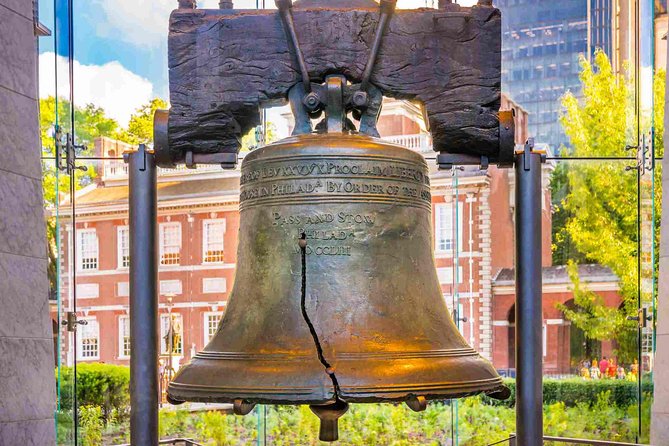
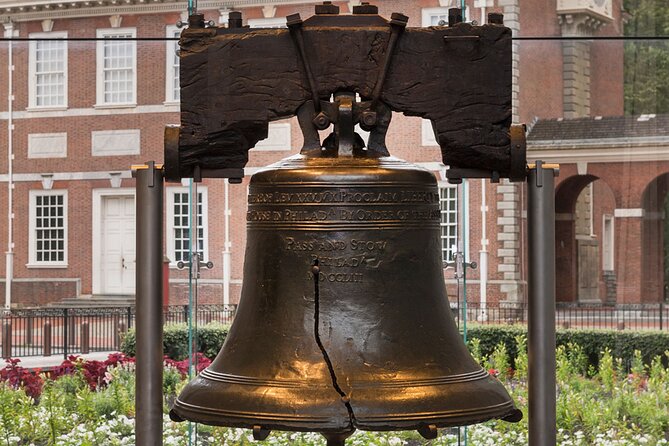
The Liberty Bell is the natural opening landmark, but the guide adds useful context before you decide to join the line for the pavilion. The bell was commissioned in 1752, cracked during its first test ring, and was cast again by local workers John Pass and John Stow two years later.
Its famous inscription comes from the King James Bible: Proclaim liberty throughout all the land unto all the inhabitants thereof. The wording refers to the jubilee, a biblical period when enslaved people were freed and debts were forgiven every fifty years. That background gives the inscription a wider meaning than the familiar patriotic slogan.
The tour explains the bell from outside the pavilion. During the busiest months, the line for the interior can take close to an hour. You receive directions for returning to the pavilion later, which is a smart use of your time if you want the photograph and the historical explanation without sacrificing much of your day.
Remember that the interior visit is not part of the two-hour experience. It is free, but you should treat it as a separate stop and allow about an additional hour, especially during peak periods.
Independence Hall and the rooms where the country was argued into existence
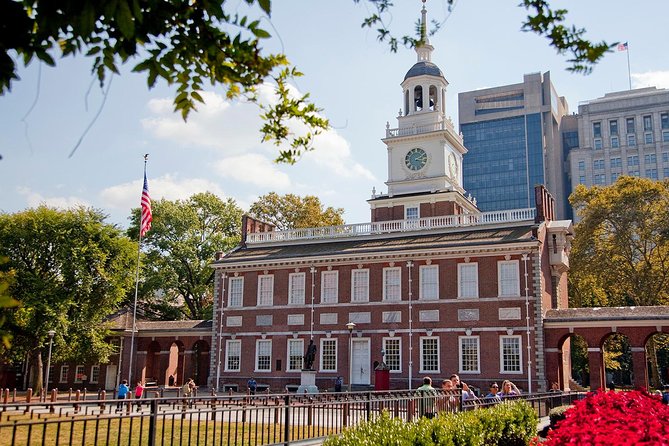
Independence Hall is the central stop. This is where the Declaration of Independence and the United States Constitution were debated and adopted. The building is powerful even from the outside, but the interior rooms add much more if you can arrange a visit.
The tour focuses on essential points around the complex and may make a brief stop inside the East Wing, depending on crowds and closures. This oldest section served as the Supreme Court chambers when Philadelphia was the national capital.
Full entry requires free timed passes, and you should allow about two more hours if you want to explore the complex properly. Those passes are not included. That detail matters when planning your day: the walking tour can orient you first, but it cannot replace the official Independence Hall visit.
I like this setup for first-time visitors. You get the broader setting before entering the building, and you can then choose how much time to give the interior. The drawback is that anyone expecting a full room-by-room tour may feel shortchanged unless they reserve a separate visit.
Washington, Adams, and Philadelphia’s first presidential home
The route continues to the site of the President’s House, where George Washington and John Adams lived while Philadelphia served as the capital from 1790 to 1800. Foreign diplomats, members of Congress, and senators came here for official business and social occasions.
The site also connects to Benedict Arnold, who lived in the structure as military governor of Philadelphia after the British left the city during the Revolutionary War. That detail complicates the usual parade of founding heroes and reminds you that political loyalty was not always fixed.
You see the place as part of the city’s public landscape, with the guide supplying the story. It is another example of why a walking tour helps: the locations are not isolated museum exhibits. They sit amid the modern city, and the guide explains what happened there.
More to weigh up across Philadelphia
- Dark Philly Adult Night Tour
★ 5.0 · 4,241 reviews - Philadelphia Hop-On Hop-Off City Tour
★ 4.0 · 2,347 reviews - The Constitutional Walking Tour of Philadelphia
★ 4.5 · 902 reviews - Philadelphia: Double-Decker Hop-on Hop-off Sightseeing Tour
★ 4.4 · 868 reviews
Congress Hall and the early machinery of government

Congress Hall hosted the United States Congress from 1790 to 1800 and saw the presidential inaugurations of Washington and Adams. Philadelphia’s brief period as national capital becomes easier to picture here.
The stop helps bridge the gap between revolution and government. The Revolution was not the end of the story. The new nation still needed a legislature, a president, a treasury, courts, and rules for handling sharp disagreements.
You should expect a historical explanation and exterior sightseeing, with access to interiors depending on the day and current conditions. If Congress Hall is a top priority, ask the guide how to return and explore it afterward.
Franklin Court and the many careers of Benjamin Franklin

Franklin Court is one of the tour’s most useful stops because Benjamin Franklin refuses to fit into one simple role. He was a printer, publisher, scientist, diplomat, civic organizer, and statesman. The complex includes museums, structures, and historic sites connected with his Philadelphia home and his time around the Constitutional Convention.
The guide discusses Franklin’s electrical experiments and publishing work alongside his public service. That combination helps you understand why he carried such weight in the city. He was not only a famous inventor or an elder statesman. He helped build Philadelphia’s institutions and public life.
The route also touches the location of America’s first military headquarters, where strategy and intelligence were developed during the Revolution. This gives the walk a military thread alongside the better-known political story.
A particularly memorable Franklin detail is the Benjamin Franklin Post Office and Museum. It is the only Colonial-themed post office operated by the United States Postal Service, and it still uses the postmark B. Free Franklin. It does not fly the American flag because Franklin became postmaster general in 1775, before the United States had one.
The post office is still active. The museum on the second floor presents postal history and related objects. The tour explains the stop, but you should plan a return visit if you want to see the displays inside.
Carpenters’ Hall and the French connection
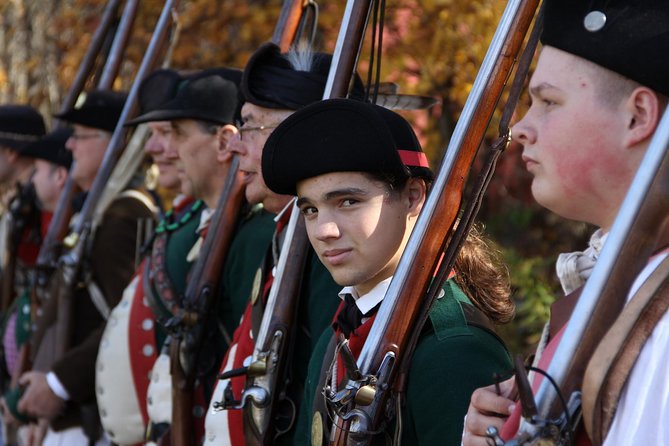
Carpenters’ Hall is one of the most rewarding stops for anyone who wants more than the standard founding story. The building hosted the First Continental Congress in 1774, when colonial leaders met to respond to British policies.
It also connects to secret meetings held by Franklin in December 1775 with John Jay, Francis Daymon, and the French agent Julien Achard de Bonvouloir. These conversations helped lead to negotiations for French support of the colonists. French aid later became a major factor in the American victory, so this quiet Philadelphia building links directly to international politics and wartime survival.
The building was occupied by British forces during the winter of 1777, when British troops held Philadelphia. That fact gives the Revolution a more physical edge. The city was not just the birthplace of political ideas. It was also a wartime capital that could be taken and held.
Again, the tour may leave you wanting an interior visit. That is not a flaw if you see the walk as a first pass, but it is worth knowing before you book.
Banks, money, and the fights after independence
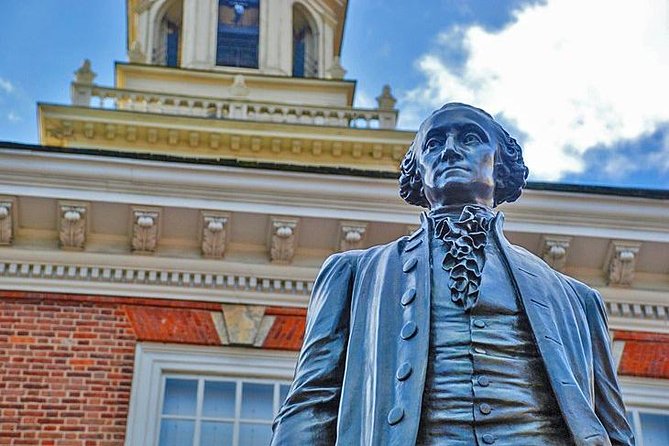
The First Bank of the United States brings Alexander Hamilton into the route. Hamilton, the first Secretary of the Treasury, championed the bank as part of the new nation’s financial system. The building also matters for its architecture.
The Second Bank of the United States adds another chapter. It was modeled on Hamilton’s First Bank, chartered by President James Madison in 1816, and lost its charter during Andrew Jackson’s presidency in 1834.
These stops show that the founders did not agree on everything once independence was won. The arguments over federal power, banking, and the role of the president continued for decades. The guide also discusses Hamilton and Jackson in connection with famous duels, giving the political story a more personal and sometimes dramatic edge.
You may not expect banking history on a Revolution walk, but I find it valuable. It explains how the ideals announced in 1776 collided with the hard work of running a country.
Philadelphia’s thinkers, libraries, and everyday citizens
The American Philosophical Society was founded by Franklin in 1743, two years after the University of Pennsylvania. Early members included Washington, Adams, Jefferson, Hamilton, Thomas Paine, David Rittenhouse, James Madison, and other leading figures.
The guide uses the site to discuss Franklin, higher education, and America’s first surgical center nearby. It shows how Philadelphia served as a place for scientific inquiry as well as political debate.
The Library Company, founded by Franklin in 1731, was the first institution in the world to lend materials to members of the public. Its story broadens the tour again. The Revolution was shaped not just by speeches and battles, but by people who printed, read, debated, studied, and shared ideas.
The route also passes the Dolley Todd House site. Dolley Madison lived there with her first husband, John Todd, from 1791 to 1793. Built in 1775, the house offers a glimpse of middle-class life in eighteenth-century Philadelphia.
This is one of the tour’s better human details. Founding-era Philadelphia was not only a stage for presidents. It was also a city of households, workplaces, publishers, shopkeepers, and families.
What the pace, group size, and weather mean for you
The tour lasts about two hours and has morning and afternoon departures. That makes it easy to place near a museum visit or a separate Independence Hall reservation. The route ends at the Merchant Exchange Building on South Third Street, just behind City Tavern, near the place where the Continental Congress met and Alexander Hamilton lived.
The group can include up to 24 people. That is large enough to create a social walking tour, but smaller than many major city outings. You will still need to stay close to the guide and listen carefully at busy streets and crowded sites.
This is an outdoor activity that runs in rain or shine, subject to the weather policy. Philadelphia winters can be severe. A January walk was completed in 9-degree weather, and several tours went ahead in freezing temperatures, snow, wind, and ice. Guides such as Ted and Josh worked hard to keep the group moving and engaged, but no storytelling can make standing outside comfortable for everyone.
Wear warm layers and shoes suited to walking. In mild weather, the outdoor format is a strength. In bitter cold or heavy rain, it becomes the main limitation. The experience requires good weather and may be canceled if conditions are poor, with a different date or full refund offered.
Is $29 a fair price?
At $29 per person, I consider this a good value for a first Philadelphia visit, especially if you want a guide rather than a self-guided walk. You are paying for two hours with a history-trained guide and a route that links many major sites, not for museum admission.
The price is less attractive if you expect long interior visits. You still need to arrange and budget time for Independence Hall’s free timed entry and the Liberty Bell pavilion. The tour’s value comes from its explanation, route, and orientation.
I would book it early if your dates are fixed. It is booked an average of 16 days ahead, and morning or afternoon choices give you some scheduling flexibility. Free cancellation is available up to 24 hours before the start time. Changes or cancellations within 24 hours are not accepted for a refund.
Who will get the most from this tour?
I would choose this walk if you are visiting Philadelphia for the first time, want the main revolutionary sites connected in one story, or enjoy history told with humor and drama. It also works well for families with school-aged children, provided they can handle two hours on foot and outdoor stops.
History buffs will appreciate the focus on 1776, Franklin, Hamilton, the Continental Congress, and the early national government. Curious first-time visitors will appreciate the simple directions for returning to sites that deserve more time.
I would hesitate if you want a quiet, slow architectural tour, guaranteed building access, or a fully academic lecture without performance. The guides are encouraged to be lively, and that energy is a major reason the tour gets strong marks, but it will not suit every style of learner.
Should you book Revolution and the Founders?
Book it if you want a brisk, well-organized introduction to Old City Philadelphia before choosing which interiors deserve your afternoon. The route covers the Liberty Bell, Independence Hall, Franklin Court, Carpenters’ Hall, Congress Hall, the banks, early libraries, and several less obvious sites for $29.
Go in with the right expectation: this is a historian-led outdoor overview, not an all-access tour of Philadelphia’s museums and landmark interiors. I would especially request Josh, Kyle, Ted, Joseph, or Vince if guide choice is available, since their styles are frequently praised for humor, drama, and personal attention.
For most first-time visitors, the tour earns its place near the start of a Philadelphia itinerary. Just reserve your Independence Hall timed entry separately, allow time for the Liberty Bell pavilion, and check the forecast before setting out.
FAQ
How long is the Revolution and the Founders tour?
The walking tour lasts approximately two hours.
What landmarks are included?
The route includes the Liberty Bell, Independence Hall, the President’s House site, Congress Hall, Franklin Court, the location of America’s first military headquarters, the Benjamin Franklin Post Office and Museum, Carpenters’ Hall, the First and Second Banks of the United States, the American Philosophical Society, the Library Company, and the Dolley Todd House site.
Are Independence Hall and the Liberty Bell interiors included?
No. The tour mainly explains these sites from outside. Independence Hall requires free timed entry passes, and the Liberty Bell pavilion can involve a line. You receive directions for returning to both sites.
Does the tour run in the morning or afternoon?
You can choose a morning or afternoon tour.
How large is the group?
The activity has a maximum of 24 travelers.
What is the cancellation policy?
You can cancel at least 24 hours before the start time for a full refund. Cancellations or changes made within 24 hours are not accepted for a refund. If poor weather or an insufficient number of bookings causes the tour to be canceled, you will be offered another date or a full refund.
Newly listed in Philadelphia
- Philadelphia: Revolution and The Founders History Tour★ 4.6 · 450 reviews
- Flavors of Philly Food Tour★ 5.0 · 505 reviews
- Double Decker Hop-On Hop-Off City Sightseeing Philadelphia (1, 2, or 3-Day)★ 4.0 · 562 reviews
- Philadelphia 2 Hour Electric Cart Tour★ 5.0 · 633 reviews
- BYOB Historically Hilarious Trolley Tour of Philadelphia★ 5.0 · 657 reviews
- Philadelphia: Double-Decker Hop-on Hop-off Sightseeing Tour★ 4.4 · 868 reviews
- The Constitutional Walking Tour of Philadelphia★ 4.5 · 902 reviews
- 2.5 Hour Philadelphia History Tour with Washington War Tent Show★ 5.0 · 924 reviews
Philadelphia Tours, compared.
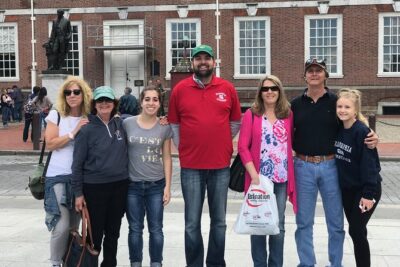
Philadelphia Old City Historic Walking Tour with 10+ Top Sites
Read our review →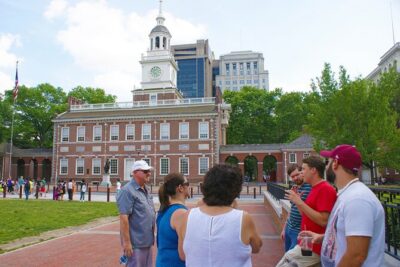
2.5 Hour Philadelphia History Tour with Washington War Tent Show
Read our review →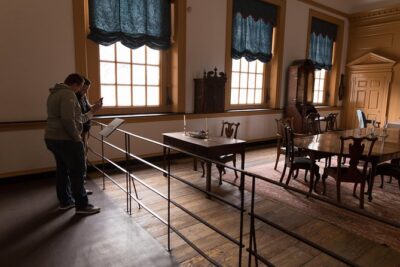
The Constitutional Walking Tour of Philadelphia
Read our review →

Center City Philadelphia Food Tour with Reading Market
Read our review →
BYOB Historically Hilarious Trolley Tour of Philadelphia
Read our review →Browse the lists this tour appears in