
Reviewed · CHARLESTON TOURS
Boone Hall Plantation Admission & Tour with Transportation from Charleston
Boone Hall’s grand entrance is the showstopper: a long avenue of live oaks draped in Spanish moss leads toward the plantation grounds. The visit then shifts from postcard scenery to harder history, with the enslaved people’s cabins and a thoughtful presentation on Gullah culture.
I especially like the round-trip bus ride, which removes the need for a car and adds local history along the way. The Gullah presentation is another strong point, bringing language, music, memory, and African American culture into a visit that could otherwise focus too much on a pretty house.
The main drawback is time. You get about three hours at Boone Hall, but walking between stops and fitting in the house tour, Gullah program, gardens, cabins, and possible tram ride can feel rushed. The grounds also offer limited shade, so a hot afternoon calls for water, a hat, and sensible shoes.
Key points to know before you book
- The live-oak entrance is Boone Hall’s signature sight: Allow a moment to take in the tree-lined approach before rushing toward the house.
- The house is not the original 17th-century building: Boone Hall dates back to 1681, but the current mansion is less than a century old.
- The Gullah presentation is the emotional high point: It connects plantation history with the living culture of descendants of enslaved Africans in the region.
- The enslaved people’s cabins add necessary context: Historic quarters, artifacts, and interpretation focus attention on daily life and forced labor.
- The tram may be seasonal and may not stop at every attraction: Treat it as a narrated ride around the property, not as a shuttle service.
- Transportation begins and ends at 375 Meeting Street: Hotel pickup is not included, but the Charleston Visitor Center has restrooms, parking, and a gift shop.
Why Boone Hall is more than a pretty driveway

Boone Hall is easy to recognize from photographs. The avenue of live oaks, with Spanish moss hanging overhead, gives the approach a theatrical quality. It is also one reason many people choose this plantation over another Charleston-area visit.
But the property works best when you look beyond the scenery. Boone Hall is described as one of America’s oldest working, living plantations, with agricultural activity that has included strawberries, peaches, pecans, and other crops. The site connects its long past with its present use rather than presenting a frozen museum set.
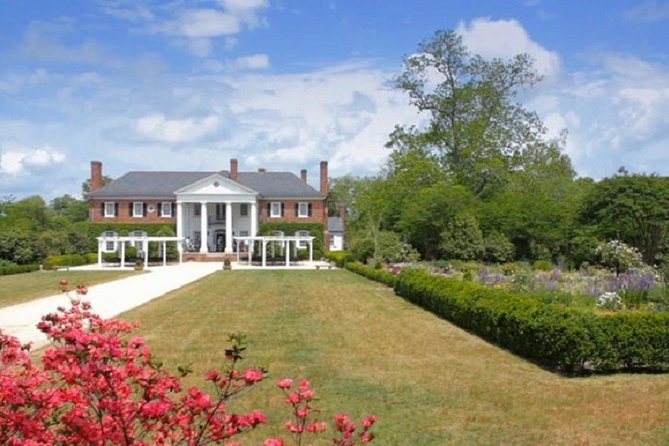
That said, you should arrive with clear expectations about the house. Boone Hall’s history reaches back to 1681, but the mansion you tour is not a Civil War-era building. The current house is less than 100 years old, and the property was purchased by the McRae family in 1955 before opening to the public in 1956.
I think that distinction matters. If you want an original colonial or antebellum mansion, this may disappoint you. If you want a broader look at plantation life, changing ownership, agriculture, slavery, emancipation, and Gullah culture, the site offers more than the house alone.
More to weigh up across Charleston
- Charleston’s Old South Carriage Historic Horse & Carriage Tour
★ 5.0 · 10,023 reviews - Historic Charleston Guided Sightseeing Walking Tour
★ 5.0 · 6,216 reviews - Haunted Evening Horse and Carriage Tour of Charleston
★ 4.5 · 3,678 reviews
The 30 to 45 minute ride from Charleston
Your day starts at the Charleston Visitor Center, at 375 Meeting Street. The location is convenient if you are staying downtown, and it has restrooms, parking, and a gift shop. You do not receive hotel pickup, so allow time to reach the meeting point.
The ride to Boone Hall takes about 30 to 45 minutes. You travel in an air-conditioned bus with a professional driver, and the ride is not simply dead time. The driver may point out local sights and share background about the area before you arrive. This gives you a useful introduction before you begin walking around the property.
The group is advertised at up to 25 people, while the experience is also described as a small-group tour of 15. In practice, group size may vary, so do not assume an intimate private outing. The bus does make the trip much easier than arranging a rental car, especially if you are visiting Charleston for only a few days.
The return bus brings you back to the same Visitor Center. The full experience lasts about four and a half hours, including transportation.
The porch talk and the modern mansion
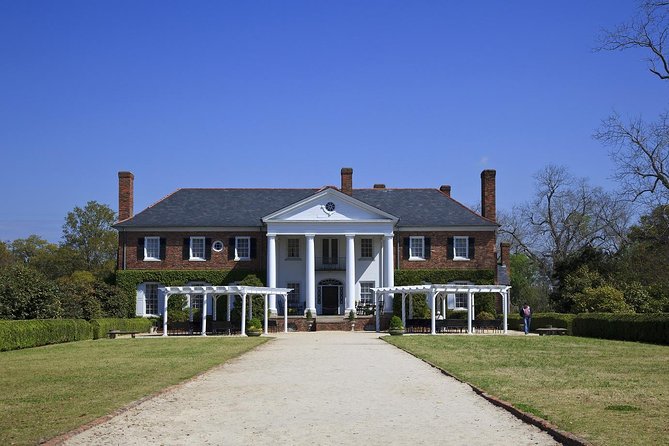
At Boone Hall, the plantation house tour begins on the front porch. A guide in historical dress leads a presentation of about 30 minutes, covering the property’s development and its succession of owners since 1681.
This format gives you a focused introduction rather than an open-ended walk through every corner of the house. You get the main story, then use your remaining time to explore the grounds and other presentations.
The house is attractive, and it helps explain why Boone Hall has been used as a filming location, including for The Notebook. Still, the movie-like appearance can create the wrong idea if you expect every building and furnishing to date from the earliest plantation years.
I would treat the house as one chapter, not the whole book. The more useful visit pairs the porch talk with the cabins, Gullah program, gardens, and farm areas. If the mansion is your only goal, the outing may feel thin for the price. If you want several different ways to understand the property, the house tour fits well into the larger visit.
The cabins and the history of enslavement
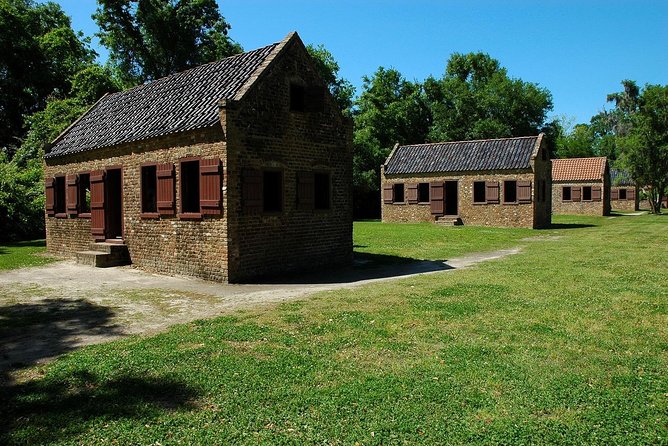
The presentation about enslaved people is one of the most important parts of the visit. You see historic cabins, living quarters, relics, and material connected with the daily lives of the people held here.
These structures make the subject physical. Instead of hearing only about plantation economics or owners, you confront the small spaces where enslaved people lived and the limited possessions associated with their lives. The experience can be sobering, and it should be.
Boone Hall’s interpretation also covers the period through emancipation and afterward. That wider time frame helps you avoid the common mistake of treating slavery as a brief footnote before moving on to the mansion. The history of the people who lived and worked here did not end when emancipation came.
I appreciate that this part of the visit is included in the standard admission rather than treated as an optional add-on. It gives the property a more honest shape. The beauty of the grounds and the pain of the past need to be understood together.
A different kind of day, same corner of the map:
- Charleston Horse-Drawn Carriage Tour: Explore Historic Charleston
★ 5.0 · 3,561 reviews - Fort Sumter Admission and Self-Guided Tour with Roundtrip Ferry
★ 4.5 · 3,343 reviews - Ghosts of Charleston Night-Time Walking Tour with Unitarian Church Graveyard
★ 4.5 · 2,835 reviews - Charleston Harbor History Day-Time or Sunset Boat Cruise
★ 4.5 · 2,788 reviews
The Gullah presentation is the visit’s heart
Boone Hall offers a live, seasonal presentation called Exploring the Gullah Culture. It focuses on the Gullah people, descendants of enslaved Africans who live in this part of the country, and on the culture that developed through African traditions, forced migration, language, music, and community life.
For many people, this is the most memorable portion of the day. A costumed performer explains Gullah culture in a way that reaches beyond dates and ownership changes. The program includes discussion of Creole language and music, and it can make the connection between plantation history and present-day cultural identity much clearer.
Sweetgrass baskets are also part of the regional story. You may learn how these distinctive baskets can take weeks or months to make and serve practical, multi-use purposes. The presentation gives you a better basis for understanding why these crafts are more than souvenirs.
The program is seasonal, so confirm availability for your date. I would plan your visit around it rather than assume you can simply catch it whenever you finish the house tour. The schedule can shape your entire three hours on site.
Gardens, roses, farms, and the tram
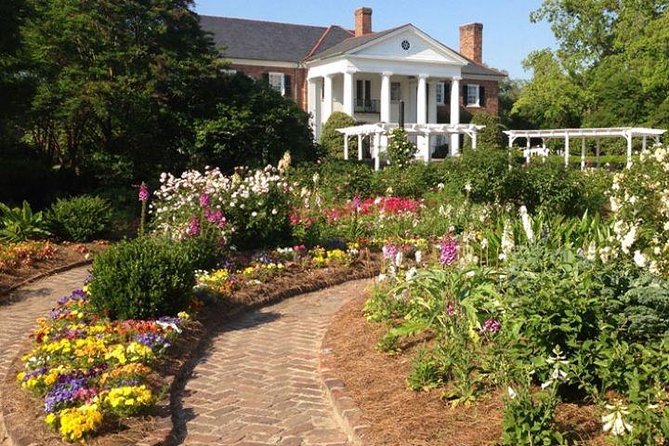
The grounds are largely self-guided, so you can set your own pace between formal areas, gardens, historic buildings, and agricultural sections. Boone Hall’s rose garden is a particular draw, with bushes more than a century old.
The property is also a working plantation, producing crops such as strawberries, peaches, and pecans. That working quality gives the visit a present-day angle, although the amount of farming you see may depend on the season.
A plantation tram tour may be available seasonally. If it runs, it offers a narrated ride around the grounds and gives your feet a break. It is important to understand what it is not. The tram or tractor may circle the property while the story is told, but it does not necessarily stop at every attraction or serve as a hop-on, hop-off shuttle.
That detail matters if you use a cane or have trouble walking. Much of the visit takes place outdoors, and you may need to walk between the house, cabins, gardens, and performance areas. The activity calls for moderate physical fitness, so ask staff about the day’s tram arrangements if mobility is a concern.
How to fit everything into three hours
The site has enough to see that planning helps. Start by checking the house tour time and the schedule for the Gullah program. One practical approach is:
- Begin with the house tour if a time is assigned or reserved.
- Attend the Gullah presentation next, since it is seasonal and scheduled.
- Visit the enslaved people’s cabins and history presentation.
- Walk through the gardens and rose garden.
- Add the tram or farm ride if it is operating and time allows.
Do not assume you can attend every presentation and still stroll slowly through the property. Several people find the half-day visit a little tight, particularly when the grounds are busy or the weather is hot.
Food and drinks are not included, but snacks and drinks can be purchased at Boone Hall. A food stop near the horse stalls, including sandwiches and snacks, may be useful if you arrive hungry. Bringing water is still wise, especially for a midday visit.
Heat, walking, and practical comfort
Charleston summers can make an open plantation visit demanding. The entrance avenue provides shade, but you will spend time in open areas, and one of the most useful tips is to bring plenty of water. A hat, sunscreen, and comfortable walking shoes will make a real difference.
The tour is not designed as a strenuous hike, but there is enough walking to matter. The property is large, and the tram cannot be counted on to deliver you directly to every stop. If you have limited mobility, check the day’s arrangements before committing.
Service animals are allowed, and the plantation is near public transportation. The supplied details do not promise full accessibility at every historic building or path, so ask specific questions if you need step-free access or frequent seating.
Weather also matters. The activity requires good weather and can be canceled if conditions are poor. In that case, you are offered another date or a full refund.
Is the $82 price fair?
At $82 per person, the price includes the gate fees, air-conditioned round-trip transport, driver, house tour, enslaved people’s cabins and history presentation, Gullah theater program, self-guided garden access, and a possible tram tour.
That is a fair package if you are based in Charleston without a car. You are paying not only for admission, but also for the ride out and back and the convenience of having the day organized. The transportation is especially useful if you want a plantation visit without spending time with rental-car directions and parking.
The value is weaker if you already have a car and want to spend a full day at Boone Hall. The bus schedule limits your time, and you may wish you had another hour for the gardens, farm areas, and presentations.
The tour is generally a good fit for a first Charleston visit, couples, families with older children, and anyone interested in the relationship between plantation history and Gullah culture. It is less suitable if your main goal is an original antebellum mansion, a leisurely garden day, or a fully accessible shuttle between every stop.
You can cancel for a full refund up to 24 hours before the start time. Changes or cancellations within 24 hours are not refunded, so keep that deadline in mind when weather or illness may affect your plans.
Should you book Boone Hall from Charleston?
I would book this tour if you want a straightforward half-day outing that combines transportation, scenery, house history, the cabins of enslaved people, and a strong Gullah program. The live-oak avenue is unforgettable, but the Gullah presentation and the cabins give the visit its real purpose.
I would hesitate if you expect an original 17th-century mansion or want to explore at a slow pace. In that case, having your own car and more time may suit you better.
For most first-time visitors, Boone Hall offers a useful balance of beauty and difficult truth. Just plan around the scheduled presentations, wear shoes for walking, bring water, and remember that the modern house is only one part of a much longer story.
FAQ
Where does the tour begin and end?
The tour begins and ends at the Charleston Visitor Center, 375 Meeting Street, Charleston, South Carolina. Hotel pickup and drop-off are not included.
How long does the Boone Hall experience take?
The full outing lasts about 4 hours and 30 minutes, including the bus ride from Charleston and the return trip. You have roughly three hours at Boone Hall itself.
Is transportation included?
Yes. The tour includes round-trip transportation from the Charleston Visitor Center aboard an air-conditioned bus and a professional driver.
What is included at Boone Hall?
Admission includes the house tour, enslaved people’s cabins and history presentation, Gullah theater presentation, self-guided garden access, and a tram tour when available.
Is the tram tour always available?
No. The tram tour is seasonal or dependent on availability. It may tour the grounds without stopping at every attraction, so it should not be treated as a shuttle between all sites.
Can I cancel for a refund?
You can cancel up to 24 hours before the experience start time for a full refund. Cancellations or changes made less than 24 hours before departure are not refunded.
Newly listed in Charleston
- Charleston: Downtown Horse-Drawn Carriage Tour★ 4.8 · 459 reviews
- Charleston Horse & Carriage Historic Sightseeing Tour★ 4.5 · 460 reviews
- Charleston Ghosts of Liberty Guided Walking Tour★ 4.5 · 473 reviews
- Charleston Ghost & Dungeon Night-Time Walking Tour with Entry to Provost Dungeon★ 4.0 · 479 reviews
- Charleston Haunted Jail Night-Time Walking Tour with Admission to Old City Jail★ 4.5 · 570 reviews
- Charleston Harbor Luxury Dinner Cruise with Live Music★ 4.0 · 607 reviews
- Afternoon Schooner Sightseeing Dolphin Cruise on Charleston Harbor★ 4.5 · 620 reviews
- Charleston: Sightseeing Harbor Tour & Dolphin Watch★ 4.5 · 649 reviews
Charleston Tours, compared.

Charleston’s Old South Carriage Historic Horse & Carriage Tour
Read our review →
Historic Charleston Guided Sightseeing Walking Tour
Read our review →
Haunted Evening Horse and Carriage Tour of Charleston
Read our review →
Charleston Horse-Drawn Carriage Tour: Explore Historic Charleston
Read our review →
Fort Sumter Admission and Self-Guided Tour with Roundtrip Ferry
Read our review →
Ghosts of Charleston Night-Time Walking Tour with Unitarian Church Graveyard
Read our review →
Charleston Harbor History Day-Time or Sunset Boat Cruise
Read our review →
Hidden Alleyways and Historic Sites Small-Group Walking Tour
Read our review →Browse the lists this tour appears in