
Reviewed · TAMPA TOURS
The Florida Aquarium Ticket
The best part of The Florida Aquarium is how quickly it moves you from Florida wetlands to a 500,000-gallon coral reef. One minute you are under a glass dome with free-flying birds, river otters, and alligators. Next, you are eye to eye with sharks, stingrays, sea turtles, and barracudas.
I like the three touch pools, especially the chance to feel a stingray and gently touch a jellyfish. I also like the aquarium’s serious conservation work, since admission supports rescued sea turtles, student education, coral reef research, and animal care. The main drawback is size: many people finish in 75 minutes to two hours, so the $36 price can feel high if you move quickly.
Key points to know before you go
- Three hands-on touch pools: Stingray Touch, No Bone Zone, and Moon Bay give you more to do than simply look through glass.
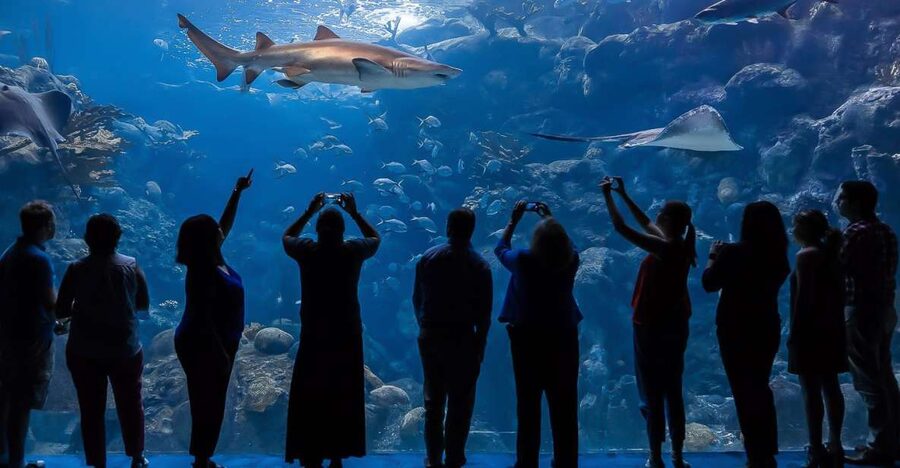
- The Coral Reef Gallery: A huge panoramic tank holds sharks, giant stingrays, sea turtles, barracudas, and many smaller fish.
- A Florida-first approach: Wetlands, mangroves, native fish, alligators, and otters connect the aquarium to the state around you.
- More than fish: You will also see lemurs, free-flying birds, seahorses, jellyfish, and other animals from around the world.
- Downtown Tampa location: The aquarium sits near the Riverwalk, Ybor City, Sparkman Wharf, restaurants, and cruise terminals.
- A visit you can support: The Florida Aquarium is a 501(C)(3) nonprofit accredited by the Association of Zoos and Aquariums.
Starting under the glass dome in downtown Tampa

The Florida Aquarium sits in the Channel District, in the heart of downtown Tampa. Follow the signs to the main entrance, where your prepaid ticket is scanned before you enter. The process is generally simple, and a skip-the-ticket-line booking can save time when the entrance is busy, though you still pass through security.
Location is one of the aquarium’s strongest practical advantages. You can combine it with Tampa’s Riverwalk, a meal at Sparkman Wharf, a walk through historic Ybor City, or a cruise from one of the nearby terminals. The free TECO streetcar also makes this a useful stop if you do not want to drive.
By streetcar, get off at The Florida Aquarium station and walk south about half a block on Channelside Drive. You can also use the Amalie Arena station, then walk east about one and a half blocks. That is easier than searching for a downtown parking space, especially during a busy event.
Parking is not included. A City of Tampa lot north of the aquarium has pay stations that accept major credit cards, and a privately managed garage sits across the street with rates that vary. Other lots are within walking distance, so allow extra time if you are arriving near opening or during a major event.
More to weigh up across the USA
- Atlanta: Georgia Aquarium Skip-the-Box-Office Entry Ticket
★ 4.7 · 3,476 reviews - Las Vegas: Shark Reef Aquarium Entry Ticket
★ 4.3 · 892 reviews - The Florida Aquarium in Tampa General Admission
★ 4.5 · 757 reviews
Florida wetlands, mangroves, and animals at tree level
The visit begins with a strong sense of place. Rather than treating Florida as a backdrop, the aquarium shows how water shapes the state, from coastal shallows and mangroves to freshwater habitats and the animals that depend on them.
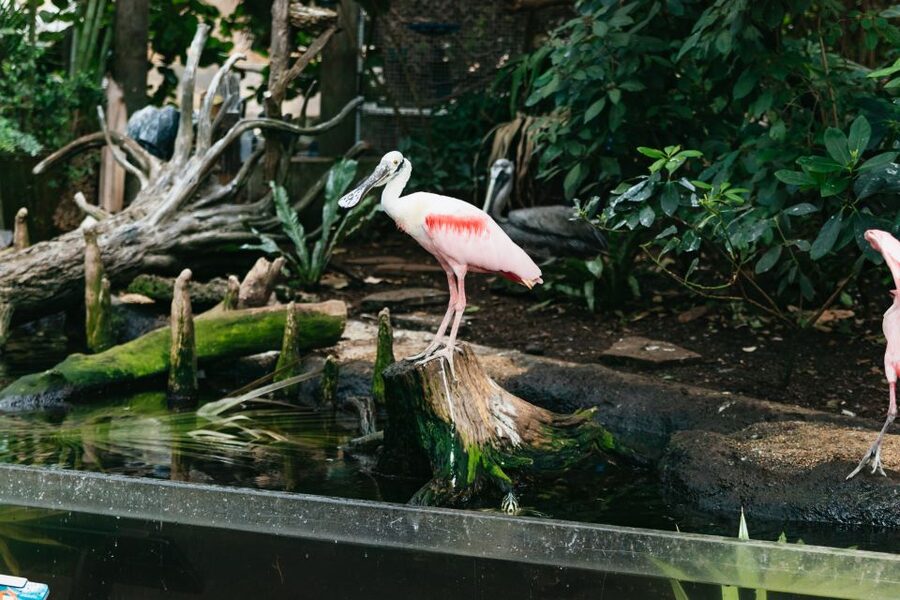
The free-flying bird aviary is one of the more memorable spaces. A lush mangrove tunnel, flowing water, and native fish create a setting that feels closer to a living wetland than a row of separate tanks. Birds move overhead, so look up as often as you look into the water.
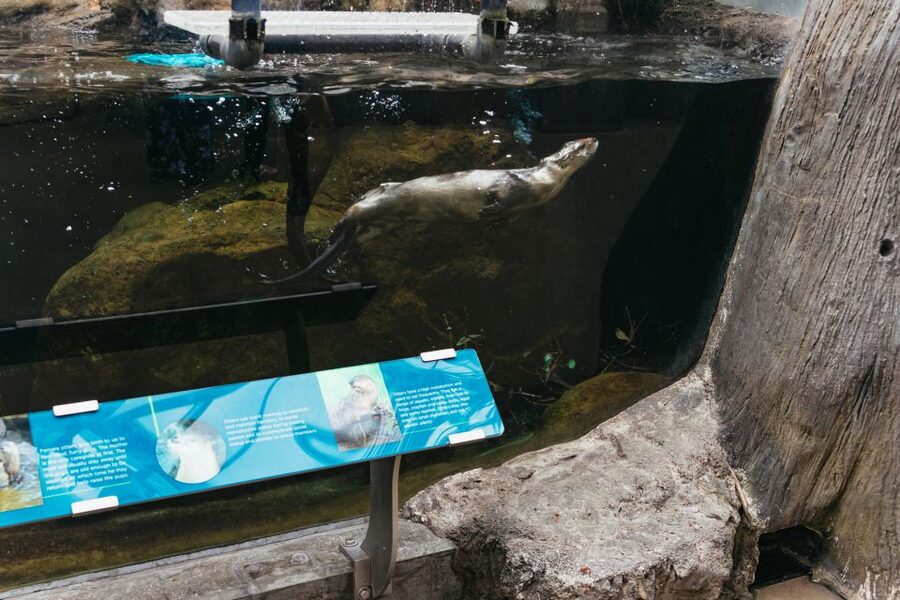
River otters provide a burst of energy, while alligators offer a reminder that Florida wildlife is not all soft feathers and colorful fish. The area is especially useful for families because it changes the pace. You are not simply walking past tanks. You are moving through a habitat with animals above, below, and beside you.
The aquarium describes its journey as moving from sea level to tree level. That idea works well here. You see how birds, fish, mammals, and reptiles share one connected system, which gives the displays more meaning than a basic species checklist.
Three touch pools make this a hands-on visit
The interactive areas are the aquarium’s biggest advantage for children and curious adults. General admission includes three touch pools, so you do not need to buy an extra ticket to take part.
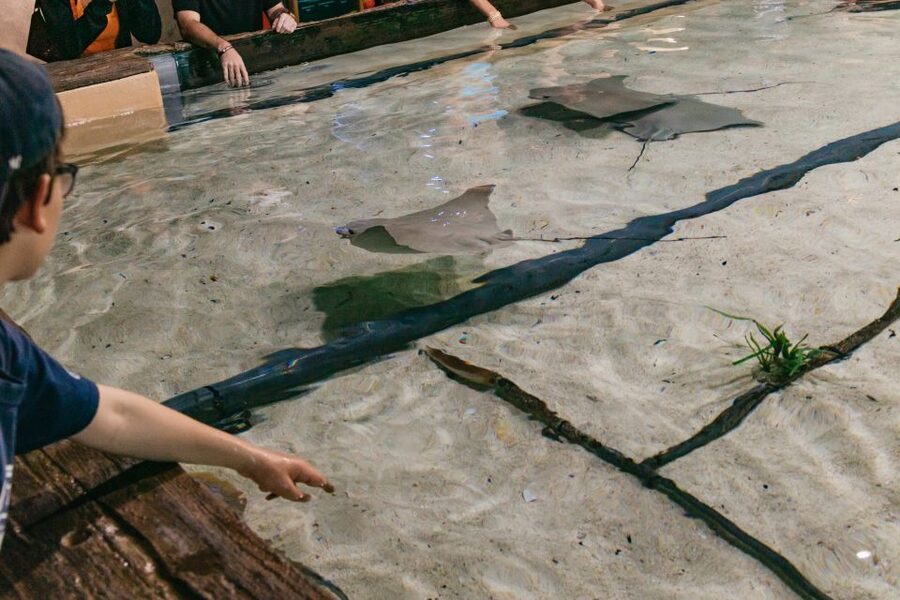
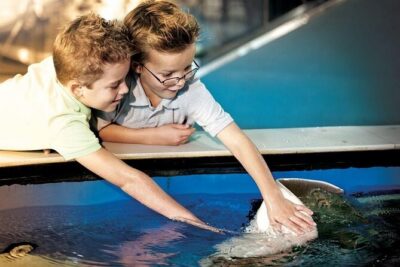
At Stingray Touch, you can reach into the water and touch a stingray under staff guidance. This is often the moment children remember most, but it works for adults too. The stingrays turn a distant animal into something real and immediate.
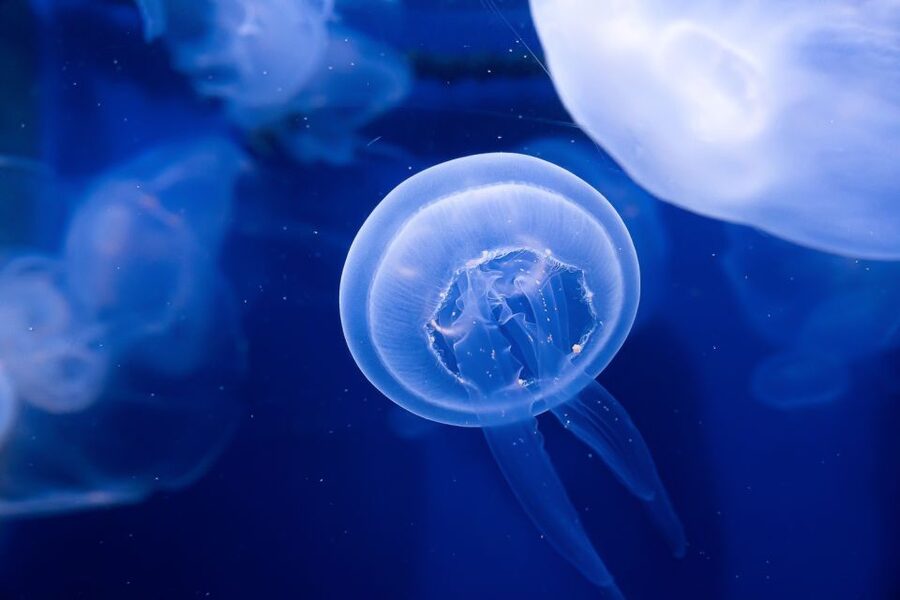
No Bone Zone focuses on animals without backbones. Moon Bay lets you touch a jellyfish, a surprisingly gentle experience when done carefully and as instructed. The jellyfish are fascinating because they seem delicate, yet they have adapted to survive without the structure most people associate with animals.
These pools can become crowded at popular times. If you want more room and less waiting, arrive early or return later in the day. I would also bring a change of clothes, especially if you are visiting with young children and plan to use any nearby water-play area.
The interactive spaces are a major reason the ticket can be worth more than a short walk through conventional exhibits. You are not just watching wildlife. You are learning how different bodies work through direct contact.
The Coral Reef Gallery is the visual centerpiece

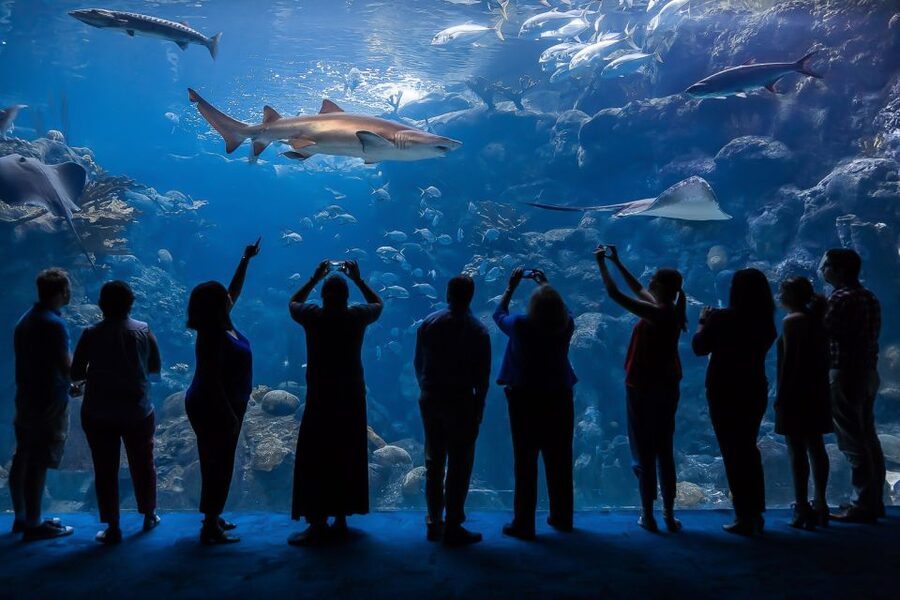
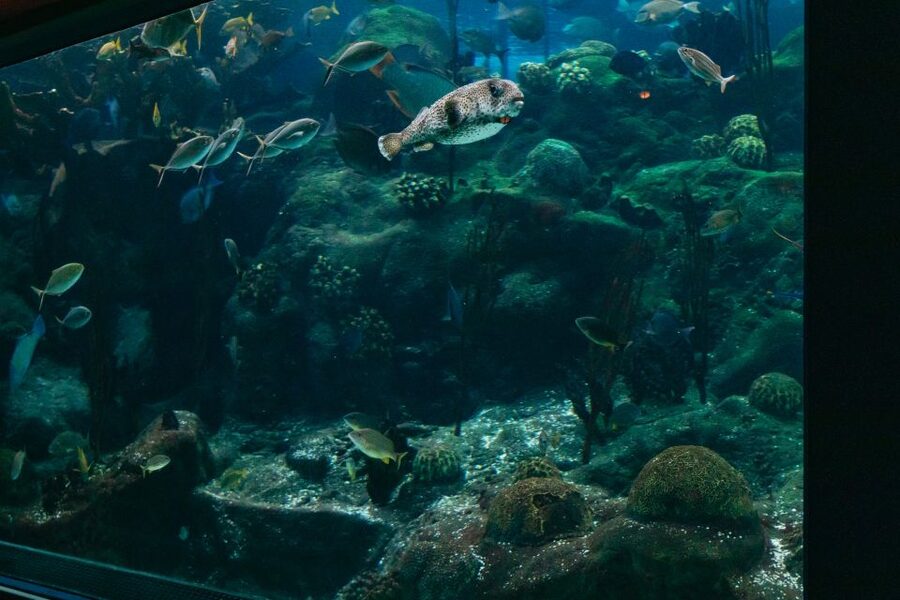
The 500,000-gallon panoramic Coral Reef Gallery is the aquarium’s grandest room. The tank gives you long views through the water, and it is worth sitting down rather than rushing past.
Sharks patrol the space with giant stingrays, endangered sea turtles, barracudas, and schools of smaller fish. The variety creates a changing scene. You may watch a shark pass, then notice a turtle, a ray, or a flash of silver behind it.
I recommend spending several quiet minutes in front of this tank. The aquarium is not huge, and that works in your favor here. You can return to the same viewing area and notice details that were easy to miss on the first pass.
The gallery also provides a useful lesson in scale. A small aquarium can show many species, but a very large tank lets you see how animals share open water. That is particularly valuable for children who know sharks or sea turtles only from books and television.
On busy days, the space may fill with families and school groups. If you want a calmer look, try it early, then return near the end of your visit. The best view is not always the first one you find.
A different kind of day, same corner of the map:
- NYC: SUMMIT One Vanderbilt Tickets
★ 4.7 · 51,195 reviews - NYC: 9/11 Memorial & Museum Timed-Entry Ticket
★ 4.8 · 31,428 reviews - NYC: Empire State Building Tickets – Observatory & Museum
★ 4.7 · 25,757 reviews - NYC: Empire State Building Observation Deck Tickets
★ 4.7 · 22,072 reviews
MORPH’D explains how animals adjust to their surroundings
MORPH’D is built around adaptation. It looks at the physical traits and behaviors that help animals survive in their environments, making it a useful change from the large reef tank.
This section is a good choice if you enjoy the science behind the animals rather than only their appearance. A seahorse, a lemur, and a bird may seem unrelated, but adaptation gives you a way to compare how each one finds food, moves, hides, or copes with its surroundings.
The aquarium’s range is one of its pleasures. You can move from dwarf seahorses to apex predators, then shift from aquatic life to mammals and birds. That variety keeps the visit from becoming repetitive, especially for children who lose interest after too many similar tanks.
Read the interpretive panels and listen to the short educational presentations when available. The information helps turn a pretty display into a lesson about habitat, survival, and conservation. Staff members are present around the exhibits to answer questions and explain what you are seeing.
Educational presentations add structure to a self-guided visit
Your ticket includes educational and entertaining shows or presentations. These are useful because a self-guided aquarium visit can otherwise become a fast loop through the building.
The presentations give you a chance to pause and hear context about the animals. If you are visiting with children, they also create natural breaks between exhibits. Check the day’s schedule when you arrive, since starting times and operating hours can change.
The aquarium is accredited by the Association of Zoos and Aquariums. That accreditation reflects standards for animal welfare, veterinary care, conservation, and education. It does not make every exhibit equally compelling, but it gives the institution a clear framework for caring for its animals.
The conservation mission is not hidden behind the entertainment. Ticket revenue helps educate students, care for animal ambassadors, rehabilitate rescued sea turtles, and support research aimed at protecting Florida’s coral reef tract. I consider that a meaningful part of the price, particularly if you prefer attractions with a public purpose.
How long you need, and how to pace the visit
The aquarium recommends allowing at least two hours. That is a sensible minimum if you want to read signs, attend a presentation, use the touch pools, and sit at the Coral Reef Gallery.
You can walk through the main route in about an hour if you move briskly. Some families spend three hours or more by slowing down, repeating favorite areas, eating onsite, or using child-friendly spaces. The difference comes down to your pace, not a formal guided itinerary.
A practical route looks like this:
- Start with the Florida wetland and mangrove habitats.
- Continue to the bird aviary, native fish, river otters, and alligators.
- Visit the three touch pools while everyone still has energy.
- Spend unhurried time at the Coral Reef Gallery.
- Finish with MORPH’D, seahorses, lemurs, and any scheduled presentation.
- Return to the large reef tank or a favorite animal before leaving.
This order is only a suggestion. If the touch pools are crowded, begin elsewhere and come back. If the reef tank is your priority, visit it before the aquarium fills.
Food, family facilities, and extra activities
Food and drinks are not included, but Cafe Ray offers food onsite. One particularly useful family detail is the presence of a play area, while past visits also included a splash pad. Conditions and features can change, so check what is operating on the day you visit.
A change of clothes is listed as something to bring. That advice matters most for families with small children, since water play can turn a dry shirt into a wet one quickly.
Wheelchairs, electric scooters, and strollers are available to rent in limited daily numbers. The aquarium is wheelchair accessible, but rental supply is not unlimited, so do not assume a particular item will still be available late in the day.
You can also add separate water activities, including SeaTREK, a helmet-based underwater experience, and the Wild Dolphin Cruise on Tampa Bay. These are not part of general admission. A 75-minute dolphin boat ride has sometimes been offered for less than $20, but check the current price and schedule before building your day around it.
Is $36 a fair price for this aquarium?
At $36 per person, the ticket is reasonable for a visitor who uses the touch pools, watches a presentation, spends time at the reef tank, and stays for two or three hours. It is less convincing if you expect a huge all-day complex or if you tend to move through museums quickly.
The aquarium’s size is both a strength and a weakness. You can see the major areas without exhausting yourself, and it works well as part of a downtown Tampa day. But some people can walk through the entire building in 75 minutes, which makes the cost feel steep.
Booking ahead may also save money. Same-day online purchases have sometimes cost less than buying at the window, and prepaid entry can let you bypass the ticket line. Compare the current online price with the direct rate, then factor in parking, food, and any optional cruise.
For families, the touch pools and animal variety help justify the price. For adults without children, the experience still has plenty to offer, especially the reef gallery, jellyfish, birds, and conservation displays. I would be more hesitant if you are seeking a large, full-day aquarium with many separate buildings.
When to visit and what to expect at the entrance
Your entry is valid at the reserved time or later on the same day only. This gives you some flexibility, but it does not mean the ticket works on another date.
A quiet weekday can make the visit feel personal, with easier access to the touch pools and more space at the exhibits. Weekends and school holidays can be much busier. One Saturday was described as having roughly 5,000 people onsite, so crowd levels can change the experience dramatically.
Arriving early helps with parking and security. One useful pattern is to enter around 9:30 in the morning, explore for two hours, and leave before the entrance line grows. You can also return to the aquarium’s central displays if you want a slower finish.
Operating hours can change, and the aquarium closes on Thanksgiving Day and Christmas Day. Check the official website before setting out.
Who will enjoy The Florida Aquarium most?
I would recommend this aquarium to families with young children, especially those interested in stingrays, jellyfish, colorful fish, and hands-on activities. The touch pools give children a reason to slow down, while the otters and alligators keep the Florida section lively.
It also suits adults who want a manageable indoor attraction in Tampa. You can visit without committing an entire day, then continue to the Riverwalk, Ybor City, Sparkman Wharf, or a meal nearby.
The aquarium is a good fit for anyone interested in conservation. Your admission supports rescued sea turtles, education, animal care, and coral reef research, so the ticket does more than provide entertainment.
I would hesitate if you want a massive aquarium with enough exhibits to fill six hours. I would also calculate the cost carefully for a large family, especially after parking and food. Look for an online rate, arrive early, and plan another downtown activity so the price feels more balanced.
Should you book The Florida Aquarium?
Book it if you want hands-on animal encounters, a strong Florida wetlands section, and a beautiful large reef tank in a convenient downtown location. Plan on at least two hours, and slow down at the touch pools and Coral Reef Gallery rather than racing through.
Skip it if you only have a short Tampa stop and the $36 admission feels high for a compact aquarium. For everyone else, especially families and conservation-minded visitors, it is a well-rounded half-day stop with enough variety to make the ticket worthwhile when you take your time.
FAQ
How much does admission to The Florida Aquarium cost?
The listed price is $36 per person for general admission. Online or same-day rates may differ, so check the current price before booking.
What does general admission include?
General admission includes access to all exhibits, three touch pools, and educational or entertaining shows and presentations.
How long should I plan for the aquarium?
Plan on at least two hours. You can move through the aquarium in about 75 minutes to an hour and a half, or stay three hours or more if you read the displays, attend presentations, repeat favorite exhibits, and eat onsite.
Where is The Florida Aquarium located?
It is in downtown Tampa’s Channel District, near the Riverwalk, historic Ybor City, Sparkman Wharf, restaurants, and two cruise ship terminals.
Can I reach the aquarium by streetcar?
Yes. Exit at The Florida Aquarium station and walk south about half a block on Channelside Drive. You can also exit at Amalie Arena station and walk east about one and a half blocks.
Is parking included with admission?
No. Parking is available in nearby City of Tampa lots, a privately managed garage across from the aquarium, and other lots within walking distance.
Is The Florida Aquarium wheelchair accessible?
Yes, the aquarium is wheelchair accessible. A limited number of wheelchairs, electric scooters, and strollers are available to rent each day.
Are food and drinks included?
No. Food and drinks are available for purchase at Cafe Ray.
Can I cancel my ticket?
You can cancel up to 24 hours in advance for a full refund. The ticket is valid at the reserved time or later on the same day, not on another date.
Newly listed in the USA
- The Maui Butterfly Farm Tour★ 5.0 · 446 reviews
- NON BUS 4 Winery Traverse City Wine Tour on Old Mission Peninsula★ 5.0 · 445 reviews
- New England Aquarium Admission Ticket in Boston★ 4.0 · 446 reviews
- New Orleans City Tour and Steamboat Natchez Harbor Jazz Cruise★ 4.0 · 446 reviews
- Alpaca and Llama Farm Tour★ 5.0 · 446 reviews
- Small-Group Laura and Whitney Plantation Tour from New Orleans★ 4.5 · 446 reviews
- Dreaded Dead Descent of the District: DC Ghost Tour★ 4.0 · 446 reviews
- Cañon City: Royal Gorge Bridge & Park Entry Ticket & Gondola★ 4.5 · 448 reviews
Tampa Tours, compared.


Guided Tampa Sightseeing Tour in a Deluxe Street Legal Golf Cart
Read our review →

The Florida Aquarium in Tampa General Admission
Read our review →

Browse the lists this tour appears in