
Reviewed · BIG ISLAND OF HAWAII TOURS
Small Group Big Island Twilight Volcano and Stargazing Tour
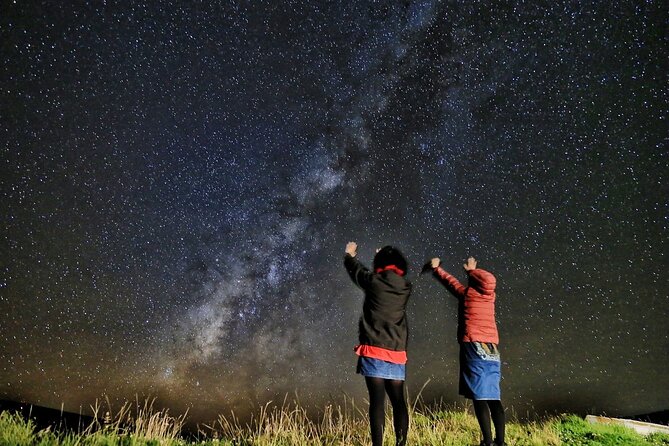
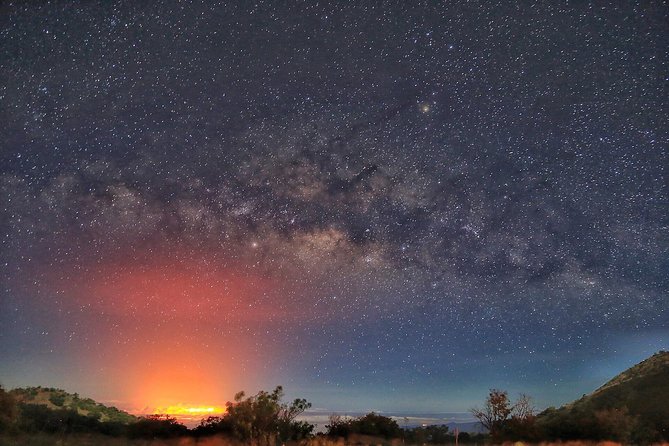
The best part of this tour comes late: after a long day of coffee farms, sea turtles, lava tubes, and volcanic craters, you head into the dark for stars, planets, and possibly the Milky Way. Volcanoes National Park at twilight can be spectacular, especially when Kilauea is glowing, but volcanic activity and clear skies are never guaranteed.
I like the way this tour links very different parts of the Big Island in one outing. I also like the small group, capped at 13 people, and the care guides such as Felix, Derek, Todd, and Dreu bring to the day. Lunch, dinner, hotel pickup, jackets, and drinks are included, which makes the $297.82 price easier to justify.
The tradeoff is time. This is a 12-hour day with plenty of driving, and most park stops last only 15 to 30 minutes. If you want long hikes or several hours focused only on the volcano, a rental car or a park-centered tour may suit you better.
Key points to know before you book
- The day crosses a huge slice of the Big Island: You go from Kona coffee country to the southern coast, Volcanoes National Park, and the high Saddle Road area.
- Kilauea activity is never promised: You may see steam vents, craters, old lava, or a red glow, but weather and volcanic conditions control the show.
- Stargazing is done with the naked eye: Your guide points out stars, planets, galaxies, and constellations, but no telescope is listed.
- It is a small-group day in a Mercedes Sprinter van: With no more than 13 people, the ride feels more personal than a large coach tour.
- Bring warm clothes even if Kona is hot: The high country can feel close to 40 degrees, and rain, wind, fog, and clouds can appear quickly.
- Expect a sample of many sights, not deep time at one site: The tour is best for first-time visitors who want an overview without driving themselves.
Why this 12-hour route works, and where it does not
The Big Island is big enough to make a day like this useful. Kona and Kohala Coast resorts sit on the dry western side, while Hawaii Volcanoes National Park is far to the southeast. A guided trip saves you from spending your vacation day navigating a long route, planning meal stops, and working out where to view Kilauea after dark.
You pay $297.82 per person, so this is not a cheap sightseeing shuttle. Still, the price includes transportation in a luxury Mercedes Sprinter van, hotel pickup and drop-off in the Kona and Kohala Coast areas, a picnic lunch, restaurant dinner, water, Hawaiian juice, park fees, and use of rain and warm jackets.
I see the value if you have limited time on the island or do not want to drive at night. The price is harder to defend if your main goal is a long hike in the park, a telescope session, or a slow day built around one volcano viewpoint.
The group size matters, too. A maximum of 13 people allows the guide to answer questions and adjust small details when conditions change. Several guides receive especially strong praise for their humor, care, and storytelling. Felix is noted for offering umbrellas, rain jackets, windbreakers, and blankets. Derek is often singled out for keeping a long day light and organized. Todd brings Hawaiian stories and sky lore, while Dreu is energetic and fast-moving.
More to weigh up across Big Island of Hawaii
- Big Island in a Day: Volcanoes Waterfalls Sightseeing and History
★ 5.0 · 6,569 reviews - Big Island Manta Ray Night Snorkel
★ 5.0 · 5,656 reviews - Big Island: Kona Manta Ray Snorkel Tour in Keauhou Harbor
★ 4.5 · 2,465 reviews
Kona coffee and a picnic above Kealakekua Bay
Your morning begins with pickup from a major hotel or resort in Kona or the Kohala Coast. Vacation-rental stays are directed to a nearby hotel or meeting point, such as Queens’ Marketplace or Foodland Farms at The Shops at Mauna Lani. The exact place and time are sent by the operator, so check your email before the morning of the tour.
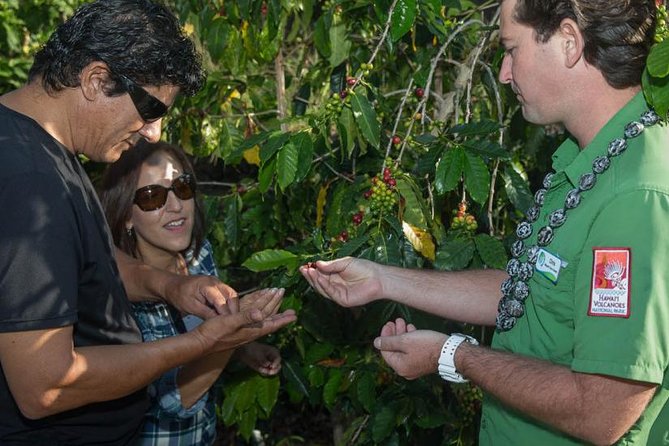
Bay View Farm gives the day a local start. You learn how Kona coffee is harvested and milled, then sample Kona coffee and tea. This is more useful than simply being handed a cup because it gives you some context for one of the island’s best-known crops.
The picnic lunch is served overlooking Kealakekua Bay. That setting helps break up the driving and gives you a pleasant first meal before the route heads south. Vegetarian and gluten-free meals are available, but you must request one at booking.
Keep your expectations sensible. This is a short farm visit, not a full agricultural workshop. You have about an hour, so the stop works best as a taste of Kona coffee country rather than a deep tour of plantation life.
Punaluʻu Bake Shop and the black sand coast
At Punaluʻu Bake Shop, you taste Hawaiian sweet bread and malasadas. The bakery stop lasts about 30 minutes and adds a simple food memory to a day otherwise filled with geology and long roads.
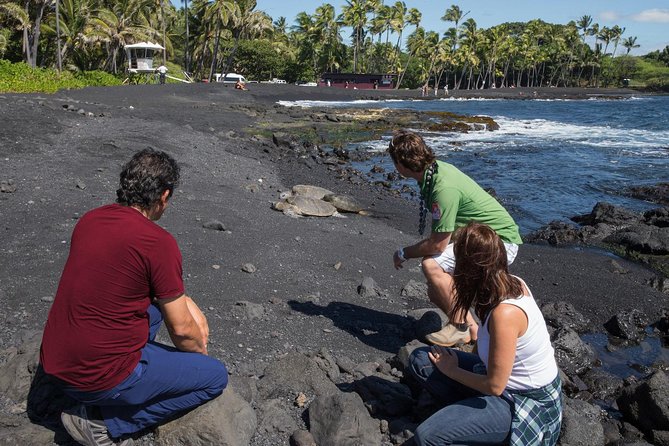
The next stop is Punaluʻu Black Sand Beach, where dark volcanic sand meets the ocean. You have about 40 minutes to relax and look for Hawaiian green sea turtles from shore. Seeing turtles is possible, not certain, and you should keep a respectful distance if one appears.
This is a pleasant contrast to the coffee farm. The beach gives you open air, coastal scenery, and a chance to stretch your legs. It is also one of the places where the short stop can feel limiting. You are getting a quick look, not a full beach afternoon.
The route may not unfold perfectly every day. Weather, traffic, park conditions, and volcanic activity can change the order or length of stops. One disrupted outing even required schedule changes, and another skipped the bakery to reach an erupting volcano. That flexibility can be helpful, but it also means the printed sequence is not a guarantee.
Three hours inside Hawaii Volcanoes National Park
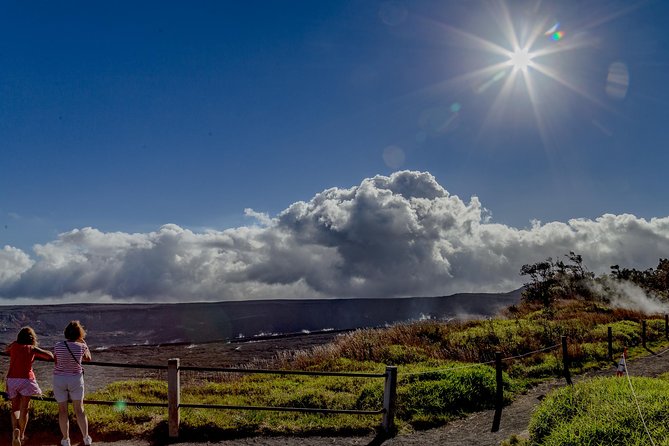
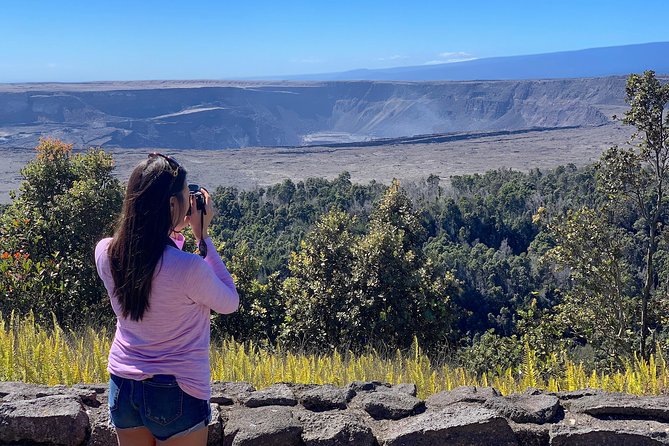
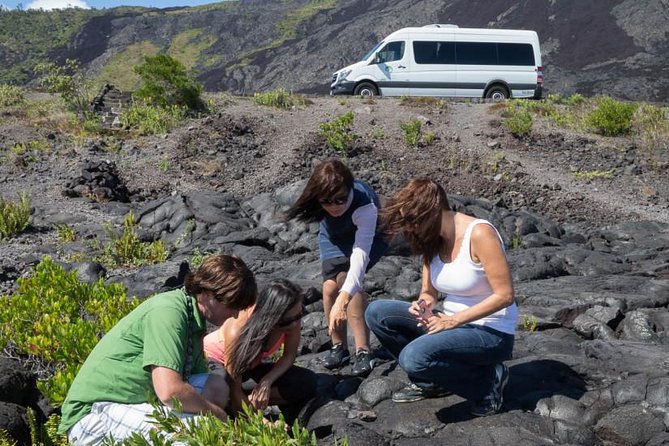
Volcanoes National Park is the heart of the experience. You spend roughly three hours making several stops, with the guide explaining craters, lava flows, steam vents, and the forces beneath the island.
You may visit Kilauea Crater Lookout, part of the crater rim trail, steam vents, old lava flow areas, and a portion of Chain of Craters Road. The exact views depend on safety rules, weather, closures, and current volcanic conditions.
When Kilauea is erupting, this can be an extraordinary experience. A red glow in the crater during twilight or at night gives the trip a clear emotional high point. The sight can change from one visit to the next, so nobody should book this expecting a guaranteed eruption.
The guide adds real value here. A good explanation helps you read the ground instead of simply photographing it. You learn to notice different lava textures, former fissures, crater forms, and steam rising from the volcanic system. Felix, Todd, Derek, and Dreu are all praised for making the geology, plants, animals, and Hawaiian culture easier to understand.
The limit is time. Three hours sounds generous, but it is divided among several viewpoints. Many stops last only 15 to 30 minutes. You will see a lot, but you may not have time for a one or two-hour walk or for lingering at a favorite crater.
That makes this a good introduction to the park. It is less satisfying for anyone who already knows exactly which trail or viewpoint they want to explore. I would choose a different plan if your priority is hiking the crater rim at your own pace.
A different kind of day, same corner of the map:
- Hilo Shore Excursion: Volcanoes National Park & Black Sand Beach
★ 4.5 · 2,338 reviews - Big Island: Captain Cook Snorkel On A Power Catamaran With Lunch
★ 5.0 · 2,232 reviews - KONA Manta Ray Night Snorkel – FREE re-ride if no Sightings
★ 5.0 · 2,212 reviews - Manta Ray Night Snorkel at Kona, Big Island
★ 5.0 · 1,758 reviews
Thurston Lava Tube, a quick walk inside old lava
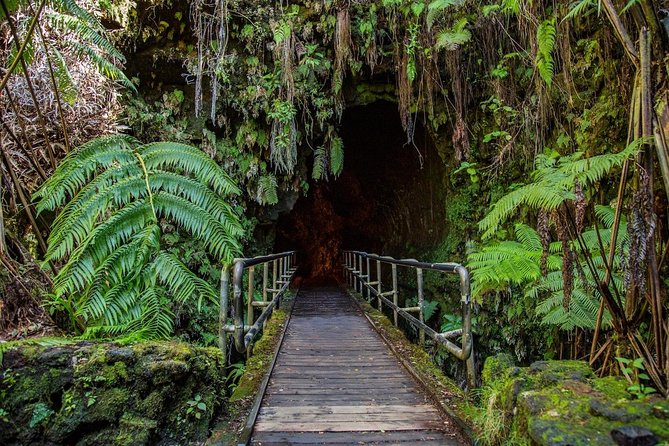
Nahuku, also called Thurston Lava Tube, is one of the most memorable stops because it lets you walk through a cave formed by flowing magma. The tube stretches about 600 feet, or 183 meters, and the route includes a bridge before reaching the cave.
The walk is short, around 30 minutes, and involves uneven ground. You should have a moderate level of fitness and be comfortable walking carefully on natural surfaces. The stop is not a strenuous hike, but it is not a fully paved, no-effort viewing platform either.
The lava tube gives you a physical sense of how an eruption works. Instead of looking at a crater from a distance, you are inside a channel left behind when the outer lava cooled and the molten center drained away. It is a compact stop with a strong payoff.
Dinner, twilight, and the problem of changing conditions
The tour includes a restaurant dinner, along with the picnic lunch. That is convenient on a day when you are far from your hotel for most of the daylight and evening. Food quality may vary, so I would think of the meals as practical inclusions rather than a reason to book the tour.
The timing around dinner matters. The tour aims to combine volcano views at twilight with stargazing afterward, but clouds, fog, moonlight, and the day’s schedule can interfere. On some outings, the group sees lava glow and stars together. On others, clouds block the sky, and the guide may adjust the plan.
A near-full moon can be beautiful, but bright moonlight washes out many fainter stars. Cloud cover creates the same problem. If you do not get a clear sky, the guide may point out stars during a later stop or make the most of whatever view conditions allow. One practical point is worth stressing: the stargazing portion is generally with the naked eye, not through a telescope.
Saddle Road stargazing in the high country
The final major setting is a secluded location along Saddle Road. This high, open part of the island is far cooler than the Kona coast. Depending on weather, you may see stars, planets, galaxies, the moon, and familiar constellations.
The guide’s storytelling is part of the attraction. You are not simply parked in the dark and told to look up. Guides share Hawaiian legends and sky lore while helping you identify celestial objects. Todd is especially praised for making the night-sky portion personal and engaging.
Still, plan for a short session of about 30 minutes. This is an introduction to the night sky, not a professional astronomy program. If clouds fill in, there may be little to see. If the moon is bright, fewer stars will show.
Bring a hoodie, long pants, and warm layers from the coast. The operator provides warm and rain jackets, but personal layers make the return ride more comfortable. The temperature shift is one of the most common surprises on this outing: a hot Kona morning can end in cold, damp high-country air.
What the ride and guide service are really like
You spend many hours in the van, so transportation is a major part of the experience. The Mercedes Sprinter is a more comfortable choice than a basic passenger vehicle, but no van can make the Big Island feel small. The drive to Volcanoes National Park takes time, and the return to Kona or Kohala Coast can run late.
Plan to be away from your hotel for about 12 hours, with some departures around the late morning window and returns potentially after 11 p.m. That makes this a poor fit for a night of dining reservations, an early flight, or anyone who dislikes a full day on the road.
The guide can make or break the ride. Guides named Felix, Derek, Todd, Dreu, Aaron, Scott, and Miexia receive especially warm praise for humor, care, cultural insight, and flexibility. Some guides add unscheduled scenic stops when time and conditions allow.
The style is not identical from one guide to another. Dreu, for example, is described as highly energetic and fast-talking. That can keep a long day moving, but it may feel like a lot if you prefer quiet stretches. When booking, you may be able to request a guide, though that is not guaranteed.
Physical effort, weather, and what to pack
You do not need to be an athlete. The tour includes short walks, roadside viewpoints, the lava tube, beach time, and some uneven ground. A moderate fitness level is recommended, with rest breaks along the way.
The bigger challenge is endurance. Twelve hours of sitting, getting out, walking, eating, and getting back into the van can leave you tired even when no single stop is difficult.
The tour runs rain or shine, and weather may change the order or content of the day. Park closures, poor visibility, and clouds can prevent the best crater or star views. Refunds are not provided for changes outside the operator’s control, but if the entire experience is canceled for poor weather or because the minimum group size is not met, you are offered another date or a full refund.
Pack:
- Warm layers and long pants
- Comfortable shoes for uneven ground
- A light personal rain layer
- Extra water if you prefer more than the included bottles
- Patience for a long day with changing plans
Children under five cannot join. Pickup is offered at major Kona and Kohala Coast hotels, while some vacation rentals require a nearby meeting point.
Who should book this Big Island volcano tour?
I would recommend it to a first-time Big Island visitor who wants to sample several major sights without renting a car. It is also a strong choice if you have only a short stay and want coffee country, the southern coast, Volcanoes National Park, and a high-country night sky in one day.
The tour suits you if you value a guide’s stories and local context as much as free time. The best guides add information about Hawaiian culture, plants, animals, coffee, geology, and the sky, turning long drives into part of the experience.
I would hesitate if you want a relaxed pace. The itinerary is packed, and some stops can feel like quick photo visits. I would also hesitate if the volcano is your only reason for booking. Volcanic glow depends on current activity, clear viewing conditions, park access, and the schedule. A bad weather day can leave you with a lot of road time and only brief park visits.
The free cancellation policy gives you some protection if you cancel at least 24 hours before the start time. Last-minute changes are not accepted, so make your decision early and keep the weather policy in mind.
My take: a useful Big Island sampler with a long tail
This tour offers a lot for one day: Kona coffee, Kealakekua Bay views, sweet bread, malasadas, black sand, turtles, lava formations, Kilauea, a lava tube, dinner, and stars. Few outings cover such a broad mix without asking you to handle the driving yourself.
Its weakness is the same as its selling point. You see much of the island, but you do not spend long in any one place. The tour is a sampler, not a slow study of Volcanoes National Park.
Book it if you want the convenience of a guide, included meals, a small group, and the chance to see volcanic activity and stars in one day. Skip it in favor of a rental car or a park-focused outing if you want long hikes, a telescope, or several unhurried hours beside Kilauea.
FAQ
How long does the Big Island volcano and stargazing tour last?
The tour lasts approximately 12 hours. Because of the long route between Kona, southern Hawaii, Volcanoes National Park, and Saddle Road, you may return to your hotel late in the evening.
Where does hotel pickup take place?
Pickup is offered from major hotels and resorts in Kona and along the Kohala Coast. If you stay in a vacation rental, you may be directed to a nearby hotel or meeting point, including Queens’ Marketplace or Foodland Farms at The Shops at Mauna Lani.
Is stargazing guaranteed?
No. Stargazing depends on weather and visibility. Clouds, fog, rain, and bright moonlight can limit what you see. The guide may point out stars, planets, galaxies, the moon, and constellations when conditions allow.
Is a telescope used during the stargazing stop?
No telescope is listed as part of the experience. The stargazing session is conducted with the naked eye while the guide explains sky objects and Hawaiian sky lore.
Will I see an active volcanic eruption?
An eruption or red lava glow is not guaranteed. The tour may include views of current volcanic activity, old lava flows, craters, steam vents, and other park features, depending on conditions and access.
What meals and drinks are included?
The price includes a picnic lunch, restaurant dinner, bottled water, and Hawaiian juice. Vegetarian and gluten-free meals are available if requested when you book.
What should I wear, and how difficult is the walking?
Bring comfortable shoes and warm layers. The high-country stargazing location can be much colder than the Kona coast, and the operator provides rain and warm jackets. Walking is generally moderate, but some ground is uneven, and a moderate fitness level is recommended.
Newly listed in Big Island of Hawaii
- Zodiac Raft Whale Watching Adventure★ 5.0 · 456 reviews
- Deluxe Sail & Snorkel to the Captain Cook Monument★ 5.0 · 472 reviews
- Award Winning Farm Tour: Coffee, Chocolate and Unique Gifts★ 5.0 · 484 reviews
- Kailua-Kona: Manta Ray Watching Nighttime Boat Trip★ 4.8 · 488 reviews
- Manta Ray Night Snorkel Experience of a Lifetime★ 4.5 · 505 reviews
- Glass-Bottom Boat Reef Tour★ 4.5 · 506 reviews
- Kealakekua Bay Snorkeling Tour – 4 hour Kona Zodiac Adventure★ 5.0 · 508 reviews
- Big Island Waterfalls Tour with Swimming and Botanical Garden★ 5.0 · 513 reviews
Big Island of Hawaii Tours, compared.
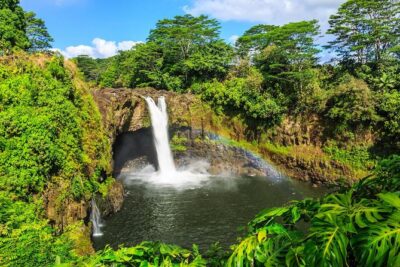
Big Island in a Day: Volcanoes Waterfalls Sightseeing and History
Read our review →
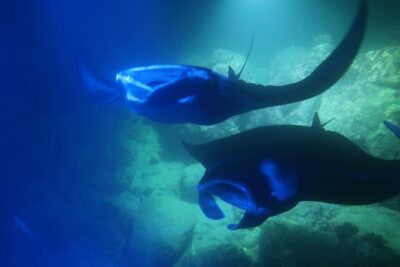
Kona Manta Ray Snorkel Tour in Keauhou Harbor
Read our review →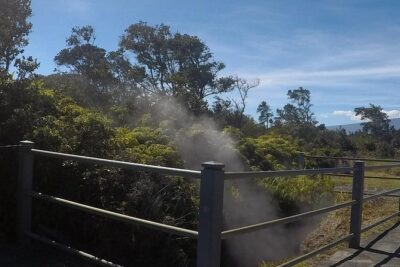
Hilo Shore Excursion: Volcanoes National Park & Black Sand Beach
Read our review →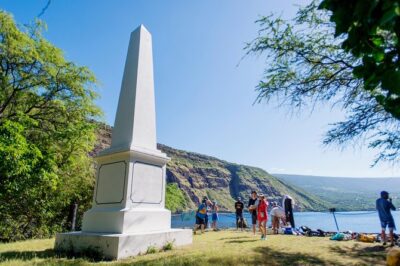
Captain Cook Snorkel On A Power Catamaran With Lunch
Read our review →
KONA Manta Ray Night Snorkel – FREE re-ride if no Sightings
Read our review →

Big Island GOAT Experience: Mauna Kea Summit, Sunset & Stars
Read our review →Browse the lists this tour appears in