
Reviewed · BIG ISLAND OF HAWAII TOURS
Kailua-Kona: Manta Ray Watching Nighttime Boat Trip
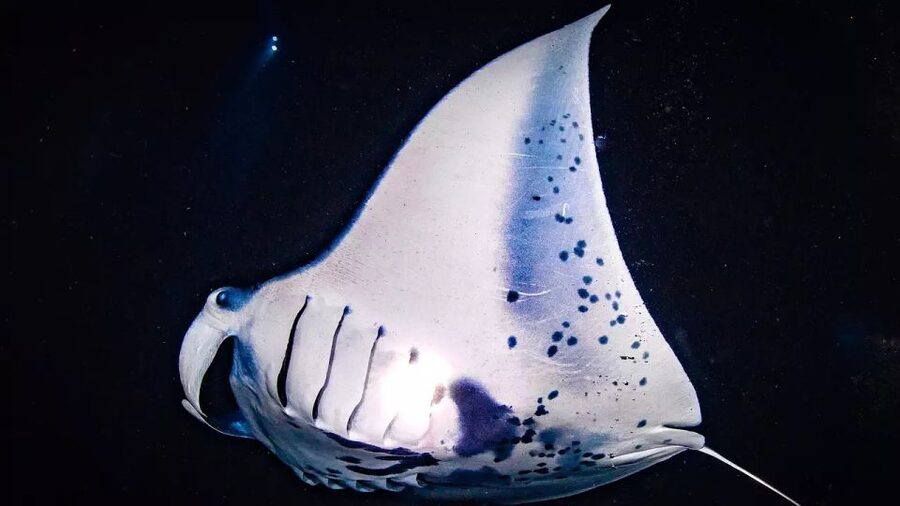
A few minutes after leaving Honokohau Harbor, the boat reaches the dark ocean where bright lights draw plankton, and manta rays sweep in below. Their wide wings make slow, graceful circles beneath swimmers, often close enough to feel almost unreal. This is one of the Big Island’s most unusual nights out.
I like the close-up snorkeling option, which gives you the full experience, and the crew’s calm, funny way of helping first-time swimmers. Guides including Kelley, Bryce, Koa, and Elayo have earned praise for clear instructions and patient support. The main drawback is simple: the boat-only option offers a much weaker view, and the ride back can feel chilly or choppy.
Key things to know before you book
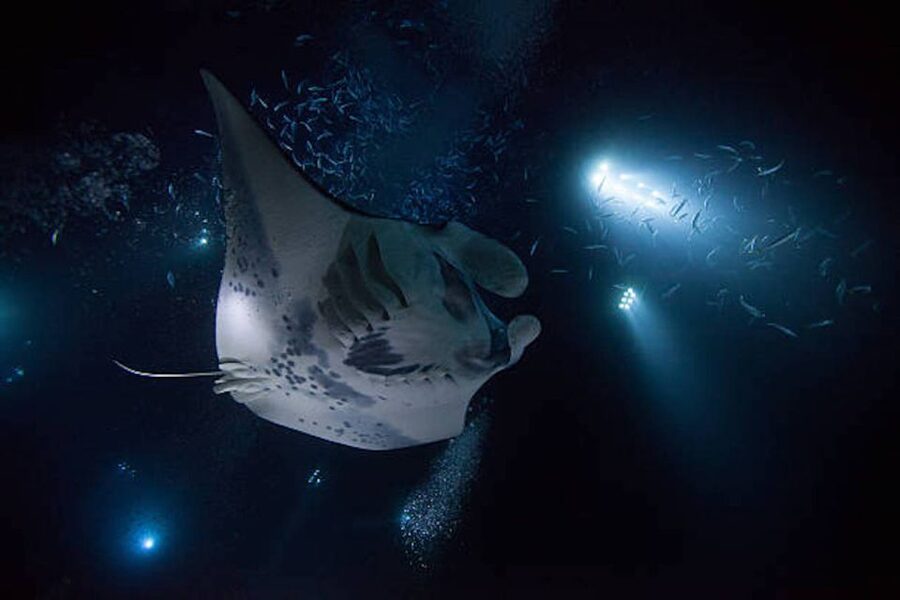
- Mantas come to the light: The boat’s lights attract plankton, which brings the rays close to the surface.
- Snorkeling is the better choice: From the water, you can watch the rays spiral within inches of the group.
- The crew is hands-on: Guides help nervous swimmers, explain the activity clearly, and remain with the group in the water.
- The trip lasts two hours: That includes the boat ride, preparation, time near the rays, snacks, and the return to Kona.
- Bring warm clothes: The ocean breeze and wet gear can make the return trip feel cold.
- The harbor meeting point takes care: Honokohau Harbor has several boats, so confirm the exact location before setting out.
Why Kona’s manta rays come out at night
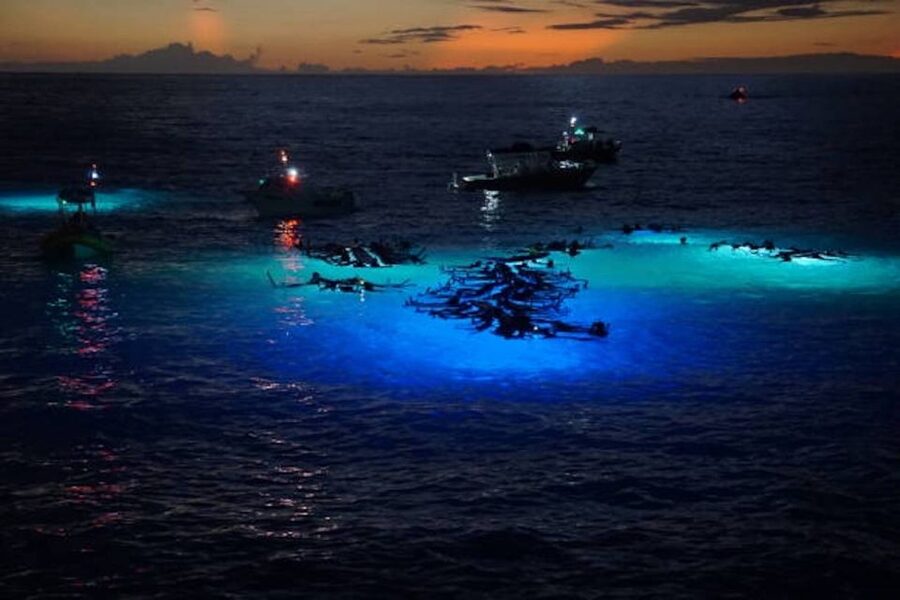
Kona is one of the few places where you can reliably watch manta rays close to shore after dark. The basic idea is clever. Lights placed in the water attract plankton, and the rays follow their food.
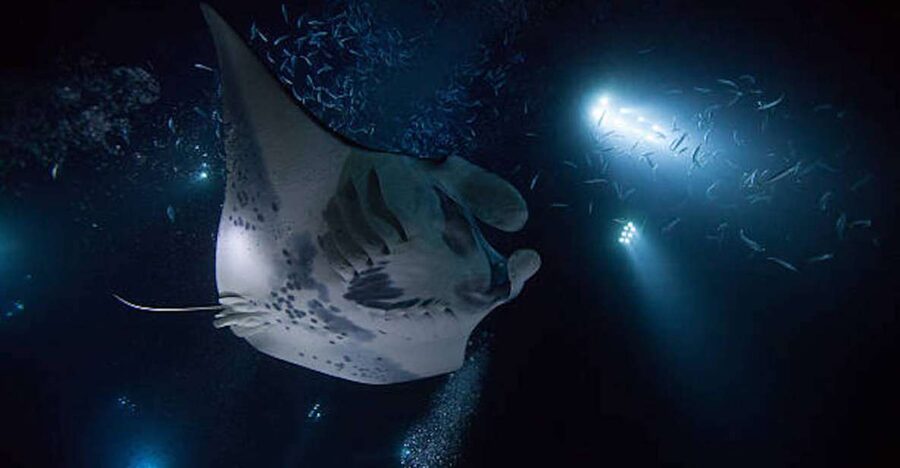
The mantas do not come to perform tricks, and there is no feeding them. You simply float at the surface while the animals make wide passes below. Their mouths open as they filter tiny food from the water, and their broad fins fold and turn with surprising control.
That natural behavior is the heart of the experience. You are not chasing wildlife across a large area. You are waiting quietly in one place while the animals choose how close to come. Some nights bring several rays, and some bring more than 10. Sightings can vary, so no responsible operator can promise a particular number.
The activity has a 4.8 rating from 488 bookings, and 88 percent of the ratings give the transport a perfect score. That fits the basic appeal: the ride is short, the main viewing area is close to Kona, and the time in the water is the reason to go.
More Boat Tours in Big Island of Hawaii
- Big Island: Captain Cook Snorkel On A Power Catamaran With Lunch
★ 5.0 · 2,232 reviews - Big Island Historical Dinner Cruise to Kealakekua Bay
★ 4.5 · 1,279 reviews - Deluxe Snorkel & Dolphin Watch Aboard a Luxury Catamaran from Kailua-Kona
★ 5.0 · 797 reviews
Meeting the boat at Honokohau Harbor
The departure point sits about 4.5 miles south of Kona International Airport and 3.5 miles north of Kailua-Kona town. Turn into Honokohau Harbor from the main highway, take the second right, and meet the crew member in front of the restrooms.
Do not treat the harbor address as quite enough. Several boats operate from the harbor, and the exact boat location can be confusing at night. Call about 12 hours before the trip to confirm your booking and ask where the boat will be. The activity provider also recommends checking the directions sent before departure.
One useful detail: the restrooms are an important landmark. A few people have described the small restroom building as easy to mistake for a little hut or even a pizza shop. Arrive with enough time to find the right spot rather than rushing down the dock in the dark.
Hotel pickup and return are not included. You will need your own transport to Honokohau Harbor, and rideshare pickup may require patience after the boat returns. One crew even waited with a participant until an Uber arrived, but you should not count on that as a standard transfer service.
The short catamaran ride into the dark
The trip begins aboard a spacious catamaran. From the harbor, you get a changing view of the Kona coast as the boat heads away from shore. At night, the scenery becomes less about seeing every detail and more about feeling the open ocean, the breeze, and the dark sky above you.
The ride to the viewing area is generally short. That matters if you are uneasy on boats or prone to motion sickness. Conditions can still change. A calm evening may bring a smooth run, while wind can make the ride choppy. One account described a rougher crossing but a comfortable viewing session once the boat reached the site.
If you use motion-sickness medicine, bring what you normally use. The supplied information does not require it, but sensible preparation is worthwhile on any evening boat trip. Sit where you feel steady, hold on when moving around, and remember that the upper deck can be windy.
The crew uses this part of the trip to explain what will happen. You learn why plankton collects around the lights, why manta rays visit the area, and how to behave around them. The tone is informal. Guides such as Bryce, Kelley, Elayo, and Koa are often praised for mixing facts with jokes, which helps settle nerves before anyone enters the water.
Choosing between the boat and the water
You can select a boat-only option or a snorkeling option. This is the biggest decision when booking, and I would choose the water option unless you have a clear reason not to get wet.
From the boat, you may catch glimpses of the rays around the lights, but the view is limited. The real encounter comes when you wear the provided wetsuit top, mask, and snorkel and float at the surface above them. The rays may pass directly beneath you, sometimes within inches.
The water option is not a scuba activity. You remain at the surface and watch from above. Life jackets are included, and the guides stay close to the group. The crew also helps people who are new to snorkeling or nervous about being in the ocean at night.
That support makes a real difference. Several families had children and teenagers in the group, and first-time swimmers received step-by-step help. The activity is not suitable for non-swimmers, however. A person who cannot swim should not book simply because a guide is present. Children under five are also not permitted.
If you are only mildly worried about the darkness, the setup may help. The lights create a bright viewing area, and your attention quickly shifts from the black water to the animals below. Still, you need to be comfortable entering the ocean and following instructions.
More boat trips around Big Island of Hawaii:
- Afternoon Sail & Snorkel to the Captain Cook Monument
★ 5.0 · 722 reviews - Kealakekua Bay (Captain Cook Monument) Snorkel and Sail Adventure
★ 5.0 · 695 reviews - Deluxe Sail & Snorkel to the Captain Cook Monument
★ 5.0 · 535 reviews - Glass-Bottom Boat Reef Tour
★ 4.5 · 506 reviews
What the manta viewing feels like
The usual position is face down at the surface, looking into the lighted water. You may hold onto a floating structure while the group watches below. The rays move in large circles and banking turns, returning again and again as they feed.
The visual effect is almost theatrical, but the animals are completely wild. A manta can pass close to your face, turn on its side, and rise toward the light before gliding away. You may see one ray at a time or several moving through the same area.
The best approach is to stay still and let the mantas decide the distance. Do not reach out or try to touch them. One of the appealing parts of the activity is that you watch without chasing or handling the animals.
The time in the water can feel longer than expected in a good way. Some participants stayed for roughly 40 minutes, while another group spent about an hour watching the rays. Your exact water time depends on the conditions, the group, and the evening schedule.
Floating with your arms extended can tire your shoulders. Bring a relaxed attitude, listen to the crew, and take breaks if you need one. If you feel cold or tired, tell a guide rather than trying to push through.
Other marine life is possible. Dolphins have appeared during some outings, and sightings have also included a monk seal, sea turtles near the marina, and fish. These are welcome extras, not the main promise of the trip.
The crew and the level of care
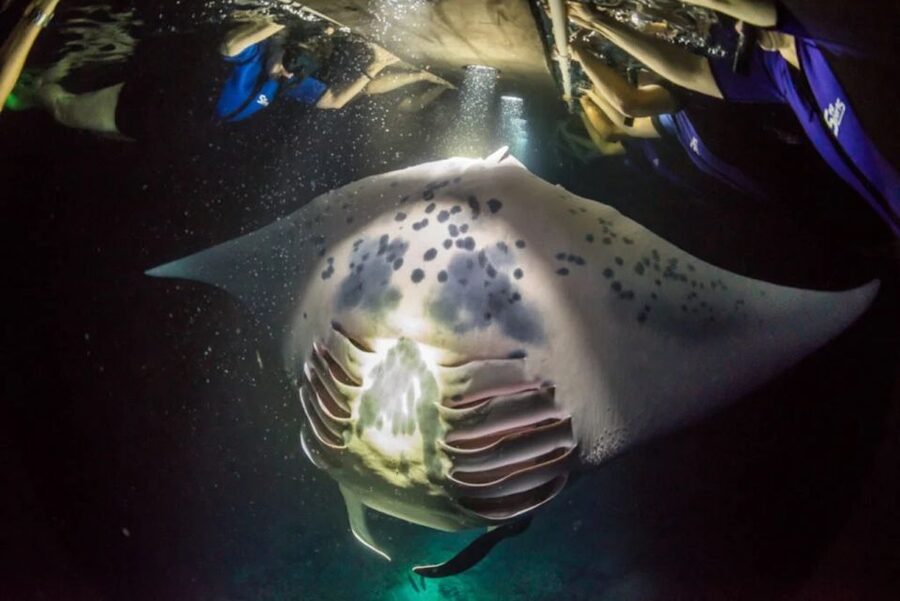
The crew is one of the strongest parts of this outing. Names associated with the trips include Captain Kelley, Bryce, Koa, Elayo, Elio, Ilio, Chase, Connor, Mana, and Diesel. The staff can change by departure, but the pattern is consistent: safety instructions are clear, and guides remain attentive in the water.
That is especially valuable when your group includes a first-time snorkeler. Guides help with equipment, explain how to position yourself, and ease people into the water. They also take time to find a good viewing spot instead of rushing through the setup.
The mood is relaxed and playful. Music and jokes may be part of the ride, and several groups praised the crew for keeping things light without losing control of the outing. Captain Kelley received repeated praise for making people feel secure, while Bryce, Koa, Elayo, and other crew members were noted for patience and good humor.
The equipment is functional but not luxurious. Snorkel gear, life jackets, and a wetsuit top are included. One complaint concerned an old or smelly wetsuit, so do not expect fresh resort-style gear. The boats also vary in condition, with one description calling the vessel a little rugged while still saying it did the job.
Snacks, warmth, and what to pack
Light snacks are included. They are useful after time in the water, but this is not a meal, so eat beforehand if you need a full dinner.
Bring swimwear, a towel, and a waterproof camera. A towel is especially important if you choose snorkeling, since you will return to the boat wet. A waterproof camera can capture the animals under the lights, but keep your attention on the water and follow any instructions from the crew about photography.
Pack a warm layer for the ride home. This is the most repeated practical tip for good reason. You may feel warm while active in the water, then cool quickly once you are sitting on the boat in wet swimwear. A sweatshirt, fleece, or dry jacket is useful.
The ocean can be dark, windy, and cool even in Hawaii. You do not need to treat this as a hardship, but you should prepare for a real nighttime boat trip rather than a warm cruise.
Is $75 a fair price?
At $75 per person, this is a strong value if you choose the snorkeling option. The price includes the boat ride, guide, snorkel equipment, wetsuit top, life jacket, and light snacks. You are also paying for a small window into a rare natural event, not just transport on the water.
The value drops if you book the boat-only option expecting the same view. The rays are easiest to appreciate from the water, and a boat passenger may see less. If you cannot swim or do not want to enter the ocean, consider carefully if the limited boat view is worth the fare.
For families with older children, couples, solo participants, and first-time snorkelers who can swim, the price compares well with the length and unusual nature of the activity. Several family groups with children from eight through the teenage years had a good time, while children under five are excluded.
The trip also offers a flexible booking policy. You can cancel up to 24 hours before departure for a full refund, and reserve now while paying later. Check the available starting times, since the exact departure schedule is not fixed in the activity details.
Who should book this nighttime ocean trip
I would recommend it to you if you want a close wildlife encounter and are comfortable in open water. It suits people who enjoy a little adventure but do not want a long boat crossing or a technical water sport.
Families can make it work if the children are confident swimmers and can follow directions. Teenagers often get a particularly memorable experience because the setting feels adventurous without requiring advanced skill.
Solo participants should also feel comfortable booking. The crew has helped people who arrived alone feel safe and included, and the short format makes it easy to fit into a Kona stay.
You should think twice if you are a non-swimmer, dislike being wet, or become very uncomfortable in dark ocean water. The boat-only choice is available, but it may leave you watching the main event from too far away.
My practical verdict
The snorkeling option is the clear choice. It puts you at the surface where the manta rays feed, and it lets you see their size, movement, and grace in a way the boat cannot match. The crew’s patience is a major benefit for beginners, while experienced snorkelers get a rare wildlife setting rather than a demanding athletic outing.
Allow extra time to find the harbor meeting point, confirm the boat location, and bring dry clothes for the ride home. Expect a basic boat and shared equipment, not a polished luxury cruise.
Book this experience if you can swim and want one of the Big Island’s most distinctive evenings. Skip it if you only want a scenic boat ride or cannot enter the water. At $75, it is a very good buy when you take part in the snorkeling, and a much less convincing one when you do not.
FAQ
How long is the manta ray boat trip?
The activity lasts two hours, including the boat ride, preparation, manta ray viewing, snacks, and the return to Kona.
How much does the experience cost?
The listed price is $75 per person.
Where do I meet the boat?
Meet the crew at Honokohau Harbor, about 4.5 miles south of Kona International Airport and 3.5 miles north of Kailua-Kona town. After turning into the harbor from the main highway, take the second right and meet in front of the restrooms.
Do I need to confirm the meeting location?
Yes. Call about 12 hours before departure to confirm your booking and the exact boat location, since several boats operate from the harbor.
Is snorkeling included?
Snorkeling is included with the selected snorkeling option. That option includes snorkel gear, a wetsuit top, and a life jacket.
Can I join without snorkeling?
Yes, a boat-only option is available. Keep in mind that the rays are best seen from the water, so the boat-only experience may provide a more limited view.
What should I bring?
Bring swimwear, a towel, and a waterproof camera. You should also bring something warm for the return boat ride.
Who cannot take this activity?
Children under five and non-swimmers cannot participate.
Can I cancel for a refund?
You can cancel up to 24 hours in advance for a full refund. A reserve-now, pay-later option is also available.
Newly listed in Big Island of Hawaii
- Manta Ray Night Snorkel Experience of a Lifetime★ 4.5 · 505 reviews
- Glass-Bottom Boat Reef Tour★ 4.5 · 506 reviews
- Kealakekua Bay Snorkeling Tour – 4 hour Kona Zodiac Adventure★ 5.0 · 508 reviews
- Big Island Waterfalls Tour with Swimming and Botanical Garden★ 5.0 · 513 reviews
- Deluxe Sail & Snorkel to the Captain Cook Monument★ 5.0 · 535 reviews
- Big Island, Hawaii: Volcanoes National Park Safari★ 4.5 · 545 reviews
- Big Island: Fat Tire E-Bike Tour through Volcanoes National Park★ 5.0 · 546 reviews
- Captain Cook Snorkel Tour with Sea Caves and Lava Tubes★ 5.0 · 548 reviews
Big Island of Hawaii Tours, compared.
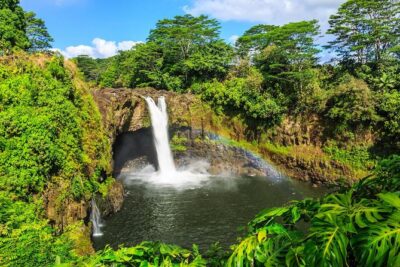
Big Island in a Day: Volcanoes Waterfalls Sightseeing and History
Read our review →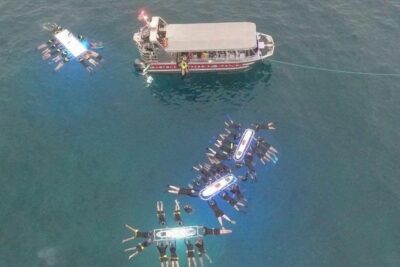
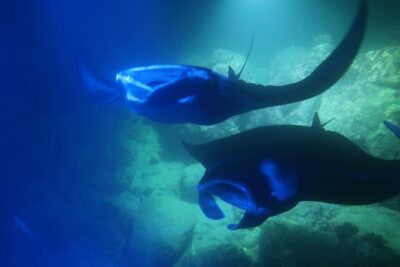
Kona Manta Ray Snorkel Tour in Keauhou Harbor
Read our review →
Hilo Shore Excursion: Volcanoes National Park & Black Sand Beach
Read our review →
Captain Cook Snorkel On A Power Catamaran With Lunch
Read our review →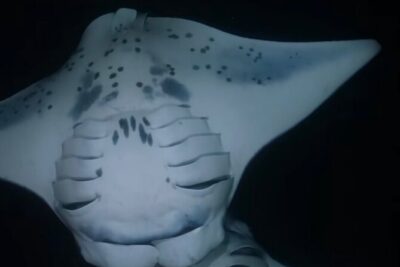
KONA Manta Ray Night Snorkel – FREE re-ride if no Sightings
Read our review →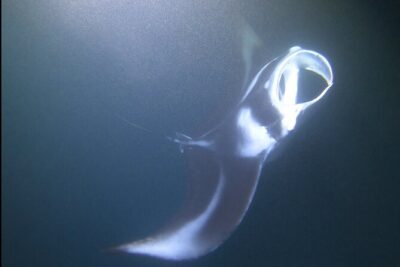

Big Island GOAT Experience: Mauna Kea Summit, Sunset & Stars
Read our review →Browse the lists this tour appears in