
Reviewed · NEW ORLEANS TOURS
New Orleans French Quarter and More Carriage Ride
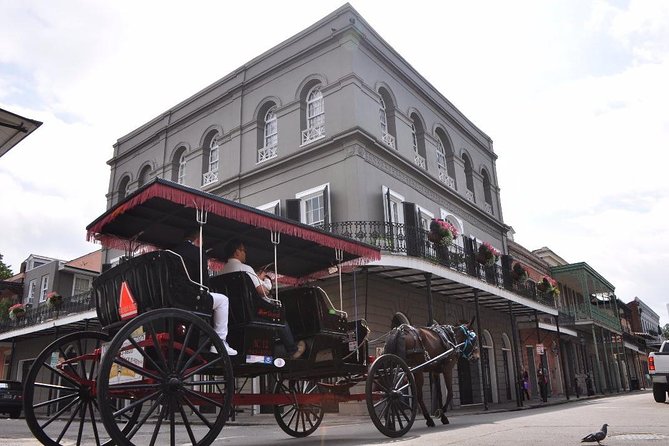
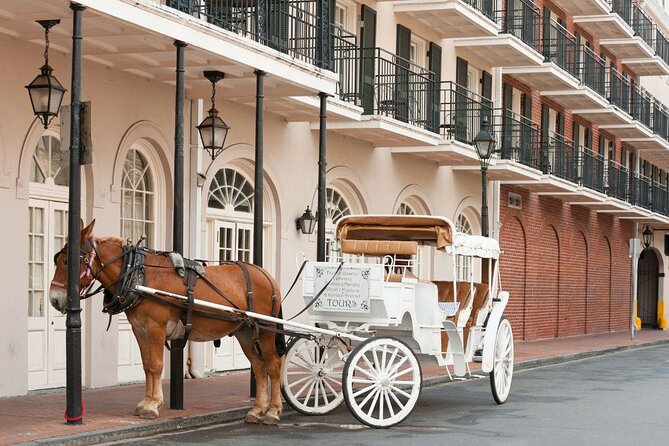
New Orleans reveals itself in layers, and a mule-drawn carriage ride lets you take in those layers at an easy pace. From Decatur Street, you roll through the French Quarter and Marigny while your guide points out iron balconies, Spanish patios, old coffee houses, Creole architecture, and streets shaped by fire and flood.
I like the small group, capped at eight people, and the practical advice built into the hour. Guides such as Nate, Marty, Sarah, and Tony have been praised for mixing local stories with suggestions for restaurants, jazz, museums, and evening stops. I also like that the covered carriage offers shade and some protection from poor weather.
The main drawback is time. One hour gives you a useful introduction, not a full study of the Quarter, and some riders find the seats uncomfortable or the commentary harder to hear from the back. If you have trouble hearing, sit near the front.
Key points to know before you book
- The ride covers both the French Quarter and Marigny, giving you more than a quick pass along the best-known streets.
- The group is limited to eight people, which makes it easier to hear the guide and ask questions.
- You’ll pass major landmarks, including St. Louis Cathedral, French Market, the Spanish Cabildo, Napoleon House, and the Pontalba Buildings.
- The covered carriage helps with sun and difficult weather, though the experience still depends on safe riding conditions.
- The best value comes early in your visit, when local suggestions can shape the rest of your New Orleans plans.
- The ride returns to 700 Decatur Street, so you can continue exploring on foot after the carriage pulls in.
Why a carriage is a smart first look at New Orleans
The French Quarter is compact on a map, but it can feel confusing when you first arrive. Streets change names, courtyards hide behind walls, and many buildings look decorative without revealing why they were built that way.
A carriage gives you time to look up. You can study the ironwork balconies, bright facades, shuttered windows, and narrow buildings without worrying about a map every few steps. You also cover more ground than you might on foot, which matters if walking long distances is difficult.
The ride is not only about sightseeing. A good guide helps connect the buildings to the city’s past. Stories about the Great Fire of 1788 and the Battle of New Orleans explain why brick, iron, and certain building styles matter here. The commentary may also touch on floods, old slave quarters, Spanish courtyards, French coffee houses, and local legends.
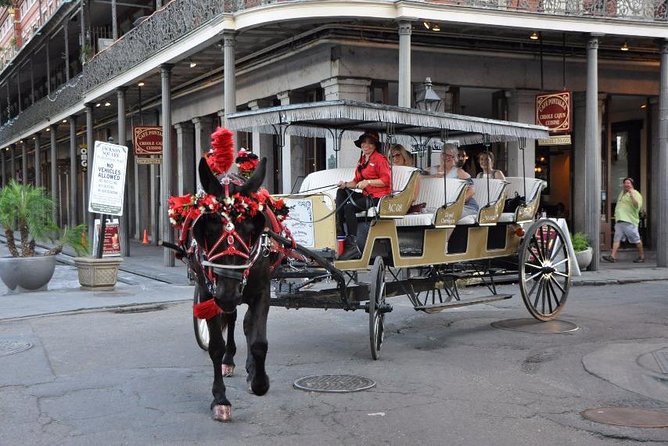
The tone appears to vary with the guide. Marty, Nate, Sarah, Tony, and other named guides have been praised for being friendly, funny, and well informed. One guide worked with a mule named Praline, while another drove with Kate. Those details give the ride some personality, especially for children who may care as much about the animal as the architecture.
More to weigh up across New Orleans
- New Orleans Premier Ghost, Voodoo and Vampire Walking Tour
★ 4.5 · 12,856 reviews - New Orleans Steamboat Natchez Jazz Cruise with Dinner Option
★ 4.0 · 7,533 reviews - Adults-Only New Orleans Ghost, Crime, Voodoo, and Vampire Tour
★ 5.0 · 6,545 reviews
Starting at 700 Decatur Street
You meet at 700 Decatur Street, a useful starting point near the French Quarter’s busiest sights. The exact meeting area should be checked on your confirmation, since Decatur can be crowded and active with pedestrians, cars, street performers, and other tours.
The tour is offered in English and uses a mobile ticket. Confirmation is provided when you book. Since the ride is often reserved well ahead of time, with an average booking lead of about 22 days, I would not leave it until the last minute if your schedule is fixed.
Once seated, you’ll ride in a covered carriage. The roof is useful in New Orleans, where strong sun can make a slow ride tiring. It also offers some shelter when conditions are less pleasant, but this is still an outdoor activity. Wear comfortable clothes and expect city streets rather than a perfectly smooth path.
The carriage is limited to eight people. That number is small enough to keep the setting personal, though comfort depends on the carriage and how full it is. One experience became crowded after tours had been rescheduled because of rain. That is worth keeping in mind if weather disrupts several departure times.
St. Louis Cathedral and Place D’Armes
St. Louis Cathedral is one of the key sights along the route. It is the oldest continuously active cathedral in the United States, and its position beside Jackson Square makes it one of the Quarter’s most recognizable landmarks.
You may not enter the cathedral during this ride, so think of this part as an exterior introduction. The value comes from seeing the cathedral in its setting, with the square, surrounding buildings, and riverfront area close by.
The nearby Place D’Armes area helps explain how the Quarter developed as a planned colonial center. The guide can point out the relationship between the cathedral, the square, the Pontalba Buildings, and the old streets around them. This is where the carriage format helps: you can listen while the whole architectural scene passes slowly in front of you.
The Place D’Armes Hotel is also included among the sights. You’ll see it as part of the historic streetscape rather than as a separate stop with an admission ticket. If you want detailed interior visits, save those for your walking time after the ride.
The Spanish Cabildo and New Orleans architecture
The Spanish Cabildo adds another layer to the Quarter’s story. Its Spanish colonial design is a reminder that New Orleans was shaped by more than one European power, and the guide’s commentary helps place the building within the city’s changing rule and culture.
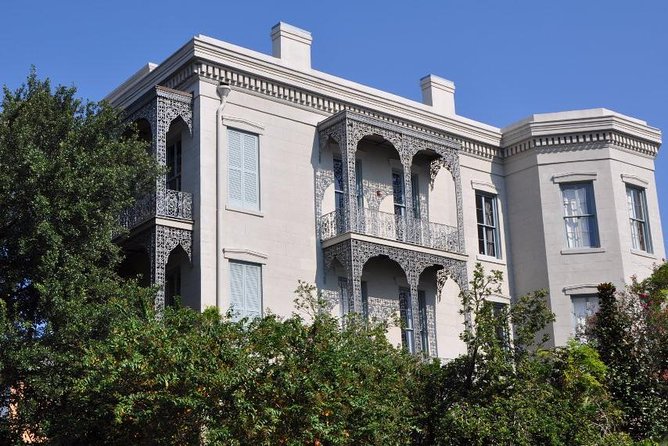
Look above street level as you ride. Ironwork balconies are one of the Quarter’s signature features, but they are more than decoration. They create shade, add outdoor space, and show how local building traditions adapted to the climate and tight urban streets.
You’ll also see examples of Creole Esplanade, Spanish patios, old coffee houses, and former slave quarters. The ride does not promise entry into every building, so its strength is visual context. You get a broad look at how the Quarter’s facades, balconies, courtyards, and materials fit together.
The stories about fires and floods are especially useful. They explain why so many buildings use brick and why iron became an important architectural material. One rider found the hour just right for this sort of explanation, while another wished for ten more minutes. That is a fair reading of the format: enough time to get oriented, not enough for every detail.
A different kind of day, same corner of the map:
- New Orleans Food Walking Tour of the French Quarter with Small-Group Option
★ 5.0 · 6,118 reviews - New Orleans Swamp and Bayou Boat Tour with Transportation
★ 5.0 · 5,399 reviews - New Orleans Steamboat Natchez Jazz Cruise
★ 4.5 · 5,334 reviews - New Orleans City Sightseeing Hop-On Hop-Off Bus Tour
★ 4.5 · 4,943 reviews
French Market and the Mississippi River side of the Quarter
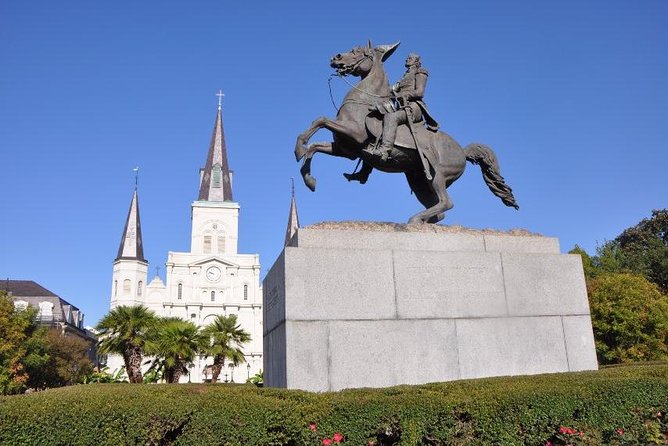
The French Market is another major point along the route. This historic market area looks toward the Mississippi and gives the ride a change of pace from the dense streets deeper inside the Quarter.
You may see the market as part of the passing route rather than having time to shop or eat. The tour does not include snacks, so plan to return later if you want to browse stalls or make a meal of the area.
This is also a good moment to notice how close the river is to the French Quarter. New Orleans often feels like a city of separate scenes, but the market, riverfront, old streets, and courtyards are all tied together. The guide’s job is to help you notice those links before you wander off on your own.
Napoleon House and the Pontalba Buildings
Napoleon House is included among the important landmarks. The building is connected with a mold made by Dr. Francesco Antommarchi, one of Napoleon Bonaparte’s physicians at the time of his death, and the museum is home to Napoleon’s death mask.
That is an unusual detail in a city already full of unusual stories. You’ll likely see the building from the carriage and hear its connection to Napoleon, but the ride does not include a museum visit. If the subject catches your interest, mark the location for a later stop.
The Pontalba Buildings are often described as the oldest apartment buildings in the United States. Their long facades and iron balconies help show how the Quarter combined private homes, apartments, shops, and public spaces in a dense urban setting.
Taken together, Napoleon House and the Pontalba Buildings show why this tour works best as an introduction. You receive several strong landmarks and enough context to decide where you want to return. You are not being asked to spend an hour inside one museum or hear an academic lecture.
What the guide adds to the ride
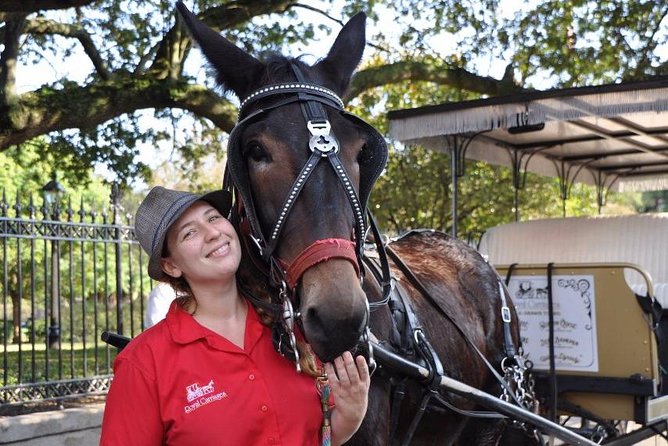
The guide can make or break a short carriage tour. The most praised guides have done more than recite dates. They have pointed out special places, told stories about restaurants and ghostly legends, and offered advice for the rest of the visit.
Sarah has been singled out for fun historical details and useful suggestions. Nate has been praised for a friendly, informative approach, and Marty for explaining the Quarter’s architecture, fires, floods, and culture. Tony was remembered for his humor and for driving a mule named Praline. These individual touches matter because the basic route is only part of the experience.
You should also use the hour to ask questions. Ask where to hear jazz, which museums fit your interests, what parts of the Quarter deserve a second look, or where to go after dark. Recommendations for nightclubs, jazz, museums, restaurants, and other sights are included, and they may be more useful than another list of buildings.
Commentary can be harder to hear from the back of the carriage. Sit toward the front if you have hearing concerns. A full carriage, traffic noise, and the open-air setting can all make a soft voice difficult to follow.
Comfort, weather, and the mule-drawn pace
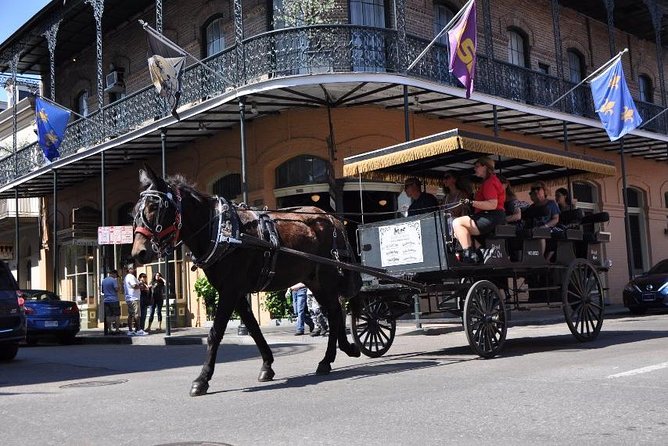
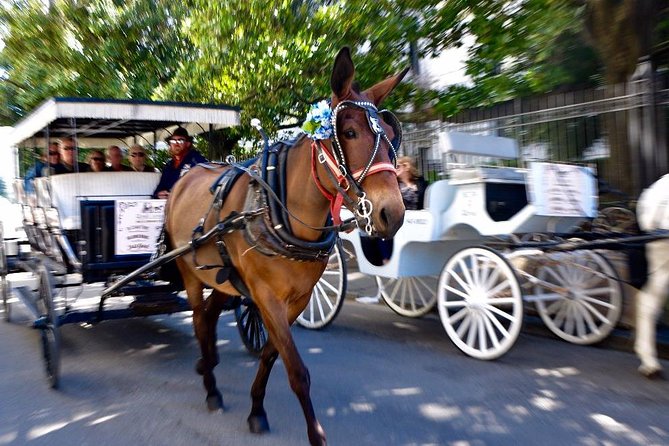
The carriage moves slowly, which is the point. You get time to look around, take photographs, and let the city pass without the effort of walking every block. Several riders have found the ride smooth, relaxed, and suitable for people who cannot walk far.
Comfort is not perfect for everyone. One rider found the seats uncomfortable after a while, and another noted that the carriage can tilt toward the curb when it pulls over for cars. These are ordinary issues with a carriage moving through active city streets, but they are worth knowing before you book.
The covered top helps block sun and other difficult weather elements. Still, the tour requires good weather, and poor conditions can lead to a new date or a full refund. If the forecast looks uncertain, keep some flexibility in your plans.
Service animals are allowed, the experience is near public transportation, and most people can participate. The carriage ride itself ends where it starts, so you do not need to arrange a separate return transfer.
What $65 buys you
At $65 per person, this is not the cheapest way to see the French Quarter. You can walk the same streets for free, and self-guided exploration gives you more control over stops and timing.
The price makes more sense if you value orientation, storytelling, and a slower ride. You are paying for the mule-drawn carriage, a small group, an English-speaking guide, and recommendations that can help shape the rest of your stay. The hour also lets you see more than you might cover comfortably on foot during your first outing.
I would call it a fair value for a first visit, especially for couples, families, and anyone who prefers not to walk continuously. It is less compelling if you already know the Quarter well or want deep access to interiors, museums, or cemeteries. One rider wished the route included a cemetery, while another felt the commentary was limited when the carriage was packed.
Gratuity is not included. If your guide makes the ride useful, entertaining, and personal, plan to tip separately.
Who will enjoy this most
This ride suits first-time visitors who want a clear introduction before choosing where to spend the next few days. It is also a good choice for families. A four-year-old was captivated by the mule, and the short duration is manageable for children who may lose interest on a longer walking tour.
It works well for people with limited walking stamina, too. You still need to board the carriage and sit for the ride, but you are not covering the Quarter block by block.
Couples may like the relaxed pace, especially in the late afternoon or evening, though the tour is not private unless your booking arrangement says otherwise. The maximum group size is eight, so you share the carriage with other people.
History and architecture fans will get the most from the commentary on fires, floods, balconies, patios, and colonial buildings. If your main goal is shopping or food, use the ride to scout places and return on foot afterward.
How to use the ride in your New Orleans plans
I would schedule this near the beginning of your stay, not on the final afternoon. The guide’s tips about jazz, restaurants, museums, and nightlife can help you avoid spending the rest of your visit guessing.
After the carriage returns to Decatur Street, you can continue exploring the French Market, St. Louis Cathedral area, or other parts of the Quarter on foot. You’ll already have seen the main landmarks, so the second look can be slower and more selective.
Do not expect the ride to replace walking. New Orleans rewards close attention to doorways, courtyards, signs, balconies, and small architectural details. Think of the carriage as your orientation hour, then return to the places that caught your eye.
Should you book the New Orleans carriage ride?
Book it if you want a relaxed first look at the French Quarter and Marigny, prefer a small group, or find long walks difficult. The combination of major landmarks, local stories, and practical advice gives the hour real purpose.
Skip it if you already know New Orleans well, need extensive interior visits, or want a very detailed historical tour. At $65, the value depends on what the guide adds, and the commentary may feel brief from the back or in a full carriage.
For most first-time visitors, I would book it early in the trip, sit near the front, bring weather-appropriate clothing, and keep the rest of the day open for exploring the places you discover.
FAQ
How long is the New Orleans French Quarter and More Carriage Ride?
The ride lasts approximately one hour.
Where does the tour begin?
It begins at 700 Decatur Street, New Orleans, Louisiana 70116.
Where does the tour end?
The carriage returns to the same meeting point at 700 Decatur Street.
How many people can join the tour?
The experience has a maximum of eight participants.
Is the carriage covered?
Yes. The carriage has a covered top to block the sun and provide some protection from difficult weather.
Which New Orleans areas does the ride visit?
The route covers the French Quarter and the Marigny neighborhood.
Which landmarks will I see?
The listed sights include St. Louis Cathedral, Place D’Armes, the Spanish Cabildo, French Market, Napoleon House, the Pontalba Buildings, and the Place D’Armes Hotel.
Is food included?
No. Snacks are not included in the tour price.
Is gratuity included?
No. Gratuity is not included.
What happens if bad weather cancels the ride?
If poor weather causes cancellation, you’ll be offered a different date or a full refund. You can also cancel for a full refund if you do so at least 24 hours before the start time. Cancellations within 24 hours are not refunded.
Newly listed in New Orleans
- New Orleans City Tour and Steamboat Natchez Harbor Jazz Cruise★ 4.0 · 446 reviews
- Small-Group Laura and Whitney Plantation Tour from New Orleans★ 4.5 · 446 reviews
- New Orleans French Quarter Photo Shoot★ 5.0 · 462 reviews
- New Orleans: 2-Hour Ghosts & Vampires Walking Tour★ 4.5 · 465 reviews
- Garden District Home and History Walking Tour★ 5.0 · 470 reviews
- New Orleans: Sunday Steamboat Jazz Cruise + Optional Brunch★ 4.3 · 470 reviews
- New Orleans Jazz History and Music Walking Tour★ 4.5 · 477 reviews
- Small-Group Manchac Swamp Kayak Tour with Local Guide★ 5.0 · 480 reviews
New Orleans Tours, compared.
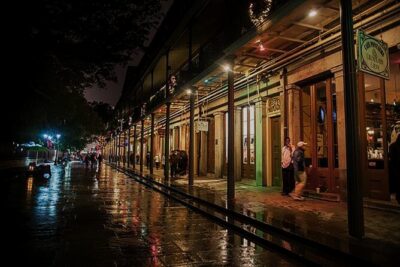
New Orleans Premier Ghost, Voodoo and Vampire Walking Tour
Read our review →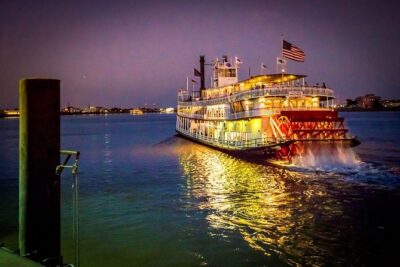
New Orleans Steamboat Natchez Jazz Cruise with Dinner Option
Read our review →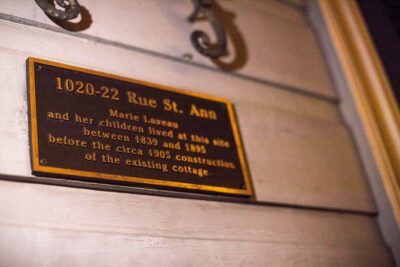
Adults-Only New Orleans Ghost, Crime, Voodoo, and Vampire Tour
Read our review →
New Orleans Food Walking Tour of the French Quarter with Small-Group Option
Read our review →
New Orleans Swamp and Bayou Boat Tour with Transportation
Read our review →
New Orleans City Sightseeing Hop-On Hop-Off Bus Tour
Read our review →
Browse the lists this tour appears in