
Reviewed · NEW ORLEANS TOURS
New Orleans Demonstration Cooking Class with Meal
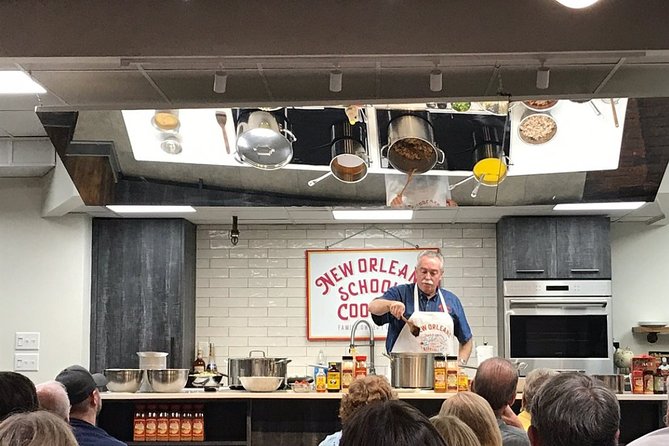
New Orleans cuisine makes more sense once you understand the roux, the spice blend, and the cultures behind the pot. In this lively two-hour class, a local chef prepares dishes such as gumbo, jambalaya, crawfish étouffée, and pralines while telling stories about Louisiana food.
I like the generous meal, which turns a cooking lesson into lunch or dinner, and I like the mix of recipes, local beer, iced tea, and New Orleans history. The main consideration is size: the class can hold up to 68 people, so it feels more like a food show than a small kitchen lesson.
Key points
- A full Creole meal is included: You sample several dishes prepared during the demonstration, not just one small taste.
- The roux gets proper attention: You learn why this dark, patient base matters in many Louisiana dishes.
- Several chefs lead the class: Presenters may include Lynn, Eric, Dianne, Austin, Viviane, Rene, or Terri, so the tone varies by session.
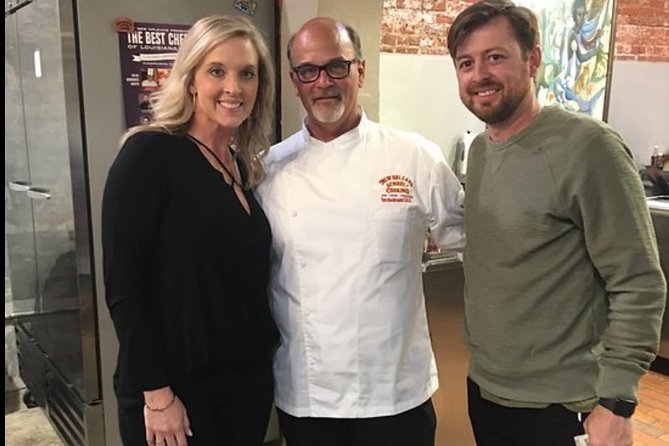
- The setting has character: The New Orleans School of Cooking operates in a converted 19th-century molasses warehouse at 524 St. Louis Street.
- You leave with usable recipes: The class supplies copies, and you can earn a diploma by sending in photos of dishes you make at home.
- Dietary help is available with limits: Vegan, gluten-free, and nut-free substitutions can be arranged for a $5 fee, but they are not the dishes demonstrated.
A meal, a cooking show, and a New Orleans story
This experience works because it does three jobs at once. You learn the basics of Louisiana cooking, you eat a substantial selection of local dishes, and you get a friendly history lesson about the people and cultures that shaped the food.
The chef cooks in real time and explains each step as it happens. You might hear about the difference between Cajun and Creole cooking, the role of local spices, and why a good roux can make or break a pot of gumbo. The class is designed for people who want to understand the food, not merely take a cooking lesson home.
The tone is informal. Past sessions have been led by chefs including Lynn, Chef Eric, Chef Dianne, Chef Austin, Viviane, Rene, and Chef Terri. Each brings a different personality. Some lean into jokes and Southern charm, while others put more time into technique and food culture.
That variety is worth noting. You are booking the school and its format, not a guaranteed single instructor. The common thread is a live cooking demonstration followed by a meal.
More to weigh up across New Orleans
- New Orleans Hands-On Cooking Class with Meal
★ 5.0 · 1,183 reviews - New Orleans: Cajun and Creole Cooking Class
★ 4.9 · 730 reviews - Undiscovered Charleston: Half Day Food, Wine & History Tour with Cooking Class
★ 5.0 · 948 reviews
Inside the New Orleans School of Cooking
The class takes place at 524 St. Louis Street, in the French Quarter. The school occupies a converted 19th-century molasses warehouse, so the venue gives the experience a useful sense of place before the first pot goes on the stove.
You take a seat among other food lovers and watch from the dining area. This is not a hands-on workshop. You will not chop vegetables, stir the roux, or build your own pralines, which may disappoint you if you came hoping to practice knife skills.
I see the lack of hands-on work as a fair trade for the price. You can sit back, watch the full process, ask questions, and eat without spending the session elbowing for counter space. It also lets the chef keep the meal moving for a large group.
The size can reach 68 people, though one session had about 48 attendees. That scale affects the mood. A good chef can keep the room laughing and focused, but side conversations may make it hard to hear at times. Sit where you can see and hear the cooking area, and be ready for the energy of a public demonstration rather than a quiet private class.
The school is near public transportation. The activity begins and ends at the same address, so you do not need to arrange a separate ride between stops.
What you learn about Cajun and Creole cooking
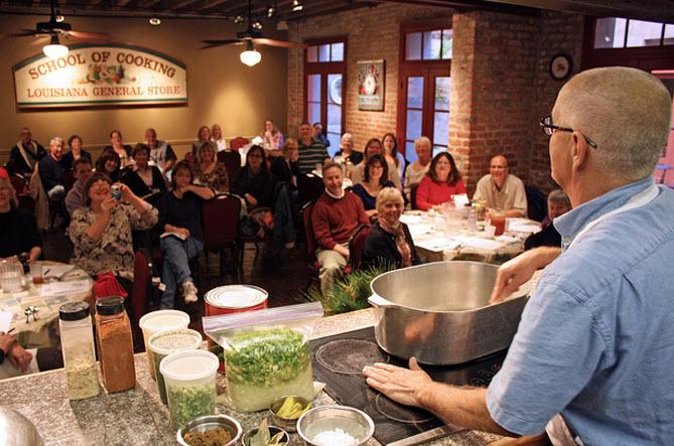
The most useful lesson is often the simplest one: Louisiana food depends on method. The chef explains the importance of building a proper roux, then shows how spices, vegetables, seafood, and meat come together in dishes that have traveled through many cultural traditions.
The class also addresses Cajun and Creole cooking. You can ask about the difference, which is often treated too casually in restaurant menus. The chef places both styles in the wider story of Louisiana food and explains how local traditions developed from a mix of cultural influences.
You will also hear local anecdotes, jokes, and personal food stories. That material keeps the lesson from becoming a dry recipe reading. The strongest classes balance the history with practical instruction, so you understand not just what to add, but why the dish tastes the way it does.
Spice is handled in a sensible way for a large class. The prepared food is not made aggressively hot. Seasonings are provided at the table so you can adjust the flavor yourself. If you expect every dish to arrive fiery, you may find the base seasoning mild. If you are cautious with heat, this approach is more welcoming.
The menu: from corn and crab bisque to pralines
The exact menu can vary, but the advertised choices cover a generous spread of Louisiana cooking. You might begin with corn and crab bisque or shrimp and artichoke soup. The menu may also include gumbo, jambalaya, shrimp or chicken Creole, and crawfish étouffée.
That lineup gives you a useful comparison. Gumbo teaches you about a roux-based stew with deep seasoning. Jambalaya shows a different approach to rice, meat, and spice. Shrimp or chicken Creole brings a tomato-based style into the mix, while crawfish étouffée offers a rich shellfish dish with its own texture and flavor.
You do not receive only a token spoonful. The portions are described as generous samplings, and the meal is intended to fill you. You can expect to taste each dish prepared during the class, making the $43 price easier to judge.
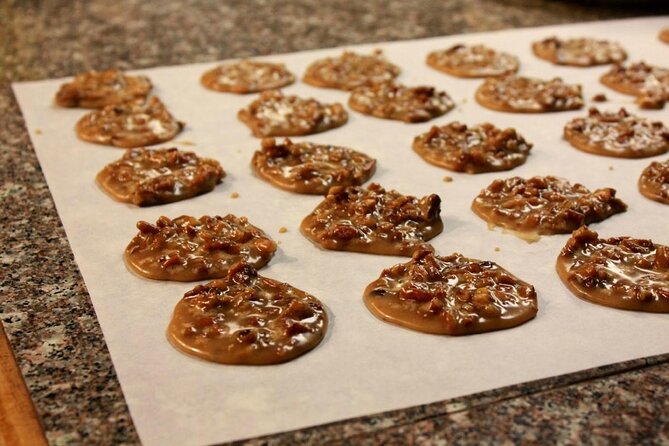
Dessert may include bread pudding, bananas Foster, pralines, or pecan pie. The flaming dessert demonstration is a memorable touch when bananas Foster appears. Pralines also provide a sweet finish and show how Louisiana cooks turned simple ingredients such as sugar and pecans into a local specialty.
The important point is variety. This is not a class built around one recipe. You get a broad introduction to savory dishes and desserts, then take home the recipes for later practice.
A different kind of day, same corner of the map:
- New Orleans Premier Ghost, Voodoo and Vampire Walking Tour
★ 4.5 · 12,856 reviews - New Orleans Steamboat Natchez Jazz Cruise with Dinner Option
★ 4.0 · 7,533 reviews - Adults-Only New Orleans Ghost, Crime, Voodoo, and Vampire Tour
★ 5.0 · 6,545 reviews - New Orleans Food Walking Tour of the French Quarter with Small-Group Option
★ 5.0 · 6,118 reviews
Why the food lesson is worth the $43 price
At $43 per person, this is not the cheapest meal in New Orleans. It is also not priced like a private cooking lesson. The value comes from combining food, instruction, drinks, entertainment, and recipes in one two-hour session.
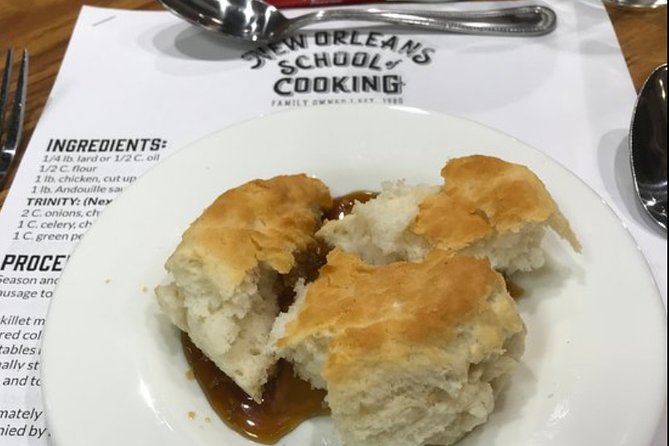
You receive a full meal made in front of you, plus coffee, iced tea, water, and one local beer. The meal alone makes the cost reasonable, especially if you are looking for a planned lunch or an early evening activity in the French Quarter.
The class is also useful for people who do not normally cook. You can attend with a partner or friend who loves food and still have a good time if you never intend to make gumbo at home. The chef carries the work, and you get the pleasure of watching, asking questions, and eating.
For a home cook, the value is different. You can compare the techniques in the room with your own habits, learn how the school handles roux and seasoning, and leave with recipes you can try later. The cooking itself is not advanced training, but the explanation can help beginners and experienced cooks alike.
The main thing you are not paying for is personal attention. With a large class, the chef cannot coach each person through a recipe. If you want hands-on practice, a small group, or a custom menu, spend your money elsewhere.
The meal is also the entertainment

The best part of this class may be the chef’s personality. The cooking provides the structure, but storytelling gives the session its New Orleans character.
Names such as Chef Eric, Chef Austin, Lynn, Viviane, Rene, and Terri have been associated with especially engaging sessions. Chef Austin, in particular, is described as mixing stories, jokes, questions, and cooking instruction while keeping the room well fed. Rene is noted for setting a warm New Orleans mood, while Lynn brings food history into an entertaining presentation.
You should expect some variation between classes. One chef may spend more time on Louisiana history, another may focus on recipe details, and another may make the room laugh more often. That is part of the live format.
The class suits a mixed group. You do not need to be a serious cook, and you do not need to arrive with a notebook full of technical questions. A couple can attend together even if only one person cooks at home. Families and friends can treat it as a shared meal with a lesson attached.
The atmosphere is casual and social, but a large room can produce noise. If you have trouble hearing, choosing a seat carefully matters. The chef may also pause to answer questions, so you get chances to ask about roux, spices, or Cajun and Creole traditions.
The French Quarter setting and timing
The listed stops are the New Orleans School of Cooking and the French Quarter, but this is not a separate walking tour of the district. The school is located in the French Quarter, and the cooking activity ends back at the meeting point.
That makes the class easy to fit into a day of sightseeing. You can visit nearby parts of the quarter before or after the meal without arranging additional transportation. The activity itself lasts about two hours, giving you a focused break from walking and sightseeing.
I like the timing because it creates a useful rhythm for a New Orleans visit. You can schedule the demonstration around other plans, then continue exploring from the same central area. The booking pattern suggests that people often reserve about 24 days ahead, so popular dates may require some planning.
The school sends confirmation at booking. It offers a mobile ticket, and the class is conducted in English.
Dietary restrictions and what to know before you go
Dietary needs can be accommodated, but you need to call the reservations line after booking and tell the staff before arrival. A $5 upcharge, payable at check-in, provides gumbo z’herbes and Creole z’herbes as substitutions.
Those substitutions are vegan, gluten-free, and nut-free. They are discussed during the class, but they are not demonstrated, and you receive copies of those recipes instead. The school cannot alter each recipe being prepared for the whole room.
Depending on your restrictions, you may be able to eat the soup but not the entree. Tell the stewards when you check in so they can explain what works for you. Do not assume that removing one ingredient from a demonstrated dish will make it suitable.
For anyone with serious allergies, the limits of a shared kitchen matter. The information provided does not promise an allergen-free environment, so call ahead and ask specific questions before booking.
Practical details, tips, and cancellation
The experience costs $43 per person and includes the demonstration, food, coffee, iced tea, water, one local beer, and recipe copies. Gratuities are not included, with 15 to 20 percent recommended.
Bring a mobile ticket and arrive at 524 St. Louis Street. The activity returns to that same location, and public transportation is nearby. You should also come hungry. The meal includes samples of several courses, and the servings can add up quickly.
Plan on leaving room for dessert. Bread pudding, bananas Foster, pralines, and pecan pie may appear alongside the savory dishes, so this is more than a tasting of gumbo and rice.
Free cancellation is available if you cancel at least 24 hours before the start time. Inside that window, you do not receive a refund and changes are not accepted. The experience may also be canceled if poor weather affects the event or if the minimum number of people is not met. In those cases, you are offered another date or experience, or a full refund.
Who should book this class?
You should book it if you want a friendly introduction to New Orleans food without committing to a full cooking workshop. It is especially good for a first visit, a rainy-day backup, a couple with different levels of cooking interest, or anyone who wants a meal with local context.
It also suits repeat visitors. The menu can change, so you might return for a different set of dishes. The school format gives you a reliable way to learn more about local food even if you have already eaten your way through the French Quarter.
You may want to skip it if you dislike large groups, need quiet instruction, or want to cook with your own hands. A small number of people may find the food mild, though seasoning is available so you can adjust it at the table.
Should you book the New Orleans cooking demonstration?
I would book this class for its strong value and generous meal. You get two hours of cooking, history, stories, drinks, dessert, and recipes for $43, which is a sensible price for a French Quarter activity.
Go in expecting a lively demonstration, not a private lesson. Choose it for the food and the personality of the chef, and you will likely leave full and better prepared to make gumbo, jambalaya, or pralines at home.
FAQ
Where does the cooking class take place?
The class takes place at the New Orleans School of Cooking, 524 St. Louis Street, New Orleans, Louisiana 70130, in the French Quarter.
How long does the experience last?
The demonstration and meal last approximately two hours.
Is this a hands-on cooking class?
No. This is a demonstration-only class. The chef prepares the dishes while you watch, listen, ask questions, and sample the food.
What food might be served?
The menu may include corn and crab bisque, gumbo, jambalaya, shrimp or chicken Creole, crawfish étouffée, shrimp and artichoke soup, bread pudding, bananas Foster, pralines, and pecan pie.
Are drinks included?
Yes. The price includes coffee, iced tea, water, and one local beer.
Do I receive recipes?
Yes. You receive copies of the class recipes to take home. You can also receive a diploma by submitting photos of recipes you prepare at home.
Can dietary restrictions be accommodated?
Yes, with advance notice. After booking, call the reservations line. For a $5 fee payable at check-in, vegan, gluten-free, and nut-free gumbo z’herbes and Creole z’herbes substitutions may be provided.
How large can the class be?
The activity can have a maximum of 68 participants. It is a public group demonstration rather than a small private lesson.
What is the cancellation policy?
You can cancel at least 24 hours before the start time for a full refund. Cancellations or changes made less than 24 hours before the start time are not accepted and are not refunded.
Newly listed in New Orleans
- New Orleans City Tour and Steamboat Natchez Harbor Jazz Cruise★ 4.0 · 446 reviews
- Small-Group Laura and Whitney Plantation Tour from New Orleans★ 4.5 · 446 reviews
- New Orleans French Quarter Photo Shoot★ 5.0 · 462 reviews
- New Orleans: 2-Hour Ghosts & Vampires Walking Tour★ 4.5 · 465 reviews
- Garden District Home and History Walking Tour★ 5.0 · 470 reviews
- New Orleans: Sunday Steamboat Jazz Cruise + Optional Brunch★ 4.3 · 470 reviews
- New Orleans Jazz History and Music Walking Tour★ 4.5 · 477 reviews
- Small-Group Manchac Swamp Kayak Tour with Local Guide★ 5.0 · 480 reviews
New Orleans Tours, compared.
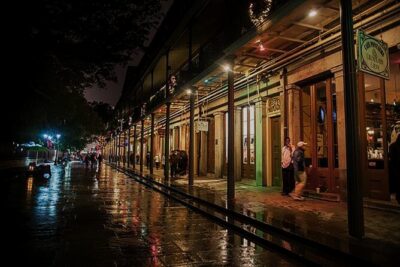
New Orleans Premier Ghost, Voodoo and Vampire Walking Tour
Read our review →
New Orleans Steamboat Natchez Jazz Cruise with Dinner Option
Read our review →
Adults-Only New Orleans Ghost, Crime, Voodoo, and Vampire Tour
Read our review →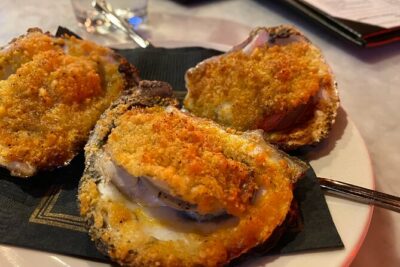
New Orleans Food Walking Tour of the French Quarter with Small-Group Option
Read our review →
New Orleans Swamp and Bayou Boat Tour with Transportation
Read our review →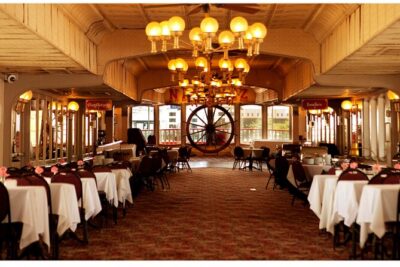
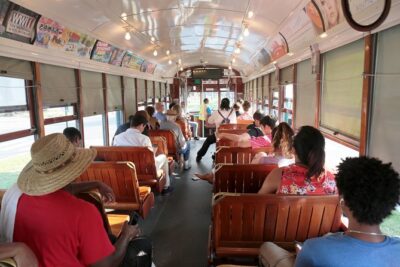
New Orleans City Sightseeing Hop-On Hop-Off Bus Tour
Read our review →
Browse the lists this tour appears in