
Reviewed · MAUI TOURS
Maui: Ultimate Whale Watch from Lahaina
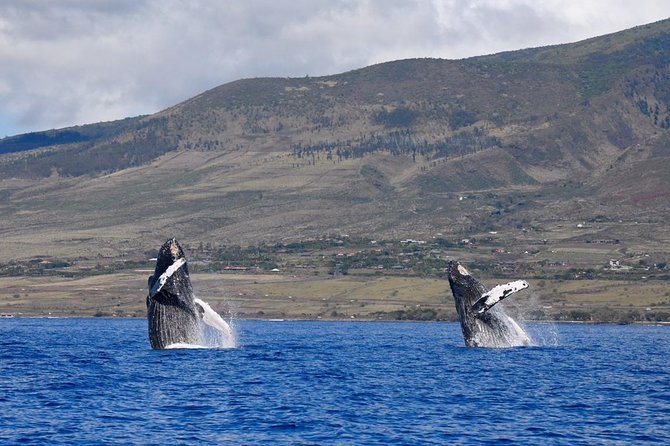
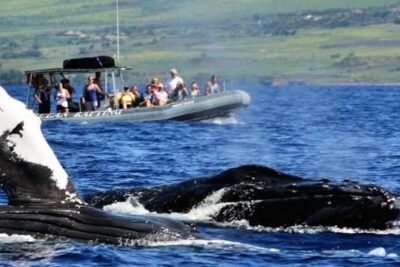
Maui’s humpback whales are the main event here, and the low raft puts you close to the water without packing you onto a huge sightseeing boat. Captains such as Jill, Lacey, Jeremiah, and John work quickly to find activity, while the naturalist explains tail slaps, breaches, calf behavior, and whale calls through the hydrophone.
I like the small-group setup, capped at 28 people, because it gives you a much better chance of seeing over the side and asking questions. I also like the whale-sighting guarantee, which takes some of the gamble out of booking a wildlife trip. The tradeoff is a tight, open-air boat with limited personal space, and the ride can feel bumpy when the ocean is up.
Key points to know before booking
- Low raft, maximum group size of 28: The boat sits close to the water and keeps the group small, giving most seats a clear view.
- Two time choices: Select the approximately 1.5-hour or 2-hour version when booking.
- Whale songs onboard: A hydrophone lets you hear underwater whale communication, not just watch surface activity.
- Dolphins are possible: Some outings include spinner dolphins along with humpbacks, though wildlife sightings can never be fully controlled.
- No-whale protection: If you do not see whales, you can take another trip at no extra charge.
- Useful restrictions: Children under 3 and pregnant passengers cannot join, and the maximum group size is 28.
Why this Lahaina whale watch feels different
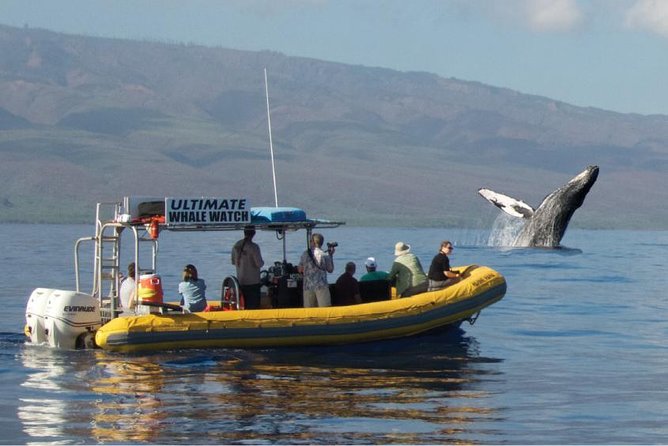
A whale watch can mean one of two things in Maui: a large catamaran with plenty of room, or a compact raft that gets you closer to the water. Ultimate Whale Watch & Snorkel takes the second approach.
The boat leaves from 1229 Front Street in Lahaina, at or near Lahaina Harbor, and returns to the same meeting point. The trip lasts about 1 hour 45 minutes to 2 hours 10 minutes, depending on the selected option and operating conditions. You are not spending half the outing on a long transfer. The focus is the search for whales.
That matters because humpbacks are wild animals, not scheduled performers. Your captain may need to move from one sighting to another, pause near a pod, or wait for a whale to surface again. A smaller vessel can make those changes more quickly than a large boat, and the crew can keep the group together without the scale of a major harbor cruise.
The experience is offered in English. You get purified water from an igloo-style dispenser rather than individual plastic bottles, a small but sensible touch for an ocean activity.
More Whale Watching in Maui
- From Maalaea: Whale Watching Tour Aboard the Quicksilver
★ 4.5 · 1,461 reviews - WHALES GUARANTEED Maui Whale Watching Makai Adventures
★ 5.0 · 1,081 reviews - Ma’alaea Harbor: Whale Watching Tour Aboard Power Catamaran
★ 4.6 · 979 reviews
Setting out from Lahaina Harbor
Check-in is at the Lahaina meeting point, and the outing ends there as well. The meeting location is easy to find, though arriving early is useful if you want more time to settle into the boat before departure.
The vessel is described as fast, safe, and low to the water. That low profile is the central feature of the trip. You are not looking through a distant railing from a high deck. You are seated close to sea level, so the horizon and the water feel immediate.
The phrase front row needs a little explanation. The seating is arranged in rows along the boat, and the operator considers each position a front-row view because every row is beside the water. That does not mean every seat has the same amount of legroom or the same photography angle. One passenger specifically found the seats close together and compared the layout to school-bus seating.
I would treat this as a small boat with good sight lines, not a private charter or a roomy cruise. If you care about getting the best possible position, arrive early and listen carefully to the crew’s seating instructions. The compact layout helps with viewing, but it can make cameras, bags, and elbows feel crowded.
Watching humpbacks at the surface
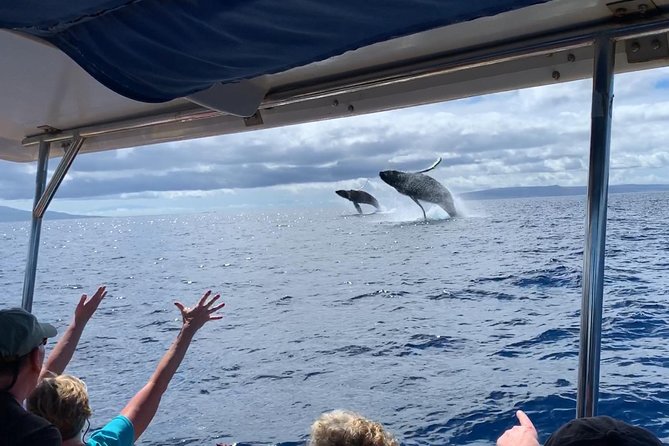
The crew’s job is to find active whales while respecting the animals’ space. Captains such as Jill, Lacey, Jeremiah, Derek, John, and others are repeatedly praised for reading the water and moving toward whale activity without rushing carelessly.
When the whales cooperate, the action can be spectacular. You might see a breach, a tail slap, a pectoral fin wave, or a whale surfacing beside the raft. Mothers and calves may travel together, and several whales can sometimes gather in one area. One outing included a group of four whales, while another encountered a large pod of spinner dolphins as well.
Still, you should set the right expectation. A whale watch is not a guarantee of repeated breaches directly beside your seat. One well-liked outing involved several whales that stayed relatively quiet and far away, and the captain remained with that group longer than one passenger preferred. That is the honest wildlife-watch tradeoff: some trips bring nonstop action, while others offer distant blows, backs, and brief surfaces.
The company does provide a no-whale guarantee, allowing you to take another trip at no additional charge if no whales are seen. That is valuable, but it does not guarantee a breach, a close approach, or dolphins. It protects you from the most disappointing possible result, not from ordinary changes in animal behavior.
Hearing whales through the hydrophone
The onboard hydrophone gives this trip a second layer. Instead of only looking for a blow or a dark back, you can listen to whale sounds beneath the boat.
That makes the outing more than a simple hunt for photographs. The naturalist can connect what you hear with what the whales are doing, and the sound helps you understand that much of the action takes place below the surface. Depending on the conditions, the hydrophone may be one of the most memorable parts of the trip, particularly when the water above seems quiet.
The naturalists are an important part of the experience. Lacey, Kacey, Casey, Kat, Charlie, Lily, and other crew members are praised for explaining whale habits, answering questions, and keeping the mood relaxed. Several crew members are described as trained biologists or naturalists, so you can expect more than a captain simply pointing toward a distant fin.
The quality of narration can vary by crew and by the rhythm of the outing. One passenger found the naturalist fairly quiet, while other outings included steady explanations and lively conversation. If you want the science, ask questions. The small group makes that easier than it would be on a large boat with a microphone and dozens of people between you and the guide.
More whale watching trips around Maui:
- Maui: Whale Watching Cruise with Open Bar from Ka’anapali Beach
★ 5.0 · 802 reviews - Whale Watching Maui: 2-Hour Small Group Raft Tour from Lahaina
★ 5.0 · 661 reviews - Whale Watching from Ma’alaea Harbor
★ 5.0 · 537 reviews - Maui Premium Sunset Dinner Cruise & Whale Watch
★ 4.5 · 504 reviews
Why the two-hour option may be worth it
You can choose between an approximately 1.5-hour trip and a 2-hour trip. The longer outing costs more time, but it also gives the captain more room to search, follow changing activity, and wait for a whale to resurface.
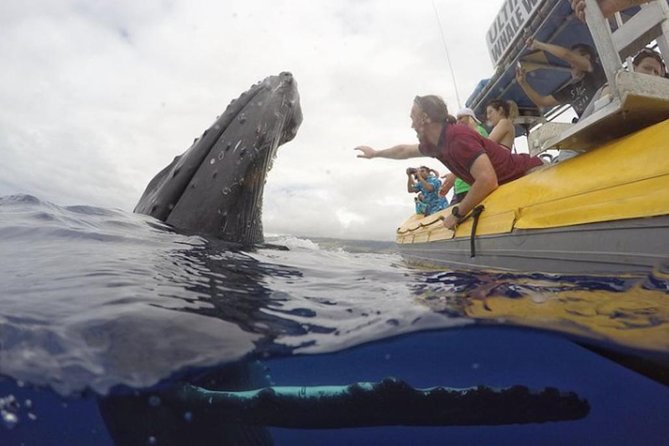
I would favor the two-hour option if whale watching is high on your Maui list. Even when the first sighting is quiet, extra time can bring a better encounter. Several outings described multiple breaches, calf activity, fin slaps, and whales swimming under the raft during the full two hours.
The shorter option makes sense if you have a packed schedule, young children who can handle the outing but may not want to sit at sea for long, or a tight connection with another activity. It still gives you a proper search rather than a quick harbor loop.
You should also remember that the time on the water may feel longer than the clock suggests if the ocean is rough. The captain works to reduce the effect of swells, but a small raft will transmit more movement than a large catamaran. If you are sensitive to motion, this is worth considering before you book.
Price and value at $77
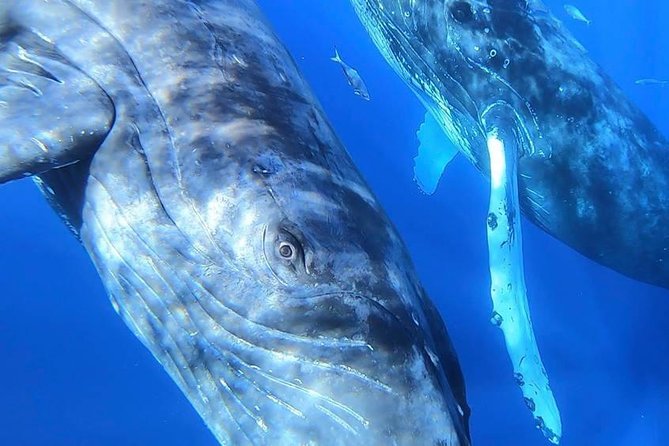
At $77 per person, this is priced as an accessible wildlife excursion rather than a luxury cruise. You are paying for the boat, crew, whale search, naturalist commentary, hydrophone, and the chance to return for another outing if no whales appear.
You do not get a full meal or a broad set of onboard amenities. Water is available through a shared purified-water dispenser, and seating is compact. Large catamarans may offer more indoor shelter, more open deck space, and refreshments, but they also carry many more people.
For me, the value comes from the ratio of time to group size. A maximum of 28 passengers gives the crew a manageable group and gives you a better chance to see the water without a crowd blocking the view. The raft also feels more personal than a large boat, especially when the captain and naturalist are actively answering questions.
The price is easiest to justify if you care about close viewing and whale education, rather than comfort and facilities. If you mainly want a spacious ride with indoor seating, this may not be your best match.
The practical side of a small raft
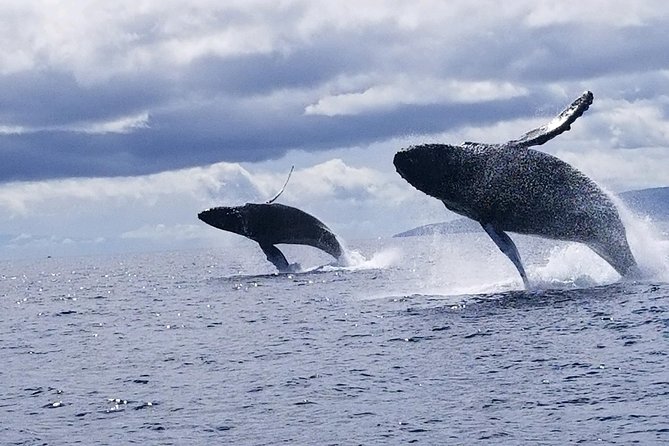
Bring only what you truly need. The seating is close, and photography is easier when you are not managing a large bag or several loose items. A camera or phone is worthwhile, since the crew may find whales breaching, slapping their tails, or surfacing near the boat.
The raft is low, so views are good, but the same design means you are exposed to spray and movement. The provided information does not specify a clothing list, so I would dress for changing conditions on the water and keep electronics secure. Use the bottled-water reference carefully: the operator supplies purified water from a dispenser, not individual plastic bottles.
The tour allows service animals, operates near public transportation, and most people can participate. Children under 3 cannot join, and pregnant passengers cannot be accommodated. These restrictions are especially important because the boat is small and the ride can be active.
The public restroom situation at the harbor is not a reason to skip the tour, but it is a reason to plan ahead. Facilities are managed by the marina and may be awkward to reach. Take care of that before boarding if possible.
Picking the right departure
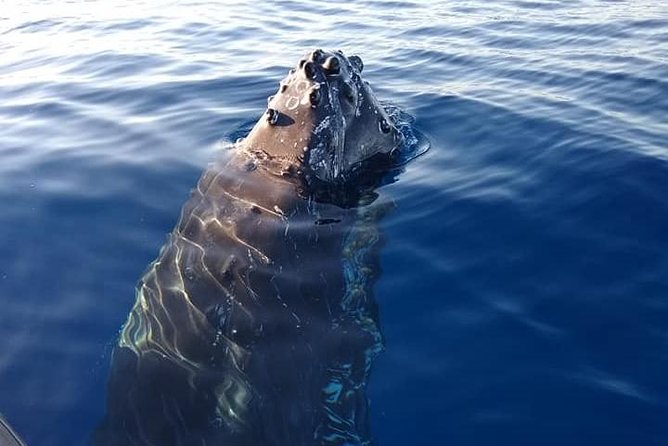
This activity is booked well ahead on average, about 24 days in advance. If whale watching is a priority, I would not leave it until the last day of your Maui stay. Booking early gives you more choice of departure and leaves room to use the whale guarantee if conditions or animal activity do not cooperate.
An early trip can work well if you want to free the rest of your day, and one outing at 7 a.m. produced strong whale activity, including breaches and a whale swimming beneath the boat. That does not mean every early departure will be better, but it shows that the first departure can deliver a full experience.
Choose the departure that fits your schedule and leave some flexibility around it. Weather can cancel the trip, in which case you are offered another date or a full refund. The same applies if the minimum number of participants is not reached.
Free cancellation is available up to 24 hours before the start time. Cancellations or changes made inside that window are not accepted for a refund, so avoid booking a departure that you already suspect may conflict with another plan.
Who will enjoy this most
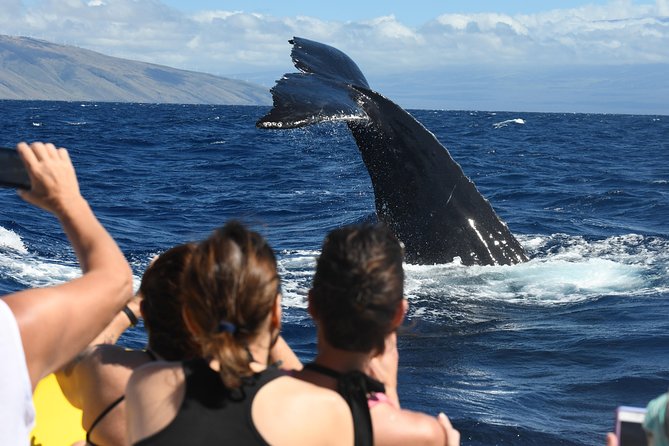
I would choose this whale watch for you if you want a focused wildlife outing, a smaller group, and a crew that can explain what you are seeing. It works especially well for couples, solo visitors, friends, and families with children old enough for the boat’s restrictions.
It also suits repeat visitors who have already tried a large catamaran and now want a more personal format. The compact raft gives you less distance from the water and fewer people competing for the same view.
You may prefer another style of boat if you need indoor seating, extra room, or a gentler ride. The boat is small, seats are close, and the ocean may be uneven. A person who becomes uncomfortable on moving water should weigh that carefully.
Photographers should know that the small vessel offers excellent access to the water but not necessarily generous elbow room. Get there early, keep your equipment compact, and be ready to look in every direction. Whales can surface behind you as easily as in front.
Should you book Ultimate Whale Watch?
Book it if your main goal is to see humpback whales from a small, low boat and learn what you are watching. The hydrophone, compact group, whale guarantee, and skilled captains make this a strong value at $77, especially during the part of the year when humpbacks are present around Maui.
I would select the two-hour option if you have room in your schedule. Choose the 1.5-hour trip if you want the same basic format with less time on the water.
Skip it if you need a roomy vessel, indoor comfort, or a calm ride. Otherwise, this is a sensible Maui pick: simple, focused, and built around the animals rather than onboard extras. Just remember that nature supplies the show. The crew can find the whales, but the whales decide whether they breach.
FAQ
Where does the whale watch begin?
The tour begins at 1229 Front Street in Lahaina, Hawaii, at the Lahaina Harbor area.
Where does the activity end?
The outing ends back at the same meeting point.
How long does the tour last?
You can choose an approximately 1.5-hour or 2-hour option. The listed overall duration is about 1 hour 45 minutes to 2 hours 10 minutes.
How much does the experience cost?
The listed price is $77 per person.
How many people can join?
The activity has a maximum of 28 participants.
Is water provided?
Yes. Purified water is available from an igloo-style dispenser. The operator does not provide individual plastic water bottles.
What happens if no whales are seen?
You can take another whale-watching trip at no extra charge.
Can children under 3 join?
No. Children under 3 are not permitted.
Can pregnant passengers participate?
No. The operator is unable to take pregnant passengers. Service animals are allowed, and most other participants can join.
Newly listed in Maui
- The Maui Butterfly Farm Tour★ 5.0 · 446 reviews
- South Maui: Molokini Snorkeling Adventure★ 4.6 · 450 reviews
- Maui 8 line Zipline Adventure: Soar above valleys & Island views★ 5.0 · 458 reviews
- Rappel Maui Waterfalls and Rainforest Cliffs★ 5.0 · 459 reviews
- Maui: Eco-Friendly Molokini & Turtle Town Tour with Meals★ 4.5 · 464 reviews
- Maui: Molokini and Turtles Luxury Yacht Snorkel★ 5.0 · 477 reviews
- Doors Off West Maui and Molokai 45 minute Helicopter Tour★ 5.0 · 487 reviews
- Best Haleakala Downhill Self-Guided Bike Tour with Maui Sunriders★ 5.0 · 496 reviews
Maui Tours, compared.

Maui Eco-Raft Tour: Eye-Level Whale or Dolphin Watching – Lahaina
Read our review →
Maui Snorkeling Adventure to Molokini and Turtle Town
Read our review →
Haleakala Sunrise Spectacular with Local Breakfast
Read our review →
Maui Snorkeling Adventure From Ma’alaea Harbor to Molokini
Read our review →


Browse the lists this tour appears in