
Reviewed · MAUI TOURS
Rappel Maui Waterfalls and Rainforest Cliffs
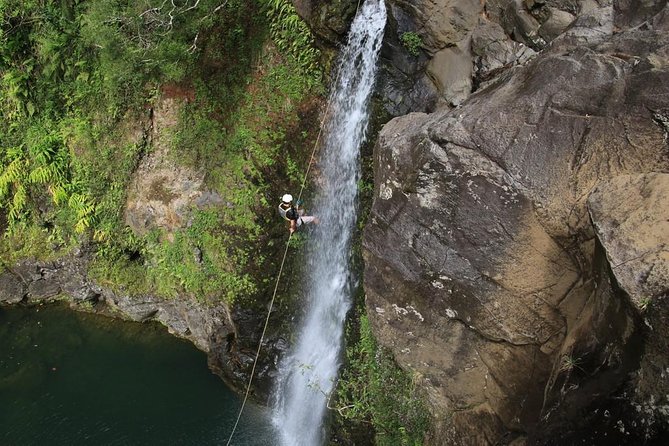
Rappelling down a Maui waterfall is not a passive sightseeing stop. You clip into a rope, lean back over a wet cliff, and lower yourself toward a pool surrounded by rainforest. The route begins with smaller descents, then can build to cliffs as high as 30 feet.
I like the eight-person maximum, since it leaves room for real coaching instead of a rushed assembly line. I also like the flexible approach to weather: rain is normal here, and guides choose alternate cliffs when water levels become unsafe. The main drawback is the physical work. You hike, climb over wet rock, swim, and manage a full morning in damp gear, all for $240.84 per person.
Key points to know before you book
- Three rappels are common: Many outings include a cliff descent and two waterfall rappels, though conditions can change the route.
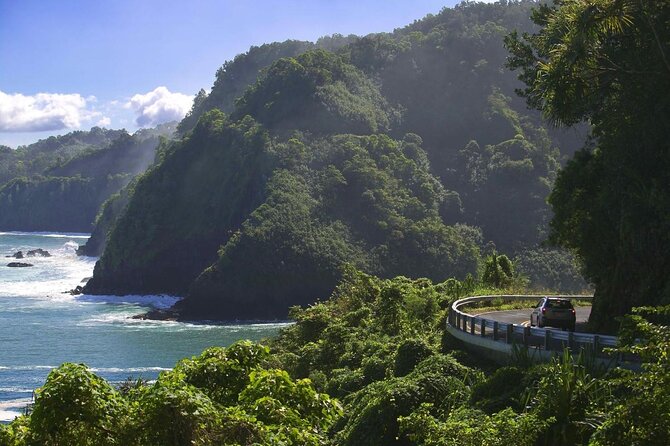
- The setting is near the Hana Highway: You meet in Haiku and reach the rainforest area without hotel pickup.
- The tallest descent can reach 30 feet: Smaller practice rappels help first-timers gain control before higher drops.
- Rain does not automatically cancel the outing: Flooding may lead to alternate rappel sites for safety.
- Swimming is part of the fun: Plan on waterfall pools, wet rocks, and the chance to swim beneath falling water.
- Strict body-size rules apply: Participants must weigh 70 to 250 pounds and have waists measuring 22 to 48 inches.
Rappelling above the rainforest
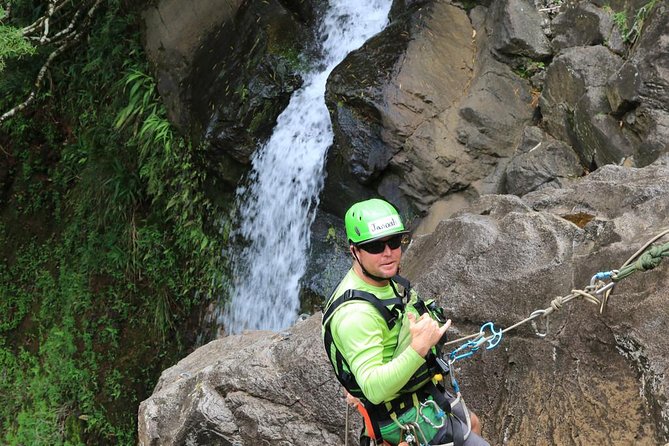
The appeal is simple: Maui gives you a way to experience its waterfalls from the rope rather than from a roadside lookout. You are not just photographing a cascade. You are standing at its edge, learning how to control your descent, then stepping into the pool below.
The experience begins with a safety briefing and equipment check. You do not need previous rappelling experience, but you do need to listen closely and follow instructions. Guides work with the group on rope handling, body position, and the basic movements needed to descend with control.
This is where the small group matters. With no more than eight people, your guide can watch each person carefully. First-timers get time to ask questions, and a nervous child or adult is not simply pushed along because the next group is waiting.
The guide team has earned repeated praise for its calm, friendly approach. Shauna, Alba, Deacon, Naomi, Jackson, Elena, Taylor, Mike, and Elaina are among the guides named by people who had especially good outings. Staff assignments can change, but the consistent pattern is clear: expect instruction that is serious about safety without turning the morning into a grim technical class.
More to weigh up across Maui
- Maui Pineapple Farm Tour in Haliimaile
★ 5.0 · 2,855 reviews - Maui Eco-Raft Tour: Eye-Level Whale or Dolphin Watching – Lahaina
★ 5.0 · 2,482 reviews - Maui Snorkeling Adventure to Molokini and Turtle Town
★ 4.5 · 2,221 reviews
Starting near the Hana Highway in Haiku
You meet at 10-600 Hana Highway in Haiku, an easy-to-locate departure point. Hotel pickup and drop-off are not included, so you need to arrange your own way to the start and return there after the activity.
The location puts you on the eastern side of Maui, close to the road associated with the Road to Hana. That matters for planning. This is not a quick activity from a resort beach in West Maui. Build in driving time, and do not schedule it so tightly that a late return creates trouble for another reservation.
The Hana Highway is part of the appeal. The road leads through one of Maui’s wettest areas, where rain, cliffs, streams, and thick plant growth shape the setting. It is also a road that can require patience. If you are combining this activity with a longer drive, allow enough time to arrive at the meeting point without rushing.
The tour ends back at the same meeting point. That makes the start and finish easy to understand, but it also means you are responsible for transportation at both ends. Bottled water and seasonal snacks are included, which is useful after the hike and rope work, though you should still arrive ready for a physically active outing.
A short rainforest route with real effort
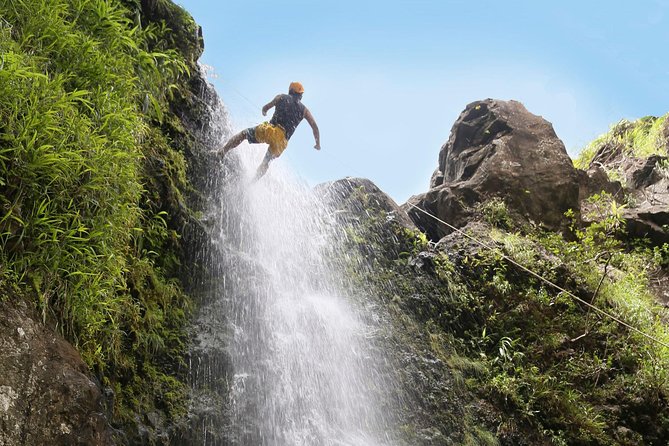
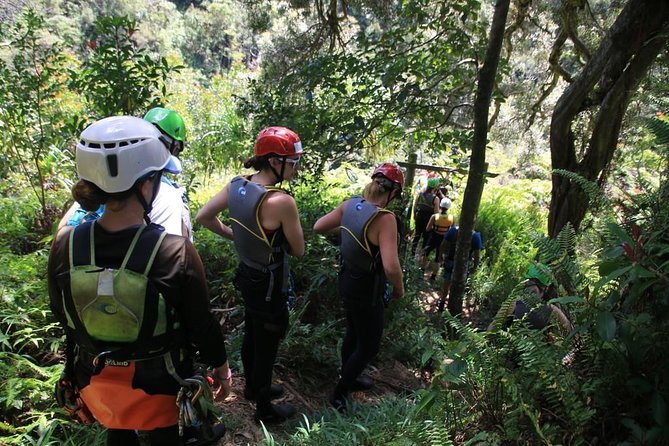
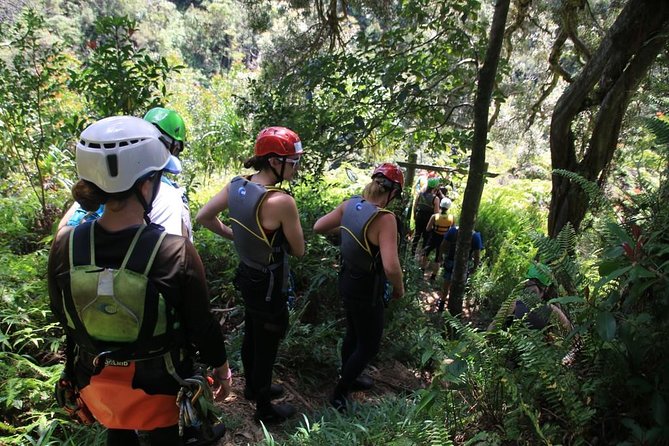
The route takes you away from the ordinary road stop and into the rainforest. Expect some hiking, wet rock, and sections that require careful footing. You must be able to walk and hike without assistance, and the stated fitness level is moderate.
The hiking is not just filler between rappels. It gives you access to the cliffs and pools that make the activity special. You may pass through the grounds of the Garden of Eden Arboretum and Botanical Garden, one of the named stops connected with the outing. The arboretum adds plant life and a more scenic setting to what could otherwise feel like a ropes course.
Do not picture a dry, polished walkway all morning. This is a rainforest activity, and rain can make the ground slippery. You may be wet from the weather before you even reach the first waterfall. Wear clothing and footwear suited to that reality, and avoid bringing anything you cannot afford to get soaked.
The route can include a little rock climbing as well as hiking. That does not mean you need technical climbing skills, but you should be comfortable using your hands and feet to move over uneven ground. If stairs, wet trails, or repeated transitions from standing to sitting are difficult for you, this may not be a good match.
From practice cliffs to 30-foot drops
The progression is one of the best parts of the design. You start on smaller cliffs and waterfalls, where you can learn the system with less height and less pressure. Once you understand how the rope responds, the route can move to larger descents, reaching as high as 30 feet, or about 8 meters.
Many accounts of the outing describe three rappels, often one on a cliff and two involving waterfalls. Treat that as a useful expectation, not a guarantee. Water flow, site conditions, group pace, and safety decisions can alter the exact route.
A 30-foot rappel is not a giant canyon descent, but it feels substantial when you are looking down from the top. The guides handle the rope system and coach you through each step. Your job is to keep your body position, follow directions, and move at the pace the guide sets.
That structure makes the activity suitable for beginners who want a thrill without having to arrive with technical experience. It is also more active than a zip line. You are not simply seated in a harness and carried across a gap. You learn a skill and make controlled movements down the rock.
The experience can still test your nerve. One parent described children aged 17, 14, and 11 leaving with new confidence, while other first-timers in their 50s felt comfortable after patient instruction. Those examples suggest a broad age range, but they do not erase the physical demands or the minimum age of 10.
A different kind of day, same corner of the map:
- Maui: Haleakala Sunrise Spectacular with Local Breakfast
★ 4.5 · 2,155 reviews - Maui Snorkeling Adventure From Ma’alaea Harbor to Molokini
★ 4.5 · 1,997 reviews - Maui: Turtle Town Snorkel with Photo and Video
★ 5.0 · 1,916 reviews - Road to Hana Adventure Maui Tour with Lunch
★ 5.0 · 1,832 reviews
Waterfall pools and the wet payoff
Swimming gives the tour a welcome change of pace. After a rappel, you may have time to enjoy a waterfall pool or swim beneath falling water. The cool water is part of the reward, especially after hiking in humid rainforest conditions.
You should not expect a long, relaxed pool session to be guaranteed. The schedule is about rappelling, hiking, and swimming together, and the exact amount of free time depends on the group and conditions. One useful tip is to avoid rushing your descent or immediately hurrying to the next station. Take in the view from the rope and use the available pool time when the guide allows it.
The combination of rope work and swimming makes this more memorable than a standard waterfall viewpoint. You see the water from above, pass beside it, and then experience it at pool level. That sequence is a strong reason to choose this outing over a simple scenic drive along the Hana Highway.
It also means your clothing choices matter. The company says to dress appropriately for all weather conditions. Assume you will get wet from rain, spray, swimming, or all three. Keep valuable electronics protected and bring only what the operator permits on the route.
How weather changes the route
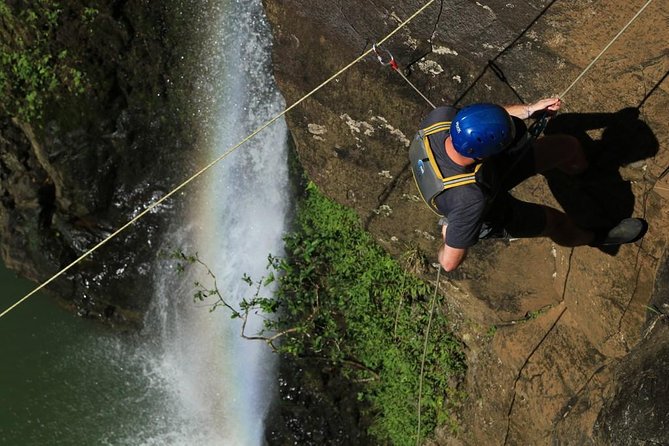
Rain is part of daily life in this part of Maui, and the activity operates in rainy weather. That can make the rainforest feel more alive, but it can also change the technical conditions quickly.
The guides choose which cliffs and waterfalls to use based on the weather. If waterfalls are flooding, the outing can switch to alternate rappels. This is an important safety feature, but it also means the exact waterfall experience is not fully fixed when you book.
A wet day is not automatically a bad day. Rain can add water to the falls and make the forest feel dramatic. Flooding, however, is a different matter. The point of the flexible route is to keep the activity going without sending people onto unsafe descents.
The experience requires good weather in the company’s cancellation terms. If the operator cancels because conditions are poor, you can receive another date or a full refund. That policy offers some protection, but you should still keep your schedule flexible if this is a major part of your Maui plans.
The value of $240.84 per person
At $240.84, this is an expensive three-hour activity. You are paying for specialist equipment, trained guides, safety support, a limited group size, access to a setting you cannot easily reach on your own, and a guided introduction to rappelling.
The value depends on what you want from Maui. If you are mainly seeking a cheap swim or a scenic waterfall stop, the price will feel high. If you want a structured adventure that combines three rappels, rainforest hiking, cliff work, and swimming, the cost is easier to justify.
The eight-person limit strengthens the value. A larger group might lower the price, but it could also mean more waiting and less personal help. Here, the guides can encourage a cautious first-timer, check equipment, and make small adjustments without losing track of the rest of the group.
The price also covers bottled water, seasonal snacks, taxes, fees, and handling charges. It does not cover transportation to the meeting point. Since the activity lasts about three hours, the cost per hour is not low, but this is a specialized experience rather than a basic attraction admission.
I would book it for a special Maui day, especially if your group has already seen beaches and roadside waterfalls and wants something more active. I would skip it if your budget is tight or if you are unsure about the weight, waist, fitness, or language requirements.
Who will enjoy this most
This works best for adults, families with children aged 10 and older, and couples looking for a shared challenge. A parent or legal guardian must accompany minors, and a parent or guardian must sign the required permission form before a child begins.
You need to understand and speak English fluently because the safety instructions are delivered in spoken English. That is not a minor detail. Rappelling depends on clear communication, especially when weather and footing change.
You also need to meet the body-size rules. Every participant is weighed at check-in. The limits are 70 to 250 pounds, with a waist between 22 and 48 inches. If you do not meet those limits at check-in, there is no refund, so confirm them before paying.
I would not choose this for someone who cannot hike or walk unassisted. Nor would I recommend it to anyone hoping for a dry, gentle morning. Even people with moderate fitness should expect effort, wet conditions, and some nerves at the top of a descent.
For families, the age minimum and small group size are helpful. Younger participants can receive direct support, while adults can take part instead of watching from the side. Still, each child should be comfortable with heights, water, and instruction from the guide team.
Booking, timing, and sensible preparation
The activity is often reserved well ahead, with an average booking lead time of about 36 days. If your Maui dates are fixed, reserve early rather than hoping a convenient morning will remain open.
You can cancel for a full refund up to 24 hours before the start time. Changes or cancellations inside that 24-hour window are not accepted for a refund. Cutoff times follow local Maui time.
Wear clothing that can handle rain and water. The supplied information does not specify a required shoe type, so follow the operator’s current instructions when booking. Bring a practical attitude toward weather, and protect valuables from spray and swimming.
Plan your drive carefully. Since you meet and finish at 10-600 Hana Highway and arrange your own transportation, leave room for road conditions and the possibility of a slower morning. The activity is about three hours, but you should not stack a time-sensitive reservation immediately afterward.
FAQ
Where does the waterfall rappelling tour begin?
The meeting point is 10-600 Hana Highway, Haiku, Hawaii 96708. The activity ends back at the same meeting point.
How long does the experience last?
The tour lasts approximately three hours.
How high are the rappels?
The route begins with smaller cliffs and waterfalls and can progress to descents as high as 30 feet, or about 8 meters.
Do I need previous rappelling experience?
No previous experience is required. Guides provide instruction and support, but you must understand and speak spoken English fluently and follow safety directions.
What is the minimum age?
The minimum age is 10. Children and all minors must be accompanied by an adult, and a legal parent or guardian must sign the required permission form for a minor.
Are there weight and waist restrictions?
Yes. Participants must weigh between 70 and 250 pounds and have a waist measurement between 22 and 48 inches. Everyone is weighed at check-in, and there is no refund if a participant does not meet the limits.
What happens if it rains or the waterfalls are flooding?
The activity operates in rainy weather, with alternate rappel sites used when waterfalls are flooding. If the operator cancels because of poor weather, you can choose another date or receive a full refund.
Should you book Rappel Maui?
Book this if you want a genuine physical challenge and a way to experience Maui’s rainforest from inside the action. The best reasons are the small group, patient instruction, waterfall pools, and the unusual chance to rappel beside or down active falls.
Think twice if you dislike heights, wet trails, swimming, or uncertain weather. Also check the strict body-size rules before booking and leave enough driving time to reach Haiku.
For the right person, this is one of Maui’s more distinctive paid activities. You leave the roadside viewpoint behind, learn a real technique, and earn the scenery one rope descent at a time.
Newly listed in Maui
- The Maui Butterfly Farm Tour★ 5.0 · 446 reviews
- South Maui: Molokini Snorkeling Adventure★ 4.6 · 450 reviews
- Maui 8 line Zipline Adventure: Soar above valleys & Island views★ 5.0 · 458 reviews
- Maui: Eco-Friendly Molokini & Turtle Town Tour with Meals★ 4.5 · 464 reviews
- Maui: Molokini and Turtles Luxury Yacht Snorkel★ 5.0 · 477 reviews
- Doors Off West Maui and Molokai 45 minute Helicopter Tour★ 5.0 · 487 reviews
- Best Haleakala Downhill Self-Guided Bike Tour with Maui Sunriders★ 5.0 · 496 reviews
- Maui Premium Sunset Dinner Cruise & Whale Watch★ 4.5 · 504 reviews
Maui Tours, compared.

Maui Eco-Raft Tour: Eye-Level Whale or Dolphin Watching – Lahaina
Read our review →
Maui Snorkeling Adventure to Molokini and Turtle Town
Read our review →
Haleakala Sunrise Spectacular with Local Breakfast
Read our review →
Maui Snorkeling Adventure From Ma’alaea Harbor to Molokini
Read our review →
Browse the lists this tour appears in