
Reviewed · SAVANNAH TOURS
Guided Savannah Civil War History Walking Tour
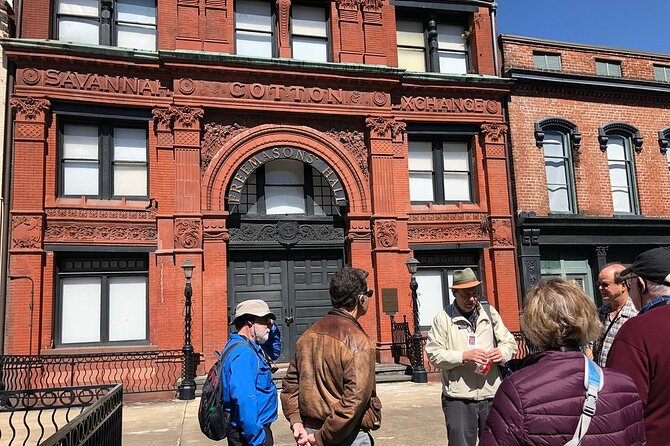
Savannah’s Civil War story is more complicated than a march through battle dates. This two-hour walk connects the city’s political choices before secession with Sherman’s arrival, his headquarters, Special Order No. 15, and the hard question of what came next: Reconstruction or retribution.
I like the steady movement through Savannah’s beautiful squares, and I like that the guides separate documented history from local lore. Guides including Kelce, Champ, Rodney, Pierce, and Robert have been praised for clear storytelling, visual aids, and a pace that lets you keep up.
The main drawback is the heat. You’ll be outdoors for about two hours, and even an easy walk can feel long in Savannah’s sun. Comfortable shoes, water, and a weather-friendly departure time will make a real difference.
Key points to know before you book
- Sherman’s headquarters and Special Order No. 15: The tour links Savannah’s streets to major decisions made during and after the Civil War.
- A small walking group: The maximum is 15 people, which should make it easier to hear the guide and ask questions.
- A calm, easy pace: The route covers less than two miles, with some chances to sit and rest.
- Strong guide roster: Kelce, Champ, Rodney, Pierce, and Robert are all specifically praised for their teaching, preparation, and clear delivery.
- A history-first experience: You’ll cover secession, Savannah’s political leanings, Sherman’s March to the Sea, Robert E. Lee’s visits, and Reconstruction.
- Good scheduling flexibility: Multiple departure times are offered, with a mobile ticket and English-language narration.
Why this Savannah walk is different

Many city walks give you architecture, ghost stories, and a handful of famous names. This one takes a narrower path. Its subject is Savannah during the years before, during, and after the Civil War, with more than 150 years of context folded into the route.
That focus matters. You are not simply being told that Sherman came to Savannah. You are asked to consider why Savannah’s leaders leaned toward secession, how the city responded to the Union occupation, and what freedom and punishment meant once the fighting ended.
I especially value the tour’s attention to causes. The discussion includes the different political and cultural forces behind the Civil War rather than reducing the conflict to a single slogan. If you already know the broad outline of the war, this is where the walk can add depth.
If you know very little about the subject, you should still be able to follow along. One guide was specifically praised for explaining the material clearly to someone with limited Civil War background. That is a useful sign for families and mixed-interest groups.
The format also keeps the subject connected to place. You hear the story while standing in the historic district, moving through squares and streets tied to the people and decisions under discussion. History can feel distant in a museum gallery. Here, the city itself supplies the setting.
More Historical Tours in Savannah
- Savannah History and Haunts Candlelit Ghost Walking Tour
★ 5.0 · 3,235 reviews - Historic Savannah Guided Walking Tour
★ 5.0 · 2,918 reviews - Narrated Historic Savannah Sightseeing Trolley Tour
★ 4.5 · 2,375 reviews
Reynolds Square: starting with Savannah before secession
The meeting point is Reynolds Square, at 32 Abercorn Street. This gives the guide a natural place to begin with Savannah’s older civic setting before moving into the political crisis of the 1850s and early 1860s.
Expect the opening portion to establish Savannah’s cultural and political leanings. The important point is not only what happened when Georgia seceded, but why the city and state were pulled toward that decision.
The tour’s strength is its refusal to treat secession as a simple local preference. Your guide addresses the underlying causes of the Civil War and places Savannah within the wider political arguments of the period. That approach is useful if you want more than dates and military movements.
The walk begins at a selected departure time, so arrive ready to start on schedule. Since the group can include up to 15 people, getting there a little early is sensible if you want to position yourself close to the guide.
Savannah’s squares as Civil War classrooms
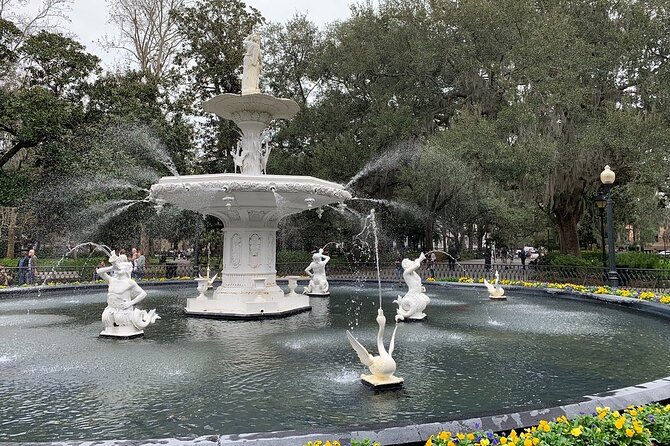
The route passes through several of Savannah’s squares. These green public spaces are among the city’s most appealing features, but on this tour they are not just pretty places for photographs.
The squares help break the walk into manageable sections. You move, stop, listen, and then continue. The route covers less than two miles, and several stops may offer a chance to rest your feet. That makes this a gentler way to study the city than a fast-paced march from landmark to landmark.
Some groups have used an earphone system, which can help you hear the narration while still looking around. That is especially useful in a city where traffic, other walking groups, and street noise can compete with the guide’s voice.
I would still choose comfortable shoes. The walk is described as easy, but easy does not mean effortless when you are outside for two hours. Savannah’s weather can also shift the experience. On hot days, the shade of a square is welcome, and one guide has even provided spare fans when conditions became uncomfortable.
The squares also give you a useful visual pause between serious subjects. A discussion of wartime policy can be heavy. Moving through attractive public spaces keeps the tour from feeling like a lecture in one fixed room, while the guide continues to tie each section back to Savannah.
Sherman’s March and the occupation of Savannah
Sherman’s March to the Sea is one of the central subjects. The tour connects the larger campaign with what happened in Savannah, rather than treating the march as an isolated military episode.
You will visit the area associated with Sherman’s headquarters and hear about the Union presence in the city. The discussion includes General John Geary and General Oliver Howard, two figures whose roles help broaden the story beyond Sherman alone.
This part should appeal to military-history fans, but it is not limited to troop movements. The guide’s job is to show how military decisions affected the city and its people. You can expect the narration to move between commanders, occupation, policy, and Savannah’s place in the final phase of the war.
The experience is strongest when you remain curious about the human and political consequences. Ask questions if you have them. Several guides have been praised for answering questions well, and the small group limit gives you a better chance to do so than a large bus tour would.
The guide may also bring visual aids. These have been particularly useful for placing people and events in sequence. If you learn best from maps, photographs, or other images, the visual material can make the spoken timeline easier to track.
More Walking Tours in Savannah
- Savannah First Squares Culinary & Cultural Walking Food Tour
★ 5.0 · 3,229 reviews - Savannah’s Ghost City “Dead of Night” Walking Night Tour
★ 4.5 · 2,482 reviews - Southern Flavors Food, Pub Crawl, and History Walking Tour
★ 4.5 · 1,623 reviews - Genteel and Bard’s Savannah Dark History and Ghost Encounter Walking Tour
★ 5.0 · 1,546 reviews
Special Order No. 15 and the difficult postwar question
Special Order No. 15 is another major subject. Its inclusion signals that this tour is not only about the military end of the Civil War. It also deals with what Union policy meant for formerly enslaved people and for the future of the South.
This is where the question of Reconstruction or retribution becomes important. The wording points to a serious discussion of the choices facing the country after the war. You are encouraged to think about whether policy should focus on rebuilding, punishment, justice, or some uneasy combination of all three.
I appreciate that this part widens the story beyond battlefield victory. A tour can mention Sherman, march on, and leave the impression that the war ended when the army arrived in Savannah. This route continues into the political and social aftermath.
The subject is best suited to listeners who want a thoughtful account rather than a dramatic performance. The strongest guide descriptions emphasize facts, context, and stories without theatrical embellishment. That does not mean the walk is dry. It means the interest comes from the events and the people themselves.
Robert E. Lee, local memory, and fact versus folklore
The walk also points out places connected to Robert E. Lee’s visits to Savannah. Lee visited the city many times, and those connections add a personal and local layer to the larger national story.
This is a good place to keep your expectations realistic. You are walking through the historic district, not entering a preserved Civil War battlefield or a dedicated museum. The value comes from hearing how the streets and buildings fit into the period, then seeing the modern city around you.
One of the most useful teaching habits associated with the guides is separating fact from fiction. Savannah has no shortage of stories, legends, and old local claims. A guide who makes the distinction clear gives you a better tool for understanding the city after the tour ends.
The narration may also include extra details about buildings, plants, trees, and the city beyond the strictly military story. Champ, for example, has been praised for pointing out local natural features while leading the Civil War discussion. Those additions do not replace the main subject, but they help connect the historical route to present-day Savannah.
The guides make or break the experience
A walking history tour depends heavily on the person holding the microphone. The guide needs to manage a route, keep a timeline clear, answer questions, and make complex events understandable without turning the walk into a classroom monologue.
This experience has several names worth noting. Kelce is repeatedly praised for an energetic, professional style and for keeping the walk well paced. Champ is described as approachable, clear, and especially strong with visual aids and local details.
Rodney is praised for engaging storytelling and a fact-based approach. Pierce is described as careful about both historical detail and group safety. Robert, a University of South Carolina history professor, is noted for taking time to explain the period and for separating established fact from local lore.
Guide assignments can change, so you should not assume you will receive a particular person. Still, the range of positive descriptions suggests that the experience is not dependent on only one guide.
The overall rating is 4.8 from 492 ratings, with 97 percent recommending the experience. Those numbers do not remove the need to plan for weather or walking, but they do support the tour’s main promise: a well-prepared guide delivering a serious history lesson at a manageable pace.
What the $40 price buys you
The cost is $40 per person. For about two hours with a professional guide, that is a fair price if Civil War history is one of your main reasons for visiting Savannah.
You are paying for interpretation rather than admission to a major site. There is no listed museum entry or special collection included. The value lies in the guide’s organization of people, policies, locations, and dates, along with the chance to ask questions as you walk.
I would compare this with the cost of spending two hours trying to piece together the story on your own. Savannah’s squares are easy to visit independently, but the connections between Sherman’s headquarters, secession, Lee’s visits, and Special Order No. 15 are less obvious without someone to explain them.
The small maximum of 15 also helps the price feel reasonable. You are not being carried around in a large group with a guide speaking over a crowd. If you care about hearing every detail and having some room for questions, the group size is an important part of the value.
Timing, weather, and practical planning
The tour lasts about two hours and offers multiple departure times. That makes it easy to place beside meals, a museum visit, or another historic-district activity.
You start at Reynolds Square and finish at Oglethorpe Square, at 127 Abercorn Street. Since the end point differs from the start, you should note where you are in the district before booking another activity immediately afterward.
The tour is offered in English and uses a mobile ticket. It is near public transportation, and most people can participate. Service animals are allowed.
Weather deserves attention. The experience requires good weather, and a cancellation for poor conditions results in either another date or a full refund. If you cancel, you must do so at least 24 hours before the start time for a full refund. Changes or cancellations inside that window are not accepted and are not refunded.
I would book a morning or later departure during hot weather if those options fit your plans. The route is not long, but the combination of sun, humidity, and standing can affect your comfort more than the mileage.
Who should take this tour
This is a strong choice for you if you want Savannah history presented in a clear timeline and tied to actual streets. It suits Civil War enthusiasts, adults who enjoy political history, and families with older children who can manage a two-hour walk.
It also works well for mixed groups. You do not need advanced knowledge of the war to follow the main story, and the guides have been praised for answering questions and explaining the causes of the conflict in plain language.
The tour may be less suitable if you want a broad survey of Savannah’s food, architecture, haunted tales, or colonial history. Those subjects may appear as side details, but the main focus remains the Civil War and its aftermath.
Likewise, consider another option if you prefer to sit indoors. This is an outdoor walking experience, and even a gentle route requires time on your feet.
Should you book the Savannah Civil War History Walking Tour?
I would book it if you want the city’s Civil War story treated as a complicated political and social chapter, not just a list of generals. The route is short, the group is limited to 15, and the price is reasonable for two hours of guided interpretation.
Book with confidence if Sherman’s March, Special Order No. 15, secession, Reconstruction, and Robert E. Lee’s Savannah connections are the subjects you came to explore. Choose your departure time with the weather in mind, wear comfortable shoes, and arrive ready to listen.
If your main goal is a general introduction to Savannah, this may be too focused. But for a history-minded visit, it offers a useful way to read the city’s squares and streets with new questions in mind.
FAQ
How long is the Guided Savannah Civil War History Walking Tour?
The tour lasts approximately two hours.
Where does the tour begin?
It begins at Reynolds Square, 32 Abercorn Street, Savannah, Georgia 31401.
Where does the tour end?
The tour ends at Oglethorpe Square, at 127 Abercorn Street, Savannah, Georgia 31401.
What subjects are covered?
The tour covers Savannah’s political and cultural leanings, the reasons for secession, Sherman’s March to the Sea, Special Order No. 15, Reconstruction, General John Geary, General Oliver Howard, and Robert E. Lee’s visits to Savannah.
How much does the tour cost?
The price is $40 per person, including taxes, fees, and handling charges.
How large is the group?
The experience has a maximum of 15 participants.
Is the tour offered in English?
Yes. The tour is offered in English.
What happens if the weather causes a cancellation?
If poor weather cancels the experience, you will be offered a different date or a full refund. You can also receive a full refund if you cancel at least 24 hours before the start time.
More Historic Sites in Savannah
- 60-Minute Guided Segway History Tour of Savannah
★ 5.0 · 1,163 reviews - Savannah: Old Savannah Tours Historic Overview
★ 4.6 · 874 reviews - Bonaventure Cemetery Scenic History Art Symbols and Film Tour
★ 5.0 · 870 reviews - Heart of Savannah History Walking Tour – 2hr
★ 5.0 · 857 reviews
Newly listed in Savannah
- 2-Hour Savannah Sunset Riverboat Cruise★ 4.0 · 487 reviews
- Spirits and Scoundrels Adults Only Savannah Ghost Tour | 10pm★ 5.0 · 493 reviews
- Savannah: Riverboat Cruise & City Tour Combo★ 4.5 · 528 reviews
- Savannah Supernatural Haunted Walking Tour★ 5.0 · 546 reviews
- Southern Flavors of Savannah Walking Dessert Tour★ 4.5 · 560 reviews
- Savannah Beyond Good & Evil Tour★ 4.5 · 561 reviews
- Savannah: Historic District Foodie Walking Tour★ 4.8 · 613 reviews
- Explore Savannah Sightseeing Trolley Tour with Bonus Unlimited Shuttle Service★ 4.5 · 622 reviews
Savannah Tours, compared.


90-Minute Savannah Riverboat Sightseeing Cruise
Read our review →
Savannah History and Haunts Candlelit Ghost Walking Tour
Read our review →
Savannah First Squares Culinary & Cultural Walking Food Tour
Read our review →


Savannah’s Ghost City “Dead of Night” Walking Night Tour
Read our review →
Narrated Historic Savannah Sightseeing Trolley Tour
Read our review →Browse the lists this tour appears in