
Reviewed · CHICAGO TOURS
Chicago: Art Institute of Chicago Fast-Pass Ticket
Chicago’s Art Institute is the kind of museum where a planned two-hour visit can quietly become five. The famous works are only the beginning: after Monet, Van Gogh, Hopper, and American Gothic, you still have ancient Egyptian objects, Asian art, African works, armor, modern art, and the tiny world of the Thorne Rooms waiting downstairs.
I like this ticket for two clear reasons: you can bypass the general admission line, and the one-day entry gives you freedom to move at your own pace. The free museum app adds audio tours in three languages, which is useful when you want context without paying for a guided visit. The main consideration is value: at $40, the pass makes the most sense on crowded days, while some visitors have found short or quiet lines at the museum itself.
Key points to know before you go

- Walk past the ticket line: Enter at the Michigan Avenue entrance and go directly to security with your voucher.
- Plan more than a quick stop: The collection is so large that four or five hours may cover only part of it.
- See the essential paintings: Monet, Van Gogh, Seurat, Renoir, Picasso, Dalí, Hopper, and Grant Wood are among the major draws.
- Save time for the lower level: The 68 Thorne Miniature Rooms are easy to miss and reward slow looking.
- Use the free app: Audio tours are available in English, Spanish, and Mandarin, along with tools for finding your way.
- Pack lightly: Backpacks, large bags, food, drinks, tripods, selfie sticks, and flash photography are not allowed.
Entering through Michigan Avenue with a fast pass
The practical advantage is simple. Pre-book your ticket, arrive at the Michigan Avenue entrance, and proceed to the security desk rather than joining the line for people buying general admission tickets.
That distinction matters most during busy periods, such as weekends, holiday visits, and popular exhibition dates. One visitor arrived to find a long queue and walked straight to the security booth. Another bought the pass on a phone while already standing in the ticket line, then went directly inside. The voucher is scanned from your phone, so keep it easy to reach.
This is not a guided tour with a fixed route or group schedule. Once inside, you explore independently. You can spend twenty minutes with the Impressionists, take a break, switch to American art, or follow the museum app to a different floor without needing to keep up with anyone.
The ticket is valid for one day from its first activation. It covers the permanent collection and special exhibitions that do not require a separate ticket. Ticketed special exhibitions cost extra, so check that distinction before assuming every gallery is included.
More to weigh up across Chicago
- Chicago: Willis Tower Skydeck and The Ledge Ticket
★ 4.6 · 4,350 reviews - Chicago: Architecture River Cruise Skip-the-Ticket Line
★ 4.8 · 4,325 reviews - Chicago: 360 CHICAGO Observation Deck Ticket
★ 4.5 · 3,173 reviews
Why the $40 price can be worth it
At $40 per person, this is not the cheapest way to enter on a quiet day. One past visitor found the regular box office price lower, and another did not need a fast pass because there was no meaningful wait at the time of arrival. That is the tradeoff: you are paying for convenience and advance planning, not for a different collection.
On a crowded day, the value is easy to understand. Skipping a long line gives you more time in the galleries, especially if you have only one day in Chicago. It also removes the worry of arriving at a busy museum without knowing how long entry will take.
The pass becomes a weaker deal if you plan a short visit during a quiet period and could walk in quickly without pre-booking. If you are staying nearby and can visit at an off-peak time, you may prefer to compare the regular admission price before buying.
For most art-focused visitors, I would judge the ticket by time saved. If avoiding a queue is worth $40 to you, it is a practical purchase. If you are price-sensitive and flexible about timing, the fast-pass premium may not pay off.
Start with the masterpieces, then slow down
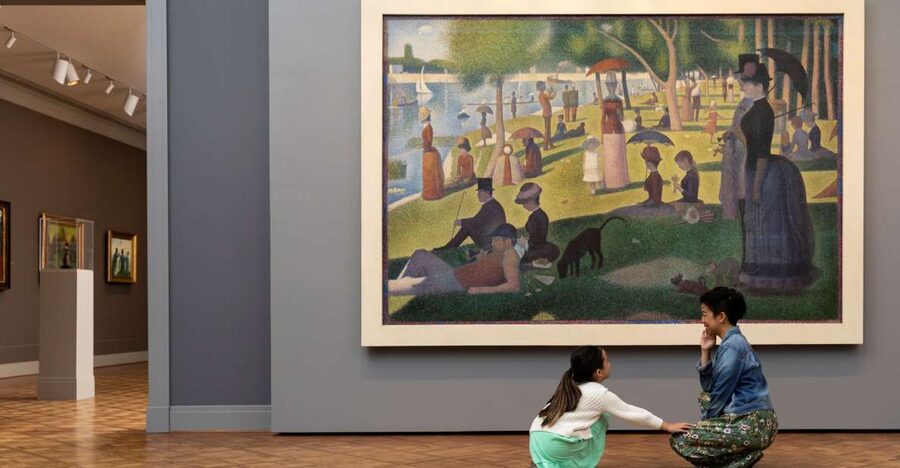
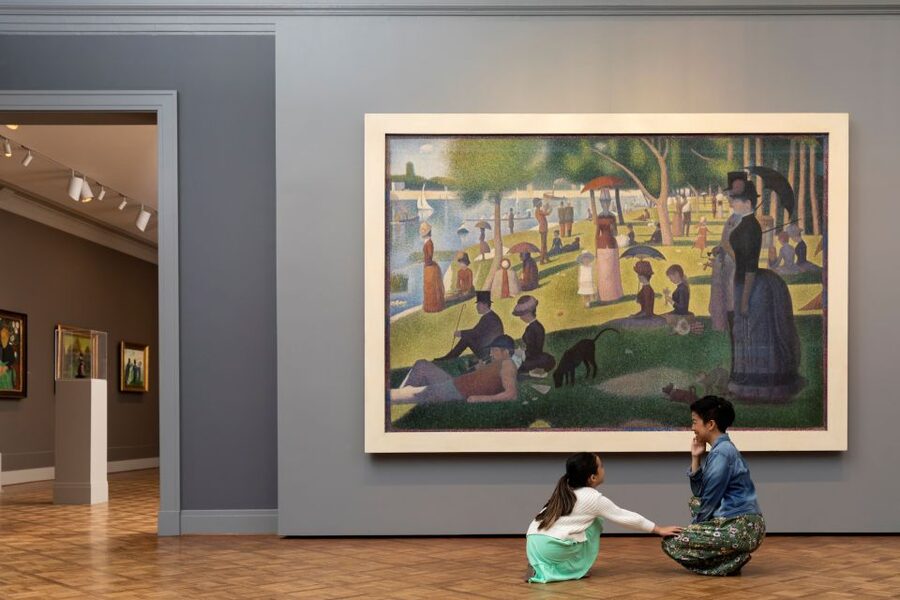
The Art Institute gives you an unusually long list of famous paintings to see in one building. You can begin with Seurat’s A Sunday Afternoon on La Grande Jatte, Renoir’s Two Sisters (On the Terrace), and several works by Van Gogh.
The Impressionist holdings are a major reason to visit. More than 25 paintings by Claude Monet are included in the collection, and the galleries also bring together major French painters and related works. If Monet is your priority, head there early in the day, before your attention and energy begin to fade.
The museum’s famous works have different kinds of appeal. Seurat’s painting rewards close inspection because the image is built from small points of color. Renoir offers a softer, more immediate pleasure. Van Gogh’s paintings are familiar from books and screens, but seeing the brushwork in person gives you a better sense of their physical force.
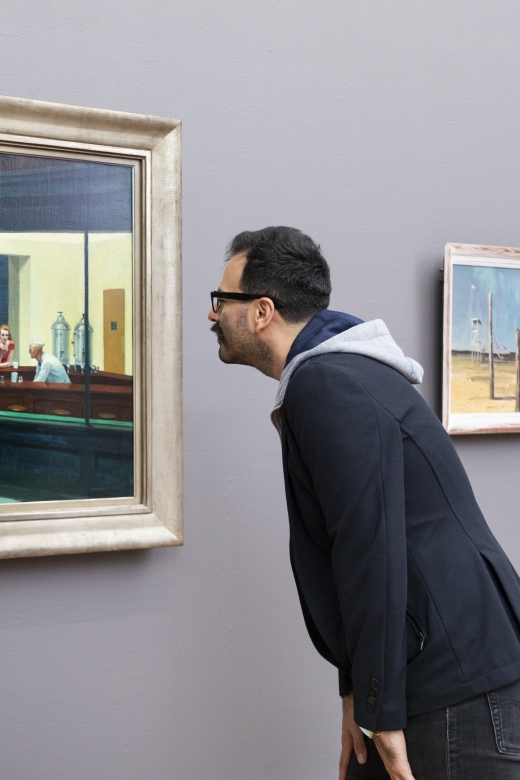
Then make time for American art. Edward Hopper’s Nighthawks is a must-see for many visitors, and Grant Wood’s American Gothic draws its own steady audience. Georgia O’Keeffe and Thomas Hart Benton add very different American voices, while works by Alma Thomas, Cindy Sherman, and Kerry James Marshall extend the story into more recent art.
You will also find Picasso, Henri Matisse, Salvador Dalí, and Andy Warhol. That mix makes the museum a good choice for a mixed group. One person can focus on European painting, another on American art, and someone else can spend the afternoon with modern and contemporary works.
Do not rush from famous painting to famous painting. The best part of a large museum is often the work you did not recognize before entering. Give yourself permission to stop at pieces that catch your eye, even if they are not on your must-see list.
Four gallery stops that deserve extra time
A different kind of day, same corner of the map:
- Chicago Architecture River Cruise
★ 5.0 · 15,756 reviews - Chicago River 90-Minute Architecture Tour
★ 4.5 · 9,629 reviews - Chicago River: 1.5-Hour Guided Architecture Cruise
★ 4.8 · 8,046 reviews - Chicago: Gangsters and Ghosts Walking Tour
★ 5.0 · 7,155 reviews
The Impressionist galleries
This is the most obvious first stop for many people, and it earns that attention. Monet, Renoir, Seurat, and Van Gogh provide a strong introduction to the museum’s European collection.
You can see how different artists handled color, light, and ordinary modern life. The works are also close enough in style and period to make comparisons useful. If you have never felt comfortable in a major museum, start here and let your eye adjust.
The drawback is that these rooms can become your entire visit. Set a time limit if you also want to see Asian art, American art, the armor collection, and the lower level.
American art and Nighthawks
Hopper’s Nighthawks is worth seeing even if you know it well. The painting’s familiar late-night diner scene has a quiet tension that reproductions do not fully convey. The surrounding American art galleries help place it in a wider story rather than treating it as an isolated icon.
Grant Wood’s American Gothic is another essential stop. O’Keeffe and Benton offer a different mood and visual language, while later works by Alma Thomas, Cindy Sherman, and Kerry James Marshall broaden the visit beyond the best-known names.
If American art is your main interest, do not leave this section until the end of the day. It is easy to spend too long with the European paintings and reach the American galleries when you are tired.
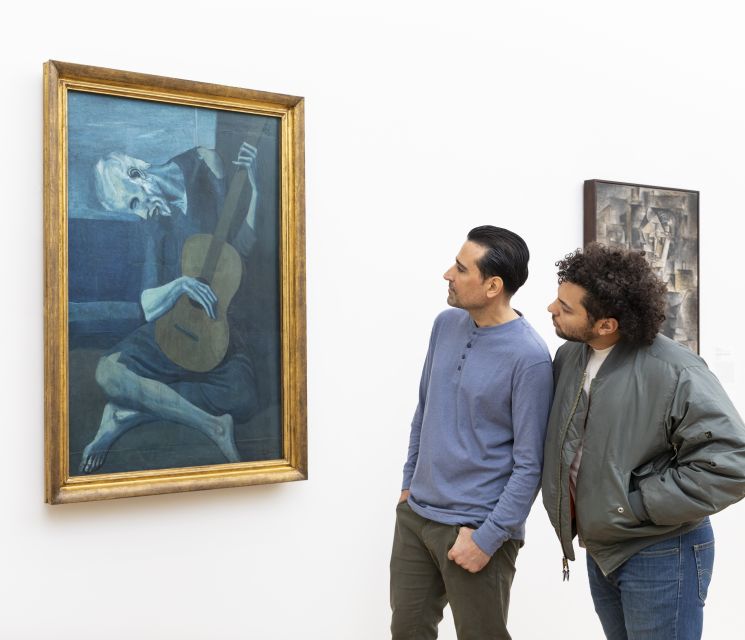
Picasso’s The Old Guitarist
Picasso’s The Old Guitarist is famous for its restrained blue tones and melancholy figure. Look closely at the surface. An earlier painting can be seen beneath parts of the final image, a reminder that artists sometimes reused canvases.
That small detail is exactly why I recommend viewing the paintings in person rather than treating the museum as a checklist. The work has a physical object quality that disappears on a phone screen.
The Thorne Miniature Rooms
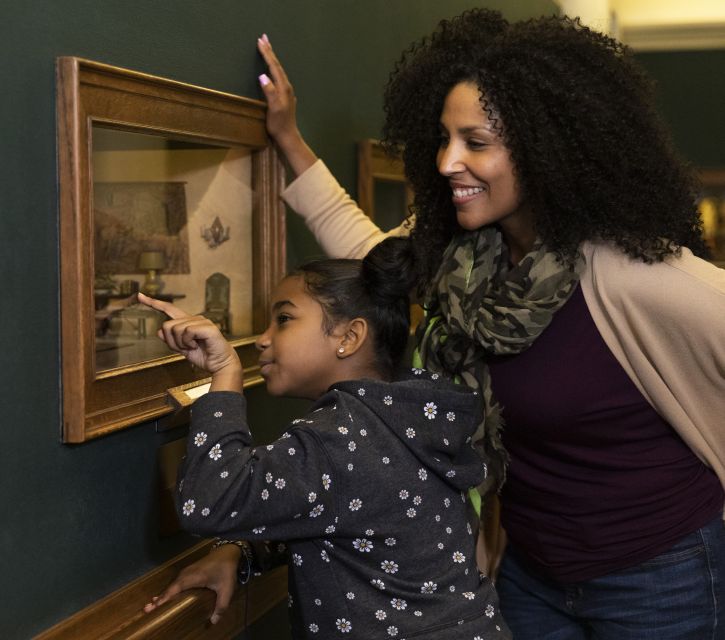
The 68 Thorne Miniature Rooms are one of the museum’s most charming surprises. They are easy to overlook because they are on the lower level, but they deserve a deliberate stop.
Each room is packed with tiny architectural and decorative details. You can look quickly and see a collection of small interiors, or slow down and study furniture, materials, patterns, and room design. One visitor bought a hardcover book afterward to examine the rooms in greater detail, which tells you how much close looking they invite.
Families often enjoy this area because the scale changes the way you look. Children can search for details while adults study the craftsmanship and historical styles. The rooms are also a welcome change after several floors of large paintings.
Five thousand years of art under one roof
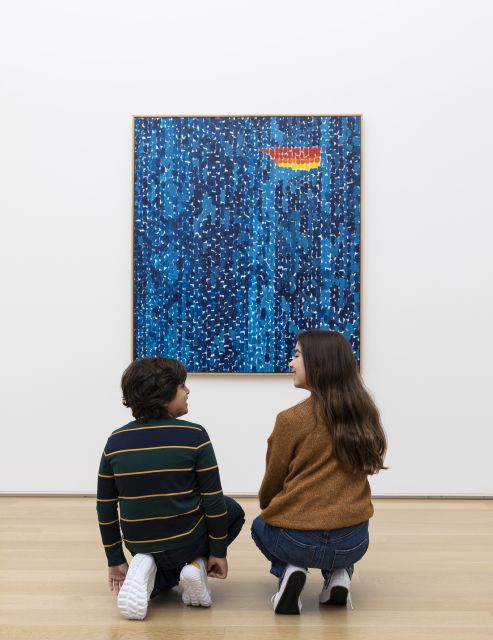
The Art Institute is not only a European and American painting museum. Its collection reaches back 5,000 years and crosses several continents.
Ancient Egyptian objects give the visit an early historical anchor. The Asian art holdings cover 5,000 years, offering a long view across different periods and artistic traditions. Works from Africa add another broad section, and the European and American galleries carry the story into later centuries.
This scale is both the museum’s strength and its challenge. You can move from ancient objects to modern art within the same visit, but you cannot absorb every section with equal attention in one day.
I suggest choosing two or three priorities before you arrive. For example, you might focus on Impressionism, American art, and the Thorne Rooms. If you still have energy, add Asian art or modern works. This approach feels much better than trying to see everything and remembering only that your feet hurt.
A useful app, free tours, and family activities

The museum’s free downloadable app helps you build a visit around your interests. It includes audio tours in English, Spanish, and Mandarin, as well as information to help you explore the galleries.
You can also join one of the museum’s free daily tours. The fast-pass ticket does not promise a private guide, so these public tours are the place to look for added interpretation without booking a separate paid guide. A review praised a guide named Philippe for his energy and expertise, but you should not assume Philippe, or any particular guide, will lead your visit. Guide availability can change.
Families should allow time for the Ryan Learning Center. It offers art-making activities and JourneyMaker, an interactive tool that lets you create a custom, adventure-style route through the galleries.
These features matter because a large museum can be tiring for children and first-time visitors. A hands-on activity gives younger visitors a break from looking at framed objects, while JourneyMaker turns the visit into a series of choices rather than one long march through rooms.
Free WiFi is included, which makes using the app easier. If you prefer a traditional handheld audio guide, rentals are available at the museum for an extra charge. That is separate from the free mobile app.
How long should you stay?

The advertised duration is one day, and you should take that seriously. Many people plan for two or three hours and then find themselves staying four or five. One visitor entered around noon and remained until closing, yet still felt only about half of the museum had been covered.
A short visit can work if you concentrate on the main European and American masterpieces. Allow at least several hours if you want to see those sections without racing. If you hope to include the Thorne Rooms, Asian art, ancient objects, modern art, and family areas, a full day is more realistic.
You can also make the museum work as a two-day Chicago activity if your schedule allows, but the ticket itself is valid for one day only. Do not assume you can return the next day using the same voucher.
The museum’s size makes pacing important. Take a real break instead of pushing through. The museum has food service, though food and drinks are not allowed in the galleries, and availability of specific dining areas can change. One visitor especially enjoyed lunch on the patio, while another appreciated having a café break during a long visit.
Getting there and packing smart
The Art Institute is easy to reach by bus and train. Underground parking lots are located as close as a block away, which helps if you are arriving by car, though parking is separate from the ticket.
Pack lightly. The checkroom is closed, and bags or purses larger than 13 by 17 by 4 inches are not allowed. Backpacks, shopping bags, umbrellas, wrapped packages, flowers, balloons, toys, and other restricted items should stay elsewhere.
Food and drinks, selfie sticks, tripods, flash photography, and video recording are also prohibited. Bring only what you need for the visit, and use a pencil rather than other art materials if you plan to sketch.
The museum is wheelchair accessible. A limited number of wheelchairs and strollers are available free of charge on a first-come, first-served basis. Security staff can help with navigation, but arriving early is sensible if you need one of the museum’s loaner devices.
The museum closes on Thanksgiving, Christmas Day, and New Year’s Day. Vouchers are non-transferable and non-refundable, so check your date carefully before purchasing.
Who will get the most from this ticket?
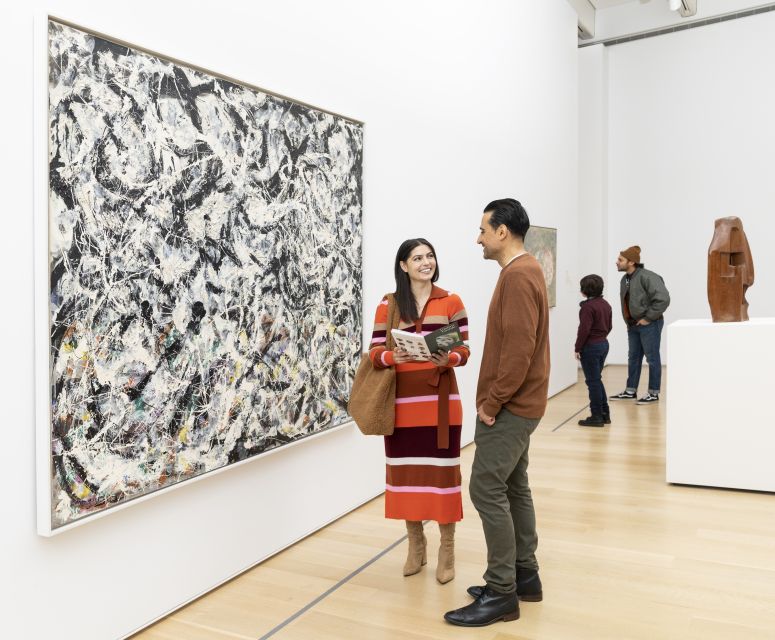
You should consider this pass if you have one day in Chicago, want to see major works, and dislike waiting in admission lines. It is also useful for first-time visitors who want a flexible schedule rather than a fixed group tour.
Art lovers will find enough material for repeated visits. Families can mix famous paintings with armor, miniature rooms, and the Ryan Learning Center. A mixed group can split up inside and still meet later, since everyone has access to the same broad collection.
You may want to skip the fast pass if you are visiting at a quiet time, have plenty of flexibility, or are mainly interested in a short look at one gallery. In that case, compare the $40 price with regular admission before booking.
Should you book the Art Institute fast pass?
I would book it when your Chicago schedule is tight or when a busy visit is likely. The direct entry can save valuable time, and the museum itself is one of the city’s strongest indoor stops, with more than enough art for a full day.
The ticket is less compelling as a bargain. It does not include ticketed special exhibitions, food, hotel transport, or a private guide, and the regular admission line may be short. Still, if you want to walk in with your phone voucher and start looking at Monet, Hopper, Van Gogh, and the Thorne Rooms without delay, the convenience is real.
Plan your priorities, pack lightly, download the app, and save more time than you think you need. The Art Institute is not a museum to rush through.
FAQ
Where do I enter with the fast-pass ticket?
Enter at the Michigan Avenue entrance and proceed directly to the security desk to present your voucher.
How long is the ticket valid?
The ticket is valid for one day from the time you first activate it.
What does the ticket include?
It includes fast-pass entry to the permanent collection and special exhibitions that do not require a separate ticket. It also includes free WiFi and access to the museum’s free downloadable app.
Are ticketed special exhibitions included?
No. Special exhibitions that require their own ticket are not included.
Is there a free audio guide?
Yes. The museum’s free app includes audio tours in English, Spanish, and Mandarin. Handheld audio guides are also available to rent separately at the Art Institute.
Can I bring a backpack or large bag?
No. Backpacks are not allowed, and bags or purses larger than 13 by 17 by 4 inches cannot enter. The museum checkroom is closed, so pack lightly.
Is the museum wheelchair accessible?
Yes. The museum is wheelchair accessible. A limited number of wheelchairs and strollers are available free of charge on a first-come, first-served basis.
Newly listed in Chicago
- Field Museum of Natural History Admission Tickets★ 4.5 · 489 reviews
- Chicago: Secret Interiors Architecture Walking Tour★ 4.9 · 498 reviews
- Chicago Sightseeing River and Lake Cruise★ 4.5 · 509 reviews
- Chicago City Minibus Tour★ 5.0 · 516 reviews
- Chicago CityPASS®★ 4.5 · 521 reviews
- Chicago: Fireworks Cruise with Lake or River Viewing Options★ 4.3 · 551 reviews
- Chicago’s Chinatown Food and Walking Tour★ 5.0 · 600 reviews
- Chicago’s Secret Interiors Architectural Walking Tour★ 5.0 · 635 reviews
Chicago Tours, compared.


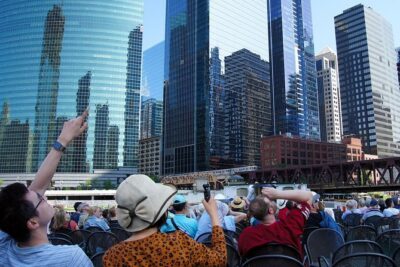
Chicago Architecture Center River Cruise aboard First Lady
Read our review →

Architecture River Cruise Skip-the-Ticket Line
Read our review →

Browse the lists this tour appears in