
Reviewed · CHICAGO TOURS
Chicago’s Secret Interiors Architectural Walking Tour
Chicago’s best architectural surprises are often indoors. This two-hour Loop walk takes you past famous towers, then through grand lobbies, mosaic halls, a Beaux-Arts hotel, and rooms most people would pass without a second look.
I like the way the tour joins big Chicago stories with small visual details, and I like the $35 price, especially since an expert guide helps you find interiors you would likely miss alone. Guides such as Ethan, Grant, Ty, and Matthew have been praised for clear explanations, humor, and keeping groups together.
The main caution is that this is still a city walk, with outdoor stretches and changing access to buildings. The Rookery is closed on Sundays, and some departures have been larger than the advertised maximum of 15 people.
Key points to know before you book
- The Rookery is the architectural star: See Burnham and Root’s 1888 building and Frank Lloyd Wright’s later work in its remarkable lobby, except on Sundays.
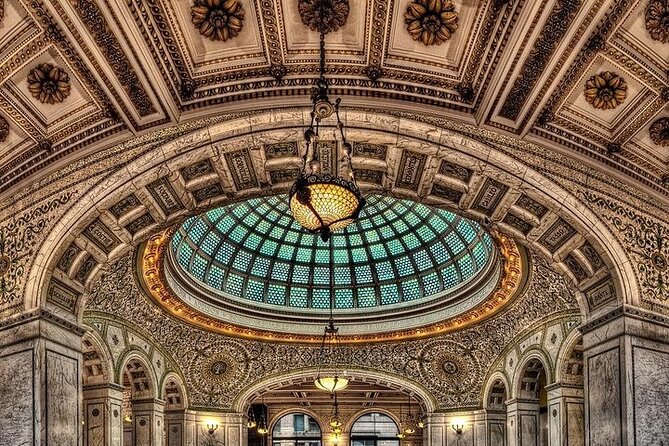
- You finish at Macy’s historic home: The former Marshall Field and Company Building contains a famous Tiffany glass mosaic dome and an elegant Tea Room.
- The route links major Chicago eras: You move from early skyscraper design and Gilded Age luxury to Art Deco and modern commercial power.
- Indoor stops make bad weather manageable: You still walk outside, but the tour spends meaningful time inside buildings.
- Guides shape the experience: Ethan, Grant, Ty, and Matthew are noted for energy, humor, organization, and strong knowledge of Chicago architecture.
- The route begins at Union Station: It ends at 111 N State Street, a useful finish for shopping, lunch, or more Loop sightseeing.
Why Chicago’s interiors are worth two hours
Chicago’s skyline is easy to admire from the river or from street level. The trickier part is getting inside the buildings that explain how the city grew. This tour focuses on that inside view.
For $35, you are not paying for admission to a single landmark. You are paying for a guide who connects several buildings, points out details at eye level, and explains the engineering problems behind Chicago’s vertical growth. That makes the price good value for anyone who cares about buildings, urban history, design, or old commercial spaces.
The format also helps if you have only a half-day in the city. The walk covers a compact part of the Loop, and the stops are short enough to keep the pace moving. You will not spend an hour in one building, but you will see enough of each place to understand why it matters.
I would think of this as a guided introduction rather than a full architectural study. The tour gives you a working map of downtown’s most important buildings, then leaves you better prepared to return to the places that catch your eye.
More Walking Tours in Chicago
- Chicago: Gangsters and Ghosts Walking Tour
★ 5.0 · 7,155 reviews - Chicago Favorites Ultimate Food and Walking Tour
★ 5.0 · 1,962 reviews - Chicago: Gangsters and Ghosts Guided Walking Tour
★ 4.7 · 1,697 reviews
Starting at Union Station and entering the Loop
The meeting point is Chicago Union Station at 225 S Canal Street. That is a fitting start. Union Station is not only a transport hub but also one of the clearest expressions of early 20th-century civic ambition.
The station’s Beaux-Arts facade leads to the Great Hall, where a large skylight, classical details, and broad proportions create the grand effect Chicago’s builders wanted. The building was designed by Daniel Burnham and completed in 1925, so it gives you a useful opening chapter before the route moves into the older commercial core.
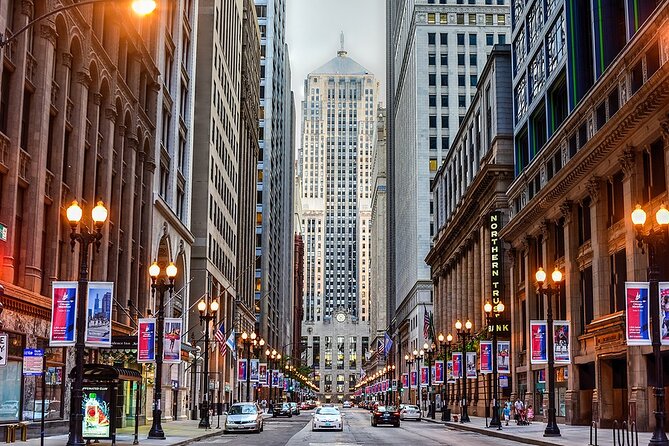
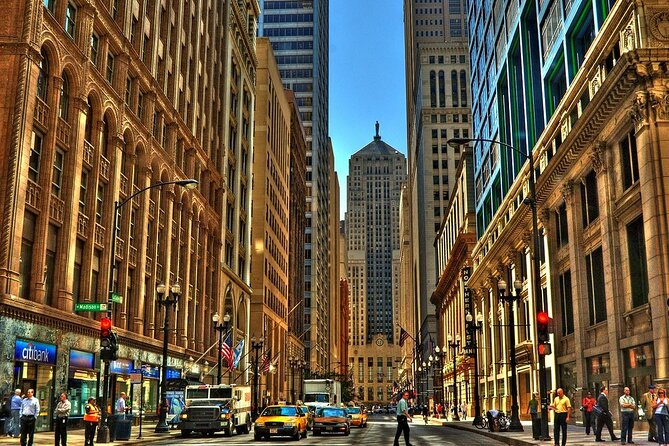
Your guide also uses the surrounding streets to explain Chicago’s financial district. The Loop can feel like a canyon, with tall buildings pressing close along La Salle Street and nearby corridors. From the street, you can look up at the Chicago Board of Trade and Willis Tower while hearing how commerce, finance, and new construction shaped the city.
The outdoor views are important because they let you compare the buildings. The Board of Trade’s Art Deco design has a formal, sculptural quality. Willis Tower represents a later push toward height and modern engineering. You get more from both when someone explains what changed between their construction eras.
The Rookery, a Chicago classic with a Wright connection
The Rookery is likely to be the emotional high point of the walk. Burnham and Root designed the building in 1888, combining Romanesque and Moorish influences with a forward-looking commercial plan.
Inside, the famous light court helps explain the practical challenge of bringing daylight into a large office building. Ironwork, the oriel staircase, and layered decorative details make the lobby a place to examine slowly, even though the tour’s scheduled stop is brief.
Frank Lloyd Wright later reworked the lobby, adding another chapter to the building’s design story. That combination is what makes the Rookery so appealing: you can see an early Chicago approach to tall commercial buildings alongside the cleaner, more controlled style associated with Wright.
There is one important planning note. The Rookery is closed on Sundays, so it is not included on the Sunday route. If this building is your main reason for booking, choose another day.
Field Building and the polished look of Art Deco
The historic Field Building brings the route into the Art Deco period. Its design shows how Chicago’s commercial architecture became more streamlined and decorative at the same time.
You will look at the details that give the building its character rather than simply hearing its name and moving on. This is useful for understanding the skyline as a sequence of design choices. Chicago’s towers are not one uniform style, and the Field Building helps make that clear.
The stop is relatively short, so do not expect an extended interior study. Instead, treat it as one piece of a larger progression through the Loop. The value comes from seeing it alongside the earlier Rookery and later commercial landmarks.
More walking tours around Chicago:
- Chicago in a Day: Food, History & Architecture Walking Tour
★ 5.0 · 1,153 reviews - Chicago’s Chinatown Food and Walking Tour
★ 5.0 · 600 reviews - Chicago: Secret Interiors Architecture Walking Tour
★ 4.9 · 498 reviews - History and Hauntings of Salem Guided Walking Tour
★ 5.0 · 14,564 reviews
The Marquette Building’s mosaics and Chicago windows
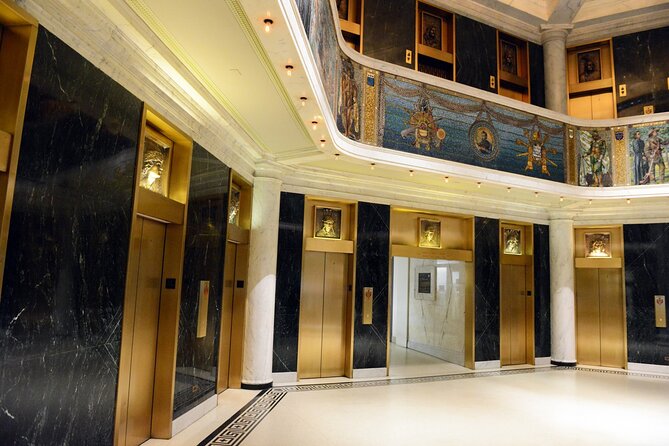
The Marquette Building is another strong interior stop. It is associated with the Chicago School of Architecture and is known for its use of the Chicago window, a design that places a large fixed pane between narrower movable sections.
That window style mattered because it allowed more light into office interiors while supporting the practical needs of commercial buildings. Your guide can use this feature to explain how design and engineering worked together, rather than treating decoration as something separate from construction.
The lobby is especially memorable for its mosaics. They tell the story of Jacques Marquette’s exploration of Illinois, giving the interior a narrative quality as well as visual appeal. Look up, look down, and take a moment with the small pieces of color. This is the sort of place you might walk past without entering if you did not know what was inside.
For me, this is one of the tour’s best examples of value. You are not only seeing a handsome building. You are learning why a particular window mattered and how a lobby used art to present a version of local history.
The Palmer House and Gilded Age luxury
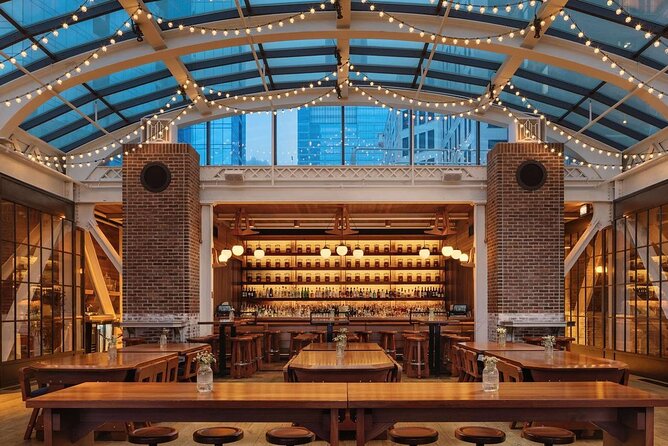
The Palmer House brings a different mood. Rebuilt after the Great Chicago Fire of 1871, this grand hotel reflects the luxury and confidence of the Gilded Age.
The lobby features a frescoed ceiling, mosaic floors, and bronze peacock doors. These details are deliberately theatrical. The hotel was designed to impress guests arriving in a city that was remaking itself through business, travel, and ambitious construction.
The guide also connects the Palmer House to the celebrities and dignitaries who passed through its doors. That human side keeps the stop from becoming a list of dates and architects. You begin to picture the hotel as a stage for Chicago’s social life during the Gilded Age and the Roaring Twenties.
Because it is an operating hotel, the atmosphere may be more active and less museum-like than at a dedicated historic site. Be respectful, stay with the group, and listen for the details that are easy to miss while looking at the ceiling.
Cultural Center or Monadnock Building
At the next part of the route, the group visits either the Chicago Cultural Center or the Monadnock Building. This means the exact experience can vary, but both choices support the tour’s focus on Chicago’s changing architectural language.
The Cultural Center offers architectural beauty with a public cultural role. It is a good reminder that impressive interiors are not limited to private offices or luxury hotels.
The Monadnock Building represents the commercial style of the late 19th century. Its importance comes from the way it expresses an earlier phase of high-rise construction and the practical pressures of building upward in a growing business district.
Since the itinerary can use one or the other, I would not book expecting a guaranteed visit to both. The guide’s interpretation matters here, and the stop works best as part of the broader story rather than as the sole reason for taking the tour.
Marshall Field and Company, the grand finish
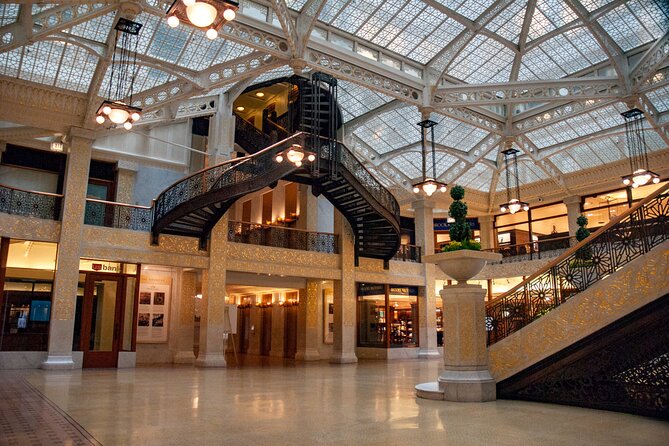
The final stop is the former Marshall Field and Company Building at 111 N State Street, now home to Macy’s. It is a fitting end because the building combines retail, design, and Chicago’s commercial ambition.
Inside, the Tiffany glass mosaic dome is the showpiece. It gives the space color and scale, while the walnut-paneled Tea Room recalls the era when a department store visit was a social outing, not just a quick purchase.
This stop also helps connect architecture to everyday city life. Department stores needed to attract people, guide them through large interiors, and make shopping feel special. The building’s materials and decoration served that purpose.
You finish in a very convenient location for continuing your day. From here, you can explore State Street, stop for food, or simply look back at the buildings with a better sense of how their interiors relate to the public life of the Loop.
Guides, group size, and the walking pace
The guides are a major part of the tour’s appeal. Ethan is repeatedly described as animated, passionate, and highly informed, while Grant is praised for warmth, organization, and keeping the group moving at a comfortable pace. Ty is noted for being entertaining and accommodating, and Matthew for combining humor with clear explanations.
Those qualities matter on an architecture walk. A guide must keep a group together across city streets, make sure people can hear, and adjust the pace when weather or foot traffic gets in the way. Several guide experiences also included useful facts about buildings beyond the formal stops, which adds value as you walk.
The listed group limit is 15 people, but some experiences have had larger groups, including reports of 15 to 20 people and even around 40. A larger group can make it harder to hear inside a lobby, so stay near the guide and move promptly between stops.
The tour lasts about two hours, although one session ran closer to an hour and a half with a 15-minute break. Plan for a compact but active outing, not a leisurely museum visit.
Weather, comfort, and practical planning
This is an outdoor walking tour, so wear comfortable shoes and check the forecast. You will go in and out of buildings, which makes cold or rainy weather more manageable, but you still need to cross streets and spend time outside.
One session continued through heavy rain, and another took place on a very cold day with much of the time indoors. That suggests the indoor stops provide useful shelter, but poor conditions can still affect the pace and comfort.
The tour requires good weather. If the operator cancels because conditions are poor, you are offered another date or a full refund. You can cancel for a full refund up to 24 hours before the start time. Changes or cancellations inside that window are not accepted for a refund.
Mobile tickets make entry simple. The route is near public transportation, service animals are allowed, and most people can take part. The most important physical consideration is the amount of walking and standing.
Who will get the most from this tour
I would choose this walk if you enjoy architecture but do not want a long academic lecture. It suits first-time visitors who want a clear introduction to Chicago, local residents hoping to see familiar streets differently, and anyone looking for a useful half-day activity.
It pairs well with a Chicago architecture boat tour because the two experiences show different sides of the city. From the river, you get the skyline as a whole. On this walk, you get the lobbies, mosaics, doors, ceilings, and building systems that are invisible from the water.
The tour is less suited to someone who wants plenty of time for photography or detailed sketching at every stop. Ten minutes at a building can feel short, especially at the Rookery or Marshall Field interior. If you need a slow, quiet visit, use the walk to identify places you want to revisit later.
Should you book Chicago’s Secret Interiors tour?
At $35, I consider this a strong buy for architecture and city-history fans. The tour gives you a useful sequence of Chicago landmarks, several striking interiors, and a guide who can explain why the buildings look and function as they do.
Book it if you want access to places you might otherwise pass without noticing, especially the Rookery, Marquette mosaics, Palmer House lobby, and Marshall Field dome. Choose a weekday or Saturday if the Rookery is essential, and be ready for outdoor walking.
Skip it if your schedule cannot handle a fixed two-hour route, if you want guaranteed access to every listed building, or if Sunday is your only option and the Rookery is your top priority. For most people with an interest in Chicago’s built character, the tour offers a lively, well-priced look behind the Loop’s famous facades.
FAQ
How long is Chicago’s Secret Interiors Architectural Walking Tour?
The tour lasts about two hours, though one reported outing lasted around an hour and a half and included a 15-minute break.
How much does the tour cost?
The listed price is $35.
Where does the tour begin?
The meeting point is Chicago Union Station at 225 S Canal Street, Chicago, Illinois 60606.
Where does the tour end?
The tour ends at the Marshall Field and Company Building, 111 N State Street, Chicago, Illinois 60602.
Is the Rookery included every day?
No. The Rookery is closed on Sundays, so it is not included on the Sunday route.
Which buildings are visited?
Stops can include Union Station, the Rookery, the Field Building, the Marquette Building, Palmer House, the Chicago Cultural Center or Monadnock Building, and the Marshall Field and Company Building. The route also covers the Loop and La Salle area.
Is the Chicago Cultural Center guaranteed?
No. The group visits either the Chicago Cultural Center or the Monadnock Building.
What is included in the price?
An expert tour guide is included. The experience uses a mobile ticket.
How large is the group?
The stated maximum is 15 people, though some outings have had larger groups.
Can I cancel for a refund?
Yes. You can cancel at least 24 hours before the start time for a full refund. Cancellations or changes made less than 24 hours before the start time are not refunded, and poor-weather cancellations offer a different date or a full refund.
Newly listed in Chicago
- Field Museum of Natural History Admission Tickets★ 4.5 · 489 reviews
- Chicago: Secret Interiors Architecture Walking Tour★ 4.9 · 498 reviews
- Chicago Sightseeing River and Lake Cruise★ 4.5 · 509 reviews
- Chicago City Minibus Tour★ 5.0 · 516 reviews
- Chicago CityPASS®★ 4.5 · 521 reviews
- Chicago: Fireworks Cruise with Lake or River Viewing Options★ 4.3 · 551 reviews
- Chicago’s Chinatown Food and Walking Tour★ 5.0 · 600 reviews
- City Cruises Chicago: Seadog Lakefront Speedboat Ride★ 4.4 · 642 reviews
Chicago Tours, compared.
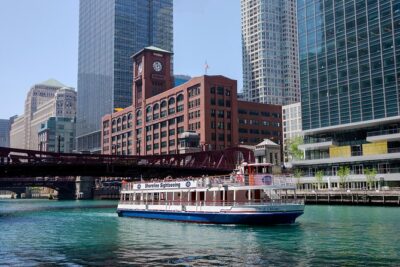
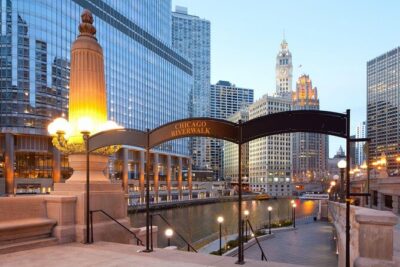
Chicago Architecture Center River Cruise aboard First Lady
Read our review →
Architecture River Cruise Skip-the-Ticket Line
Read our review →

Browse the lists this tour appears in