
Reviewed · MONUMENT VALLEY TOURS
Monument Valley: Highlights Tour with Backcountry Access
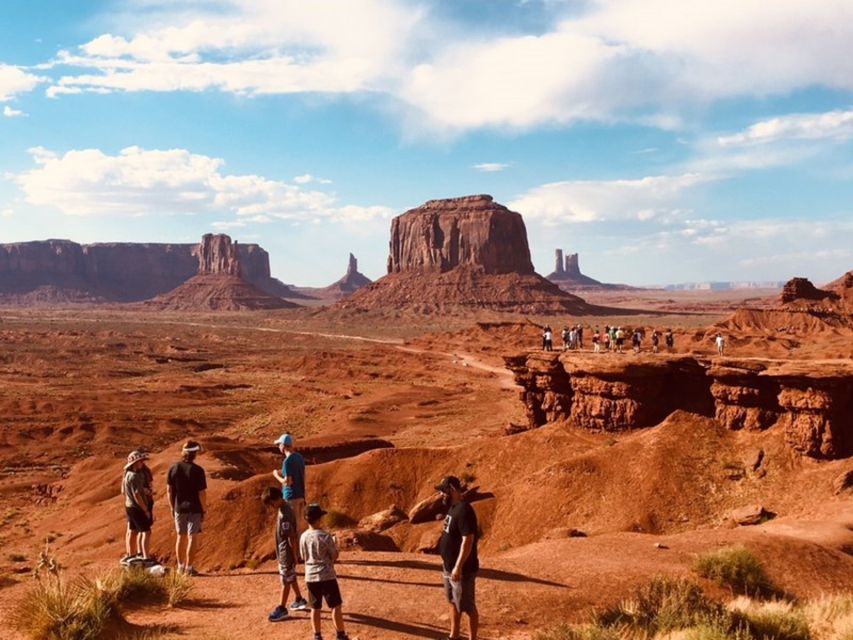
Monument Valley looks grand from the main road, but the best parts are beyond the public loop. This 3.5-hour Navajo-led tour takes you into restricted backcountry, where you can see arches, ruins, and viewpoints that you cannot reach on your own.
I like the long photo stops and the personal storytelling. Guides such as Larry, Travis, Bruce, Jamison, and Sabrina have helped with camera angles, taken group pictures, and explained Navajo traditions in a warm, direct way. The traditional hogan visit and flute performance add something a scenic drive alone cannot provide.
The main drawback is price. At $97 per person, plus the $8 Tribal Park entry fee, this is not the cheapest way to see Monument Valley. You also need to find the correct loading area and watch the Utah-Arizona time difference carefully.
Key points to know before you book
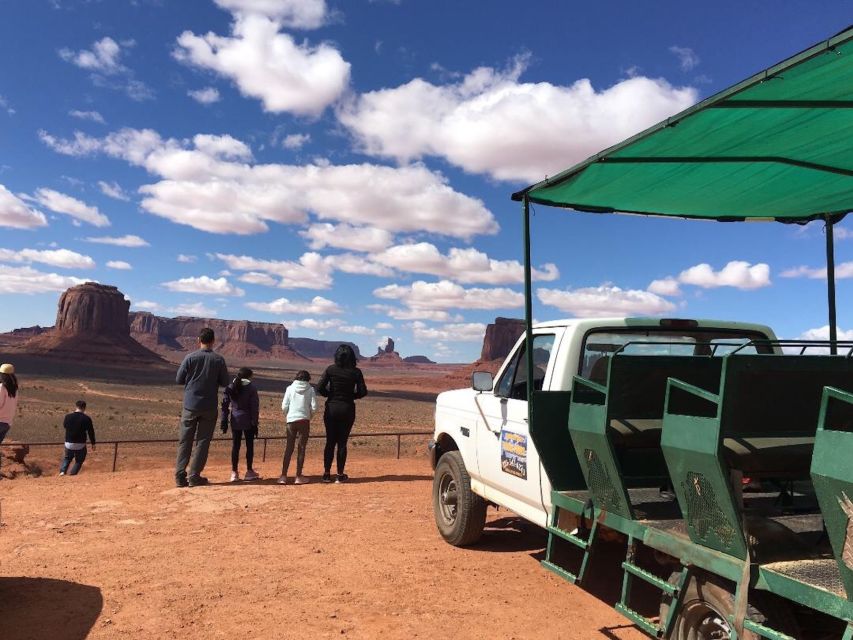
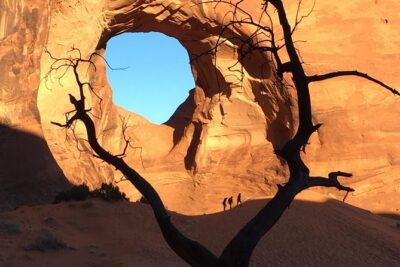
- Restricted backcountry access: You will see parts of Monument Valley closed to self-drive visitors, including Ear of the Wind Arch and Anasazi Ruins.
- Extra time for photographs: Stops are not rushed, and guides often suggest the best angles or take pictures for you.
- Personal Navajo interpretation: Guides share family stories, local traditions, tribal history, and details about life in the valley.
- Traditional hogan visit: You visit a Navajo home and learn how this traditional structure fits into local culture.
- Music at Big Hogan: The tour includes a live performance, often flute music, from your Navajo guide.
- Small-group transport: The vehicle carries up to 12 people in warm weather or up to 7 in an enclosed SUV during cold or hot conditions.
Why the backcountry changes Monument Valley
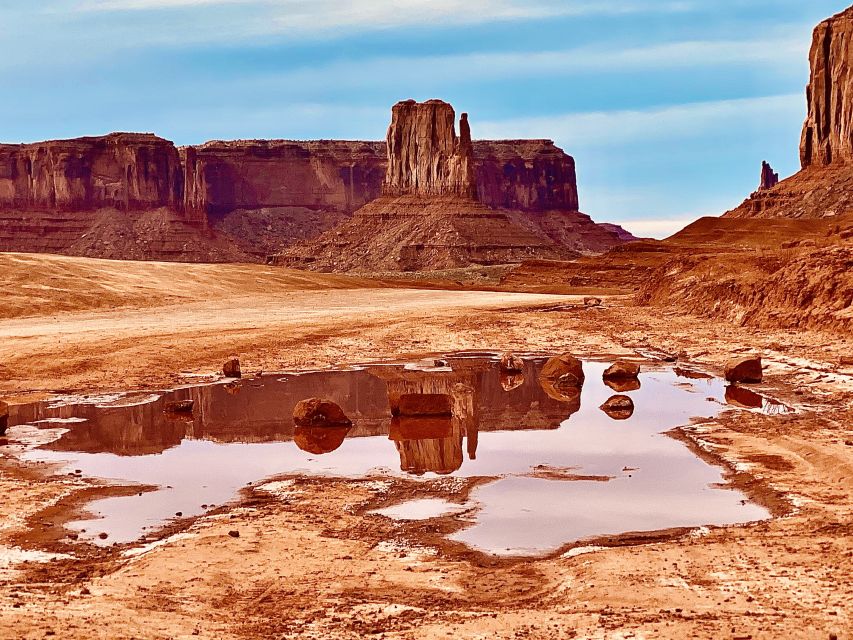
The public 17-mile scenic loop gives you the famous views, but it leaves out much of what makes Monument Valley feel personal and unusual. This tour combines the familiar stops with rougher backcountry tracks that require a permitted local operator.
That difference matters. You are not simply looking at the Mittens from a parking area. You are moving closer to arches and rock formations, stopping in quieter places, and hearing why certain sites matter to the Navajo people. I like this approach because the valley becomes more than a collection of movie views.
The open-air safari vehicle also changes the rhythm of the trip. You get a broad view of the buttes and open sky, along with a bumpy ride over unpaved roads. In warm weather, that open design gives you excellent sightlines for photographs, but it also means you need a hat, sunglasses, sunscreen, and a scarf.
During cold or very hot weather, the operator uses an enclosed SUV instead. That vehicle holds no more than seven people, while the warm-weather safari vehicle holds up to 12. The smaller group can feel more intimate, although the vehicle type depends on conditions rather than your personal preference.
More to weigh up across Monument Valley
- Monument Valley: Backcountry Jeep Tour with Navajo Guide
★ 4.8 · 1,794 reviews - 3 Hour Monument Valley Tour
★ 5.0 · 1,616 reviews - 2.5 Hours of Monument Valley’s Backcountry 4×4 Tour
★ 5.0 · 1,550 reviews
Mitten View and the classic Monument Valley scene
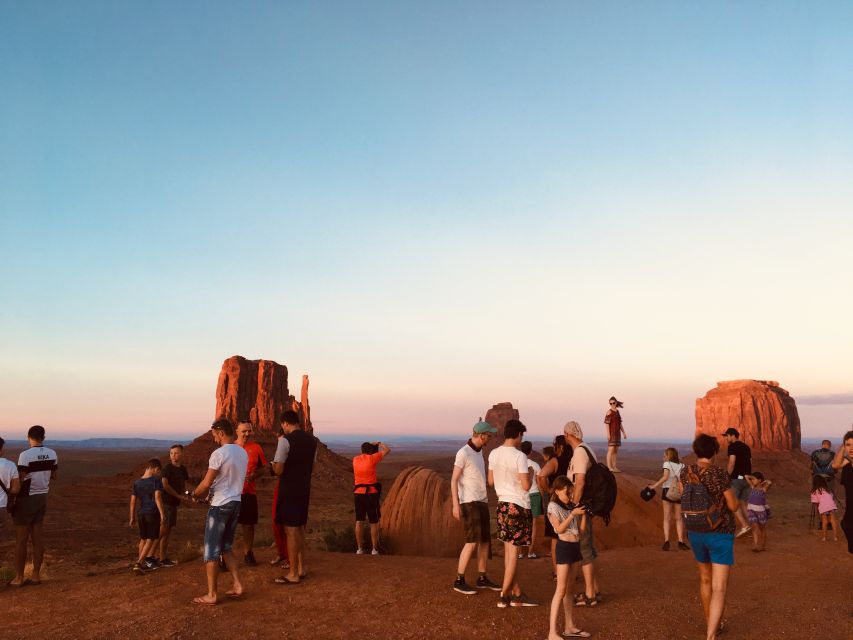
Mitten View is one of the essential first stops. The East and West Mittens rise from the valley floor in broad, sculptural shapes that have become the area’s signature image.
This is the place for the classic wide photograph, but do not rush. The value of this tour is that you get time to frame the shot rather than grab one quick picture before climbing back into the vehicle. Guides have also helped people with panoramic photos and family pictures, which is useful if you are traveling without a photographer in your group.
The view can feel familiar from postcards and films, yet the scale is still startling in person. I would use this stop to get your bearings, then save some camera space for the less familiar backcountry formations later.
Three Sisters, John Ford Point, and Sleeping Dragon
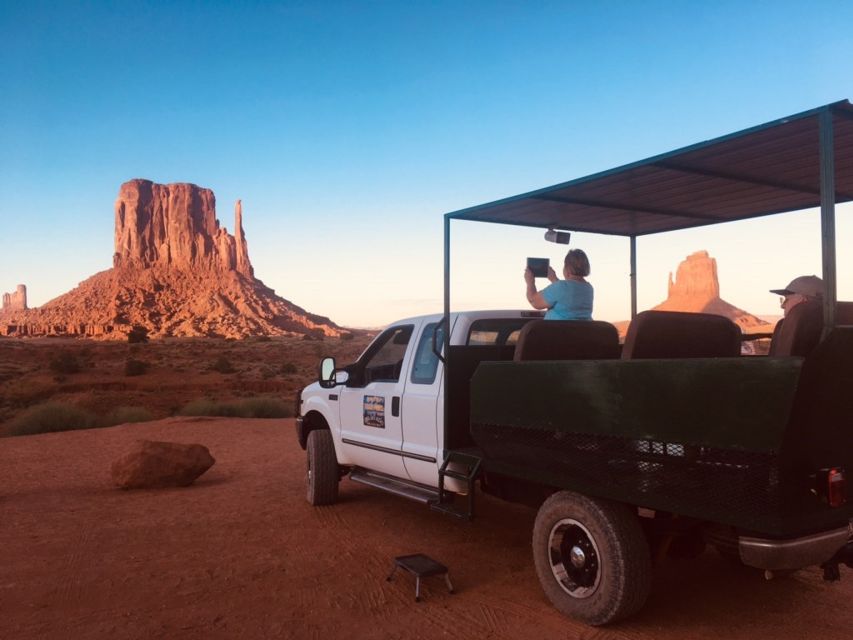
Three Sisters offers another view of Monument Valley’s weathered sandstone. The formation has a different shape and mood from the Mittens, and your guide can explain the local names and stories connected with the rock.
John Ford Point is tied to the Western films that helped make the valley famous. The viewpoint gives you a strong sense of the open setting used by filmmakers, with buttes rising from a wide desert floor. It is a good place to step back from close-up detail and photograph the full scale of the valley.
Sleeping Dragon adds another distinct outline to the route. These stops are not just a parade of rock names. A good guide helps you notice how erosion has created different profiles, and several guides have used simple demonstrations to explain how the formations developed. One guide, Bruce, used sand and water to show how buttes form over time, a useful visual lesson for anyone who finds geology easier to understand when it is shown rather than recited.
The Big Hogan and the quieter arches
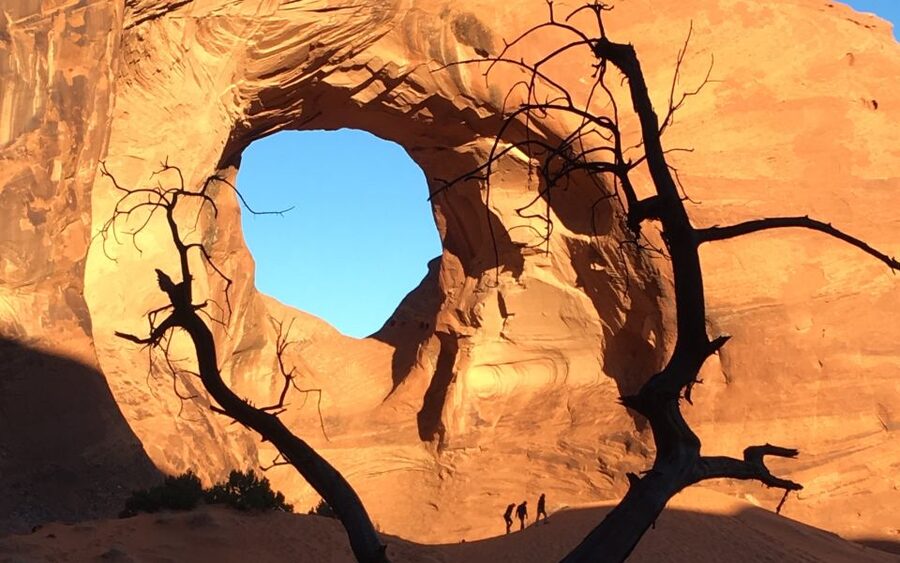
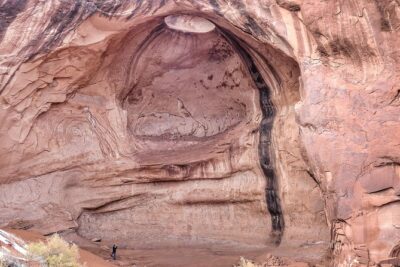
The Big Hogan is one of the tour’s strongest stops. Its curved sandstone opening creates a natural frame, and it is also where guides often perform traditional music.
The musical part is short, but it gives the stop a sense of place. Several guides, including Larry, Travis, and Jamison, have played flute for their groups. The sound carries differently inside the rock, and the performance provides a quiet pause after the driving and photography.
You also visit Moccasin Arch and Sun’s Eye, two formations that reward close attention to shape and light. Sun’s Eye is especially suited to framed photographs, while the arches give you a more intimate view of the stone than the large buttes do.
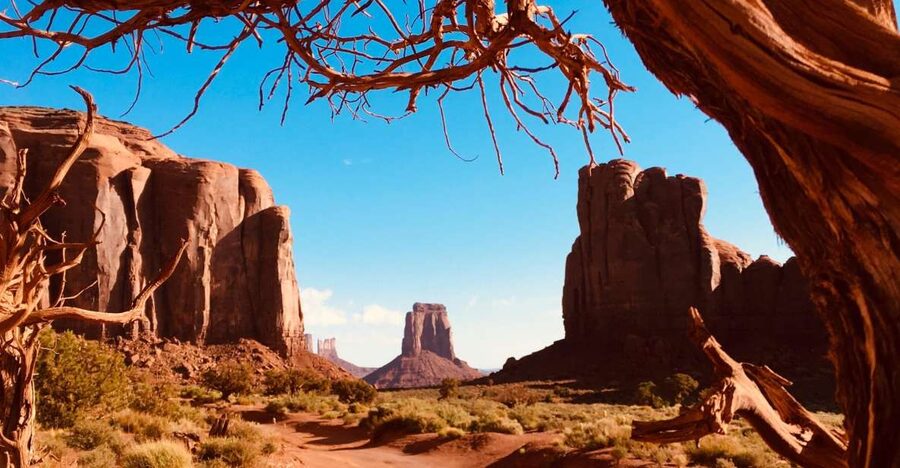
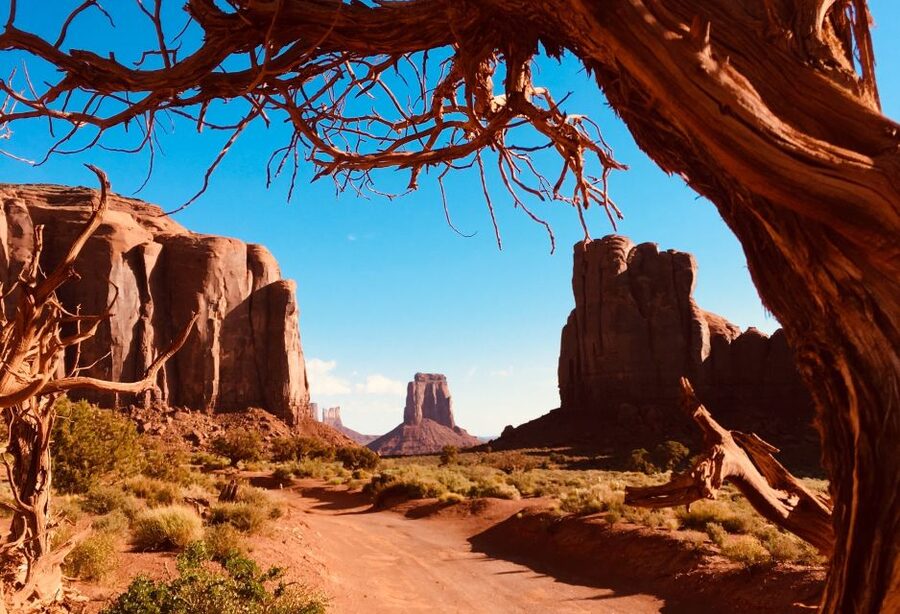
North Window and Artist Point offer more chances to compose photographs through natural openings and across broad views. I appreciate that this route is not built around one famous overlook. You see a sequence of formations, each with its own shape, distance, and angle.
A different kind of day, same corner of the map:
- Monument Valley: Sunset Tour with Navajo Guide
★ 4.8 · 1,467 reviews - 3.0 Hours of Monument Valley’s Sunrise or Sunset 4×4 Tour
★ 5.0 · 811 reviews - Sunset Tour of Monument Valley
★ 5.0 · 742 reviews - Monument Valley Extended Backcountry Tour
★ 5.0 · 720 reviews
Ear of the Wind Arch and Anasazi Ruins
The backcountry portion is the main reason to choose this tour instead of driving the public loop. Ear of the Wind Arch is one of the less accessible sights, and reaching it requires a local operator with backcountry permission.
The arch brings you close to the worn, sculpted surface of the sandstone. You may find the stop more rewarding than another distant viewpoint because the rock feels immediate and detailed. The exact amount of time at each site can vary, but this tour is designed to allow longer stops for exploring and photography.
Anasazi Ruins add an archaeological dimension to the route. The ruins connect the valley to earlier communities and remind you that this is not simply a scenic backdrop. Your guide can place the site within the broader story of the region and the people who lived here long before modern tourism.
Because these areas are restricted, the guide’s role is especially important. You are shown where to go and how to approach the site respectfully, rather than wandering into places that may be difficult to find or inappropriate to enter alone.
A Navajo hogan visit that gives the scenery context
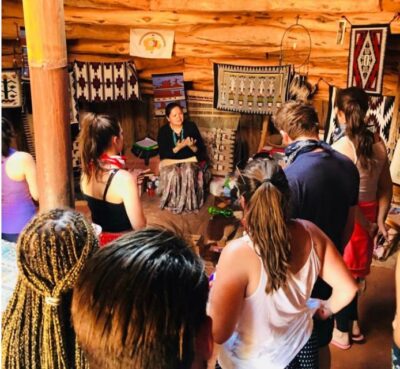
Near the end of the tour, you visit a traditional Navajo hogan. This is one of the most useful parts of the experience for anyone who wants more than photographs.
The hogan is a traditional Navajo home, and the visit gives you a chance to learn about local building traditions, daily life, and the way Navajo culture remains connected to the land. Some past tours have also included weaving demonstrations, although the supplied details do not promise weaving on every departure, so you should book this tour for the hogan visit itself rather than expect a specific demonstration.
I find this stop important because it shifts the focus from scenery to people. The valley is not an empty stage. A local guide can explain family customs, spiritual ideas, and traditions passed through generations in a way a recorded audio track cannot.
Several guides have shared personal accounts of growing up Navajo and stories about their families. That personal element is one of the tour’s biggest strengths, but each guide has a different style. Some are talkative and story-centered, while others are quieter and more measured. All guiding is in English.
The guides make the difference
The operator uses local Navajo guides, and the strongest part of the tour is the human connection. Larry is often praised for his photo help, stories, humor, and flute playing. Travis has been singled out for making special occasions memorable and for explaining Navajo culture with care.
Bruce has helped with panoramic pictures and used a hands-on sand-and-water demonstration to explain geology. Jamison has combined history, cultural stories, music, and practical help at viewpoints. Sabrina and Sandrea have also been noted for their friendly, personal approach.
Names matter here because this is not a fixed audio program. Your guide controls the pace, the amount of explanation, and the way the stops feel. You might receive detailed geological explanations, family stories, or practical photography advice. You should expect a live guide with a personal perspective, but not a scripted performance that sounds identical every time.
Guides have also helped with step stools for people who found the vehicle difficult to enter, offered blankets in cool conditions, provided water on some departures, and taken photographs for groups. These touches are not listed as guaranteed inclusions, so treat them as possible extras rather than promises.
Is $97 a fair price?
The tour costs $97 per person, and you must also pay the Monument Valley Tribal Park entry fee of $8 per person. Food is not included.
I consider the price fair if you value access and interpretation. You are paying for 210 minutes, a local Navajo guide, backcountry permission, transport over rough roads, many stops, a hogan visit, and live music. The tour also saves you from seeing only the public loop and wondering what lies beyond it.
The price is harder to justify if you only want the famous Mittens and John Ford Point. You can get the main scenic views with a self-drive visit, though you will miss the restricted areas and the guide’s cultural context.
The long duration improves the value. A shorter trip can show you the headline formations, but this one gives you time to stop, listen, walk a little, and take several photographs at each location. For photographers, that extra time may be worth more than the musical performance or hogan visit.
Timing, pickup, and the Utah-Arizona clock
Meet in front of the lobby at the Navajo loading area. The driver does not go inside to collect you, so wait outside at the designated spot.
Finding the loading area can be confusing, especially because it is separate from the main collection of tour vehicles. One useful point is that the meeting area is on the right after the park toll entrance, near the restrooms. Give yourself extra time to find it.
Monument Valley operates on Utah Time, which is Mountain Daylight Time. From March through November, Utah is one hour ahead of Arizona. If you are driving from Arizona, plan to leave one hour earlier than you might first expect. This is a small detail, but arriving late at a remote park entrance is an unpleasant way to start the morning.
The tour lasts 210 minutes, or three and a half hours. Starting times vary, so check availability for your date. You can cancel up to 24 hours ahead for a full refund, and reserve now while paying later if you want to keep your plans flexible.
What to wear and who should skip it
Wear comfortable shoes. You should also bring sunglasses, a hat, sunscreen, and a scarf. The scarf is useful in an open vehicle, where dust and wind may be part of the ride.
Weather can change the feel of the tour. Some departures have been cold enough that blankets were helpful, while warm-weather trips suit the open-air vehicle. Bring an extra layer even if the day begins mild.
The tour is not suitable for pregnant women or babies under one year old. The ride takes place in a safari-style vehicle or SUV over Monument Valley roads, so you should consider your comfort with vehicle movement and stepping up into the transport.
Who will enjoy this tour most?
I would choose this tour for photographers, first-time visitors who want the full picture, and anyone interested in Navajo culture as much as sandstone scenery. It also suits road trippers who have only one half-day for Monument Valley and want more than the public drive.
It is a good fit for families with older children, provided they can manage the vehicle and the length of the outing. The guide-led format also helps if you want photographs of your whole group instead of taking turns behind the camera.
I would skip it if you dislike bumpy roads, prefer complete independence, or only want a quick viewpoint stop. The open vehicle can be exposed to cold, heat, sun, and dust, while the three-and-a-half-hour length demands more time than a simple loop drive.
Should you book it?
Book this tour if restricted backcountry access, long photo stops, and a local Navajo perspective matter to you. The extra cost buys access you cannot get by driving the public loop, plus a traditional hogan visit and music at Big Hogan.
If you do book, arrive early, confirm the Utah time, bring layers and sun protection, and ask your guide for help with group photographs. I would also arrive with realistic expectations: the scenery is the star, but the guide determines how much cultural and geological detail you receive.
For a deeper visit to Monument Valley in a single half-day, this is a strong choice. The combination of famous viewpoints, lesser-seen arches, ruins, personal stories, and time to stop makes it more useful than simply circling the park and moving on.
FAQ
How long does the Monument Valley tour last?
The tour lasts 210 minutes, or three and a half hours.
What is included in the tour?
The tour includes a local Navajo guide, access to the restricted backcountry, a visit to a Navajo traditional home, and a traditional musical performance by the guide.
Is the Monument Valley entry fee included?
No. The Tribal Park entry pass costs $8 per person and can be purchased when you enter the park.
How many people fit in the vehicle?
In warm weather, the open-air safari vehicle holds up to 12 passengers. In cold or hot weather, an enclosed SUV is used with a maximum of seven people.
What should I bring?
Bring comfortable shoes, sunglasses, a hat, sunscreen, and a scarf.
What time zone does the tour use?
The tour operates on Utah Time, or Mountain Daylight Time. From March through November, Utah is one hour ahead of Arizona, so plan to leave one hour earlier if you are coming from Arizona.
Newly listed in Monument Valley
- 2 Hour Monument Valley Horseback Tour★ 4.5 · 458 reviews
- Monument Valley Group Tour – 3 Hours – Navajo Spirit Tours★ 5.0 · 636 reviews
- Monument Valley Backcountry Tour★ 5.0 · 645 reviews
- Monument Valley: Scenic 2.5-Hour Guided Tour★ 4.9 · 714 reviews
- Monument Valley: Horseback Adventure Tour★ 4.4 · 715 reviews
- Monument Valley Extended Backcountry Tour★ 5.0 · 720 reviews
- Sunset Tour of Monument Valley★ 5.0 · 742 reviews
- 3.0 Hours of Monument Valley’s Sunrise or Sunset 4×4 Tour★ 5.0 · 811 reviews
Monument Valley Tours, compared.
Monument Valley: Backcountry Jeep Tour with Navajo Guide
Read our review →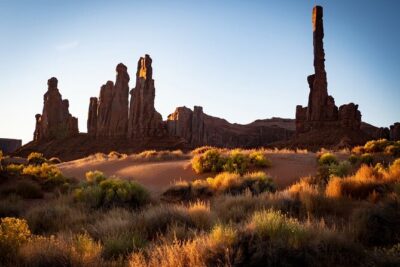
2.5 Hours of Monument Valley’s Backcountry 4×4 Tour
Read our review →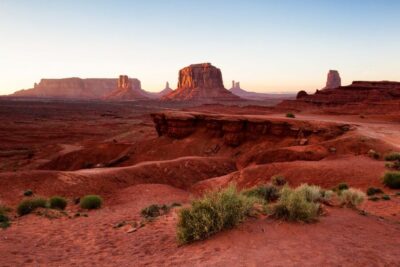
Monument Valley: Sunset Tour with Navajo Guide
Read our review →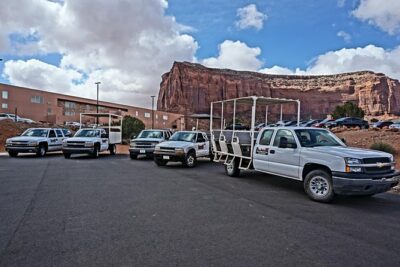
3.0 Hours of Monument Valley’s Sunrise or Sunset 4×4 Tour
Read our review →
Browse the lists this tour appears in