
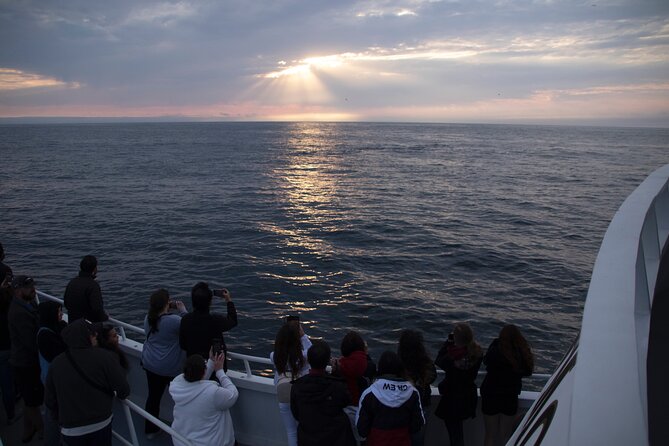
Reviewed · MONTEREY TOURS
Monterey Whale Watching Tour
Monterey Bay can serve up a remarkable wildlife show: humpback whales surfacing in groups, dolphins racing beside the boat, sea lions barking below, and the occasional orca or blue whale farther out. This three-hour cruise uses the large Princess Monterey and Atlantis Monterey, giving you room to move between indoor and outdoor viewing areas.
I like the year-round whale watching and the naturalists who explain what you are seeing rather than simply pointing at a fin. I also like the choice of seating, with several decks, restrooms, and shelter when the Pacific turns cold or rough.
The catch is the sea itself. Monterey Bay can become very choppy, and some people have been badly seasick even on these large boats. A whale tour is still a wildlife search, not a guaranteed close-up show, despite the stated 99 percent success rate.
Key points to know before you go
- Whales are often found after a long run out: It can take an hour or more before the first sighting, so plan on a full three-hour outing.
- The bay is active all year: Humpbacks, gray whales, dolphins, sea lions, otters, sunfish, and many other species may appear in different seasons.
- Two large boats carry up to 140 people: The size offers more room and indoor shelter, but the lower decks can still feel busy when everyone moves to one side.
- VIP upper-deck seating costs $20 more: It offers fewer people, open views, benches, and two restrooms, but it is available only if space remains at check-in.
- Motion sickness is the main concern: Bring your preferred prevention, dress warmly, and remember that a big boat can still roll hard in Pacific swells.
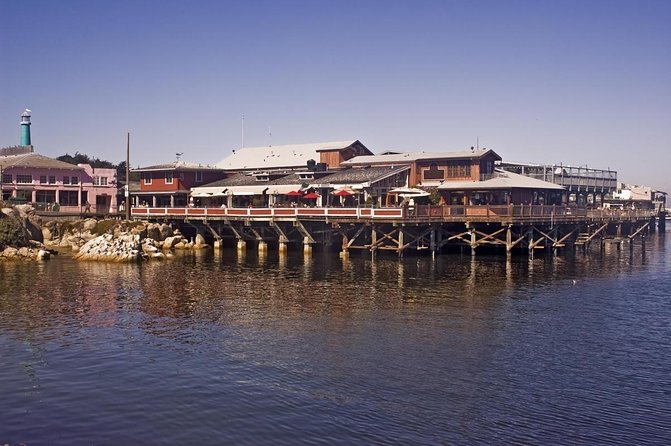
- The cruise returns to Fisherman’s Wharf: You board and finish at 96 Fishermans Wharf in Monterey, near public transportation.
Why Monterey Bay is such a strong whale-watching spot
Monterey Bay is one of the few places where whale watching operates throughout the year. Its appeal comes from the Monterey Bay Submarine Canyon, an underwater channel that brings nutrient-rich water close to shore and supports a large food supply.
That food draws different species at different times. You may see humpback whales, gray whales, blue whales, killer whales, or sperm whales. The possible smaller sightings are just as worthwhile: Risso dolphins, common dolphins, bottlenose dolphins, Dall’s porpoises, sea turtles, jellyfish, sea lions, pelicans, sea otters, and mola mola, also called ocean sunfish.
The important word is possible. The company’s 99 percent success rate means your odds are unusually good, but it does not mean every trip produces breaches, tail slaps, or whales beside the rail. Wild animals set the schedule. One outing may bring a dozen or more humpbacks and a breach, while another may produce distant gray whales that require binoculars.
That uncertainty is part of the bargain. You are watching animals in their own habitat, not entering an aquarium with a timed performance.
More Whale Watching in Monterey
- Monterey Bay: Whale Watching Tour
★ 4.8 · 2,300 reviews - Monterey: Monterey Bay Dolphin and Whale Watching Boat Tour
★ 4.7 · 1,645 reviews - 4 Hour Whale Watching Tour From Monterey
★ 5.0 · 1,045 reviews
Boarding the Princess Monterey or Atlantis Monterey
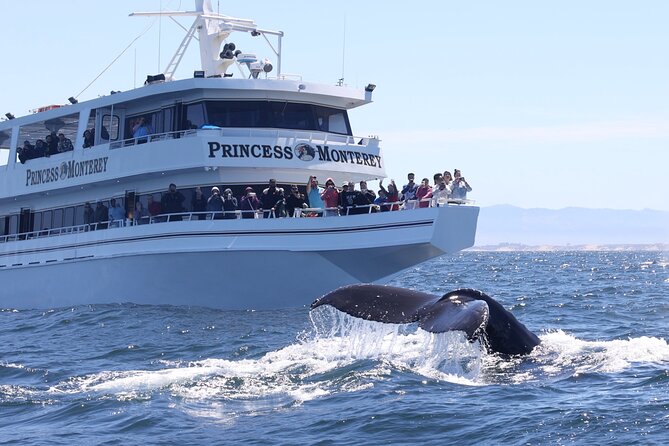
You meet at 96 Fishermans Wharf, Monterey, and return to the same point. The boats are the two largest in the local fleet: the 110-foot Princess Monterey and the 100-foot Atlantis Monterey.
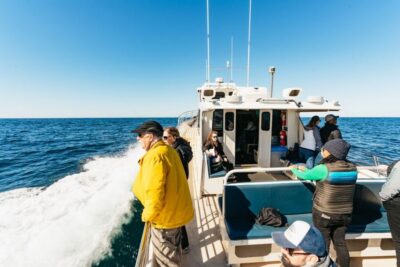
Large boats have a clear advantage over small open craft. You get several decks, indoor and outdoor places to stand or sit, and restrooms onboard. If the wind sharpens or spray starts flying, you can move inside instead of spending the whole trip exposed.
The size does not make the ride smooth in every condition. A large vessel may feel more secure, but Pacific swells can still cause a powerful rolling motion. On rough days, the front viewing area on the lower deck may be closed for safety, limiting where you can stand.
The boat can carry up to 140 people. That is a fairly large group, so expect some competition at the rail when whales appear. If you remain seated, someone standing directly in front of you can block the view. Moving between decks helps, but you will need to pay attention and share the best spots.
What the three-hour route feels like
The cruise heads out into Monterey Bay and searches along the water until the crew locates wildlife. The trip may travel for 45 minutes or more before the first whale appears. Several people have gone more than an hour with little action, only to find a busy group later.
That waiting period is easier if you treat the trip as time on the Pacific rather than a guaranteed show from the moment you leave the dock. Keep watching the water, listen to the naturalist, and scan for birds or sea lions. The smaller creatures can make the outward run worthwhile before the main sighting begins.
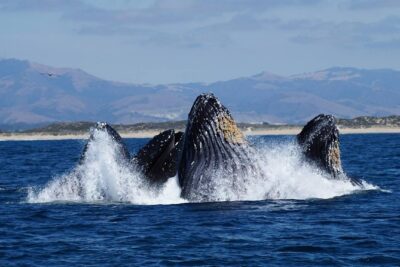
Once whales are found, the boat may remain in the area for a long stretch. Humpbacks have appeared in groups, with some trips recording seven, eight, or even 15 animals. Close encounters can include tail flips, repeated surfacing, and an occasional breach. Other trips have produced gray whales at 50 to 100 yards, close enough to identify but far enough that binoculars would help.
The captain and crew work to give people views from both sides of the vessel. Wildlife is not always on the side where you first settle, so do not remain fixed in one position. Listen for announcements and watch where the naturalist is pointing.
The naturalists make the difference
A good naturalist turns a sighting into an experience with context. The onboard staff explain whale behavior and help you identify dolphins, sea lions, seabirds, and other life that is easy to miss from shore.
Melissa has led one of the highly praised outings, offering clear explanations of whale and sea lion behavior. Other naturalists have also been described as energetic and well prepared. Their value is especially clear when the whales stay underwater or surface far away. Instead of staring at empty water, you learn what to watch for and why the crew is waiting.
The commentary can also help families. Children may lose interest during the first hour, but a naturalist who keeps pointing out changing wildlife gives the trip a better rhythm. Adults who already know something about whales should still find the behavior notes useful, particularly when the boat encounters a pod rather than a single animal.
The tone is informative rather than theatrical. You are not promised a scripted display. The staff interpret what is happening and try to position the boat responsibly around wild animals.
More whale watching trips around the USA:
- Juneau Wildlife Whale Watching
★ 5.0 · 7,379 reviews - Juneau Wildlife Whale Watching & Mendenhall Glacier
★ 5.0 · 6,236 reviews - Boston: City Cruises Whale Watching Cruise
★ 4.5 · 4,710 reviews - Whale Watching Tour in Gloucester
★ 5.0 · 4,460 reviews
Humpbacks, gray whales, dolphins, and surprise sightings
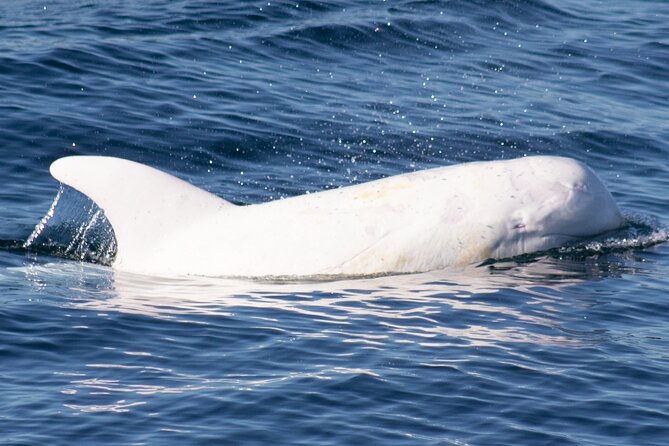
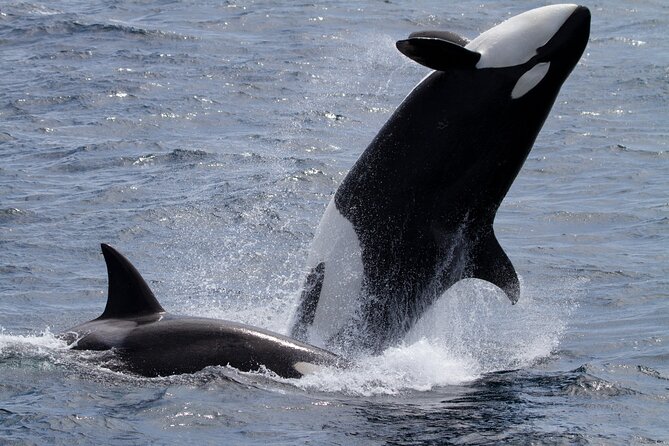
Humpback whales are the most frequent stars in the reported outings. They can appear alone or in groups, and they sometimes provide the classic moments people hope for: a tail rising from the water, a close surfacing, or a breach.
Gray whales may be easier to spot by their blows and backs than by dramatic leaps. They often remain lower in the water, and distance rules can keep the boat well away. If you expect the action shown in advertising photographs, adjust your expectations. A calm sighting of a gray whale is still special, but it may look modest through the naked eye.
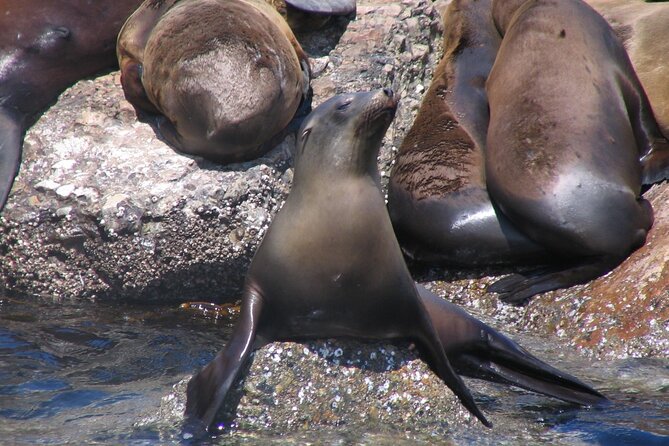
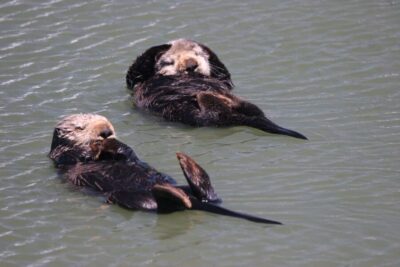
The less predictable species can be the highlight. Orcas have appeared in pods, and blue whales, sperm whales, Risso dolphins, common dolphins, bottlenose dolphins, Dall’s porpoises, and sea turtles are all among the possible wildlife. Sea otters, sea lions, sunfish, pelicans, and jellyfish add variety when whales are quiet.
This range is one of the tour’s best features. Even a slower whale day can become a successful wildlife cruise if dolphins appear or otters are playing in the water. Still, you should not book expecting every animal on the list. The list describes what lives in or passes through the bay, not what is guaranteed on your departure.
VIP upper deck: worth the extra $20?
The optional VIP upper deck costs $20 per person and can be purchased at check-in if space remains. You do not automatically receive it with the standard fare.
The upper deck has benches, open views, and two restrooms. It is less crowded, which matters when animals appear on both sides of the boat and people begin shifting around. Several outings found the extra cost worthwhile for the wider sightlines and breathing room.
The standard areas are still usable. The lower deck includes indoor benches, a walkway around the boat, and a large forward viewing area when conditions permit. There is also a snack bar, but soda, coffee, tea, and snacks are not included in the ticket price.
I would consider VIP seating if you care about photography, want a quieter place to watch, or dislike being pressed against a crowded rail. It is less important if you are happy to move around, sit indoors during rough patches, and accept that the best sighting may happen wherever you happen to be standing.
Seasickness is the issue to take seriously
The most important preparation is motion-sickness planning. Several people have felt fine on other boats but became ill when Monterey Bay turned rough. One passenger described severe vomiting, while another became drowsy from the motion. Those are not minor inconveniences, and seasickness can erase the whole experience.
Use the motion-sickness method that has worked for you before, and follow any product instructions carefully. Some people have used medication, patches, bands, or a combination of precautions, but no method is guaranteed. If you are prone to nausea, do not wait until the boat is already rolling badly.
Dress for a colder ride than the weather at Fisherman’s Wharf suggests. Bring a warm jacket, and consider binoculars because whales can remain 50 to 100 yards away. The boat has indoor space, but you will enjoy the wildlife more if you can spend time outside without becoming chilled.
Pregnant passengers cannot take this trip, and children under three are not permitted. Most other people can participate, but the motion of the ocean remains a personal concern rather than an accessibility detail you should ignore.
Is $70 a fair price?
At $70 per person, this is a reasonable price for an approximately three-hour cruise, especially when you consider the large vessel, onboard restrooms, multiple decks, and naturalist commentary. You are paying for time on the water and a serious chance of seeing wildlife, not just a short harbor ride.
The value improves on a day with multiple whales, dolphins, and sea lions. A few outings have produced groups of humpbacks, orcas, and other animals, making the fare feel modest for the amount of time spent watching them.
The value is harder to judge if your boat spends much of the trip searching and the whales stay distant. That is the unavoidable risk of any wildlife tour. The 99 percent success claim improves your odds, but it does not control whale behavior, sea conditions, or viewing distance.
The VIP upgrade brings the price to $90 per person if available. I would treat it as a comfort purchase rather than a ticket to better wildlife. You may get a clearer view simply because fewer people are around, but the animals can still appear on the opposite side of the boat.
Best times and who should book
The tour runs at different departure times, including morning and afternoon outings. A 9 a.m. trip has produced excellent wildlife viewing, while a 12:30 departure has also found many whales. The available evidence does not support declaring one departure universally better.
I would book this if you want a full marine-wildlife outing and can accept waiting. It suits families with children over three, couples, friends, first-time whale watchers, and older adults who are comfortable on a moving boat. An 85-year-old passenger enjoyed the trip, but comfort depends heavily on sea conditions and personal tolerance.
You should think twice if you are highly prone to seasickness, pregnant, traveling with a child under three, or expecting whales to breach beside the boat on cue. The crew can search carefully, but nature does not follow a schedule.
The experience is offered in English. Confirmation arrives when you book, and the departure point is near public transportation. Allow the full three hours, plus time before boarding to find the wharf and prepare for the water.
Cancellation and weather details
You can cancel up to 24 hours before the start time for a full refund. Changes or cancellations made within 24 hours are not accepted and are not refunded.
The company can cancel for poor weather or if the minimum number of participants is not met. In that case, you are offered another date or experience, or a full refund. This matters in Monterey, where rough water can make a scheduled afternoon trip impossible.
Should you book the Monterey whale watching cruise?
Book it if seeing wild marine life matters more to you than getting a perfect photograph. The combination of a strong chance of sightings, large boats, naturalist commentary, and access to Monterey Bay’s wide range of species makes this one of the better ways to experience the coast from Monterey.
Go prepared: take motion-sickness precautions, bring a warm jacket, pack binoculars if you have them, and expect the first whale to take time. Pay the extra $20 for the upper deck if you value space and broad views, but do not confuse the upgrade with a wildlife guarantee.
For most people who can handle the ocean, I would book this tour. Just remember that the best moments may be a whale’s tail, a distant blow, a pod of dolphins, or an otter beside the boat, not the dramatic leap pictured in your imagination.
FAQ
How long is the Monterey whale watching tour?
The cruise lasts approximately two to three hours, with the advertised itinerary lasting about three hours.
Where does the tour depart?
You meet at 96 Fishermans Wharf, Monterey, California. The cruise ends back at the same meeting point.
Which boats are used?
The tour uses the 110-foot Princess Monterey and the 100-foot Atlantis Monterey, described as the two largest boats in the Monterey fleet.
How likely am I to see whales?
The tour states a 99 percent success rate. Sightings are not guaranteed to be close or dramatic, and some whales may remain 50 to 100 yards away.
What wildlife might I see besides whales?
Possible sightings include killer whales, dolphins, porpoises, sea lions, sea otters, sea turtles, pelicans, jellyfish, mola mola, and other marine life.
Does the ticket include the VIP upper deck?
No. VIP upper-deck seating is an optional $20-per-person upgrade, available at check-in only if space remains.
Are food and drinks included?
No. Soda, coffee, tea, and snacks are not included. The boat has a snack bar, and a restroom is available onboard.
Can children under three join the cruise?
No. Children under three are not permitted on these trips.
What is the cancellation policy?
You receive a full refund if you cancel at least 24 hours before the start time. Cancellations within 24 hours are not refunded. If poor weather or insufficient participation cancels the trip, you are offered another date or experience, or a full refund.
Newly listed in the USA
- NON BUS 4 Winery Traverse City Wine Tour on Old Mission Peninsula★ 5.0 · 445 reviews
- The Maui Butterfly Farm Tour★ 5.0 · 446 reviews
- New England Aquarium Admission Ticket in Boston★ 4.0 · 446 reviews
- New Orleans City Tour and Steamboat Natchez Harbor Jazz Cruise★ 4.0 · 446 reviews
- Alpaca and Llama Farm Tour★ 5.0 · 446 reviews
- Small-Group Laura and Whitney Plantation Tour from New Orleans★ 4.5 · 446 reviews
- Dreaded Dead Descent of the District: DC Ghost Tour★ 4.0 · 446 reviews
- Cañon City: Royal Gorge Bridge & Park Entry Ticket & Gondola★ 4.5 · 448 reviews
Monterey Tours, compared.
Monterey Bay Dolphin and Whale Watching Boat Tour
Read our review →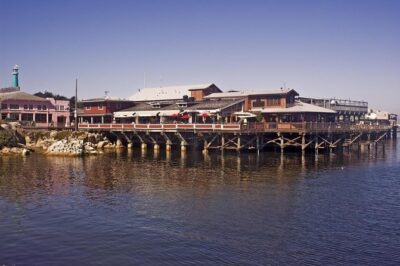
Monterey’s 17 Mile Drive Guided Electric Bike Tour, 3 hr
Read our review →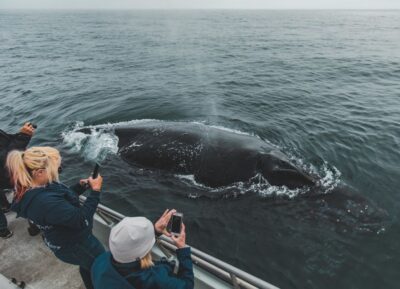
Browse the lists this tour appears in