
Reviewed · MONTEREY TOURS
Monterey Bay: Whale Watching Tour
Monterey Bay gives you a real shot at seeing whales close to shore, thanks to its submarine canyon and food-filled waters. On a good day, you may watch humpbacks feed, dolphins ride the bow, or even spot a blue whale, orca, or breaching whale.
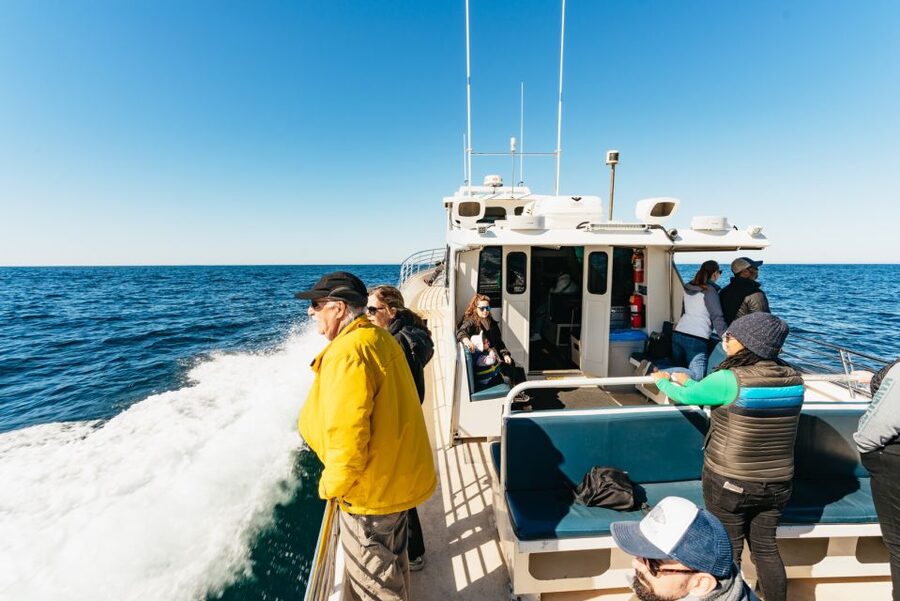
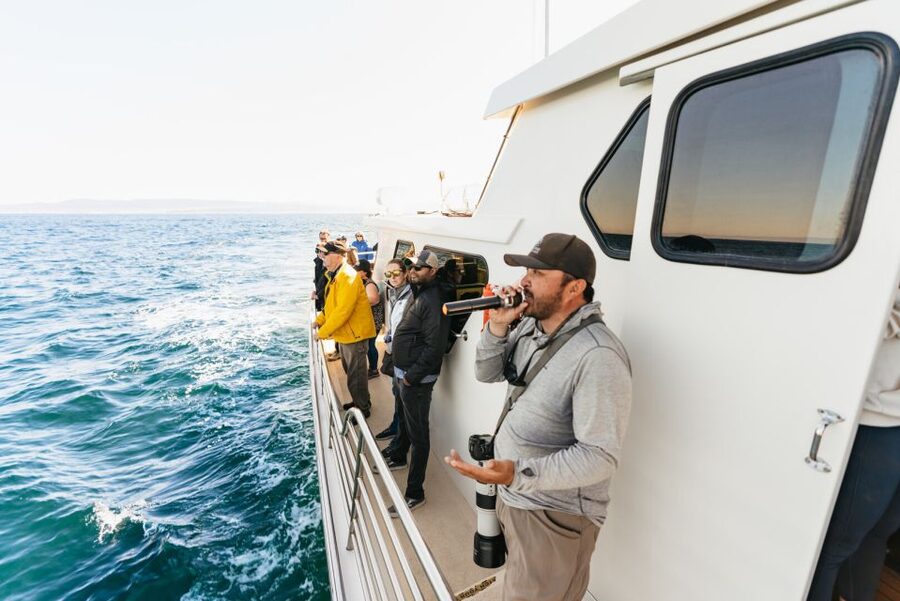
I like the smaller boat setup, reported at about 25 people, because you can move around for a better view without feeling packed in. I also like the mix of wildlife and explanation, with guides such as Isiah, Maddy, Sophie, and Isaiah adding useful marine-life facts rather than simply pointing at fins.
The main drawback is the ocean itself. The boat can be cold and choppy, and motion sickness is a real possibility. Sightings are common, but no responsible whale-watching trip can promise a particular species or dramatic breach.
Key points to know before booking
- The submarine canyon brings deep water near shore, making Monterey one of California’s strongest whale-watching areas.
- Summer and fall center on feeding whales, especially humpbacks, with possible blue whales, fin whales, dolphins, and orcas.
- Winter shifts toward migrating gray whales near the southern end of the bay.
- The boat holds about 25 people, giving you room to change sides and watch from different spots.
- Hot beverages, restrooms, and friendly dogs are allowed, but food is not included.
- Plan extra time for check-in and possible delays, especially if whale activity or ocean conditions slow the return.
Why Monterey Bay is such a strong whale-watching setting
This is not a short harbor cruise with a slim chance of spotting something offshore. Monterey Bay has a deep underwater canyon that comes surprisingly close to land. That canyon helps bring nutrient-rich water into the bay, which supports small fish and krill. Those are exactly the meals that attract large whales.
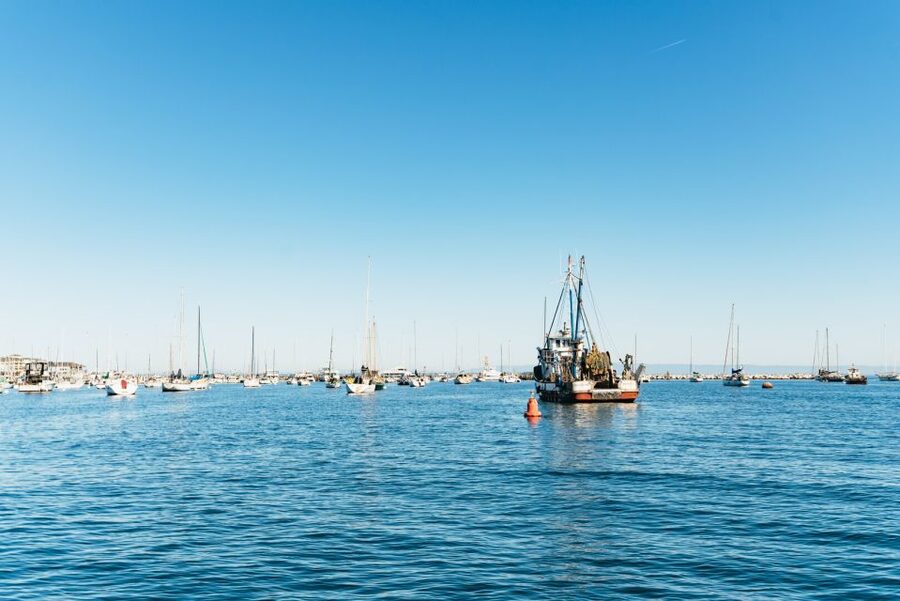
From Old Fisherman’s Wharf, the boat moves out through one of the best-known marine sanctuaries in the United States. The scenery is pleasant, but the real appeal is what is happening below the surface. You are sailing over a productive feeding area, not simply hoping to find a passing whale in open ocean.
The experience has earned a 4.8 rating from roughly 2,300 ratings, and I can see why the strongest praise centers on three things: frequent sightings, personable guides, and a boat that does not feel overcrowded. Still, the value depends partly on your expectations. You are paying for time and access to a wild place, not a scheduled animal performance.
More Whale Watching in Monterey
- Monterey: Monterey Bay Dolphin and Whale Watching Boat Tour
★ 4.7 · 1,645 reviews - 4 Hour Whale Watching Tour From Monterey
★ 5.0 · 1,045 reviews - Monterey Whale Watching Tour
★ 4.5 · 732 reviews
Leaving Old Fisherman’s Wharf
You check in at Discovery Whale Watch, at 66 Fisherman’s Wharf, Monterey. Arrive at least 45 minutes before departure. Each person must complete a Coast Guard waiver electronically, and adults complete the forms for children. Take care of this before you arrive so the dockside check-in does not become a last-minute scramble.
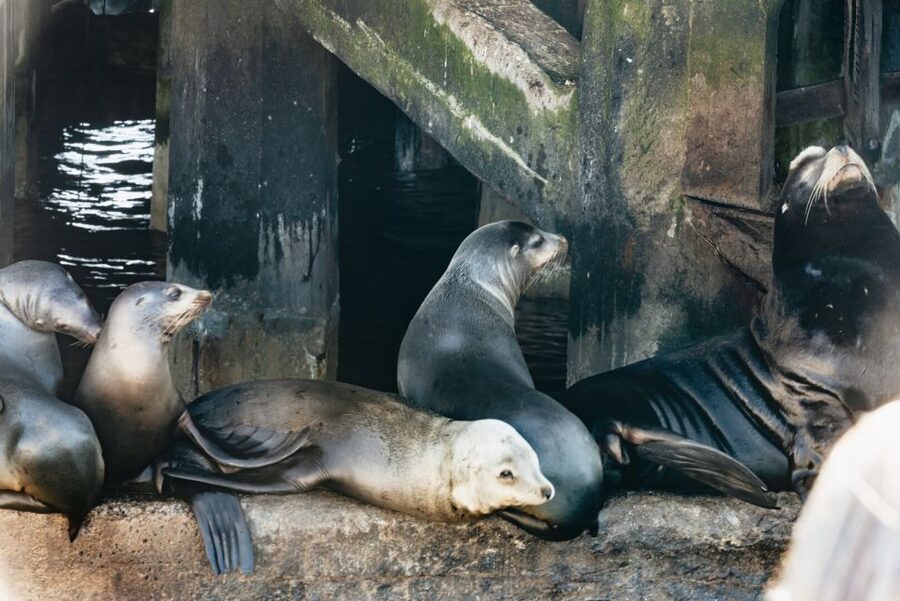
The departure area is easy to combine with a visit to Monterey’s waterfront. As the boat leaves the harbor, look for the large groups of California sea lions gathered inside. Their barking and jostling often provide your first wildlife encounter before the boat reaches the open bay.
This opening section is also a good time to settle in, find a comfortable place, and listen to the safety instructions. You will want to keep your eyes moving, but do not spend the first few minutes staring only at the horizon. Sea lions, harbor wildlife, and birds can appear close to the boat.
If you are driving, the nearest listed parking is the Monterey Harbor Waterfront lot at 245 Washington Street. Pay in advance through the ParkMobile app or at a pay station. Failing to pay can result in a $49 ticket. RV parking is available, but allow time to walk from the lot.
The walking route goes toward Wharf 1. Pass the pink Harbor House, continue past the yellow Crab House, then turn right. Discovery Whale Watch is the blue building on the right. This is useful information because the waterfront has several wharves and restaurants, and a rushed search can eat into your check-in time.
Passing Cannery Row and entering the sanctuary
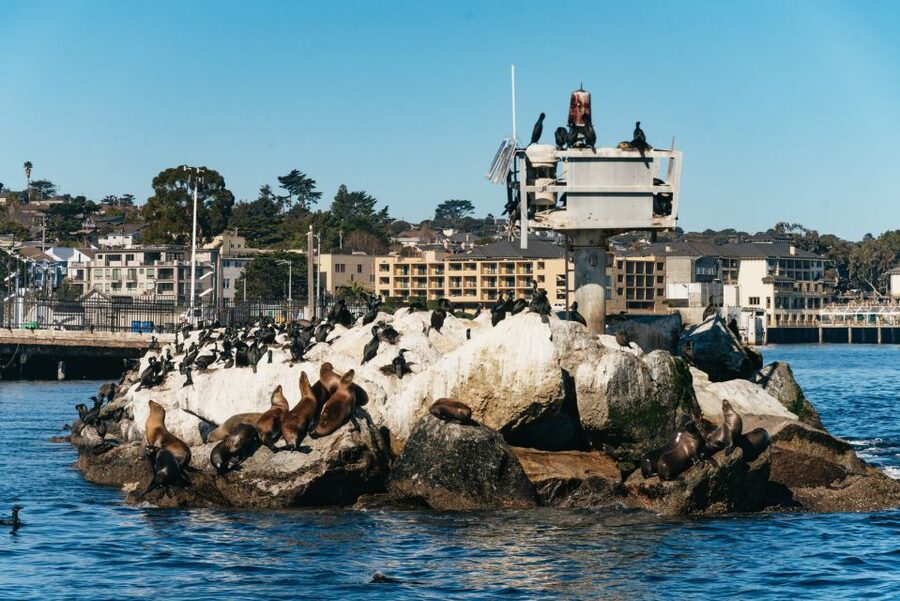
After leaving the wharf, the boat passes Cannery Row. The old waterfront district is now lined with shops, restaurants, and attractions, but from the water you get a different view of its position along the bay.
Soon you are beyond the harbor and inside the Monterey Bay National Marine Sanctuary. The pace changes here. There is no fixed sequence of animal stops. The captain and biologist guide watch the water, communicate about sightings, and adjust the route to follow whale activity.
That flexibility is important. One trip may spend a long stretch with humpbacks in a feeding area. Another may head toward migrating gray whales. You could see dolphins first, then sea lions, and only later find whales. The boat’s job is to search carefully and give you time when wildlife appears.
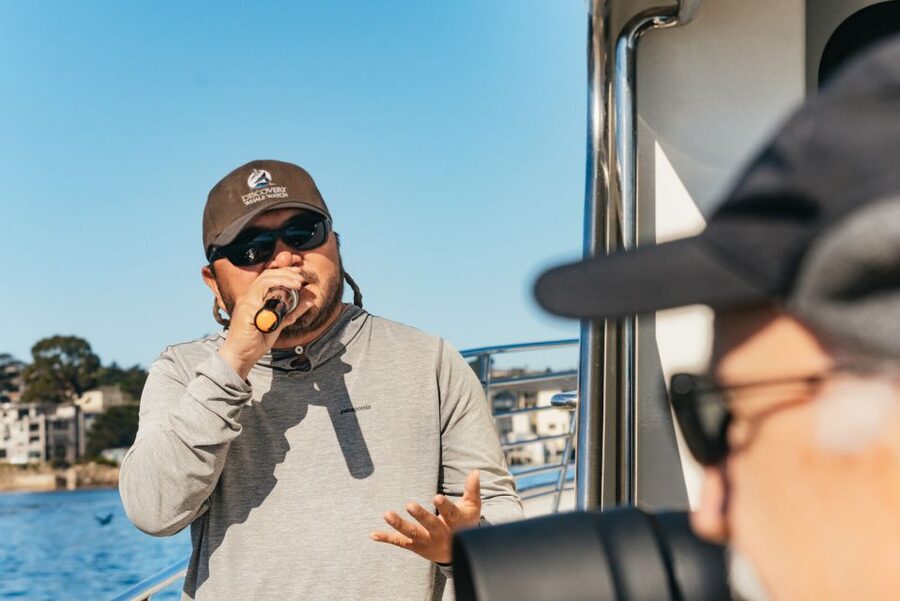
The guides add a lot to this part of the cruise. Isiah has been singled out for clear explanations, humor, photographs, and even sea shanties. Maddy, Sophie, and Isaiah have also been praised for their enthusiasm and ability to make the biology understandable. The experience works best when you listen to the guide while keeping watch yourself.
What you may see during summer and fall
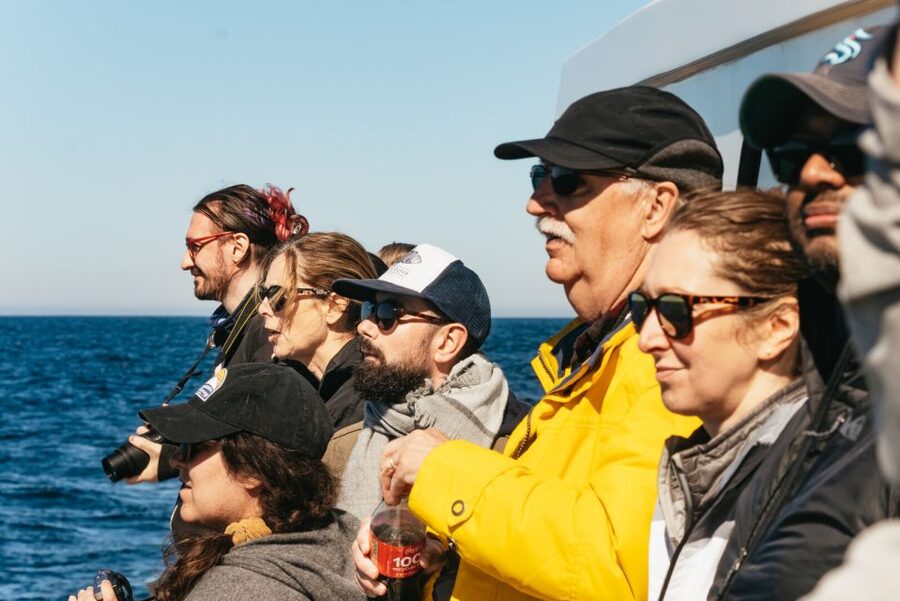
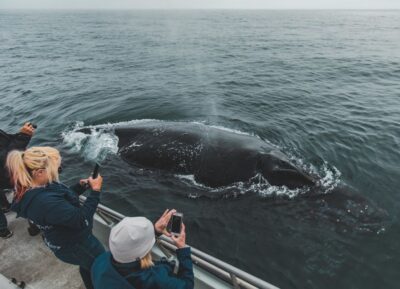
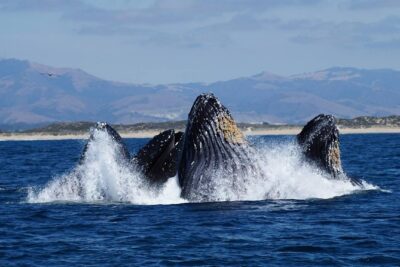
Summer and fall are built around feeding activity. Humpback whales are the most regular sighting, and they may surface repeatedly as they chase small fish or feed on krill. A calm afternoon can bring several whales into view, while a more active feeding area may include seabirds, sea lions, and whales working the same patch of water.
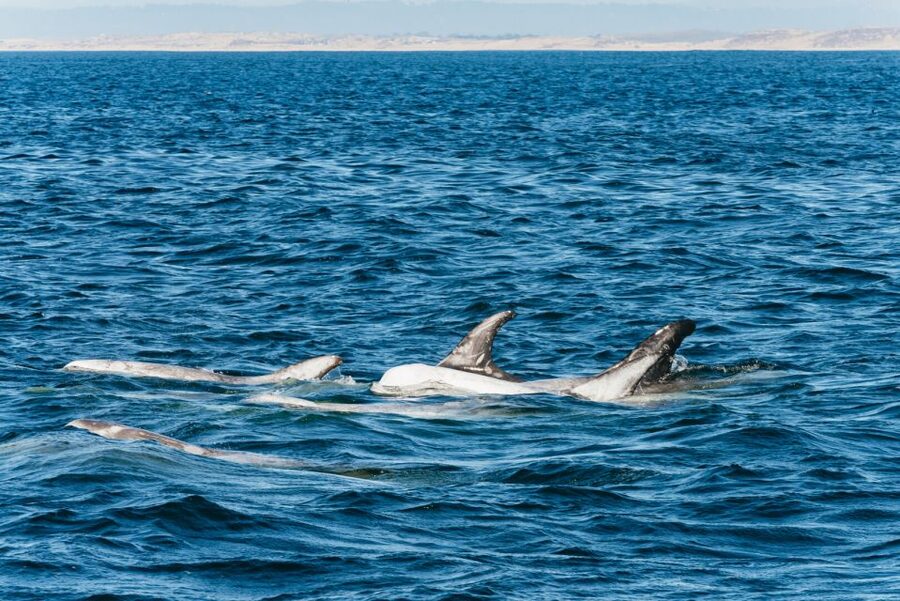
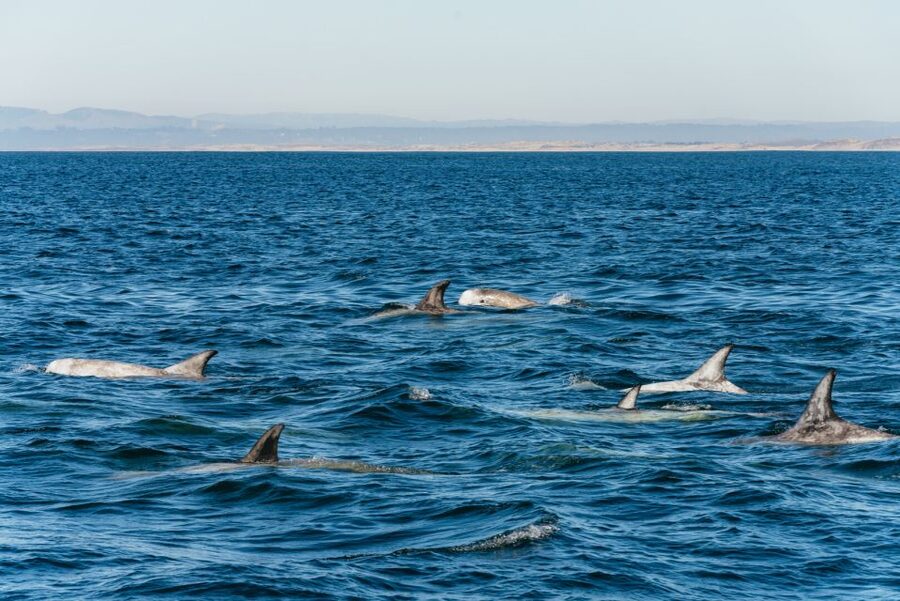
The reports from individual trips include groups ranging from several humpbacks to around 15 or even 30 whales. Some people saw a blue whale and calf, which is a remarkable sight simply because of the animal’s scale. Others saw fin whales, Rissos dolphins, white-sided dolphins, otters, elephant seals, albatross, tufted puffins, and salmon sharks.
You should treat these as examples, not promises. A whale may surface only briefly, and the best view may be on the opposite side of the boat. Keep your camera ready, but do not watch the entire trip through a screen. A back or dorsal fin, a puff of breath, or a rolling back can be all you get before the animal disappears.
The most exciting behavior includes breaching, fin slapping, and bow riding. One trip had a feeding group with seabirds and sea lions. Another included four orcas and a large group of white-sided dolphins. Such encounters are possible because the bay supports many species at once, not because the crew can order them into position.
More whale watching trips around the USA:
- Juneau Wildlife Whale Watching
★ 5.0 · 7,379 reviews - Juneau Wildlife Whale Watching & Mendenhall Glacier
★ 5.0 · 6,236 reviews - Boston: City Cruises Whale Watching Cruise
★ 4.5 · 4,710 reviews - Whale Watching Tour in Gloucester
★ 5.0 · 4,460 reviews
Winter whale watching and migrating gray whales
Winter changes the focus. The boat heads toward the southern end of Monterey Bay to look for migrating whales, especially gray whales. Gray whales can be a wonderful reason to choose a winter departure, but conditions may be less predictable than during the main summer feeding period.
One February trip produced gray whales, seals, and otters. Another winter outing found a migrating group and gave the boat a close view. A December trip still produced about 10 whales, along with more dolphins and sea lions, despite the passenger’s feeling that late November and December can be less dependable.
This is a good example of how to plan honestly. If your main goal is a strong chance of seeing feeding humpbacks, summer and early fall may suit you better. If you enjoy migration season and can appreciate a broader wildlife outing, winter can still be worthwhile.
Winter water and weather can also make the boat ride feel more demanding. Bring layers, even on a sunny California day. Cloud, wind, spray, and open water can make the temperature feel much lower than it did at the wharf.
The boat, group size, and onboard comfort
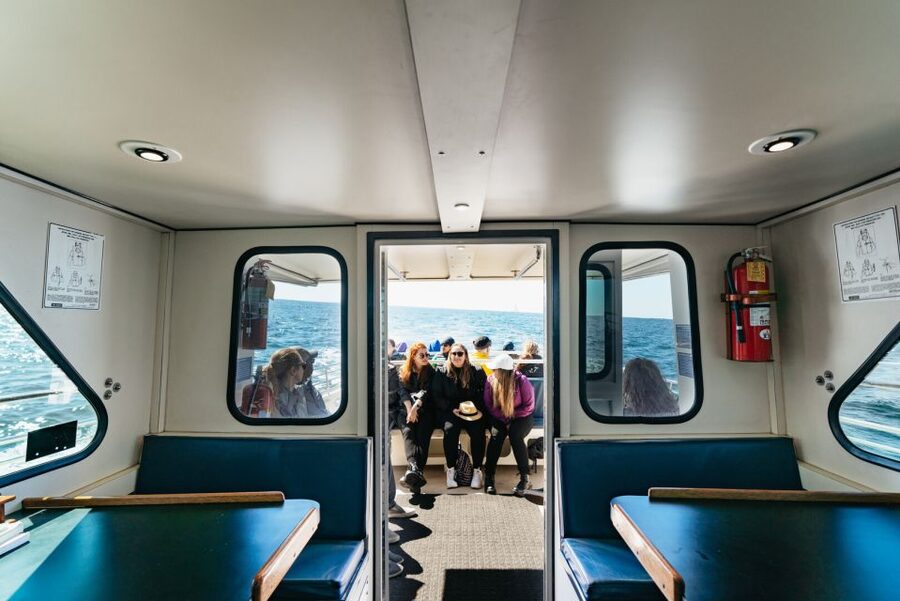
The boat size matters. A group of about 25 people gives you more room than a packed sightseeing vessel. You can shift position, look over both sides, and find a clear angle when a whale surfaces. The smaller feel also helps during the guide’s explanations, since questions are easier to ask and hear.
This is not a luxury cruise. You are on a working whale-watch boat, and the water may bounce. Some people enjoy the movement; others find it uncomfortable. There are restrooms onboard, and hot beverages are included. Small packed lunches and non-alcoholic drinks are allowed, while food is not supplied as part of the booking.
The office sells motion-sickness remedies, and you can bring your own. If you know you are sensitive to boats, take your preferred remedy according to its instructions before boarding rather than waiting until you feel ill. One person became very seasick but received care from the crew, while another had no trouble after taking precautions before a choppy trip.
Friendly dogs are allowed onboard. That is a useful perk for some households, though you should still consider how your dog handles noise, wind, crowds, and moving water.
Smoking, alcohol, and drugs are not allowed. Bring sunglasses, a sun hat, sunscreen, comfortable shoes, and a passport or ID card. Layers are especially important because the bay can feel cold even when Monterey itself feels mild.
How long the trip really takes
The general duration is listed as three to four hours, with three-and-a-half to four hours for summer and fall morning departures. Winter morning trips and afternoon trips throughout the year are listed at about two-and-a-half to three hours.
That timing can shift. Whale watching depends on where the animals are, how fast the boat reaches them, and how long the captain stays with a productive sighting. One outing lasted a little over four hours, and another ran later than expected after the boat took time to find whales.
I recommend keeping the rest of your day flexible. Do not schedule a tight lunch reservation, airport transfer, or timed attraction immediately after the cruise. A longer trip can be good news because it may mean the crew is giving the animals and passengers more time, but it can still disrupt a strict itinerary.
The early morning trip may appeal if you want a full day afterward, while an afternoon cruise can fit better around a morning in Monterey. Check the actual departure time and seasonal duration when booking.
Is $75 a fair price?
At $75 per person, this is not a throwaway activity, especially for a family. I think the price is fair if you value several hours on the water, an onboard biologist, a small-group feel, and the chance to see multiple species in a protected marine area.
The price looks better when you consider the length. You are not paying for a 45-minute harbor loop. The cruise may run close to four hours in summer and fall, with the crew searching across a large part of the bay and explaining what you see.
Still, the value is not measured only by the number of whales. You might have an extraordinary day with humpbacks, dolphins, sea lions, and a blue whale. You might instead spend more time searching and see fewer animals. The crew can improve your chances, but nature controls the result.
I would book it for a special Monterey day, a first whale-watching experience, or a family outing where seeing wildlife matters more than a guaranteed checklist. I would hesitate only if you dislike open-water motion, need a fully accessible activity, or have a very tight schedule.
Who will enjoy this most
This cruise suits adults, older children, wildlife fans, photographers, and anyone who wants to understand the bay rather than simply look at it. Children aged nine and 13 enjoyed one outing, and the guides have also been praised for being patient and engaging with kids.
It is less suitable for pregnant women and people with mobility impairments. The supplied information does not describe the vessel as accessible, so contact the operator if you have specific mobility needs.
You should also think carefully about seasickness. The boat can be comfortable for an open-water trip, but comfortable does not mean still. If you are uncertain, bring medication or another remedy you already know works for you.
Simple ways to get more from the cruise
Arrive early, complete the waiver beforehand, and wear layers. Keep sunscreen and sunglasses handy even when the morning begins cool or cloudy.
Bring a small lunch and non-alcoholic drinks if you prefer not to buy snacks. Hot drinks are included, and the boat has restrooms, so you can stay onboard for the full search without returning to shore for basic needs.
Watch the water in every direction. A guide may call out a whale, but dolphins, sea lions, otters, birds, and smaller surfacing animals can appear elsewhere. If the boat is carrying about 25 people, use that space to change sides rather than staying fixed in one spot.
Give yourself room for delays. The cruise may last longer than the stated estimate, especially when whales are active or distant. That extra flexibility can turn a routine outing into the part of your Monterey visit you remember best.
Should you book Discovery Whale Watch?
I would book this tour if you want a serious whale-watching outing from Monterey, not just a quick boat ride. The deep canyon, the productive sanctuary waters, the small boat, and the biologist-led commentary create a strong package at $75.
Choose summer or fall for feeding humpbacks and a broad mix of marine life. Choose winter if migrating gray whales are your priority and you can accept more variable sightings. In every season, take motion-sickness precautions and leave your schedule open afterward.
This is a good match for you if wild animals, changing conditions, and time on the ocean sound exciting. It is not the right pick if you need guaranteed sightings, calm water, or step-free access. Book it with realistic expectations, dress for cold spray, and keep your eyes off the phone when the water begins to move.
FAQ
Where does the whale-watching cruise depart?
The cruise departs from Discovery Whale Watch at 66 Fisherman’s Wharf, Monterey, California.
How early should I arrive?
You should check in at the office at least 45 minutes before departure, with the Coast Guard waivers completed.
Where can I park?
The closest listed parking lot is Monterey Harbor Waterfront at 245 Washington Street. Pay with the ParkMobile app or at a pay station before walking to the wharf. RV parking is available.
How long does the cruise last?
The listed activity lasts three to four hours. Summer and fall morning trips generally last three-and-a-half to four hours. Winter morning trips and afternoon trips year-round generally last two-and-a-half to three hours.
What animals might I see?
Possible sightings include humpback, blue, fin, and gray whales, orcas, dolphins, porpoises, sea lions, seals, sea otters, seabirds, and other marine life.
Are food and drinks included?
Hot beverages are included. Food is not included, but you may bring a small packed lunch and non-alcoholic drinks.
Are motion-sickness remedies available?
Motion-sickness remedies are available for purchase at the office before the tour. You may also bring your own.
Are dogs allowed on the boat?
Friendly dogs are permitted onboard. Smoking, alcohol, and drugs are not allowed.
Newly listed in the USA
- NON BUS 4 Winery Traverse City Wine Tour on Old Mission Peninsula★ 5.0 · 445 reviews
- The Maui Butterfly Farm Tour★ 5.0 · 446 reviews
- New England Aquarium Admission Ticket in Boston★ 4.0 · 446 reviews
- New Orleans City Tour and Steamboat Natchez Harbor Jazz Cruise★ 4.0 · 446 reviews
- Alpaca and Llama Farm Tour★ 5.0 · 446 reviews
- Small-Group Laura and Whitney Plantation Tour from New Orleans★ 4.5 · 446 reviews
- Dreaded Dead Descent of the District: DC Ghost Tour★ 4.0 · 446 reviews
- Cañon City: Royal Gorge Bridge & Park Entry Ticket & Gondola★ 4.5 · 448 reviews
Monterey Tours, compared.
Monterey Bay Dolphin and Whale Watching Boat Tour
Read our review →
Monterey’s 17 Mile Drive Guided Electric Bike Tour, 3 hr
Read our review →
Browse the lists this tour appears in