
Reviewed · MAUI TOURS
Maui Ocean Center All Day Admission Ticket
The best part of Maui Ocean Center is the Humpback Whales of Hawaiʻi 3D Sphere, a short but striking virtual encounter that puts you close to humpback whales without leaving Maalaea. Afterward, the aquarium’s living corals, turtles, sharks, rays, eels, and reef fish give you a useful look at marine life found around Hawaii.
I like the local focus: these exhibits are built around Hawaiian waters rather than a random collection of creatures from around the world. I also like the freedom to return to favorite tanks, catch several presentations, eat at Seascape Restaurant, and use the ticket any time from 9 a.m. to 5 p.m.
The main caution is value. At $55.44 per person, this is a medium-sized aquarium, not a sprawling attraction on the scale of Monterey Bay Aquarium. Many people finish in about an hour or two, so your ticket makes the most sense if you plan to attend talks, linger at the coral displays, and use the full day.
Key points to know before you go
- The 3D whale sphere is the clear highlight: It offers a brief, close-up whale encounter and is included with admission.
- More than 60 exhibits focus on Hawaii: Expect native reef fish, octopuses, sharks, rays, turtles, eels, jellies, and live Pacific corals.
- Daily talks add useful context: Presentations take place at Turtle Lagoon, Shark Nursery Bay, Open Ocean, Discovery Pool, Living Reef, and Nursery Bay.
- Touch pools suit families: Tide Pool Tactile Discovery lets you use two fingers to touch selected marine animals.
- The ticket is valid all day: You can enter from 9 a.m. until 4 p.m., then stay until closing at 5 p.m.
- The price deserves a close look: It can be worthwhile for ocean lovers and families, but less so if you only spend 45 minutes walking through.
What Maui Ocean Center does best
Maui Ocean Center gives you an organized introduction to Hawaii’s sea life, and that matters if you are not planning to snorkel or take a boat trip. You can see the animals at close range, read about their role in island waters, and ask questions of the ocean naturalists on hand.
The strongest feature is the sense of place. You are not simply looking at familiar aquarium animals in generic tanks. The exhibits explain the marine world around the Hawaiian Islands, with attention to native fish, coral, conservation, and local culture.
I especially like the Living Coral Reef Exhibit. Live Pacific corals are not just colorful decoration. They create shelter and feeding grounds for countless small creatures, and seeing them in a large display makes the connection between coral health and the wider ocean easier to understand.
The aquarium also makes room for cultural activities, including a wood carving demonstration. That broadens the visit beyond animal identification. You get a little sense of how island life, tradition, and the sea fit together.
More to weigh up across Maui
- Road to Hana: Full-Day Scenic Drive with Blacksand & Waterfalls
★ 4.5 · 837 reviews - Full-Day Iconic Sights of LA, Hollywood, Beverly Hills, Beaches and More
★ 5.0 · 6,147 reviews - Napa and Sonoma Wine Country Full-Day Tour from San Francisco
★ 4.5 · 4,455 reviews
The Humpback Whales of Hawaiʻi 3D Sphere
Make the whale sphere a priority when you arrive. The presentation is not long, but its large-format view and close whale encounters make it the most memorable part of the visit for many people.
This is a virtual presentation rather than a live animal encounter. That distinction is worth keeping clear, especially if you are comparing the aquarium with a whale-watching cruise. A cruise gives you open water and the chance of seeing real whales. The sphere gives you a controlled, weather-free presentation with no guessing about whether a whale will appear.
The show is included in your admission. Children under five are not permitted to take part, so families with very young children should plan around that rule. The attraction is short enough that it will not take over your day, but it can be the feature that makes the admission feel worthwhile.
If you have older children, place the sphere near the beginning or middle of your visit. That gives you time to follow it with the whale and conservation displays rather than treating it as a quick add-on before leaving.
Walking through the aquarium’s main exhibits
The route moves through more than 60 exhibits, with a mix of indoor and outdoor areas. You can walk at your own pace, stop for photographs, and return to tanks that catch your attention.
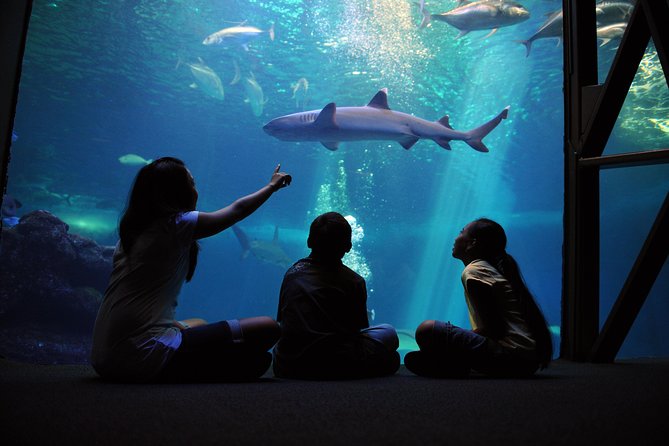
The 750,000-gallon Open Ocean exhibit is one of the central attractions. It gives you a larger view of Hawaiian marine life, with sharks, stingrays, and other animals moving through a broad underwater setting. A clear tunnel provides close views from below, and a floor section can let you watch sharks passing underneath.
Turtle Lagoon is another natural stopping point. It is tied to daily Marine Naturalist Presentations at 10:30 a.m. and 2:30 p.m. If you want more than a quick look at the turtles, build one of these talks into your visit.
Shark Nursery Bay has presentations at 11:45 a.m. and 1:45 p.m. This is a useful stop for families because sharks usually grab children’s attention quickly. One parent described a two-year-old being especially taken with the sharks, which fits the attraction’s broad appeal for young children.
You will also find octopuses, eels, sea jellies, tropical reef fish, stingrays, and smaller species that are easy to miss in a large tank. Take your time around the small exhibits. A frogfish, for example, may not be as instantly dramatic as a shark, but odd creatures like this are part of the fun.
Touch pools and hands-on learning
Tide Pool Tactile Discovery gives you a chance to get close to selected marine animals using a two-finger touch. Staff guidance matters here. The point is not to handle animals freely, but to learn how careful contact protects them.
This area is particularly useful with children. It gives them something active to do between viewing tanks, and it can turn a lesson about tide pools into a real memory. Parents should still stay close and follow the instructions provided at the pool.
The aquarium’s daily presentations also help bring the exhibits to life. Ocean naturalists speak at Turtle Lagoon, Open Ocean, Discovery Pool, Living Reef, and Nursery Bay. Since exact presentation times are listed for the turtle and shark areas but not every exhibit, check the schedule when you enter.
These talks are one of the best ways to improve the value of the ticket. If you simply walk from tank to tank, you may finish in an hour. If you attend presentations and pause to read the displays, the visit can fill two to three hours, or even four to five hours for a serious aquarium fan.
A different kind of day, same corner of the map:
- Maui Pineapple Farm Tour in Haliimaile
★ 5.0 · 2,855 reviews - Maui Eco-Raft Tour: Eye-Level Whale or Dolphin Watching – Lahaina
★ 5.0 · 2,482 reviews - Maui Snorkeling Adventure to Molokini and Turtle Town
★ 4.5 · 2,221 reviews - Maui: Haleakala Sunrise Spectacular with Local Breakfast
★ 4.5 · 2,155 reviews
Planning the day around the 9 a.m. to 5 p.m. ticket
The ticket gives you all-day access, with entry available from 9 a.m. until 4 p.m. The center closes at 5 p.m. That flexibility is more useful than a fixed two-hour tour because you can fit the aquarium around a beach morning, a drive, or a meal.
For a focused visit, allow about two hours. That should give you enough time for the major exhibits, the whale sphere, and at least one presentation.
For a fuller visit, arrive early and note the talk times. You could see Turtle Lagoon at 10:30 a.m., Shark Nursery Bay at 11:45 a.m., take a break for lunch, and return to another presentation at 1:45 or 2:30 p.m. The all-day policy permits this kind of relaxed schedule.
The aquarium is at 192 Maalaea Road in Wailuku. There is no hotel pickup or drop-off, so you need to arrange your own transport. Paid parking costs $3 per hour through the ParkLinq app or the QR code provided on arrival. That parking charge is easy to overlook when you are calculating the total cost.
If you are coming from a cruise ship, factor in transport carefully. One visitor reported spending about $100 round trip by taxi from the ship dock. That can change the value calculation considerably, especially for a small group.
Food, shopping, and the surrounding stop
Seascape Restaurant is on site and offers ocean views, fresh catch specials, and island-inspired food. It is certified as an Ocean-Friendly restaurant, which fits the center’s conservation message.
Having food available on site is convenient if you are using the ticket for most of the day. You do not have to rush out just because someone in your group needs lunch. Food and drinks are not included in the admission price, so budget separately.
Maui Ocean Treasures gift shop provides the shopping stop. The wider Maalaea area also has places to eat and browse, which makes the aquarium easier to combine with other activities.
Still, do not treat the restaurant or shop as a reason to buy the ticket. They are useful extras, not substitutes for the marine exhibits. The aquarium needs to carry the visit on its own.
How much time do you really need?
The advertised visit length is about two hours, and that is a sensible starting point. A family moving at a brisk pace may see the main areas in one hour, especially if children are not interested in reading signs or waiting for presentations.
That shorter visit is the main reason some people find the $55.44 price high. The center is clean, attractive, and well kept, but it is not enormous. If you compare it with very large aquariums in California or Utah, you may find the scale modest.
On the other hand, an ocean enthusiast can spend much longer here. Reading each display, watching animal behavior, attending talks, and studying the coral tanks can turn a brief stop into a half-day. One especially dedicated visitor spent four to five hours examining the displays closely and found the visit rewarding.
My advice is simple: do not pay the admission for a quick look between other plans. Give yourself at least two hours and use the schedule. The ticket becomes a better buy when you treat it as a flexible half-day stop.
Families, older visitors, and accessibility
The center suits a wide age range. Toddlers have easy visual targets in the sharks, turtles, and colorful fish, while older children can use the touch pools and follow the educational displays.
It is also a practical rainy-day or hot-weather choice because it includes indoor and outdoor areas. Most of the exhibits are described as accessible, and the paths are generally easy to walk.
There are a few cautions. Some presentation areas use stairwells, and a protruding rock was reported as a tripping hazard. If you use a wheelchair or have trouble with stairs, ask staff about the best route before joining a presentation. Service animals are allowed, and the center is near public transportation.
Keep a close eye on small children. The aquarium includes a nearby playground, and staff can help if a child wanders, but supervision remains your responsibility.
Best times to visit and how to get more from it
Arriving near opening gives you the best chance to set your own pace before the day builds. It also makes it easier to plan the scheduled talks without having to hurry from one exhibit to another.
Start by checking the daily presentation schedule. Then choose two or three areas you want to study rather than trying to rush through every display. Open Ocean, the Living Coral Reef, Turtle Lagoon, and the whale sphere deserve priority if your time is limited.
Bring a phone for the mobile ticket and photographs. The clear tunnel and large tanks offer good photo opportunities, though you will get better results by turning off your flash where requested and waiting for the animals to move into view.
I would also leave room for a quiet pause. The aquarium is not only about the biggest creatures. Small fish, unusual frogfish, coral structures, and sea jellies reward slow looking.
Price, ratings, and overall value
Admission costs $55.44 per person, and the experience has a 4.4 rating from 910 reviews. The praise centers on the whale sphere, clean exhibits, local marine life, family appeal, and the chance to learn about conservation.
The criticism is consistent too: the aquarium can feel small for the price, and some people finish quickly. That does not mean the center is poor. It means your expectations should match the scale.
I see the ticket as good value for three types of visitors: families wanting a manageable attraction, people who love aquariums and marine life, and anyone who wants a weather-proof Maui activity with educational content. It is less convincing for adults seeking a huge aquarium or for anyone who only has time for a fast walk-through.
Free cancellation is available if you cancel at least 24 hours before the start time. Changes or cancellations inside that window are not accepted, and no refund is provided.
Should you book Maui Ocean Center?
Book it if you want a relaxed, Hawaii-specific look at marine life, especially if the humpback whale sphere, live corals, turtles, and daily talks appeal to you. Families with young children will find plenty to hold their attention, though children under five cannot use the whale sphere.
Skip it if you are expecting a massive aquarium or if $55.44 feels too high for a two-hour stop. You can make the visit worthwhile by staying for presentations, eating at Seascape, and using the all-day entry. If you do that, Maui Ocean Center is a thoughtful and enjoyable half-day activity. If you rush through, the price may feel hard to justify.
FAQ
How much does Maui Ocean Center admission cost?
The listed price is $55.44 per person. Food, drinks, and paid parking are not included.
How long should I plan to spend at Maui Ocean Center?
The approximate duration is two hours. You can stay longer because admission allows access from 9 a.m. until 5 p.m., with the final entry at 4 p.m.
What time does the aquarium open?
All-day admission begins at 9 a.m. The center closes at 5 p.m.
Is the Humpback Whales of Hawaiʻi 3D Sphere included?
Yes. The Humpback Whales of Hawaiʻi 3D Sphere is included with admission.
Can children under five use the whale sphere?
Children under five are not permitted to participate in the whale sphere.
What presentations are offered?
Daily presentations take place at areas including Turtle Lagoon, Open Ocean, Discovery Pool, Living Reef, and Nursery Bay. Turtle Lagoon presentations are at 10:30 a.m. and 2:30 p.m. Shark Nursery Bay presentations are at 11:45 a.m. and 1:45 p.m.
Is parking included?
No. Parking costs $3 per hour and is paid through the ParkLinq app or a QR code upon arrival.
Can I cancel for a refund?
Yes, if you cancel at least 24 hours before the experience start time. Cancellations or changes made less than 24 hours before the start time are not accepted and are not refunded.
Newly listed in Maui
- The Maui Butterfly Farm Tour★ 5.0 · 446 reviews
- South Maui: Molokini Snorkeling Adventure★ 4.6 · 450 reviews
- Maui 8 line Zipline Adventure: Soar above valleys & Island views★ 5.0 · 458 reviews
- Rappel Maui Waterfalls and Rainforest Cliffs★ 5.0 · 459 reviews
- Maui: Eco-Friendly Molokini & Turtle Town Tour with Meals★ 4.5 · 464 reviews
- Maui: Molokini and Turtles Luxury Yacht Snorkel★ 5.0 · 477 reviews
- Doors Off West Maui and Molokai 45 minute Helicopter Tour★ 5.0 · 487 reviews
- Best Haleakala Downhill Self-Guided Bike Tour with Maui Sunriders★ 5.0 · 496 reviews
Maui Tours, compared.

Maui Eco-Raft Tour: Eye-Level Whale or Dolphin Watching – Lahaina
Read our review →
Maui Snorkeling Adventure to Molokini and Turtle Town
Read our review →
Haleakala Sunrise Spectacular with Local Breakfast
Read our review →
Maui Snorkeling Adventure From Ma’alaea Harbor to Molokini
Read our review →


Browse the lists this tour appears in