
Reviewed · CHICAGO TOURS
Chicago: Secret Interiors Architecture Walking Tour
Chicago’s best architectural surprises are often behind ordinary doors. This two-hour walk takes you from Union Station into the Loop, where glittering mosaics, grand stairways, domes, and ornate lobbies reveal the city’s grand ambitions better than a quick sidewalk stroll ever could. I like the way the tour links decoration to practical problems such as daylight and structural strength. I also like the human stories, from industrial tycoons to Roaring Twenties celebrities.
The $35 price is fair for a small-group experience with a live guide and access to interiors you might skip on your own. Guides such as Grant, Talia, Annie, Angel, and Matthew are praised for clear storytelling and a willingness to answer questions. The main catch is weather: much of the tour is outside, and some buildings may close for Sundays or holidays, so the exact indoor mix can change.
Key points at a glance
- Grand interiors behind everyday entrances: See decorative spaces in the Rookery, Field Building, Marquette Building, Palmer House, and other Loop landmarks.
- A practical look at architecture: Learn how architects handled daylight, heavy structures, decoration, and the demands of early skyscrapers.
- A brisk but manageable two-hour route: The walk covers a large part of the Loop without feeling like a forced march, though one guide described the pace as brisk.
- Strong guide quality: Grant, Talia, Annie, Angel, and Matthew are singled out for warmth, humor, clear explanations, and city knowledge.
- Best paired with a river cruise: The walk focuses on interiors and street-level detail, while a boat tour gives you the wider view of Chicago’s skyline.
- Winter requires planning: Bundle up, wear comfortable shoes, and expect roughly 90 percent of the experience to take place outdoors in cold weather.
Why Chicago’s interiors tell the real story
Chicago is famous for its skyscrapers, but the city’s architectural character is not limited to what you see from the street. Step inside a grand commercial building and the story changes. You notice how owners wanted visitors to feel, how architects used stone and colored glass to project confidence, and how engineers worked around the limits of early high-rise construction.
That is the focus here. You are not simply shown a fine ceiling and given its date. Your guide explains why the ceiling is there, what problem a design choice solved, and how the building fit into Chicago’s rise as a business center.
The route also connects architecture with people. Industrial magnates, famous personalities, and less respectable figures passed through these spaces during the Gilded Age and the Roaring Twenties. Those stories keep the tour from becoming a parade of architects’ names and construction dates.
I especially like this approach for first-time visitors who have already admired the skyline but want to understand how the city developed. It also works for locals. Several lifelong Chicago-area residents discovered buildings they had passed for years without entering.
More Walking Tours in Chicago
- Chicago: Gangsters and Ghosts Walking Tour
★ 5.0 · 7,155 reviews - Chicago Favorites Ultimate Food and Walking Tour
★ 5.0 · 1,962 reviews - Chicago: Gangsters and Ghosts Guided Walking Tour
★ 4.7 · 1,697 reviews
Starting inside Union Station’s Great Hall
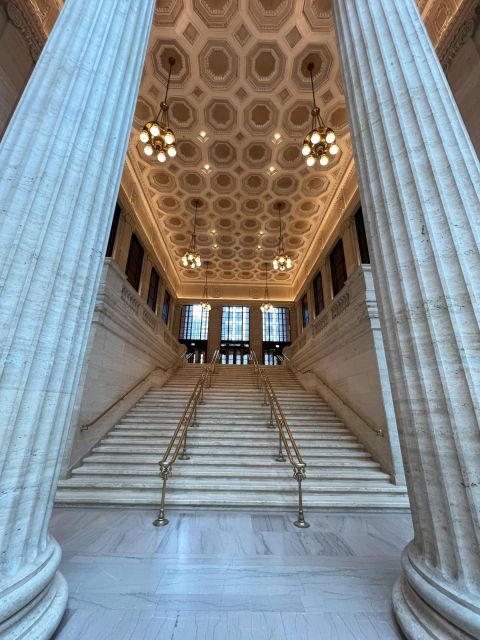
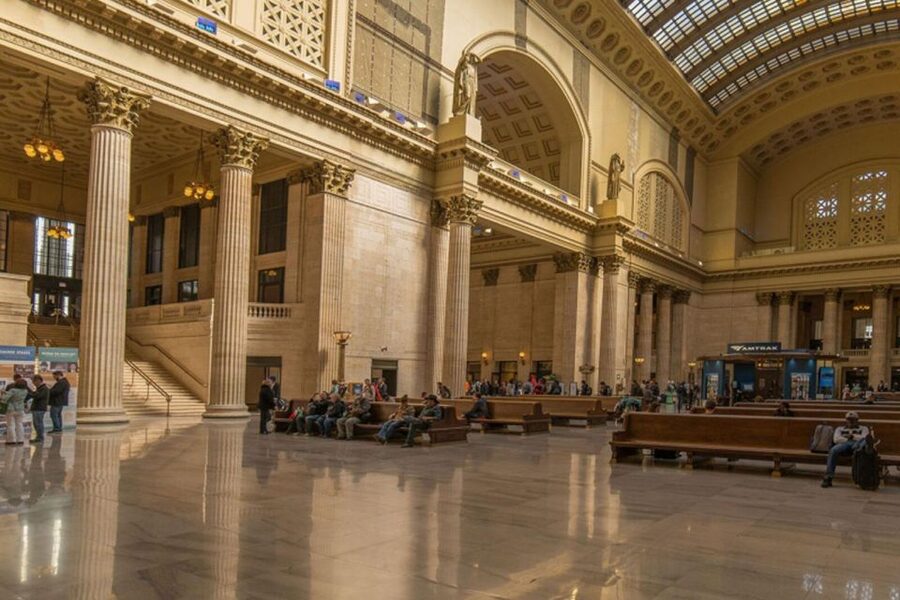
Meet your guide inside Union Station, under the Clinton Street sign in the Great Hall. This is a practical starting point because the station itself gives you an immediate sense of Chicago’s taste for scale and ceremony.
Arrive with enough time to find the meeting spot. The Great Hall is large, and the Clinton Street sign is the useful landmark. Once the group gathers, the route moves into the Chicago Loop for a combination of exterior viewing, short walks, photo stops, and interior visits.
The pace is generally comfortable, but you should not treat this as a slow museum tour. One account described covering a large area at a brisk walk, while others found the pace easy and leisurely. That difference may reflect group size, guide, and the day’s access conditions.
South LaSalle Street and the Loop’s first impressions
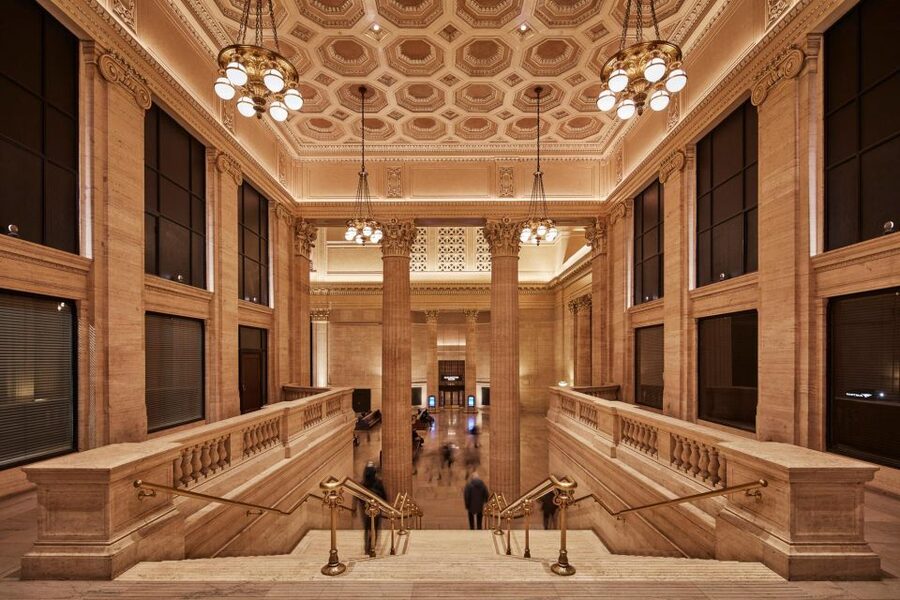
South LaSalle Street provides an early look at the commercial heart of old Chicago. Here, your guide sets up the larger story: the city’s drive to build higher, impress clients, bring daylight into deep floor plates, and make downtown feel permanent after periods of rapid change.
This part of the route helps you read the streetscape. Rather than seeing separate buildings, you begin to notice repeated ideas: strong vertical lines, decorated entrances, elaborate upper stories, and materials chosen to signal power.
The Loop can be busy, and outdoor explanations sometimes compete with traffic and city noise. A guide who speaks clearly matters here. Grant is praised for being easy to hear, while other guides are described as conversational and good at handling questions.
The Rookery Building and its famous interior drama
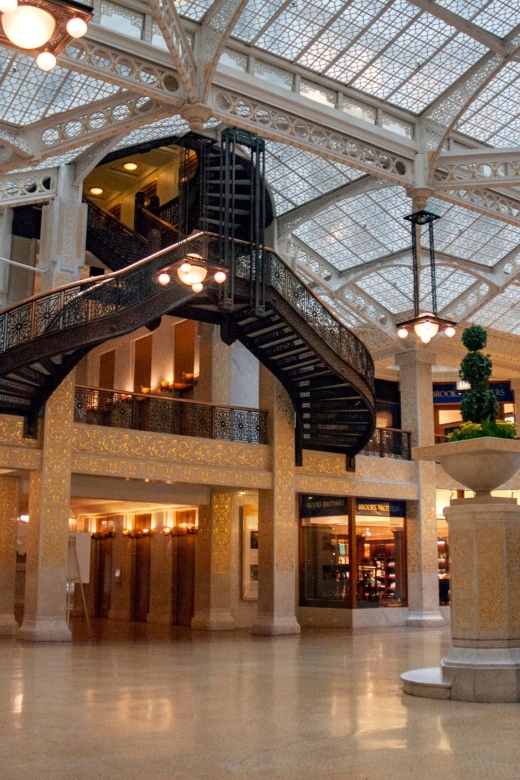
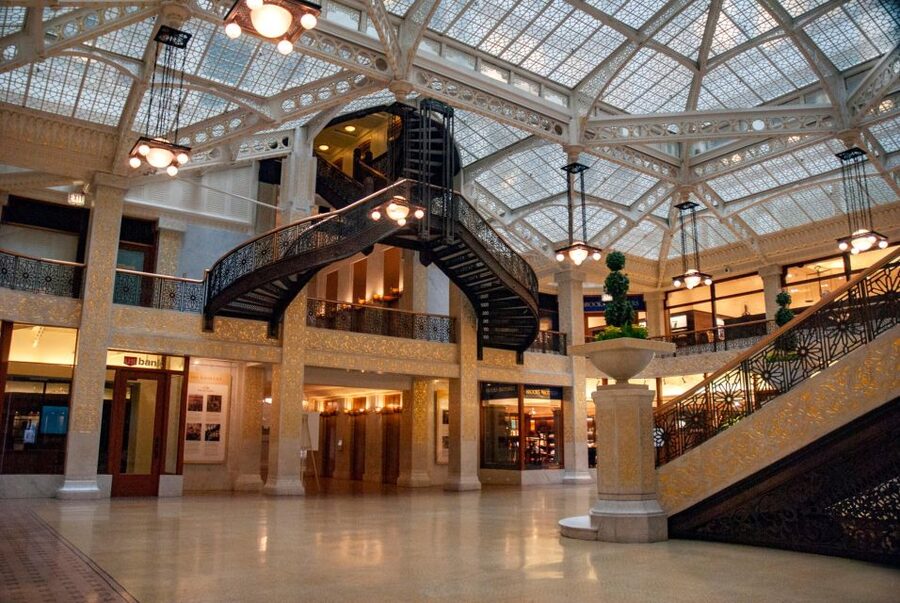
The Rookery is one of the major reasons to book this particular walk. Its interior shows how Chicago architects combined a serious commercial building with theatrical public space.
Expect attention to the building’s decorative details, central interior space, and the way light was handled. The Rookery helps explain the transition from older masonry traditions to the new world of tall office buildings. You see a building that had to carry great weight while still giving workers and visitors a sense of openness.
The Rookery is closed on Sundays, so the tour uses an alternative stop then. Check your date before booking if this building is a top priority. Holiday closures can also affect the day’s indoor access, as happened to one participant visiting on Labor Day.
The building is worth seeing from outside even if the interior is unavailable, but the indoor visit is the stronger experience. You get the chance to examine the craftsmanship at close range instead of looking up from a sidewalk.
More walking tours around Chicago:
- Chicago in a Day: Food, History & Architecture Walking Tour
★ 5.0 · 1,153 reviews - Chicago’s Secret Interiors Architectural Walking Tour
★ 5.0 · 635 reviews - Chicago’s Chinatown Food and Walking Tour
★ 5.0 · 600 reviews - History and Hauntings of Salem Guided Walking Tour
★ 5.0 · 14,564 reviews
The Field Building and Chicago’s commercial confidence
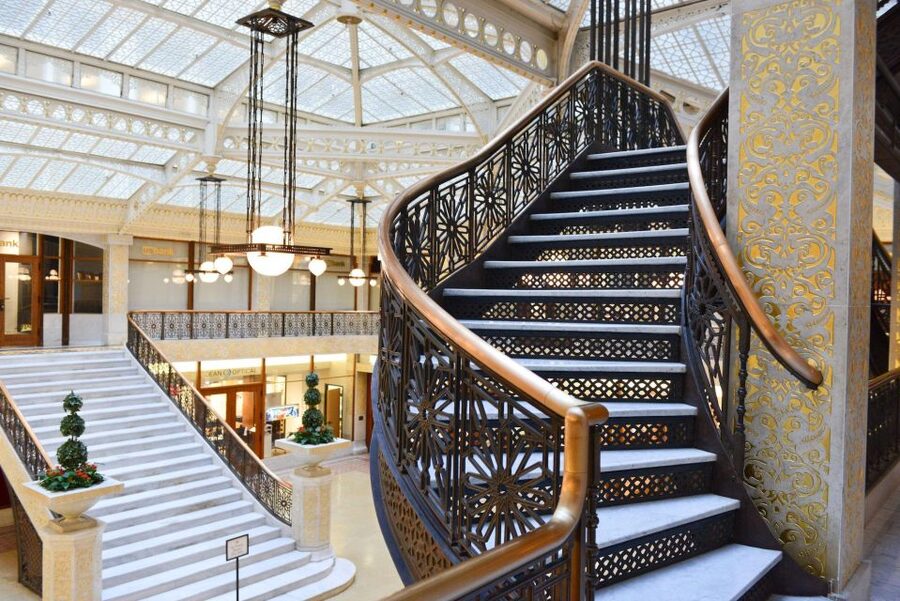
The Field Building offers another view of how Chicago’s business architecture developed. Here, listen for the relationship between structure and ornament. The point is not simply that the building looks impressive. Its design communicates stability, order, and money at a time when commercial towers were changing the way cities worked.
Your guide may point out features you would miss while rushing through a lobby. Doorways, decorative frames, patterns, and ceiling details often seem secondary from the street, but they reveal how much attention once went into spaces used by office workers and customers every day.
This is also where a good guide can make the past feel close. The tour connects the building to the people who worked, traded, and socialized in downtown Chicago, rather than treating it as a silent object.
The Marquette Building’s close-up craftsmanship
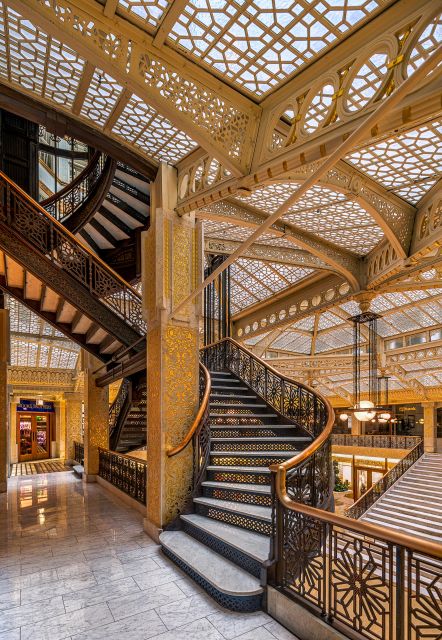
The Marquette Building is one of the route’s most rewarding stops for anyone who likes decoration. Its interior details show how architects used art to tell a story about Chicago and its place in the nation.
Look closely rather than simply taking a wide photo. Mosaics, colored surfaces, metalwork, and small carved details reward a slower eye. The guide explains the meaning of design elements and how the decorative program fits the building’s purpose.
This stop also exposes one limitation of a two-hour walk. There is a lot to see, and you may want more time for doorways, trim, and individual panels. One participant wished for more unprompted discussion of small decorative features along the way, though the guide was happy to answer questions. If a detail catches your eye, ask about it immediately.
Palmer House and the grand hotel tradition
The Palmer House adds a different mood to the route. This is not just another office building. As a major hotel, it shows how Chicago used interiors to welcome wealthy visitors, business travelers, and public figures.
Expect a more social and theatrical setting, with attention to the hotel’s decorative splendor and its role in city life. The stop broadens the tour beyond engineering and office construction. Chicago’s architectural story also includes places where people met, celebrated, negotiated, and displayed their status.
Hotels can be active working spaces, so access and viewing conditions may vary. Stay with the group and follow the guide’s instructions. The value of the visit is less about wandering freely and more about getting the architectural context while you are inside.
Chicago Cultural Center and a change of scale
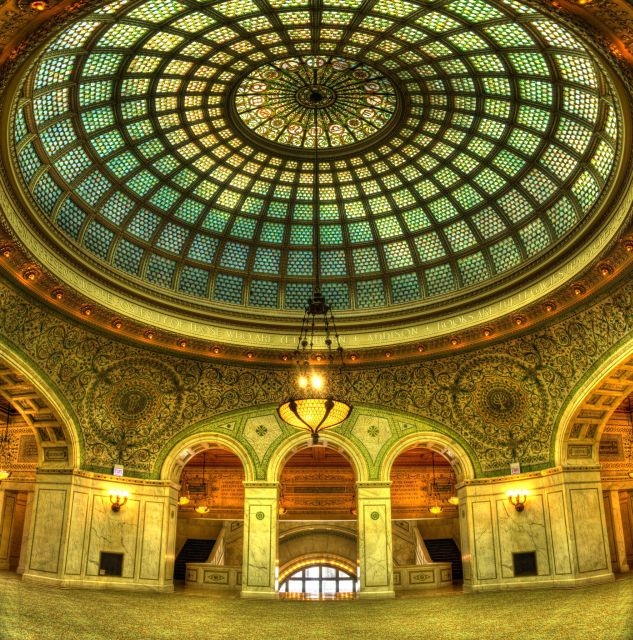
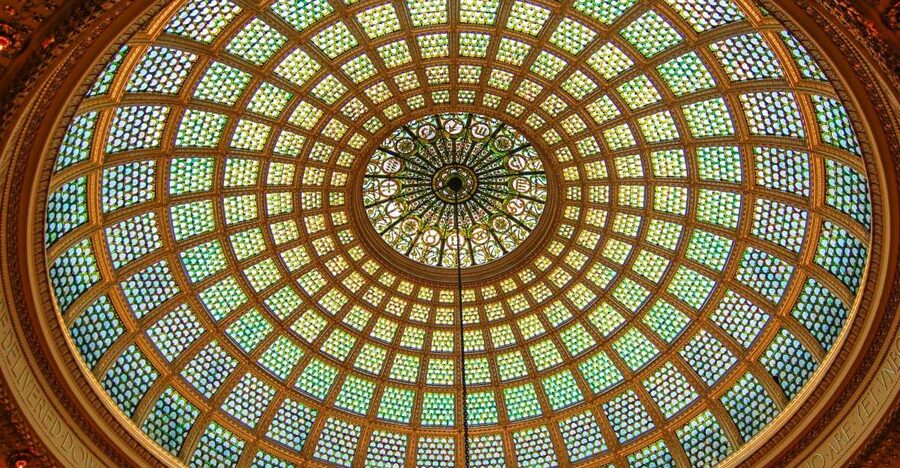
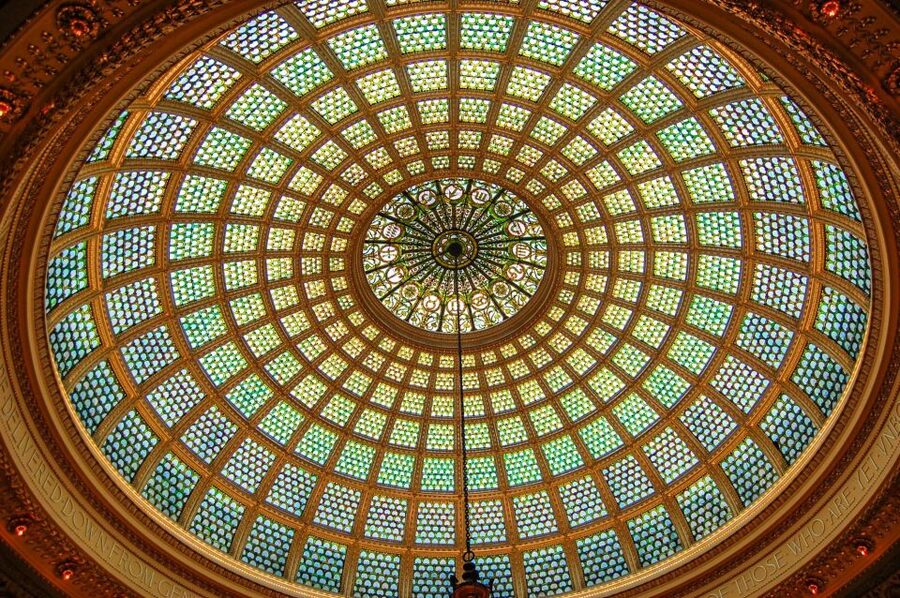
The Chicago Cultural Center gives you one of the route’s most visually memorable interiors. Its domes and mosaics show how a public building can use lavish materials for civic purpose rather than private business.
This is the kind of place that can look familiar in photographs but feel different in person. Stand beneath the dome and look at how the pieces fit together. The scale, pattern, and light work together in a way that is hard to grasp from a picture.
The stop also helps show Chicago’s ongoing architectural evolution. The tour is not limited to one period or one style. You move from early skyscraper-era ideas to later modernist influences and civic design, seeing how the city kept changing while preserving major interiors.
Marshall Field and Company Building, the final stop
The tour finishes at the former Marshall Field and Company Building, now associated with Macy’s. This is a fitting end because department stores were public architecture in their own right. They had to attract shoppers, encourage people to linger, and make buying feel like an event.
Your guide points out the craftsmanship and design choices that helped create that atmosphere. The building is also useful for understanding how commerce shaped downtown interiors. A store could be practical, but it also had to express abundance and trust.
Finishing here gives you time to continue exploring the Loop on your own. You are near other major sights, restaurants, and routes toward the river. Grant has even shared dining suggestions with participants after the tour, which is useful if you want to turn the walk into an afternoon downtown.
What the guides add to the experience
The buildings provide the setting, but the guide determines how much you take away. Grant is repeatedly praised for historical detail, clear delivery, humor, and practical suggestions. As a high school history teacher, he brings extra context and enjoys questions.
Talia is described as warm, funny, patient, and especially enthusiastic about the interiors. She has also contacted participants before a tour, a small touch that can make meeting up less stressful. Annie is praised for friendly storytelling and food and drink recommendations, while Angel is noted for enthusiasm and strong knowledge of design and city history. Matthew is described as informative, charismatic, and easy to enjoy.
Small groups can make a real difference. Some walks have had only two or four people, allowing plenty of time for questions. Group size is not guaranteed, but the tour’s guide-led format gives you more personal contact than a large bus excursion.
Walking, weather, and access
Wear comfortable shoes. The route is accessible to wheelchair users, but the day can still include stairs in and out of buildings. One participant found the pace a little fast and noted many stairs, so tell your guide about mobility concerns at the start.
Do not underestimate the outdoor portion. A January account estimated that about 90 percent of the tour was spent outside. Chicago wind and cold can make a pleasant architectural walk uncomfortable if you arrive underdressed. In winter, wear warm layers, gloves, and a hat. In milder weather, bring water and protect yourself from sun or rain as needed.
The walk is not described as excessively long, and several people found there was not too much walking. Still, you are moving between several Loop buildings, crossing streets, and standing during explanations. The tour suits you best if you can manage a steady urban walk for two hours.
Is $35 a good value?
At $35 per person, this is a solid buy if you care about architecture, city history, or unusual interiors. You are paying for a live English-speaking guide who gives meaning to places that are easy to miss, not just for a route between famous facades.
The value is strongest when indoor access is good and the guide can explain details at close range. It is a little less certain on Sundays, holidays, or days when buildings restrict entry. That does not make the tour poor, but it means you should book for the quality of the storytelling and route, not for one single building alone.
I would pair this with a Chicago architecture river cruise rather than treat the two as rivals. The boat gives you the big skyline view and the story of the city’s towers from the water. This walk puts you at street level and inside the buildings, where mosaics, domes, staircases, and doorways do the talking.
Who should book this walk?
Book it if you want more than exterior photographs, enjoy guided history, or have already seen the major skyline from the river. It is also a smart choice for Chicago residents who assume they know downtown but have rarely entered its older buildings.
Families can enjoy it if children are willing to walk and listen. Art Deco fans, design students, history teachers, architecture buffs, and photographers will find plenty to study. The mix of famous landmarks and less obvious interior details keeps the route moving.
You may want to skip it if you dislike walking outside in poor weather, need a very slow pace, or want a purely interior museum visit. You should also check the day of the week if the Rookery is essential to your plans.
Should you book the Chicago Secret Interiors Architecture Tour?
Yes, if you want to see the Chicago Loop from the inside. The best part is the change in viewpoint: ordinary-looking entrances open into spaces filled with craft, ambition, and clever solutions to old engineering problems.
Book with comfortable shoes, allow for outdoor weather, and ask questions about the details that interest you. If you can choose among tour times, a day with broad building access should give you the fullest experience. For $35, this is an informative, human-scale way to see why Chicago architecture matters.
FAQ
How long is the Chicago Secret Interiors Architecture Tour?
The walking tour lasts two hours.
Where does the tour meet?
Meet your English-speaking guide inside Union Station’s Great Hall, under the Clinton Street sign.
Where does the tour finish?
The tour finishes at the Marshall Field and Company Building.
Which buildings are included?
The route includes South LaSalle Street, the Rookery Building, the Field Building, the Marquette Building, Palmer House, the Chicago Cultural Center, and the Marshall Field and Company Building. Union Station is the starting point.
Is the Rookery open every day on the tour?
No. The Rookery is closed on Sundays, so an alternative stop is included on Sunday tours.
Is the tour wheelchair accessible?
Yes, the activity is listed as wheelchair accessible. Some participants have also noted stairs in and out of buildings, so discuss mobility needs with your guide.
What should I wear or bring?
Bring comfortable shoes. In winter, dress warmly because most of the tour takes place outdoors.
What language is the tour conducted in?
The tour is conducted in English with a live guide.
Can I cancel the booking?
You can cancel up to 24 hours in advance for a full refund. A reserve-now, pay-later option is also available.
Newly listed in Chicago
- Field Museum of Natural History Admission Tickets★ 4.5 · 489 reviews
- Chicago Sightseeing River and Lake Cruise★ 4.5 · 509 reviews
- Chicago City Minibus Tour★ 5.0 · 516 reviews
- Chicago CityPASS®★ 4.5 · 521 reviews
- Chicago: Fireworks Cruise with Lake or River Viewing Options★ 4.3 · 551 reviews
- Chicago’s Chinatown Food and Walking Tour★ 5.0 · 600 reviews
- Chicago’s Secret Interiors Architectural Walking Tour★ 5.0 · 635 reviews
- City Cruises Chicago: Seadog Lakefront Speedboat Ride★ 4.4 · 642 reviews
Chicago Tours, compared.
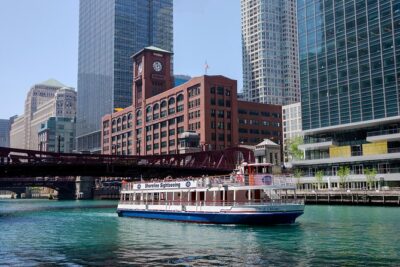
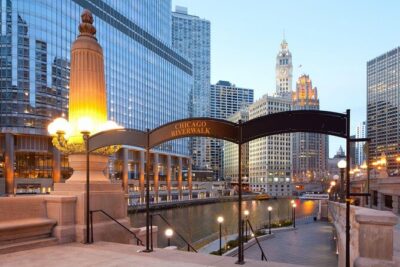
Chicago Architecture Center River Cruise aboard First Lady
Read our review →
Architecture River Cruise Skip-the-Ticket Line
Read our review →

Browse the lists this tour appears in