
Reviewed · CHICAGO TOURS
Chicago River 90-Minute Architecture Tour
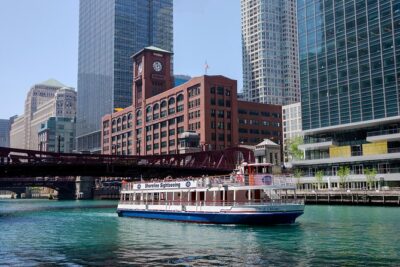
Chicago’s best architecture tour puts you at water level, where the city’s towers rise directly above the boat. In 90 minutes, you cruise all three branches of the river while a guide explains how Chicago rebuilt itself, reversed the river’s flow, and turned industrial waterfront into public space. The river view is the real star, especially from the open upper deck.
I like two things here: you cover a huge part of downtown without traffic or subway transfers, and the narration gives buildings a story instead of leaving you with a skyline full of anonymous towers. Guides such as Lucas, Jack, and Alyssa have been singled out for humor and clear explanations, though your guide will vary.
The main drawback is weather. The indoor, climate-controlled lounge has limited seating and weaker views, while the best sight lines are outside. In winter, wind off the river can be brutal, and on wet days the dock may offer little shelter while you wait.
Key Points Before You Book
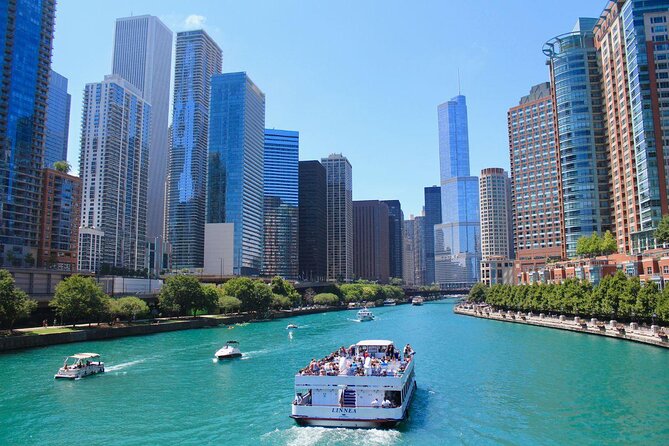
- The boat follows all three branches of the Chicago River, giving you a broad look at downtown architecture in one ride.
- The best views come from the outdoor upper deck, but seating is first come, first served.
- Indoor seating is climate controlled, with a restroom and bar downstairs, though interior seats are limited.
- The dock is at the foot of the Wrigley Building, below street level near the northwest corner of the Michigan Avenue Bridge.
- A 90-minute ride offers strong value at $45, particularly if this is your first visit to Chicago.
- Winter requires serious layers, and indoor seating may not be available for everyone on a full departure.
Why the Chicago River Is the Right Place to See the City
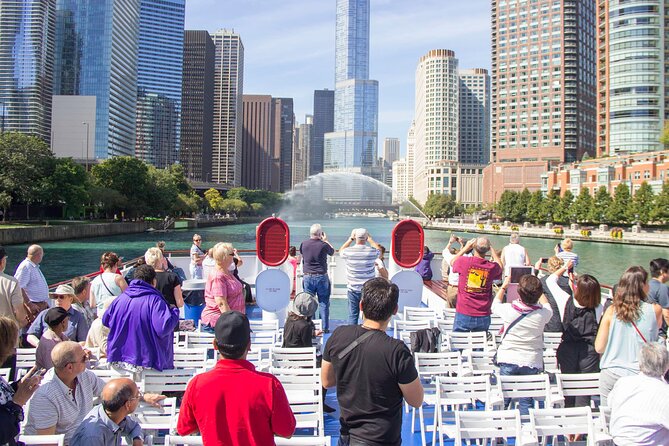
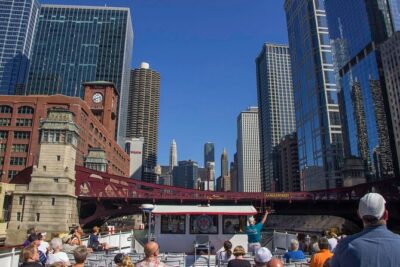
Chicago’s architecture makes more sense from the river than from a sidewalk. On land, tall buildings block one another and busy streets pull your attention in several directions. From the boat, you get clean sight lines up the walls, across the river, and into the gaps between towers.
The route covers more than 130 years of building history. You see early commercial landmarks, grand civic projects, modern offices, apartment towers, theaters, and public waterfront improvements in one continuous ride.
I also like the scale of the experience. At $45 per person, this is not the cheapest way to spend 90 minutes in Chicago, but it is a fair price for a guided outing that combines transport, sightseeing, and interpretation. A self-guided walk can be cheaper, but it takes much longer and does not give you the same view of the upper floors.
The boat returns to its starting point, so you do not need to plan a second way back downtown. That matters if you are fitting the cruise between the Art Institute, Millennium Park, shopping on Michigan Avenue, or an evening meal.
More to weigh up across Chicago
- Chicago Architecture River Cruise
★ 5.0 · 15,756 reviews - Chicago River: 1.5-Hour Guided Architecture Cruise
★ 4.8 · 8,046 reviews - Chicago: Gangsters and Ghosts Walking Tour
★ 5.0 · 7,155 reviews
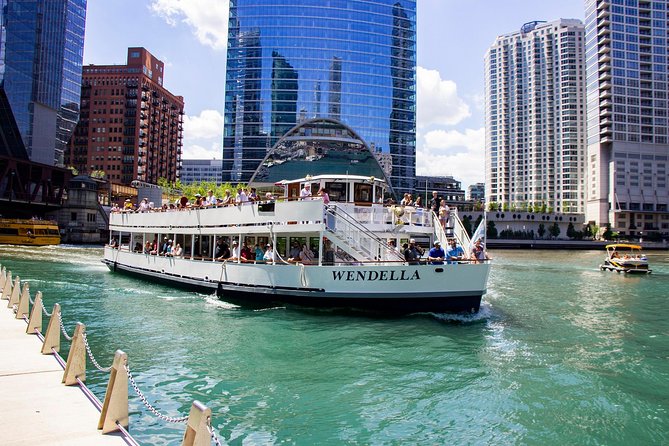
Finding Wendella at the Wrigley Building
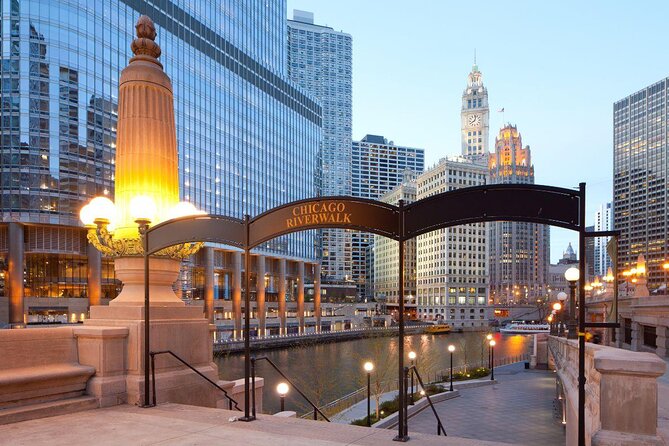
The departure point is at 400 North Michigan Avenue, at the historic Wrigley Building. Wendella’s docks extend west from the Michigan Avenue, or DuSable, Bridge toward Wabash Avenue.
Give yourself 30 minutes before departure, even though boarding begins about 15 to 30 minutes before sailing. The dock is below street level, and it can be easy to walk past without spotting the right entrance. Look for the Wendella signs near the northwest corner of the bridge and at the foot of the Wrigley Building.
This is a busy downtown area with public transportation nearby. Two nearby parking garages are AMA Plaza at 401 North State Street and InterPark Public Parking at 430 North Rush Street. Both charge parking fees, so driving is less convenient than arriving by train, bus, or on foot.
If you need an elevator to reach the dock, contact the company before you go and ask for detailed directions. The boats have wheelchair lifts between decks, and all vessels can accommodate wheelchairs. Written narration is available at the ticket office for people who are deaf or hard of hearing.
Boarding and Choosing Your Seat
Once aboard, you choose between the open upper deck and an enclosed lower lounge. Your choice affects the whole experience.
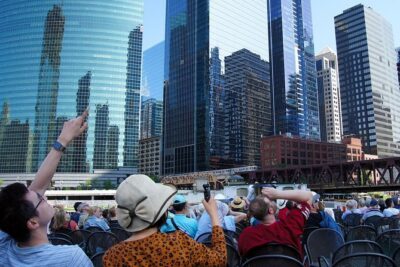
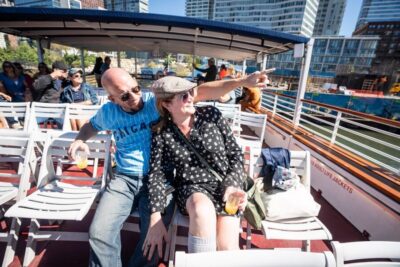
The upper deck gives you the clearest photographs and the best view of the buildings. You can look straight up at cornice details, rooftop signs, and unusual shapes that disappear from street level. It is also the exposed option, with wind and rain reaching you even when the day feels mild on land.
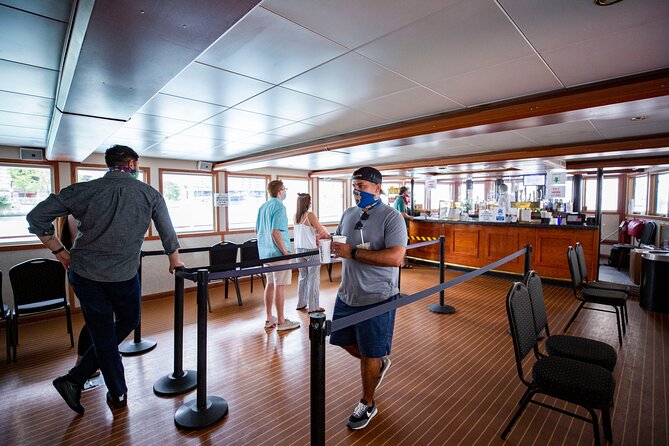
The lower deck is climate controlled on most vessels and has speakers so you can hear the guide. It is the sensible refuge on a cold or rainy day, but seating is limited, and windows may be partly blocked by people sitting nearby. If the boat is full, you might need to stand inside, with a much narrower view.
Seating is first come, first served. Arriving early improves your choice, but it does not guarantee a particular seat. On some colder departures, there may be more people aboard than available indoor seats, so do not book a winter cruise assuming everyone in your party can sit inside.
A restroom is located on the lower deck, and changing tables are available. The onboard bar sells alcoholic and non-alcoholic drinks, seasonal beverages, and snacks such as chips, candy, and packaged Garrett popcorn. Bar purchases require a credit card. Outside alcohol is not allowed, and all bags may be searched.
The First Views from Michigan Avenue
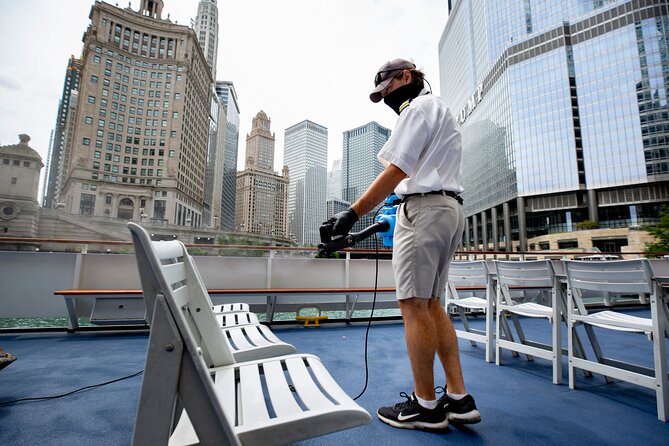
The boat leaves from beside the Wrigley Building, immediately placing one of Chicago’s most recognizable facades in view. The white terra-cotta building dates to 1922 and was built as the headquarters of the Wrigley chewing gum company.
From the water, the building’s bright surface and decorative details are easier to appreciate than they are from a crowded sidewalk. The guide also uses it as a starting point for discussing Chicago’s commercial growth and the way major companies shaped the river corridor.
You will also get context for Michigan Avenue itself. The street leads toward the Chicago Water Tower, the Art Institute of Chicago, Millennium Park, and the Magnificent Mile. The boat does not replace those visits, but it helps you understand how they fit into the city’s central plan.
One useful habit is to keep your camera pointed in several directions. The strongest view may be behind you rather than directly ahead, especially as the boat turns beneath the bridges.
A different kind of day, same corner of the map:
- Chicago Architecture Center River Cruise aboard First Lady
★ 5.0 · 5,536 reviews - Chicago: Willis Tower Skydeck and The Ledge Ticket
★ 4.6 · 4,350 reviews - Chicago: Architecture River Cruise Skip-the-Ticket Line
★ 4.8 · 4,325 reviews - Chicago Crime and Mob Bus Tour
★ 4.5 · 3,186 reviews
The Fountain and the River’s Reversal
A notable stop along the route is a fountain dedicated in 1989 to mark the 100th anniversary of the Metropolitan Water Reclamation District of Greater Chicago. Its story connects directly to one of the city’s boldest engineering decisions.
In 1900, Chicago reversed the flow of the river to protect the city’s drinking water supply. The guide explains this change while you pass the fountain, which sends an arc of water across the river during the first five minutes of every hour.
The timing may or may not line up with your cruise, so treat the water arc as a possible bonus rather than a guaranteed show. The larger point is the river itself. It is not just a scenic route through downtown. It is a working piece of infrastructure that helped shape Chicago’s growth and public health.
This part of the narration is especially useful if you want more than a building checklist. It shows how engineering, commerce, sanitation, and city planning are tied together.
Merchandise Mart and Chicago’s Commercial Scale
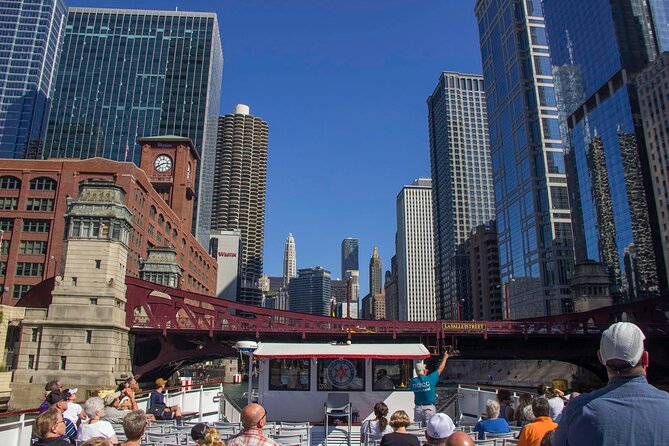
The boat passes the Merchandise Mart, described as the largest commercial building in the world. Its size is hard to grasp from a road, where nearby towers break up the view. From the river, you can better see the long facade and the scale of the complex.
The guide uses buildings like this to explain how Chicago became a center for trade, manufacturing, retail, and office work. You get a sense of how the river once served industry and transport, then gradually became part of the city’s public life.
The attraction here is not only the building’s size. It is the contrast between massive early commercial structures and the slimmer glass towers that came later. The cruise presents the skyline as a sequence of different eras rather than one uniform wall of buildings.
Keep listening even when the boat is moving between major landmarks. The bridges, river bends, and smaller facades help explain why the city feels so different from the water.
The Riverwalk and the Second Lakefront
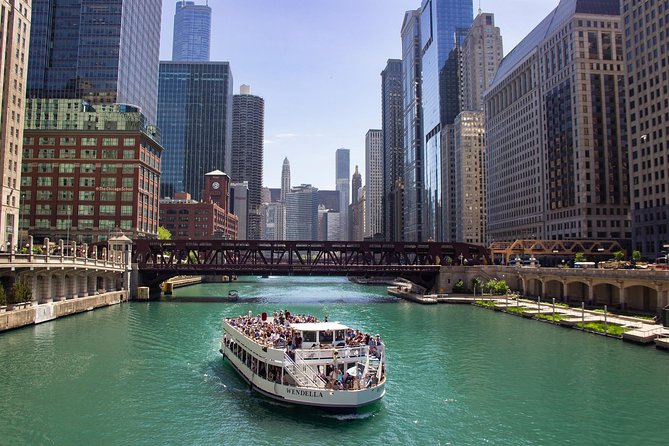
The Chicago Riverwalk appears as an open pedestrian waterfront along the downtown riverfront. It has been called the city’s Second Lakefront, a useful nickname that captures its role as a place for walking, sitting, dining, and looking back at the buildings.
Seeing the Riverwalk from the boat gives you a different angle on a space you might otherwise visit only at eye level. You can watch the public path unfold between the water and the towers, and you can see how older commercial buildings now share the river with restaurants and public gathering areas.
I like this section because it shows Chicago changing without erasing its older framework. The river remains the organizing feature, but the edge is now meant for people as well as freight and industry.
If you plan to walk the Riverwalk later, the cruise helps you get oriented. You will recognize the bends in the river and understand how the different sections connect.
Lyric Opera and the Civic Side of Chicago
The route also passes the Lyric Opera of Chicago, home to the second-largest opera auditorium in North America. Its interior is Art Deco, and the guide explains its place in Chicago’s performing arts scene.
You will not tour the auditorium during this cruise, so the value here is visual and contextual. The building adds a cultural note to a route otherwise filled with offices, apartments, and commercial landmarks.
That variety is one reason the 90-minute format works well. The ride is not limited to famous skyscrapers. It shows the city as a mix of business, housing, entertainment, engineering, and public space.
The guide’s delivery matters during these transitions. Strong guides keep the facts moving with humor and stories, rather than turning the ride into a list of dates. Names reported for different departures include Lucas, Jack, and Alyssa, but no particular guide is guaranteed.
Marina City and the Corncob Towers
Near the end of the route, look for Marina City, the pair of mixed-use apartment buildings with their distinctive rounded, corncob-like exteriors. They were designed as a city within a city, combining housing and other uses in a compact downtown setting.
These towers are among the easiest buildings to recognize from the water. Their repetitive balconies create a strong pattern, and the river gives you a clean view of their unusual shape.
The guide places Marina City within the story of urban housing and changing ideas about downtown life. It is a good example of architecture that is not merely decorative. The form reflects how the building was intended to function.
This is another place where the boat has an advantage over a sidewalk. From below, you can see the towers rise directly from the riverfront, with their curved profiles visible from several angles as the vessel passes.
Daylight, Evening, and Winter Conditions
A daytime cruise gives you the clearest look at materials, decorative details, and differences between buildings. If you want to study terra-cotta ornament, bridge construction, and facade design, choose a departure with good daylight.
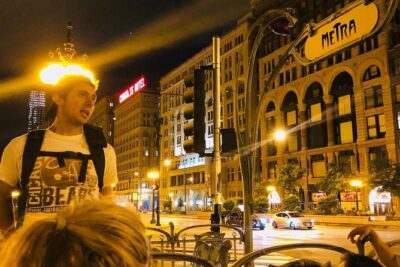
The last tour of the day can offer attractive views of illuminated buildings. At night, the city becomes more graphic, with lights outlining the river corridor and reflecting on the water. You may lose some detail, but gain a different mood.
Weather is the decision point. The company operates in rain or shine when conditions allow, with sheltered areas and climate-controlled lounges. Ponchos can be purchased onboard, but the dock may not provide a dry place to wait in heavy rain.
Winter can work if you dress for the water rather than the sidewalk. Wear warm layers, a hat, gloves, and footwear that can handle a cold, damp deck. The ride itself is smooth, which is helpful if you are concerned about motion sickness, but smooth water does not make the air warmer.
If the weather becomes severe and the cruise is canceled, you are offered another date or a full refund. For a planned visit, a mild day is the safest choice if outdoor views matter most.
Who Will Get the Most from This Cruise?
I would choose this tour for a first visit to Chicago, especially if you want a quick orientation before exploring on foot. It suits families, couples, solo visitors, and anyone who wants city history without a long walking route.
It is also useful for repeat visitors. Even if you have seen the Wrigley Building, Marina City, or Willis Tower from the street, the river changes the view and connects the buildings in a way a normal downtown walk does not.
You should think twice if you strongly dislike cold, rain, or crowded boarding areas. The indoor lounge helps, but it may not hold everyone comfortably on a busy departure. People who need the best photographs should plan on spending at least part of the ride outside.
The maximum capacity is 300 people, so this is not an intimate small-boat outing. The tradeoff is a well-established operation with indoor facilities, a restroom, bar service, wheelchair access, and a trained onboard guide.
Is $45 a Fair Price?
At $45, the tour offers good value if you use it as both sightseeing and orientation. You get 90 minutes on the water, narration covering more than a century of architecture, views of all three river branches, and a return to the original dock.
The price is less attractive if you are booking only for a quick photo ride or if poor weather will keep you indoors. Much of the pleasure comes from looking up at the buildings, and that works best from the open deck.
For most first-time visits, I think the extra time of the 90-minute route is worthwhile. A shorter ride might show you a few headline buildings, but this route gives you the river’s wider story, including the Riverwalk, Merchandise Mart, Lyric Opera, Marina City, and the engineering history behind the waterway.
Should You Book the Chicago River Architecture Tour?
Book it if you want a clear, entertaining introduction to Chicago’s buildings and city planning, with excellent views and little physical effort. The 90-minute route is long enough to feel substantial, and the guides generally bring humor and energy to the narration.
Choose a mild-weather departure, arrive 30 minutes early, and aim for the outdoor deck. If you are visiting in winter, accept that you may need to move indoors to warm up, and do not assume there will be an indoor seat for everyone.
I would put this near the top of a first Chicago itinerary, especially before walking the Riverwalk or visiting Michigan Avenue landmarks. Skip it only if the forecast is poor and you cannot tolerate an exposed deck, or if you prefer a small, quiet tour with fewer people.
FAQ
Where does the Chicago River Architecture Tour depart?
The tour departs from Wendella’s docks at 400 North Michigan Avenue, at the foot of the Wrigley Building near the northwest corner of the Michigan Avenue, or DuSable, Bridge.
How early should I arrive?
Plan to arrive 30 minutes before your scheduled departure. Boarding begins about 15 to 30 minutes before sailing, and the below-street-level dock can take time to find.
How long is the cruise?
The cruise lasts approximately 90 minutes and returns to the original meeting point.
Is there indoor seating?
Yes. Most vessels have an enclosed, climate-controlled lower lounge with speakers for the guide’s narration. Indoor and outdoor seats are first come, first served, and indoor seating is limited.
Does the cruise operate in rain or cold weather?
Cruises operate in rain or shine when conditions allow. Boats have sheltered areas and climate-controlled lounges. Severe weather can cause a cancellation, in which case you are offered another date or a full refund.
Is food or drink available onboard?
Yes. The onboard bar sells alcoholic and non-alcoholic drinks, seasonal beverages, and snacks. Bar purchases require a credit card, and outside alcohol is prohibited.
Are restrooms available?
Yes. Restrooms are on the lower deck of each vessel, and changing tables are available.
Is the tour wheelchair accessible?
Wendella operates three boats with wheelchair lifts between decks. All boats can accommodate wheelchairs and have ADA-compliant toilets.
Can I cancel for a refund?
You can cancel at least 24 hours before the experience begins for a full refund. Cancellations or changes made less than 24 hours before departure are not refunded or accepted.
Newly listed in Chicago
- Chicago Pizza Tour★ 5.0 · 454 reviews
- Chicago: Architecture Center Cruise on Chicago’s First Lady★ 4.7 · 456 reviews
- Chicago: Architecture Boat Tour with Drinks★ 4.7 · 466 reviews
- Chicago Gangster and Food Walking Tour★ 5.0 · 471 reviews
- Chicago Night Crimes Tour by Bus★ 5.0 · 478 reviews
- Flyover in Chicago★ 5.0 · 486 reviews
- Field Museum of Natural History Admission Tickets★ 4.5 · 489 reviews
- Chicago: Secret Interiors Architecture Walking Tour★ 4.9 · 498 reviews
Chicago Tours, compared.
Chicago Architecture Center River Cruise aboard First Lady
Read our review →
Architecture River Cruise Skip-the-Ticket Line
Read our review →

Chicago River 45-Minute Architecture Tour from Magnificent Mile
Read our review →Browse the lists this tour appears in