
Reviewed · CHICAGO TOURS
Chicago: Architecture Center Cruise on Chicago’s First Lady
Chicago’s best architecture lesson comes from the water. On this 90-minute cruise aboard Chicago’s First Lady, you follow all three branches of the Chicago River while a Chicago Architecture Center docent explains the city’s towers, bridges, materials, and changing styles. The river turns downtown into a giant outdoor classroom, with Art Deco, neoclassical, mid-century modern, and postmodern buildings rising overhead.
I like the open-air upper decks, where every seat is guaranteed and you get broad views without fighting a bus window. I also like the live docent commentary, which connects buildings to the people and events behind them instead of simply naming facades. The main consideration is price: at $57, it costs more than a basic sightseeing boat, though the instruction and nonprofit mission help explain the difference.
Key points to know before booking
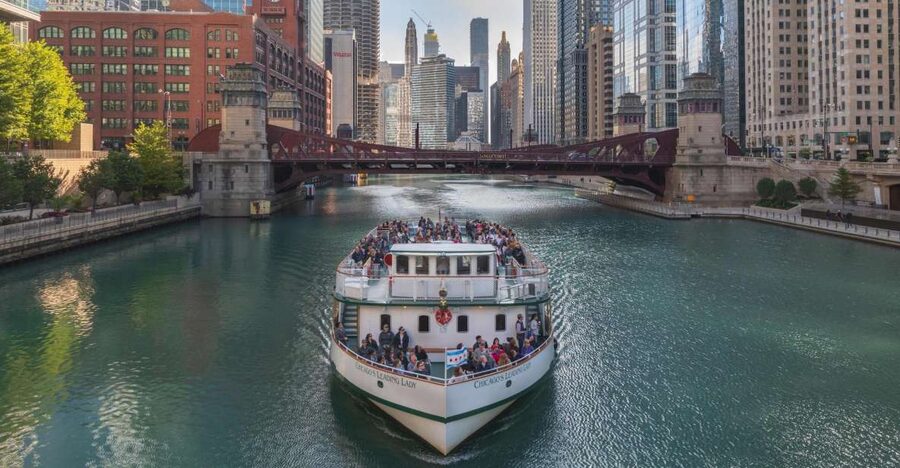
- All three river branches: You see more than the central canyon, including the forks that many shorter cruises skip.
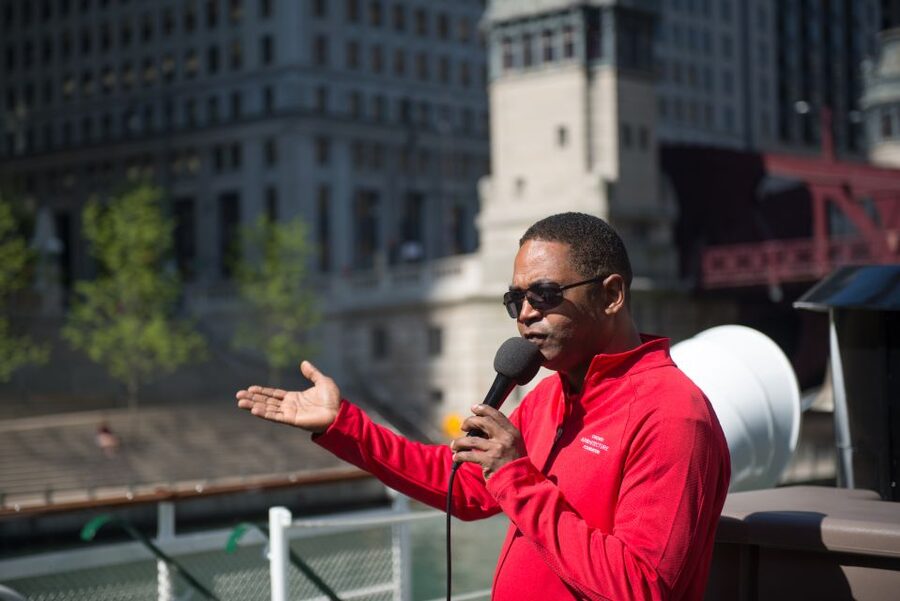
- Live Chicago Architecture Center docents: Guides such as Russel, Amy, Patricia, Tim, Mary Jo, and Barbara have received especially warm praise for clear, entertaining talks.
- More than 50 buildings and 13 bridges: The commentary covers design, city history, architects, and Chicago’s movable bascule bridges.
- Open-air views with indoor backup: The upper decks offer 360-degree sightlines, while climate-controlled salons provide shelter from heat or rain.
- $5 Chicago Architecture Center add-on: Add general admission for $5 instead of the regular $14 price.
- Plan for the dock: Check in at the black awning on the Riverwalk at the southeast corner of the Michigan Avenue bridge. There is no elevator to the boat dock.
Why the Chicago River is the right classroom
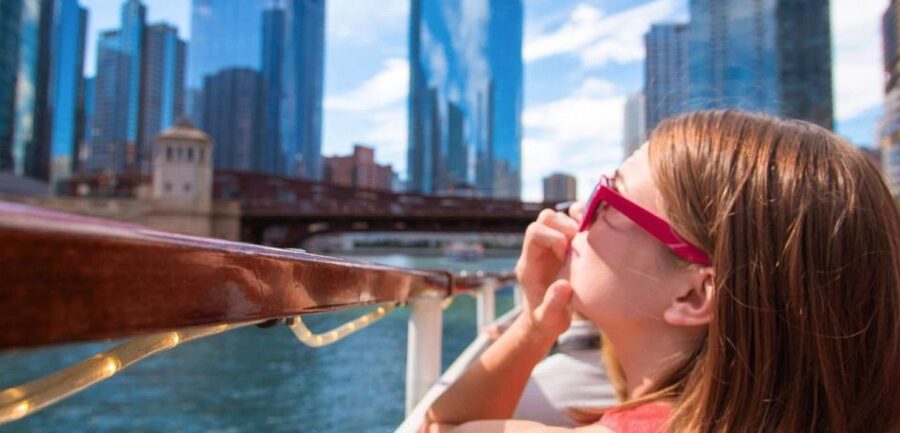
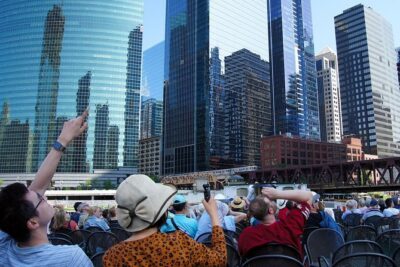
From street level, Chicago’s architecture can feel like a wall of glass, stone, and steel. You look up, see a striking shape, and move on. From the river, you get time and distance. Buildings reveal their full height, their lower levels, their setbacks, and the way they meet one another.
That change in viewpoint is the heart of this tour. The river cuts through the center of downtown, creating what the guides call Chicago’s canyon of architecture. You are not simply looking at one famous tower. You are reading several eras at once, from older classical forms to modern glass buildings and later postmodern designs.
The setting also makes Chicago’s growth easier to understand. The river is not just a scenic route. It is the line that ties together the city’s commercial center, bridges, engineering projects, and high-rise development. A good docent helps you see how design shaped daily life and how the city changed around the river.
This is especially useful if you do not already know architectural terms. The explanations make styles easier to spot, and the guides connect materials and shapes to the period in which a building was made. You can enjoy the views casually, or pay close attention and leave with a better eye for Chicago’s design.
More Boat Tours in Chicago
- Chicago Architecture River Cruise
★ 5.0 · 15,756 reviews - Chicago River: 1.5-Hour Guided Architecture Cruise
★ 4.8 · 8,046 reviews - Chicago Architecture Center River Cruise aboard First Lady
★ 5.0 · 5,536 reviews
Check-in beside the Michigan Avenue bridge
The meeting point is on the Riverwalk level at the southeast corner of the Michigan Avenue bridge, where Michigan Avenue meets Wacker Drive. Look for the black awning marked for Chicago’s First Lady. The location is central, but the approach can be less obvious than the address suggests, so allow time to find the river level.
You check in before boarding, then make your way down to the boat dock. There is no elevator access to the dock, and the route includes stairs. This is important for anyone with limited mobility. A manual wheelchair may be available from the provider for guests who can transfer, but motorized scooters and electric wheelchairs cannot be accommodated aboard the ship.
One past passenger found that reaching the accessible ramp from State Street took a longer walk than expected. That is useful advice: if stairs are a concern, contact the operator ahead of time and ask for the current accessible route rather than relying on a quick verbal description.
Do not bring luggage or large bags. Sunglasses and a sun hat are sensible, even on a mild day, because the upper deck is exposed and the water can make bright conditions feel stronger.
Boarding Chicago’s First Lady
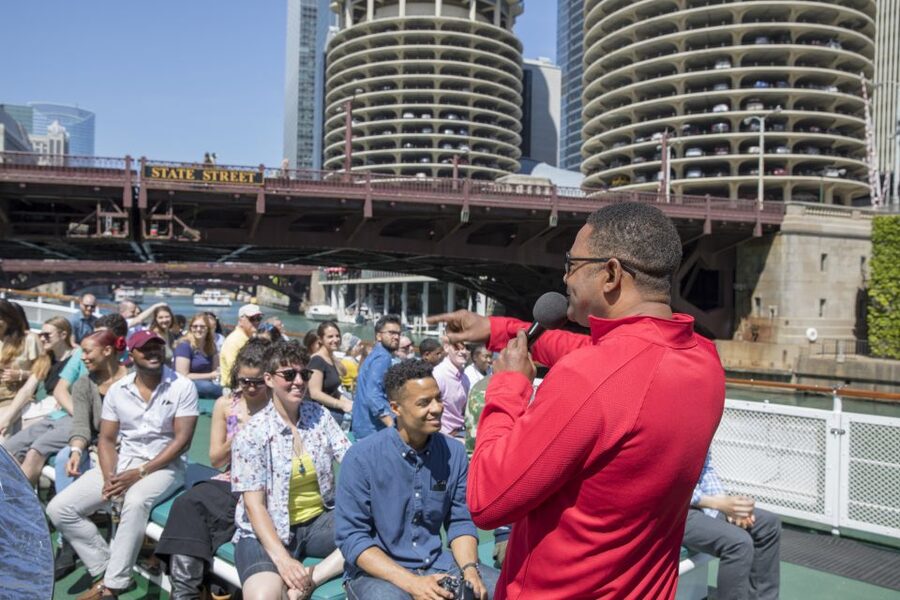
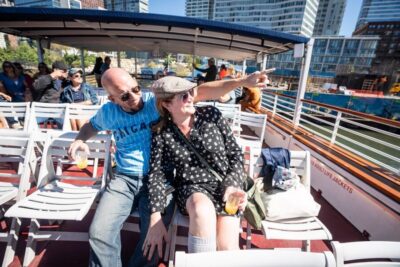
The boat provides guaranteed seating on the open-air upper decks. That matters because you do not have to arrive and then compete for a good place to sit. You can settle in, keep your attention on the buildings, and move inside if the sun becomes too strong.
The open deck is the best place for photography and for seeing both sides of the river. The 360-degree views are the main reason to choose this experience over a standard enclosed sightseeing ride. Keep in mind that a boat is not a private viewing platform. Other passengers, bridge structures, and the position of the vessel can affect your view at any moment.
The interior salons are climate-controlled and include full-service cocktail and snack bars. Water, soda, wine, beer, chips, cookies, and nuts are available for purchase. Food and drinks are not included, but having them onboard is handy, particularly on hot afternoons or during a rain shower.
The covered seating gives the cruise useful flexibility. Cruises operate rain or shine, and the open and covered areas mean poor weather does not automatically cancel the experience. Still, weather changes how much you enjoy the upper deck. On a hot day, one passenger appreciated the air conditioning and indoor bar, while another simply noted that the heat was noticeable. Bring sun protection and treat the indoor salon as a practical part of the boat, not just an emergency option.
The central river canyon and Chicago’s changing styles
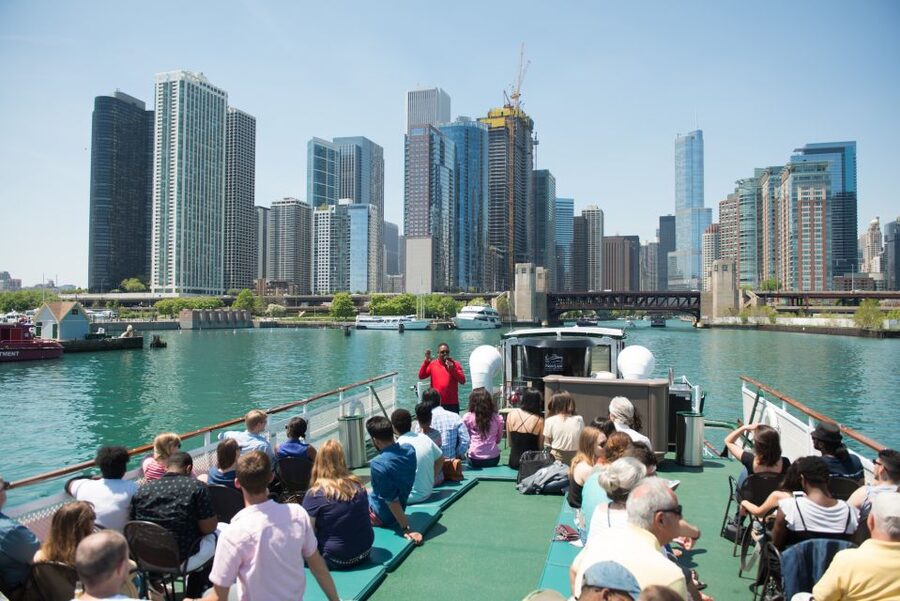
Once underway, the docent begins the main presentation. The route brings you through the dense downtown corridor, where tall buildings crowd the riverbanks and the water offers a clean line of sight up their facades.
The talk covers more than 50 buildings, including examples of Art Deco, neoclassicism, mid-century modernism, and postmodernism. The value is not just the number. You hear why a building looks the way it does, how its materials affect the impression it makes, and which architects and figures helped shape it.
Guides bring different personalities to the same route. Russel was praised for combining a wealth of information with an easy afternoon presentation. Amy was described as both informative and entertaining, while Claudia was appreciated for her cheerful, clear delivery. Mary Jo’s presentation made such an impression that one family called it the best part of their Chicago visit.
You should expect a continuous talk rather than a few occasional announcements. One passenger noted that the docent spoke for the full 90 minutes, covering both the buildings and the river’s past and future. That is good news if you want a serious introduction, but it may feel like a lot if you prefer a quiet boat ride.
The guides are volunteers trained by the Chicago Architecture Center, and the strongest ones bring obvious personal enthusiasm. Patricia, Barbara, Jessica, Tim, and Cynthia were all singled out for clear, engaging explanations. A few small presentation quirks have been noticed, such as repeated filler words or a style that becomes a little dramatic. Those are minor issues, but they remind you that this is a live human talk, not a polished recorded soundtrack.
More boat trips around Chicago:
- Chicago: Architecture River Cruise Skip-the-Ticket Line
★ 4.8 · 4,325 reviews - Chicago: 45-Minute Family-Friendly Architecture River Cruise
★ 4.7 · 2,304 reviews - Chicago: 1.5-Hour Lake and River Architecture Cruise
★ 4.7 · 2,050 reviews - Chicago River 90-Minute Architecture Boat Tour
★ 5.0 · 1,635 reviews
All three branches, including the river forks
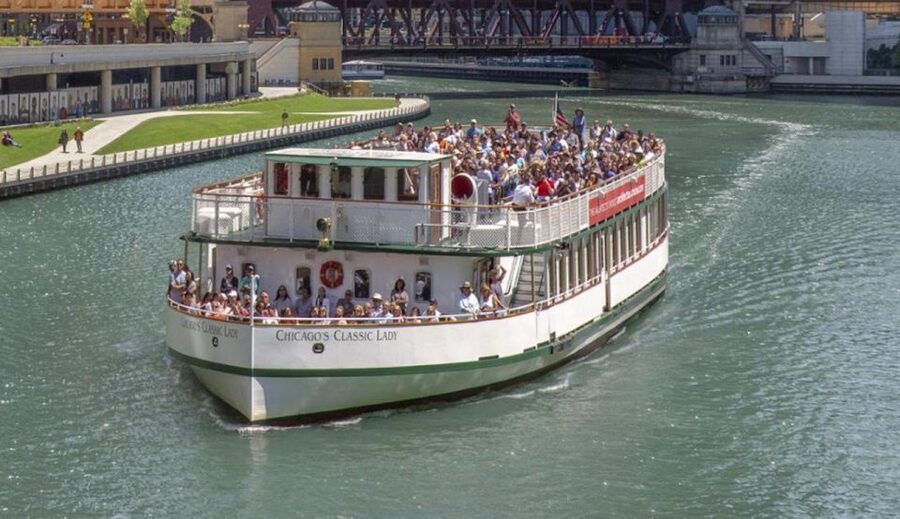
A major advantage of this route is that it travels down all three branches of the Chicago River. Many visitors naturally focus on the central section because it has the greatest concentration of famous buildings. The forks give you a broader picture of the river system and the city around it.
The route also helps explain why this cruise feels more substantial than a simple skyline ride. You get the main downtown views, then continue through sections where the perspective changes and the relationship between buildings, bridges, and water becomes easier to see.
One repeat passenger specifically preferred this trip because it included the forks instead of staying only on the main river section. That makes the itinerary appealing for anyone who has already seen Chicago’s central skyline from the street and wants a fuller view from the water.
The tradeoff is that the more complete route means the commentary must cover a lot in a fixed time. You will hear many names, dates, styles, and anecdotes. If a particular building catches your eye, note its name or take a quick photograph of the guide’s reference material if available, since the talk moves on at river speed.
Thirteen bascule bridges and the engineering story
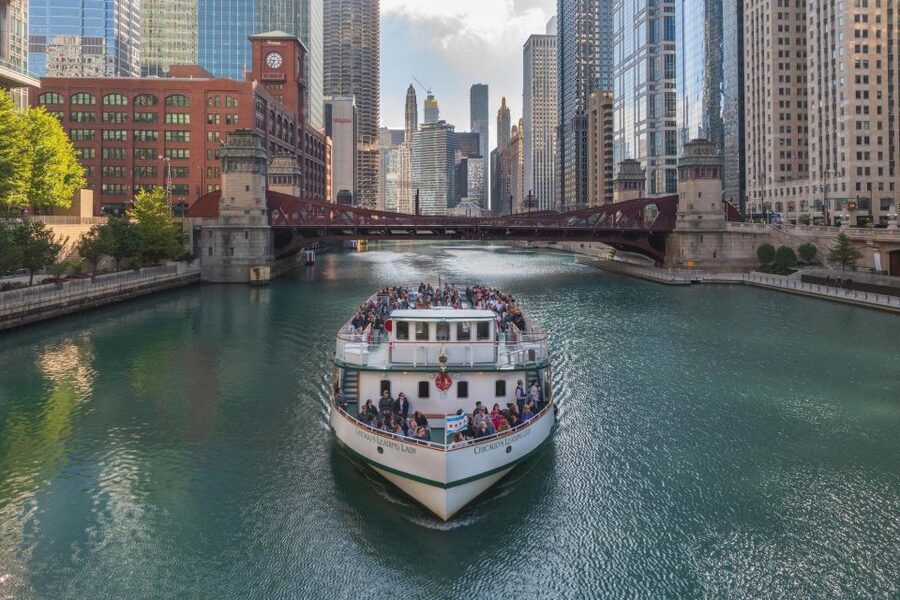
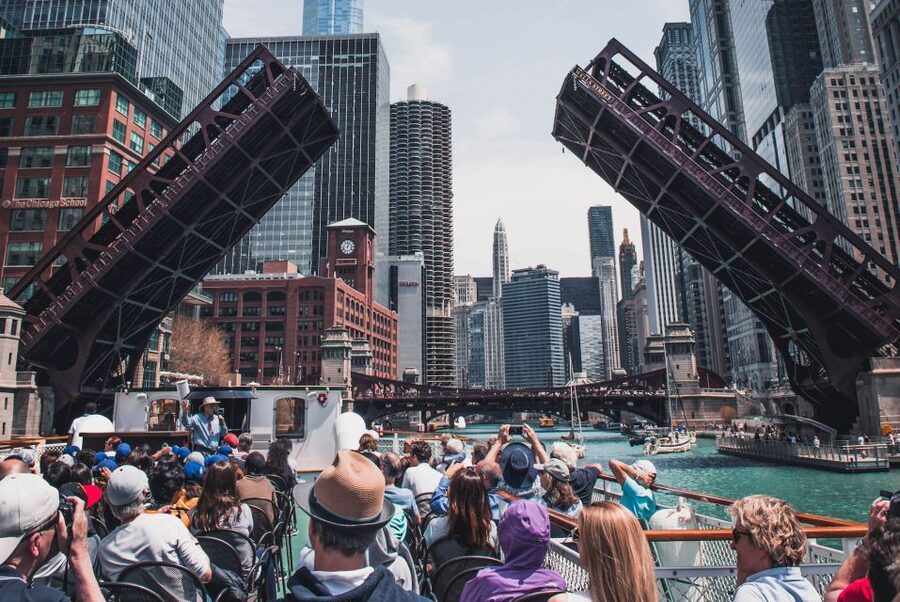
The cruise includes stories about 13 bascule bridges. These are movable bridges designed to lift so boats can pass along the river. They are easy to treat as background scenery, but the docent shows how much engineering and city planning sit inside these familiar structures.
The bridges also add rhythm to the route. You move from open views to enclosed corridors beneath the bridge decks, then back into the vertical canyon of downtown. Along the way, the talk broadens beyond architecture in the narrow sense. You learn how infrastructure influenced the way Chicago functioned and grew.
This is one of the strongest reasons to choose the Architecture Center version of the cruise. A basic ride might point out a bridge and give you its name. Here, the guide places it within the city’s larger story, alongside the buildings and the river itself.
Sunset, weather, and the best time to go
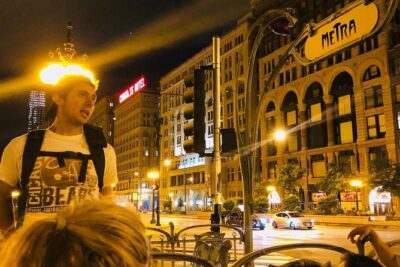
The cruise works at different times of day, but late afternoon and sunset offer an extra visual payoff. One November outing just before sunset gave the buildings a different character as they began to light up. If the available departure time lines up with sunset, that can be a particularly attractive choice.
Daylight is better for reading facades and seeing details in stone, metal, and glass. Sunset is better for mood and reflections. I would choose based on your priority: architecture study in full light, or a changing skyline as the city lights come on.
Weather matters. On a clear day, the open upper deck gives you the full benefit of the river viewpoint. On a hot day, you may spend part of the trip in the air-conditioned salon. Rain does not stop the cruise, but it can reduce the pleasure of sitting outside and may make photography harder.
Bring sunglasses and a hat. You can buy water onboard, but carrying a small personal bottle is not a bad idea if you have one that fits the bag rules. Alcohol and drugs are not allowed, and pets are not permitted except for assistance dogs.
Is $57 a fair price?
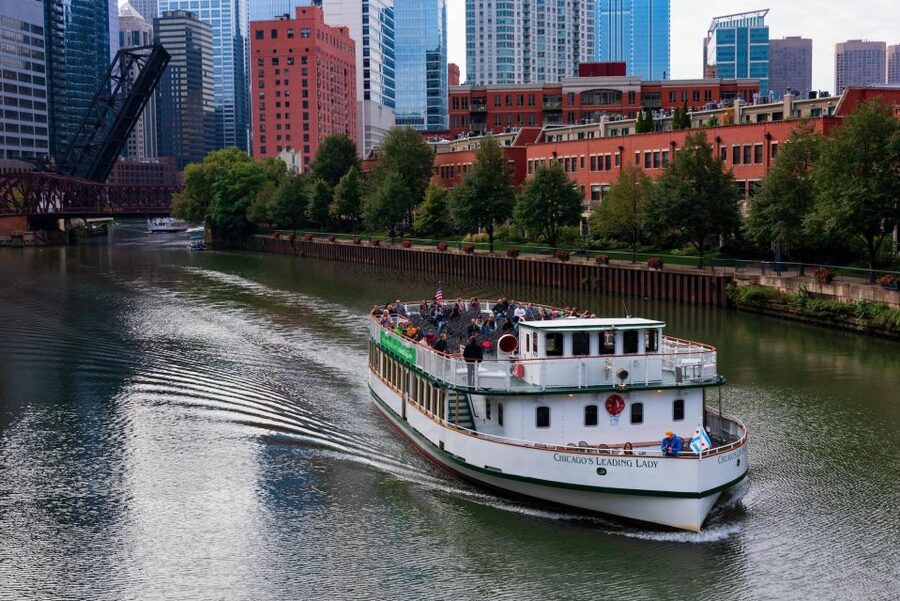
At $57 per person, this is not Chicago’s cheapest river ride. The price makes more sense when you separate it into three parts: the boat route, the guaranteed open-air seat, and the trained live instruction.
You are getting 90 minutes on the river, access to all three branches, views of more than 50 buildings, and information about 13 bridges. The docent commentary is the key difference. If you only want photos from the water, a less expensive cruise may be enough. If you want to understand what you are seeing, the higher fare is easier to justify.
There is also a clear add-on value. You can include Chicago Architecture Center general admission for $5, compared with the normal $14 admission. That saves $9 and gives you an indoor follow-up to the river tour. The center is at the same general boarding location, which makes it easy to visit after the cruise. The ticket has also been used for center admission for up to five days after the cruise, according to one passenger, so check the current terms when booking if you want to spread out the visit.
Part of each ticket supports the Chicago Architecture Center’s nonprofit educational work. That will not matter equally to every buyer, but it gives the higher price a useful purpose beyond the ride itself.
Who will get the most from this cruise?
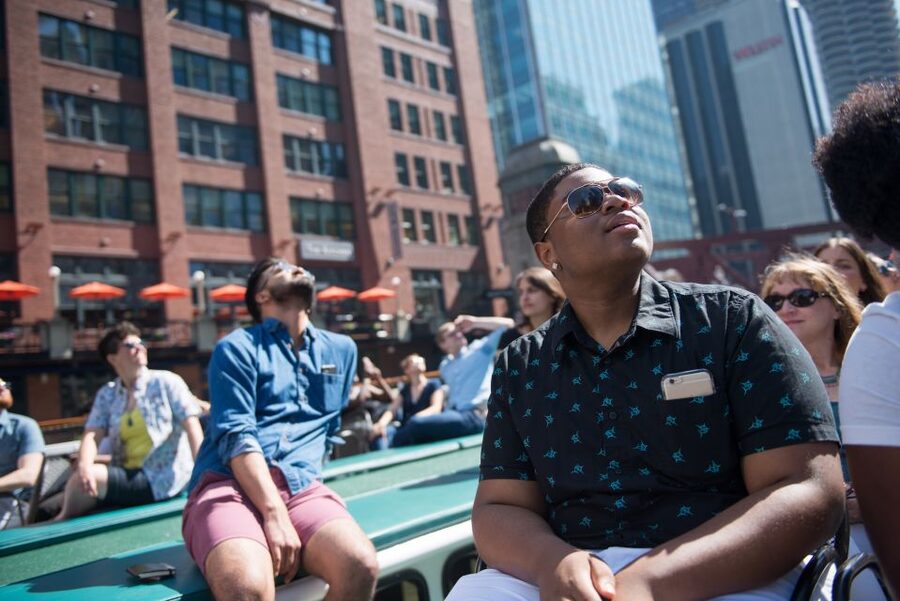
I would recommend this to first-time Chicago visitors who want an introduction that combines sightseeing with context. It gives you a quick grasp of the city’s major architectural periods and helps you recognize why the river is central to Chicago’s identity.
It is also a strong choice for architecture students, design fans, and anyone who enjoys city planning. One passenger with a design background called the cruise more useful than textbooks because the buildings, materials, and river setting appear together in real time.
Families can enjoy it too, especially if the group includes different levels of interest. The skyline holds attention while the talk supplies substance. The 90-minute length is long enough to feel worthwhile but short enough to fit into a busy day.
You may want a different option if your main goal is a quiet boat ride, a party atmosphere, or a meal on the water. This is a spoken architecture tour first, with drinks and snacks available as extras. You should also think twice if stairs, bright sun, or live public speaking create major problems for your group.
Practical advice for a smoother visit
Book ahead. Departures often sell out, and late arrivals cannot receive a refund. The option to reserve now and pay later gives you some flexibility, while cancellation is allowed up to 24 hours before departure for a full refund.
Arrive early enough to find the Riverwalk entrance and black awning. Parking can be awkward in the area, and one visitor ended up paying more than expected after having trouble locating a lot. Public transport or a prearranged parking plan may save stress, though no specific transport service is included with the cruise.
Dress for the upper deck, even if you plan to use the covered area. Sunglasses, a hat, and a light layer are useful. The vessel has clean bathrooms, helpful deckhands, indoor seating, and a bar, so you can stay comfortable without leaving the boat.
Choose a seat with a broad view, then keep your head moving. Buildings appear on both sides, and the most interesting detail may be behind you as the boat turns or passes beneath a bridge. If you care about photographs, take a few wide shots first, then listen. The guide’s explanation is the part you cannot recreate later from pictures.
Should you book Chicago’s First Lady?
Book it if you want more than a skyline postcard. The combination of all three river branches, open-air seating, and a live Chicago Architecture Center docent gives you a clear, useful introduction to the city’s buildings and bridges.
The $57 fare is a little high for a casual boat ride, but fair for a 90-minute architecture lesson with guaranteed seating and strong indoor facilities. Add the $5 Architecture Center admission if you have time for the exhibits. Skip it only if you want silence, dislike guided commentary, or cannot manage the dock access without arranging help in advance.
FAQ
How long is the Chicago Architecture Center cruise?
The cruise lasts 90 minutes.
Where do I check in?
Check in at the black awning for Chicago’s First Lady on the Riverwalk level at the southeast corner of the Michigan Avenue bridge, where Michigan Avenue and Wacker Drive meet.
Is the commentary live?
Yes. The cruise is narrated in English by a volunteer docent trained by the Chicago Architecture Center.
What does the tour cover?
The boat travels along all three branches of the Chicago River. The docent discusses more than 50 buildings, 13 bascule bridges, architectural styles, Chicago’s development, and the people connected with the city’s design.
Is seating guaranteed?
Yes. Seating on the open-air upper decks is guaranteed. Covered seating is also available inside the climate-controlled salons.
Can I buy food and drinks onboard?
Yes. Water, soda, wine, beer, chips, cookies, and nuts are available for purchase. Food and drinks are not included in the ticket price.
Is the cruise wheelchair accessible?
The boat is described as wheelchair accessible, but there is no elevator to the dock. Motorized scooters and electric wheelchairs cannot be accommodated. Guests who can transfer may use the provider’s manual wheelchair, subject to availability.
Newly listed in Chicago
- Chicago Pizza Tour★ 5.0 · 454 reviews
- Chicago: Architecture Boat Tour with Drinks★ 4.7 · 466 reviews
- Chicago Gangster and Food Walking Tour★ 5.0 · 471 reviews
- Chicago Night Crimes Tour by Bus★ 5.0 · 478 reviews
- Flyover in Chicago★ 5.0 · 486 reviews
- Field Museum of Natural History Admission Tickets★ 4.5 · 489 reviews
- Chicago: Secret Interiors Architecture Walking Tour★ 4.9 · 498 reviews
- Chicago Sightseeing River and Lake Cruise★ 4.5 · 509 reviews
Chicago Tours, compared.
Chicago Architecture Center River Cruise aboard First Lady
Read our review →
Architecture River Cruise Skip-the-Ticket Line
Read our review →

Browse the lists this tour appears in