
Reviewed · CHICAGO TOURS
Chicago Architecture Center River Cruise aboard First Lady
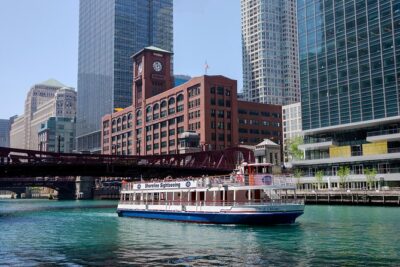
Chicago’s finest skyline views come from the water, where the buildings rise directly above you and the river reveals how the city grew, rebuilt, and reinvented itself. This 90-minute cruise turns a downtown boat ride into a lively lesson in architecture, bridges, engineering, and city history.
I like the excellent Chicago Architecture Center docents, including guides such as Laura, Cynthia, Amy, Mark, Nick, and Russell, and I like the choice between an open-air upper deck and a heated, windowed lower salon. The main drawback is simple: seating is first come, first served, and cold shade or rain can affect your comfort.
Key points to know before boarding
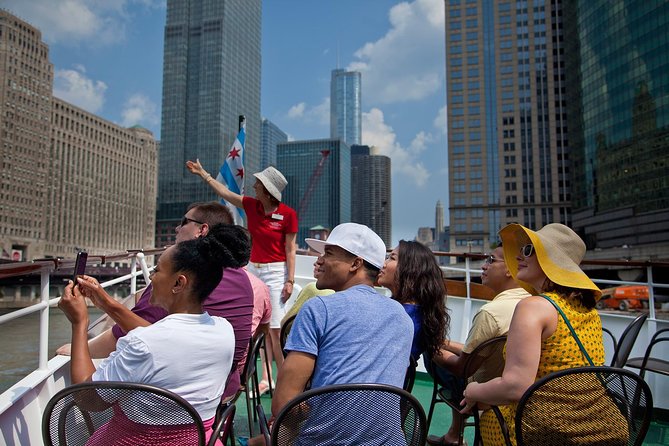
- The river is the classroom: You see Chicago’s towers from a low, close angle that streets rarely provide.
- Docents give the tour its value: The guides explain why buildings look as they do and how they relate to one another.
- The cruise lasts about 90 minutes: That is long enough for a broad introduction without taking up half your day.
- Seating is general admission: Arrive at least 30 minutes early if you want the best choice of seats.
- The boat works in poor weather: A climate-controlled lower level and large windows help, but dress for wind and shade.
- A full bar is onboard: Drinks and light snacks are available for purchase, including hot chocolate on some sailings.
Why this river cruise belongs near the top of your Chicago list
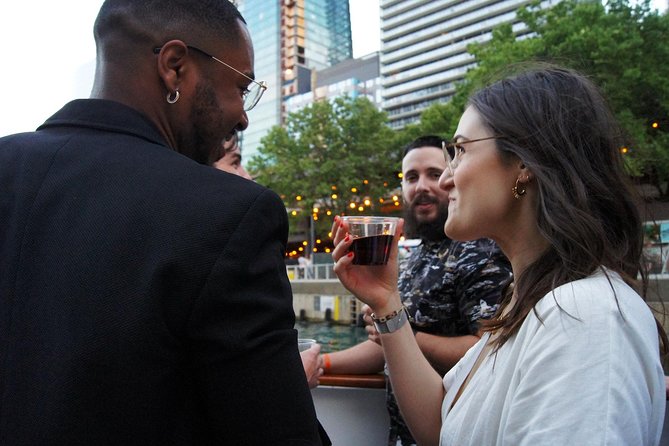
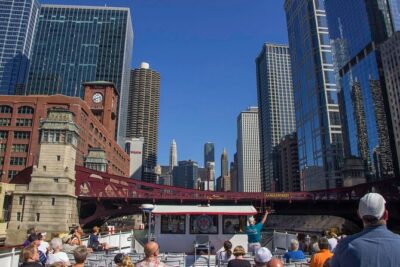
Chicago is easy to admire from the sidewalk, but the river gives you the city’s grandest buildings in one steady procession. From the boat, you can look up at Marina City, watch the glass of Trump International Hotel & Tower reflect nearby structures, and see Willis Tower from a fresh angle.
I especially like this as a first-day activity. The docent explains the city’s basic story, points out major towers, and gives you a mental map for the rest of your visit. Afterward, buildings that might have looked like anonymous slabs of glass or stone have names, dates, designers, and purposes attached to them.
The tour is offered in English and costs $57 per person. That is not a bargain boat ride, but the price includes more than a view. You are paying for a trained Chicago Architecture Center docent, live commentary, a clean vessel, restroom access, and a route packed with major buildings.
A simple sightseeing cruise may give you photographs. This one gives you a way to read the city. If architecture means little to you, the commentary may feel like extra information. If you enjoy cities, design, engineering, or local stories, the added context makes the fare easier to justify.
More Boat Tours in Chicago
- Chicago Architecture River Cruise
★ 5.0 · 15,756 reviews - Chicago River: 1.5-Hour Guided Architecture Cruise
★ 4.8 · 8,046 reviews - Chicago: Architecture River Cruise Skip-the-Ticket Line
★ 4.8 · 4,325 reviews
Finding the dock at 112 East Wacker Drive
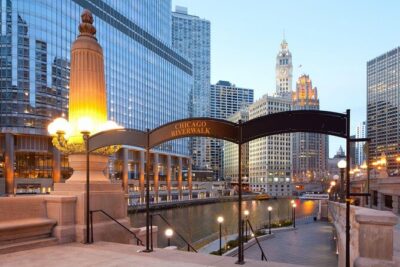
The boat leaves from the Chicago Riverwalk at 112 East Wacker Drive. The Riverwalk entrance is at street level near the northeast corner of Michigan Avenue and Wacker Drive, about three blocks north of Millennium Park and close to the Magnificent Mile.
Give yourself at least 30 minutes before departure. The ticketing office is at Riverwalk level, and boarding takes time. Your phone confirmation is not necessarily the final boarding document, so allow time to check in and receive the proper ticket.
There is no elevator access to the boat dock. You will need to use stairs, so plan accordingly. Service animals are allowed, and the activity is near public transportation. Children must have an adult with them, and the experience is not recommended for children younger than 12.
If you drive, the LAZ Parking garage at 111 East Wacker Drive is directly across from the stairway to the dock and next to the Chicago Architecture Center. Parking costs extra, so public transportation may be the simpler choice.
The Chicago Architecture Center is directly across Wacker Drive from the dock. Showing your cruise ticket gets you discounted admission of $5 per person, a useful add-on if you want to continue with Chicago’s building story after the boat ride.
Choosing a seat on the First Lady
All seating is general admission. Printed seat numbers can be ignored, and boarding is first come, first served. Arriving early matters if you want a particular view, especially during busy summer departures.
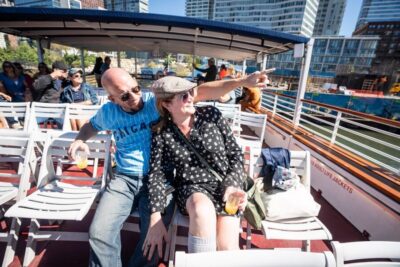
The upper deck is open to the weather and offers the clearest photographs. Bring sunglasses, a cap, or a visor because bright sun can make it harder to see the buildings and follow the guide’s pointing.
The lower salon is enclosed and climate controlled, with large windows. It is a welcome refuge on a chilly day, and one recent sailing included warm, comfortable seating below when the upper deck felt cold. The tradeoff is that window reflections and other passengers may make photography less direct.
The boat has a restroom, although it closes 15 minutes before the cruise ends for safety reasons. There is also a full bar, with drinks and light snacks available to buy. Hot chocolate can be a particularly good choice on a cold departure.
Do not bring luggage. There is no luggage storage onboard or at the dock. Strollers are allowed, but children must be removed from them during boarding, and the stroller will be folded and stored in the salon.
The Chicago River: industry, bridges, and a changing city
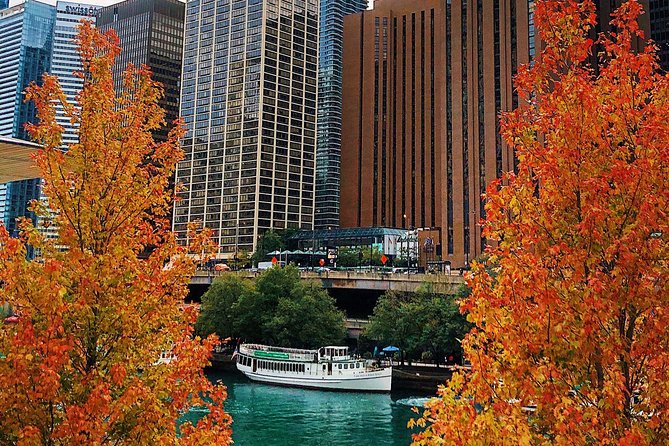
The cruise begins with the river itself. That may sound obvious, but the river is more than a channel between skyscrapers. It has served industry, transportation, shipping, recreation, and downtown redevelopment, changing along with Chicago.
The low boat gives you a close look at bridges and riverfront buildings. Your docent uses the route to explain how the city grew around this waterway and how old commercial spaces now share the river with offices, apartments, restaurants, and public paths.
This opening section helps you understand the rest of the cruise. Instead of seeing separate buildings, you begin to see a city shaped by water, trade, engineering, and the pressure to build upward.
The route and vessel can change without notice. That means the exact order or angle of each view may vary, but the cruise is designed around the central river corridor and its major buildings.
More boat trips around Chicago:
- Chicago: 45-Minute Family-Friendly Architecture River Cruise
★ 4.7 · 2,304 reviews - Chicago: 1.5-Hour Lake and River Architecture Cruise
★ 4.7 · 2,050 reviews - Chicago River 90-Minute Architecture Boat Tour
★ 5.0 · 1,635 reviews - Lake Michigan Sunset Cruise in Chicago
★ 4.5 · 1,520 reviews
Navy Pier and Chicago’s talent for reuse
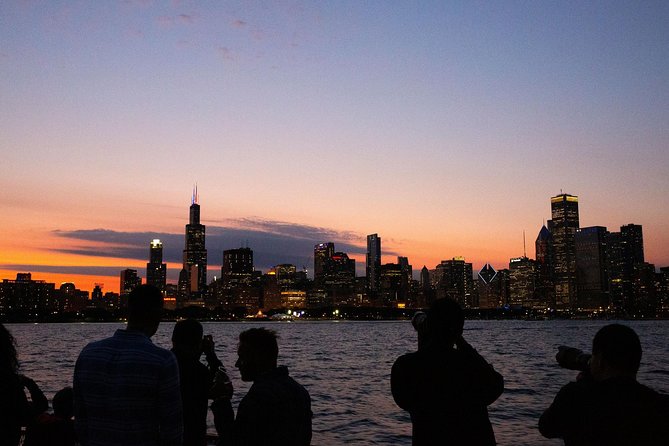
From the river, you can see Navy Pier, one of Chicago’s best examples of a place that has changed jobs over time. It has served as a naval base, university campus, shipping center, and entertainment destination.
That backstory adds a useful layer to the view. Navy Pier is not just a place for rides, food, and lake views. It shows how the city repeatedly gives older infrastructure a new purpose.
The cruise does not take you into Navy Pier, so consider this a visual introduction rather than a full visit. You will need separate time if you want to walk the pier, but seeing it from the water helps place it within downtown’s wider story.
Marina City’s concrete corncobs
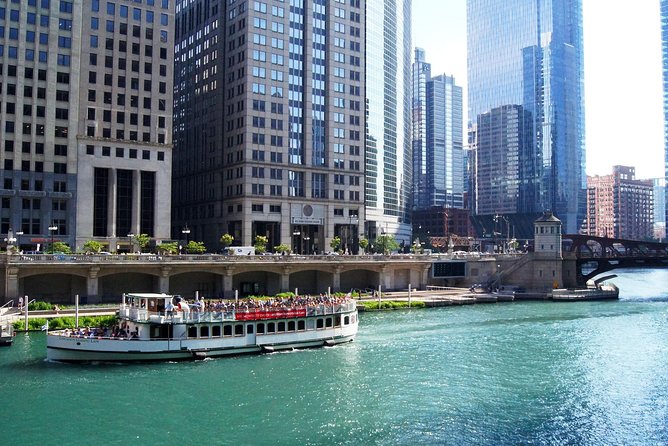
Marina City is one of the most memorable sights along the river. Bertrand Goldberg designed the paired towers as an urban experiment meant to bring middle-class residents back to the city during a period when many people were moving to the suburbs.
The rounded concrete forms are easy to recognize from the boat. They also make more sense once the docent explains the social goal behind them. This was not architecture for decoration alone. It was an attempt to build a fuller city life in one place.
I like this stop because the design and the idea match so clearly. You do not need technical training to understand why the towers matter, and the view from the river shows their unusual shape better than a distant street view does.
Trump Tower and the idea of architectural conversation
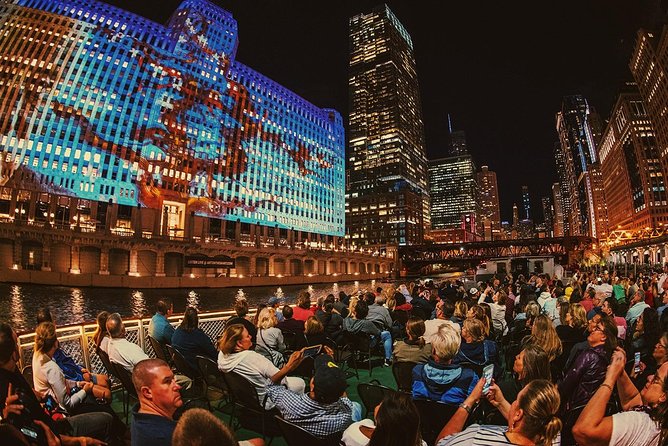
Trump International Hotel & Tower gives the docent a chance to discuss how a new building responds to its surroundings. Its glass and steel exterior is only part of the story. The tower also reflects the nearby river, bridges, and older buildings.
The useful lesson here is that architecture does not happen in isolation. A building changes the view around it, and the buildings around it affect how you see it. The docent may compare its materials, scale, and placement with neighboring structures.
This section is less about a single famous tower and more about learning how to look. Once you start comparing buildings instead of viewing them one by one, the river corridor becomes much more interesting.
Mies van der Rohe’s powerful modernism
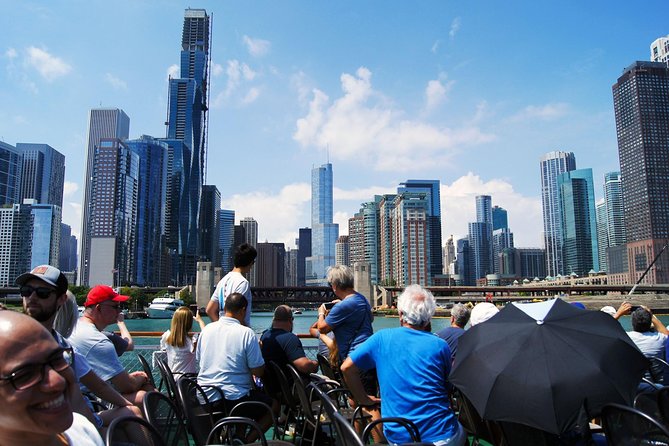
One of the last American projects designed by Ludwig Mies van der Rohe sits prominently along the Chicago River. The structure offers a clear example of Modernist design, with a strong, restrained form that contrasts with the rounded Marina City towers and more reflective contemporary buildings.
The changing mix of styles is one of the cruise’s strengths. You move from bold concrete curves to glass towers, steel frames, and carefully ordered Modernist lines. The boat gives you enough time to compare them while the guide explains the people and ideas behind the designs.
This is also a good reminder that Chicago architecture is not one fixed style. The city’s identity comes from several eras sharing the same narrow river corridor.
150 North Riverside and the engineering spectacle
150 North Riverside catches the eye because it appears to balance above a narrow base. Its upper floors spread outward over a slender lower section, creating a shape that looks almost impossible from the water.
The docent explains why the structure is considered an engineering achievement. You do not need to remember every technical detail to appreciate the point: the building’s unusual form is the result of solving practical problems while creating a memorable silhouette.
The river is the right place to view this tower. From street level, the lower portion can be easy to miss. From the boat, the full shape rises above you, and the relationship between the narrow base and wide upper floors is much clearer.
The route also offers views of Boeing International Headquarters at 100 North Riverside Plaza. It is part of the same broad riverfront group of office buildings, giving you another chance to compare different approaches to corporate design.
Willis Tower and Chicago’s race for height
Willis Tower, formerly known as the Sears Tower, held the title of world’s tallest building for nearly 25 years. From the river, its size is still impressive, but the docent adds the business and city context that makes the height meaningful.
Chicago’s skyscrapers were not built simply because architects wanted to reach the clouds. Land values, commerce, steel construction, elevators, and competition all shaped the city’s vertical growth. The river view lets you see how Willis Tower relates to the other towers instead of viewing it as an isolated landmark.
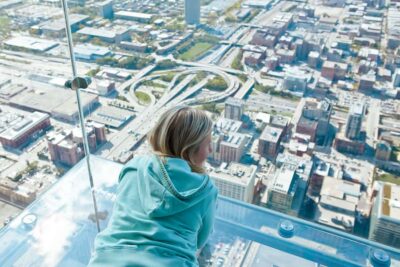
The tour does not include entry to the tower or its Skydeck. If you want the high-level view, that requires a separate ticket and visit. The cruise is about understanding the building within Chicago, not going inside it.
The Merchandise Mart and wholesale Chicago
The Merchandise Mart was the world’s largest building when it opened in 1930. It served as Marshall Field’s wholesale warehouse, where retailers bought stock.
This stop makes the skyline feel more practical. Chicago’s grand buildings were often tied to trade, offices, manufacturing, and retail rather than built only as monuments. The Merchandise Mart shows how a giant building could support the commercial machinery of the Midwest.
Its large scale is easier to grasp from the river. You see the long facade stretch along the water, and the guide connects its size to the way business once operated in the city.
The Chicago Mercantile Exchange and the Freedom Center
The route includes a view of the Chicago Mercantile Exchange Building at 20 South Wacker Drive. This adds another piece to the city’s financial story and helps explain why Wacker Drive and the river remain important downtown corridors.
You also pass the Chicago Tribune Freedom Center. Like the Merchandise Mart, it links architecture to the work that took place inside. The cruise repeatedly returns to this useful idea: buildings tell you what a city values, sells, produces, and communicates.
The itinerary covers a broad stretch of Chicago in only 90 minutes. You will not stop at each building, and the distance may feel shorter than expected if you were hoping for a longer ride. Still, the concentrated route gives you a strong introduction to the central skyline without requiring a full afternoon.
Weather, timing, and the best fit for this cruise
The cruise operates in all weather. The upper deck can be sunny, windy, wet, or cold, while the lower salon offers shelter and climate control. Dress for the conditions, and bring a hat or sunglasses on bright days.
I would choose an evening departure if you want a different mood and cooler light on the buildings. A daytime cruise is better for clear architectural details and photographs. The exact experience depends on weather, the route, and the specific vessel assigned.
The boat can carry up to 250 people. That is large enough for a lively group setting, but the vessel is described as clean, spacious, and comfortable. If you prefer a quiet private tour, this is not the right format. If you like learning in a shared setting, the size works well.
The cruise suits adults, couples, friends, solo visitors, and families with older children. It is especially useful for people visiting Chicago for a short stay, because you cover major landmarks while gaining a basic framework for the city.
Is $57 a fair price?
At $57 per person, this is more expensive than a basic sightseeing boat ride, but the docent is the reason to consider it. The commentary covers architecture, engineering, city history, and the river’s changing role, rather than simply naming buildings as you pass.
The cruise also saves time. In 90 minutes, you see Marina City, Navy Pier, Willis Tower, the Merchandise Mart, 150 North Riverside, the Tribune Freedom Center, and other major structures. Recreating that route on foot would take far longer, and you would not get the same low view from the water.
The fare does not include drinks, snacks, Chicago Architecture Center admission, parking, or luggage storage. Those are manageable extras, but add them to your budget if they matter to you.
One practical warning matters more than the price: tickets are non-refundable and cannot be transferred to another departure. Check your schedule and weather tolerance before booking.
Who should book the Chicago First Lady cruise?
I would book this if you want a strong city orientation, enjoy buildings, or have only a few days in Chicago. The guides bring personality to the material, and clear delivery matters when you are trying to follow a talk while looking up at tall structures.
I would also choose it for a sunny afternoon or an evening when you want a break from walking. The full bar and lower salon make it more comfortable than an open boat with no shelter.
I would hesitate if you dislike group tours, need guaranteed assigned seating, are bringing luggage, or want a long ride far beyond downtown. The cruise is focused and educational, not a free-form exploration of the entire city.
For most visitors, the best use is early in the trip. Take notes on a few buildings that catch your eye, then return to them on foot. That simple plan turns a 90-minute cruise into a guide for the rest of your Chicago stay.
FAQ
Where does the Chicago Architecture Center River Cruise depart?
It departs from the Chicago Riverwalk at 112 East Wacker Drive. The street-level Riverwalk entrance is near the northeast corner of Michigan Avenue and Wacker Drive.
How early should I arrive?
Arrive 30 minutes before departure. Allow extra time during summer, when boarding may take longer.
How long does the cruise last?
The cruise lasts approximately 1 hour and 30 minutes.
Is seating assigned?
No. Seating is general admission and boarding is first come, first served. Printed seat numbers are not valid.
Is the cruise offered in English?
Yes. The experience is offered in English with live commentary from a local Chicago Architecture Center docent.
Is there indoor seating?
Yes. The boats have an enclosed, climate-controlled lower salon with large windows. The upper deck is open-air.
Does the cruise operate in rain?
Yes. It operates in all weather conditions. Dress appropriately, and use the lower salon if you need shelter from rain or cold.
Can I buy food or drinks onboard?
Yes. A full bar is available, and drinks and light snacks can be purchased. Hot chocolate may also be available.
Can I bring luggage or a pet?
Luggage cannot be brought onboard, and there is no luggage storage at the dock. Pets are not allowed, but service animals are permitted.
Is the cruise accessible by elevator?
There is no elevator access to the boat dock. The dock is reached by stairs.
Newly listed in Chicago
- Chicago Pizza Tour★ 5.0 · 454 reviews
- Chicago: Architecture Center Cruise on Chicago’s First Lady★ 4.7 · 456 reviews
- Chicago: Architecture Boat Tour with Drinks★ 4.7 · 466 reviews
- Chicago Gangster and Food Walking Tour★ 5.0 · 471 reviews
- Chicago Night Crimes Tour by Bus★ 5.0 · 478 reviews
- Flyover in Chicago★ 5.0 · 486 reviews
- Field Museum of Natural History Admission Tickets★ 4.5 · 489 reviews
- Chicago: Secret Interiors Architecture Walking Tour★ 4.9 · 498 reviews
Chicago Tours, compared.
Architecture River Cruise Skip-the-Ticket Line
Read our review →

Chicago River 45-Minute Architecture Tour from Magnificent Mile
Read our review →Browse the lists this tour appears in