
Reviewed · NEW YORK CITY TOURS
“The Met” Metropolitan Museum of Art Exclusive Guided Tour
The Metropolitan Museum of Art is less a museum than a small city of art. This 2.5-hour guided tour gives you a route through its biggest rooms, from ancient Egypt and medieval armor to American painting and Van Gogh, without leaving you to wander the vast building on your own.
I like the small group size, capped at eight people per booking, because you can hear the guide and ask questions without shouting across a crowd. I also like the tour’s range: guides such as Rob, Charlie, Mark, Kathryn, and Jeff have led visitors through many eras, while still adjusting the route to match your interests.
The main drawback is time. Two and a half hours is enough for a strong introduction, not a full visit. At $132.50 per person, this is a serious spend, so it offers the best value if you are visiting the Met for the first time or want a clear plan for a very large museum.
Key Points to Know Before You Go
- You cover major eras quickly: The route can include ancient Egyptian art, medieval Europe, American painting, European modern art, and pop culture displays.
- The group stays small: A booking can include no more than eight people, and private tours keep the experience limited to your own party.
- The famous works come with context: Expect stories about artists, the museum’s growth, and how to look at a painting, not just a list of names.
- Skip-the-line admission is included: You still pass through the museum’s security check, and that line can vary.
- The tour works best as an orientation: Many people use the guided visit to decide which galleries deserve more time afterward.
- Plan for a long Met day: The tour ends at the museum, so you can continue exploring independently if you have the energy.
Why a Guide Helps Inside the Met
The Met holds roughly two million objects. That number matters because a first visit can become a tiring march from one famous room to another, with little sense of how the pieces connect.
A guide gives you a thread to follow. Instead of trying to read every wall label, you can focus on selected works and hear why they matter. You may learn how the museum began before the United States was 100 years old, how its collection grew, and how its approach differs from older museums in Europe.
That last point adds useful perspective. The Met is not simply an American copy of the Louvre or the British Museum. Its galleries bring together art from many periods and places under one roof, while the building itself has continued to expand and change.
I especially like having a guide explain the museum before rushing into the art. A short introduction can help you understand the Met as an institution, not just a string of galleries. Michael, for example, has been praised for giving this kind of background before starting the route, while Mark has used his New York knowledge to explain the museum’s place in the city.
More Museums in New York City
- NYC: Empire State Building Tickets – Observatory & Museum
★ 4.7 · 25,757 reviews - New York City: American Museum of Natural History Ticket
★ 4.5 · 15,447 reviews - NYC: Museum of Modern Art (MoMA) Entry Ticket
★ 4.6 · 12,540 reviews
Starting in the Great Hall
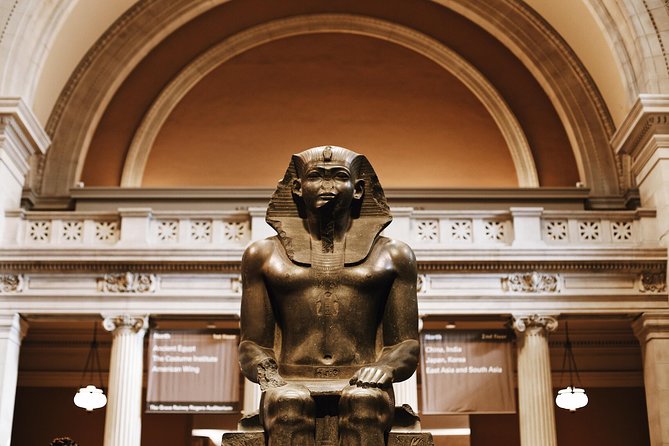
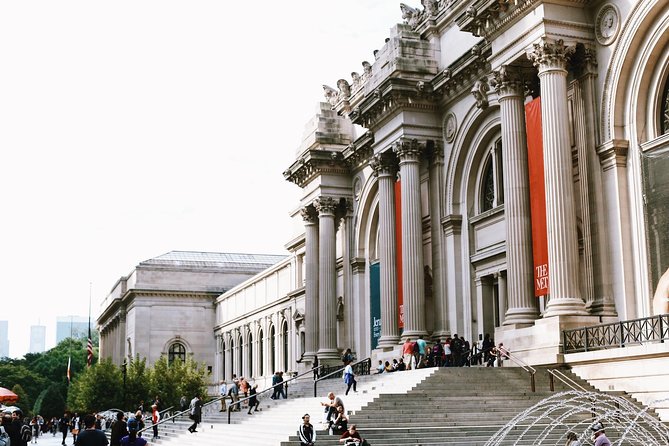
The tour begins at the Metropolitan Museum of Art, 1000 Fifth Avenue, on the Upper East Side. The Great Hall is the natural meeting point and a useful first lesson in the scale of the place. You are entering a museum where even the entrance feels grand enough for a civic ceremony.
From here, your guide leads you through selected galleries rather than attempting every corridor. The exact order can change, and some rooms or works may be closed, restored, or loaned elsewhere. That flexibility is necessary. A rigid route would be less useful than a smart one.
The included admission saves time at the main entry, but do not confuse skip-the-line access with skipping security. Every person must still pass through the security check, and extra measures can create a wait. Leave large bags and suitcases behind. Only handbags or small, thin backpacks are permitted through security.
Medieval Europe and Armor Worn by Henry VIII
One of the most memorable early stops is the Medieval Europe Gallery, followed by the Studiolo from the Ducal Palace. The studiolo is a compact, highly decorated room that offers a sharp contrast to the Met’s larger halls. It rewards close attention, and a guide can point out details you might otherwise pass without noticing.
The armor section gives the tour a welcome change of pace. Rather than looking only at paintings, you see the craft, ceremony, and practical design of the Middle Ages. The armor associated with Henry VIII is a natural highlight, especially for families and anyone who finds portraits easier to understand when they can see the objects of power behind them.
This part of the route also shows why a guided visit suits mixed groups. One person may care about military objects, another about palace interiors, and another about design. A good guide can connect those interests without turning the whole visit into a lecture.
Keep in mind that galleries can be crowded, and some rooms require quiet or limit speaking. Your guide will explain those rules before you enter. That may mean certain explanations happen outside a room or in a softer voice, so stay close enough to hear.
The American Wing and Washington Crossing the Delaware
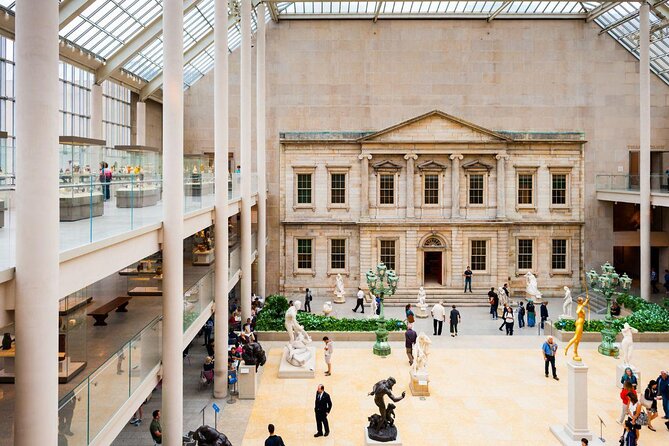
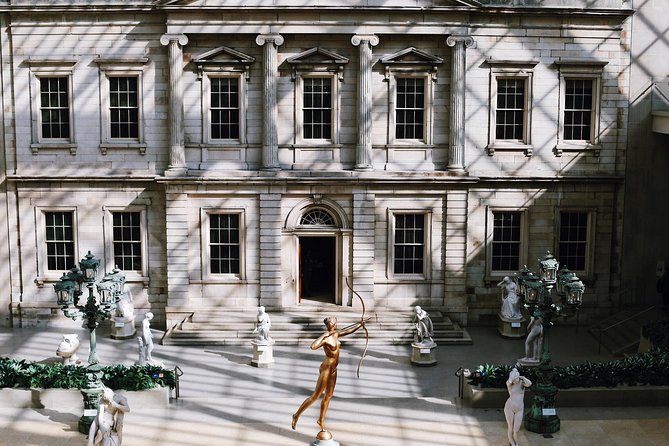
The American wing brings the tour closer to home, even if your main interest is European art. The Chicago Stock Exchange staircase is an eye-catching architectural fragment, and it helps you see the Met as a museum of design and buildings as well as paintings.
Washington Crossing the Delaware is the big painting many visitors expect to see. A guide can help you look past its obvious patriotic drama and examine how the scene is arranged, how the figures are presented, and how national symbols shape the viewer’s response.
Madame X provides a different kind of American story. The painting’s style and social setting open the door to questions about portraiture, reputation, and public taste. Tiffany’s Autumn landscape adds yet another note, with decorative color and atmosphere replacing the formal grandeur of a society portrait.
The American galleries are especially useful for visitors who think they need to choose between art history and national history. You get both here. The rooms show how artists and patrons in the United States borrowed from, argued with, and reshaped European traditions.
More museums around New York City:
- 9/11 Memorial, Ground Zero Tour with Optional 9/11 Museum Ticket
★ 5.0 · 6,381 reviews - 9/11 Memorial Museum Admission Ticket
★ 4.5 · 6,376 reviews - All-Access 9/11: Ground Zero Tour, Memorial and Museum, One World Observatory
★ 5.0 · 4,886 reviews - NYC: Intrepid Museum Entry Ticket
★ 4.7 · 4,687 reviews
Vermeer, Picasso, Seurat, and Van Gogh
The European painting rooms provide some of the tour’s most familiar names. Vermeer rewards a quiet look at light, interior space, and small human gestures. Because his paintings are often modest in scale, a guide’s explanation can help you resist the temptation to glance quickly and move on.
Picasso shifts the conversation toward modern art. You may not agree with every artistic choice, but the tour can give you a way to read the work through form, movement, and changing ideas about representation. Seurat offers another clear example of how artists experimented with the act of seeing.
Van Gogh tends to be a crowd favorite, but the value of the stop is not just recognition. A guide can place the painting within the artist’s life and working method, then show you how brushwork and color carry emotion without relying on a long written label.
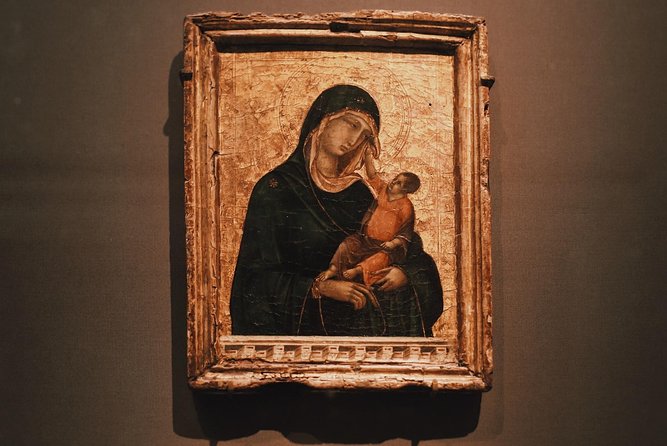
The route may also include a Madonna and Child and works by other European painters. The goal is not to inspect every important canvas. It is to give you a few solid reference points across different styles, then leave you with enough understanding to explore further.
One three-star experience made a fair point: covering such a wide span in a short visit means the treatment of individual artists may not always be as detailed as an art specialist expects. I see that as the tradeoff built into the tour. You gain breadth and a working map of the museum, but you should not expect a full seminar on each painter.
Pop Culture and Art Outside the Usual Canon

The tour can include pop culture memorabilia, which keeps the visit from becoming a parade of old masters. The Met’s collection is broad enough to connect fine art with popular objects, changing ideas of taste, and the way modern culture is preserved.
This section can be helpful if you are visiting with children or with someone who is unsure about museums. Kat has been praised for keeping children engaged, while Mark has worked well with families that included nine and eleven-year-old children. A guide who can move between serious art history and more familiar cultural references makes the visit easier for a mixed-age group.
Do not expect every listed work to appear on every departure. Museum collections change through loans, conservation work, gallery closures, and seasonal displays. The listed highlights are best understood as the intended range, not a guarantee that every single object will be on view.
How the Small Group Changes the Experience
A small group is not just a comfort feature. It affects how much of the guide’s explanation you can actually use.
In a group of five or fewer, you can usually stay near the work, ask a quick question, and hear the answer. Larger groups can make this harder, especially in crowded galleries. The maximum of eight is still not an intimate private lesson, but it is far more manageable than a large coach-style group.
The private option makes the most sense for families, couples with particular interests, or anyone who wants the route adjusted. Mark has been praised for tailoring a visit around specific interests, and that kind of flexibility is one of the strongest reasons to choose private guiding.
The experience is wheelchair friendly. You should still expect a lot of standing and walking through large galleries, so a moderate level of physical fitness is advised. Wear sensible clothing and remember that some areas require appropriate dress.
Is $132.50 a Fair Price?
At $132.50 per person, this is not a casual add-on. The price includes museum admission, a professional guide for 2.5 hours, and the skip-the-line admission arrangement. It does not include hotel pickup, drop-off, or gratuity.
The value depends on how you use the tour. If you spend the entire visit wandering without a plan, the guide can save time and help you see works you might otherwise miss. If you already know the Met well and prefer to explore alone, the cost may feel harder to justify.
I see the best value in three situations:
- Your first Met visit: You get a clear introduction to the building and its major collections.
- A short New York stay: The route lets you see a broad range of art in one focused session.
- A family visit: A guide can keep the pace moving and adjust explanations for different ages.
The tour becomes an even better use of money if you treat it as the first part of a longer Met visit. Several people have found it useful to continue on their own afterward, returning to the rooms and works that caught their attention. The museum can easily occupy a full day, and seeing everything would take far longer.
How to Plan Your Met Day
Choose an early tour if you want to continue exploring afterward. Charles has been praised for making the guided visit a good start to the day, and that approach makes practical sense. You learn the basic layout first, then use the remaining time to revisit favorite galleries at your own pace.
Build in time for the museum itself. The tour lasts about two and a half hours, but that does not mean you have seen the Met. You have seen a selected route through it. If you want to experience more of the Egyptian collection, American rooms, medieval art, or modern galleries, plan to stay after the guide finishes.
The activity ends back at the meeting point. There is no hotel transportation, so arrange your own way to Fifth Avenue by public transportation, taxi, or Uber. The museum is near public transportation, but the booking information does not include a specific subway or bus plan, so check your route before leaving.
Book ahead if your schedule is fixed. The tour averages about 30 days of advance booking, and the choice of tour times can help fit it into a New York itinerary. You receive confirmation at booking, and cancellations made at least 24 hours before the start time receive a full refund. Changes or cancellations within 24 hours are not refunded.
What Kind of Guide Should You Expect?
The guides named in the available feedback include Rob C, Charlie, Mark, Kathryn, Jeff D, Kat, Cherie, Michael, and Matt. Their strengths differ slightly, but the best pattern is clear: you want a guide who can explain art in plain language, keep a group moving, and respond to questions.
Rob has been praised for pacing and for covering the major eras without making the museum feel rushed. Charlie’s style combines art and museum history with stories about artists and practical ways to understand art movements. Mark is a strong choice for families and for anyone wanting a route shaped around personal interests.
Kathryn and Jeff D have been singled out for clear explanations and strong knowledge of the museum. Kat has done well with children, while Matt has been praised for showing unusual objects that visitors might otherwise miss.
The experience can vary with the individual guide. One less enthusiastic assessment found the route somewhat scattered and more focused on the guide’s favorite works than on a strict list of major highlights. If you have visited the Met many times, tell your guide what you have already seen and what you want to study. That is the best way to turn the private format into a real advantage.
Who Should Book This Tour?
I would recommend it most strongly to first-time visitors, families, couples with limited time, and anyone who feels uneasy about navigating a giant museum. It is also useful if you want a broad introduction before choosing which galleries deserve a second look.
Art specialists may want something more focused. The tour ranges from ancient Egypt to pop culture, so no single artist or period receives a full treatment. Repeat visitors may prefer a themed tour or an independent day devoted to one collection.
Still, the broad route is part of the appeal. You can see the armor of a king, a grand American history painting, a delicate Vermeer, modern works by Picasso and Seurat, and Van Gogh in one visit. That is a lot of ground, and the guide keeps it from becoming a blur of famous names.
Should You Book the Met Guided Tour?
Book it if you want orientation, context, and efficient highlights rather than a quiet solo visit. The small-group format, included admission, and strong group of named guides make it a practical way to meet the Met for the first time.
Skip it if you already know the museum well, dislike group pacing, or want to spend an hour studying a single painting. At $132.50 per person, you should be ready to use the guide’s route and then stay on for independent exploring.
For most first-time visitors, I think the tour earns its place in a New York plan. The Met is simply too large to treat casually. A good guide gives you a route, a set of stories, and enough confidence to keep exploring after the formal tour ends.
FAQ
Where does the Met guided tour begin?
The tour begins at The Metropolitan Museum of Art, 1000 Fifth Avenue, New York, NY 10028.
How long does the tour last?
The experience lasts approximately 2 hours and 30 minutes.
Is museum admission included?
Yes. All entrance fees and skip-the-line admission are included, though every person must still pass through the museum’s security line.
How large is the tour group?
The maximum is eight people per booking. Private tours are limited to your own group, and a small-group option is also available.
What art can I see on the tour?
The route generally covers selected highlights from ancient Egypt, medieval Europe, the American wing, European painting, modern art, and pop culture. Possible works include Henry VIII armor, Washington Crossing the Delaware, Madame X, Vermeer, Picasso, Seurat, Van Gogh, and more. Displays can change during the year.
Is the tour wheelchair accessible?
Yes. The experience is listed as wheelchair friendly. A moderate level of physical fitness is still recommended because the visit involves walking and standing in museum galleries.
What happens if I need to cancel?
You can receive a full refund if you cancel at least 24 hours before the experience start time. Cancellations or changes made less than 24 hours before the start time are not accepted for a refund.
Newly listed in New York City
- Official Private NYC Central Park Horse Carriage Ride Since 1970™★ 4.5 · 447 reviews
- NYC at Night: 3-Hour Luxury Bus Tour of Top Highlights★ 4.5 · 448 reviews
- From Manhattan: 5-Hour Bronx, Queens, and Brooklyn Bus Tour★ 4.7 · 451 reviews
- Private Guided New York City Tour by SUV★ 5.0 · 451 reviews
- Statue of Liberty Tour with Ellis Island and Immigration Museum★ 4.0 · 452 reviews
- NYC: Official Grand Central Terminal Tour★ 5.0 · 458 reviews
- Circle Line: NYC BEAST Speedboat Ride★ 4.5 · 458 reviews
- New York City: Sunset Yacht Cruise★ 4.9 · 461 reviews
New York City Tours, compared.


Empire State Building Tickets – Observatory & Museum
Read our review →


Statue of Liberty and Ellis Island Tour: All Options
Read our review →


New York CityPASS®: Save up to 41% at 5 Top Attractions
Read our review →Browse the lists this tour appears in