
Reviewed · ST PETERSBURG TOURS
St. Petersburg Jungle Prada Site History Tour
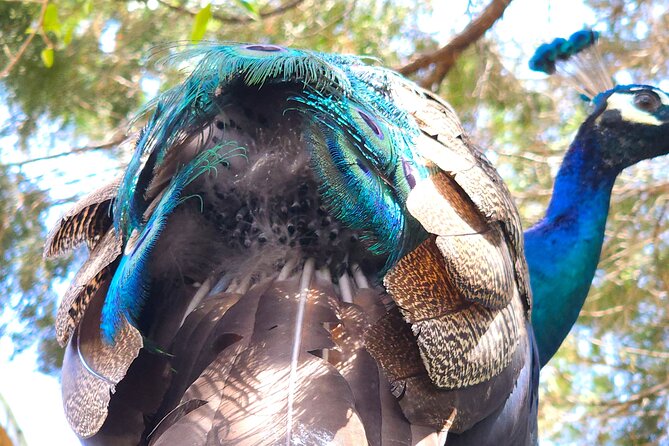
The most surprising thing about this St. Petersburg tour is the 900-foot Tocobaga shell mound tucked inside the Jungle Prada neighborhood. This is not a distant archaeological ruin reached after a long drive. It sits in town, under palms and dense subtropical growth, with peacocks wandering through the grounds.
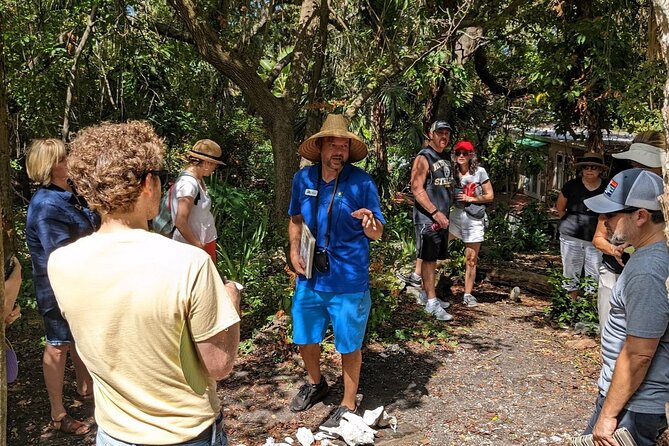
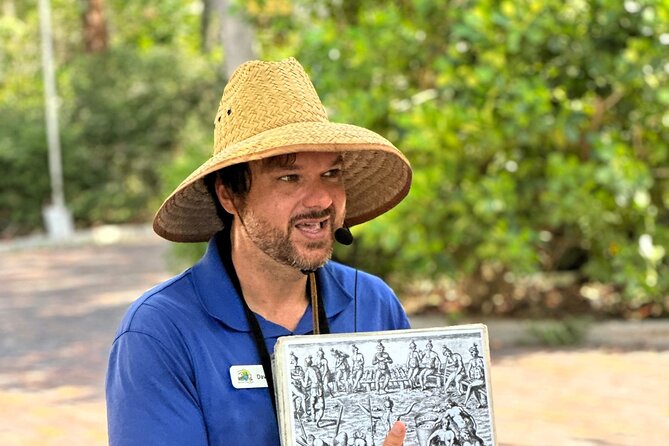
I like the personal connection here: guide David is part of the family that has protected the property for three generations. I also like the honest, local scale of the tour. For $14, you get a small-group walk through a site tied to Native American life, Spanish exploration, St. Petersburg development, plants, and local folklore.
The main thing to consider is the ground. This is a rustic, wooded property with uneven surfaces, and Florida heat can make even a short walk feel demanding. Bring water, wear sturdy shoes, and expect a history talk that may be more appealing to older children and adults than to young kids.
Key points to know before you go
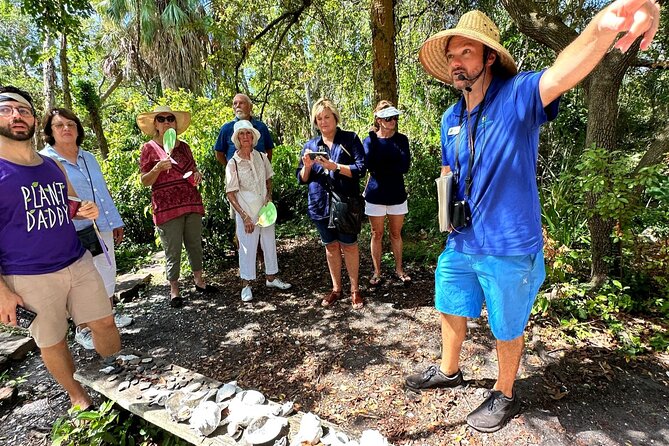
- A giant shell mound contains layers of ancient conch and whelk shells gathered by the Tocobaga.
- David leads the tour with family ties to the property and a strong focus on local history.
- The 1528 Narváez expedition adds a dramatic Spanish exploration story to the Native American setting.
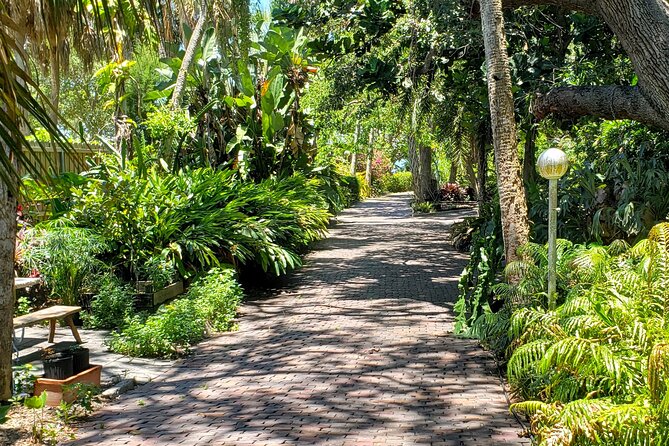
- Peacocks roam freely through the gardens, making the walk as pleasant visually as it is informative.
- The guided portion lasts about 75 minutes, but you should allow roughly two hours for the full visit.
- On-site parking is available, and the group size is capped at 25 people.
Why this small St. Petersburg site matters
Florida’s human story reaches back at least 14,000 years, long before the beaches, hotels, and retirement communities that shape the state today. The Jungle Prada Site gives you a way to connect that broad history to one specific piece of ground.
The site is associated with the Tocobaga, a Native American people who lived around Tampa Bay. Their daily life left behind a midden, a mound built from discarded shells and other food remains. The result is an archaeological record you can actually see rather than a story confined to a museum display.
The main mound is made largely from conch and whelk shells and stretches for more than 900 feet. That size helps you understand the scale of the community that used this area over time. It was not a random pile of shells. It reflects repeated meals, work, movement, and settlement across generations.
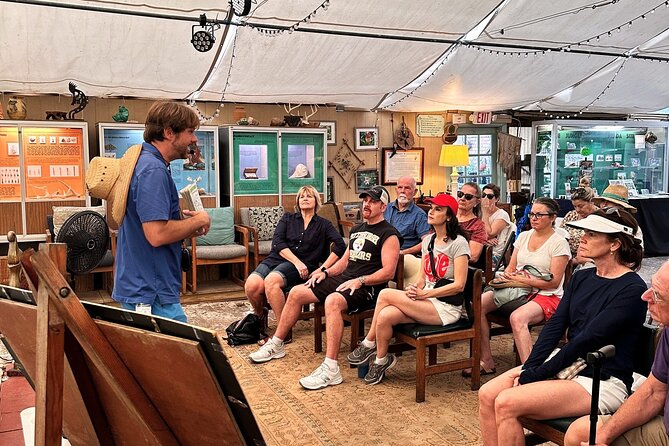
I find this kind of place more useful than a quick stop at a historical marker. You can walk across the property, see the mound, look at remains in their setting, and then examine artifacts in the small on-site museum. The setting helps connect objects to the people who made and used them.
The property also carries a more recent preservation story. The Anderson family purchased it decades ago to protect the archaeological site from development, and the land remains family-owned across three generations. That gives David’s presentation a personal layer without turning the visit into a purely family story. The focus stays on the Tocobaga, the Spanish arrival, and the growth of the St. Petersburg area.
More historic sites around the USA:
- New York City: American Museum of Natural History Ticket
★ 4.5 · 15,447 reviews - History and Hauntings of Salem Guided Walking Tour
★ 5.0 · 14,564 reviews - Charleston’s Old South Carriage Historic Horse & Carriage Tour
★ 5.0 · 10,023 reviews
Walking the mound and village plaza
The guided walk begins at 1700 Park St N in St. Petersburg. You start on the Jungle Prada property, then follow the guide through the wooded grounds toward the main mound and adjoining village plaza.
The mound is the central sight. From its top, you get a better sense of its size and position within the property. The walk is not a polished boardwalk experience, so watch your footing as you move over uneven ground and through heavily wooded areas.
David’s role is important here. The subject includes archaeology, Native American culture, Spanish exploration, plants, pirates, and local development, so a guide has to connect many pieces without losing the thread. His style, as described through the experience, mixes dates and names with humor and time for questions.
You may also see fragments of pottery and other remains on the open grounds. Treat anything you find as part of the site. The value is in seeing archaeological evidence where it was left and understanding what it tells you, not in taking anything home.
The village plaza adjoining the mound helps you picture the site as a lived-in place. The tour does not present the Tocobaga as an abstract group from a textbook. It uses the physical property to discuss the people who gathered food, made tools, built homes, and organized community life around Tampa Bay.
This portion is especially good for anyone who likes archaeology but does not want a formal museum-only visit. You get a gentle outdoor walk, a real mound, and explanations along the way. The tradeoff is that the site is rustic. You should not expect extensive signage, level paths, or the visual polish of a major state park.
Cabeza de Vaca and the 1528 landing
The Spanish story gives the tour a second strong thread. The Narváez expedition reached this area in 1528, bringing the group into contact with the Native people who already lived here.
One of the expedition members was Alvar Núñez Cabeza de Vaca. His later journey became one of the most remarkable survival stories in early Spanish exploration. After the expedition’s failures, Cabeza de Vaca and three others traveled across what is now the southern United States, eventually reaching the Pacific Ocean between 1528 and 1536.
That story adds drama, but the tour’s value comes from placing it beside the Tocobaga story rather than treating the Spanish arrival as the beginning of Florida’s history. You first encounter a Native American site shaped by centuries of use, then learn how Spanish exploration entered that world.
I appreciate that order. It helps correct the usual tourist version of Florida, where history begins with colonial forts or modern development. Here, Spanish exploration is one chapter in a much longer human story.
The Narváez material may appeal most to adults and older children who enjoy names, dates, maps, and survival accounts. It also gives you a reason to pay attention during the walking portions. You are not just moving from one plant to another. You are following the setting of an expedition that had lasting importance in the written record of early Florida.
If you want a short, purely visual attraction, this tour may feel talk-heavy. The guided portion includes substantial explanation, and the information is the main event. The plants, mound, museum, and peacocks make the setting enjoyable, but you book this experience to learn.
Peacocks, plants, and the feel of the property
The Jungle Prada grounds have a character that changes the pace of the history. Free-roaming peacocks move through the subtropical property, often adding a noisy and colorful distraction while David is speaking.
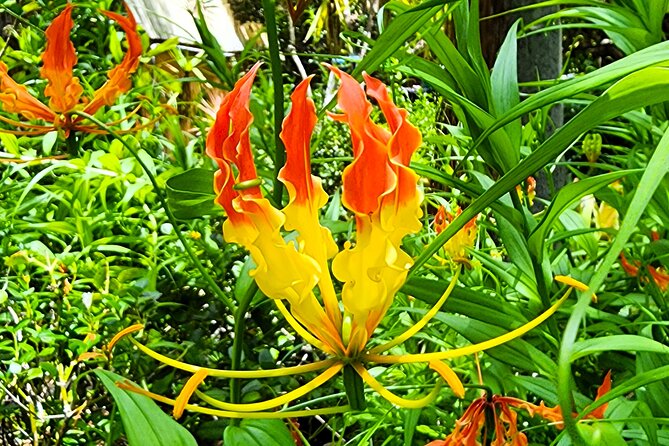
You may also notice a wide range of plants. David includes horticulture in his discussions, which adds another layer to the walk. The plants are not simply decoration. They help show how a preserved family property can function as both an archaeological site and a living garden.
The wooded setting offers shade, which matters in Florida. Still, shade does not remove the heat, especially during the warmer months. Bring your own bottled water because water is not included. Comfortable closed-toe shoes are the sensible choice.
The property has uneven surfaces and natural hazards associated with heavily wooded grounds. That does not make the tour difficult for most people, but it does mean you should walk carefully. If you use a stroller, cane, or mobility aid, the supplied information does not promise fully even access, so ask before booking if that matters to you.
The peacocks are a bonus, not the reason to come. Their presence can make the tour memorable for families, but the birds are free-roaming and not a scheduled part of the program. You should come prepared for a history walk first, with animals and gardens as extras.
More to weigh up across the USA
- Clear Kayak Tour of Shell Key Preserve and Tampa Bay Area
★ 5.0 · 5,800 reviews - Island Sunset and Skyway Light Show – 3hr Boat Cruise in St. Pete
★ 5.0 · 1,871 reviews - Small Group 2 Hour Dolphin Cruise with Snorkeling to Shell Key
★ 5.0 · 1,523 reviews - Evening Yacht Cruise with Optional Dining in St. Petersburg
★ 4.5 · 590 reviews
How long the visit really takes
The guided history portion lasts about 75 minutes. The full activity is described as approximately two hours, so allow extra time for arrival, gathering with the group, walking at a relaxed pace, and looking around the property.
The itinerary also includes Jungle Prada de Narváez Park, a nearby attraction with free parking and a short walk to the tour site. The practical point is simple: you do not need separate transportation between the parking area and the main meeting point.
Morning and afternoon tours are available. I would choose based on the day’s heat and your wider St. Petersburg plans. A morning start should be more comfortable in warm weather, while an afternoon visit can fit well around other city activities.
The group can include up to 25 people. That is still small enough for a personal guide-led experience, though it is not a private tour. David’s willingness to answer questions is useful here. If you want to ask about pottery, plants, the mound, or the expedition, there should be room to engage rather than simply follow along silently.
The tour begins and ends at 1700 Park St N. Transportation to the site is not included, so you need to make your own way there. Parking is available on-site, which keeps the logistics easy once you arrive.
Is $14 good value?
At $14 per person, this is one of the easier history purchases in St. Petersburg to justify. The price covers a historian-led guided tour, access to the grounds, the mound, the village plaza, and the on-site museum area with artifacts from the midden.
The value is strongest if you like places with a real connection to the land. You are not paying for a large attraction filled with special effects or elaborate displays. You are paying for access, interpretation, and preservation of a site that could otherwise have disappeared under development.
David’s family connection also matters to the experience. He is not simply reading a script about an unrelated property. His family has worked to protect the site, and his presentation includes local knowledge about Boca Ciega, Jungle Prada, plants, pirates, and the growth of St. Petersburg.
The $14 price does not include transportation or bottled water. Those are minor costs, but they are worth remembering in Florida, where arriving without water can make an easy outing less comfortable. You also need to accept the rustic nature of the grounds. The price is excellent for a guided archaeological walk, but this is not a fully built visitor center with air-conditioned exhibits.
Who will enjoy this tour most
I would recommend the Jungle Prada Site History Tour to:
- History fans who want Native American and Spanish stories in the same visit.
- People interested in archaeology who want to see a shell mound and artifacts in place.
- Families with older children who can handle a 75-minute explanation and uneven ground.
- St. Petersburg residents looking for a deeper look at the city’s past.
- Visitors with limited time who want a worthwhile local activity without leaving the city.
- Garden and wildlife fans who enjoy subtropical plants and free-roaming peacocks.
Young children may struggle with the length of the talks. The property is attractive, but the tour depends on listening. I would choose it for a child who can follow a story about the Tocobaga and the Narváez expedition, not simply for a child who wants to see animals.
It also suits repeat visitors. The combination of local history, family preservation, and a distinctive setting makes it different from the usual beach day or waterfront stroll. If you already know St. Petersburg’s modern side, this tour gives you a much older point of reference.
The tour welcomes service animals, and most people can participate. Pets are not allowed on the site. Since weather affects the activity, poor conditions can lead to a new date or a full refund.
Practical tips for a better visit
Bring water, especially in summer. It is not provided, and the property can be warm even where the trees offer shade.
Wear sturdy shoes with good grip. The surface is uneven, and the safest approach is to focus on your footing rather than trying to walk quickly while taking pictures.
Give yourself a little extra time to park and reach the meeting point. Jungle Prada de Narváez Park is close by, and the walk to the site is short, but arriving early keeps the visit relaxed.
Keep your expectations focused on a guided history experience. The museum is small, and the grounds are natural rather than heavily developed. That is part of the appeal, but it may disappoint you if you want a large indoor collection or a polished theme-park presentation.
Ask questions. David’s approach leaves room for them, and the subjects range well beyond the mound. You might want to ask about the Tocobaga, the shell deposits, the Narváez expedition, local plants, or the property’s preservation.
If your plans change, cancellation is free up to 24 hours before the start time. Cancellations within 24 hours are not refunded, and poor weather is handled with a different date or a full refund.
Should you book the Jungle Prada Site History Tour?
I would book it if you want an affordable, personal look at St. Petersburg’s oldest layers. The combination of a huge Tocobaga shell mound, Spanish exploration, family preservation, a small museum, and peacocks is unusual. At $14, it offers far more substance than the price suggests.
I would skip it only if you want a fully paved attraction, a short photo stop, or a tour with little talking. The uneven ground and warm weather require a little preparation, and the history presentation is the heart of the visit.
For everyone else, choose a morning or afternoon time, bring water, wear sturdy shoes, and let David guide you through a side of Florida that many people never realize is here.
FAQ
Where does the Jungle Prada Site History Tour begin?
The tour begins at 1700 Park St N, St. Petersburg, Florida 33710.
How long does the tour last?
The guided history portion lasts about 75 minutes. You should allow approximately two hours for the full activity.
What will I see on the tour?
You will see a large Tocobaga midden mound, an adjoining village plaza, archaeological remains, artifacts from the midden in the on-site museum, subtropical plants, and free-roaming peacocks.
Who leads the tour?
The tour is led by David, whose family has owned and helped preserve the property across three generations.
Is parking available?
Yes. Parking is available on-site at the nearby Jungle Prada de Narváez Park, which is a short walk from the tour site.
Is the tour offered at different times?
Yes. You can choose from morning or afternoon guided tour times.
How much does the tour cost?
The price is $14 per person.
Is bottled water included?
No. Bottled water is not included, so bring your own, especially during Florida’s hot summer weather.
Are pets allowed?
Pets are not allowed on the site. Service animals are allowed.
Is the property easy to walk?
The property has uneven surfaces and wooded areas. Most people can participate, but you should watch your step, exercise caution, and wear sturdy shoes.
What happens if the weather is poor?
The experience requires good weather. If it is canceled because of weather, you will be offered another date or a full refund.
Can I cancel for a refund?
You can cancel at least 24 hours before the start time for a full refund. Cancellations or changes made less than 24 hours before the start time are not accepted for a refund.
Newly listed in the USA
- The Maui Butterfly Farm Tour★ 5.0 · 446 reviews
- NON BUS 4 Winery Traverse City Wine Tour on Old Mission Peninsula★ 5.0 · 445 reviews
- New Orleans City Tour and Steamboat Natchez Harbor Jazz Cruise★ 4.0 · 446 reviews
- New England Aquarium Admission Ticket in Boston★ 4.0 · 446 reviews
- Alpaca and Llama Farm Tour★ 5.0 · 446 reviews
- Small-Group Laura and Whitney Plantation Tour from New Orleans★ 4.5 · 446 reviews
- Dreaded Dead Descent of the District: DC Ghost Tour★ 4.0 · 446 reviews
- Cañon City: Royal Gorge Bridge & Park Entry Ticket & Gondola★ 4.5 · 448 reviews
St Petersburg Tours, compared.

Clear Kayak Tour of Shell Key Preserve and Tampa Bay Area
Read our review →
Island Sunset and Skyway Light Show – 3hr Boat Cruise in St. Pete
Read our review →
Small Group 2 Hour Dolphin Cruise with Snorkeling to Shell Key
Read our review →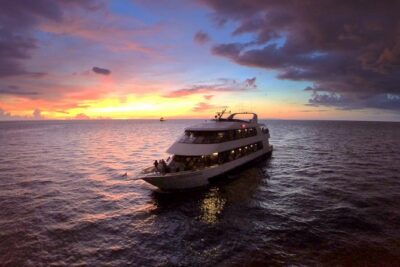
Evening Yacht Cruise with Optional Dining in St. Petersburg
Read our review →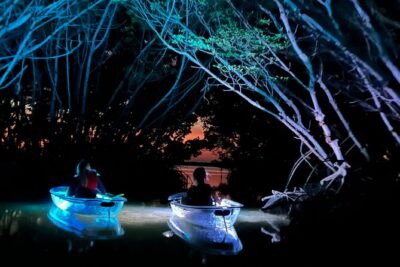

Dolphin Watching/Eco Cruise, John’s Pass, Madeira Bch, FL
Read our review →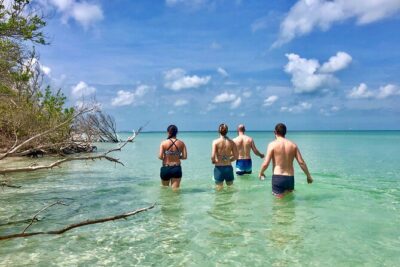
Small Group Kayak Tour of the Shell Key Preserve
Read our review →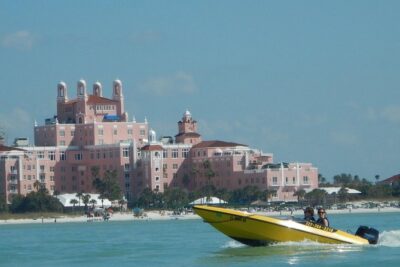
Browse the lists this tour appears in