
Reviewed · THE USA
Rock and Roll Hall of Fame Admission in Cleveland
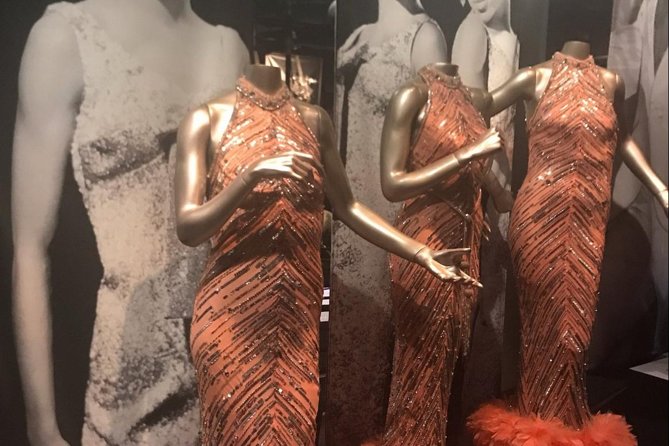
The Rock and Roll Hall of Fame is not a quick room of guitars and gold records. It is a six-floor music museum built for wandering, listening, reading, and remembering. You can trace rock’s roots, see famous stage clothes and instruments, and test interactive displays that connect artists to their influences.
I like the freedom to explore independently, with no guide hurrying you along. I also like the mix of permanent galleries and special exhibits, from Elvis and The Beatles to cities shaped by Motown, punk, psychedelia, and grunge. The main caution is time: one to four hours is possible, but serious music fans may need much longer, and some areas can be loud, dark, or affected by renovation work.
Key things to know before you go
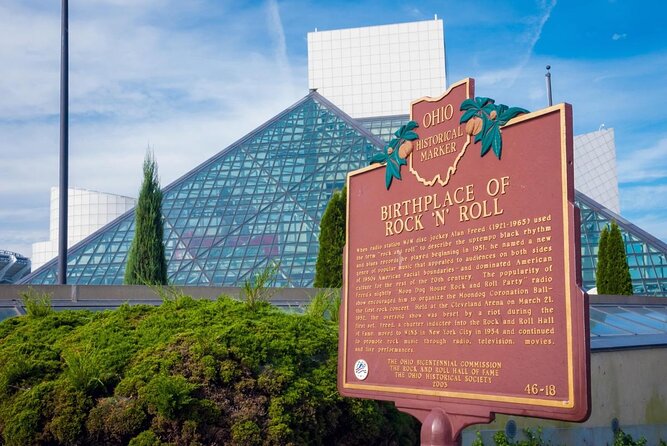
- Plan on at least three hours: You can walk through in less, but the films, listening stations, displays, and reading material reward a slower visit.
- Start on the ground floor: This gives you a better sense of the museum’s layout before moving through the upper galleries.
- Expect six floors of material: The collection covers famous artists, musical movements, induction ceremonies, instruments, clothing, photographs, and multimedia displays.
- Use the interactive exhibits: The Beat Goes On helps show how artists influenced one another, and some stations let guitar players play along with well-known performers.
- Check the calendar and local events: Browns games, road closures, construction, and limited parking can complicate access around the waterfront.
- Bring your mobile ticket: Electronic admission works at the entrance, and the associated app has worked without an internet connection for some ticket holders.
Why this museum deserves real time
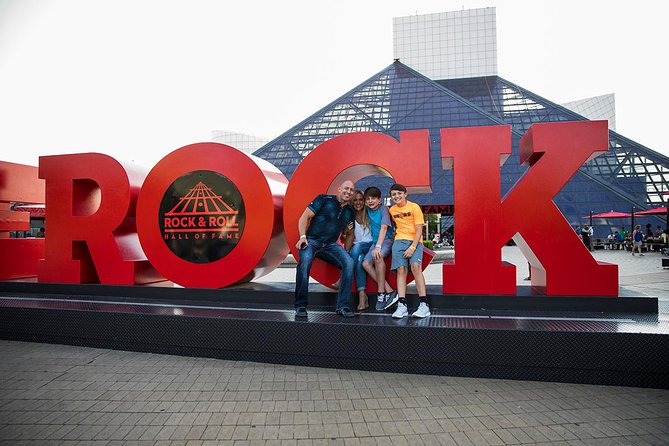
The main attraction is the sheer range of music under one roof. You are not limited to one narrow idea of rock. The galleries connect early rock and roll with soul, pop, hip-hop, R&B, metal, punk, psychedelic music, and grunge.
That wide reach matters because the best part of rock history is often the exchange between styles. The museum’s displays can show how a sound from one city influenced an artist somewhere else, or how a band borrowed from older performers and then changed the formula.
I would not treat this as a standard art museum where you quietly look at objects and move on. Music plays a large role in the experience. Films, induction ceremony footage, listening stations, bright screens, and interactive displays make the building feel active, though the sound level may be too much for some people.
The museum is also a good match for mixed-age families. Children may not know every name on the walls, but the hands-on stations give them something to do while older family members revisit music from their own lives. Children must be accompanied by an adult, and most people can take part. Service animals are allowed.
Other trips travellers line up across the USA on the same visit:
- NYC: SUMMIT One Vanderbilt Tickets
★ 4.7 · 51,195 reviews - NYC: 9/11 Memorial & Museum Timed-Entry Ticket
★ 4.8 · 31,428 reviews - NYC: Empire State Building Tickets – Observatory & Museum
★ 4.7 · 25,757 reviews
Begin with the roots of rock and roll
Start on the ground floor, then work upward rather than choosing galleries at random. The opening material gives context for the rest of the visit, especially if you are interested in how rock developed from earlier musical traditions.
The Roots of Rock & Roll section provides the foundation. It helps place later stars in a larger story instead of presenting each artist as an isolated celebrity. You can then move into displays that show the movement of music through cities, record labels, scenes, and changing audiences.
This first stage may appeal most to readers who want more than famous costumes. It is also the part that can feel less immediately exciting if you came mainly to see a favorite performer. Give it time. The later galleries make more sense when you understand the musical connections introduced here.
The museum does not present every artist with equal space, and the organization may feel uneven. Some people prefer one dedicated room per artist, while the Hall often arranges musicians by theme, era, or musical relationship. That approach is useful for understanding influence, but it can be less satisfying if you want a simple, chronological walk through one star’s career.
Follow the musical connections at The Beat Goes On
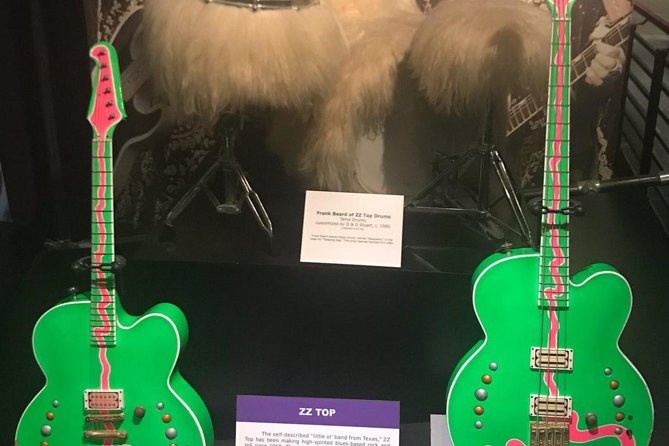
The Beat Goes On is one of the more useful stops for anyone who likes tracing influences. It is an interactive display that shows who shaped a favorite band or performer, helping you follow the chain backward through earlier sounds.
This is where the museum’s broad scope becomes practical. Instead of only asking who was inducted, you can ask why an artist sounded the way they did. The display encourages you to move beyond the most famous names and notice the musicians who helped create the conditions for later success.
If you play guitar, look for the interactive stations that let you play along with favorite artists. That feature gives the visit a physical element, and it can be a welcome change after several galleries of reading and watching.
I would make this section a priority for teenagers and adults who enjoy music-making, not just music memorabilia. It is also a smart place to spend time with children. The activity can turn an abstract lesson about influence into something they can hear and try.
See the icons in the Elvis, Beatles, Stones, and Hendrix galleries
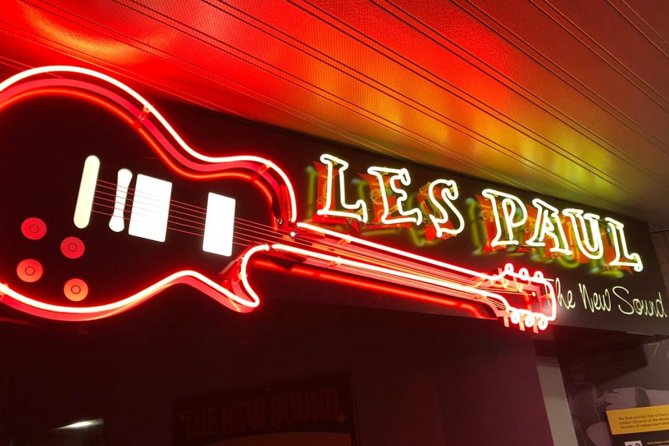
The major artist displays are the museum’s dependable crowd-pleasers. Elvis, The Beatles, The Rolling Stones, and Jimi Hendrix each represent a different chapter in popular music, and their collections give you a chance to see the people behind the mythology.
Expect the appeal to come from a combination of objects and stories. Instruments, clothing, photographs, and career material help explain how performers built a public identity. A famous guitar or stage outfit means more when the display also gives you the setting in which it was used.
The Beatles and Rolling Stones sections should appeal to anyone interested in the British influence on American popular music. The Hendrix material offers a closer look at an artist whose sound and stage presence changed expectations for electric guitar.
The Elvis display provides another important piece of the story, especially for visitors interested in early rock and the creation of the modern music star. You may find that some galleries feel more focused than others, depending on the current display plan and special exhibits.
Do not rush through these rooms simply to reach newer music. The Hall works best when you compare generations. Notice what changes in the instruments, clothing, presentation, and relationship between performer and audience.
A different kind of day, same corner of the map:
- NYC: Empire State Building Observation Deck Tickets
★ 4.7 · 22,072 reviews - NYC: Edge Observation Deck Admission Ticket
★ 4.6 · 20,918 reviews - Grand Canyon West, Hoover Dam Stop and Optional Lunch and Skywalk
★ 5.0 · 19,535 reviews - New York City: Statue of Liberty & Ellis Island with Ferry
★ 4.6 · 18,683 reviews
Walk through Legends of Rock
Legends of Rock brings together a long list of major names, including Guns N’ Roses, David Bowie, the Supremes, Metallica, Michael Jackson, and Parliament Funkadelic.
The strength here is variety. You can move from glam and hard rock to funk, pop, soul, and metal in a short stretch. That makes the gallery useful for people with different musical tastes. One person can study Bowie while another heads for Metallica or Michael Jackson.
This section also shows why the Hall is not only for classic-rock purists. The institution’s idea of rock reaches into styles that changed popular music without fitting neatly into a single guitar-based category.
The drawback is organization. If you want a clean, dedicated exhibit for every artist, the mixed display may feel scattered. I suggest choosing two or three artists you care about, then allowing time for names you know less well. The unexpected material is often what gives this part of the museum its value.
Hear how cities created distinct sounds

Cities and Sounds is one of the most useful galleries for understanding music as a local phenomenon. It covers styles such as Motown, psychedelic music, punk, and grunge, showing how places across the United States and overseas developed recognizable musical identities.
This is more than a list of city names. Local scenes often shape how musicians dress, record, perform, and find an audience. The gallery gives you a way to connect those choices to the sound that eventually reached a wider public.
I would spend time here if you have already seen the biggest stars elsewhere. It moves the focus from individual fame to communities of musicians, clubs, producers, fans, and record buyers.
The section can also help younger visitors understand why music history is tied to geography. A sound does not appear from nowhere. It grows from the people and places around it, then travels.
Experience the induction ceremony production
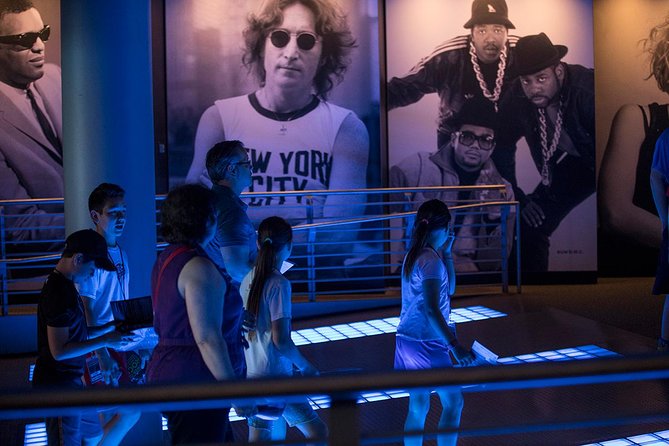
One of the museum’s major attractions is a concert-style presentation built around highlights from more than 30 years of Rock and Roll Hall of Fame induction ceremonies.
This gives you the front-row feeling promised by the experience. Instead of reading only about the honors, you can see selected ceremony moments and watch artists receive recognition from their peers.
The presentation is a highlight, but it comes with two practical cautions. The surrounding lighting can flash directly toward the audience, and the music or video sound may be very loud. If you are sensitive to bright lights or high volume, take breaks and position yourself carefully.
The footage is worth watching if you want to understand the Hall as more than a collection of objects. Induction ceremonies show the personal side of music history: admiration, rivalry, influence, and the passing of one generation’s knowledge to the next.
Explore the Rolling Stone anniversary material
The museum also marks more than 50 years since Rolling Stone magazine began as a counterculture publication covering music, politics, and popular culture.
This exhibit adds useful context because music journalism helped shape how artists were understood. Magazines did not simply report on songs. They helped define scenes, create public debates, and connect music with wider cultural movements.
You may find this material especially interesting if you enjoy the story around music as much as the performances themselves. It shows how criticism, politics, photography, and pop culture became part of the rock and roll conversation.
As with other multimedia areas, the amount of material can be heavy. You will get more from it if you select the subjects that interest you instead of trying to read every panel.
How long should you allow?
The official visit can take from one to four hours, but I would treat one hour as a rushed visit. Two hours lets you see the main areas, while three hours gives you time for films, listening stations, and interactive exhibits.
Four hours is a sensible target for a music fan. Some people may want even longer, particularly if they read every label and watch several films. The building contains enough material that a short stop can leave you feeling that you saw objects without understanding them.
You should also expect plenty of walking. The museum’s six floors make comfortable shoes a wise choice. If you are visiting with family, set a loose plan rather than trying to keep everyone together in every gallery.
For a second visit, you can focus on a particular artist, genre, or city. That makes the museum more useful than a one-time checklist attraction.
Is the $39.50 admission good value?
At $39.50 per person, this is not a cheap casual stop. The value depends on how you visit it.
If you have only 45 minutes and care little about music history, the price may feel high. If you spend three or four hours with the exhibitions, films, artifacts, and interactive displays, the cost becomes easier to justify. You are paying for a large indoor attraction with both permanent material and changing presentations, not just a single gallery.
I think the admission works best for people who already have a personal connection to music. The museum is designed to trigger memories, but it also offers enough context to introduce unfamiliar artists and genres.
The mobile ticket adds convenience. Keep it ready at the entrance, and save it in the app if possible. An electronic ticket has worked even when no internet connection was available, but you should still confirm that the ticket details are correct before arriving.
Timing, access, and practical cautions
Hours vary by season. From January through June, the museum is generally open daily from 10:00 a.m. to 5:00 p.m., with Thursday hours extending to 9:00 p.m. July and August hours run daily from 10:00 a.m. to 5:00 p.m., with Thursday, Friday, and Saturday extending to 8:00 p.m. From September through December, it is generally open daily from 10:00 a.m. to 5:00 p.m., with Thursday hours extending to 9:00 p.m.
Confirm the hours for your date before setting your schedule, especially if you are counting on an evening visit. Food and drinks are not included, though they are available to purchase.
The museum is near Cleveland’s stadium area, so event days matter. A Browns game can bring road closures, scarce parking, and unusually high parking prices. If you are visiting during football season, check the local event schedule and allow extra time. Construction near the site has also affected some visits, and it may not always be obvious when you book.
This is a self-guided admission rather than a guided tour. The maximum booking size is listed as 14 people, but the museum itself is designed for independent exploration, so you can set your own pace.
Free cancellation is available if you cancel at least 24 hours before the experience start time. Cancellations or changes made within 24 hours are not refunded.
Who will enjoy this most?
I would recommend the Hall to:
- Music fans who want to see instruments, clothing, photographs, and career material in person
- Families with different musical tastes
- Guitar players who want to try interactive stations
- Visitors interested in the links between music, cities, politics, journalism, and pop culture
- People looking for a substantial indoor Cleveland attraction
- Fans of artists such as Elvis, The Beatles, The Rolling Stones, Jimi Hendrix, David Bowie, Metallica, Michael Jackson, and many others
You may want to reconsider if loud sound, flashing lights, dark rooms, or multimedia-heavy museums bother you. The Hall can also feel dated or disorganized in places, and some displays may be affected by construction or renovation.
Should you book Rock and Roll Hall of Fame admission?
Book it if you can give the museum at least three hours and have more than a passing interest in music. The best parts are the range of artists, the connections between genres, the induction ceremony footage, and the chance to handle the visit at your own speed.
Book with a plan. Start on the ground floor, wear comfortable shoes, check for football events, and do not expect to see everything in one quick stop. At $39.50, it earns its price when you treat it as a half-day museum visit rather than a photo opportunity.
If you are in Cleveland with a serious music fan, this is an easy choice. If your group includes people who dislike loud multimedia displays, agree on a shorter visit and take breaks. The Hall can be inspiring, informative, noisy, and slightly uneven, often within the same hour, but it gives you a memorable look at how music shaped modern culture.
FAQ
How much does admission cost?
Admission costs $39.50 per person.
How long does a visit take?
The visit can take approximately one to four hours. Allow at least three hours if you want time for the exhibits, films, reading, and interactive displays.
Is the experience guided?
No. You explore the Rock and Roll Hall of Fame independently rather than joining a guided group.
Is a mobile ticket available?
Yes. The admission includes a mobile ticket. Electronic tickets have worked even without an internet connection when used through the app.
What exhibits can I see?
Permanent and featured exhibits include Roots of Rock & Roll, The Beat Goes On, Elvis, Legends of Rock, Cities and Sounds, The Beatles, The Rolling Stones, and Jimi Hendrix. Displays and special exhibits may change.
Are food and drinks included?
No. Food and drinks are not included in admission, but they are available to purchase.
Can children visit alone?
No. Children must be accompanied by an adult.
Are service animals allowed?
Yes. Service animals are allowed.
What are the opening hours?
From January through June, hours are generally 10:00 a.m. to 5:00 p.m. daily, with Thursday open until 9:00 p.m. July and August hours are generally 10:00 a.m. to 5:00 p.m. daily, with Thursday, Friday, and Saturday open until 8:00 p.m. From September through December, hours are generally 10:00 a.m. to 5:00 p.m. daily, with Thursday open until 9:00 p.m.
Can I cancel for a refund?
Yes. You can receive a full refund by canceling at least 24 hours before the experience start time. Cancellations and changes made less than 24 hours before the start time are not accepted for a refund.
Newly listed in the USA
- Sail Biscayne Bay: An Intimate Eco-Adventure with Snorkeling★ 5.0 · 441 reviews
- Pinnacle Zipline Tour in Keystone★ 5.0 · 441 reviews
- 2-Hour Guided Segway Tour of Chicago★ 5.0 · 442 reviews
- Kailua 2-Hour Guided Kayaking Excursion, Oahu★ 5.0 · 442 reviews
- Snorkel & Dolphin Sightseeing Tour Aboard the Footloose★ 5.0 · 441 reviews
- NYC: Bar, Lounge and Rooftop Nightlife Tour★ 4.6 · 442 reviews
- Sunset Dolphin Sail Aboard the Footloose Catamaran★ 5.0 · 442 reviews
- Los Angeles: Surfing Lesson in Venice Beach★ 4.8 · 442 reviews