
Reviewed · WALKING TOURS
ORIGINAL Old Louisville Walking Tour seen in The New York Times!
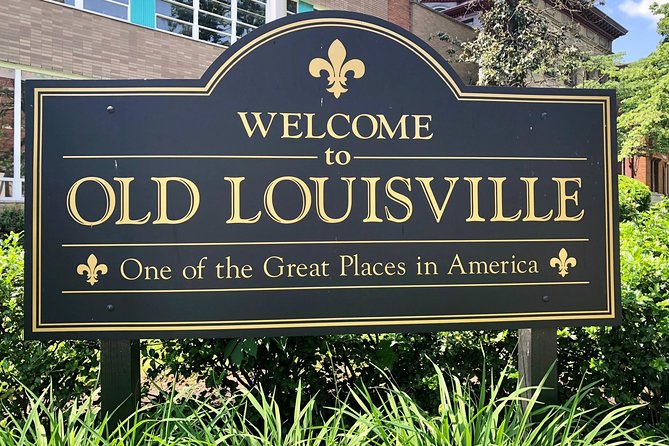
Old Louisville is the star here: more than 1,000 historic buildings fill 40 square blocks, creating one of the largest historic districts in the United States. The grand houses, carved stonework, shaded streets, and local tales make this far more than a stroll past pretty facades. The Witches’ Tree adds a good bit of oddball folklore to the architecture.
I like two things in particular. First, the guides bring personal knowledge and strong storytelling to the streets. David, Gabe, Angelique, Brenda, and Frances are all praised for clear, engaging talks, and one guide has lived in the neighborhood. Second, the $25 price buys nearly two hours of context you would miss on your own. The main drawback is simple: you must walk for about 90 minutes without a bathroom break, and the tour is not a good fit for people with mobility problems.
Key points to know before you book

- More than 1,000 historic buildings: Old Louisville offers an unusually large concentration of Victorian architecture across 40 square blocks.
- Stories make the houses memorable: You hear about the wealthy families, builders, local characters, and legends connected to the neighborhood.
- The Witches’ Tree is the quirky stop: This twisted tree carries a tale of angry witches, a tornado, and offerings left by passersby.
- No mansion interiors are included: You view the houses from the street, though the Conrad-Caldwell House Museum can be toured separately for a fee.
- A steady 90-minute walk: Wear practical shoes and plan ahead for the lack of a scheduled bathroom break.
- Small-group format: The maximum group size is 20, with a certified English-speaking guide.
Why Old Louisville deserves a walking tour
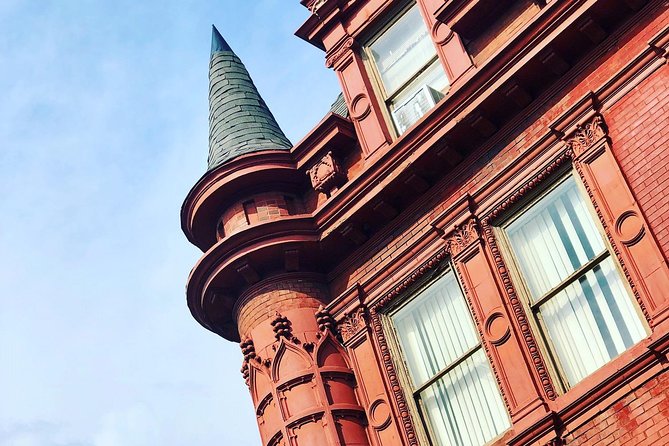
You can drive around Old Louisville and see handsome houses. You will not get much sense of who built them, why the neighborhood developed, or how the city’s past still shapes it today. This tour adds the human layer, linking the buildings to wealthy industrialists, prominent families, odd local stories, and changing city life.
Old Louisville is not a single preserved street. It covers a broad residential district with more than a thousand structures, many of them private homes. That scale is part of the appeal. You get a real neighborhood, not a staged collection of monuments, but it also means the setting is transitional and urban rather than polished at every corner.
The tour begins at West Ormsby Avenue and South Fourth Street, at the north edge of the district. The activity returns to the same meeting point, which keeps the day easy to plan. Since the walk is outdoors and depends on decent weather, bring shoes suited to city sidewalks and dress for the forecast.
More walking tours around the USA:
- History and Hauntings of Salem Guided Walking Tour
★ 5.0 · 14,564 reviews - New Orleans Premier Ghost, Voodoo and Vampire Walking Tour
★ 4.5 · 12,856 reviews - Little Havana Food and Walking Tour in Miami
★ 5.0 · 8,882 reviews
Victorian architecture from St. James Court to Millionaires Row
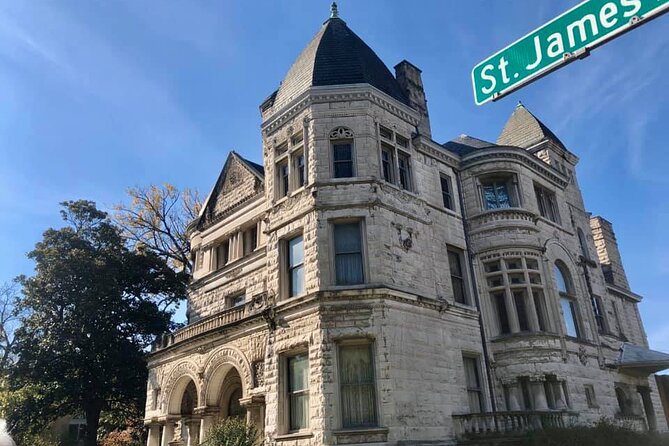
The visual heart of the walk is the grand residential architecture. Old Louisville is known for Victorian homes in several styles, and the route takes you through some of its most striking streets and courtyards, including St. James Court, Ormsby Avenue, Floral Terrace, and Millionaires Row.
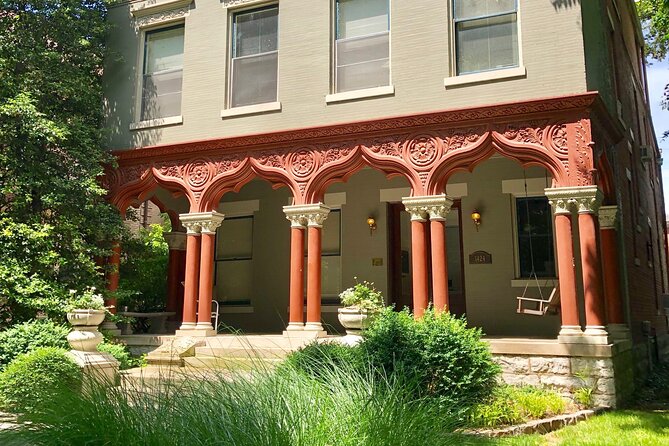
You do not need to be an architecture expert to enjoy this part. The guide helps you notice the details: elaborate porches, towers, carved stone, dramatic rooflines, stained-glass touches, and gardens tucked behind ironwork. A good guide turns a row of impressive houses into a record of ambition and social status.
St. James Court is especially useful for understanding the neighborhood’s grand scale. The homes were built for people with money and influence, and their design was meant to announce it. As you walk, listen for the difference between a house that was meant to impress from the street and one designed for private comfort.
Ormsby Avenue and Floral Terrace offer more chances to see the district as a collection of homes rather than a single architectural display. This is where the tour’s local detail matters. Guides such as David and Gabe are praised for explaining the area clearly while keeping a comfortable pace. Angelique is known for noticing small features beyond the buildings, including trees, flowers, and neighborhood cats.
The route is also a good choice if you enjoy taking photographs. You can frame wide views of entire blocks, then focus on porch columns, stone faces, and decorative figures. Keep in mind that these are private residences. Admire them from public sidewalks, and do not treat the walk as an invitation to enter courtyards or approach homeowners.
The Witches’ Tree and Old Louisville’s stranger side
The Witches’ Tree is only a five-minute stop, but it gives the tour a welcome change of mood. A gnarled tree now grows where a tree once cherished by local witches was cut down. According to the local story, the witches responded by sending a tornado to punish the city.
The tale is folklore, not a sober architectural lesson, and that is exactly why it works. A neighborhood can be understood through its mansions and civic history, but it also lives through rumors, legends, and stories repeated for generations. People leave small offerings on the twisted trunk, hoping to make peace with the crones.
You may find this stop especially entertaining if you like unusual local traditions. It is also a good reminder that the tour is not only a parade of wealthy names and ornate homes. The guide’s personality shapes this section, and the feedback about David, Angelique, and Brenda points to the value of a lively storyteller.
Brenda has also been praised for using a microphone, a practical touch when the group is gathered near a street. With a maximum of 20 people, the group is limited enough to hear the guide more easily than on a large city tour, though staying near the speaker still makes sense.
Conrad-Caldwell House, Old Louisville’s castle
The Conrad-Caldwell House Museum is one of the route’s signature sights. Often called Conrad’s Castle, it is viewed from the outside during the walking tour. You do not enter the building as part of the $25 ticket.
That limitation is worth understanding before booking. If you want to see the interior, you can arrange a separate mansion tour with the museum for an additional fee. The walking tour gives you the setting, exterior details, and historical context, but it is not a combined house museum visit.
The exterior is still an important stop. Its scale and ornament show how far the district’s wealthiest residents went to make their homes distinctive. A guide can help you read the facade rather than simply photograph it, pointing out features that might otherwise blur together after several blocks of Victorian buildings.
I would treat the Conrad-Caldwell stop as a useful choice point. If you have limited time, the walking tour gives you a broad introduction to Old Louisville. If you have more time and care about interiors, plan a separate museum visit instead of assuming it is included.
A different kind of day, same corner of the map:
- NYC: SUMMIT One Vanderbilt Tickets
★ 4.7 · 51,195 reviews - NYC: 9/11 Memorial & Museum Timed-Entry Ticket
★ 4.8 · 31,428 reviews - NYC: Empire State Building Tickets – Observatory & Museum
★ 4.7 · 25,757 reviews - NYC: Empire State Building Observation Deck Tickets
★ 4.7 · 22,072 reviews
Bernheim Mansion and the old Millionaires Row
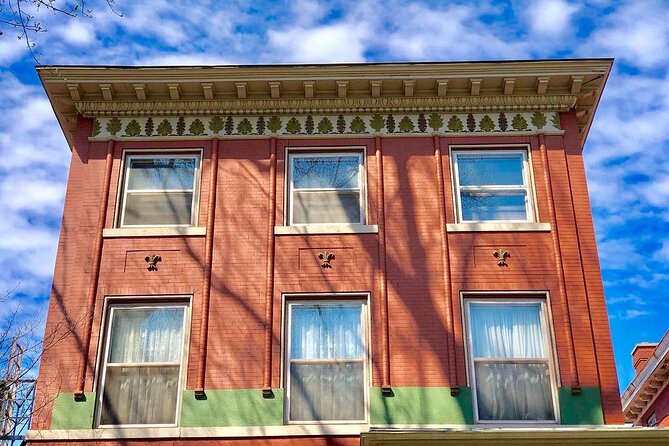
The Bernheim Mansion sits in the area once known as Millionaires Row. Its Richardsonian Romanesque design is easy to recognize, with a triple Roman-arched porch and green men arranged around it.
Those carved green figures are the kind of detail you might miss while walking alone. This is one reason the tour earns its price for architecture fans. You are not just covering distance between houses. You are being shown the features that give each mansion its character.
The stop itself lasts only a couple of minutes, but the surrounding walk provides the larger setting. Millionaires Row was not simply a collection of rich homes. It reflected the city’s old social and economic order, and the mansions help you picture the people who once shaped Louisville’s public life.
The house is now a bed-and-breakfast, but admission is not part of this activity. You view it from outside, as you do with most buildings along the route.
The Filson Historical Society and Louisville’s civic past
The Filson Historical Society occupies the Ferguson Mansion, built in 1905. The building was once considered the grandest home in the city and is a fine example of Beaux Arts architecture.
This stop adds a civic and institutional note to a route otherwise focused on residential buildings. It connects private wealth with the work of preserving regional history. You can arrange a separate visit to the society, but that visit is not included in the walking tour.
For me, this is the sort of stop that helps keep the tour from becoming a simple mansion count. You see how these buildings have taken on new roles over time. Some remain homes, some serve as lodging or museums, and others now support historical work.
The guide can also answer questions as you walk, which is useful if you want to place Louisville’s architecture in a wider local story. The best comments about the guides repeatedly point to their ability to explain history without losing the group’s attention.
Central Park, Olmsted’s green center
Central Park offers a change from stone, brick, and busy streets. Frederick Law Olmsted designed this 14-acre park, which occupies four square blocks and includes native trees and shaded walkways.
The park is also home to Shakespeare in the Park each summer. The event has run since 1961 and is described as the nation’s oldest free outdoor Shakespeare event. Even if your visit is outside the performance season, that connection gives the park a stronger identity than a simple patch of green.
This is a pleasant place to slow the pace and understand how Old Louisville’s residents use public space. After several blocks of elaborate houses, the trees and paths provide visual relief. The stop lasts about five minutes, so it is not a long park visit, but it rounds out the neighborhood’s design.
The route’s mix of architecture, stories, and open space is one of its strengths. You get a picture of how private wealth, public parks, historic preservation, and present-day neighborhood life fit together.
How much walking and what the $25 price buys
The tour lasts about 1 hour 40 minutes to 2 hours. The itinerary includes a longer Old Louisville segment of roughly 90 minutes, with short stops at the Witches’ Tree, Conrad-Caldwell House, Bernheim Mansion, the Filson Historical Society, and Central Park.
The operator requires you to walk for 90 minutes without a bathroom break. Take that seriously. Use facilities before you arrive, carry water, and choose shoes for a steady city walk. The tour is not recommended for people with mobility issues, and you should expect to remain outdoors for the full activity.
At $25 per person, the value is good if you care about architecture, city history, or local stories. You could walk the same streets for free, but you would lose the explanations about original owners, builders, design details, and legends. The fee also gives you a certified guide and a planned route that helps you see more in a short visit.
Gratuity is listed separately at $5 per person. I would include that in your working budget, making the practical cost about $30 per person if you plan to follow the suggested tip.
The group maximum is 20 people. That is not a private tour, but it is small enough for a more personal feel than a large coach excursion. Recent guide names include David, Gabe, Angelique, Brenda, Frances, and Gage. The exact guide is not specified in advance, but the repeated praise for clear speaking, humor, good pacing, and strong local knowledge suggests that the guiding style is a major part of the experience.
Who will enjoy this walk most
I would choose this tour early in a Louisville visit if you want a quick sense of the city’s past and neighborhoods. It can help you decide which buildings or museums deserve a closer look later.
It suits:
- Architecture fans who want to see Victorian and Beaux Arts details.
- First-time Louisville visitors who want orientation beyond the main tourist stops.
- Families with older children who can manage a long outdoor walk.
- Local residents who want fresh stories about a familiar district.
- Anyone who prefers history delivered through conversation rather than a museum label.
It is less suitable if you need frequent restrooms, have trouble walking for 90 minutes, or want to tour mansion interiors. It is also worth remembering that the starting point is in a transitional urban area. Panhandlers and people experiencing homelessness are often present along Fourth Street at the north edge of the neighborhood. That is part of the setting, not something the tour hides, but you should arrive aware of it.
Service animals are allowed, and the meeting point is near public transportation. The tour is offered in English and uses mobile tickets. Confirmation arrives when you book.
Practical booking advice for Old Louisville
This experience is commonly booked about 11 days ahead, so I would reserve before your trip if your schedule is tight. The activity is non-refundable and cannot be changed after booking, so check your date carefully.
Bad weather can cancel the walk. If that happens, you are offered another date or a full refund. Since the tour depends on outdoor conditions, keep a little flexibility in your Louisville plans if possible.
Wear comfortable shoes, bring water, and arrive ready to listen while walking. You will not enter the private homes, and the short museum-related stops are exterior views unless you make separate arrangements.
Should you book the Old Louisville Walking Tour?
Book it if you want architecture with stories, not just a self-guided look at expensive old houses. The route covers a lot in under two hours, the price is reasonable, and the guides appear to be the main strength. David, Gabe, Angelique, Brenda, and Frances are all associated with the friendly, clear style this tour needs.
Skip it if your priority is indoor access, a very short walk, or a fully polished tourist district. Old Louisville is a real neighborhood with urban problems as well as beautiful buildings. For most visitors who can walk comfortably and want a grounded introduction to Louisville, that mix is precisely what makes the tour worthwhile.
FAQ
Where does the Old Louisville Walking Tour begin?
It begins at West Ormsby Avenue and South Fourth Street, Louisville, Kentucky 40203.
Where does the tour end?
The activity ends back at the starting meeting point.
How long does the walking tour last?
It lasts approximately 1 hour 40 minutes to 2 hours.
How much does the tour cost?
The listed price is $25 per person.
Is a guide included?
Yes. A certified guide is included, and the tour is offered in English.
Are mansion interiors included?
No. The walking tour does not enter buildings. You can arrange a separate paid visit to the Conrad-Caldwell House Museum.
How much walking is required?
You must be able to walk for 90 minutes without a bathroom break. A moderate level of physical fitness is required.
Is the tour suitable for people with mobility issues?
No. The activity is not recommended for visitors with mobility issues.
What happens if bad weather cancels the tour?
You will be offered a different date or a full refund if poor weather causes the cancellation.
Newly listed in the USA
- The Maui Butterfly Farm Tour★ 5.0 · 446 reviews
- NON BUS 4 Winery Traverse City Wine Tour on Old Mission Peninsula★ 5.0 · 445 reviews
- New England Aquarium Admission Ticket in Boston★ 4.0 · 446 reviews
- New Orleans City Tour and Steamboat Natchez Harbor Jazz Cruise★ 4.0 · 446 reviews
- Alpaca and Llama Farm Tour★ 5.0 · 446 reviews
- Small-Group Laura and Whitney Plantation Tour from New Orleans★ 4.5 · 446 reviews
- Dreaded Dead Descent of the District: DC Ghost Tour★ 4.0 · 446 reviews
- Cañon City: Royal Gorge Bridge & Park Entry Ticket & Gondola★ 4.5 · 448 reviews
Walking Tours, compared.
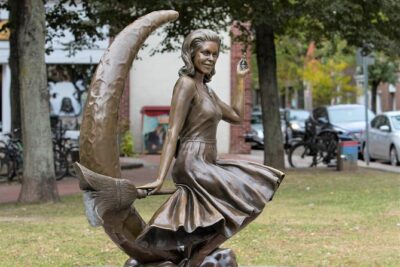
History and Hauntings of Salem Guided Walking Tour
Read our review →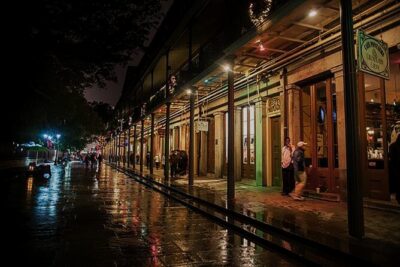
New Orleans Premier Ghost, Voodoo and Vampire Walking Tour
Read our review →

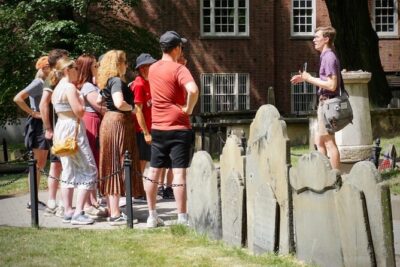
Freedom Trail History Small Group Walking Tour
Read our review →
Historic Charleston Guided Sightseeing Walking Tour
Read our review →
New Orleans Food Walking Tour of the French Quarter with Small-Group Option
Read our review →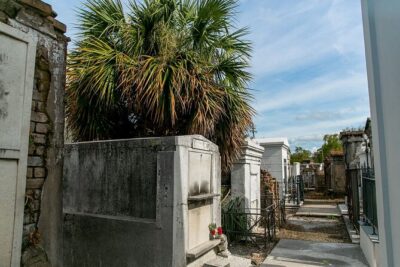
St. Louis Cemetery No. 1 Official Walking Tour
Read our review →Browse the lists this tour appears in