
Reviewed · NEW YORK CITY TOURS
New York City Mafia and Local Food Tour led by NYPD Guides
New York’s old Mafia story is best understood on foot, with a plate of red-sauce Italian food in front of you and an NYPD detective explaining what happened around the corner. This 3.5-hour walk links the East Village, Nolita, and Little Italy through real crime sites, old restaurants, churches, and movie locations. The food is not just a nibble: you get full portions of Italian dishes.
I like two things here. First, the police background gives the stories a sharper edge than a standard sightseeing walk, especially when guides such as Dennis, Frank, George, Mike, or Jay share personal New York experience. Second, John’s of 12th Street and the cannoli stop give the tour a genuine neighborhood feel. The main drawback is that this is not a classic tasting tour with many small samples, and a large group can make it hard to hear.
Key points at a glance
- John’s of 12th Street begins the story: Meet in the back room of a restaurant dating to 1908, with Prohibition and Mafia connections.
- The guide is the main attraction: An active or retired NYPD detective leads the walk and explains organized crime through police experience.
- The food equals a meal: Expect spaghetti and meatballs, a second Italian dish such as eggplant rollatini, and a full Sicilian cannoli.
- The route crosses several historic districts: You walk from the East Village through Nolita and into Little Italy.
- The pace requires steady walking: The tour is about 3.5 hours, with some reports of a brisk pace and long stretches between stops.
- The value depends on your interests: True crime fans may find the price fair, while diners seeking many tastings may not.
Starting at John’s of 12th Street
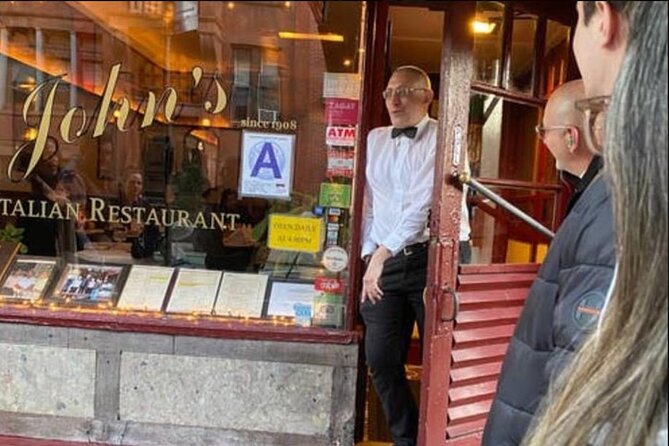
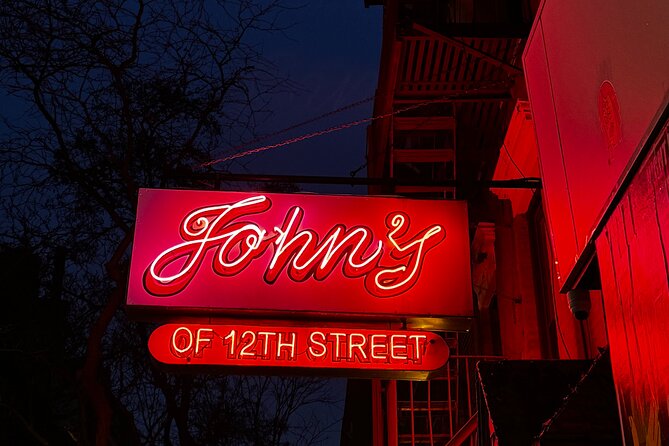
The tour begins at 302 East 12th Street, inside John’s of 12th Street. That setting does a lot of work before the guide even starts talking. This old-school Italian restaurant opened in 1908 and is closely tied to the early story of organized crime in New York.
The group meets in the back room, often called a classic red-sauce setting. During Prohibition, the restaurant operated as a speakeasy and produced wine and whiskey in its basement. The site is also linked to the 1922 killing of Umberto Rocco Valenti, a Morello family hitman, during what was supposed to be a peace meeting.
I like beginning here because you are not standing beside a generic plaque while someone recites dates. You are sitting in a place where food, immigrant life, politics, and crime once crossed paths. The restaurant has also appeared in productions such as Boardwalk Empire and The Sopranos, which adds a pop-culture layer without being the whole point.
The first food course is served here. You should expect a full portion of spaghetti topped with meatballs and meat sauce. The tour describes the meatballs as a major feature, and several guides and diners have singled out the dish as one of the strongest parts of the evening.
This is also where expectations matter. If you picture a food tour as a moving lunch with five or six restaurant tastings, adjust that picture now. The pasta is a proper serving, not a sample, but it is one principal food stop rather than a series of small plates.
More City Tours in New York City
- New York City: Statue of Liberty & Ellis Island with Ferry
★ 4.6 · 18,683 reviews - New York City: American Museum of Natural History Ticket
★ 4.5 · 15,447 reviews - New York City: Manhattan Helicopter Tour
★ 4.7 · 7,076 reviews
Walking through the East Village
After John’s, the tour heads through the East Village and nearby parts of lower Manhattan. The route uses streets as evidence. You hear where mob figures met, where businesses once served as gathering points, and how the neighborhood changed as New York grew.
The East Village is useful ground for this subject because its identity was shaped by waves of immigration and crowded housing. In the 19th century, parts of the East Village and Lower East Side saw enormous population growth. Manhattan’s 17th Ward rose from about 18,000 people in 1840 to more than 43,000 in 1850 and about 73,000 in 1860.
That growth brought opportunity, but it also created packed living conditions and fierce competition for work and housing. Many homes were divided into smaller units for new arrivals. A good guide connects this social setting to the rise of street gangs, political machines, protection rackets, and later Mafia structures.
I appreciate this wider frame. A Mafia tour can become a parade of colorful names and violent incidents. The better version explains why organized crime found room to grow, and how poverty, migration, policing, and local power shaped the city.
You will also pass places that are not strictly Mafia sites. St. Mark’s Church in-the-Bowery, at East 10th Street and Second Avenue, has hosted Christian worship continuously since the mid-17th century. Its presence gives the walk a useful contrast: the same neighborhood contains old religious institutions, immigrant streets, restaurants, entertainment venues, and crime stories.
The guide may also point out buildings and corners used in movies and television. These are good photo stops, but the real value comes from hearing how fiction borrows from actual New York places. I would treat the film references as seasoning, not as the main course.
From immigrant neighborhoods to Old St. Patrick’s
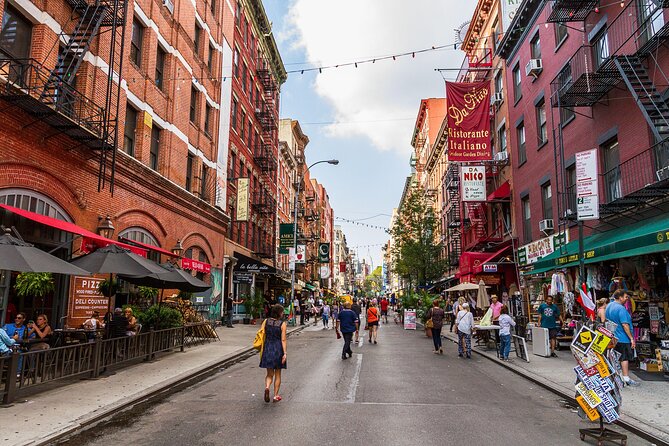
The route continues south toward Nolita and Little Italy. Along the way, the guide explains how Manhattan’s Italian districts formed and how their boundaries shifted.
The Basilica of Saint Patrick’s Old Cathedral is one of the major landmarks in this part of the route. Built between 1809 and 1815, it was designed by Joseph-François Mangin in the Gothic Revival style and once served as the cathedral of the Archdiocese of New York.
The church matters to the tour because it places the Mafia story inside the larger life of New York’s Italian and Catholic communities. Religious institutions, family networks, local businesses, and political connections all helped shape the neighborhood. You get more from the stop if you pay attention to that social structure rather than treating the church as a quick backdrop.
Little Italy itself has changed sharply. Rising rents have reduced its Italian character, and the neighborhood is now smaller and more commercial than it once was. Mulberry Street still carries the name, food, and festival traditions of the area, especially during the annual Feast of San Gennaro after Labor Day.
The festival is tied to Saint Januarius, known locally as San Gennaro, and its familiar streets have appeared in films such as The Godfather Part II. The tour uses these locations to show the gap between the neighborhood people imagine from movies and the city you see today.
That gap is one of the most useful parts of the walk. Film often makes Mafia life look stylish, clever, or glamorous. The guide’s police perspective tends to bring the violence and fear back into the picture. You still hear the famous names, but the story is less about dressing up as a gangster and more about how ruthless organized crime could be.
The second Italian course in Little Italy
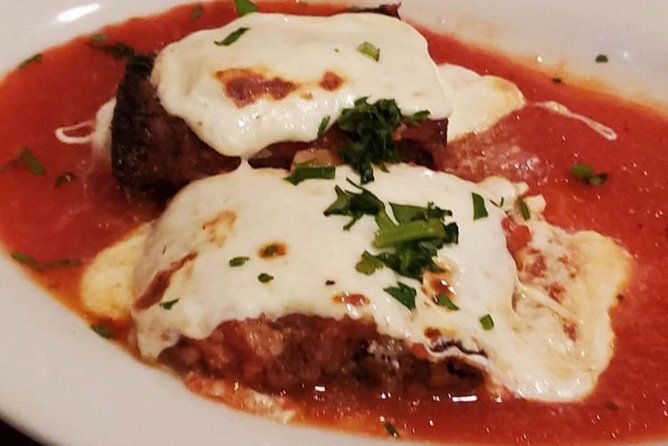
The food portion in Little Italy is described as eggplant rollatini, with lightly breaded eggplant, mozzarella filling, and tomato sauce. Some departures have featured eggplant Parmesan instead, and the exact restaurant arrangement may vary. The important point is that you should expect a substantial second Italian dish rather than a bite-sized tasting.
Past food descriptions have included places such as The Original Benito One, a long-running Little Italy restaurant. If your tour follows that arrangement, the dish gives you a chance to compare the East Village red-sauce meal with a Little Italy classic.
I would not plan a separate dinner afterward unless you have a very large appetite. Spaghetti and meatballs followed by eggplant and then cannoli is enough food for most people. Drinks are not included, but you can buy them during the meal.
Vegetarian food is available with advance notice. Make that request before the tour rather than hoping to arrange it at the table. No specific vegan menu is provided, so you should ask the operator directly if you need something beyond a vegetarian substitute.
More Food Tours in New York City
- NYC: Chinatown & Little Italy Food Tour with 7 Flavorful Tastings
★ 5.0 · 2,733 reviews - Original NYC Guided Food Tour of Chinatown and Little Italy
★ 5.0 · 2,194 reviews - NYC: Greenwich Village Food Tour with 6 Locals Favorites Dishes
★ 5.0 · 1,812 reviews - Greenwich Village Walking and Food Tasting Tour
★ 5.0 · 1,572 reviews
Ending with a Sicilian cannoli at 108 Mulberry Street
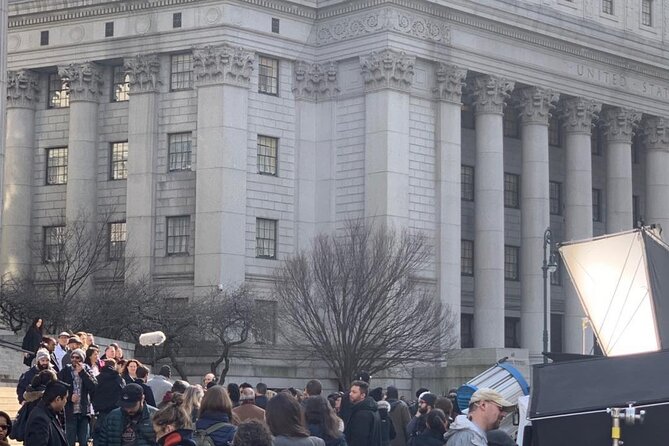
The walk ends at 108 Mulberry Street, near the corner of Mulberry and Canal Streets. The final food stop is a full-sized Sicilian cannoli, with several flavors available.
This is a smart finish. The cannoli gives the tour a sweet ending, but the location also brings you into the heart of the Little Italy restaurant and pastry district. The pastry has been associated with long-established shops such as Caffè Roma and La Bella Ferrara, both known for traditional Italian sweets.
The cannoli is not presented as a tiny decorative sample. It is a full pastry, and it may be enough to serve as dessert after the earlier meal. If you are visiting New York mainly for Italian food, this final stop adds real value. If you do not care much about dessert, it is still a short stop, listed at about 10 minutes.
From here, you are well placed to continue exploring lower Manhattan. The tour does not provide transportation, and the end point is not the same as the start. Plan your next move before you arrive, especially if you have evening tickets elsewhere.
What the NYPD guide adds
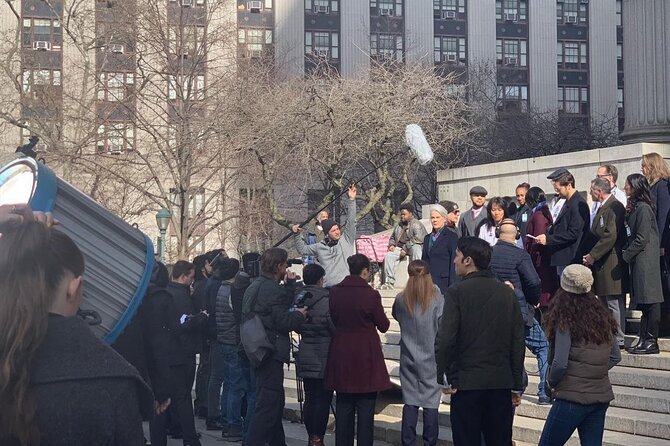
The guide makes or breaks this experience. The advertised leaders are active or retired NYPD detectives, and the strongest part of the format is the connection between police work and local history.
Names associated with especially well-received departures include Dennis O’Leary, Frank, George, Mike, Jay, and other current or former NYPD personnel. You cannot choose a particular guide from the information provided, so book this for the format rather than for one individual.
The best guides use personal experience to explain the city. One might discuss growing up near Mafia enclaves. Another may connect the neighborhood to cases, police work, or the people who lived there. This kind of detail gives the walk a human scale that a general guidebook cannot match.
The tone can be direct and occasionally colorful. That may suit you if you enjoy unpolished true crime storytelling. Families with young children should consider that the subject includes murder, extortion, violence, and adult language.
Group management deserves attention. The published maximum is 37 people, but some departures have had more than 40. A large group can feel crowded in restaurant dining rooms, and it is harder to hear stories on a noisy street. One guide may also walk ahead at a quick pace, making it difficult for slower walkers to keep up.
Some groups have been split between two guides when numbers rise, but that arrangement should not be assumed. If hearing every detail matters to you, ask about current group size before booking. Arrive ready to stay close to the guide, and speak up if you cannot hear.
Pace, distance, and practical comfort
This is a walking tour, not a seated lecture with a few short strolls. It lasts about three hours and 30 minutes and links several neighborhoods. You need a moderate level of fitness, and the experience is not recommended if you have leg or walking problems.
The pace has varied. Some people find it comfortable, while others describe it as brisk. I would wear supportive shoes and avoid carrying a heavy bag. In winter, dress warmly. A December departure can involve long periods outdoors, even though the meal stops offer indoor breaks.
The tour is offered in English and uses a mobile ticket. It begins at John’s of 12th Street and ends in Little Italy, so leave room in your schedule for getting back across town. The route is near public transportation, and service animals are allowed.
Is $109.65 a fair price?
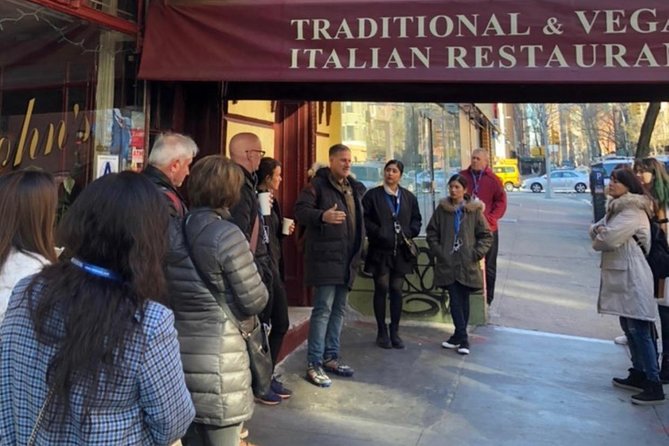
At $109.65 per person, this is not a cheap way to get a bowl of pasta and a dessert. You could buy those items separately for less. The price only begins to make sense when you place value on the three-and-a-half-hour guided walk and the police perspective.
You receive a full serving of spaghetti and meatballs, a second Italian dish, and a large cannoli. Drinks and gratuities are extra. If the tour includes the full food arrangement, you are paying for a meal as well as the walking program.
I see the value most clearly for true crime fans, people interested in New York’s Italian immigrant neighborhoods, and first-time visitors who want one experience combining food and local history. I see less value for serious food tourists who expect a dozen tastings or for people who already know the East Village and Little Italy well.
The 4.8 rating from 1,197 reviews and 96 percent recommendation rate suggest that the format works for many people. Still, the lower ratings point to real issues, not minor complaints: group size, poor audibility, uneven pacing, and the mismatch between a food tour label and the actual number of food stops.
Who should book this experience?
I would book it if you enjoy Mafia history, police stories, old New York restaurants, and a steady walk through changing neighborhoods. It suits couples, families with older children, and friends who want a structured evening rather than a standard sightseeing bus.
I would also choose it if personal stories matter more to you than polished presentation. A strong guide such as Dennis, Frank, George, Mike, or Jay can turn the route into a memorable history lesson, but the experience depends heavily on who leads your departure.
I would skip it if your main goal is restaurant-hopping. You do not get a small dish at every stop. You get a substantial meal, a dessert, and several outdoor storytelling points.
The free-cancellation policy gives you some flexibility. You can cancel at least 24 hours before the start time for a full refund. Changes or cancellations inside 24 hours are not accepted and are not refunded.
Final verdict: book for the stories, not just the food
I recommend this tour to the right audience. The combination of NYPD storytelling, real city locations, and full Italian portions is unusual, and John’s of 12th Street provides a memorable opening.
Go in expecting a Mafia-themed history walk with a meal, not a conventional food crawl. Wear good shoes, dress for the weather, stay close to the guide, and ask about group size before paying. If those conditions suit you, the tour offers a lively way to connect New York’s food, immigrant neighborhoods, movies, and organized crime.
FAQ
Where does the tour begin?
The tour begins at John’s of 12th Street, at 302 East 12th Street, New York, NY 10003.
Where does the tour end?
The tour ends at 108 Mulberry Street, near the corner of Mulberry and Canal Streets in Little Italy.
How long does the tour last?
The walking and food experience lasts approximately three hours and 30 minutes.
What food is included?
The listed food includes a full portion of spaghetti with meatballs, a second Italian dish such as eggplant rollatini, and a full-sized Sicilian cannoli. The exact second dish may vary.
Are drinks included?
No. Drinks are not included, but you can purchase them during the tour.
Can I request vegetarian food?
Yes. Vegetarian options are available if you make the request in advance.
Who leads the tour?
The guide is an active or retired NYPD detective. Guides associated with departures include Dennis, Frank, George, Mike, and Jay, but a specific guide is not guaranteed.
How large is the group?
The stated maximum is 37 people. Some departures have been larger, and a second guide may be used when numbers rise.
Is the tour suitable for people with limited mobility?
The tour requires moderate physical fitness and is not recommended for people with leg or walking problems. It involves extended walking through several Manhattan neighborhoods.
What is the cancellation policy?
You can cancel at least 24 hours before the start time for a full refund. Cancellations or changes made less than 24 hours before the experience are not refunded or accepted.
Newly listed in New York City
- NYC: Brooklyn Graffiti & Street Art Walking Tour in Bushwick★ 4.8 · 492 reviews
- Hell’s Kitchen Guided Food Tour★ 5.0 · 494 reviews
- Manhattan Neighborhood Private Customized Walking Tour★ 5.0 · 498 reviews
- The Big Apple Helicopter Tour of New York City★ 4.5 · 498 reviews
- Central Park TV and Movie Sites Walking Tour★ 4.5 · 499 reviews
- Harlem: Central Harlem Sunday Gospel with Locals★ 3.9 · 499 reviews
- NYC: City Climb Skyscraping Experience Ticket★ 4.8 · 511 reviews
- 2-hour Metropolitan Museum Guided Tour★ 5.0 · 515 reviews
New York City Tours, compared.
Empire State Building Tickets – Observatory & Museum
Read our review →


Statue of Liberty and Ellis Island Tour: All Options
Read our review →


New York CityPASS®: Save up to 41% at 5 Top Attractions
Read our review →Browse the lists this tour appears in