
Reviewed · PAGE TOURS
Lower Antelope Canyon Hiking Tour
Lower Antelope Canyon is a narrow, twisting passage where Navajo sandstone catches sunlight in shades of orange, red, gold, and purple. You walk through the canyon rather than simply viewing it from an overlook, with a Navajo guide explaining the land, culture, geology, and plant life along the way. Guides such as Eli, Archie, and Aaron have been especially good at adding music, stories, and photo help.
I like the one-mile walking route, which gives you time to see the canyon from many angles, and I like the practical help with photographs. Guides often point out shapes in the walls, suggest places to pose, and may play a flute or double flute inside the cavern. The main consideration is physical: you must manage five flights of stairs and eight ladders, and the narrow canyon can feel busy.
Key points to know before you book
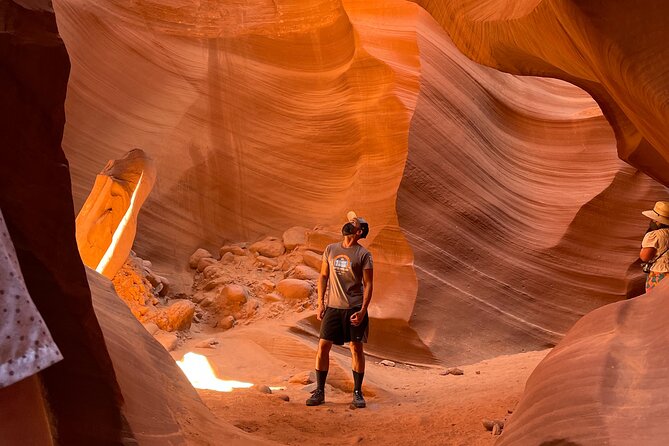
- You descend five flights of stairs into the canyon, then climb through it using eight ladders with safety handrails.
- The full route covers about 1.1 miles and includes a rocky, sandy walk from the check-in booth to the canyon entrance.
- Navajo guides add more than directions, with lessons about erosion, local culture, botany, and photo spots.
- The tour is priced at $94 per person, a fair rate for a guided visit to one of Page’s signature sights, especially when compared with other area activities.
- There is a strict no-bag policy, so plan to carry only what the operator permits.
- Allow up to 1.5 hours, even though the listed duration is about one hour, and arrive prepared for a moderate physical outing.
Why Lower Antelope Canyon feels so different
Many canyon viewpoints give you a grand scene from a distance. Lower Antelope Canyon works in the opposite way. You enter a sandstone corridor and watch the walls change as you move. One section may look smooth and flowing, while the next has sharp folds, ledges, and ripples cut by water and wind.
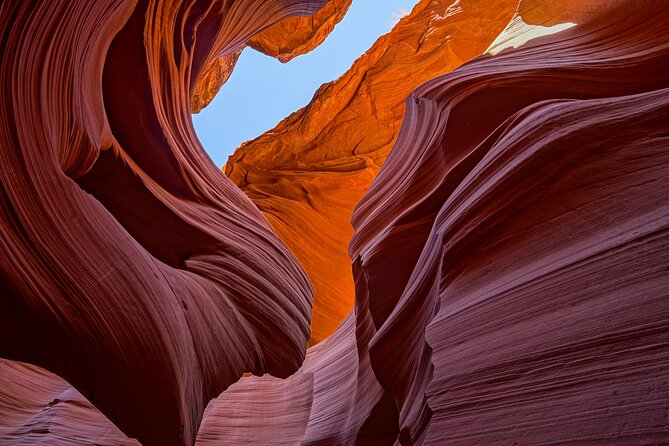
The walls are made of Navajo sandstone. Rainwater, wind, and erosion shaped the passage over time, creating the curved forms that make the canyon so photogenic. Light slips into the narrow openings above you, then bounces across the walls. The color is not fixed. It shifts with the sun, the time of year, and your position inside the canyon.
That last point matters if you arrive expecting your photos to look exactly like pictures seen online. The sun sits at different points in the sky throughout the year, so the balance of light and shadow changes. You will still see the sculpted walls, but the strongest colors and brightest beams may appear in different places from the ones you had in mind.
The canyon is also a cultural place, not simply a pretty photo stop. A Navajo guide gives the setting more meaning by explaining the land from an Indigenous perspective. The best guides connect the visible rock to the forces that shaped it, then add stories, local details, and a sense of place that you would miss on your own.
More to weigh up across Page
- Page: Lower Antelope Canyon Entry and Navajo Guided Tour
★ 4.7 · 7,801 reviews - Page: Antelope Canyon X Guided Tour
★ 4.6 · 4,034 reviews - Page: Lower Antelope Canyon Tour with Trained Navajo Guide
★ 4.7 · 2,552 reviews
From Route 222 to the canyon entrance
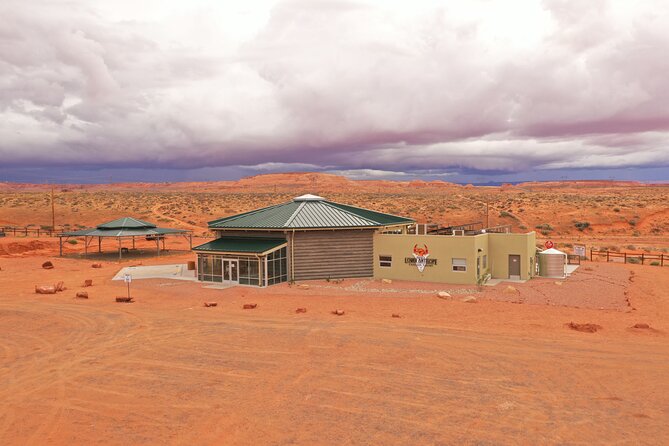
The meeting point is Dixie’s Lower Antelope Canyon Tours on Route 222 in Page, Arizona. After check-in, you walk about 10 minutes to the canyon entrance. This approach is not a paved stroll. The ground includes Navajo sandstone, rocks, and sand, so comfortable shoes with a secure sole are a smart choice.
Plan your timing carefully. The operator advises arriving 45 minutes before the scheduled start, though that can mean waiting outside, particularly in cold weather. One useful approach is to arrive with enough time for check-in but avoid treating the full 45 minutes as part of the tour itself. Confirm the current arrival instructions when you book, since timing at the meeting area can affect the start of your visit.
There is no transportation between the meeting point and the canyon. You walk there and return to the same place at the end. The location is near public transportation, but the supplied information does not specify routes or schedules, so you should check those separately if you are not driving.
Five flights down into the sandstone
The first major physical part is the descent. You go down five flights of stairs, dropping about 35 meters into the largest cavern on the route. This is where Lower Antelope Canyon begins to feel less like a conventional walking trail and more like an underground passage.
The stairs require care, but handrails and a slow pace make the descent manageable for people with a moderate fitness level. You should not rush. The route includes uneven ground, sandy patches, and narrow sections, so steady steps are more useful than speed.
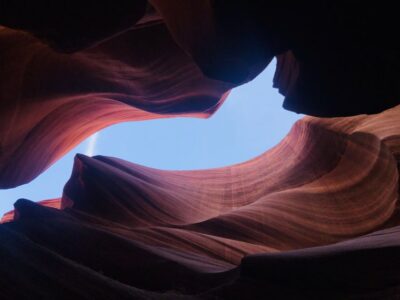
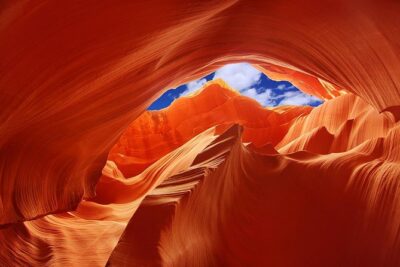
At the bottom, pause and look up before moving on. The opening above frames the sandstone in a completely different way from the walls beside you. This is also a good moment to adjust your phone or camera, since the light level changes quickly as you move farther inside.
The descent is a drawback for anyone with significant difficulty on stairs or ladders. This is not a flat sightseeing route, and the operator specifically recommends a moderate physical fitness level. The ladders have safety handrails, but you still need to climb them under your own power.
Eight ladders through the narrow sections
After reaching the lower cavern, the route turns into a gradual ascent through the canyon. You use eight purpose-built ladders with handrails. These ladders are part of what makes Lower Antelope Canyon feel adventurous, though they are also the feature you should consider most carefully before booking.
The ladders vary as part of the canyon’s changing levels. Some sections are narrow, and you may need to move at a controlled pace while other people are nearby. The route is designed for a guided group, not for stopping anywhere you like for as long as you wish. You will have time for photographs, but you should be ready to keep moving when the group does.
The canyon’s shape rewards patience. As you climb, the walls reveal new folds and patterns. Guides often point out formations that resemble familiar objects, including an eagle, Mickey Mouse, or ET. These shapes are a playful addition, but they also encourage you to study the rock rather than simply walk through it.
The handrails are helpful, especially on the sandy and uneven parts. Still, this is not the right choice if you are uncomfortable with ladders or tight passages. Children and adults who can manage the stairs and ladders should find the route active but achievable. People with limited mobility should choose another Page sightseeing option.
More hikes around Page:
- Page: Lower Antelope Canyon Ticket and Guided Hiking Tour
★ 4.6 · 519 reviews - Multnomah Falls and Columbia River Gorge Half-Day Hiking Tour
★ 5.0 · 2,108 reviews - San Francisco: Yosemite National Park & Giant Sequoias Hike
★ 4.5 · 1,777 reviews - Valley of Fire Guided Hike from Las Vegas
★ 5.0 · 1,611 reviews
What the Navajo guide adds
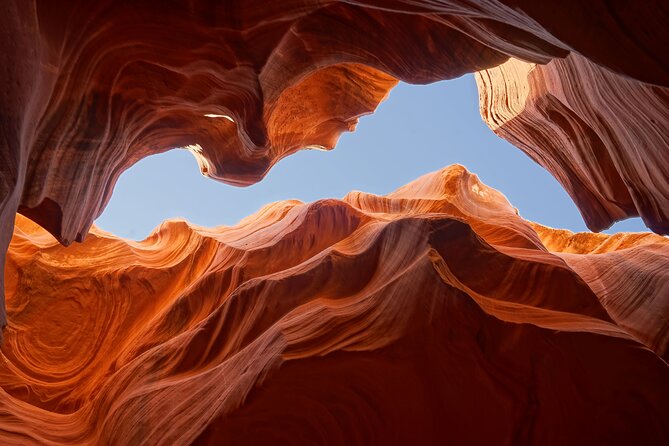
The guide is the difference between a scenic walk and a meaningful tour. You receive explanations about how wind, rain, and erosion shaped the sandstone, along with information about Navajo culture and regional botany. The strongest guides make these subjects easy to follow without turning the walk into a classroom lecture.
Eli has been praised for combining Navajo history, photo advice, and flute music. Archie has helped with photographs and added a birthday song in Navajo, along with a flute performance. Aaron Yazzie has used sand and water to demonstrate how the canyon formed, then played a flute inside the cavern. Eder and Gabby have also added music to their groups.
These personal touches are not guaranteed, since guides vary and you cannot count on a particular person being assigned to you. Still, they show the range of what the guide may bring to the outing. Some guides focus more on geology and stories. Others are especially good at finding angles for photographs or making the group laugh.
You may also hear less clearly in the narrow sections, particularly if several groups are moving through nearby. One useful habit is to stay close enough to your guide to catch the explanations, while leaving room for people ahead of you. If a point matters to you, ask a question when the group pauses.
Photographing the canyon without fancy equipment
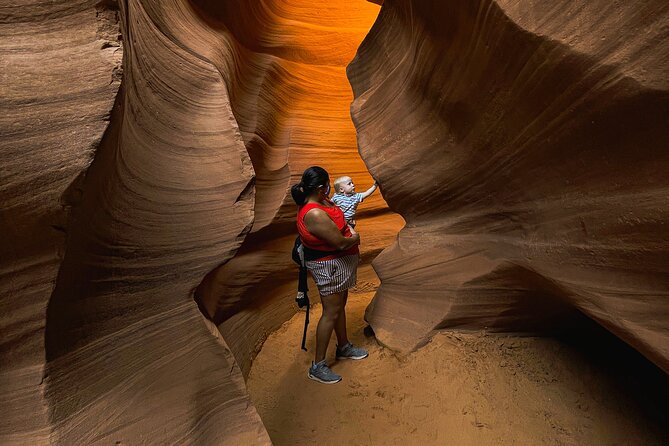
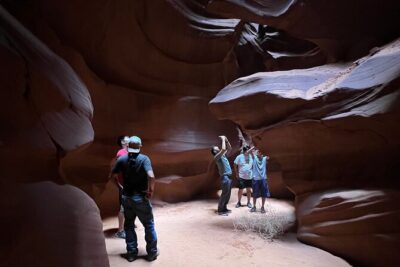
Lower Antelope Canyon is naturally well suited to phone photography. The curved walls create strong lines, and the mix of light and shadow gives even simple pictures depth. Guides frequently know which sections make good backdrops and can help with portrait angles.
You will probably get better results by taking several types of photographs. Try a wider view to show the shape of the passage, then a closer image of the sandstone’s ripples and color bands. Look upward at the openings and downward at the changing floor. The most obvious orange wall is not always the most interesting frame.
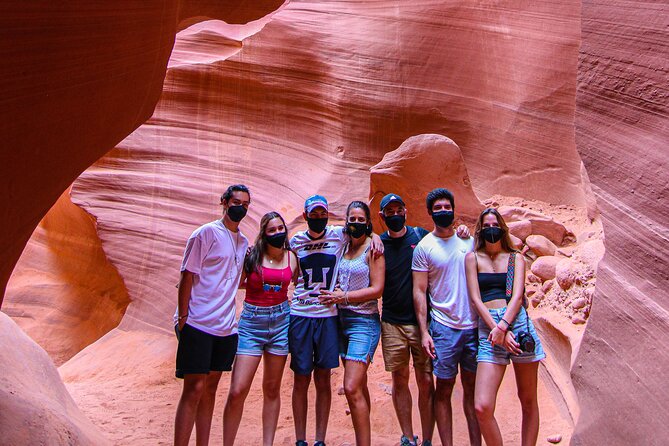
Guides may help take pictures of you and your companions. Taylor, Ian, Terran, Elijah, and others have been singled out for photo advice and patience while people tried different poses. That help matters because the canyon is not a place where you can easily step aside and set up a tripod or lengthy camera session.
The light is part of the surprise, but it is also unpredictable. A photograph taken in winter may look different from one taken in summer, and the same tour can produce different results at different times of day. Treat online images as examples of what the canyon can do, not as a promise of the exact scene you will see.
Group size, pace, and the busy feeling
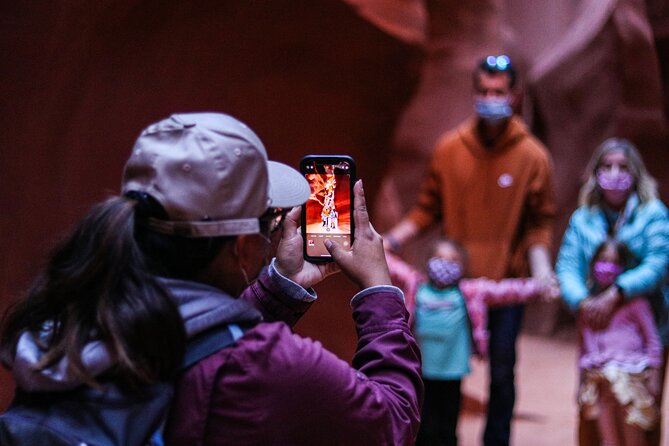
The activity allows a maximum of 50 people, although groups within the tour can be much smaller. Some outings have been organized in groups of around 15, and off-season departures may have only a few people. You should be prepared for a busier experience during popular periods, since Lower Antelope Canyon is a major Page attraction.
The narrow route means the pace is partly controlled by the group ahead. You will not have unlimited freedom to stop at every bend. That can frustrate serious photographers, but it also keeps the walk moving and makes the one-hour schedule possible.
The positive side is that a guide helps the group use its time well. You do not need to guess where to stop or which formation deserves attention. A good guide can keep things orderly, answer questions, and prevent the visit from becoming a simple procession through the rocks.
The overall timing is listed as about one hour, while the detailed route is described as taking one to 1.5 hours. Add the 10-minute walk from check-in to the entrance and the return to the meeting point when planning your day. This is easy to combine with other Page sights, but do not schedule another activity so tightly that a modest delay causes trouble.
Is $94 a fair price?
At $94 per person, this is not a cheap walk. It is, however, a reasonable price for a guided visit to Lower Antelope Canyon when you consider what is included: admission, the Navajo guide, the managed route, safety equipment on the ladders, and about a mile of access through a place you cannot explore independently.
The value improves if you care about learning how the canyon formed or want help with photographs. A guide who explains the geology, points out shapes, and takes pictures can save you from simply passing through while staring at the walls. Music from a flute or double flute can also make the enclosed space feel special.
The value is lower if you want solitude, a long unhurried photo session, or a flat walk. The canyon is popular and can feel touristy. You are paying for organized access and interpretation, not a private wilderness outing.
Compared with other activities around Page, this tour can be a strong use of your sightseeing budget. One family described it as the best activity of its stay and noted that it was also the least expensive tour they took. That does not make it right for every budget, but it explains why the price can feel fair once you are inside the canyon.
Who should book this walk
I would recommend it to couples, families, solo visitors, and friends who want a close-up view of the sandstone rather than another overlook. It suits people who enjoy short active outings and do not mind stairs, ladders, narrow passages, or a set group pace.
It is also a good choice if you want cultural context. The Navajo guide is not a minor detail here. The explanations about the land and Navajo culture give the visit more weight than a self-guided photo stop.
You should think twice if you have trouble with five flights of stairs, eight ladders, uneven sand, or moderate exertion. The tour information does not describe an alternative route, so do not book on the assumption that you can skip the physical sections.
Bring suitable shoes and follow the no-bag policy. Since the tour is outdoors and weather-sensitive, a poor-weather cancellation can lead to a new date or a full refund. Free cancellation is available up to 24 hours before the start time. Inside that window, changes and refunds are not accepted.
My verdict on Lower Antelope Canyon
Book this tour if you want one of the most memorable sights near Page and are comfortable with an active route. The sandstone is the main attraction, but the experience becomes much better when your guide explains the geology, shares Navajo cultural knowledge, and helps you find the best camera angles.
I would not book it for a quiet, private walk or a completely effortless outing. For most visitors who can manage the stairs and ladders, though, the combination of remarkable rock, a manageable one-mile route, and strong guide involvement makes $94 worthwhile. If you can choose your timing, remember that the light changes through the year, and leave room in your schedule for the full 1.5-hour version of the visit.
FAQ
Where does the Lower Antelope Canyon tour begin?
It begins at Dixie’s Lower Antelope Canyon Tours on Route 222 in Page, Arizona. The activity ends back at the same meeting point.
How long does the tour take?
The listed duration is about one hour. The detailed route is described as taking approximately one to 1.5 hours, plus the roughly 10-minute walk from the check-in booth to the canyon entrance.
How far do you walk?
The route covers about 1,800 meters, or 1.1 miles, round trip. The tour is entirely on foot.
How difficult is the route?
You need a moderate level of physical fitness. The route includes a rocky and sandy approach, five flights of stairs, and eight ladders with safety handrails.
Is admission included in the $94 price?
Yes. The admission ticket is included in the per-person tour price.
Are bags allowed?
The tour has a no-bag policy. Check the operator’s current instructions before arrival so you know what you may bring.
How many people can join the tour?
The maximum group size is 50 people. Individual groups may be smaller, with some groups reported at around 15 people or fewer during the off-season.
Can the tour be canceled because of weather?
Yes. The experience requires good weather. If the operator cancels because of poor weather, you can choose another date or receive a full refund. You can also cancel for a full refund if you do so at least 24 hours before the start time.
Newly listed in Page
- Page/Lake Powell: Guided Kayak & Water Antelope Canyon Tour★ 4.9 · 477 reviews
- Lower Antelope Canyon General Guided Tour★ 4.5 · 508 reviews
- Page: Lower Antelope Canyon Ticket and Guided Hiking Tour★ 4.6 · 519 reviews
- Antelope Canyon X Admission Ticket★ 4.5 · 584 reviews
- Page: Upper Antelope Canyon Walking Tour with Local Guide★ 4.5 · 586 reviews
- Page: Upper Antelope Canyon Prime Time Entry & Navajo Guide.★ 4.6 · 619 reviews
- Page: Lower Antelope Canyon Prime-Time Guided Tour★ 4.6 · 668 reviews
- Upper Antelope Canyon Ticket★ 4.5 · 744 reviews
Page Tours, compared.
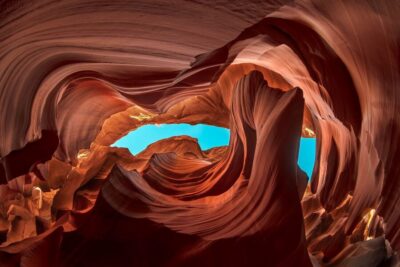
Lower Antelope Canyon Entry and Navajo Guided Tour
Read our review →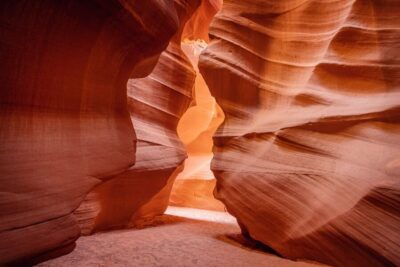
Lower Antelope Canyon Tour with Trained Navajo Guide
Read our review →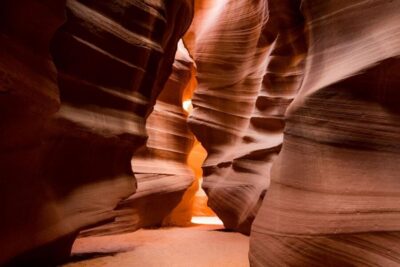
Upper Antelope Canyon Entry Ticket and Guided Tour
Read our review →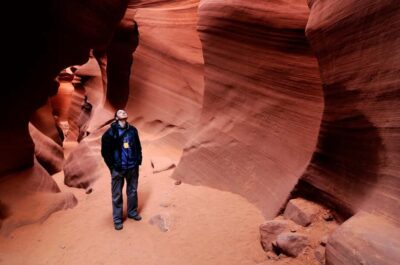
Antelope Canyon Horseshoe Bend Tour & Lake Powell
Read our review →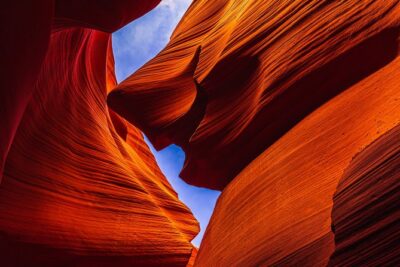
Browse the lists this tour appears in