
Reviewed · OAHU TOURS
Hawaii Off The Beaten Path Food Tour
Honolulu’s best food discoveries may be tucked inside a market, a family-run counter, or a Chinatown shop you would never notice from Waikiki. This three-hour tour follows that trail, moving from a Japanese Shinto temple to Filipino, Chinese, Vietnamese, Japanese, Korean, and Hawaiian dishes. You do not just sample food. You see how many cultures meet on one plate in Oahu.
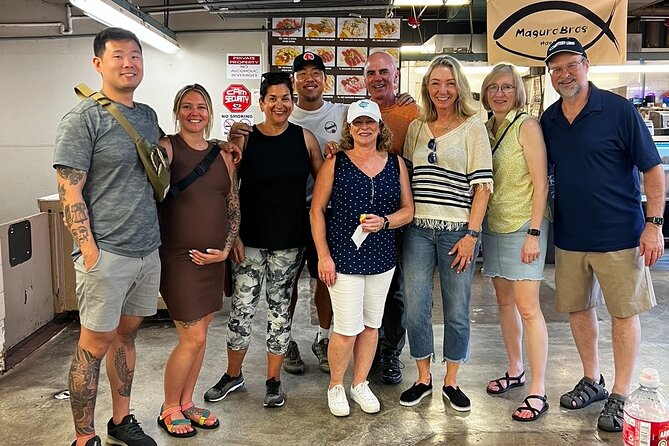
I like the generous portions, which often feel closer to small meals than tiny samples. I also like the local angle: guides such as Victor and TJ explain the food, introduce you to Chinatown vendors, and share useful ideas for eating elsewhere on Oahu. The catch is simple: you need to arrive hungry, and much of the morning involves standing while eating.
Key points to know before booking
- Expect a full meal’s worth of food: Manapua, adobo, fruit, seafood, roast meats, cake, and two styles of poke are included.
- Chinatown is the main stage: Most tastings take place around Honolulu’s markets and small food shops rather than polished tourist restaurants.
- Victor and TJ bring local context: They connect the dishes to Hawaii’s Japanese, Filipino, Chinese, Vietnamese, Korean, and Hawaiian influences.
- Raw seafood is part of the experience: Chutoro sashimi, spicy ahi poke, octopus, and fish-market tastings may appear, depending on availability.
- Hotel pickup saves time: Pickup and drop-off are offered in Waikiki and Honolulu, but east and west Oahu visitors must meet the group at the first stop.
- Save room for leftovers: Containers may be provided when the food exceeds what you can eat during the morning.
Why this Honolulu food tour feels different
Many Waikiki food outings focus on familiar dishes and easy-to-find restaurants. This one sends you into downtown Honolulu and Chinatown, where fresh markets, seafood counters, fruit sellers, and roast-meat shops do the talking.
The food reflects Oahu’s long history of immigration and trade. A sweet pork bun leads to Filipino chicken adobo and banana lumpia. Later, Japanese-style seafood, Korean-seasoned octopus, Chinese roast duck, Vietnamese pandan cake, and Hawaiian poke fill out the table.
That range is the real value. You are not being asked to define Hawaiian food as one narrow style. You are seeing how local food developed through several communities, with island ingredients and local habits joining the mix.
The tour is led by a guide, or sometimes two, and the best-known names attached to the experience are Victor and TJ. They are described as friendly, funny, and well connected with the food sellers. That matters here because the tour works best when someone helps you understand what you are seeing, not just what you are eating.
The group is designed to be small. The tour highlights a maximum of 12, while the additional booking information lists a maximum of 16, so the exact size can vary. Either way, this is a more personal setup than a large bus excursion.
More food tours around Oahu:
- Sights & Bites Ultimate Oahu Circle Island Foodie Tour
★ 4.5 · 492 reviews - New Orleans Food Walking Tour of the French Quarter with Small-Group Option
★ 5.0 · 6,118 reviews - Chef Guided Food Tour of Pike Place Market
★ 5.0 · 3,733 reviews
Starting at Izumo Taishakyo Mission of Hawaii
The morning begins at 201 N Kukui Street, near the Izumo Taishakyo Mission of Hawaii. This active Japanese Shinto temple is about 125 years old and sits beside Nuuanu Stream.
You spend roughly 15 minutes here. Admission is free, and the stop gives the morning a useful opening: before tasting Japanese-influenced seafood or talking about Hawaii’s immigrant communities, you get a glimpse of one cultural thread that helped shape Honolulu.
This is not a long temple visit, and you should not expect an extended religious tour. Think of it as a short cultural marker before the food begins. If you are staying in Kailua, Kaneohe, Ko Olina, Aulani, or elsewhere on the east or west side of Oahu, this is also where you meet the group rather than receiving hotel pickup.
Manapua and the first taste of Chinatown
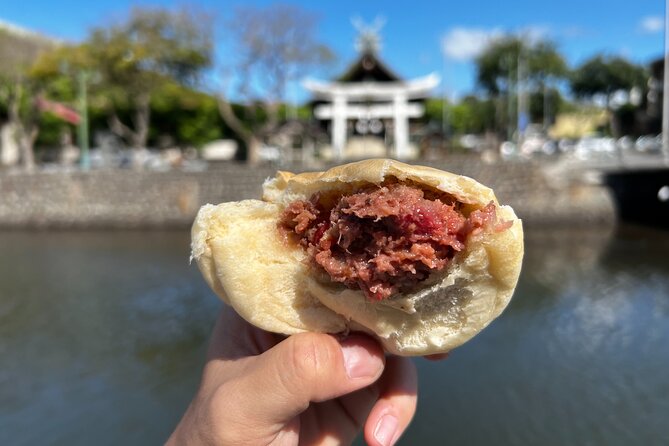
The first food stop brings out local manapua, a baked sweet bun filled with savory, smoky pork. The bread has a soft sweetness, while the filling gives it enough salt and richness to wake up your appetite.
Manapua is a useful first bite because it shows how a familiar Chinese-style filled bun has become part of local island eating. It is portable, filling, and easy to understand even if you are new to Hawaii’s food traditions.
Do not make the mistake of eating a large breakfast before this tour. The manapua is only the opening move.
Filipino comfort food: adobo and turon
Chicken adobo follows in Chinatown. The chicken is marinated and simmered in sauce, producing the tender, savory flavor associated with this Filipino classic.
The dish is less about flash than balance. You get a hearty, seasoned bite that contrasts with the sweet bun. It also reinforces the tour’s larger point: Filipino food is central to Hawaii’s local food culture, not a side note for curious eaters.
Then comes turon, also called banana lumpia. Banana is wrapped and fried in a crisp shell, creating a warm dessert with a soft, sweet center. It may arrive early in the meal, but that is part of the fun. This tour does not follow a strict restaurant sequence, and the guide may pace the food according to what is available.
More to weigh up across Oahu
- Oahu Catamaran Waikiki Sunset on 40 Foot Catamaran: Food and BYOB
★ 5.0 · 836 reviews - Oahu in a Day: Waterfall – Food Trucks – Lookouts – Small Crowds
★ 5.0 · 475 reviews - Little Havana Food and Walking Tour in Miami
★ 5.0 · 8,882 reviews - NYC Bus Tour of Brooklyn, Bronx, Queens: Art, Food & Sports
★ 5.0 · 3,805 reviews
Tropical fruit at a local market
The fruit stop is one of the most interesting parts for anyone who wants more than standard pineapple. You may try five or more locally grown fruits, with the exact selection changing by season and by what looks good that day.
The tasting can include fruits that many visitors have never tried. Durian is one possibility, and it is a useful reminder that tropical fruit comes with strong opinions. Some varieties are sweet and floral, others are tart, creamy, or unusual in texture.
This stop rewards an open mind. You do not need to love every fruit, but you should be willing to taste unfamiliar ones. Since the selection depends on availability, no fixed fruit menu is promised. That uncertainty is a drawback for picky eaters, but it is also what keeps the tasting tied to the market rather than a preset display.
Fresh seafood, from Kauai prawns to chutoro
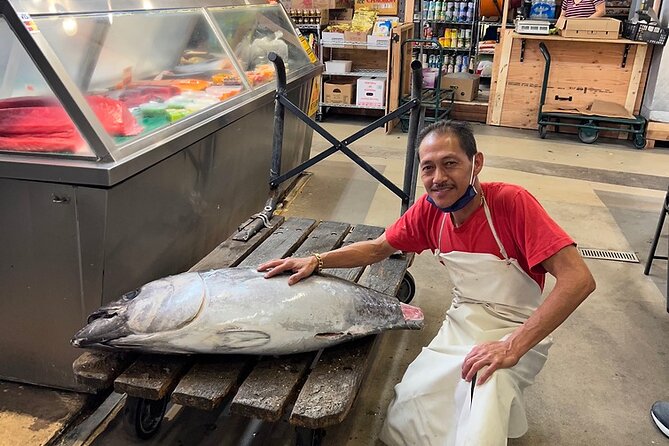
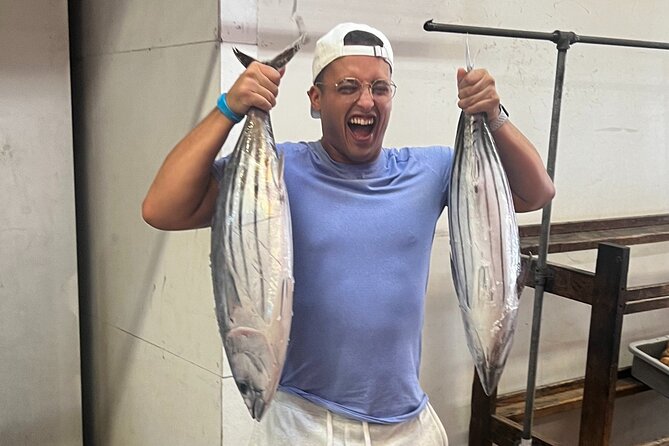
The seafood portion is substantial. You may receive Kauai wild-caught deep-water prawns, identified as ama ebi or botan shrimp, followed by Japanese-style seafood from an Oahu fish market.
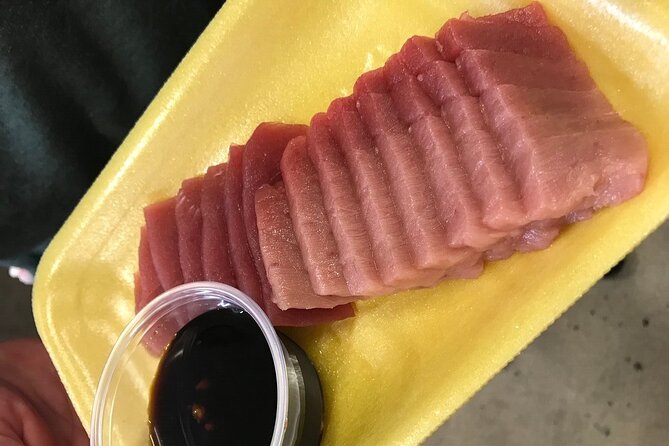
Chutoro sashimi is fatty tuna belly served raw and sliced Japanese style. The quality of raw fish depends on freshness and handling, so having a guide direct you to a trusted market is useful. This is a serious seafood stop, not a token piece of fish on a toothpick.
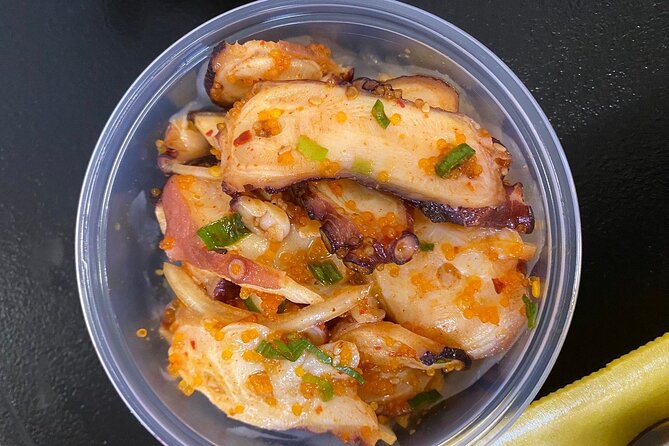
You may also try cooked Japanese madako octopus dressed with a Korean-style spicy sauce and flying fish eggs. That brings a different texture and a sharper seasoning to the seafood lineup.
The fish-market stop depends on availability. If you do not eat raw fish, this part may be the least comfortable section of the tour. Serious food allergies should be discussed before booking, and anyone with seafood restrictions should contact the operator in advance.
Roast duck, pork belly, and char siu
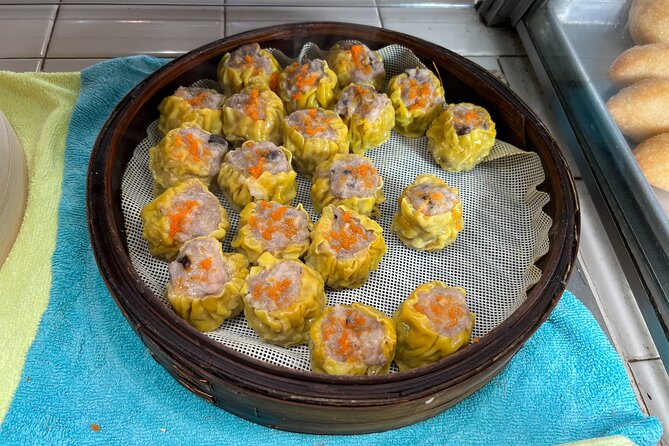
The Chinatown meat stop is the most indulgent stretch of the morning. Depending on availability, you may try Chinese-style roast duck, crispy-skinned roast pork belly, and sweet honey barbecue pork belly, also called char siu.
These dishes bring crisp skin, rich fat, smoky seasoning, and sweet glaze into the mix. They also make clear why the portions can become difficult to finish. This is not a series of microscopic samples. Several servings are large enough to save for later.
The practical tip is to pace yourself. Take a bite of everything, but do not feel obligated to finish every serving immediately. Food containers may be available for leftovers, and many people use them to turn the tour into lunch or a later snack.
Pandan cake and two kinds of poke
Vietnamese green pandan cake provides a soft, fragrant sweet after the roast meats. Pandan has a distinctive aroma that can remind you of vanilla, grass, or toasted rice, depending on your palate. The cake is a gentler finish before the final savory bites.
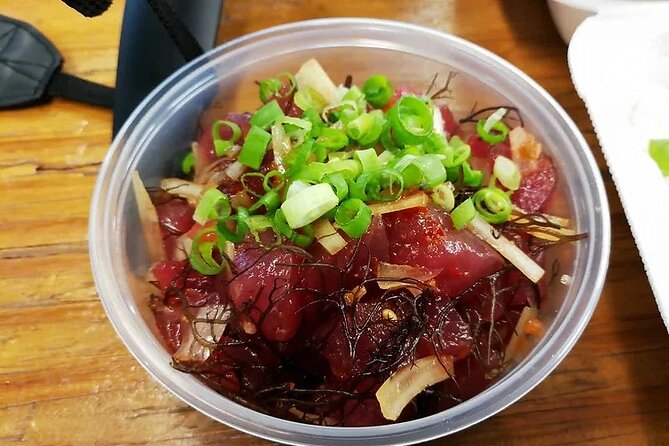
The tour then returns to two forms of poke. Spicy ahi or tuna poke uses fresh fatty tuna with a spicy seasoning. Hawaiian-style ahi limu poke is made with cubed raw big eye tuna seasoned in a local style, with limu adding a seaweed note.
Poke is easy to find around Oahu, but this tasting helps you compare preparation styles. The Japanese-style sashimi, spicy tuna poke, and local limu poke are not interchangeable. Texture, seasoning, and the way the fish is cut all change the experience.
What the walking is really like
The walking itself is described as manageable and on even pavement, but the tour is not a seated meal. You should expect to stand for much of the morning, with seating arranged when possible.
That affects who will enjoy it most. If you like grazing through markets and moving from counter to counter, the format feels lively and natural. If you need a chair between every tasting, the standing may become tiring.
The tour lasts about three hours and begins at 9:30 a.m. Hotel pickup in Waikiki or Honolulu usually takes place between 9:00 and 9:30, depending on traffic. You receive a text the day before with a 15-minute pickup window and other details, so keep your phone available.
Pickup is a useful part of the package. You do not have to arrange your own trip from Waikiki to downtown, and the vehicle returns you to the meeting point at the end. If your hotel or Airbnb does not appear during booking, provide the accommodation name or contact the operator at least 24 hours ahead.
Is $150 a fair price?
At $150 per person, this is not a cheap breakfast. It becomes easier to justify when you count what is included: private transportation from Waikiki or Honolulu, drinks, a long list of tastings, and a guide who handles the food stops and local explanation.
You receive local juice such as lilikoi, lychee, guava, or pineapple, or bottled water. The food list can include more than a dozen individual items, from manapua and adobo to sashimi, prawns, fruit, roast meats, cake, and poke.
The strongest value comes from the access and the volume. You could spend a morning trying to find these places yourself, but you would not know which market counter to choose, what to order, or how much food to buy. You would also pay separately for transportation and likely order more cautiously.
I would not book this tour only for a light breakfast or a quick introduction to one signature Hawaiian dish. I would book it if you want a large, guided tasting and expect the food and cultural explanation to replace lunch.
Who should book, and who should think twice?
This is a strong choice for food-curious visitors, repeat Oahu visitors, and anyone who wants to see beyond Waikiki’s main dining strip. It also works well early in your stay, since the guide can offer ideas for other places to eat and explain how to recognize dishes you may encounter elsewhere.
It suits families and mixed-age groups when everyone can handle standing and walking. The pace can be adjusted for older adults, and the guides have been praised for looking after parents and keeping groups together.
You should think twice if you have serious food allergies, avoid raw seafood, dislike organ or unfamiliar textures, or want a quiet sit-down meal. The exact fruit and fish selections change, and some stops require eating while standing.
The tour requires good weather. If poor weather cancels it, you are offered another date or a full refund. You can cancel for a full refund up to 24 hours before the start time, but later cancellations and changes are not refunded or accepted.
My take: book it for the food range
Book this tour if you want a morning built around generous tastings, Chinatown markets, and the many cultures behind Oahu’s food. The combination of fresh tuna, tropical fruit, roast meats, Filipino dishes, sweets, and poke gives you a much broader picture than a standard Hawaiian food sampler.
My main advice is to go hungry, wear comfortable walking shoes, and leave room for food to take away. If you want a small bite and a polished dining room, choose something else. If you want local markets, unusual fruit, fresh seafood, and guides such as Victor and TJ who can connect the dishes to island life, this is a very good use of three hours.
FAQ
How long is the Hawaii Off The Beaten Path Food Tour?
The tour lasts approximately three hours.
Where does the tour begin?
The listed meeting point is 201 N Kukui Street, Honolulu, Hawaii 96817. The tour ends back at the meeting point.
What time does the tour start?
The scheduled start time is 9:30 a.m. Hotel pickup generally takes place between 9:00 and 9:30 a.m., depending on traffic.
Is hotel pickup included?
Yes. Private pickup and drop-off are offered for hotels and Airbnb residences in the Honolulu and Waikiki areas.
Can visitors staying outside Waikiki or Honolulu receive pickup?
Those staying in Kailua, Kaneohe, Aulani, Ko Olina, or the Four Seasons area must meet the group at the first stop.
What food is included?
Included tastings may include manapua, chicken adobo, turon, tropical fruit, Kauai prawns, chutoro sashimi, spicy ahi poke, Japanese octopus, roast duck, roast pork belly, char siu, Vietnamese pandan cake, and Hawaiian-style ahi limu poke.
Are drinks included?
Yes. You receive local juice, such as lilikoi, lychee, guava, or pineapple, or bottled water.
Does the tour involve standing and walking?
Yes. Standing is expected for much of the tour, though seating is arranged whenever possible. The walking is described as manageable and takes place on even pavement.
How far in advance can I cancel?
You can cancel up to 24 hours before the start time for a full refund. Cancellations or changes made less than 24 hours before the start time are not accepted or refunded.
Newly listed in Oahu
- Rock-A-Hula Ticket★ 4.5 · 448 reviews
- Honolulu Airport, Cruise Port and Hotels Private Transfer★ 5.0 · 452 reviews
- Queens Waikiki Luau with Dinner Buffet and Cultural Activities★ 4.0 · 456 reviews
- Chief’s Luau Admission Including Transfers★ 4.5 · 457 reviews
- Pearl Harbor USS Arizona Memorial and Honolulu City Tour★ 4.0 · 460 reviews
- Dive with Sharks in Hawaii: Shark Tour from Haleiwa★ 5.0 · 468 reviews
- Oahu: Pearl Harbor Complete Experience Passport★ 4.5 · 469 reviews
- Oahu in a Day: Waterfall – Food Trucks – Lookouts – Small Crowds★ 5.0 · 475 reviews
Oahu Tours, compared.
Oahu Grand Circle Island and Haleiwa Tour: 9-Hr Deluxe Experience
Read our review →
Grand Tour Around Island 16 Locations plus Snorkeling
Read our review →
Oahu’s Ultimate Tour: Dole, Turtle Snorkel, Pali Lookout & More
Read our review →
Oahu Circle Island Tour with Turtle Snorkeling— Small-Groups
Read our review →
Browse the lists this tour appears in