
Reviewed · BOSTON TOURS
Entire Freedom Trail Walking Tour: Includes Bunker Hill and USS Constitution
Boston’s Freedom Trail is more than a red line through downtown. It is a 2.8-mile story of protest, empire, money, religion, and war that ends across the river in Charlestown. This tour follows the whole route, from the Massachusetts State House to Bunker Hill and the USS Constitution, so you get the broad story instead of a short downtown sampler.
I like two things right away. First, guide Mark connects events instead of treating each monument as a separate fact. Second, the small maximum of 16 people makes it easier to hear, ask questions, and keep a comfortable pace. The main drawback is simple: four hours on foot is a serious commitment, and admission to historic interiors is not included.
Key points to know before booking
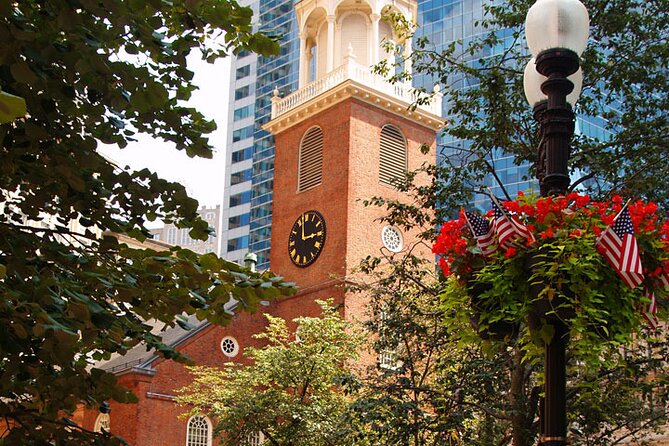
- The complete 2.8-mile route: You begin near Park Street and finish at the USS Constitution in Charlestown.
- A cause-and-effect history lesson: Mark links the Stamp Act era, the Boston Massacre, the Tea Party, Lexington and Concord, and Bunker Hill.
- Small groups, up to 16 people: This is far more personal than a large street-corner lecture.
- Outdoor sightseeing with optional interior costs: Several buildings are visited from outside, while entry fees are your responsibility.
- A manageable but lengthy walk: The route is mostly flat, but you should wear good walking shoes and expect roughly 10,000 steps.
- No tip expected: Guide gratuity is included, so Mark does not expect or accept an additional tip.
Why this full Freedom Trail walk works
Many Boston tours cover the central Freedom Trail, then stop before the route gets less convenient. This one keeps going. You pass through the North End, cross to Charlestown, and finish at two sites that give the Revolution a military and naval ending: the Bunker Hill Monument and USS Constitution.
That full route matters because the city’s geography shaped the events. The meetinghouses and government buildings downtown show how arguments over law and taxation grew into open rebellion. The North End brings in Paul Revere, the Old North Church, and the alarm before Lexington and Concord. Across the water, Charlestown puts the Battle of Bunker Hill and the young American Navy into the same story.
Mark’s approach, based on the supplied tour details, is conversational and thorough rather than theatrical. He uses maps and original material, answers questions, and adds a few places just off the official trail. He also makes room for less familiar figures, including women who helped shape the period. That is useful if you already know the standard names and want more than the usual Paul Revere summary.
The pace is designed for sightseeing, not speed. Some stops last five minutes, others about ten. You pause often, but the total distance still adds up. One practical estimate puts the walk at about 10,000 steps, so even a mostly flat route can feel tiring by the end.
More Walking Tours in Boston
- Boston: Freedom Trail History Small Group Walking Tour
★ 5.0 · 6,450 reviews - Harvard University Campus Guided Walking Tour
★ 4.5 · 3,632 reviews - Boston Freedom Trail Walking Tour with Costumed Guide
★ 4.5 · 2,531 reviews
From the State House to Park Street
The tour starts at 10:00 a.m. near Beacon Street and Park Street, beside Boston Common. The first stop is the Massachusetts State House, Charles Bulfinch’s grand Federal-style building and the current seat of Massachusetts government.
Mark places it alongside the two earlier buildings that served as the colony’s government headquarters. That comparison gives you a quick sense of how Boston grew from a compact colonial town into the capital of Massachusetts.
At Park Street Church, you get a different part of the story. When it opened, it was the tallest building in the country. Its connection to the abolition movement also reminds you that Boston’s reform movements did not end with independence. The nickname Brimstone Corner refers both to fiery sermons and to an unexpected former use of the church cellar.
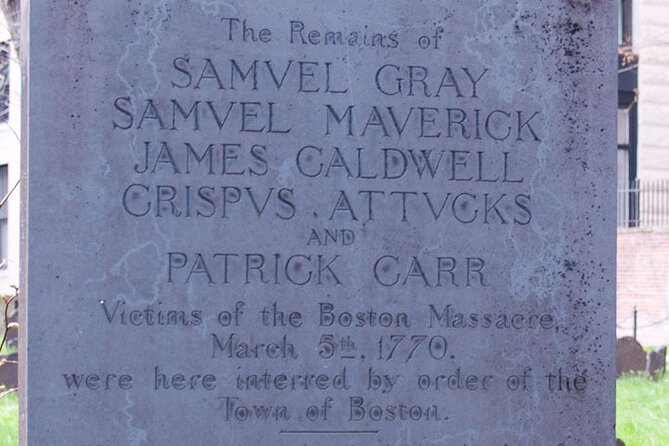
The Granary Burying Ground is one of the first major pauses. Samuel Adams, Paul Revere, John Hancock, and victims of the Boston Massacre are buried here. Instead of simply pointing out old gravestones, Mark introduces the people and explains what each contributed to the revolutionary cause.
This is a useful early stop because it puts names onto the political story. You are not just hearing about a movement. You are standing among the people who argued for it, organized it, financed it, and paid for it.
King’s Chapel and the colonial fight over power
King’s Chapel looks like a church stop, but its story begins with a land dispute and religious tension. The 1749 Anglican church was tied to an earlier conflict in which the king took land for an unwanted church in a strongly Puritan town.
That detail helps explain why religion and government were hard to separate in colonial Boston. The quarrel was not only about worship. It was also about who had authority to claim public space and impose the crown’s will.
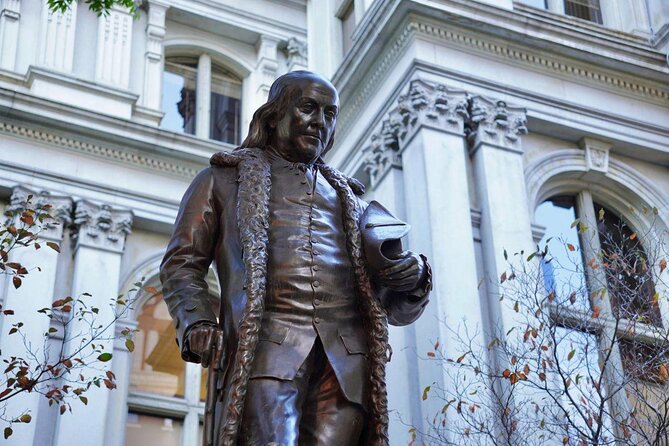
At Old City Hall, the focus shifts to civic memory. You see a Benjamin Franklin statue and a marker connected to the oldest still-operating school in the colony. This is a shorter stop, but it breaks up the political narrative with two reminders of education, public life, and Boston’s long institutional history.
You should expect many of these early stops to be explained from the street or public grounds. Admission to interiors is not included, so the tour works best if you see the buildings as part of a walking story rather than as a series of museum visits.
Meetinghouses, taxes, and the road to rebellion

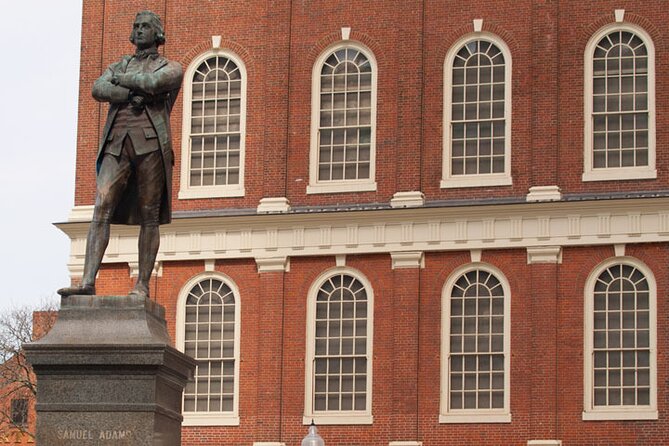
The Old South Meeting House is one of the strongest political stops on the route. In colonial Boston, a meetinghouse could function as a place of worship, public debate, and political organizing. Samuel Adams used this one as a platform before the Boston Tea Party.
The value here is the setting. The Tea Party did not appear from nowhere, and it was not simply a dramatic act of protest. It followed years of disputes over taxation, representation, trade, and the right of the British government to govern people who had no elected voice in Parliament.
The Old State House takes the story into the courts and onto the street. It was once the center of British government in Massachusetts and the site of a major 1761 legal battle over colonial rights. It was also the scene of the 1770 Boston Massacre.
Mark treats the massacre as a contested event rather than a simple morality play. That is important. Patriot leaders used the deaths as powerful anti-British propaganda, while the legal proceedings raised difficult questions about crowd behavior, military presence, and responsibility. Seeing the site gives the argument a physical setting, not just a textbook label.
Faneuil Hall adds another layer. Samuel Adams spoke there against taxation without representation, but the building also hosted Frederick Douglass, the escaped slave and abolitionist. The stop connects the revolutionary language of liberty with later struggles over who was actually included in that promise.
More walking tours around Boston:
- The Full Revolutionary Story Epic Small Group Boston Walking Tour
★ 5.0 · 2,356 reviews - Boston’s Freedom Trail: A Revolutionary Walking Tour
★ 4.9 · 1,748 reviews - Boston: Freedom Trail History Small Group Walking Tour
★ 4.9 · 1,590 reviews - Boston’s Freedom Trail: A Revolutionary Walking Tour
★ 5.0 · 1,343 reviews
The Blackstone Block and Paul Revere’s neighborhood
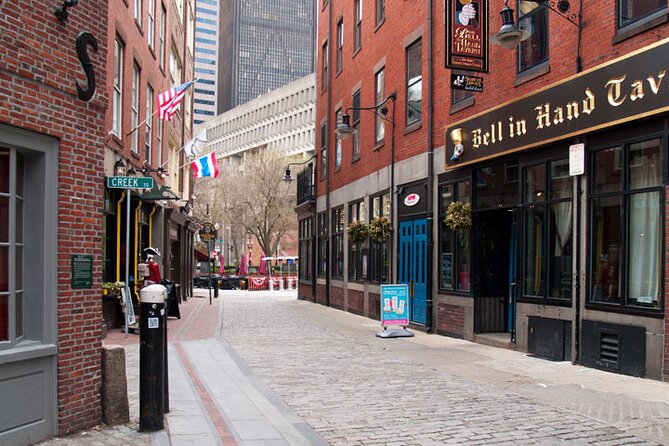
Near the Blackstone Block, the walk becomes more detailed and less monument-focused. You hear about the Massachusetts Spy newspaper, a tavern known as the Headquarters of the Revolution, and the Ebenezer Hancock House.
Ebenezer Hancock was John Hancock’s brother, and his home was used to store French money sent to support the Revolution. That is exactly the sort of detail that makes the tour useful. Independence depended on supplies, credit, communication, and foreign help, not only on famous speeches and battlefield courage.
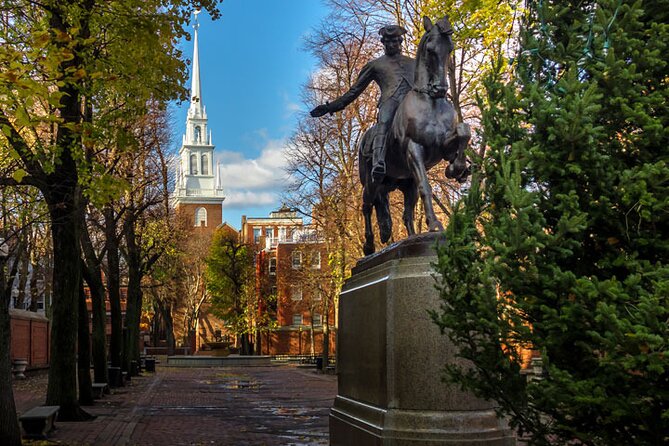
The Paul Revere House is among Boston’s oldest surviving homes. Revere bought the 1680 house in 1770, and it became home to his large family. The building gives you a more ordinary view of a famous figure. Revere was not only a messenger on horseback. He was a craftsman, a businessman, a family man, and a participant in Boston’s political network.
The tour does not reduce him to one midnight ride. That wider treatment is one of its strengths, particularly if you already know the familiar version of the story.
Old North Church and the warning to Charlestown
The Old North Church is the key North End stop. Its role in the Revolution is tied to the signal warning that British regulars were moving toward Cambridge and the military supplies at Lexington and Concord.
The important point is geography. The signal crossed the water toward Charlestown, where people could interpret the movement of British troops and spread the alarm. The church is therefore not just an old building with a famous lantern story. It is part of a communication network operating across a crowded harbor and tense colonial towns.
From here, the tour moves toward Copp’s Hill Burying Ground. The brief visit helps you understand the geography around the Battle of Bunker Hill. You also see a grave marker with its own unusual story, another example of Mark’s habit of using smaller details to keep the walk from becoming a march between famous names.
This is also where the physical challenge becomes more noticeable. You have already covered much of downtown Boston, and the route still continues across the water. Bring water, wear shoes with solid support, and plan your day so you do not need to rush to another appointment afterward.
Bunker Hill, where the British paid dearly
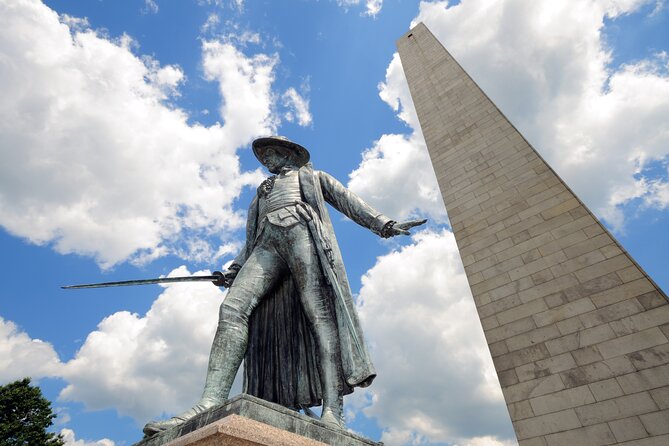
The Bunker Hill Monument is in Charlestown, on Breed’s Hill, where the battle was actually fought. That correction is a small but important part of the visit. The name Bunker Hill became standard, even though much of the fighting took place on the neighboring hill.
The battle ended in a British victory, but at a heavy cost. British losses were about three times those of the Patriots. That fact changed how both sides viewed the conflict. The British learned that suppressing the rebellion would be far harder than expected, while the Americans gained confidence despite losing the ground.
The monument itself is free to visit, according to the tour details, but the guided stop is mainly about understanding what happened there and why it mattered. You get a battlefield conclusion to the political arguments heard earlier in the day.
This part of the tour is especially valuable for families with teenagers and for adults who want the Revolution explained as a sequence of decisions and consequences. The central question becomes clear: how did disputes over taxes and legal authority lead to armed troops marching through Massachusetts?
USS Constitution, a fitting final stop
The tour ends at the USS Constitution in the Charlestown Navy Yard. Known as Old Ironsides, it is the world’s oldest commissioned warship still in service and a major American naval treasure.
Ending here changes the scale of the story. The day begins with local government, meetinghouses, and angry town meetings. It finishes with a national navy and a ship that served the United States in American and foreign waters.
The listed tour ends at the USS Constitution Museum building, Building 22, with the ship as the final sight. The walk includes the ship stop, but admission to interiors is not included. You should confirm current entry arrangements if going aboard or visiting museum exhibits is important to you.
As a final stop, Old Ironsides works well because it carries the story beyond 1776. The Revolution created a country, but that country still had to defend itself, trade abroad, and build institutions. The ship gives the tour a strong closing image.
Price, group size, and practical value
At $79 per person, this is not the cheapest way to see a few Freedom Trail landmarks. It is a fair price for a four-hour, small-group experience covering the complete route, especially if you want the history explained rather than simply followed with a map.
The maximum group size is 16. That is large enough to create a lively group but small enough for Mark to keep track of people in busy streets, answer questions, and adjust the pace. Several comments specifically praise his ability to keep the group together and make sure people remain comfortable.
Guide gratuity is included. Mark does not expect or accept tips, which makes the listed price easier to understand. You are paying for the time, preparation, route knowledge, and narration rather than trying to calculate an extra amount at the end.
The tour is booked an average of 55 days ahead, so I would not leave it until the last morning of a short Boston visit. It is offered in English with a mobile ticket. Free cancellation is available up to 24 hours before the start time. Since the tour depends on good weather, a cancellation for poor conditions brings the choice of another date or a full refund.
Who should book this four-hour walk?
I would choose this tour if you want the full Freedom Trail in one day and prefer a guide who explains why events happened, not just what a building is called. It suits history buffs, couples, solo visitors, families with teenagers, and anyone who enjoys walking through a city while listening to a clear narrative.
It can also work well for older adults who are comfortable walking several miles at a slow pace. The route is described as mostly flat, and the pace is manageable, but you still need moderate physical fitness.
I would think twice if you dislike long walking tours, want extensive indoor visits, or have children under 12 who are not strongly interested in history. The guide himself cautions that younger children need to be real history fans to enjoy such an in-depth experience.
One useful bonus is the local advice Mark gives along the way. His restaurant suggestions include James Hook & Co for lobster rolls, so you may finish the tour with a practical plan for lunch or dinner.
Should you book the Entire Freedom Trail Walking Tour?
Book it if you want Boston’s revolutionary story told as one connected four-hour walk. The strongest parts are Mark’s cause-and-effect approach, the small group, the extra details around the official trail, and the decision to continue to Bunker Hill and USS Constitution.
Skip it if you want a short introduction, lots of museum time, or a flexible self-guided schedule. For everyone else, $79 buys a serious look at Boston’s past, with enough context to make the red line, old churches, burial grounds, and harbor crossings mean something.
FAQ
How long is the Entire Freedom Trail Walking Tour?
The tour lasts approximately four hours and covers the full 2.8-mile, or 4-kilometer, Freedom Trail route.
Where does the tour begin?
The meeting point is near Beacon Street and Park Street in Boston, Massachusetts.
Where does the tour finish?
The tour concludes at Old Ironsides, the USS Constitution, at Building 22 in the Charlestown Navy Yard.
What time does the tour start?
The scheduled start time is 10:00 a.m.
Does the tour include Bunker Hill and USS Constitution?
Yes. The itinerary includes the Bunker Hill Monument and USS Constitution as the final major stops.
Are admission fees included?
Admission to historic interiors is not included. The tour includes the guided walking experience, while any interior entry costs are your responsibility.
How large is the group?
The experience has a maximum of 16 people.
Is guide gratuity included?
Yes. Guide gratuity is included, and the guide does not expect or accept additional gratuities.
Can I cancel for a refund?
You can cancel at least 24 hours before the start time for a full refund. Cancellations or changes made less than 24 hours in advance are not accepted for a refund. If poor weather causes the tour operator to cancel, you will be offered another date or a full refund.
Newly listed in Boston
- New England Aquarium Admission Ticket in Boston★ 4.0 · 446 reviews
- Boston’s Politically Incorrect North End Food Tour★ 5.0 · 453 reviews
- Boston’s North End Food and History Walking Tour★ 5.0 · 459 reviews
- Downtown Freedom Trail, Beacon Hill & Back Bay Walking Tour★ 4.5 · 473 reviews
- Cambridge, Massachusetts: MIT and Harvard Walking Tour★ 4.7 · 486 reviews
- Narrated Sunset Cruise of Boston Harbor★ 4.0 · 532 reviews
- Sightseeing Day Sail around Boston Harbor★ 5.0 · 541 reviews
- Boston: Harbor Sunset Yacht Cruise★ 4.6 · 570 reviews
Boston Tours, compared.
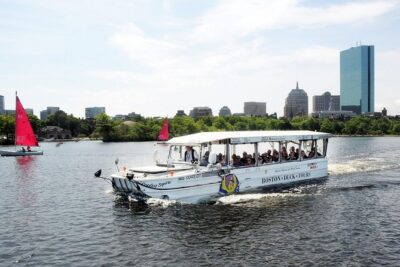
Boston Duck Boat Sightseeing City Tour with Cruise Along Charles River
Read our review →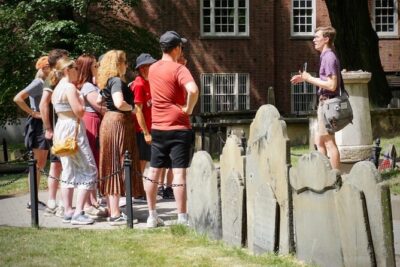
Freedom Trail History Small Group Walking Tour
Read our review →
Boston Hop-On Hop-Off Trolley Tour with 13 Stops
Read our review →

Boston Duck Tour: The Original and World-Famous
Read our review →
Harvard University Campus Guided Walking Tour
Read our review →
Boston Fenway Park: Guided Ballpark Tour with Options
Read our review →
Boston to Martha’s Vineyard Day Trip with Optional Island Tour
Read our review →Browse the lists this tour appears in