
Reviewed · NASHVILLE TOURS
Downtown Nashville Guided Sightseeing Walking Tour
Nashville’s story comes alive in the gap between its polished music landmarks and its rougher corners. This two-hour downtown walk takes you from Broadway honky-tonks to Printer’s Alley, the Cumberland River, Fort Nashborough, Civil Rights history, and the Egyptian-style Downtown Presbyterian Church.
I like two things right away: the route gives first-time visitors a useful city orientation, and the guide turns a lot of dates and names into memorable stories. I also like the portable speaker used by guide Ryan, which helps you hear over Broadway’s noise. The main consideration is pace. One guide may deliver information quickly, and the tour spends much of its time outside, so weather, comfortable shoes, and your attention span matter.
Key points at a glance
- Music City in one compact walk: See the Ryman Auditorium, Tootsie’s Orchid Lounge, Ernest Tubb Record Shop, and George Jones references along the Broadway corridor.
- Nashville beyond the neon: The route includes Fort Nashborough, the riverfront, Andrew Jackson stories, Woolworth, the Tennessee State Capitol, and Downtown Presbyterian Church.
- A strong guide can make the difference: Ryan is praised for humor, singing, dancing, clear storytelling, and answering questions.
- Good value at $25: You get two hours of live guiding and a useful introduction before choosing which places to revisit.
- Easy first-morning plan: The 10:00 am start and return to the meeting point make this a practical way to begin a Nashville stay.
- Small-group limits, with a catch: The maximum is 20 people, but at least six are needed or the tour may be rescheduled or canceled.
Why this walking tour works as a first look at Nashville
At $25 per person, this is priced as an affordable introduction rather than a full museum visit or a deep architectural tour. You are paying for a local guide’s stories, route planning, and recommendations, not admission to the Ryman, the State Capitol, or any other attraction.
That distinction matters. The stops are mainly outside, and the short five-minute visits are designed to give you context. If you want to tour the Ryman interior or spend time inside a honky-tonk, you will need to arrange that separately.
I like the route because it does not treat Nashville as only a country-music theme park. You get the famous music names, but also the river trade, early settlement, political history, Civil Rights struggle, architecture, and less polished nightlife stories. In two hours, you get a broad map of downtown and several ideas for the rest of your trip.
The tour is especially useful on your first morning. You can spot places you want to revisit, understand how Broadway connects to the riverfront and Printer’s Alley, and ask the guide for suggestions about where to go next. The experience includes unlimited recommendations, so come prepared with a few questions.
More walking tours around Nashville:
- Walking Food & Drink Tour of Downtown Nashville
★ 5.0 · 1,140 reviews - Delicious Donuts of Nashville: A Sweet City Walking Adventure
★ 5.0 · 979 reviews - The Ghosts of Nashville Night-Time Walking Tour
★ 4.5 · 799 reviews
Meeting at 501 Broadway
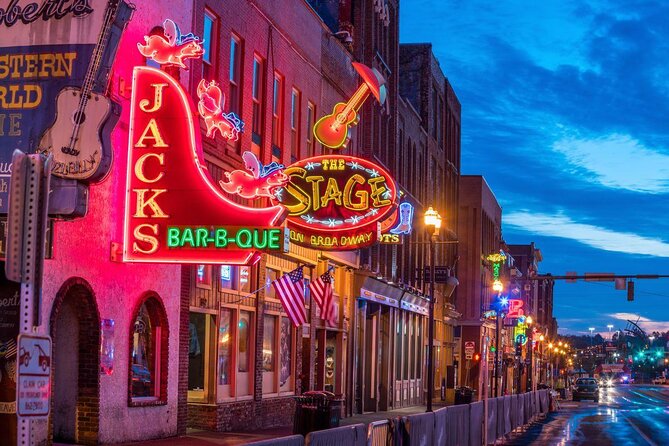
The tour begins at 10:00 am at 501 Broadway, in the heart of downtown Nashville. This places you at ground zero for the city’s honky-tonk scene, where the walk starts with the sights, sounds, and history that made Broadway famous.
Pay close attention to the exact meeting point. One poor experience involved confusion between the meeting instructions and the nearby arena, followed by a long wait and no contact. Bring the mobile ticket, arrive early, and keep the tour provider’s messages available on your phone.
You are asked to provide a cell phone number for text updates. That is important because weather or scheduling changes may be sent by text. The tour requires at least six people, and it may be rescheduled or canceled with a refund if that minimum is not reached.
The group can include up to 20 people. That is still a manageable size for a city walk, though your experience may depend on where you stand around the guide. Ryan has used a portable microphone and speaker, a useful touch on streets filled with music, traffic, and conversation.
Broadway, the Ryman, and the honky-tonk story
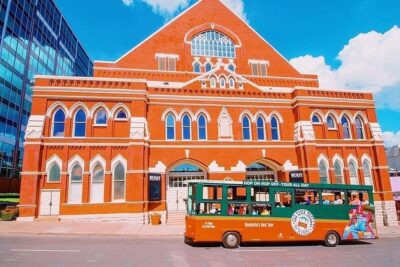
The first part of the route introduces Nashville through its music landmarks. The Ryman Auditorium is the centerpiece. Known as the Mother Church of Country Music, it connects downtown Nashville to the city’s radio and performance past.
The itinerary includes two brief Ryman stops, one early and one near the end. That gives the building a useful role as both a historical landmark and a point of return. You see it in relation to Broadway, Tootsie’s, and the surrounding downtown blocks rather than as an isolated concert hall.
Next comes Tootsie’s Orchid Lounge, one of Nashville’s best-known honky-tonks. The guide uses the venue to explain the city’s rough-edged music culture, where performers, songwriters, and famous names crossed paths in crowded bars.
You also pass Ernest Tubb Record Shop, connected with the old path to the Grand Ole Opry. The tour notes its connection to Coal Miner’s Daughter, adding a film detail to the music history. These are quick outdoor stops, not extended shopping or interior visits, but they help you understand how Nashville’s music industry worked at street level.
There is also a stop connected with George Jones, known by the nickname Possum. The point is less about a formal exhibit and more about the character of Nashville’s music legends. Expect names, anecdotes, and links between performers and the places that shaped their careers.
The riverfront and Fort Nashborough
From the music district, the walk heads toward Market Street and Riverfront Park. This shift is valuable because it shows you the older commercial reason Nashville grew: the Cumberland River and the trade that moved along it.
You also get views toward Nissan Stadium, home of the Tennessee Titans, along with the river and the original site of Fort Nashborough. The stadium creates a clear modern landmark, while the fort site points back to the early Anglo settlement.
The Fort Nashborough stop is also where the tour addresses the people who lived in the region before the settlement. The supplied description refers to Cherokee history and the arrival of Anglo settlers west of the Appalachians. Listen closely here, since the story involves more than a simple founding tale. It raises questions about whose history gets remembered and how Nashville developed.
Riverfront Park gives the group a chance to take in a wider view after the tighter Broadway streets. Still, do not expect a long rest break or a slow riverside stroll. The walk keeps moving, and the route includes hills and changes in pace.
More to weigh up across Nashville
- Grand Ole Opry House Guided Backstage Tour in Nashville
★ 4.5 · 2,405 reviews - Belle Meade Guided Mansion Tour with Complimentary Wine Tasting
★ 4.5 · 2,189 reviews - Guided Segway Tour of Downtown Nashville
★ 5.0 · 1,568 reviews - Ryman Auditorium Self-Guided Tour with Souvenir Photo Onstage
★ 4.5 · 903 reviews
Andrew Jackson stories at Nashville Public Square
Nashville Public Square brings the tour into political and civic history. This is where you hear stories about Andrew Jackson and his many duels, a colorful subject that fits the guide’s storytelling style.
The best way to approach this stop is as a character study rather than a full biography. Andrew Jackson’s reputation can be presented in a very celebratory or very critical way, and the guide may take a strong position. One lower-rated experience objected to political commentary and harsh language about Jackson.
That does not mean the subject should be avoided. It means you should expect interpretation, not only neutral dates. If you prefer a strictly restrained presentation, this part may feel more opinionated than the rest. If you enjoy debate and human detail, it adds personality to the history.
The tour’s humor is one of its biggest strengths, but humor is personal. Most of the praise centers on Ryan’s jokes and delivery, while one person found the jokes confusing and the information too fast. You will get the most from this stop if you are comfortable with a lively, sometimes theatrical guide.
Printer’s Alley and Skull’s Rainbow Room
Printer’s Alley shifts the mood again. Once associated with printing businesses, the narrow passage became known for nightlife and adult entertainment. The guide presents it as a place where performers and musicians crossed paths before and after fame.
The stories link the alley with Johnny Cash, Jimi Hendrix, Little Richard, Tim McGraw, Paul McCartney, and others. The appeal is not a grand monument. It is the sense that Nashville’s music culture grew in informal places, late at night, among bars, clubs, and working musicians.
Skull’s Rainbow Room is one of the most colorful stops. The tour connects it with names including Johnny Cash, Andy Griffith, Buck Owens, Bob Dylan, Paul McCartney, and Tim McGraw. The stop is brief, but the list of characters gives the guide plenty of material.
This is also where you see the tour’s less polished side. The experience is not only about family-friendly country music and famous recording venues. It includes drinking, nightlife, scandal, and the city’s old reputation for mischief. Families can participate, but parents may want to decide how much of the adult-themed history suits younger children.
Woolworth and Nashville’s Civil Rights story
The Woolworth stop on Fifth Avenue is one of the most important parts of the route. The building was tied to the Civil Rights sit-ins of the 1960s, and the guide focuses on the Nashville Freedom Riders and the resistance to Jim Crow laws.
This gives the tour moral weight. You are not simply moving from one music photo stop to the next. You are also standing in a place where ordinary people challenged unfair rules through organized protest, courage, and persistence.
The stop is scheduled for about 10 minutes, longer than many of the music landmarks. That extra time makes sense. The story needs room for context, and it deserves a respectful tone.
The Civil Rights section may also be the most emotionally demanding part of the tour. The guide aims to help you understand the pain, struggle, and eventual progress connected with the sit-ins. If you want only light entertainment, this part may feel serious. I consider that a strength, since a useful city tour should make room for difficult history as well as amusing stories.
The State Capitol and Downtown Presbyterian Church
The route turns toward the Tennessee State Capitol, though the supplied schedule does not assign a detailed stop length to the building. You should expect an exterior look and commentary rather than an interior visit.
The Capitol helps connect downtown’s entertainment district with the state’s political center. It also gives you a chance to see how quickly Nashville’s character changes from neon signs and clubs to government buildings and formal civic spaces.
The final major architectural stop is Downtown Presbyterian Church. Its Egyptian Revival design is unusual for a church in the United States and makes a sharp contrast with the brick, neon, and commercial facades elsewhere on the route.
This is the kind of detail a self-guided walk can easily miss. You might pass the building without understanding why it looks different. A guide points out the style, explains its importance, and gives you a reason to pause.
The tour then returns to central Nashville and the Ryman area. Ending near the starting point is practical. You can continue exploring Broadway, eat lunch downtown, return to a music venue, or use the guide’s suggestions to shape the rest of your day.
The guide style: funny, fast, and full of stories
The guide is the heart of this experience. Ryan receives especially strong praise for being funny, energetic, respectful, and well informed. His style includes jokes, songs, dancing, and quick facts, and he welcomes questions.
That energy keeps a two-hour city walk from feeling like a list of dates. Several comments describe the tour as a highlight of a Nashville visit because the guide made history fun. The portable speaker is another practical advantage, especially on Broadway.
There are tradeoffs. The delivery can be quick, and one experience found it hard to separate facts from jokes. You may not get a long pause at every stop, and questions may need to wait until the guide finishes a section.
I suggest standing near the guide, especially if you have hearing concerns. Wear shoes suited to two hours on city streets, and bring a light layer. One person found the route chilly because much of it stayed in the shade. The tour is family-friendly, but the nightlife stories and references to adult entertainment are part of the presentation.
Is $25 a fair price?
Yes, for the right purpose. At $25, you get a live two-hour introduction to a large share of downtown Nashville, with a professional guide and recommendations for the rest of your visit.
The value is strongest if you are new to the city and want context before spending money on concerts, museums, food, or nightlife. The walk can help you avoid wandering without a plan, and it shows how the music district, riverfront, civic center, and Printer’s Alley fit together.
The value is weaker if you want entry into major attractions. Admission is not included, and the stops are short. You are buying storytelling and orientation, not access to the Ryman Auditorium or other buildings.
A rating of 4.8 from 1,304 reviews and a 95 percent recommendation rate suggest a strong overall record. Still, the range of experiences matters. Punctuality, guide style, weather, and meeting-point clarity can affect your day. Treat the tour as a lively introduction, not a private scholarly walk.
Who should book this Nashville walk?
I would choose it for a first visit, especially on the first morning. It suits you if you like local anecdotes, music history, architecture, and a guide who is willing to perform a little.
It also works well for families and groups that want a shared activity without a high price. Most people can participate, service animals are allowed, and the meeting point is near public transportation.
You may want another type of tour if you have limited walking ability, dislike fast presentations, or want long indoor visits. This experience is also weather-dependent. If rain or other poor weather cancels it, you are offered another date or a full refund.
Free cancellation is available until 24 hours before the 10:00 am start. Inside that window, the payment is not refunded. The minimum group rule is worth remembering too, since a small booking count can lead to a change or cancellation.
Should you book it?
Book this tour if you want a lively map of Nashville’s downtown story for $25, with music landmarks, riverfront history, Civil Rights sites, and a guide who can make the facts stick.
I would book it early in your stay, arrive well before 10:00 am, confirm the meeting point at 501 Broadway, and bring a cell phone that can receive texts. Expect a quick pace, strong opinions at some history stops, outdoor conditions, and a generous dose of humor.
Skip it if your main goal is going inside attractions or taking a slow, quiet walk. For most first-time visitors who want to understand Nashville before exploring it on their own, this is a practical and entertaining choice.
FAQ
How long is the Downtown Nashville Guided Sightseeing Walking Tour?
The tour lasts approximately two hours and ends back at the meeting point in central Nashville.
Where does the tour start?
The meeting point is 501 Broadway, Nashville, Tennessee 37203. The scheduled start time is 10:00 am.
What sights are included?
The route includes the Ryman Auditorium, Tootsie’s Orchid Lounge, Ernest Tubb Record Shop, George Jones references, Fort Nashborough, Printer’s Alley, Skull’s Rainbow Room, Woolworth on Fifth, the Tennessee State Capitol, and Downtown Presbyterian Church.
How much does the tour cost?
The listed price is $25 per person. The tour includes a two-hour live walking tour, a professional guide, storytelling, and recommendations for things to do in Nashville.
What happens if the tour is canceled because of weather or too few bookings?
If poor weather causes a cancellation, you are offered a different date or a full refund. The tour also requires at least six people. If that minimum is not met, you are offered a different date or experience, or a full refund.
Can I cancel for a full refund?
Yes. You must cancel at least 24 hours before the experience start time for a full refund. Cancellations or changes made less than 24 hours before the start time are not refunded or accepted.
Newly listed in Nashville
- Nashville: Music City Nighttime Trolley Tour★ 4.6 · 490 reviews
- Nashville to Memphis Daytrip with Graceland VIP Tour and Sun Studio Admission★ 5.0 · 503 reviews
- Civil War Tour with Lotz House, Carter House & Carnton Admission from Nashville★ 5.0 · 522 reviews
- Nashville: Homes of the Stars Narrated Bus Tour★ 4.6 · 531 reviews
- Nashville VIP Style Private Tour with Local Singer-Songwriter★ 5.0 · 543 reviews
- Nashville 12South District Authentic Food Tour with 7 Tastings★ 5.0 · 556 reviews
- Open-Air Minibus Sightseeing Tour of Nashville★ 5.0 · 594 reviews
- Downtown Nashville Helicopter Tour★ 5.0 · 634 reviews
Nashville Tours, compared.

Food Tour with 5+ Tastings of Local Delicacies
Read our review →
Best of Nashville City Sightseeing Tour on Double Decker Bus
Read our review →
Explore the City of Nashville Sightseeing Tour by Golf Cart
Read our review →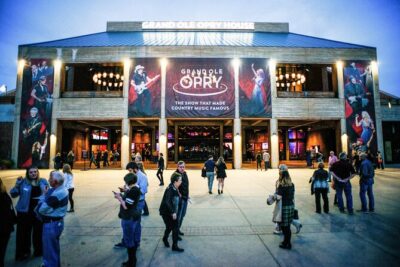

Downtown Nashville Public Party Tractor 21+ Only
Read our review →
Discover Nashville City Tour with Entry to Ryman & Country Music Hall of Fame
Read our review →
Grand Ole Opry House Guided Backstage Tour in Nashville
Read our review →Browse the lists this tour appears in