
Reviewed · THE USA
Colonial Williamsburg Admission
Colonial Williamsburg turns American history into something you can walk through. You move from the Governor’s Palace to the Capitol, then watch a blacksmith shape red-hot iron or a printer work with old methods. Costumed interpreters give the town its voice, explaining not only famous political events but also the daily work of shopkeepers, women, craftspeople, and enslaved people.
I like the range here, especially the working trade shops and the two art museums, which give the visit more depth than a simple stroll past old buildings. I also like the included shuttle, since the historic area is large and its brick paths can be tiring.
The main catch is scale. There is a lot of walking, and one day may feel rushed if you want the Palace, Capitol, Courthouse, trade shops, performances, and museums. Ticket redemption can also take time if you arrive with a digital voucher that needs to be exchanged or printed.
Key things to know before you go

- The Governor’s Palace and Capitol anchor the visit: One shows royal Virginia before the Revolution, while the other places you in the political turmoil of 1776.
- Trade demonstrations are more than decoration: Blacksmiths, printers, milliners, and other craftspeople explain how colonial residents worked and made a living.
- A two-day visit makes sense: The site covers more than 300 acres, with 88 original 18th-century buildings and many rebuilt structures.
- Start at the Regional Visitor Center: Pick up current information, study the map, and watch Williamsburg: The Story of a Patriot before walking into the historic area.
- The shuttle saves energy: Use it between sections, especially if you have limited stamina or want to save your legs for the buildings.
- Book carefully through the ticket process: Your voucher is redeemed at the Visitor Center, and printing or email problems can add a long wait.
Start at the Visitor Center, not in the middle of town
Your visit begins at the Colonial Williamsburg Visitor Center at 101 Visitor Center Drive. This is where you redeem the admission voucher, check the day’s schedule, and get the latest information on activities and performances.
I would make this your first stop even if you are eager to reach the old town. Colonial Williamsburg changes its program from day to day, and the Visitor Center is the best place to see what is actually operating. Evening programs, special reenactments, plays, dances, and concerts may be available, but you need the current schedule rather than a general assumption.
The introductory film, Williamsburg: The Story of a Patriot, provides useful orientation. It sets the political scene before you begin walking among the buildings, so the later discussions of royal rule, revolution, and Virginia government have a clearer place in your mind.
The pedestrian bridge from the Visitor Center leads toward the historic area. Parking fees are not included, but parking at the Visitor Center is described as easy and useful for avoiding the more congested center. The included shuttle then gives you another way to reach different parts of the site.
Other trips travellers line up across the USA on the same visit:
- NYC: SUMMIT One Vanderbilt Tickets
★ 4.7 · 51,195 reviews - NYC: 9/11 Memorial & Museum Timed-Entry Ticket
★ 4.8 · 31,428 reviews - NYC: Empire State Building Tickets – Observatory & Museum
★ 4.7 · 25,757 reviews
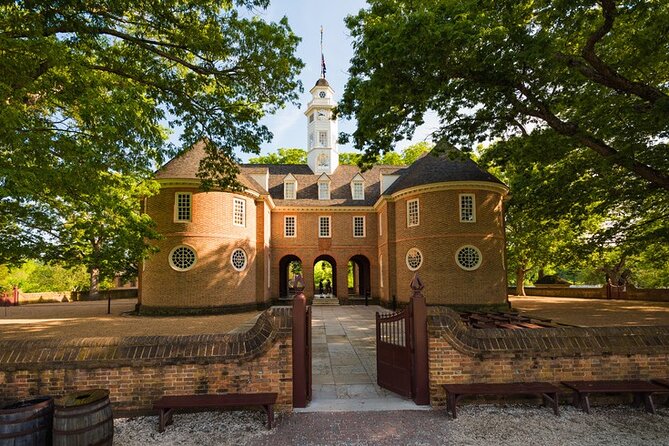
The Governor’s Palace shows royal Virginia at its grandest
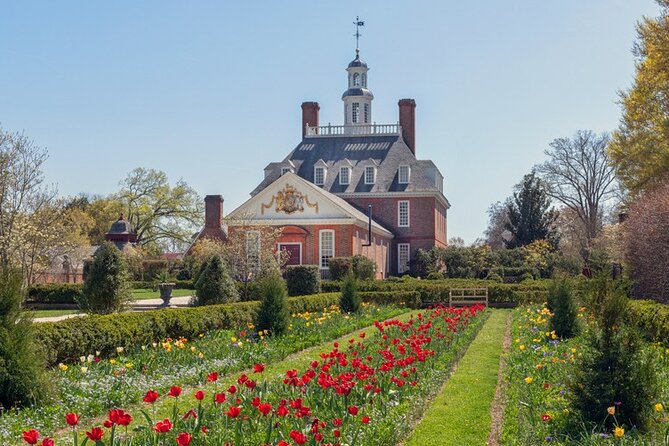
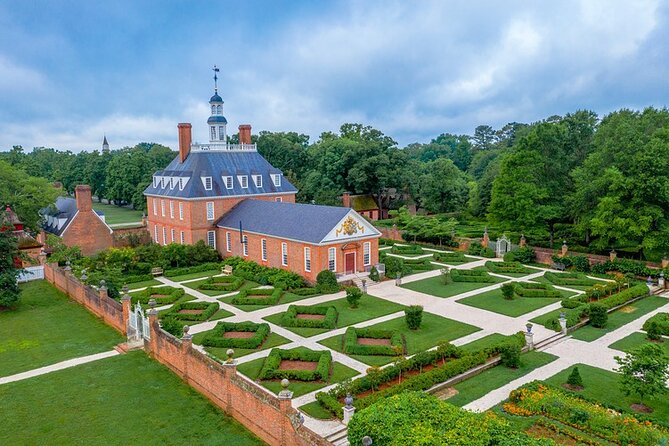
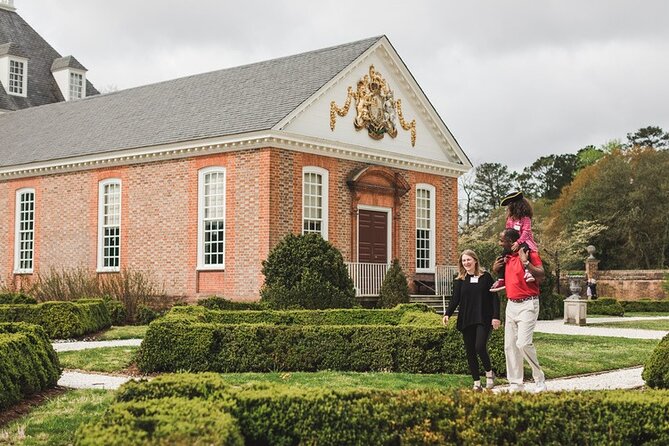
The Governor’s Palace is the natural place to see how impressive colonial government could look before the Revolution. The building presents Virginia under royal authority, with period rooms, formal spaces, and grounds that help explain the social order of the time.
The costumed interpretation is important here. You are not only looking at furniture and walls. You are hearing about the people who occupied this world, the officials who governed it, and the tensions that made royal rule increasingly difficult to defend.
The Palace is one of the most popular stops, so allow time for the guided visit rather than treating it as a quick photo stop. The tour format can make the experience feel more focused than wandering alone, though you may need to fit your plans around scheduled entry times.
The gardens and exterior spaces also deserve attention. They add a sense of how the property functioned as a home and official residence, not merely as a preserved building.
The Capitol brings 1776 into focus
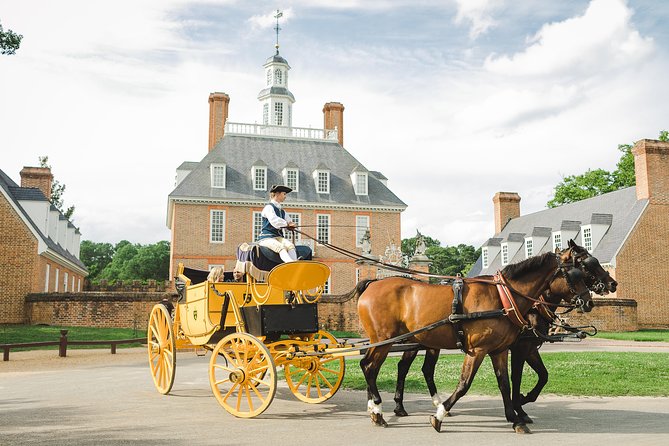
At the Capitol, the story shifts from royal display to political crisis. This was colonial Virginia’s seat of power, and the interpretation centers on the turbulent year of 1776.
I find this stop especially useful for connecting broad American history with decisions made in actual rooms. The Capitol helps you picture government as a working institution, with arguments, uncertainty, and competing ideas rather than a neat story that was obvious from the start.
The costumed interpreters give the building much of its appeal. They explain the political questions of the period and place you close to the debates that shaped Virginia’s direction. One day can easily become crowded with scheduled building tours, so check the timetable early and give the Capitol a high priority.
The Courthouse and civic buildings show everyday government
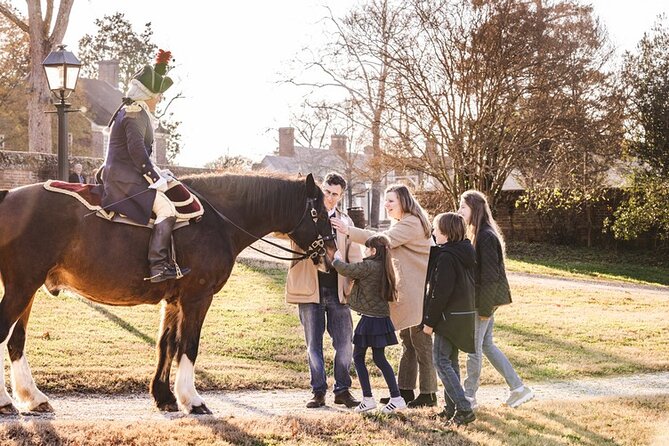
The Courthouse adds a more practical side of colonial life. Government was not only governors and revolutionary speeches. It also involved legal disputes, local rules, and the ordinary business of maintaining a community.
The courthouse tour works well after the Palace and Capitol because it fills in the civic picture. You see how authority reached into daily life and how public buildings served people who were not political leaders.
Colonial Williamsburg also includes stores, homes, gardens, kitchens, and other public spaces. Some buildings are original, while many others were rebuilt on their original foundations. That distinction matters, but the overall plan still lets you understand how the town was arranged and how residents moved through it.
Look for buildings marked as open during your visit. The flags help identify places where you can enter and speak with interpreters. Curiosity pays off here. The main route is easy to follow, but some of the more interesting corners are found by checking the map and stepping beyond the most obvious buildings.
A different kind of day, same corner of the map:
- NYC: Empire State Building Observation Deck Tickets
★ 4.7 · 22,072 reviews - NYC: Edge Observation Deck Admission Ticket
★ 4.6 · 20,918 reviews - Grand Canyon West, Hoover Dam Stop and Optional Lunch and Skywalk
★ 5.0 · 19,535 reviews - New York City: Statue of Liberty & Ellis Island with Ferry
★ 4.6 · 18,683 reviews
Trade shops turn history into practical work
The trade shops are among the strongest parts of the admission. At Anderson’s Blacksmith Shop and Public Armoury, you may see a blacksmith pull red-hot iron from the forge and hammer it into tools, hardware, or weapons.
That kind of demonstration gives you a better feel for the past than a glass case filled with finished objects. You see heat, noise, handwork, and the skill required to make useful things. The interpreters explain the process and answer questions, so this is a good stop for children and adults who learn best by watching someone work.
Other shops focus on trades such as printing and millinery. Masters, journeymen, and apprentices demonstrate period methods and explain how residents earned a living. Their work also helps you understand the town’s economy. Clothing, printed material, tools, food, and household goods all depended on trained labor.
Plan to spend more time in the shops than you might expect. A quick circuit gives you a glimpse, but conversations with the interpreters are where the visit becomes personal. Ask what the trade required, who practiced it, and how the finished goods were used.
Homes and gardens bring the social story closer

Colonial Williamsburg is not only a political center. Its homes and gardens reveal how people lived, worked, ate, and managed households.
The Peyton Randolph House is especially important because it presents the contrast between freedom and slavery within the home of one of Virginia’s prominent families. That difficult subject is essential to understanding the period, and the house gives it a physical setting rather than leaving it as an abstract chapter in a book.
You will also encounter the homes and workplaces of shopkeepers, women, political figures, and enslaved people. Their stories widen the visit beyond the better-known men associated with the Revolution. Listen for details about labor, family life, hopes, fears, and limited choices.
The gardens and kitchens are worth your time. They show that colonial life depended on constant work, from food preparation to growing and preserving supplies. These areas often make the period feel more immediate than formal political rooms do.
Performances give the town a changing rhythm
Admission includes daily staged performances on the Charlton Stage and in the Hennage Auditorium. These programs add a theatrical element to the historical interpretation and can provide a welcome break from walking outdoors.
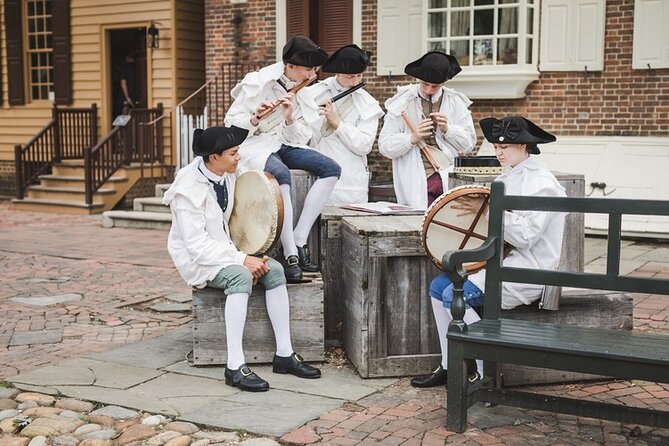
You may also find reenactments and character programs around the historic area. The schedule can include political figures, residents, and scenes built around specific moments in the colonial period. The quality of your day depends partly on checking the program early, since a memorable performance may happen only once at a certain time.
The town’s interpreters are most effective when they speak directly to the audience and invite questions. Their period clothing and manner help create the setting, but the real value comes from the explanations behind the costume.
Keep your expectations flexible. Extreme weather can lead to cancellations, and hot conditions have affected scheduled activities in the past. The experience operates in all weather, so bring clothing suited to the forecast and use indoor sites as a refuge when needed.
The art museums add a strong indoor option
The two art museums are included with admission and deserve more than a hurried visit. They provide a useful change of pace after the historic streets and offer objects that help explain taste, craft, and domestic life.
One museum visit can also rescue a difficult weather day. Cold, wind, and heat have all been part of the experience for past visitors, while the museums provide time indoors without leaving the Colonial Williamsburg story behind.
If you enjoy furniture, paintings, decorative arts, and historic objects, reserve several hours. The museums may appeal less to a child who wants only demonstrations, but they give adults and older children a fuller picture of the period.
Do not save them automatically for the last hour. The historic area is extensive, and fatigue can make it harder to appreciate detailed displays. Check the opening hours and build at least one museum into your main plan.
Walking, shuttles, and the practical side of the day
Colonial Williamsburg is very walkable, but that does not mean it is a short walk. The historic area covers more than 300 acres. Brick paths, cobblestones, uneven surfaces, and long distances between buildings can be demanding for anyone with mobility concerns.
The shuttle is included and runs between stops, allowing you to save energy. Use it to reach a distant section, then walk through nearby buildings before riding again. Shuttle vehicles can become crowded, and service may not operate on every special date, so check conditions at the Visitor Center.
Wear supportive shoes and bring water. Bottles can be refilled, and benches are available throughout the area. A moderate level of physical fitness is recommended.
Food and drinks are not included. Colonial taverns, restaurants, bars, lounges, and cafés offer historically inspired meals, including evening tavern meals with 18th-century fare and strolling musicians. Prices can be high, so bringing snacks or lunch is sensible if you want to control costs.
The more formal meals are part of the atmosphere, but you do not need one to enjoy the admission. Treat a tavern meal as an optional addition rather than a required part of the ticket.
Is $37.50 a good value for one or two days?
At $37.50 per person, the admission is a good deal if you use several parts of it. The price includes the Governor’s Palace, Capitol, Courthouse, trade shops, staged performances, art museums, and shuttle service. It is not merely a pass to walk through an outdoor district.
A one-day visit can work if you plan carefully and choose priorities. You might focus on the Palace, Capitol, two or three trade shops, a performance, and one museum. Trying to see every building, shop, performance, and museum in one day will likely leave you tired and still feeling that you missed something.
Two days offer better value for anyone who enjoys history at an unhurried pace. You can return to a shop, attend an evening program, spend longer at the museums, and explore less obvious streets and gardens. Some visitors have found that a first guided tour of about two and a half hours helped them understand the area, then returned the next day to see what they missed.
The admission does not include parking, meals, or hotel transportation. It does include enough major content that the ticket can pay off quickly, especially if you attend several included tours or performances.
Handling the voucher at the Visitor Center
Confirmation is provided at booking, but the voucher still needs to be redeemed at the Visitor Center. Bring a printed copy if possible. Digital vouchers can work, yet printing or email problems have caused lengthy exchanges at the ticket desk.
A particularly frustrating redemption can take around 45 minutes if staff must locate the voucher, print it, or issue replacement tickets. That is time you would rather spend inside the historic area. Arrive early, especially if you want a first scheduled tour.
The attraction has sometimes been flexible with an incorrect date, but do not count on that as a policy. Check your selected date before booking. Free cancellation is available up to 24 hours before the start time for a full refund. Changes or cancellations made within 24 hours are not accepted and are not refunded.
Who will enjoy Colonial Williamsburg most?
I would recommend this admission to families, couples, solo visitors, and anyone who enjoys American history presented through buildings and people rather than only text panels.
Children often respond well to the blacksmith, printer, kitchen, and costume programs. Adults who care about politics will appreciate the Capitol and Courthouse. People interested in domestic life should spend time in the homes, gardens, and museums.
It is less suitable for someone who struggles with long walks or uneven ground unless the shuttle schedule fits the day. It can also disappoint if you expect every activity to run continuously. The site operates in all weather, and heat or other conditions can cancel some programs.
Christmas can be a pleasant time to visit, with decorations and seasonal atmosphere, but winter weather may be cold and windy. Summer heat calls for water, shade, indoor museum time, and a willingness to adjust your plan.
Should you book this admission?
Book it if you want more than a scenic walk through an old town. The ticket gives you access to the buildings where Virginia government operated, trade shops where period work is demonstrated, performances, museums, gardens, and a shuttle that helps manage the distance.
I would choose the two-day option if your schedule allows and you care about details. For a single day, start at the Visitor Center, watch the introductory film, mark the Palace and Capitol on your map, then select a few trade shops and one museum instead of trying to do everything.
Bring printed voucher details, comfortable shoes, water, and snacks. Check the daily program before setting out. With that small amount of planning, the admission offers a substantial look at colonial Virginia, including its political conflicts, skilled labor, household routines, and the hard contrast between freedom and slavery.
FAQ
Where do I redeem the Colonial Williamsburg admission voucher?
Redeem it at the Colonial Williamsburg Visitor Center, located at 101 Visitor Center Drive, Williamsburg, Virginia 23185.
What does the admission include?
It includes admission to the Governor’s Palace, Capitol, Courthouse, trade sites, daily staged performances on the Charlton Stage and in the Hennage Auditorium, the two art museums, and complimentary shuttle service.
How long should I plan to spend at Colonial Williamsburg?
Plan for one to two days. The historic area covers more than 300 acres, so one day can feel rushed if you want to see the major buildings, trade demonstrations, performances, and museums.
Is food included with the admission?
No. Food and drinks are not included. Colonial Williamsburg has restaurants, taverns, cafés, bars, and lounges, and you may bring snacks or lunch to help manage food costs.
Does the experience operate in bad weather?
Yes, it operates in all weather conditions, so dress appropriately. Some activities may be canceled during extreme heat or other difficult conditions.
What is the cancellation policy?
You can cancel at least 24 hours before the experience start time for a full refund. Cancellations or changes made within 24 hours are not accepted and are not refunded.
Newly listed in the USA
- NON BUS 4 Winery Traverse City Wine Tour on Old Mission Peninsula★ 5.0 · 445 reviews
- The Maui Butterfly Farm Tour★ 5.0 · 446 reviews
- New England Aquarium Admission Ticket in Boston★ 4.0 · 446 reviews
- New Orleans City Tour and Steamboat Natchez Harbor Jazz Cruise★ 4.0 · 446 reviews
- Alpaca and Llama Farm Tour★ 5.0 · 446 reviews
- Small-Group Laura and Whitney Plantation Tour from New Orleans★ 4.5 · 446 reviews
- Dreaded Dead Descent of the District: DC Ghost Tour★ 4.0 · 446 reviews
- Cañon City: Royal Gorge Bridge & Park Entry Ticket & Gondola★ 4.5 · 448 reviews