
Reviewed · BOSTON TOURS
Boston History Tour: Scenic Walk Through Time & Landmarks
Boston’s past comes alive in the space between its landmarks. This two-hour walk links the waterfront, Faneuil Hall, the Old State House, Boston Common, Beacon Hill, and the Public Garden, giving you a useful first look at the city instead of leaving you with a list of disconnected addresses. Guides such as Bob, Nabil, Alivia, Lexie, Tim, Molly, and Allison are praised for lively stories, good humor, and a clear love for Boston.
I like the small maximum group of 16, which makes it easier to ask questions and keep up with the guide. I also like the surprise local treat and practical food and sightseeing tips. The main drawback is that the route moves through busy shopping areas, and some visitors may prefer more time at historic sites rather than walking through retail spaces.
Key points to know
- See Boston’s essential historic core in about two hours: The route covers Faneuil Hall, the Old State House, Boston Common, Granary Burying Ground, the State House, and the Public Garden.
- Expect about 4 km of walking: The pace is intended for all ages and fitness levels, but comfortable shoes matter.
- Guides make or break the experience: Bob, Nabil, Alivia, Lexie, Tim, Molly, and Allison have all been praised for storytelling, humor, and patience with questions.
- The tour ends in a useful location: You finish near the Boston Public Garden and Charles Street, well placed for more exploring.
- A private upgrade is available: Choose it if you want a more flexible, personal conversation about Boston.
- Weather does not stop the walk: Bring suitable clothing for rain, snow, heat, or cold.
Why this walk is a smart first look at Boston
Boston can feel confusing at first. The historic center is compact, but the stories overlap everywhere. A church connects to the Boston Tea Party. A cemetery points to the Revolution. A modern shopping district sits above streets shaped by colonial trade.
This tour gives you that framework quickly. You begin near Boston Harbor at the Greenway Carousel and finish at the Public Garden, crossing the central part of town on foot. Along the way, your guide explains how Boston moved from a colonial port to a modern city, while pointing out buildings and corners that are easy to pass without context.
I would consider taking this on your first day. It helps you decide where to return later, whether that means spending more time around the waterfront, visiting a museum, walking Beacon Hill, or stopping for food near Quincy Market. The two-hour length also leaves plenty of time for the rest of your day.
The tour is listed at $39.80 per person. That is a fair price for a small-group walk if you want a guide to connect the dots and answer questions. You are paying for interpretation rather than admission tickets, since the stops are viewed from outside and the tour does not include extra food or drinks. A private option costs more, but it may suit families or couples who want a slower conversation and more control over the experience.
More Historical Tours in Boston
- Boston: Freedom Trail History Small Group Walking Tour
★ 5.0 · 6,450 reviews - Tour of Historic Fenway Park, America’s Most Beloved Ballpark
★ 4.5 · 3,013 reviews - Boston Food & History: Pizza, North End & Freedom Trail
★ 5.0 · 1,772 reviews
Starting by the Greenway Carousel and Boston Harbor
Meet your guide at the Greenway Carousel, at 191 Atlantic Avenue. This puts you near Boston Harbor and the Rose Kennedy Greenway, a pleasant place to begin before heading inland.
The opening stop is brief, about 15 minutes, but it helps the group gather and sets the tone. The Greenway gives you a first sense of Boston’s changing waterfront. Your guide may also point out how the city’s old commercial center connects with its newer public spaces.
The meeting point is close to public transportation, which makes arrival fairly simple. Give yourself enough time to find the carousel and identify your guide, especially if the area is busy.
Faneuil Hall, Quincy Market, and the arguments for independence
The first major history stop is Faneuil Hall. Here you hear about the revolutionaries who pushed back against British rule and the public arguments that helped shape the independence movement.
Faneuil Hall is also beside Quincy Market and Faneuil Hall Marketplace, so this part of the walk mixes history with modern shopping and food stalls. That contrast is useful. You see how a place once linked to trade and public debate now serves as one of Boston’s busiest visitor areas.
You can also look toward Custom House Tower, one of the city’s most recognizable early skyscrapers. The building originally served the customs system, where incoming goods were recorded and stored as they reached Boston. That detail helps explain why the waterfront mattered so much to the city’s growth.
Here is one point to keep in mind: Faneuil Hall Marketplace can be crowded. If you dislike busy commercial areas, this section may feel less historic than expected. The value comes from listening to the guide while moving through the modern setting, not from quiet time inside a preserved colonial street.
Old South Meeting House and the Boston Tea Party
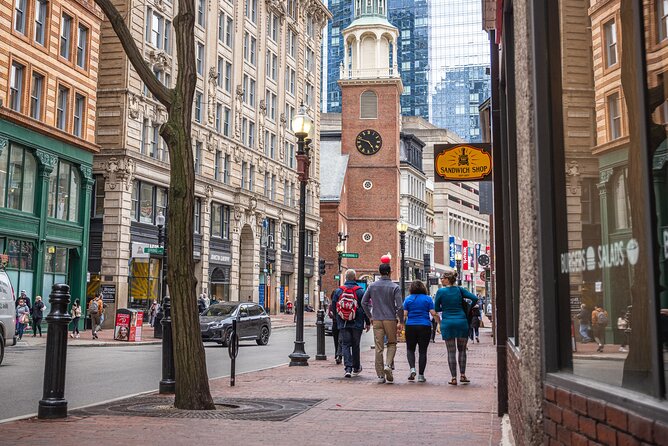
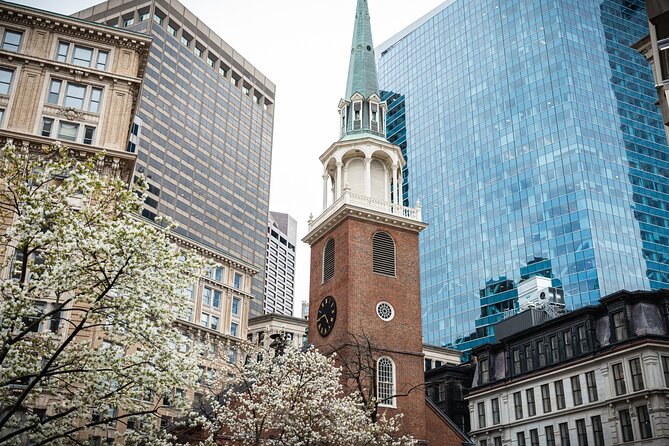
At Old South Meeting House, the guide turns to the Boston Tea Party. This former church was where Bostonians gathered in 1773 to discuss the dispute over taxation and British control.
The stop is short, about five minutes, so expect a focused explanation rather than a long visit inside. You learn how the meeting helped set the stage for the protest and why the issue became such a powerful symbol in the fight with Great Britain.
The tour then passes the location of Boston’s first bookstore. The site is tied to publishers connected with works by Henry David Thoreau, Nathaniel Hawthorne, and Henry Wadsworth Longfellow. This is a useful reminder that Boston’s story is not only about battles and political speeches. Books, schools, churches, and public debate also shaped the city.
More Walking Tours in Boston
- Harvard University Campus Guided Walking Tour
★ 4.5 · 3,632 reviews - Boston Freedom Trail Walking Tour with Costumed Guide
★ 4.5 · 2,531 reviews - The Full Revolutionary Story Epic Small Group Boston Walking Tour
★ 5.0 · 2,356 reviews - Boston’s Freedom Trail: A Revolutionary Walking Tour
★ 4.9 · 1,748 reviews
Old City Hall, King’s Chapel, and downtown streets
Old City Hall provides one of the walk’s best architectural pauses. Its French design is a sharp change from the brick colonial buildings nearby, and the building once housed Boston’s city council as well as America’s first public school.
You also get a chance to see the Bronze Donkey, a popular photo stop. It is a small detail, but guides often use such landmarks to keep the walk relaxed rather than turning every minute into a formal lecture.
From here, the group passes through Downtown Crossing and continues toward King’s Chapel. If the timing is right, you might hear the organist playing the oldest church organ in the United States. The wording matters: this is a possibility, not a guaranteed performance, so do not plan the day around it.
This section is where the tour can feel like a city walk rather than a straight historical trail. You move through active streets and commercial areas while the guide explains what used to occupy the same ground. I find that approach helpful for understanding Boston as a living city, though anyone seeking uninterrupted old-world atmosphere may wish for longer stops.
Old State House and the Boston Massacre site
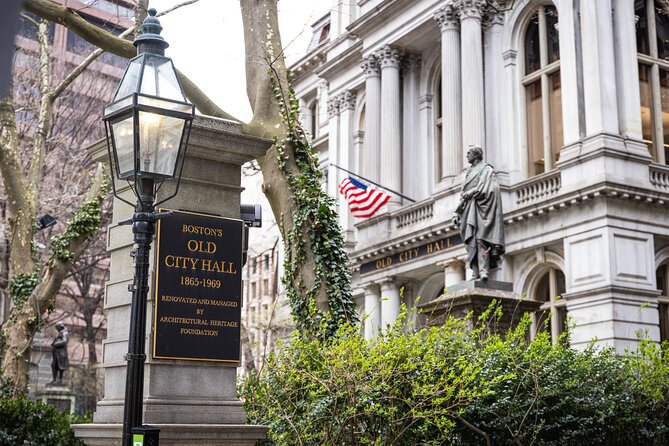
The Old State House is one of the tour’s strongest stops. In 1776, the Declaration of Independence was announced here, making the building central to Boston’s Revolutionary story.
Your guide covers both the excitement of that announcement and the violence of the Boston Massacre. Hearing those events at the place where they unfolded gives the story more force than reading a short plaque. A good guide can also explain how public anger, British military presence, and colonial resistance fed one another.
This is a good point to ask questions. Guides such as Nabil and Alivia have been praised for welcoming questions and keeping the group involved. The experience depends heavily on the person leading it, so do not expect identical wording or the same emphasis on every departure.
Boston Common and the route toward Beacon Hill
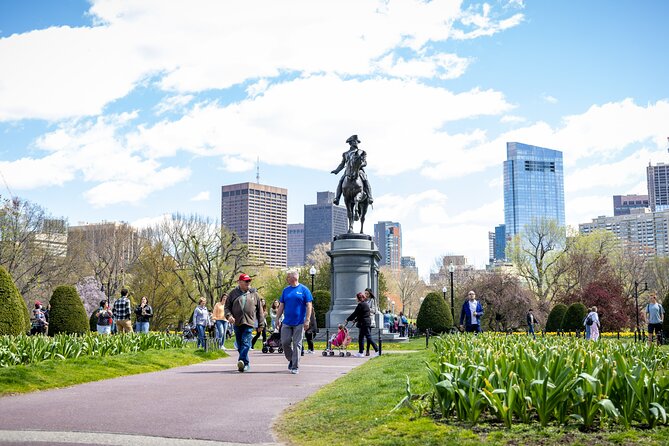
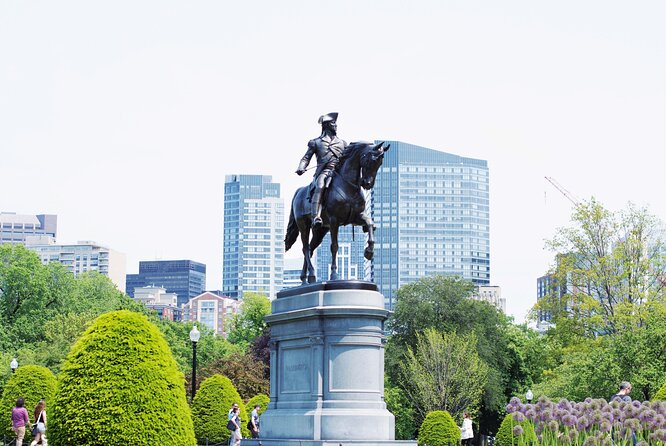
Boston Common is the oldest city park in the United States, dating to 1634. You walk through a space still used for ordinary city life, with fountains, memorials, recreation areas, and people crossing town.
That everyday use is part of the appeal. Boston Common is not simply a preserved historic site. It remains a public gathering place, and the guide explains how it served the city during the Revolution and in later periods.
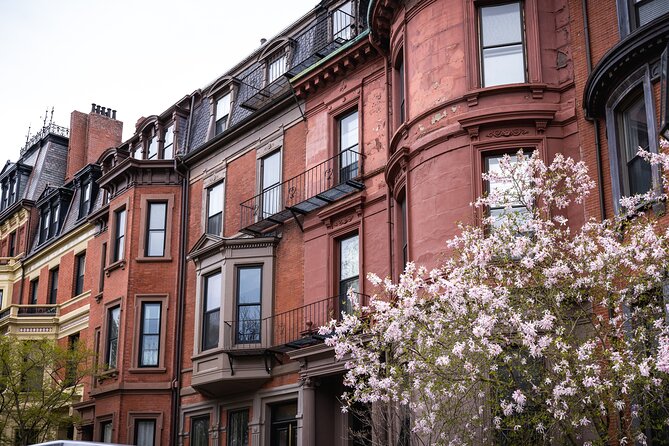
The route then moves toward Beacon Hill, one of Boston’s best-known neighborhoods. Its cobbled streets and handsome homes now suggest prestige, but the area once suffered from a rougher reputation connected with sailors and British soldiers. The guide explains how Beacon Hill changed into the district you see today.
The walk does not promise a long, leisurely wander through every lane. You should expect a guided pass through the area, with selected streets and stories. If Beacon Hill is high on your list, return later for a slower walk, especially if you want photographs or time to study the buildings.
A memorial to Black Civil War soldiers
One of the less obvious stops honors the 54th Massachusetts Volunteer Infantry, one of the first African American regiments in the Civil War, and its colonel, Robert Gould Shaw.
This memorial adds needed range to the tour. Boston’s story is not limited to the Revolution, famous white leaders, and colonial buildings. The monument points to the city’s role in the Civil War and to the service of Black soldiers whose contributions were long ignored or minimized in many public accounts.
The stop may appeal especially to you if you want a broader view of American history. It also shows why a guided walk can be more useful than simply following a map. Without context, a memorial can be easy to pass without understanding its importance.
The Massachusetts State House and John Hancock’s Boston
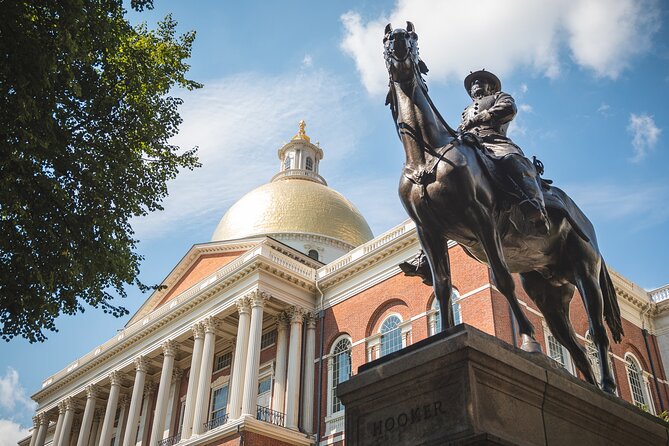
The Massachusetts State House is easy to spot because of its glittering dome. The building connects to John Hancock, whose land once occupied the site, and to Paul Revere, who presided over the cornerstone ceremony in 1795.
The guide explains how the State House has survived major changes while remaining part of the state government. This brings Boston’s political story into the present rather than leaving it frozen in 1776.
The stop lasts about ten minutes. You admire the exterior and hear the key stories, but this is not an interior government tour. If you want to see the inside, you will need to make separate plans.
Granary Burying Ground and Boston’s famous names
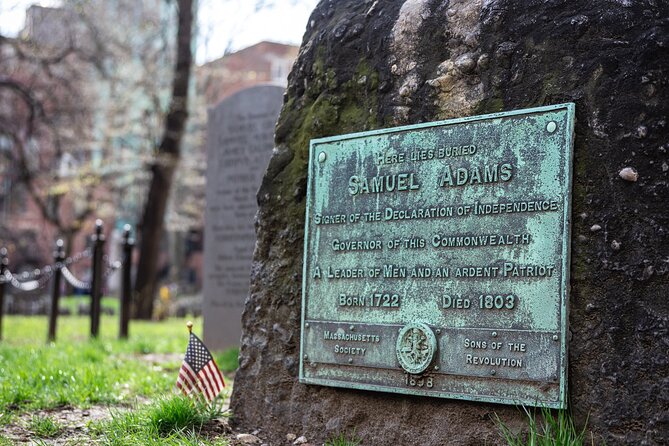
Granary Burying Ground dates to 1660 and was once part of Boston Common. You pass the graves of major Revolutionary figures, including John Hancock, Paul Revere, and Samuel Adams.
This is one of the most memorable parts of the route because the names from earlier stops become real people in a physical place. The cemetery is compact, and the guide can point out why it matters without requiring a long visit.
Timing can affect this stop. One account notes that the cemetery was closed by the time the group arrived, with the guide choosing to stop for a drink instead. That is an important practical consideration. The route and sites may change, and places with closing hours may not always be available. If seeing the burial ground is a priority, ask about timing at the start of the walk.
A surprise local treat and useful food advice
A surprise local treat is included. The exact item is not specified, so you should treat it as a small extra rather than a meal. Alcohol may be served, and you will need proper identification if that happens.
Additional food and drinks are not included. The guide does provide tips on where to eat, explore, and relax, which can be more useful than a fixed restaurant stop. Boston has plenty of food choices around the marketplace and downtown, but your guide may help you avoid spending the rest of the day in the most tourist-focused spots.
One guide also recommended Democracy Brewing, where the group later spent time over local beer. That was outside the tour itself, so do not assume it is part of the booking. Still, it shows how the social side of the walk can continue if you want company after the official finish.
Ending among the swan boats at the Public Garden
The tour ends near 4 Charles Street, by the Boston Public Garden. This is a strong finish. The garden is America’s first public park and remains a favorite place for walking, exercise, and quiet time.
The guide explains how the garden and surrounding area were used during the Revolution and in later years. After two hours of city streets and political history, the lawns, paths, and water offer a change of pace.
You can continue into Beacon Hill, walk along Charles Street, or simply rest in the garden. The end point is more useful than finishing at a random street corner because it places you near several pleasant options for the rest of the afternoon.
Pace, weather, children, and group size
The walk covers about 4 km, or 2.5 miles. It is described as suitable for all ages and fitness levels, and children under six can join free when noted at booking. Children aged six to 11 pay the adult rate, so include their ages when reserving.
The group maximum is 16 people. That is small enough for a more personal exchange, but it is not a private walk. If you want to stop often for photographs or spend extra time on one topic, the private upgrade is the better choice.
The tour runs in rain, snow, or shine. Boston weather can change quickly, so wear shoes with good support and bring layers. There is no promise of indoor shelter or a weather cancellation, so plan for the conditions rather than hoping for a clear forecast.
The activity is offered in English. Free cancellation is available up to 24 hours before the start time. Inside that window, changes and refunds are not accepted.
The guides are the heart of the experience
The strongest part of this tour is the guide. Bob is praised for friendly storytelling and wit. Nabil is described as patient, personable, and happy to handle many questions. Alivia brings the perspective of a Boston native, while Lexie is noted for research, warmth, and enthusiasm.
Tim, Molly, Allison, Alex, Clio, and Alexander are also singled out for humor, clear communication, strong history stories, and an ability to keep the group together. Several accounts describe the two hours as passing quickly, which usually means the pace and presentation work well.
That praise should come with one practical qualification. No walking tour can guarantee a specific guide, and personalities differ. The route remains useful, but the amount of detail, humor, and time spent on questions may vary by departure.
Is $39.80 a good value?
At $39.80, I see this as a useful orientation walk rather than a full historical tour of Boston. You cover many major places in a short time, and the guide provides the links between them. That saves you from piecing together the city’s story on your own.
The price makes the most sense if you are new to Boston, have limited time, or want recommendations for the rest of your visit. It is less compelling if you already know the Freedom Trail well or prefer to enter museums and historic buildings rather than view them from the street.
Remember that tips, extra food, drinks, and admission to attractions are not included. Bring money for those costs, and budget time to revisit the places that catch your interest.
Who should book this Boston walk?
I would recommend it to first-time visitors, families, solo explorers, couples, and anyone who likes history delivered in plain language. The small group, short duration, and central end point make it easy to fit into a larger Boston itinerary.
It also suits people who want more than the standard Freedom Trail script. The route includes familiar landmarks, but it adds architecture, literature, Black Civil War history, present-day city life, and local suggestions.
I would hesitate if you dislike walking in crowded commercial areas, need guaranteed indoor stops, or want long visits inside historic buildings. In that case, choose a museum-focused experience or explore the Freedom Trail at your own pace.
FAQ
How long does the Boston History Tour last?
The tour lasts approximately two hours.
How far do you walk?
You walk about 4 km, or 2.5 miles, through central Boston.
Where does the tour start?
The meeting point is the Greenway Carousel at 191 Atlantic Avenue, Boston, Massachusetts 02111.
Where does the tour end?
The tour ends near the Boston Public Garden at 4 Charles Street, Boston, Massachusetts 02116.
What language is the tour offered in?
The tour is offered in English.
What is included in the price?
The price includes an English-speaking local guide, the walking tour, a surprise local treat, and insider tips for food and further exploring.
Are food and drinks included?
Only the surprise local treat is included. Additional food and drinks are not included, and alcohol may be served with the treat.
Can children join the tour?
Yes. Children under six can join free when you mention them during booking. Children aged six to 11 join at the adult rate, and their ages should be provided when booking.
What happens in bad weather?
The tour operates in rain, snow, or shine. Dress for the forecast and wear comfortable walking shoes.
Can I cancel for a refund?
You can cancel at least 24 hours before the start time for a full refund. Cancellations or changes made less than 24 hours before the start time are not accepted and are not refundable.
Should you book it?
Book this tour if you want a friendly, well-paced introduction to Boston’s historic center, especially on your first day. The guide, the compact route, and the useful ending near the Public Garden give you a strong start for exploring on your own.
Skip it if you want long indoor visits or a quiet walk away from shopping crowds. For most first-time visitors, though, $39.80 buys a helpful sense of place, a good batch of local stories, and a clearer plan for the rest of Boston.
More Historic Sites in Boston
- Boston: City Cruises Historical Sightseeing Cruise
★ 4.6 · 1,771 reviews - Boston: Freedom Trail History Small Group Walking Tour
★ 4.9 · 1,590 reviews - City Cruises Boston Historic Sightseeing Harbor Cruise
★ 4.5 · 1,388 reviews - Boston’s North End Food Tour: Italian Flavors & Heritage Walk
★ 5.0 · 1,322 reviews
Newly listed in Boston
- Narrated Sunset Cruise of Boston Harbor★ 4.0 · 532 reviews
- Sightseeing Day Sail around Boston Harbor★ 5.0 · 541 reviews
- Boston: Harbor Sunset Yacht Cruise★ 4.6 · 570 reviews
- Boston: Martha’s Vineyard Day Trip with Optional Island Tour★ 4.6 · 573 reviews
- Massachusetts Institute of Technology Public Tour★ 4.6 · 604 reviews
- Boston: Hop-On, Hop-Off 20+ Stops Trolley Ticket★ 4.2 · 607 reviews
- Classic Tall Ship Cruise in Boston Harbor★ 4.5 · 615 reviews
- Boston Harbor Sunset Cruise★ 4.5 · 632 reviews
Boston Tours, compared.
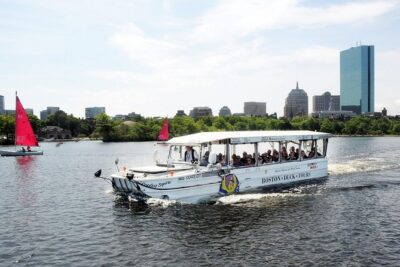
Boston Duck Boat Sightseeing City Tour with Cruise Along Charles River
Read our review →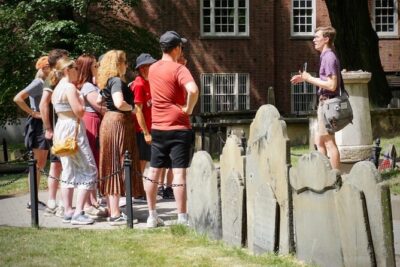
Freedom Trail History Small Group Walking Tour
Read our review →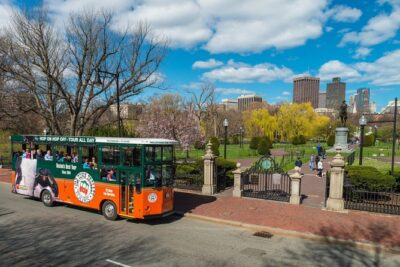
Boston Hop-On Hop-Off Trolley Tour with 13 Stops
Read our review →

Boston Duck Tour: The Original and World-Famous
Read our review →
Harvard University Campus Guided Walking Tour
Read our review →
Boston Fenway Park: Guided Ballpark Tour with Options
Read our review →
Boston to Martha’s Vineyard Day Trip with Optional Island Tour
Read our review →Browse the lists this tour appears in