
Reviewed · COCOA BEACH TOURS
Bioluminescence Kayak Tour
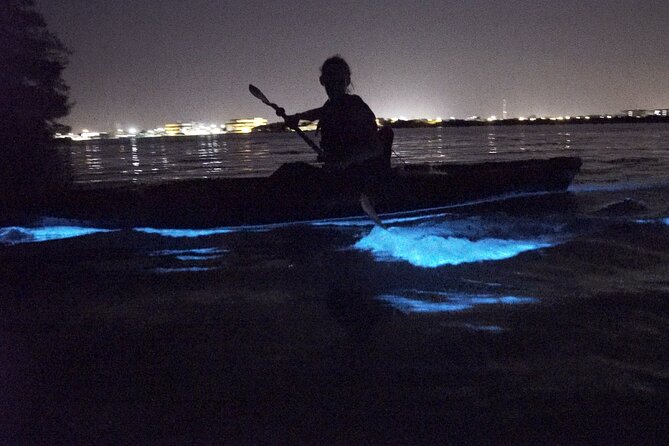
The magic here happens at the end of your paddle, when every stroke can stir up a faint blue-green flash or reveal a glowing comb jelly beside your kayak. Near Cocoa Beach, this two-hour night trip enters the quiet waters around Merritt Island National Wildlife Refuge, where fish, dolphins, manatees, mangroves, and stars may share the scene.
I like the strong seasonal choice: summer usually brings cloudy dinoflagellate glow, while winter offers individual comb jellies that do not sting. I also like the guides’ role. Aidan, Caleb, Sean, Zoey, Matt, Drew, and others have helped turn a simple paddle into a wildlife lesson, with safety guidance for first-time kayakers.
The catch is that nature controls the main attraction. A December trip may produce only a few glowing jellies, while a warm summer night can light up the water. Local lights, wind, moonlight, timing, and water conditions all affect what you see.
Key points to know before you book
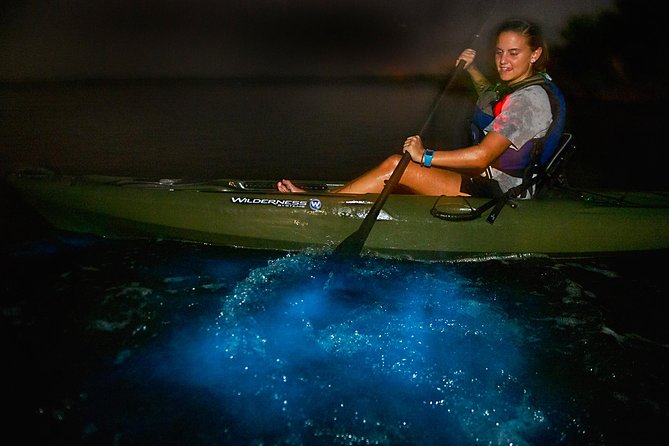
- Summer brings a cloudy blue-green glow: The best period for dinoflagellates is generally May through early November.
- Winter brings glowing comb jellies: From late November through April, you may see individual clear jellies and possibly hold them safely.
- The paddle is gentle but not always effortless: Most of the route is calm, though wind can make the return harder.
- Guides add real value: Strong guides explain the biology, keep the group together, and help nervous beginners manage the kayak.
- Wildlife is part of the evening: Fish, jumping mullet, dolphins, and manatees have all appeared during these outings.
- You may get wet: Wear water-friendly shoes and clothes you do not mind soaking, and leave a towel and dry change of clothes in the car.
What makes this night paddle special
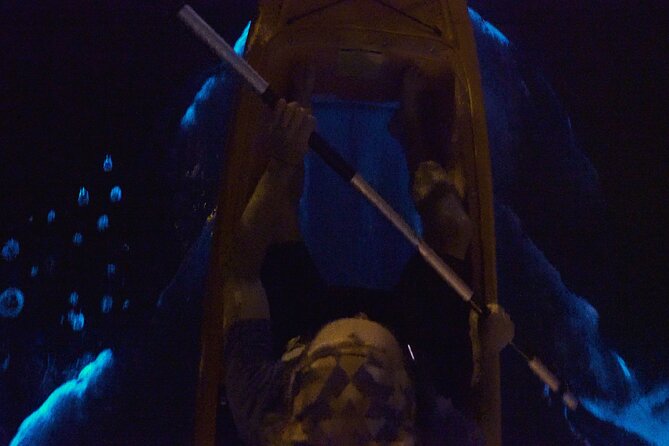
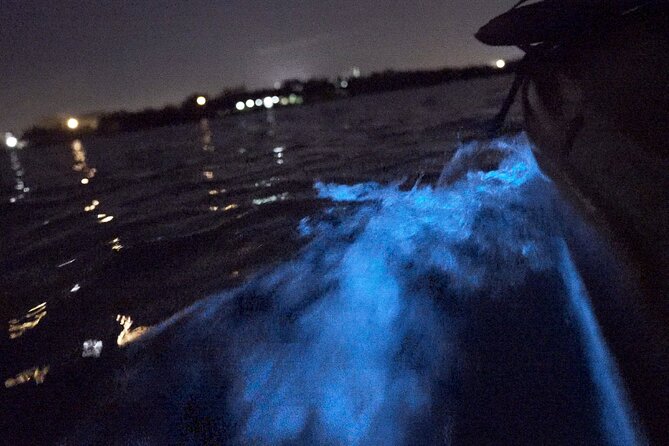
Bioluminescence is living light. In the warmer months, tiny single-celled organisms called dinoflagellates gather in the Indian River and Mosquito Lagoon. When your paddle or hand disturbs the water, they can flash a cool blue-green glow.
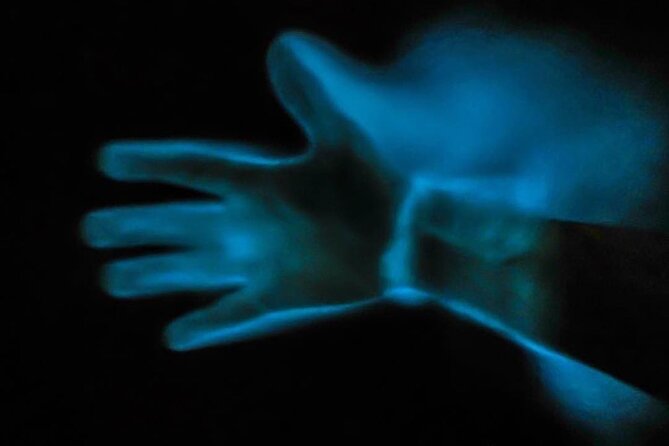
The effect is not always a solid sheet of light. Often, it appears as scattered sparks, glowing swirls, or brief streaks around the blade of your paddle. On a strong night, the water can seem to answer every movement. One particularly successful outing produced a glow described as close to a nine out of ten, with flashes that looked like galaxies in a hand.
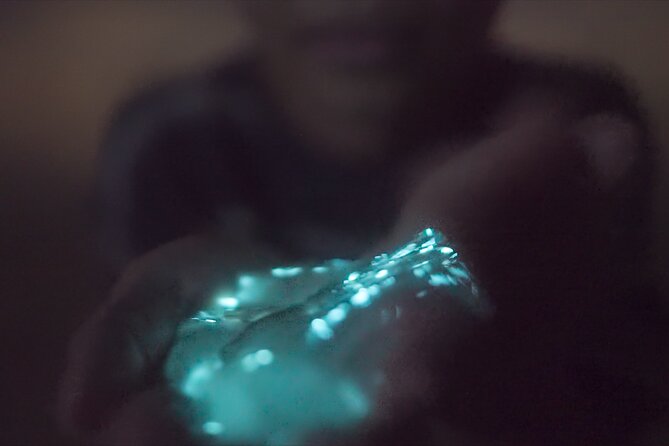
The winter show is different. Comb jellies are clear, soft-bodied creatures with rows of tiny structures that catch the light as they move. They do not sting, and the guides may provide a chance to catch and hold them briefly. This makes winter less about glowing footprints across the lagoon and more about seeing small living objects shine at close range.
That difference matters when you set expectations. If your dream is a glowing paddle trail, aim for the warmer season. If you would enjoy gently handling clear, harmless jellies, the cooler months can be rewarding even when the plankton is scarce.
More kayak trips around the USA:
- Clear Kayak Tour of Shell Key Preserve and Tampa Bay Area
★ 5.0 · 5,800 reviews - Half-Day Emerald Cave Kayak Tour with Optional Hotel Pickup
★ 5.0 · 4,978 reviews - Emerald Cave Kayak Tour: Scenic Paddle with Optional Shuttle
★ 5.0 · 2,858 reviews
Launching at 951 Kiwanis Island Park Road
The meeting point is 951 Kiwanis Island Park Road in Merritt Island, north of Cocoa Beach. The outing begins and ends at this same location, so you do not need to arrange a second pickup point.
Arrive ready for the water rather than dressed for a normal evening out. The operator provides the kayak, paddle, and personal flotation device, along with a safety light. You may bring your own flashlight, but it is not required.
The first minutes are practical. You get fitted with flotation gear, receive instructions, and learn how to handle the kayak in darkness. This briefing is especially important for first-time paddlers, since getting in and out of a kayak can feel awkward even in daylight.
Several beginners have found the instruction reassuring. Aidan has been singled out for explaining the strokes clearly and helping a nervous first-time paddler feel in control. Other guides, including Zoey and Matthew, have also adjusted their pace to suit the group.
That personal help is one reason I see this as a beginner-friendly outing, not an advanced expedition. Still, do not mistake beginner-friendly for effortless. A few outings encountered wind or choppy water, and one family found the paddle farther and more tiring than expected. Your experience depends on the night’s conditions and the guide’s route.
Paddling into the dark lagoon
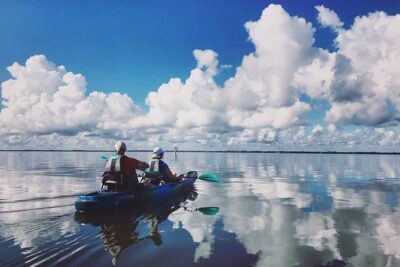
Once the group leaves shore, the trip becomes quiet and slightly strange in the best way. You are not paddling through a brightly lit attraction. Your view is limited to the safety lights, silhouettes of mangroves and palm trees, the dark water, and whatever appears nearby.
The calm setting helps. The Indian River Lagoon is part of one of North America’s most biologically diverse estuaries, and the protected water can feel far removed from the nearby beach and roads. On a clear night, stars add another layer to the scene. A new moon has created especially dark conditions for some groups, while a supermoon, meteor shower, or distant rocket launch has occasionally added a surprising bonus.
The group can be large, with a maximum of 42 participants. That limit gives you an idea of the possible scale. A small outing can feel personal, and one late-night trip had only two people. A fuller departure may feel more social, with several kayaks moving together across the lagoon.
The guide’s job is not just to lead from the front. The best guides keep checking the group, explain what is happening, and point out wildlife that you might miss in the darkness. Sean was praised for paddling backward for much of a route so he could watch the group while discussing manatees, mullet, and the biology behind the glow.
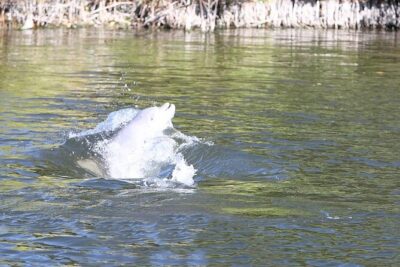
You may see fish darting beneath the surface or mullet jumping suddenly from the water. A fish has even smacked one paddler in the face, which is a vivid reminder that the wildlife is not performing on cue. Manatees and dolphins have also appeared close to kayaks, but these sightings are never guaranteed.
The best moment: stirring up living light
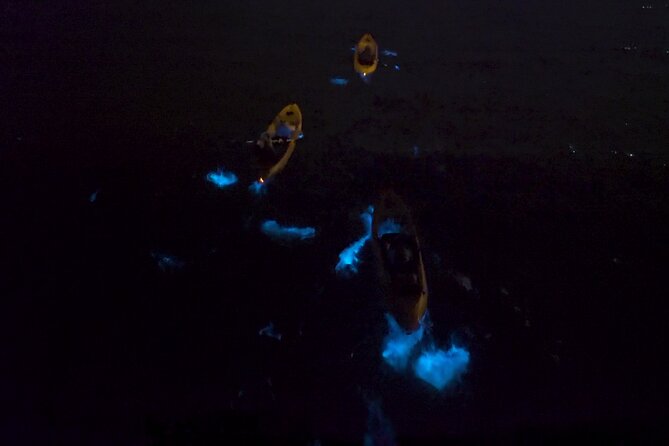
The usual goal is to reach water with enough activity for the glow to show clearly. Your guide may ask you to move the paddle, trail your fingers, or watch the surface around the kayak. Every disturbance gives the tiny organisms a chance to flash.
Do not expect a bright underwater lamp. Bioluminescence is easiest to notice when the sky and surrounding water are dark. A full moon or nearby artificial lighting can wash out the effect, while clouds, a new moon, and low local light can make faint flashes easier to see.
Light pollution is a real drawback at this location. One December outing produced very little glow partly because local lights made the water harder to read. The start time may matter, too. A departure earlier in the evening can have a different feel from a later trip under darker skies.
The guide may also use a net to collect comb jellies in winter. Equipment availability can vary, so not every kayak may get the same chance to handle one. If this is the part you care about most, ask about the plan before setting out rather than assuming every participant will have a net.
When conditions cooperate, the scene is wonderfully low-tech. There is no screen and no stage. You move your paddle, the water responds, and a small creature glows in your hand. That direct contact is worth more than simply watching a video about bioluminescence.
More to weigh up across the USA
- Cocoa Beach Dolphin and Wildlife Tour
★ 5.0 · 1,052 reviews - Thousand Island Mangrove Tunnel, Manatee & Dolphin Kayak Tour w/Cocoa Kayaking
★ 5.0 · 923 reviews - Mangrove Tunnels, Dolphins, Manatee Tour #1 Rated in Cocoa Beach
★ 5.0 · 836 reviews - Bioluminescence Night Kayaking Tour of Merritt Island Wildlife Refuge
★ 4.5 · 605 reviews
A natural show with very uneven results
This experience deserves honest expectations. The tour can be extraordinary, but the main attraction is not guaranteed. Weather, season, moonlight, water movement, organism levels, and local lights all play a role.
Summer is the safer choice for a broad dinoflagellate effect. The listed peak period is May through early November, when warm water can support the cloudy blue-green glow. Even then, the strength can vary from faint sparkles to a much brighter display.
Late November through April is the main season for comb jellies. A winter trip may produce many jellies, just a few, or a single glowing animal. The water can also feel cold after sunset, even in Florida. One February family had a wonderful time but found the night chilly.
October and November can be a transition period. You might see some plankton and some jellies, but the display may not match the strongest part of either season. If the glow is your top reason for booking, choose your date with care and accept that nature still gets the final vote.
I would also ask about wind if the forecast looks poor. One scheduled trip was canceled because of high winds. The normal policy allows a full refund when you cancel at least 24 hours before the start time, but changes or cancellations within 24 hours are not refundable. A weather cancellation can require extra attention, so clarify the refund or credit arrangement directly with the operator.
Guides make or break the evening
A good guide turns a dark paddle into a clear, engaging experience. Sean has been praised for explaining the science down to the molecular level while keeping a teenager interested. Caleb has focused on sea life and the estuary, and Aidan has earned praise for calm instruction and careful attention to safety.
Zoey has also been noted for reading the group’s energy. When water became choppy on one trip, she helped a tired pair by towing their kayak from hers. That sort of practical support matters more than a polished speech.
Names you may encounter include Matt, Matthew, Aidan, Caleb, Sean, Zoey, Jorge, Lucas, Kurt, Drew, Jordan, Jayden, and Jessie. You cannot select a particular guide unless the operator confirms it, but the repeated praise for patient instruction, local facts, humor, and group care is encouraging.
There has been at least one serious complaint about a late start, weak directions, and an inexperienced guide. Another group felt the route was too far for older family members who had not kayaked in decades. These reports point to useful questions: How long will you paddle before stopping? What are the current water conditions? How strong is the bioluminescence expected to be tonight?
What to wear and what to carry
Wear clothing that can get wet. Even on calm water, paddle drips, splashing fish, and an unstable entry can soak you. Water shoes, sandals, or Crocs that can be worn in the water are practical choices.
Leave a towel in your car and bring a full change of clothes for the ride afterward. Bottled water and snacks are sensible for a two-hour outing, especially if you are not used to paddling.
A camera and dry bag are optional. Ordinary cameras usually struggle to capture faint bioluminescence, but a dry bag can protect your phone and belongings. Your camera may work better for photos of the group before or after the darkest part of the trip than for the glow itself.
The operator provides a safety light, though you may bring a flashlight. If you have personal paddling equipment you prefer, you may bring it. The essential items, including kayak, paddle, and flotation device, are supplied.
Who will get the most from this experience
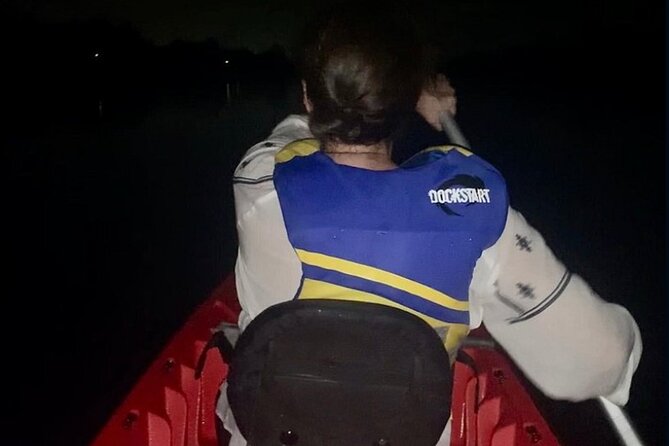
I would recommend this tour to families with older children, couples, first-time kayakers, and anyone who enjoys wildlife more than polished sightseeing. A five-year-old has completed the trip successfully, and teenagers have responded well when guides explain the science in an engaging way.
The kayaking is generally low stress, but you still need to be comfortable on the water for about two hours. If you have limited strength or have not paddled in many years, tell the guide early. The group can adjust its pace, but rough conditions can make the route more demanding.
This is also a good match for repeat visitors to the Cocoa Beach area. You can pair it with a day at Kennedy Space Center or an airboat outing, then trade roads and crowds for a quiet night on the lagoon. The chance of seeing a launch from Cape Canaveral during the paddle adds a distinctly local surprise, though it is not part of the scheduled program.
I would hesitate to book it for someone who needs a guaranteed spectacle, dislikes getting wet, or expects a bright glow every night. The tour is an encounter with wild water, not a theater show.
Is the two-hour outing good value?
The value comes from the combination of equipment, instruction, access to nighttime water, and the chance to see several kinds of wildlife in one short outing. You are not paying only for a kayak rental. A capable guide helps you paddle safely, identifies what you see, explains why the organisms glow, and keeps a mixed group together after dark.
That matters most if you are new to kayaking. A rental without guidance would not provide the same reassurance or the same background about the lagoon. It also would not give you the same chance to learn how to look for flashes, comb jellies, jumping fish, or manatees.
The value drops if your only goal is a dramatic blue-green display and you book in the wrong season. Before paying, check the date, expected conditions, meeting location, and whether the current trip focuses on dinoflagellates or comb jellies. A winter paddle with a few jellies can still be memorable, but it is a different product from a strong summer glow.
The 4.8 rating from 831 ratings and 94 percent recommendation suggest a reliable overall experience, but the lower ratings reveal the key risk clearly: bioluminescence varies. I would judge the price as fair when you treat the evening as guided night kayaking and wildlife watching, with glowing water as the possible reward rather than a promise.
Small details that can save your night
Double-check the meeting point before leaving. One booking channel has provided an incorrect location to some people, while a guide called to correct it. Confirming the address at 951 Kiwanis Island Park Road can prevent a stressful search in the dark.
Ask about add-ons and equipment, too. One person found that information about a glass-bottom boat option was unclear and depended on the provider. That option is not part of the included kayak tour, so confirm exactly what your booking covers.
If you want the darkest sky, ask about a later departure and moon conditions. Do not assume later is always better, since the operator may choose times based on tides, wildlife, or operating schedules. Still, timing can affect how much glow your eyes can pick up.
Finally, keep your plans flexible. A calm, star-filled night can produce a magical scene, but high winds may cancel the outing, and a biologically quiet night may leave you with a pleasant paddle and only a few flashes.
Should you book the Cocoa Beach bioluminescence kayak tour?
Book it if you want a hands-on nature outing and can accept uncertainty. Choose May through early November for the best chance of seeing dinoflagellates spread a blue-green glow across the water. Choose late November through April if holding harmless glowing comb jellies appeals to you more.
I especially recommend it for families, couples, and beginners who want a guide to make night kayaking feel manageable. Go prepared to get wet, ask about the night’s conditions, and value the quiet lagoon, wildlife, stars, and science even if the glow is faint.
If you need a guaranteed visual spectacle, wait for a strong seasonal forecast or choose a different attraction. For everyone else, this is a memorable Cocoa Beach night because the best moment may be a glowing paddle stroke, a manatee surfacing beside you, or a rocket rising in the distance.
FAQ
Where does the bioluminescence kayak tour meet?
The tour meets at 951 Kiwanis Island Park Road, Merritt Island, Florida 32953. The activity ends back at the same meeting point.
How long does the tour last?
The guided kayak tour lasts approximately two hours.
What type of bioluminescence appears in summer?
Summer usually brings dinoflagellates, which create a cloudy blue-green glow when the water is disturbed. Peak season is generally May through early November.
What can you see during the winter season?
From late November through April, the main attraction is usually bioluminescent comb jellies. These clear creatures do not sting, and you may be able to catch and hold them during the outing.
Are kayaks and safety equipment provided?
Yes. The package includes a kayak, paddle, and personal flotation device. A safety light is also provided.
What should I wear?
Wear clothes you do not mind getting wet and water-friendly shoes such as sandals or Crocs. Bring a towel for the car and an extra change of clothes.
Can beginners join the tour?
Most people can participate, including first-time kayakers. Guides provide instructions and help with getting into and out of the kayak, though wind or choppy water can make the paddle more tiring.
What is the cancellation policy?
You can cancel at least 24 hours before the start time for a full refund. Cancellations or changes made less than 24 hours before the start time are not accepted for a refund.
Newly listed in the USA
- The Maui Butterfly Farm Tour★ 5.0 · 446 reviews
- NON BUS 4 Winery Traverse City Wine Tour on Old Mission Peninsula★ 5.0 · 445 reviews
- New England Aquarium Admission Ticket in Boston★ 4.0 · 446 reviews
- New Orleans City Tour and Steamboat Natchez Harbor Jazz Cruise★ 4.0 · 446 reviews
- Alpaca and Llama Farm Tour★ 5.0 · 446 reviews
- Small-Group Laura and Whitney Plantation Tour from New Orleans★ 4.5 · 446 reviews
- Dreaded Dead Descent of the District: DC Ghost Tour★ 4.0 · 446 reviews
- Cañon City: Royal Gorge Bridge & Park Entry Ticket & Gondola★ 4.5 · 448 reviews
Cocoa Beach Tours, compared.
Thousand Island Mangrove Tunnel, Manatee & Dolphin Kayak Tour w/Cocoa Kayaking
Read our review →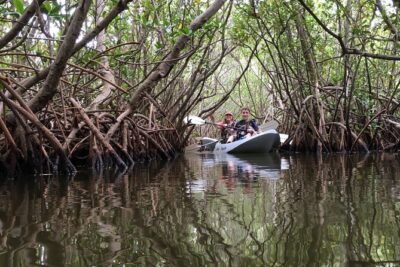
Mangrove Tunnels, Dolphins, Manatee Tour #1 Rated in Cocoa Beach
Read our review →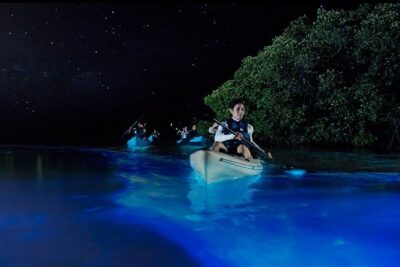
Bioluminescence Night Kayaking Tour of Merritt Island Wildlife Refuge
Read our review →Browse the lists this tour appears in