
Reviewed · BOSTON TOURS
Boston: Freedom Trail History Small Group Walking Tour
Boston’s Freedom Trail is best understood on foot, one brick-red marker at a time. This small-group tour follows the full trail through Boston Common, downtown, and the North End, linking famous sites to the tense 15 years before the American Revolution.
I like the group limit of 15, which makes it easier to hear and ask questions, and I like the guides’ story-first approach. Guides including Maura, Nick, Alejandro, Toby, and Cyrus have been singled out for making complicated events clear without reducing them to slogans. The main drawback is the pace: you cover about 2 miles in up to 3 hours, mostly outdoors, so cold, rain, crowded sidewalks, or tired legs can affect the experience.
Key points to know before you book
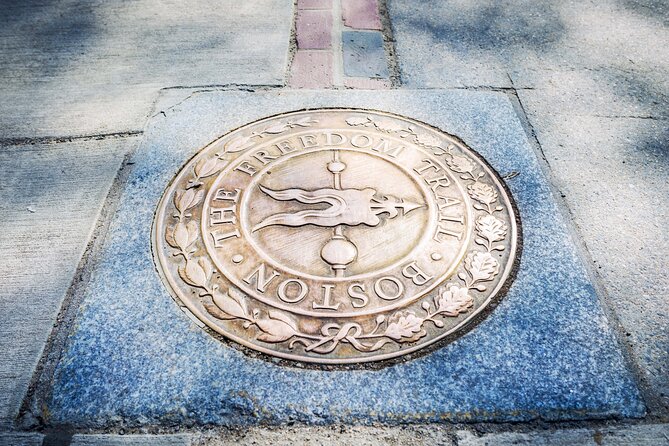
- All 16 official Freedom Trail landmarks: You see Boston Common, Granary Burying Ground, Faneuil Hall, Paul Revere’s neighborhood, Old North Church, and the other official stops.
- A 15-person maximum: A small group is far easier to follow than the large clusters often seen along the trail.
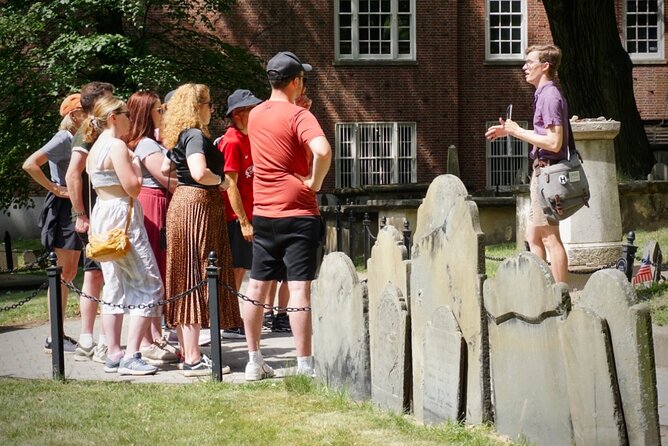
- Graveyards with famous names: Granary Burying Ground includes the final resting places of Paul Revere, Samuel Adams, and other major figures.
- A useful mid-tour pause: The 10-minute stop at Quincy Market gives you time for a drink or bathroom break.
- History with room for debate: Guides explain myths and competing viewpoints, including the Boston Massacre and Paul Revere’s famous ride.
- A strong North End finish: Copps Hill Terrace offers views toward the USS Constitution and Bunker Hill Monument, with Italian restaurants nearby.
Why the small group matters on Boston’s busiest historic route
The Freedom Trail is easy to follow physically. A line of red bricks or painted markers leads you across the city. Understanding what happened at each stop is harder. The landmarks are close together, and it is easy to pass an important building without seeing why it matters.
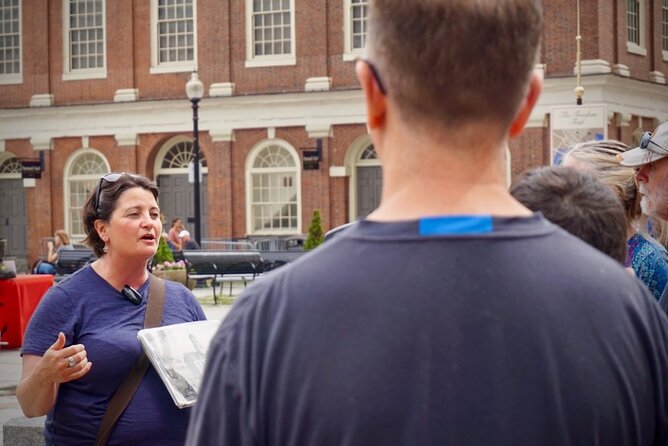
A group capped at 15 gives this tour a useful middle ground. You get a live guide rather than an audio recording, but you are not trying to hear a speech from the back of a crowd. Several guides have been praised for their energy and personal style. Maura, for example, is known for mixing dates, context, and local stories, while Nick has explained Revolutionary events in a balanced way that leaves room for your own judgment.
That matters at sites such as the Boston Massacre. The tour does not need to treat every familiar schoolbook phrase as the final word. A good guide can explain how the event was presented at the time, why the label mattered politically, and how later readers may view the clash differently.
The group still walks through public streets, so this is not a quiet private tour. Sidewalks can be busy, and the full party must stay together. Still, the smaller size should help you hear the guide and keep the experience more personal.
More Historical Tours in Boston
- Boston: Freedom Trail History Small Group Walking Tour
★ 5.0 · 6,450 reviews - Tour of Historic Fenway Park, America’s Most Beloved Ballpark
★ 4.5 · 3,013 reviews - Boston Food & History: Pizza, North End & Freedom Trail
★ 5.0 · 1,772 reviews
Boston Common and the opening scene of rebellion
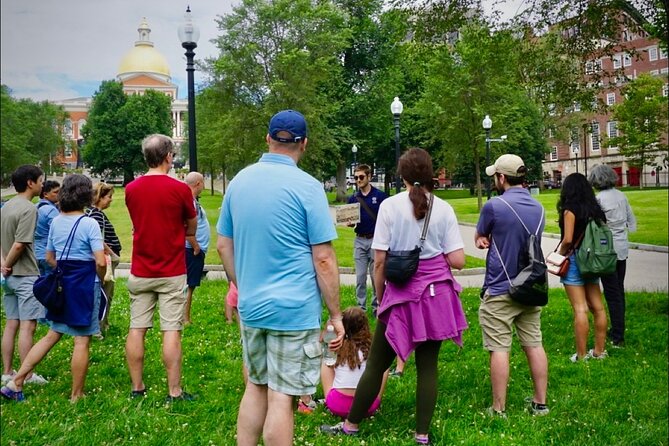
Meet inside Boston Common at the Boston Foundation Monument, on the park’s northern boundary opposite 50 Beacon Street. Look for the granite memorial with a bronze relief of two men shaking hands, linked to the Puritans’ arrival in 1630.
Boston Common is the right place to begin because it gives you a broad sense of the city before the streets tighten around the historic core. The tour spends about 15 minutes here, then moves toward the Massachusetts State House and Park Street Church.
At the State House, you begin to see how Boston’s civic power was arranged. Park Street Church adds another layer, showing how religion, public speech, and political life overlapped in the young city. The guide’s job here is to connect the physical setting to the growing argument over loyalty to the Crown or resistance to British rule.
The opening section is not just a roll call of buildings. It sets up the main question running through the tour: how ordinary colonists decided what they owed to government, community, family, and conscience.
Granary Burying Ground and Boston’s famous names
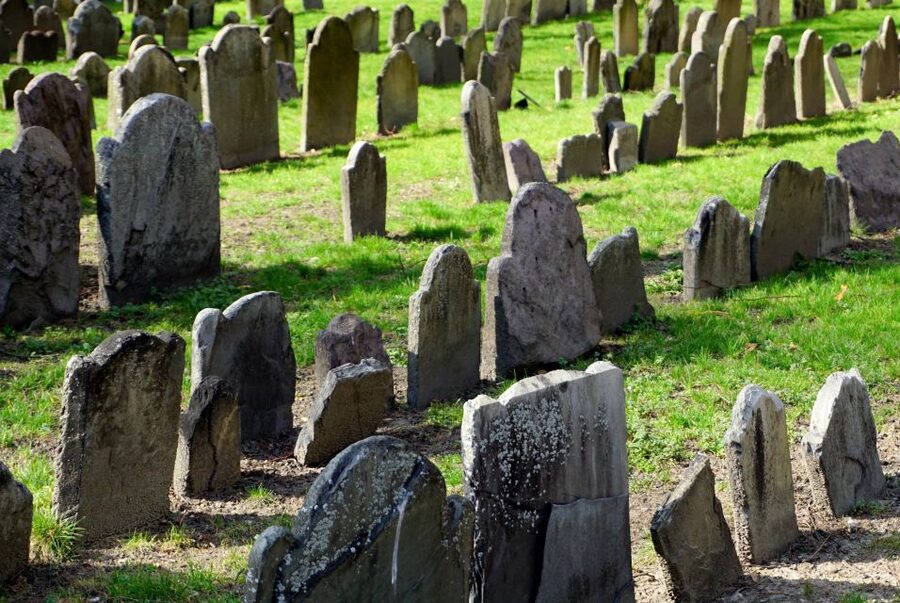
Granary Burying Ground is one of the tour’s most meaningful stops, with about 25 minutes set aside for it. You can see the final resting places of Paul Revere, Samuel Adams, and other figures tied to the founding period.
The cemetery is valuable because it puts names on the human side of the Revolution. Political change was not only made in grand halls. It was argued over by printers, merchants, ministers, laborers, soldiers, and families living close together in a compact town.
I would give this stop your full attention. The markers, dates, and famous names can blur together, especially early in a long walk. If you want to remember what you saw, keep a simple note on your phone after each major stop. One visitor specifically wished for a checklist because there is so much happening along the route.
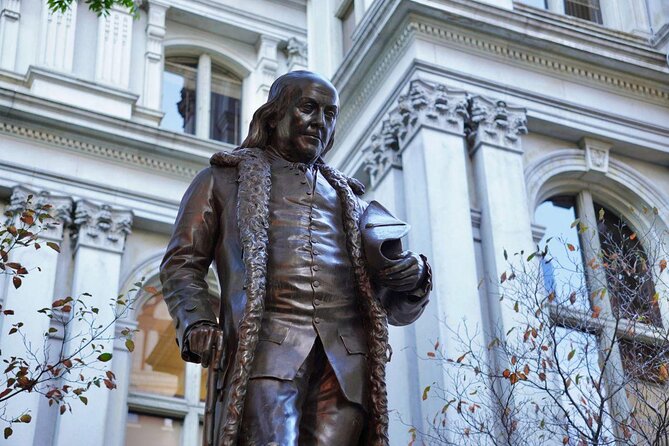
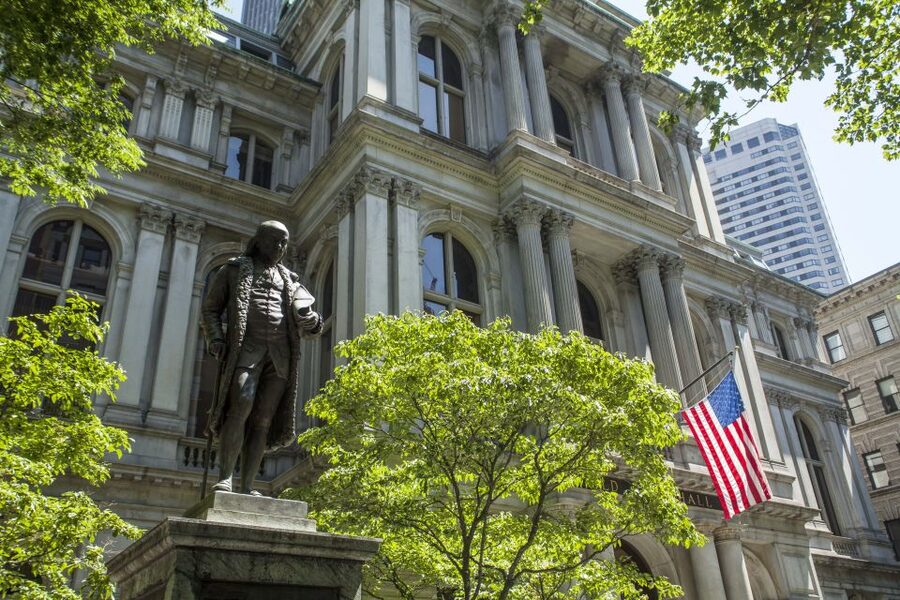
The tour then passes King’s Chapel and continues to the Boston Latin School site and the Benjamin Franklin statue. The school site connects to early education, while Franklin’s statue points to the wider story of Boston-born figures whose lives reached far beyond Massachusetts.
From Old City Hall to the Old South Meeting House
The next section moves through several layers of Boston’s built history. You pass Old City Hall and the Old Corner Book Store before reaching Old South Meeting House.
These stops reward close attention because not every important site looks dramatic from the pavement. A former bookshop or civic building can seem less memorable than a church or cemetery, yet each helps show how communication and public life worked in colonial Boston.
Old South Meeting House is one of the key political sites on the route. The tour allows about 10 minutes here, enough to explain why public meetings mattered and how large gatherings could turn anger into organized action. This is where the story of the Boston Tea Party gains its political setting.
The guide may also correct a common shortcut about the tea tax. One useful point raised on the tour is that the tax had been cut in half, yet resistance remained strong because the dispute involved the right of Parliament to tax the colonies, not only the amount charged.
Admission inside museums is not included, so the experience focuses on exterior interpretation and guided stops. That keeps the price down, but you should not expect a museum tour of every building.
More Walking Tours in Boston
- Harvard University Campus Guided Walking Tour
★ 4.5 · 3,632 reviews - Boston Freedom Trail Walking Tour with Costumed Guide
★ 4.5 · 2,531 reviews - The Full Revolutionary Story Epic Small Group Boston Walking Tour
★ 5.0 · 2,356 reviews - Boston’s Freedom Trail: A Revolutionary Walking Tour
★ 4.9 · 1,748 reviews
The Old State House and the Boston Massacre Site
The Old State House is one of the most important stops, with the Boston Massacre Site directly nearby. About 15 minutes is devoted to this part of the walk.
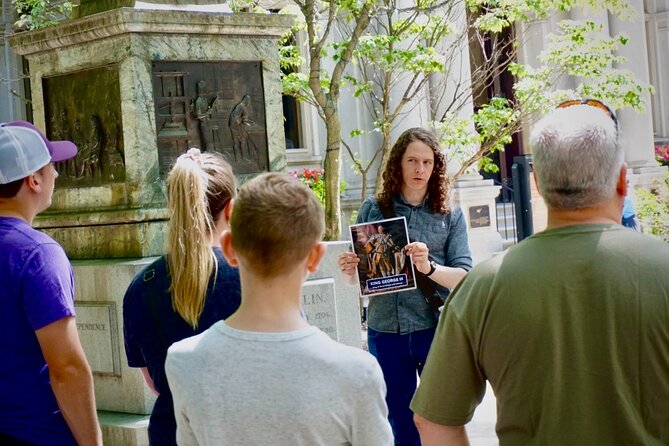
The Old State House helps you picture the collision between local government and imperial authority. Outside, the Boston Massacre Site is marked in the pavement, making it easy to miss if you do not know where to look. The guide explains the shooting, its political use, and the way the event was framed for colonial audiences.
This is a good place to listen for nuance. The phrase Boston Massacre became powerful propaganda, but the physical event was a confused confrontation that ended with British soldiers firing into a crowd. Understanding both the facts and the political language gives you more than a simplified patriotic story.
One guide, Nick, has received praise for addressing the myths and placing the event in context. That approach suits the subject. You are not asked to accept a single modern interpretation. You get the background needed to decide how you see it.
The stop also shows why a live guide adds value. A marker in the street can tell you where something happened. A skilled guide can explain why people remembered it, repeated it, and used it to shape public opinion.
Faneuil Hall and the Quincy Market pause
Faneuil Hall receives a shorter guided stop of about 5 minutes. The building is closely tied to Boston’s public meetings and political debate, so even a brief explanation helps place it in the larger story.
Then comes a 10-minute break at Quincy Market. This is a practical feature, not filler. By this point you have walked through several historic blocks, and a short pause lets you use the bathroom, get a drink, or reset before the North End.
Do not count on this as a full meal break. Ten minutes is enough for a quick purchase if conditions allow, but it is not a relaxed market visit. If you need food before the tour, eat first. If you want to dine in the North End afterward, the finish at Copps Hill Terrace puts you close to Italian restaurants.
Paul Revere’s house and the North End streets
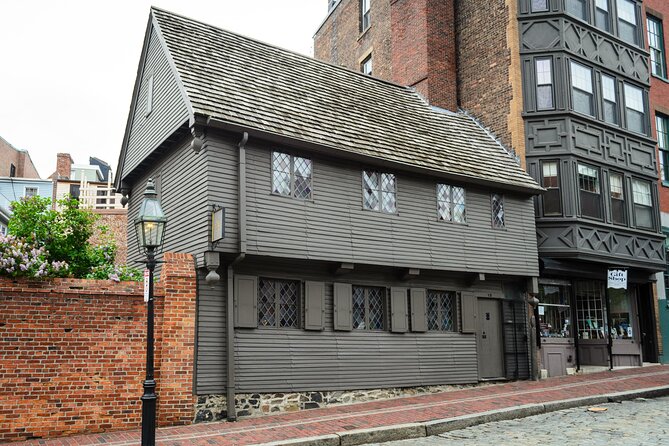
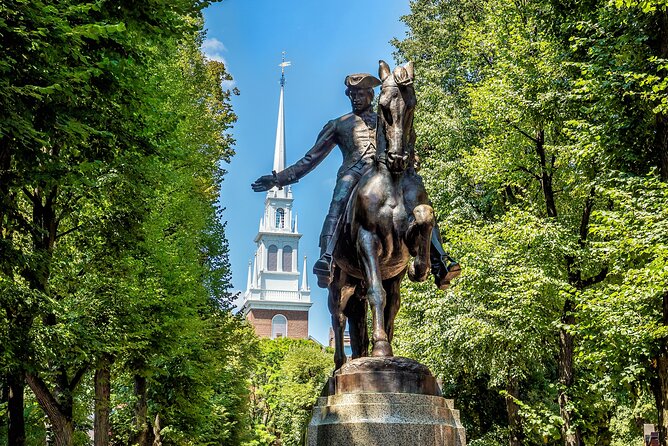
The route now enters the North End, where the story becomes more personal and neighborhood-based. Paul Revere House receives about 15 minutes, followed by stops along Hanover Street and at the Paul Revere Statue.
Paul Revere’s fame often rests on a single phrase about a midnight ride. The tour gives you a fuller version. A useful correction is that Revere did not complete the entire ride himself. Learning details like this makes the familiar story more human and less like a fixed legend.
Hanover Street also gives you a sense of the North End as a living neighborhood rather than a collection of historic plaques. The street is a natural place to ask your guide for food suggestions. Past guides have offered restaurant and bakery advice, and one recommendation for Limoncello was especially specific. Treat food tips as a bonus, not a formal part of the tour.
The North End section can feel more crowded than Boston Common. Stay close to the guide, especially while crossing streets or moving through narrow areas. The smaller group helps, but it does not remove the demands of walking through an active city district.
Old North Church, Copp’s Hill, and the final views
Old North Church receives about 10 minutes of guided attention. The church is linked to the lantern signal associated with Paul Revere’s warning system, and it gives the tour a strong visual moment near the end.
You then reach Copp’s Hill Burying Ground before passing viewpoints toward the USS Constitution and Bunker Hill Monument in Charlestown. The tour does not enter the Charlestown neighborhood, so these are scenic views rather than a separate visit to those sites.
The walk ends at Copps Hill Terrace, about 10 minutes from the end. This viewpoint is a sensible finish because you can look across toward two major places tied to the Revolutionary period: the USS Constitution and Bunker Hill Monument.
It also leaves you in a useful part of Boston. You are steps from Old North Church and close to North End restaurants. If you take the tour early in your trip, you can return later to explore the neighborhood at your own pace.
What the 150 minutes feel like on foot
The advertised duration is 150 minutes, though the tour can run as long as 3 hours. The accessible route covers approximately 2 miles, or 3.2 kilometers. That is not a marathon, but the stop-and-go format can be tiring because you spend much of the time standing outdoors.
Comfortable shoes matter more than stylish ones. Wear clothing suited to the forecast, and prepare for wind, snow, rain, or freezing temperatures in colder months. Guides have continued to lead the walk in difficult weather, but a determined guide cannot make winter feel mild.
The route is listed as wheelchair accessible, yet the activity notes also say it is not suitable for people with mobility impairments or a low level of fitness. That is a point to clarify before booking. The distance, public sidewalks, standing time, and changing street conditions may be more important than the accessible label alone.
Children under 6 are not suitable for this tour. Older children who enjoy stories may do well, especially with an energetic guide such as Maura, who has been praised for keeping children engaged. Still, the history-heavy format and two-and-a-half-hour length require attention.
Video recording is not allowed, and luggage or large bags should not be brought. Carry only what you need for the walk.
Is $35 a fair price?
At $35 per person, this sits in a reasonable range for a 2.5-hour guided city walk. The real value comes from the number of landmarks covered and the quality of the explanation, not from admission tickets. You are paying for a guide who organizes Boston’s history into a story you can follow.
The tour includes all 16 official Freedom Trail landmarks, downtown Boston, and the North End. It does not include interior museum admission or a Charlestown visit. If you want to enter historic buildings, budget separately and allow extra time on another day.
I think the price works best for a first visit. You get a strong orientation to the city, learn which sites deserve a closer look, and finish near restaurants. If you already know Boston’s Revolutionary history well, the value will depend on the guide. A guide who adds local context, corrects myths, and welcomes questions can still make the walk worthwhile.
Free cancellation up to 24 hours before the start and reserve-now, pay-later booking also reduce the risk when your schedule is uncertain.
Who should book this Freedom Trail walk?
I would choose this tour if you want the main Freedom Trail story in one organized outing. It suits first-time Boston visitors, families with older children, history fans, and anyone who prefers a human voice to a guidebook.
It is also a good first-day activity because it connects Boston Common, downtown, and the North End. You will finish with a better sense of where the major neighborhoods sit and where to return for more time.
You may want a different plan if you need a slow pace, frequent seated breaks, or long interior visits. This is an outdoor walking tour with a fixed route. It gives you breadth and context, but not extended time inside individual landmarks.
Should you book it?
Yes, if you want an efficient and personal introduction to Revolutionary Boston. The small group, full trail coverage, useful Quincy Market pause, and North End finish make $35 a sensible spend.
Book it with realistic expectations. Bring good shoes, dress for the weather, and save energy for the final stretch. If you get a guide such as Maura, Nick, Alejandro, Toby, Cyrus, or another guide with the same lively, balanced approach, you are likely to leave with more than a list of dates. You will have a clearer sense of how Boston’s people, streets, meeting halls, and burial grounds helped push a divided colony toward rebellion.
FAQ
Where does the Freedom Trail tour start?
Meet inside Boston Common at the Boston Foundation Monument on the park’s northern boundary, opposite 50 Beacon Street, Boston, Massachusetts 02108.
Where does the tour finish?
The walk ends at Copps Hill Terrace in Boston’s North End, near Old North Church and Italian restaurants.
How long is the tour?
The listed duration is 150 minutes. The actual tour can vary but will not be longer than 3 hours.
How far do you walk?
The accessible route covers approximately 2 miles, or 3.2 kilometers.
Does the tour visit all of the Freedom Trail landmarks?
Yes. The tour includes all 16 official Freedom Trail landmarks, covering Boston Common, downtown Boston, and the North End.
Are museum admission fees included?
No. Admission inside museums and historic buildings is not included in the $35 price.
Does the tour visit Charlestown?
No. You see scenic views toward the USS Constitution and Bunker Hill Monument, but Charlestown is not included as a neighborhood visit.
Is the tour wheelchair accessible?
The activity is listed as wheelchair accessible, but it is also marked as unsuitable for people with mobility impairments or a low level of fitness. Confirm that the approximately 2-mile outdoor route meets your needs before booking.
More Historic Sites in Boston
- Boston: City Cruises Historical Sightseeing Cruise
★ 4.6 · 1,771 reviews - City Cruises Boston Historic Sightseeing Harbor Cruise
★ 4.5 · 1,388 reviews - Boston’s North End Food Tour: Italian Flavors & Heritage Walk
★ 5.0 · 1,322 reviews - Boston Pizza Lovers Food and History Walking Food Tour
★ 4.5 · 1,082 reviews
Newly listed in Boston
- New England Aquarium Admission Ticket in Boston★ 4.0 · 446 reviews
- Boston’s Politically Incorrect North End Food Tour★ 5.0 · 453 reviews
- Boston’s North End Food and History Walking Tour★ 5.0 · 459 reviews
- Downtown Freedom Trail, Beacon Hill & Back Bay Walking Tour★ 4.5 · 473 reviews
- Cambridge, Massachusetts: MIT and Harvard Walking Tour★ 4.7 · 486 reviews
- Narrated Sunset Cruise of Boston Harbor★ 4.0 · 532 reviews
- Sightseeing Day Sail around Boston Harbor★ 5.0 · 541 reviews
- Boston: Harbor Sunset Yacht Cruise★ 4.6 · 570 reviews
Boston Tours, compared.

Boston Duck Boat Sightseeing City Tour with Cruise Along Charles River
Read our review →
Freedom Trail History Small Group Walking Tour
Read our review →
Boston Hop-On Hop-Off Trolley Tour with 13 Stops
Read our review →

Boston Duck Tour: The Original and World-Famous
Read our review →
Harvard University Campus Guided Walking Tour
Read our review →
Boston Fenway Park: Guided Ballpark Tour with Options
Read our review →
Boston to Martha’s Vineyard Day Trip with Optional Island Tour
Read our review →Browse the lists this tour appears in