

Reviewed · ST AUGUSTINE TOURS
Walking History Tour of St. Augustine’s Historic District
St. Augustine’s story is bigger than Spanish forts and colonial streets. This walking tour connects the city’s early settlement, cemeteries, churches, government center, old defenses, and Henry Flagler’s Gilded Age makeover in one nearly two-mile route. Guide Kevin Rose brings a local’s enthusiasm and plenty of room for questions.
I like the broad time span, from the city’s founding through the early 1900s, and I like the small group limit of 15 people, which should make it easier to hear and talk with the guide. The main thing to watch is timing: although the tour is sold as about 90 minutes, Kevin often lets it run two hours or more.
What makes this St. Augustine walk worth your time
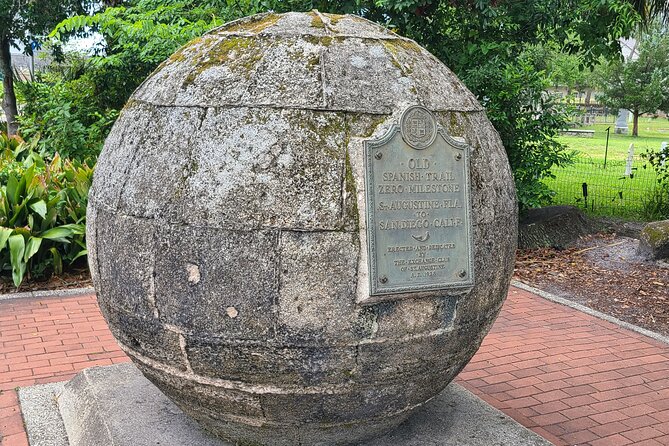
- History beyond the Spanish period: You’ll hear about early settlement, civic life, churches, the Civil War era, and Flagler’s reshaping of the city.
- A nearly two-mile route: The walk links major sights instead of treating each one as an isolated photo stop.
- A personal guide: Kevin Rose is known for humor, stories, local suggestions, and a willingness to answer detailed questions.
- Strong small-group format: A maximum of 15 people is more intimate than a large vehicle tour.
- A useful first-day orientation: The route introduces the old city center, major landmarks, and places you may want to revisit later.
- A very reasonable price: At $25 per person, the tour offers a substantial history lesson without including the cost of major attraction admissions.
A city story that reaches past the fort
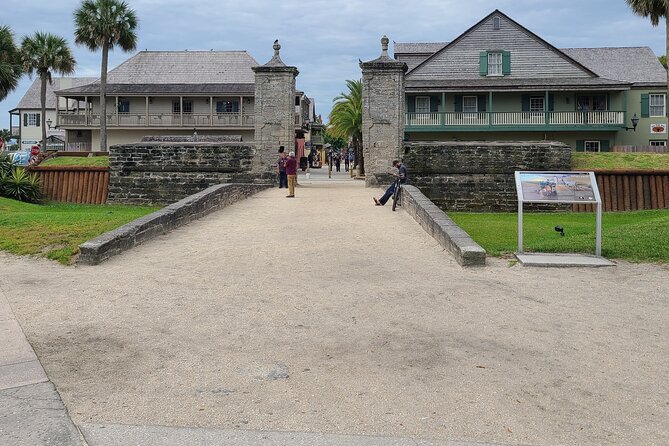
Many St. Augustine tours focus on the Spanish occupation and the Castillo de San Marcos. This one uses the fort as one chapter in a longer story. You’ll move from old burial grounds and religious buildings to the plaza, the city gate, and the lavish former Ponce de Leon Hotel.
That wider view matters. St. Augustine changed more than once. The city’s colonial past is important, but so are the people, buildings, and political shifts that shaped it later. The route gives you a chance to see how the old town was revived and recast during the late 1800s, especially under Henry Flagler.
The guide-led format also changes the pace. You are not simply ticking off landmarks. At each stop, you can ask why a building matters, how a place changed, or what happened to the people connected with it. Kevin Rose is particularly well suited to this approach. He presents himself as a history enthusiast, and his talks are described as funny, conversational, and full of side stories.
That can be a real advantage if you like asking questions. It can also explain why the tour sometimes runs far beyond its scheduled length. If you have a dinner reservation, timed ticket, or drive home waiting, build in extra time.
More historic sites around St Augustine:
- Private Guided Historic Electric Cart Tour of St. Augustine
★ 5.0 · 1,194 reviews - Guided Historical Tour of St. Augustine Per Person
★ 5.0 · 470 reviews - New York City: American Museum of Natural History Ticket
★ 4.5 · 15,447 reviews
Tolomato Cemetery and the Love Tree
The first stop is Tolomato Cemetery, described as the oldest cemetery in St. Augustine and a site that predates the arrival of the Spanish in 1562. Even if you only spend about five minutes here, the stop sets the right tone: St. Augustine’s past is not limited to grand monuments.
Cemeteries can reveal a city’s social structure in ways a fort cannot. Names, burial traditions, religious ties, and stories of ordinary people all help fill out the picture. This is a short stop, so you should expect an introduction rather than a full cemetery visit.
You’ll also hear about the Love Tree, a local curiosity included with a playful warning to visit at your own risk. The humor helps keep the opening from feeling too formal, while the cemetery itself gives the walk a serious historical foundation.
Admission is not included. The route may not provide enough time for you to explore the cemetery on your own, so consider returning later if this stop catches your interest.
Two churches from St. Augustine’s Flagler era
Grace United Methodist Church offers a look at the late 19th-century period when Henry Flagler helped reshape St. Augustine. The church played a part in that civic and architectural revival, making it a useful counterpoint to the city’s Spanish-era sites.
The stop is brief, about five minutes. You’ll hear why the church matters and how it fits into Flagler’s broader effort to turn St. Augustine into a winter resort destination. The tour does not appear to include a full interior visit, and admission is not included, so think of this as an architectural and historical explanation from the street.
Memorial Presbyterian Church gets more time, about 10 minutes, and is described as one of the city’s most beautiful buildings. The guide also shares the painful story behind its creation. That personal element is important. A building becomes easier to remember when you understand the loss, ambition, or devotion connected with it.
The churches add balance to the tour. You are not looking only at military structures and government buildings. Religion, mourning, civic pride, and private wealth all played a part in the city’s development.
Flagler College and the Ponce de Leon Hotel
Flagler College occupies the former Ponce de Leon Hotel, built for the Gilded Age visitor and remembered for its lavish design. The hotel helped set a new standard for luxury in St. Augustine, and its later life as a college gives the building an appealing second chapter.
The stop is listed at about five minutes, so you should not expect a long college tour or a detailed inspection of every decorative feature. Instead, the guide places the building in context. You’ll learn why Flagler built it, what it represented in the late 1800s, and how it helped change the city’s identity.
This is one of the tour’s most useful features. A visitor who sees only the Castillo may leave thinking of St. Augustine as a preserved colonial outpost. Flagler College shows another side: a city marketed to wealthy visitors, remodeled through private investment, and tied to the national fashion for grand hotels.
If you want to see more of the college after the walk, you may need a separate visit. The activity information does not include admission or promise an extended interior tour.
More walking tours around St Augustine:
- History and Hauntings of Salem Guided Walking Tour
★ 5.0 · 14,564 reviews - New Orleans Premier Ghost, Voodoo and Vampire Walking Tour
★ 4.5 · 12,856 reviews - Little Havana Food and Walking Tour in Miami
★ 5.0 · 8,882 reviews - Chicago: Gangsters and Ghosts Walking Tour
★ 5.0 · 7,155 reviews
Plaza de la Constitucion and Government House
Plaza de la Constitucion is the civic heart of the route. The plaza was founded in 1599 by royal decree and stood beside Government House, which served as Florida’s seat of power for nearly 250 years.
Here, the guide explains how the plaza developed, what happened to the governors who lived and worked nearby, and how the Government House was recreated in 1933 as part of Works Progress Administration projects. That last point is especially valuable because it shows that historic St. Augustine is not simply untouched old fabric. Some parts were restored, rebuilt, or re-created in later periods.
You get about 10 minutes at the plaza, and admission is free. The open space also offers a natural pause in the walk. After the tighter streets and building fronts, you can better understand how public life worked around a central square.
I’d pay close attention here if you want a quick primer on Florida’s political history. The stop links local architecture with government, preservation, and changing ideas about what the city should look like.
Castillo de San Marcos from the outside
The Castillo de San Marcos is the final major stop and receives about 15 minutes. A licensed fort guide covers the history of St. Augustine’s forts, the construction of the Castillo, and its role in the history of both the city and the nation.
The tour focuses on the exterior. Admission to the national monument is not included, so you should not expect to enter the fort as part of the $25 walk. That is a clear limit, but it can also be a smart way to begin. You get the fort’s setting, purpose, and basic story before deciding if you want to return for a separate visit.
The exterior discussion is likely to be most useful for first-time visitors who need context. Fort walls can look impressive without explaining why they were built, what they protected, or how they fit into the city’s long struggle for control. This stop gives you that framework.
Because it comes late in the route, keep an eye on the clock. The fort is the last stop, and one person had to leave before reaching it after the tour ran longer than expected.
The old city gate and the walk back
City Gate Spirits marks the traditional entrance to St. Augustine, dating from 1762. The guide covers how the gate was built and the determined effort that saved it from demolition.
This is a small stop, about five minutes, but it helps you read the street plan. Gates are practical structures, yet they also define the boundary between a defended settlement and the world outside. Seeing the gate after hearing about the fort and civic center makes the old town easier to understand as a planned place, not just a cluster of attractive streets.
The experience ends back at the Visitor Information Center, so you do not need to arrange a second pickup point. The start is at 10 S Castillo Drive, near public transportation.
What the $25 price really buys you
At $25 per person, this is a strong value if you want a guided introduction rather than a long list of admission tickets. The fee covers the guide’s time, the walking route, and historical interpretation, but it does not cover entry to Tolomato Cemetery, the churches, Flagler College, or Castillo de San Marcos.
That distinction matters. You are paying for the explanation and the route, not a package of attraction admissions. If you plan to enter the Castillo or visit Flagler College in detail, budget for those separately.
The value improves if you take the tour early in your stay. You’ll learn the layout of the Historic District, hear which places deserve a return visit, and gain context before exploring on your own. Kevin has also offered restaurant and attraction suggestions, which can be useful when you are deciding what to do next.
A small group limit of 15 makes the price easier to justify. You are not paying for a private guide, but the group should remain manageable. The mobile ticket also keeps the booking process simple.
The real timing issue: 90 minutes can become two hours
The advertised duration is about one hour and 30 minutes. In practice, Kevin often continues for well over 90 minutes, sometimes more than two hours. This is not a minor detail. It is the single most important planning point for the experience.
If you enjoy history and questions, the extra time can feel like a bonus. The guide’s enthusiasm is part of the appeal, and a relaxed pace gives him room to explain the people behind the buildings rather than rushing from one photo stop to the next.
If your schedule is tight, plan carefully. Do not place a timed attraction, meal, or departure immediately after the walk. You might also tell the guide at the start if you need to leave by a firm time. The route covers nearly two miles, and the final fort stop is worth reaching.
Wear comfortable walking shoes. Bring bottled water, especially in warm weather, and expect a moderate level of physical activity. The route is not described as strenuous, but it is a substantial city walk with several standing stops.
Who will get the most from this experience
I would choose this tour for people who want a clear historical framework and enjoy listening to a guide tell stories. It suits first-time visitors, history fans, couples, families with older children, and anyone who finds a large trolley tour too distant or impersonal.
It is also a good match for curious people who like to ask questions. The group size and conversational style make that easier than on a vehicle tour. Kevin Rose’s humor and flexible approach should help keep the material lively for different ages.
You may want another option if you prefer to explore at your own speed, need guaranteed timing, or want to spend significant time inside the Castillo, churches, or Flagler College. Those sites are covered mainly from the outside or through short explanations.
The tour is offered in English. Service animals are allowed, and the route is near public transportation. You should have a moderate level of physical fitness for the walk.
Booking and cancellation details to know
The activity is often booked about 16 days ahead, so reserving early makes sense if your dates are fixed. Confirmation is sent within 48 hours, subject to availability.
You can cancel for a full refund up to 24 hours before the start time. Cancellations or changes made within 24 hours are not refunded. The tour requires good weather, and poor conditions can lead to a different date or a full refund. It also requires a minimum number of participants, with a rebooking option or refund if that minimum is not met.
Because weather cancellations have caused communication problems in at least one case, keep an eye on your email and make sure the phone number on your booking is correct. The operator has used email, calls, and texts for cancellation notices, but a bad number can leave you without a direct alert.
Should you book the Walking History Tour?
Book it if you want a story-driven introduction to St. Augustine that covers more than the Spanish colonial era. The route is varied, the price is modest, and Kevin Rose brings humor, local pride, and the ability to answer questions.
Just treat the 90-minute duration as a minimum rather than a promise. Leave extra room in your day, wear good shoes, bring water, and remember that major site admissions are separate. If you can accept that flexible timing, this is a fine way to get your bearings and understand why St. Augustine looks the way it does.
FAQ
Where does the walking tour begin?
The tour begins at the St. Augustine and St. Johns County Visitor Information Center, located at 10 S Castillo Drive, St. Augustine, Florida 32084.
Where does the tour end?
The activity ends back at the original meeting point.
How long does the tour take?
The planned duration is about one hour and 30 minutes. It may run longer, often beyond two hours, depending on the guide’s stories and questions.
How much walking is involved?
The route covers nearly two miles. A moderate level of physical fitness is recommended, and comfortable shoes are important.
Is admission to the Castillo de San Marcos included?
No. The fort portion covers the exterior, and admission to the national monument is not included.
Is the tour offered in English?
Yes. The tour is offered in English and uses a mobile ticket.
What is the cancellation policy?
You can cancel at least 24 hours before the start time for a full refund. Cancellations or changes made less than 24 hours before the start time are not refunded. Poor weather or failure to meet the minimum group size may result in another date or a full refund.
Newly listed in St Augustine
- Guided Historical Tour of St. Augustine Per Person★ 5.0 · 470 reviews
- 8pm Beyond the Grave Tour★ 4.5 · 576 reviews
- Old Jail Museum Tour in St. Augustine★ 5.0 · 717 reviews
- Corks & Forks Tour (St. Augustine)★ 5.0 · 746 reviews
- Dolphin and Wildlife Adventure of St. Augustine★ 5.0 · 864 reviews
- Airboat Adventure in Saint Augustine with a Guide★ 5.0 · 902 reviews
- St. Augustine: Hop-on Hop-off Trolley Tour with Museum Entry★ 4.6 · 970 reviews
- St Augustine: Nights of Lights Trolley Tour★ 4.3 · 1,061 reviews
St Augustine Tours, compared.
St. Augustine Ghost Tour: A Ghostly Encounter
Read our review →
Medieval Torture Museum with Ghost Hunting and Tiny Art Gallery
Read our review →

St. Augustine’s Wine, Cocktail and Food Experience
Read our review →

Dolphin, Manatee and SeaTurtle SUP Adventure Tour of St Augustine
Read our review →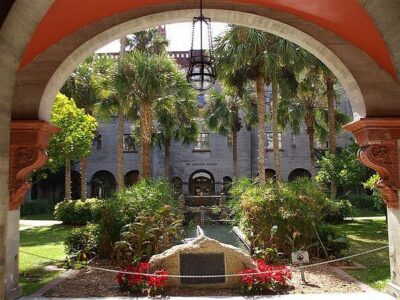
Private Guided Historic Electric Cart Tour of St. Augustine
Read our review →Browse the lists this tour appears in