
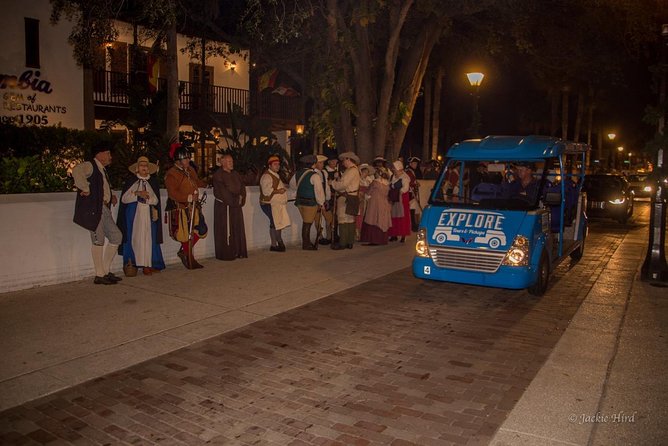
Reviewed · ST AUGUSTINE TOURS
Guided Historical Tour of St. Augustine Per Person
St. Augustine packs more than four centuries of Spanish, British, Catholic, military, and American history into a compact old town. This one-hour electric vehicle tour gives you a quick look at the city’s main landmarks without asking you to walk every brick-paved street under the Florida sun.
I especially like the small maximum of nine people, which makes it easier to hear your guide and ask questions. I also like that guides such as Karen, Marc, Mark, and Deanna bring humor and personal storytelling to the facts. The main drawback is the short running time: you see many important places, but you will not have long visits inside them.
Key Points at a Glance
- Small groups of up to nine: You get a closer, more conversational ride than on a large sightseeing vehicle.
- A practical first look: The route helps you decide which places to revisit on foot or enter later.
- Historic highlights in one hour: See Castillo de San Marcos, Flagler College, the Cathedral Basilica, Mission Nombre de Dios, and more.
- Guides shape the experience: Karen is often praised for her research and storytelling, while Marc, Mark, and Deanna add humor and strong local context.
- Open-air comfort: The electric vehicle saves your legs, but bring a light layer for cool wind and check the forecast.
- Good value at $30.60: The price is reasonable if you want orientation and historical context, not a full attraction-by-attraction visit.
Why This Short Ride Works So Well in St. Augustine
St. Augustine is easy to underestimate. On a map, the historic center looks small enough to cover quickly. In practice, the stories overlap at every corner, and the most important sites are spread across streets that can be slow to cross by car and tiring to cover on foot.
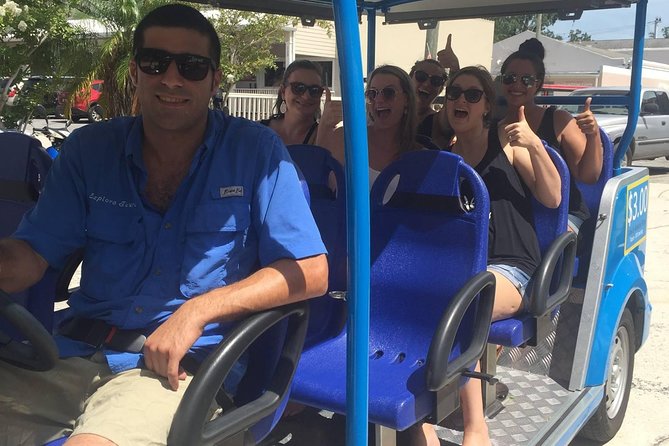
This tour solves that problem with an open-air electric vehicle. You ride through the downtown area while your driver explains what you are seeing. The vehicle is not simply transportation from one stop to the next. Your driver is also your guide, so you can ask about buildings, dates, local customs, or what deserves more of your time afterward.
The small format matters. With no more than nine people, the guide can usually be heard clearly, and questions do not disappear into a crowd. Several guides are praised for stopping near the sights long enough to explain them and allow time for photographs. That makes the trip feel more personal than a recorded narration.
I would take this tour early in a St. Augustine visit. It gives you the lay of the city before you spend money on museums or commit to a long walking route. You can mark the Castillo for a later visit, return to the plaza for a closer look, or choose a church and cemetery that match your interests.
More historic sites around St Augustine:
- Private Guided Historic Electric Cart Tour of St. Augustine
★ 5.0 · 1,194 reviews - Walking History Tour of St. Augustine’s Historic District
★ 5.0 · 1,152 reviews - New York City: American Museum of Natural History Ticket
★ 4.5 · 15,447 reviews
Mission Nombre de Dios and the Beginning of St. Augustine
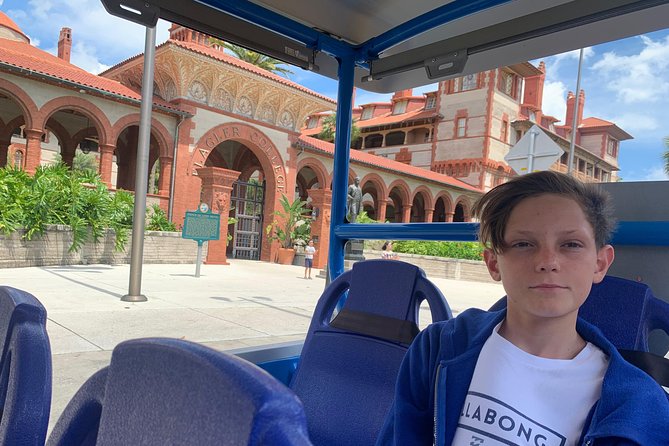
The route includes Mission Nombre de Dios, a key place for understanding how St. Augustine began. Pedro Menéndez de Avilés landed here on September 8, 1565, claimed the site for Spain and the Church, and named it Nombre de Dios, meaning Name of God.
The mission’s Shrine of Our Lady of La Leche traces its origins to that founding. Father Lopez was placed in charge, making him St. Augustine’s first parish priest. The story gives the city a wider frame: this was not just a colonial outpost, but a place where Spanish imperial ambitions and Catholic mission work arrived together.
The tour may point out the shrine, the first-mass tradition, and related features such as the rosary garden. You should not expect a long stop for quiet reflection or a detailed visit inside every religious site. The value here is context. Once you understand the founding story, the churches, plaza, and Spanish buildings you see later make more sense.
If you plan to visit the Fountain of Youth Archaeological Park, the guide can also connect it to the city’s founding. Menéndez established St. Augustine at the Timucua village of Seloy, located at today’s park. That connection is useful because it moves the story beyond a simple European arrival and points to the Indigenous community already living here.
Castillo de San Marcos and 450 Years of Conflict

The Castillo de San Marcos is the tour’s most imposing landmark. Built by the Spanish to defend Florida and the Atlantic trade route, it is the oldest masonry fortification in the continental United States.
From the vehicle, your guide can explain the fort’s role in the long contest for control of Florida. The Castillo represents more than Spanish military engineering. Its history includes changing empires, Atlantic commerce, cultural contact, and more than 450 years of conflict and adaptation.
The fort is built from coquina, a local shell stone that gives its walls their distinctive pale appearance. A drive-by explanation can help you notice why the structure looks different from a conventional stone fortress. Still, this is one attraction I would revisit on your own if you have time. A ride around the outside cannot replace walking through the fort, seeing the rooms, and taking in the views from its upper levels.
The tour’s advantage is speed. You get the historical setup without spending your first hour waiting to orient yourself at the entrance. Afterward, you can decide if the Castillo deserves a longer visit, and for most first-time visitors, it does.
Flagler College and St. Augustine’s Gilded Age
The former Ponce de Leon Hotel, now Flagler College, introduces a later chapter. Henry Flagler built the grand hotel during the period when St. Augustine was being reshaped as a winter resort for wealthy visitors.
Your guide will point out the building and discuss its place in the city. The architecture is one of the clearest reminders that St. Augustine’s story did not end with Spanish colonial rule. The city later became a showcase for elaborate resort design, tourism, and Florida’s development boom.
The tour also includes Flagler’s Memorial Presbyterian Church, dedicated in 1890. Flagler built it for his daughter Jennie Louise Flagler, who died in 1889. Carrère and Hastings, the architects of the Ponce de Leon Hotel, designed the church, using the Basilica of St. Mark in Venice as a model.
That connection is easy to miss if you are walking without a guide. You might notice the church’s unusual design, but not know why it looks so different from a plain neighborhood sanctuary. The guide supplies the link between family loss, industrial wealth, architecture, and St. Augustine’s resort era.
Again, think of the ride as an introduction. If architecture is your main interest, note these buildings and return later. The one-hour format gives you the story, but not time for a full architectural examination.
More to weigh up across St Augustine
- Airboat Adventure in Saint Augustine with a Guide
★ 5.0 · 902 reviews - History and Hauntings of Salem Guided Walking Tour
★ 5.0 · 14,564 reviews - New York in One Day Guided Sightseeing Tour
★ 5.0 · 13,166 reviews - Chicago River: 1.5-Hour Guided Architecture Cruise
★ 4.8 · 8,046 reviews
The Cathedral Basilica and the City Center

The Cathedral Basilica of St. Augustine is identified as the city’s oldest Catholic church and the oldest parish in the country. It faces the Plaza de la Constitución, putting religion and civic life side by side in the historic center.
The building is important not only for its age, but also for what it tells you about the city’s continuing Catholic identity. A guide can explain how the cathedral fits into the founding of St. Augustine and the Spanish mission system, rather than treating it as just another old façade.
The Plaza de la Constitución is the natural center of the tour. It is bordered by the Cathedral Basilica, Trinity Episcopal Church, and Government House. It also faces the Bridge of Lions and contains a central pavilion used for city events, private gatherings, and live entertainment.
The plaza has served as a public market since the 1500s, when people traded fish, vegetables, and other goods there. That detail brings the square down to street level. You are not just looking at a civic park. You are looking at the same central meeting place where commerce and public life have played out for centuries.
I like seeing the plaza from the vehicle because it helps you understand the city’s layout. You can return later for photographs, church visits, or a slower look at the surrounding buildings. The limitation is traffic and pedestrian activity. The vehicle may pass through or pause briefly, so keep your camera ready and listen closely.
Tolomato Cemetery and St. Francis Barracks
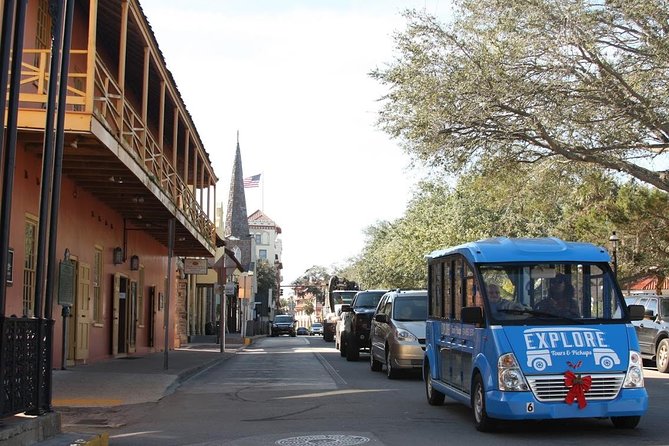
Tolomato Cemetery adds a quieter, more somber note. It was used from the 18th century until 1884 and reflects the long life of St. Augustine’s Catholic and Spanish communities.
Cemeteries can be easy to pass without noticing, especially in a city filled with famous buildings. A guide’s explanation gives the site meaning and helps you understand how burial grounds fit into the city’s religious and social history. You may not have time to enter or study every marker, so treat the stop as an orientation to a place you can explore later if it interests you.
St. Francis Barracks offers another useful change of subject. Franciscan friars built the coquina barracks between 1724 and 1755 on Marine Street. When Britain took possession of Florida in 1763, the building was converted for military use.
After the United States claimed Florida in 1821, the U.S. Army controlled the barracks until it was deactivated in 1900. In 1907, it was leased to Florida State Troops, an early form of today’s National Guard.
This single building lets you track several governments and military systems through one location. Spanish religious use, British administration, American military control, and the later state guard all appear in its story. That is exactly where a guide adds value. A passing glance tells you almost nothing; a short explanation turns the building into a timeline.
Gonzalez-Alvarez House and the Old Residential City
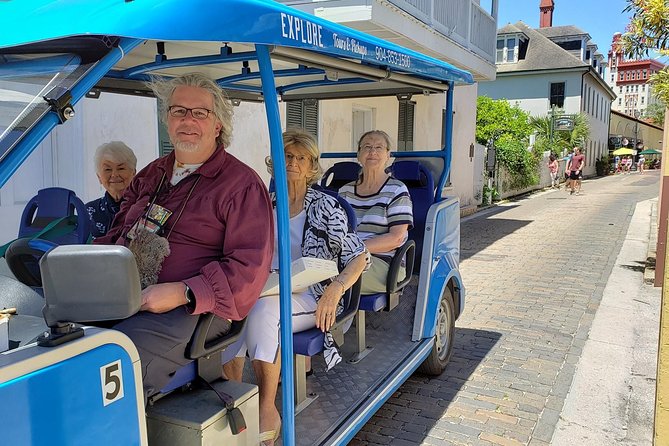
Also called the Gonzalez-Alvarez House, this is recognized as the oldest surviving Spanish colonial residence in Florida. It is operated by the St. Augustine Historical Society.
The house helps balance the grand public sites on the route. Forts, churches, hotels, and plazas can make history feel like a story about institutions. A surviving home shows how people lived within that system.
You may pass the house rather than tour its rooms. That is fine if you use the ride to make a list for later. If domestic architecture interests you, this is one of the places to flag. The guide can explain its Spanish colonial character and place it alongside the military and religious sites.
The route’s strength is this range. In about an hour, you move from a mission to a fort, from a luxury hotel to a cemetery, and from a public plaza to a private residence. The tour does not treat St. Augustine as one single historical period.
The Bridge of Lions and the City Beyond the Old Walls
The Bridge of Lions was completed in 1927 during Florida’s extravagant land boom. It was designed as both a work of art and a route for cars, connecting downtown St. Augustine with Anastasia Island.
The bridge gives the tour a chance to explain another phase of the city’s growth. St. Augustine was no longer only a colonial settlement or a resort for winter visitors. It was also adapting to automobiles, real estate speculation, and expanding connections across the water.
You may not spend much time on the bridge itself, but the guide can point out how it relates to the plaza and the island. This is another example of why the ride works best as a city overview. You see how the historic core connects to the broader city rather than staying inside a narrow old-town loop.
Traffic is a practical concern. One person noted that a drive from the beach area took much longer than expected because St. Augustine traffic was heavy. If you are coming from outside the historic center, leave extra time and call the company if you are delayed. The stated meeting point is at 1 Cordova Street, and the ride returns there.
Guides Who Make the Difference
The vehicle gets you around, but the guide determines how much you take away. Karen is repeatedly singled out for careful research, warm delivery, patience, humor, and the ability to tell a story rather than recite dates. She also gives practical suggestions, including places to eat, and allows time for questions and photographs.
Marc and Mark are praised for strong historical knowledge, humor, and enthusiasm. Deanna is noted for mixing established history with local hearsay in a playful way. That last point is worth keeping in mind. A good guide should help you distinguish documented history from colorful local stories, and you can ask when a tale belongs in one category or the other.
The small group can sometimes turn into a private ride. Several bookings had only one passenger or a very small party. That is a pleasant surprise if it happens, though you should book for the advertised group size rather than expect a private tour.
Since the driver also guides, the ride feels interactive. Ask about a building you notice, a place to eat, or which attraction deserves your next hour. The experience is best when you participate rather than sit silently and wait for a script.
Is $30.60 a Fair Price?
At $30.60 per person, this is a reasonable buy for a one-hour overview. You are paying for transportation through the historic area, a certified guide, and a concentrated introduction to major sites.
The value is strongest if this is your first visit or if walking is difficult for you. You can cover more ground with less effort and leave with a plan for the rest of the day. It also saves you from trying to decode the city’s history from plaques alone.
The price is less compelling if you want long stops, interior visits, or detailed photography time. This is not an admission ticket to the Castillo, Flagler College, the cathedral, or the other places named along the route. You are seeing and learning about them from the vehicle.
I would compare it with the cost of spending an hour wandering without context. If the ride helps you choose two or three places to revisit, it can pay for itself in time and focus.
Practical Details Before You Book
The tour lasts about one hour and is offered in English. Confirmation is provided when you book, and you should include a phone number that can reach you on the day of the tour.
Read the special instructions on your ticket carefully, especially for the exact meeting details. Parking is not provided. Plan to arrive early because finding a space in St. Augustine can take longer than expected, particularly when traffic is heavy.
The vehicle is open-air, so weather matters. Bring a light jacket or extra layer during cooler months. One ride became chilly because of the wind, while another took place in drizzle with the vehicle keeping the group reasonably dry. Conditions can change, so check the forecast rather than assuming Florida means warm and still.
Service animals are allowed, and the tour is near public transportation. Most people can participate. Free cancellation is available up to 24 hours before the start time. Cancellations or changes within 24 hours are not refunded, and poor weather or failure to reach the required minimum may lead to a different date or a full refund.
Who Should Take This St. Augustine Tour?
I would recommend it to first-time visitors who want a clear introduction before choosing their museums and historic houses. It is also a good fit for families, couples, friends, and small groups who prefer conversation over a large vehicle with a fixed script.
You will get the most from it if you enjoy history but do not want to spend your first morning reading every plaque. It is helpful for people who want to conserve energy, too, since the vehicle covers the downtown route while you listen.
This may not suit you if you want a slow walking tour, extensive time inside attractions, or a specialized focus on one subject. Architecture fans, military-history enthusiasts, and cemetery researchers may want to use the ride as a starting point, then book or visit individual sites at a slower pace.
Should You Book It?
Book this tour if you want a friendly, compact orientation to St. Augustine and value a guide who can connect the mission, fort, churches, homes, and resort buildings into one story. The nine-person limit, question-friendly format, and strong guide lineup make it more useful than a simple sightseeing loop.
Just keep your expectations in the right place. You are buying a one-hour introduction, not a full tour of every attraction. Arrive early, allow for parking and traffic, dress for an open-air ride, and save time afterward for the sites that catch your interest. At $30.60, it is a sensible first step into one of America’s oldest cities.
FAQ
How long does the guided historical tour last?
The tour lasts approximately one hour.
How many people can join the tour?
The activity has a maximum of nine travelers.
Where does the tour begin?
The meeting point is 1 Cordova Street, St. Augustine, Florida 32084. The activity ends back at the same meeting point.
What language is the tour offered in?
The tour is offered in English.
Is parking included?
No. The company does not provide parking, so you should arrive early to find a space.
What sights are included along the route?
The route passes Mission Nombre de Dios, Castillo de San Marcos, Flagler College, the Cathedral Basilica of St. Augustine, Tolomato Cemetery, St. Francis Barracks, the Plaza de la Constitución, the Gonzalez-Alvarez House, Flagler’s Memorial Presbyterian Church, and the Bridge of Lions.
Can I cancel for a full refund?
Yes. You can cancel at least 24 hours before the start time for a full refund. Cancellations or changes made less than 24 hours before the tour are not refunded or accepted. If bad weather or an insufficient number of bookings causes the company to cancel, you will be offered another date or experience, or a full refund.
Newly listed in St Augustine
- 8pm Beyond the Grave Tour★ 4.5 · 576 reviews
- Old Jail Museum Tour in St. Augustine★ 5.0 · 717 reviews
- Corks & Forks Tour (St. Augustine)★ 5.0 · 746 reviews
- Dolphin and Wildlife Adventure of St. Augustine★ 5.0 · 864 reviews
- Airboat Adventure in Saint Augustine with a Guide★ 5.0 · 902 reviews
- St. Augustine: Hop-on Hop-off Trolley Tour with Museum Entry★ 4.6 · 970 reviews
- St Augustine: Nights of Lights Trolley Tour★ 4.3 · 1,061 reviews
- Haunted Trolley Tour of St Augustine★ 4.0 · 1,088 reviews
St Augustine Tours, compared.
St. Augustine Ghost Tour: A Ghostly Encounter
Read our review →
Medieval Torture Museum with Ghost Hunting and Tiny Art Gallery
Read our review →

St. Augustine’s Wine, Cocktail and Food Experience
Read our review →

Dolphin, Manatee and SeaTurtle SUP Adventure Tour of St Augustine
Read our review →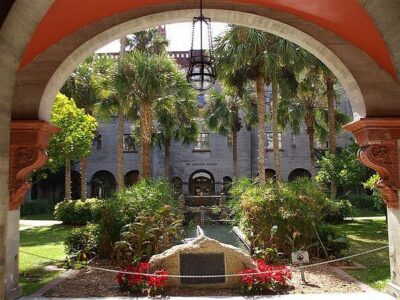
Private Guided Historic Electric Cart Tour of St. Augustine
Read our review →Browse the lists this tour appears in