

Reviewed · HOP-ON HOP-OFF BUS TOURS
Salt Lake City Trolley Tour with 3 Theatrical Guides & Live Show
Salt Lake City’s story arrives with three theatrical guides, live music, jokes, and plenty of old-fashioned showmanship. This is not a quiet ride with a single voice over a speaker. The guides trade roles, sing, act out historical characters, and keep the city’s pioneer and political past moving along at a good clip.
I like the excellent Capitol stop, where you get grand marble interiors and broad views toward the Wasatch Mountains. I also like the way the tour works for mixed-age groups. Eight-year-olds, teenagers, parents, and older adults can all find something to enjoy in the combination of short facts, songs, and comedy.
The main thing to consider is the format. This is a campy live show on wheels, not a slow, scholarly study of Utah history. Most landmarks are viewed from the trolley, and several stops last only a minute, so bring your camera but save detailed exploring for later.
Key Points Before You Board
- Three performers share the storytelling: Guide combinations vary, but past tours have featured Anna, Matthew, Kelly, Kaleigh, Max, Shayla, and Luke, with the driver also helping the show run smoothly.
- The Utah State Capitol is the major stop: Plan on about 15 minutes for the building, terrace, and city views.
- You get a quick city orientation: The route covers Temple Square, civic buildings, pioneer sites, downtown attractions, the Delta Center, and Olympic-era districts.
- Music and character acting are part of the ticket: Expect a theatrical presentation rather than standard bus-tour narration.
- Trolley treats are included: You receive old-fashioned bottled soda and Cracker Jacks.
- The group is capped at 27 people: That keeps the vehicle smaller than a large sightseeing coach, though seats can fill quickly.
A Live Show Instead of a Standard City Tour
The unusual feature here is the cast. Three theatrical guides share the trolley, each bringing a different style to the ride. One may handle a historical figure, another may lead a song, and another may add comic timing or a local story.
That variety matters. A standard city tour can become a long stream of names and dates. Here, the information is broken up by music and short performances. The approach makes it easier for children and teenagers to keep listening, while adults get a memorable introduction to Salt Lake City’s origins and landmarks.
The tone is intentionally playful. You may feel at times as if you are sitting in a small local theater rather than on a sightseeing vehicle. That is a strength if you want an entertaining first look at the city. It is less ideal if you prefer quiet narration, long stops, or detailed architectural analysis.
The tour is offered in English, and the vehicle carries no more than 27 people. The ride lasts about 90 minutes to two hours, depending on traffic and the pace of the day. That makes it a useful first activity after arriving, or a good way to fill part of an afternoon before heading to the airport.
More hop-on hop-off routes around the USA:
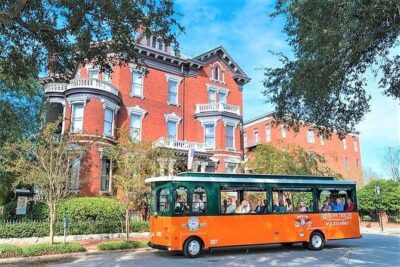
- Savannah Hop-On Hop-Off Trolley Tour
★ 4.5 · 6,527 reviews - New York: Hop-on Hop-off Sightseeing Tour by Open-top Bus
★ 4.2 · 5,863 reviews - Nashville Hop On Hop Off Trolley Tour
★ 4.5 · 5,643 reviews
Starting at the Radisson Downtown
The trolley begins at the Radisson Hotel Salt Lake City Downtown, 215 West South Temple Street. This puts you near the central sights and within reach of public transportation.
The route returns to the same meeting point. That is useful because you do not need to arrange a second pickup across town. The mobile ticket also keeps check-in simple, though I would still arrive with enough time to locate the vehicle and settle in.
A few practical comforts make a difference on a short city ride. The trolley has air conditioning, and bottled soda and Cracker Jacks are included. A restroom break is also provided, according to the tour details and on-board experience described by the operator.
The Utah State Capitol Gives You the Best View
The first major stop is the Utah State Capitol, completed in 1916. It is the grandest architectural pause on the route, and you get around 15 minutes there.
Inside, look for the marble halls, murals, sculptures, dome, and rotunda. The guides connect the building to Utah’s long path from territory to statehood, including the political struggles that delayed recognition and shaped the young state’s identity.
The terrace is the real prize for many people. From Capitol Hill, you can look across Salt Lake City toward the Wasatch Mountains. On a clear day, this gives you the quick visual orientation that a downtown ride alone cannot provide.
Fifteen minutes is enough for photographs and a brisk look around, but not enough for a full visit. If the Capitol catches your interest, return on your own later and allow more time. I would also keep the weather in mind, since the outdoor view is a key part of this stop.
Cathedral of the Madeleine Adds a Different Side of the City
The Cathedral of the Madeleine receives a short stop of about five minutes. That may sound brief, but even a quick look reveals why it matters.
Completed in 1909, the cathedral is a Gothic Revival building with soaring arches, carved stone columns, painted decoration, ornate altars, and stained glass. The guides explain how a small Catholic community in a largely Mormon pioneer city created a church with the scale and care of a European cathedral.
This stop broadens the tour beyond the familiar story of Brigham Young and the early LDS settlement. You see that Salt Lake City’s religious and cultural life has never been limited to one tradition.
Construction can affect the view. At times, the exterior of the cathedral has been partly hidden, so your visit may not offer the full picture you hoped for. The short timing also means you should treat this as an introduction, not a complete church visit.
More to weigh up across the USA
- New York City: Statue of Liberty & Ellis Island with Ferry
★ 4.6 · 18,683 reviews - New York City: American Museum of Natural History Ticket
★ 4.5 · 15,447 reviews - New York City: Top of the Rock Observation Deck Ticket
★ 4.6 · 14,488 reviews - Boston Duck Boat Sightseeing City Tour with Cruise Along Charles River
★ 4.5 · 9,378 reviews
Temple Square and the Pioneer Center of Salt Lake City
The trolley then passes Temple Square, the ten-acre center selected by Brigham Young in 1847. The Salt Lake Temple is the main visual marker, with its six spires and granite construction.
The temple took about 40 years to complete. Pioneer workers hauled granite from a canyon about 20 miles away, and the building became a symbol of endurance as well as worship. The guides focus on the human effort behind the project, which helps you see the temple as more than a famous silhouette.
The timing here is extremely short. Temple Square and the Salt Lake Temple are listed as one-minute viewing stops, so you will mostly see them from the trolley. The temple is closed to the public, and the tour does not provide an interior visit.
The Salt Lake Tabernacle receives the same quick treatment. Its domed roof spans about 150 feet without interior pillars, and its acoustic design helped make it famous as the home of the Tabernacle Choir. You will hear about the building’s engineering and music tradition, but you should plan a separate visit if you want to explore it properly.
The modern Conference Center offers a striking contrast. Completed in 2000, it holds 21,000 people and includes a rooftop garden and waterfalls. The guides use it to show how the city’s religious institutions moved from pioneer construction to large-scale modern design.
Civic Buildings Tell the Political Story
Salt Lake City’s old civic buildings give the tour a useful counterpoint to Temple Square. The City and County Building, completed in 1894, looks like a sandstone castle, complete with a clock tower, gargoyles, and statues representing Columbia and Justice.
The guides connect its grand style to a period when civic leaders wanted government to project its own power and identity. It is a good example of how architecture can reveal a political mood.
Council Hall is smaller and more intimate. Built in 1866 as Utah’s first territorial capitol, it hosted debates about self-government, polygamy, women’s suffrage, and statehood. The building was later moved brick by brick to Capitol Hill in 1963, a detail that gives the stop a memorable human scale.
Washington Square brings you back to the City and County Building from another angle. The repeated sighting is not a mistake so much as a reminder of how central this building is to the old downtown route.
The Governor’s Mansion adds a look at Salt Lake’s early wealth. Built in 1902 for mining magnate Thomas Kearns, the Beaux-Arts home later became the official residence of Utah governors. Stories of parties, politics, fire, and restoration help explain how the city changed from frontier settlement to established state capital.
Brigham Young and the Early Settlement
The Beehive House was built in 1854 for Brigham Young. Its honeybee carvings refer to industry and cooperation, and the home served both as a family residence and an executive house for receiving visitors.
The guide’s theatrical approach fits this stop well. Brigham Young’s household and public duties offer plenty of material for character-based storytelling, but the tour only gives you a brief exterior look. If you want to see the rooms, furnishings, and domestic details, return independently.
Nearby, the Eagle Gate recalls the entrance to Young’s property. The original gate was built in 1859, and the bronze eagle now spreads its wings more than 20 feet above State Street. It is a quick photo stop with a clear link between private land, public streets, and the growing city.
The Brigham Young Monument and Meridian Marker add a geographic angle. The monument honors the leader who brought settlers into the Salt Lake Valley in 1847, while the marker identifies the point from which Utah land surveys begin. Together, they connect personal decisions with the map of the state.
The Deuel Pioneer Log Home offers the humblest building on the route. Hand-hewn from local timber, it recalls the earliest homes built by settlers. After seeing grand temples, mansions, and government buildings, this small cabin brings the story back to food, shelter, labor, and survival.
Downtown Reinvention, Shopping, and Family History
City Creek Center shows modern Salt Lake City at its most polished. Opened in 2012, the open-air shopping complex covers two city blocks and includes retractable glass roofs, fountains, rooftop gardens, and a creek running through the center.
The creek and mountain-style design are memorable, but the point is larger than shopping. The guides explain how the project helped reshape downtown by blending retail, public space, and a strong sense of local identity. You pass through rather than stop to shop, so plan a separate visit if you want restaurants or stores.
The Salt Lake City Public Library offers another modern design highlight. Its five-story glass arc curves around a sunlit plaza, with reading rooms and a rooftop area looking toward the mountains. Even if you are not a library person, the building is worth noticing for its bold shape and public purpose.
The FamilySearch Library and FamilySearch Center connect Salt Lake City to genealogy. The library is described as the world’s largest collection of genealogical records, with billions of documents preserved and made available to people tracing family lines.
The two FamilySearch stops cover much the same subject, and both are quick exterior views. Still, the theme fits Utah well. The city’s story is not only about famous leaders and buildings. It is also about families, records, migration, and the effort to preserve personal stories.
From the Jazz Arena to the Olympic District
The Delta Center is home to the Utah Jazz and one of the city’s main sports venues. Opened in 1991, it has hosted NBA games, Olympic figure skating, concerts, and other major events.
You will see it from outside, with the guides adding sports and Olympic stories. This is a good change of pace for children and sports fans after several religious and civic landmarks.
The Gateway carries the Olympic connection further. Built around the 2002 Winter Olympics, the open-air district transformed an old rail yard into a place of fountains, art, entertainment, and restaurants. Restored brick depots and Olympic monuments help connect Salt Lake City’s industrial past with its modern public image.
The tour also passes the Church Office Building, a 28-story structure completed in 1972. Its marble and glass design signals the worldwide reach of the Church of Jesus Christ of Latter-day Saints, while its location near Temple Square links modern administration with the city’s earliest religious center.
The Joseph Smith Memorial Building completes the downtown architectural sweep. It opened in 1911 as Hotel Utah, welcoming presidents, movie stars, and other prominent visitors. Its white terracotta exterior and Beaux-Arts details make it one of the more elegant buildings on the route.
What the $69 Price Buys You
At $69 per person, this tour costs more than a simple narrated drive. You are paying for a live performance with three guides, a driver, music, short stops, snacks, air conditioning, and a route covering a large number of central landmarks.
The value is strongest if you would otherwise need to organize several short visits yourself. In roughly two hours, you get an orientation to Capitol Hill, Temple Square, downtown, pioneer sites, civic buildings, the sports district, and the Olympic area. That is a lot of ground without parking or navigation worries.
The price is less compelling if your priority is entering buildings and spending time inside them. Most stops last about a minute, while the Capitol gets about 15 minutes and the cathedral about five. You should think of the trolley as a lively introduction, then choose one or two places to revisit on foot.
Trolley treats are a small addition, but they suit the old-fashioned tone. The bigger value comes from the performers. Past guide teams have included Anna and Matthew, Matthew and Kelly, Shayla and Luke, and Kaleigh and Max. The exact cast may change, but the three-person format is the key feature.
Who Will Enjoy This Trolley Most?
I would recommend it first to families and groups with mixed ages. The short sections, songs, comedy, and character acting help children stay with the story, while adults get a useful overview of the city.
It also suits solo visitors and couples who want an easy first look without committing to a full-day tour. One local even found new information in the presentation, which suggests the show can add something beyond the most basic facts.
You should choose a different style if you want a silent ride, a serious academic lecture, or long interior visits. The theatrical approach can feel polished and deliberately campy. That is part of the fun, but it will not suit every mood.
Book at least several days ahead if your schedule is fixed. The tour is often reserved about 15 days before departure, and seats can sell out. Free cancellation is available up to 24 hours before the start time. Inside 24 hours, the payment is not refunded, and late changes are not accepted.
Should You Book the Salt Lake Trolley Tour?
Book it if you want to get your bearings fast and learn Salt Lake City’s main stories through music, jokes, and live performance. The Capitol views, Temple Square route, friendly cast, included snacks, and small group make it an easy choice for a first afternoon in town.
Skip it if you want a detailed walking tour or the freedom to explore every landmark at your own pace. For most people, the best use of this ride is as an opening chapter: take the trolley, note the buildings that interest you, then return to the Capitol, Cathedral of the Madeleine, Temple Square, or downtown on your own.
FAQ
How long does the Salt Lake City Trolley Tour last?
The tour lasts approximately one hour and 30 minutes to two hours.
Where does the trolley tour begin?
It begins at the Radisson Hotel Salt Lake City Downtown, 215 W S Temple St, Salt Lake City, Utah 84101.
Where does the tour end?
The trolley returns to the original meeting point at the Radisson Hotel Salt Lake City Downtown.
Is the tour conducted in English?
Yes. The experience is offered in English.
How many people can join the tour?
The maximum group size is 27 travelers.
Are snacks included?
Yes. The tour includes old-fashioned bottled sodas and Cracker Jacks.
Can I cancel for a full refund?
Yes, if you cancel at least 24 hours before the experience start time. Cancellations made less than 24 hours before the start time are not refunded.
More Show in the USA
- From Miami: Everglades Airboat, Wildlife Show & Bus Transfer
★ 4.2 · 8,622 reviews - Miami: Everglades National Park Airboat Tour & Wildlife Show
★ 4.5 · 7,296 reviews - The Haygoods: Branson’s Most Popular Show
★ 5.0 · 7,232 reviews - Oahu: The Magical Mystery Show! at Hilton Waikiki Beach Hotel
★ 5.0 · 2,754 reviews
Newly listed in the USA
- The Maui Butterfly Farm Tour★ 5.0 · 446 reviews
- NON BUS 4 Winery Traverse City Wine Tour on Old Mission Peninsula★ 5.0 · 445 reviews
- New England Aquarium Admission Ticket in Boston★ 4.0 · 446 reviews
- New Orleans City Tour and Steamboat Natchez Harbor Jazz Cruise★ 4.0 · 446 reviews
- Alpaca and Llama Farm Tour★ 5.0 · 446 reviews
- Small-Group Laura and Whitney Plantation Tour from New Orleans★ 4.5 · 446 reviews
- Dreaded Dead Descent of the District: DC Ghost Tour★ 4.0 · 446 reviews
- Cañon City: Royal Gorge Bridge & Park Entry Ticket & Gondola★ 4.5 · 448 reviews
Hop-On Hop-Off Bus Tours, compared.

Hop-on Hop-off Sightseeing Tour by Open-top Bus
Read our review →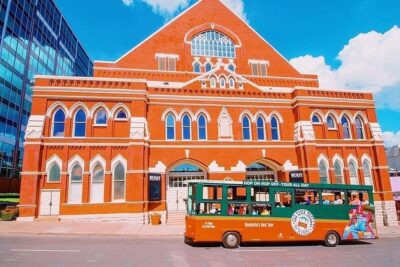
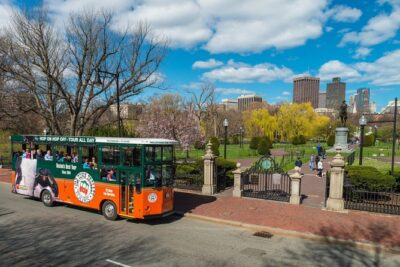
Boston Hop-On Hop-Off Trolley Tour with 13 Stops
Read our review →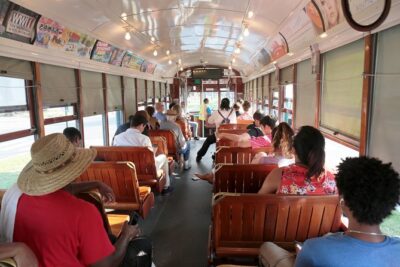
New Orleans City Sightseeing Hop-On Hop-Off Bus Tour
Read our review →
Waikiki Trolley Hop-On Hop-Off Tour of Honolulu
Read our review →
Big Bus NYC: Hop-On Hop-Off Sightseeing Tour by Open-top Bus
Read our review →
Big Bus SF: Hop-on Hop-off Tour with 17 Stops and Sunset Option
Read our review →Browse the lists this tour appears in