
Reviewed · CITY TOURS
Tabernacle Choir Performance + Salt Lake City Guided Bus Tour
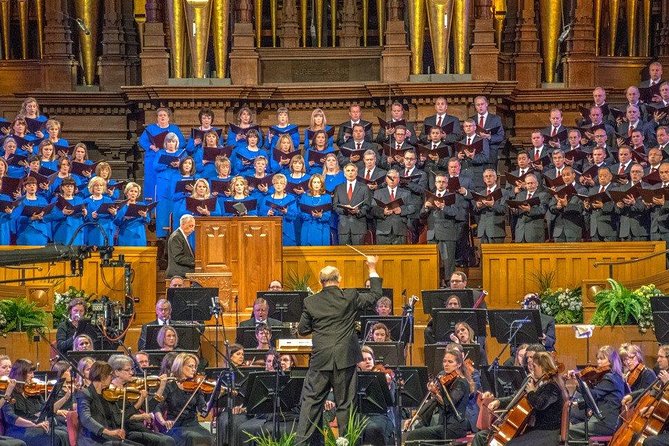
The best part of this outing is the music. The Tabernacle Choir fills the historic Salt Lake Tabernacle with a sound far bigger than the room seems able to hold. On Sundays, you attend the live broadcast of Music and the Spoken Word. On Thursdays, you can watch a rehearsal, hear several pieces, and see the conductor shape the performance.
I like two things here. First, the bus route gives you a quick sense of how Salt Lake City fits together, from the Capitol and Temple Square to the foothills and old neighborhoods. Second, guides such as Matthew, Mark, and Todd add useful local stories, and a former choir member may join the bus to explain what happens behind the music. The main drawback is pace: with so many sights packed into roughly three and a half hours, several stops are brief photo opportunities rather than full visits.
Key points to know before booking
- The choir is the main event: Sunday offers a live broadcast, while Thursday brings a longer rehearsal with a behind-the-scenes feel.
- You cover a lot of ground: The air-conditioned bus links downtown, Capitol Hill, the University of Utah area, This is the Place Heritage Park, and Olympic landmarks.
- The Utah State Capitol gets real time: This is one of the few places where you may go inside rather than simply view a building from the bus.
- Most stops are brief: Temple Square and several landmarks receive short visits, while many other sites are viewed from the vehicle.
- Former choir members may add perspective: This personal touch can make the musical portion more meaningful.
- It suits car-free visitors: At $89, the tour combines transport, commentary, and the choir experience in one half-day plan.
The Tabernacle Choir gives this tour its heart
Salt Lake City has plenty of grand buildings, pioneer stories, and mountain views. Still, the moment that stays with you is likely the first full chord from the Tabernacle Choir.
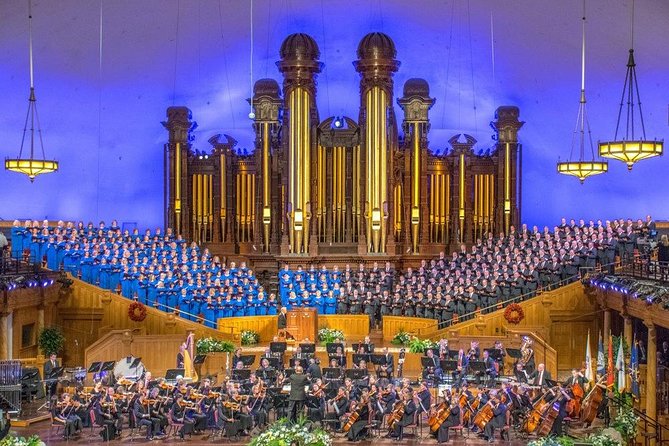
The Sunday program is the live broadcast of Music and the Spoken Word, which has run continuously since 1929. The choir has received Grammy and Emmy awards and has performed for six American presidents. You are not simply attending a standard concert. You are watching a long-running piece of Salt Lake City’s cultural life take place in front of you.
The Sunday performance lasts about 30 minutes. It is formal, polished, and moving, with 360 volunteer singers. Children under eight are seated separately during Sunday concerts because of the sensitive acoustics and sound-recording equipment. That is worth knowing before you book a family outing.
Thursday offers a different mood. The one-hour rehearsal lets you watch the conductor work with the ensemble, hear multiple selections, and observe a less polished but more revealing stage of the process. I would choose Thursday if you enjoy seeing how a major performance is built. I would choose Sunday if you want the full public program and the atmosphere of a live broadcast.
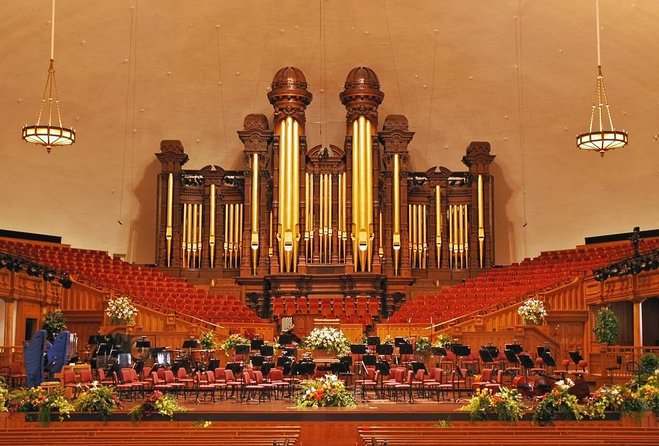
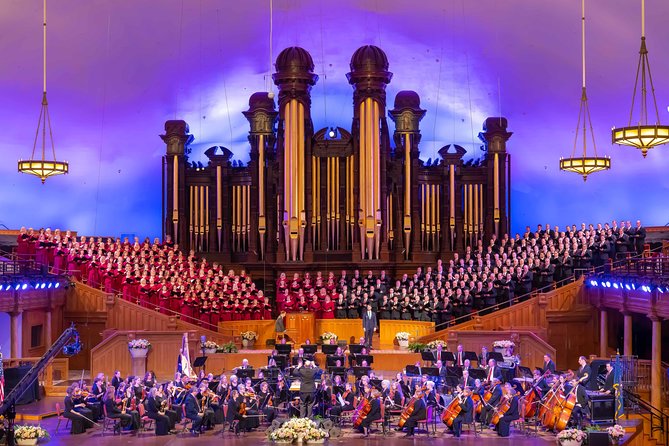
The venue depends on the season. Fall, winter, and spring performances take place in the historic Salt Lake Tabernacle, built in 1867. Its self-supporting dome spans 150 feet without interior pillars, and the building is famous for acoustics so precise that a pin drop can reportedly be heard from 170 feet away. The Tabernacle Organ has 11,632 pipes.
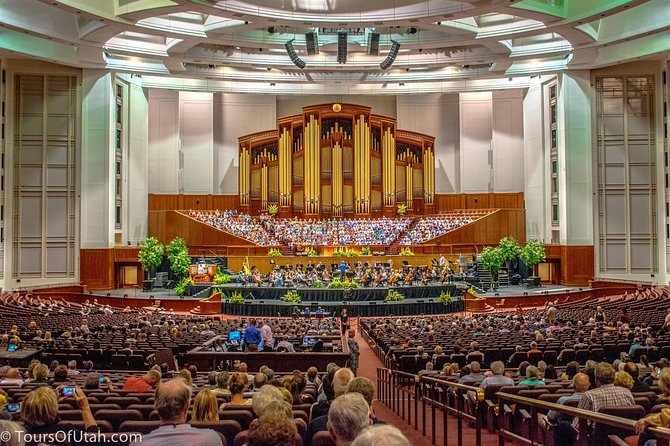
Summer performances move to the LDS Conference Center. This huge modern auditorium seats 21,000 and has a 7,667-pipe organ. The scale is impressive, but the old Tabernacle offers the more intimate setting. Check the season and venue when choosing your date.
More to weigh up across the USA
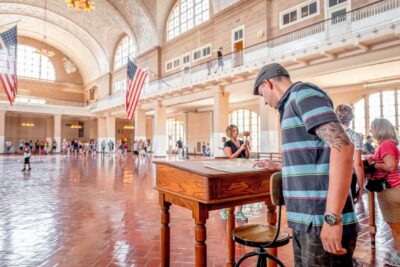
- New York City: Statue of Liberty & Ellis Island with Ferry
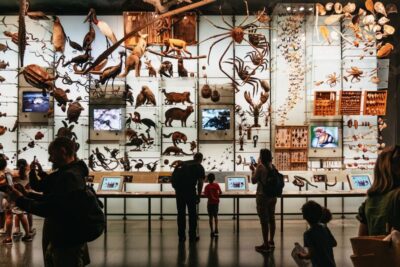
★ 4.6 · 18,683 reviews - New York City: American Museum of Natural History Ticket
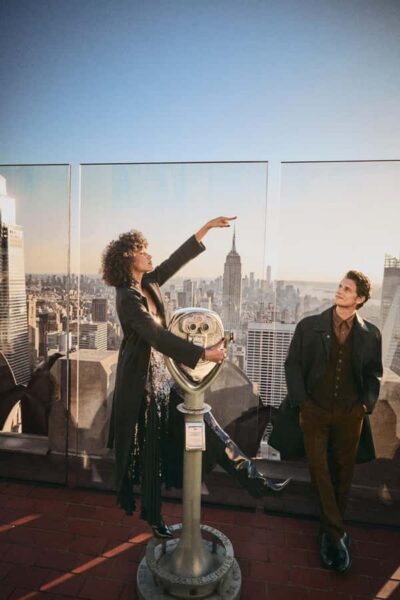
★ 4.5 · 15,447 reviews - New York City: Top of the Rock Observation Deck Ticket
★ 4.6 · 14,488 reviews
A city tour built around a long list of sights
The bus portion covers an 18-mile route and functions best as an introduction. You get the broad picture, hear the stories that connect the city’s buildings, and note places you may want to revisit independently.
The route begins at the Utah State Capitol. The building, completed in 1916, has a copper dome rising 285 feet above Capitol Hill. Inside, you may see marble columns, murals about Utah’s past, and a grand rotunda. Outside, the hill provides broad views over Salt Lake City and the Wasatch Mountains.
The Capitol is one of the strongest stops because you get more than a quick glance. If you care about architecture or government buildings, pay attention here. One caution: timing can be tight, and some tours move through the Capitol faster than visitors would prefer.
From Capitol Hill, the bus passes the City and County Building at Washington Square. Completed in 1894, this Romanesque Revival building has a 256-foot clock tower, turrets, carved stone, and arched windows. It is a handsome contrast to the newer office blocks downtown.
You also see Council Hall, Utah’s territorial capitol from 1866 to 1896. Its story helps explain Utah’s difficult path from territory to statehood, including debates about governance, women’s voting rights, and polygamy. The small red-brick building was moved brick by brick in 1963 to prevent its demolition.
Temple Square, the city’s essential first stop
Temple Square is the geographic and symbolic center of the tour. The complex includes landscaped grounds, the Salt Lake Temple, the Tabernacle, Assembly Hall, the Beehive House, and other important buildings connected with the Church of Jesus Christ of Latter-day Saints.
The Salt Lake Temple took 40 years to complete, from 1853 to 1893. Its granite blocks were quarried nearby and shaped by pioneer craftsmen. Six spires rise above the building, with the tallest reaching 210 feet, and an Angel Moroni statue crowns the central spire.
You view the temple from outside. The interior is reserved for Church members, so do not expect an interior tour. Your guide explains the symbolism, construction, and place of the temple in Utah’s story. The grounds provide some of the best photo opportunities on the route, though the scheduled visit is short.
The Salt Lake Tabernacle deserves a closer look. Its dome, galleries, organ facade, and woodwork reveal how much skill went into pioneer construction. You may spend only about five minutes here during the sightseeing portion, but the building gains new meaning when you later hear the choir perform inside it.
Assembly Hall offers a smaller and more decorative counterpoint. Built in 1882 from leftover granite associated with the temple, it has Gothic details, stained glass, and slender spires. The Beehive House, once Brigham Young’s official residence, gets a brief exterior view. Its rooftop beehive represents industry and cooperation and later became a symbol of Utah.
The Joseph Smith Memorial Building adds a different layer. It opened in 1911 as Hotel Utah, Salt Lake City’s first luxury hotel, and was later restored and rededicated. Its white terracotta exterior and Beaux-Arts design recall the city’s early twentieth-century ambitions.
Pioneer stories at This is the Place
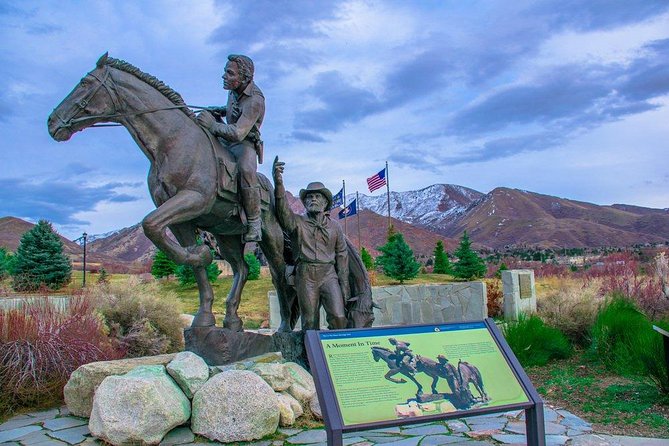
The tour then reaches This is the Place Heritage Park, near the location where Brigham Young is said to have identified the Salt Lake Valley as the destination for the Mormon pioneers in 1847.
The site connects to the 1,300-mile Mormon Pioneer National Historic Trail. From 1846 to 1869, more than 70,000 Latter-day Saints made the journey from Illinois to Utah. The route involved wagons, handcarts, rivers, mountains, poor weather, and limited supplies.
You may see the 60-foot monument and broad views over the valley, the Wasatch Mountains, and the Great Salt Lake. The heritage park itself includes living-history features, train rides, a petting zoo, and a Native American village, but this tour does not function as a full-day park visit. The scheduled stop is about 10 minutes, so you should think of it as a scenic and historical pause.
Nearby, the Mormon Battalion Monument recalls 500 Latter-day Saint volunteers who marched roughly 2,000 miles from Iowa to San Diego during the Mexican-American War. Their service, and the pay they received, helped support the early settlement. It is a lesser-known story that adds complexity to the usual pioneer narrative.
The Deuel Pioneer Log Home gives you another quick look at early settlement life. Built in 1847, it is a modest cabin set among much grander later buildings. That contrast tells the story neatly: Salt Lake City began with basic shelters and gradually grew into a state capital.
A different kind of day, same corner of the map:
- NYC: SUMMIT One Vanderbilt Tickets
★ 4.7 · 51,195 reviews - NYC: 9/11 Memorial & Museum Timed-Entry Ticket
★ 4.8 · 31,428 reviews - NYC: Empire State Building Tickets – Observatory & Museum
★ 4.7 · 25,757 reviews - NYC: Empire State Building Observation Deck Tickets
★ 4.7 · 22,072 reviews
Beyond downtown: churches, universities, and old mansions
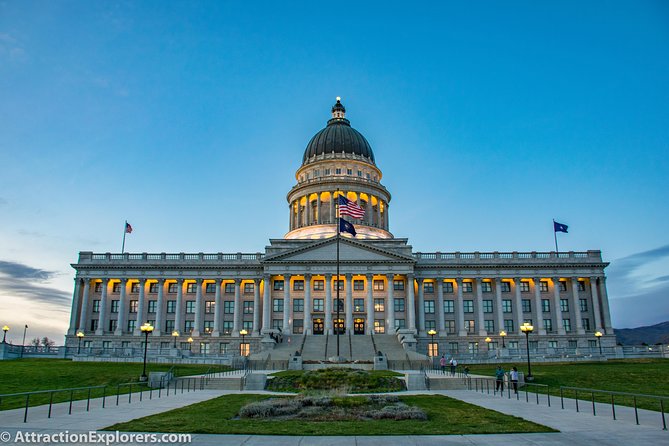
The bus route also shows you a wider Salt Lake City than Temple Square alone.
The Cathedral of the Madeleine is an important stop for understanding the city’s religious variety. Completed in 1909, it is Utah’s only Catholic cathedral. Its Gothic Revival design, twin 220-foot spires, stonework, and stained glass create a striking contrast with the Latter-day Saint buildings nearby.
The route passes the Governor’s Mansion, a 1902 residence that became Utah’s official governor’s home in 1937. It sits in Federal Heights among historic homes with views over the city.
You may also see the McCune Mansion, completed in 1901 for railroad figure Alfred W. McCune. Its red sandstone, imported marble, elaborate woodwork, and stained glass reflect the wealth that arrived with railroads and commerce. Since the tour views it from outside, treat it as an architectural detail rather than a house visit.
The Salt Lake Masonic Temple, Eagle Gate, the Brigham Young Monument, and the Salt Lake Meridian Marker add smaller pieces to the city’s story. Eagle Gate once marked the entrance to Brigham Young’s property, while the meridian marker identifies the point used for Utah land surveys.
The University of Utah area brings a more modern and civic side of the city. You see Rice-Eccles Stadium, which hosted the opening and closing ceremonies of the 2002 Winter Olympics, along with Kingsbury Hall and Fort Douglas.
Fort Douglas was established in 1862 during the Civil War. Its presence reflected the tense relationship between federal authorities and the early Latter-day Saint settlement. The red-brick buildings and parade grounds help you picture the military and political pressures surrounding the young city.
Olympic sites and modern Salt Lake City
The 2002 Winter Olympics remain a major part of Salt Lake City’s identity. Olympic Cauldron Park recalls the Games with its 72-foot glass-and-steel cauldron. Rice-Eccles Stadium and the Delta Center connect that sporting history with the city’s ongoing athletic life.
The Delta Center is home to the Utah Jazz and has hosted basketball, concerts, and Olympic figure skating. You see it from outside, but the guide’s explanation helps place the arena within the city’s growth during the 1990s and the Olympic period.
Downtown’s modern side includes City Creek Center, a three-block retail and dining district with a retractable glass roof and a restored creek running through the property. The Gateway, built around the 2002 Olympics on former rail yards, now includes public art, restaurants, fountains, and entertainment spaces.
The Salt Lake City Public Library is another quick architectural highlight. Designed by Moshe Safdie and opened in 2003, its curved glass wall and rooftop garden offer a bold contrast with the older civic buildings.
Abravanel Hall, home of the Utah Symphony, adds a cultural note. Its glass facade and bronze details reflect the city’s investment in classical music and performance. You do not enter, but it is worth spotting if you appreciate the way a city’s arts scene shapes its public face.
What the guide adds to the ride
The quality of the commentary matters here because many stops are short. A good guide turns a drive past a building into a connected story instead of a string of names.
Matthew and Todd receive particular praise for clear, friendly explanations, while Mark is noted for making the history easy to follow. The guide may be both driver and narrator, or you may have separate people handling those roles. The experience is limited to 30 people, which is small enough for a more personal feel than a large coach tour.
A former choir member sometimes joins the bus. This can be the most distinctive part of the commentary, especially on Thursday. You may hear about rehearsal routines, the organization of the ensemble, and what it is like to sing in one of the world’s best-known volunteer choirs.
I would ask questions when the former member is present. That is your chance to learn something the standard sightseeing route cannot provide.
Is $89 a fair price?
At $89 per person, the value depends on how you would otherwise arrange the day.
If you have a car, plenty of time, and a desire to explore at your own speed, you could drive past many of these places yourself. You would still need to arrange the choir visit and understand the performance schedule. You would also lose the running commentary and the convenience of having someone else handle the route.
For a visitor without a car, the price is easier to justify. You receive a half-day of transportation, a professional guide, access to the choir experience, and a quick orientation to areas that are spread across the city. The bus is air-conditioned, and the tour ends back at the Radisson Hotel Salt Lake City Downtown in time for lunch on many schedules.
The tradeoff is depth. You are paying for breadth, not long visits. If you want to explore the Capitol, Cathedral of the Madeleine, Heritage Park, or Temple Square at length, plan a separate visit.
Who should book this Salt Lake City tour?
I would recommend it for a first visit, especially if you are in town for only a day or two. It gives you the city’s central themes quickly: pioneer migration, religious architecture, state government, military history, the Olympics, and modern downtown development.
It also suits solo visitors, couples, older family members, and anyone who prefers not to manage downtown parking. The bus limits walking between far-flung sites, though you still need to get on and off and move through some buildings.
Music lovers should choose the date carefully. Thursday offers rehearsal access and a closer look at the working choir. Sunday offers the public broadcast and the most formal presentation. The performance is free as part of the tour, but the tour price covers the transport and guided sightseeing.
Bring water and a fully charged camera. Wear shoes you can manage for short walks, and allow extra time if you plan to shop or explore Temple Square afterward.
Should you book it?
Book this tour if you want one efficient introduction to Salt Lake City and the chance to hear the Tabernacle Choir without arranging separate transportation. The music is the reason to go, while the bus route gives you useful context and helps you decide what deserves a longer visit.
Skip it if you dislike fixed schedules or want to spend an hour at every landmark. The sightseeing portion moves quickly, and some stops last only a minute. For most first-time visitors, though, the combination of choir, Capitol, Temple Square, pioneer sites, and Olympic landmarks makes $89 a reasonable half-day investment.
Free cancellation is available up to 24 hours before the start time. The meeting point is the Radisson Hotel Salt Lake City Downtown, and confirmation is provided when you book.
FAQ
How long does the Tabernacle Choir and Salt Lake City tour last?
The experience lasts approximately 3 hours and 30 minutes.
What happens on Sundays?
On Sunday, you attend the live broadcast of Music and the Spoken Word. The choir portion lasts about 30 minutes.
What happens on Thursdays?
On Thursday, you attend the choir’s weekly rehearsal. The rehearsal lasts about one hour and may include several musical selections and conductor-led work with the ensemble.
Where does the choir perform?
Fall, winter, and spring performances take place in the historic Salt Lake Tabernacle. Summer performances move to the LDS Conference Center.
Can children under eight attend the Sunday performance?
Children under eight are seated in a separate location during Sunday concerts because of sensitive acoustics and sound-recording equipment.
Can you go inside the Salt Lake Temple?
No. The temple interior is reserved exclusively for Church members. The tour provides an exterior view and guide commentary.
Is the Utah State Capitol included?
Yes. The tour includes a visit to the Utah State Capitol, with time to see its architecture and views from Capitol Hill.
Where does the tour begin and end?
It begins and ends at the Radisson Hotel Salt Lake City Downtown, 215 West South Temple Street.
What is included in the $89 price?
The price includes the live Tabernacle Choir experience, an air-conditioned vehicle, and professional guided commentary. Gratuities are optional and not included.
Newly listed in the USA
- The Maui Butterfly Farm Tour★ 5.0 · 446 reviews
- NON BUS 4 Winery Traverse City Wine Tour on Old Mission Peninsula★ 5.0 · 445 reviews
- New England Aquarium Admission Ticket in Boston★ 4.0 · 446 reviews
- New Orleans City Tour and Steamboat Natchez Harbor Jazz Cruise★ 4.0 · 446 reviews
- Alpaca and Llama Farm Tour★ 5.0 · 446 reviews
- Small-Group Laura and Whitney Plantation Tour from New Orleans★ 4.5 · 446 reviews
- Dreaded Dead Descent of the District: DC Ghost Tour★ 4.0 · 446 reviews
- Smithsonian Museum of Natural History – Exclusive Guided Tour★ 5.0 · 446 reviews
City Tours, compared.
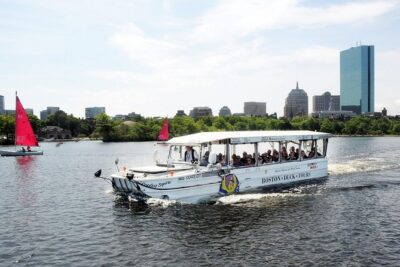
Boston Duck Boat Sightseeing City Tour with Cruise Along Charles River
Read our review →

New Orleans City Sightseeing Hop-On Hop-Off Bus Tour
Read our review →
Pearl Harbor, USS Arizona Memorial & Honolulu City Tour
Read our review →Browse the lists this tour appears in