
Reviewed · SALEM TOURS
Best Salem Witch Trials Historical Walking Tour
Salem’s witch trials are not presented here as a spooky backdrop. This is a walk through the places where accusations, arrests, trials, torture, and executions shaped the town in 1692. I like the personal stories of actual victims and accusers, and I like that the route helps you connect ordinary downtown streets with a grim chapter of American history. The Witch House, home of Judge Jonathan Corwin, gives you the tour’s clearest surviving link to the trials.
The main catch is simple: many of the original buildings are gone. You may spend more time listening beside modern shops and office buildings than examining old structures, and the guide may not reach every listed stop. That makes the quality of the storytelling especially important. Guides such as Bob have been praised for bringing the people of the period to life, while some departures have felt repetitive or short on chronology.
Key points to know before you book
- About one mile on foot: The 90-minute route includes frequent stops, but you will stand on narrow, uneven sidewalks, bricks, cobblestones, and occasional stairs.
- The Witch House is the main surviving trial-era building: It was the home of Judge Jonathan Corwin, who took part in discussions about the accused.
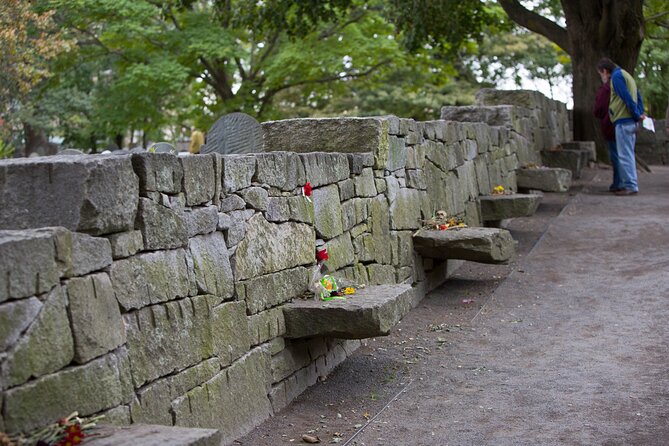
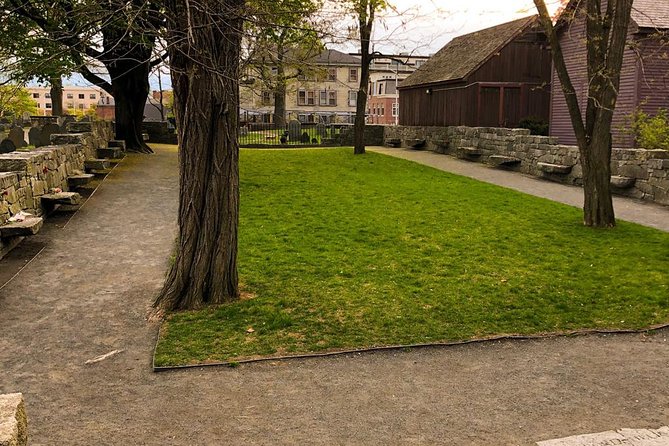
- The memorial is a quiet, serious stop: Twenty stone benches name the innocent people killed during the 1692 trials, with the date and manner of death.
- Not every stop is a preserved landmark: The jail and court locations are known, but the original structures no longer remain.
- October requires extra planning: Salem traffic, parking, crowds, and street vendors can make arrival slow, particularly near Halloween.
- A good first tour for context: The route gives you a useful introduction before you visit museums, historic houses, or the Salem Witch Museum on your own.
What this Salem walking tour is really about
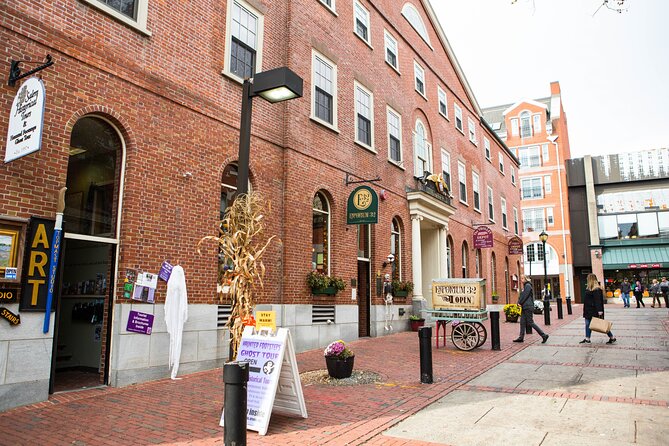
This is a history walk, not a haunted-house performance. You meet at the Salem Historical Tours office at 8 Central Street, where a guide holding a recognizable sign helps you get started. Departures are scheduled for 10 a.m., 1 p.m., and 4 p.m., and arriving 15 minutes early is wise.
The tour lasts about 90 minutes and covers roughly one mile. That sounds easy, and the distance is manageable for many people, but the frequent stops mean you will be on your feet for most of the outing. You should be comfortable walking and standing for the full time.
The guide explains the social setting, the main theories behind the hysteria, and the chain of events that turned neighbors against one another. You will hear about accusers, defendants, judges, jailers, and people caught in the middle. A strong guide gives you a timeline rather than a pile of disconnected facts. That distinction matters here, since Salem has plenty of witch-themed attractions but fewer places that explain how the crisis unfolded.
The group can include up to 40 people. That is a fairly large walking group, so your experience may depend on where you stand and how clearly the guide projects their voice. The best guides make a point of keeping the group together, answering questions, and checking that everyone can maintain the pace.
More Historical Tours in Salem
- History and Hauntings of Salem Guided Walking Tour
★ 5.0 · 14,564 reviews - Wicked Awesome Tours: Witch Trial History and Salem Haunts!
★ 5.0 · 1,032 reviews - 2.5-Hour Salem History & Sightseeing Guided Walking Tour
★ 5.0 · 850 reviews
The Witch Trials Memorial puts names to the tragedy
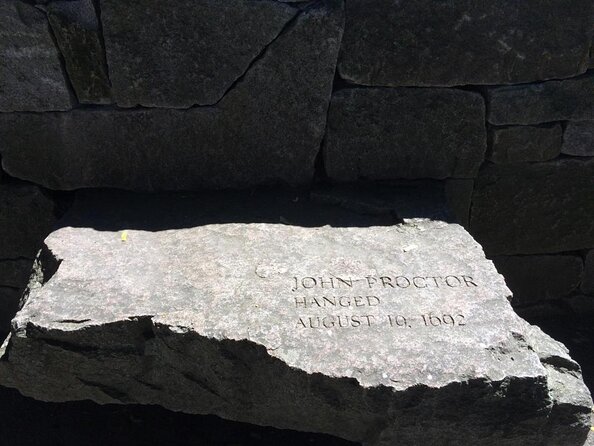
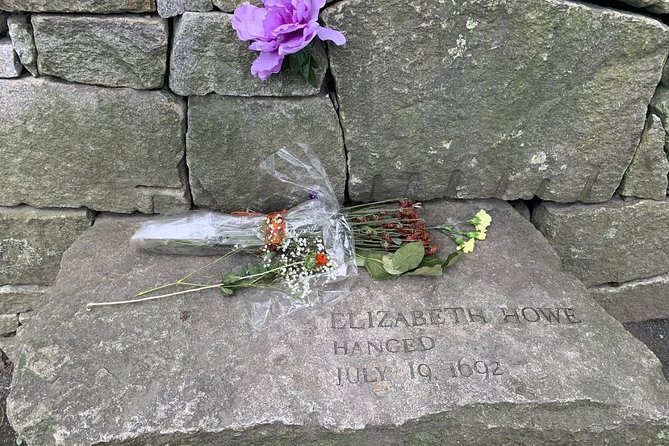
The memorial is one of the most important stops. Built in 1992, it honors the 20 people who died during the Salem Witch Trials. Each victim’s name appears on a stone bench, along with the date and manner of death.
The design asks you to pause rather than hurry past. It is not a theatrical attraction, and it works best when the guide gives you time to absorb the names and explains the memorial’s symbolism. You will hear some of the victims’ stories, which helps turn a familiar historical label into individual human lives.
One practical point is worth noting. The planned stop is around 10 minutes, and the guide may explain the memorial from nearby rather than walk you through every bench. If seeing each inscription matters to you, ask directly. The memorial is open to further exploration after the tour, and it is easy to return to once you know what you are looking at.
Rockafellas connects today’s Salem with the 1692 meeting house
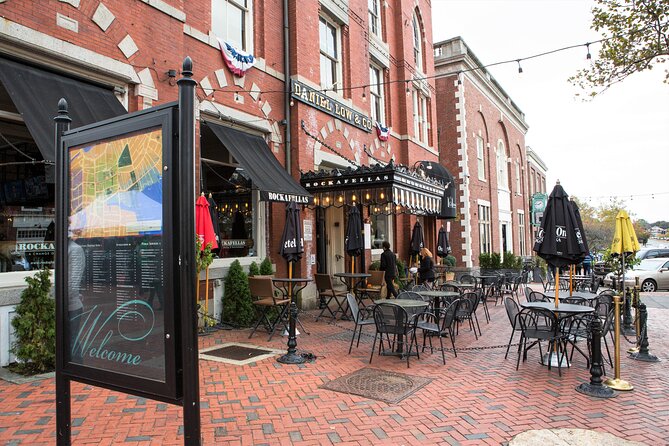
Rockafellas Restaurant occupies the Daniel Low and Company building in the center of Salem. The site was once home to the First Church of Salem and the town meeting house, places tied to public life during the trials.
You will not be visiting a preserved courtroom or church interior from 1692. The value is in understanding how central institutions helped shape the crisis. In a town where modern businesses sit on old foundations, this is a useful reminder that the trial story is often tied to a location rather than a surviving building.
The restaurant is an active business, and food or drink is not included. You may see the exterior and hear the story from the sidewalk. If you want to eat there, plan that separately rather than expecting time for a meal during the walk.
The Joshua Ward House recalls Sheriff George Corwin
The next stop points to the former home of George Corwin, the High Sheriff of Essex County in 1692. The present building is known as the Merchant Hotel, and the original house is gone.
Corwin handled arrest and execution warrants, seized personal property, and was accused of torturing people in his home. His role shows how the trials were not only about courtroom claims. Officials, jailers, property seizures, and forced confessions all helped turn accusation into punishment.
The guide may use old images or explain the former site rather than take you inside. That can disappoint anyone expecting a grand historic-house visit, but the story is strong because it shows how authority operated during the crisis.
More Walking Tours in Salem
- Salem Voodoo, Vampires, and Ghosts Guided Walking Tour
★ 5.0 · 1,931 reviews - Bewitched Walking Tour of Salem
★ 5.0 · 1,895 reviews - Satanic Salem Walking Tour
★ 5.0 · 1,635 reviews - Mysteries and Murders of Salem Guided Night-Time Walking Tour
★ 5.0 · 1,488 reviews
The Witch House is the clearest physical link to the trials
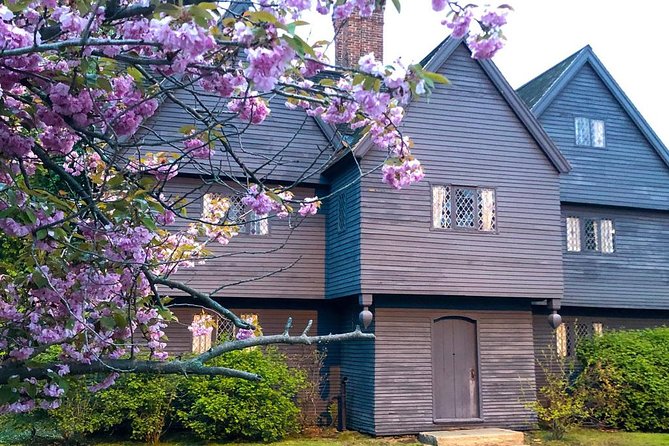
The Witch House is the only remaining structure in Salem with a direct connection to the 1692 witch trials. It dates to the 1660s and was the home of Judge Jonathan Corwin.
Corwin met with Judge Hathorne there to discuss who might be a witch. The house therefore gives the tour a rare moment when you are looking at a building that still existed during the events being discussed.
The short outdoor stop introduces the house and Corwin’s role. An admission ticket is not included, so you should treat the tour as an orientation, not a visit through the interiors. If you want to see the rooms and exhibits, return later and buy entry separately. I find this works well: the guide gives you the setting and the human story, then you can explore the house at your own pace.
Betty Parris and the spread of the accusations
At the Salem YMCA on Sewall Street, the guide discusses the former home of Reverend Parris and the childhood of Betty Parris. The house is gone, but the street name connects to Judge Stephen Sewall, a member of the Witchcraft Court.
Betty was nine years old when she became part of the events that helped ignite the hysteria. Her cousin also played a role in the early accusations. This stop is useful because it moves the story away from judges and official buildings and back toward children, family tensions, household fears, and community pressure.
Again, there is no period structure to inspect. You are listening to the account at a modern location. A guide who explains the sequence clearly can make this one of the more revealing stops. A guide who gives only scattered anecdotes may leave you unsure how the early claims led to formal arrests.
Bridget Bishop’s story at Lyceum Hall
Turner’s Seafood operates inside Lyceum Hall, built on land once owned by Bridget Bishop and her husband, Edward. Bishop was the first woman executed during the 1692 trials.
Her story is particularly striking because her arrest, trial, and execution took only eight days. The guide explains how suspicion gathered around her and how quickly the legal process moved once the town accepted the accusation.
The stop takes about five minutes and is viewed from outside. Turner’s is a restaurant, so admission is not part of the tour. The location is still worthwhile because it places Bishop’s story in the middle of present-day Salem, where ordinary commerce continues on land connected to the first execution.
The jail site and the story of Giles Corey
The Witch Dungeon Museum is used as an illustration of colonial imprisonment, not because the museum itself is directly connected to the 1692 trials. The guide describes cramped cells, sometimes no larger than a closet, and the fact that prisoners had to pay for their own confinement.
You may also get a chance to pose in the pillories, or stocks, for a photograph. This is the tour’s most playful moment, though the subject remains harsh. It shows how jail could become another form of punishment before a case ever reached a verdict.
At 50 St Peter Street, the guide identifies the former site of the Witchcraft Jail. The building is gone, but this location lets you hear about people held there, including Giles Corey. Corey was crushed during interrogation after refusing to enter a plea, and some prisoners died in jail.
These stops work best together. One explains the physical conditions of imprisonment, while the other links those conditions to named individuals. They also clarify why a walking tour cannot offer you a complete tour of the original jail: there is no surviving jail structure to enter.
The court site and Salem’s pop-culture detour
Near the Salem Masonic Building, the guide identifies the former location of the Witchcraft Court, known as the Court of Oyer and Terminer. It was located in the middle of Washington Street, in front of the present building, and most trials were held in that area.
The story here includes the court’s troubling decisions. In one case, a jury found an accused person innocent, but the judges rejected the result. That detail gives you a sharper sense of how little protection a favorable jury decision could provide.
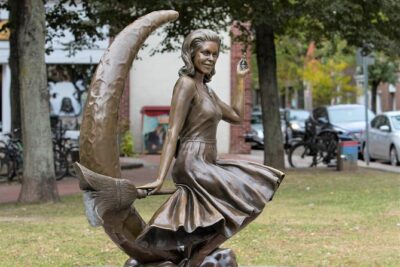
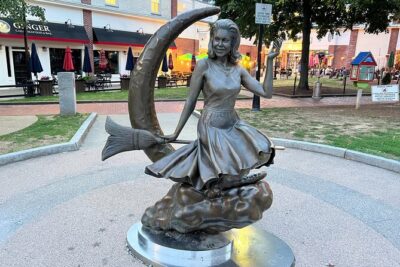
The Bewitched statue of Elizabeth Montgomery offers a quick change of tone. You can pose with Samantha Stephens, the fictional witch from the television show Bewitched, and hear about episodes filmed in Salem. The statue sits on land with an ironic connection to the real trial story, adding a small bit of humor to an otherwise severe walk.
This is also a good reminder that Salem has two overlapping identities: the real town shaped by the 1692 crisis and the modern destination built around witchcraft in popular culture. The tour touches both, but its main purpose is historical.
What you may not see on the advertised route
The route lists several locations, but the guide goes to as many as possible and may change the order. That wording matters. Some departures may cover most of the downtown sites, while others may spend longer at the memorial and early locations.
You should not assume that every stop receives a full presentation. The hanging site, for example, is more than a mile away, and it is not part of this compact route. The exact tree or gallows used for the hangings is also uncertain. The tour instead focuses on downtown locations that can be reached within a 90-minute walk.
This limitation is not a flaw unique to this tour. Salem’s trials happened more than three centuries ago, and many structures were removed. Still, you should book with the right expectation: you are walking through historical locations and hearing what happened there, not moving from one preserved 1692 building to another.
If a particular stop matters to you, ask the guide about it early. The tour staff explains that they can show images from old books and identify sites that are now modern buildings. That visual help can make a vanished structure easier to imagine.
Is $30 a fair price?
At $30 per person, the tour costs more than following Salem’s public yellow trail on your own. The free route gives you independence and lets you pause as long as you wish. It does not give you a person who can answer questions, sort fact from legend, or connect several scattered locations into one story.
I think the price is fair if you are new to Salem and want a compact introduction. The guide saves you research time, points out sites you might walk past, and adds personal accounts that are difficult to get from street markers alone. The value drops if you expect museum admissions, interior visits, or a large number of intact historic buildings.
There are no restroom facilities included, and parking is not covered. Salem can be difficult to drive in, especially in October, so allow extra time beyond what your GPS suggests. Public transportation or a nearby parking plan may make the start less stressful, but specific transportation arrangements are not included with the tour.
Who will get the most from this walk?
I would choose this tour for a first visit to Salem, a family with an older child or teenager, or anyone who wants the trial story before visiting other attractions. Several stops are short, which helps keep the route manageable, and children must be accompanied by an adult.
It can also work well for history-minded couples and groups who enjoy asking questions. The strongest guides are described as funny, engaging, and able to answer questions while keeping the group moving. Bob has been singled out for vivid storytelling, and one female guide was praised for handling questions and making the material accessible.
I would be more cautious if you dislike outdoor standing, want a strictly chronological lecture, or expect a theatrical production. The tour is offered in English, operates in all weather, and can become harder to navigate during October crowds. Wear weather-ready clothing and shoes that handle uneven pavement.
Free cancellation is available up to 24 hours before the start time. Changes or cancellations inside that window are not accepted for a refund.
Should you book the Best Salem Witch Trials Historical Walking Tour?
Book it if you want a guided introduction to the people and places behind the trials, and if you understand that most locations are now empty sites or modern buildings. The memorial, Corwin’s Witch House, Bridget Bishop’s property, the jail site, and the court location give the walk a useful shape.
Skip it if your main goal is to enter historic buildings or visit the hanging site. You can follow Salem’s yellow trail for free, then spend your money on museum admission instead.
For most first-time visitors, I would take this tour early in the day, ask the guide for a clear timeline, and return afterward to the Witch House and memorial. That combination gives you both the guide’s local context and time to look closely at the places themselves.
FAQ
How long is the Salem Witch Trials walking tour?
The tour lasts approximately 90 minutes.
How far do you walk?
The route is about one mile long, with frequent stops for information and site descriptions.
Where does the tour begin?
It begins at the Salem Historical Tours office at 8 Central Street, Salem, Massachusetts.
What time does the tour depart?
Tours depart at 10 a.m., 1 p.m., and 4 p.m. You should arrive 15 minutes before departure.
Where does the tour finish?
The walk returns to Salem’s downtown area. The guide can direct you to your preferred nearby destination.
Is admission to the Witch House included?
No. Admission tickets for the Witch House are not included.
Are restroom facilities available during the tour?
No public restrooms are provided as part of the tour.
Can children join the walk?
Yes. Children can participate, but they must be accompanied by an adult.
Is the route accessible for people with mobility concerns?
The walk can be challenging because Salem has narrow and uneven sidewalks, bricks, cobblestones, and stairs. Each person must be able to complete the one-mile route within 90 minutes.
Does the tour operate in bad weather?
Yes. It operates in all weather conditions, so dress appropriately.
How large can the group be?
The maximum group size is 40 people.
Can I cancel for a full refund?
Yes, if you cancel at least 24 hours before the experience start time. Cancellations made less than 24 hours in advance are not refunded.
More Historic Sites in Salem
- Salem Night Tour: Haunt and History Guided Night Tour
★ 4.5 · 673 reviews - Salem, MA: History and Hauntings Guided Walking Tour
★ 4.8 · 651 reviews - New York City: American Museum of Natural History Ticket
★ 4.5 · 15,447 reviews - Charleston’s Old South Carriage Historic Horse & Carriage Tour
★ 5.0 · 10,023 reviews
Newly listed in Salem
- Salem Uncovered: The Salem Witch Trials Tour★ 4.5 · 471 reviews
- Schooner Fame Sailing Tour★ 5.0 · 571 reviews
- Salem, MA: History and Hauntings Guided Walking Tour★ 4.8 · 651 reviews
- Salem “Hocus Pocus” Movie Locations Tour (31st Anniversary)★ 4.5 · 664 reviews
- Salem Night Tour: Haunt and History Guided Night Tour★ 4.5 · 673 reviews
- The Salem Witch Walk★ 4.5 · 1,301 reviews
- Mysteries and Murders of Salem Guided Night-Time Walking Tour★ 5.0 · 1,488 reviews
- Wicked Awesome Tours: Witch Trial History and Salem Haunts!★ 5.0 · 1,032 reviews
Salem Tours, compared.
History and Hauntings of Salem Guided Walking Tour
Read our review →


Mysteries and Murders of Salem Guided Night-Time Walking Tour
Read our review →
Wicked Awesome Tours: Witch Trial History and Salem Haunts!
Read our review →Browse the lists this tour appears in