
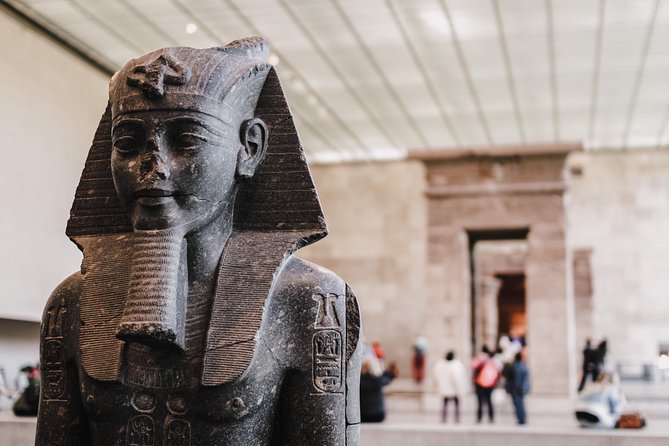
Reviewed · NEW YORK CITY TOURS
2-hour Metropolitan Museum Guided Tour
The most useful thing about this two-hour Met tour is that it gives you a route through a museum that can otherwise feel like a small city with paintings. You move from Egyptian tomb models and mummies to the Temple of Dendur, Greek and Roman art, Papua New Guinea, Monet, Van Gogh, and Rodin. That is a lot of ground, but the guide supplies the thread.
I like the small-group format, advertised for up to 15 people and capped at 18, because it gives you a better chance of hearing explanations and asking questions. I also like the balance between famous works and easy-to-miss objects, including tiny Egyptian burial scenes and the Met’s friendly mascot, William. The drawback is time: two hours gives you a smart first look, not a full museum visit.
The tour costs $65 per person, with museum admission and a local expert guide included. That is a fair price if you want help getting oriented, especially on a first visit, but less appealing if you enjoy wandering alone or plan to spend most of the day in one department. Book early if your schedule matters, since this experience is often reserved about 18 days ahead.
Key points to know before booking
- Egyptian tomb models open the tour: You begin with small, carefully preserved scenes that show daily life and burial customs in ancient Egypt.
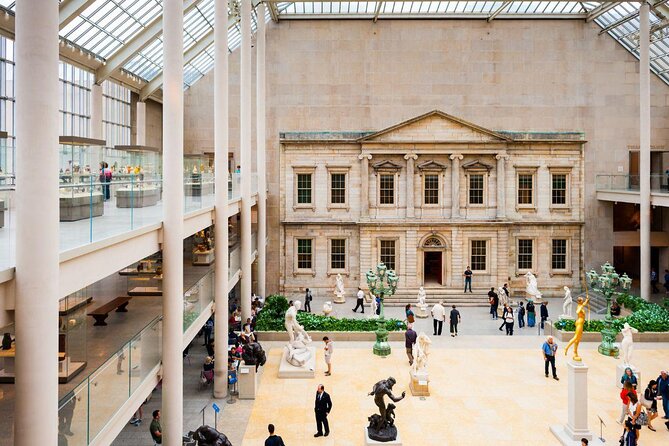
- The Temple of Dendur is the visual centerpiece: This full ancient Egyptian temple sits inside the Met, with Central Park visible beyond the glass.
- The route mixes famous and overlooked art: Expect mummies, royal armor, Greek sculpture, Roman frescoes, Papua New Guinea art, Monet, Van Gogh, and Rodin.
- A guide makes the Met less intimidating: The museum is enormous, and the route helps you understand where major sections are located.
- The group is kept fairly small: The stated limit is 15 for the small-group experience, with a maximum of 18 participants.
- Two hours is an introduction, not a complete visit: You will see major highlights, then can return on your own to the sections that caught your attention.
Why a guided route helps at the Met
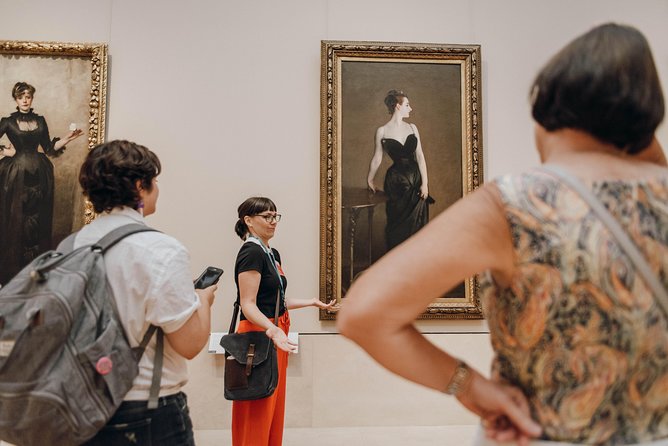
The Metropolitan Museum of Art rewards curiosity, but it can punish poor planning. Its collections cover thousands of years and many parts of the world, so you can spend a long time walking without gaining a clear sense of the place. A good guide solves that problem by choosing a manageable sequence and explaining why each stop matters.
This tour is aimed especially at people who do not normally visit museums. You do not need an art background to follow it. The guide explains objects in plain language, adds stories about artists and cultures, and connects one section to the next.
That last point matters. A mummy, a medieval suit of armor, and a Monet painting can seem unrelated when you encounter them at random. In a guided visit, they become part of a larger look at how people represented death, power, belief, nature, and daily life.
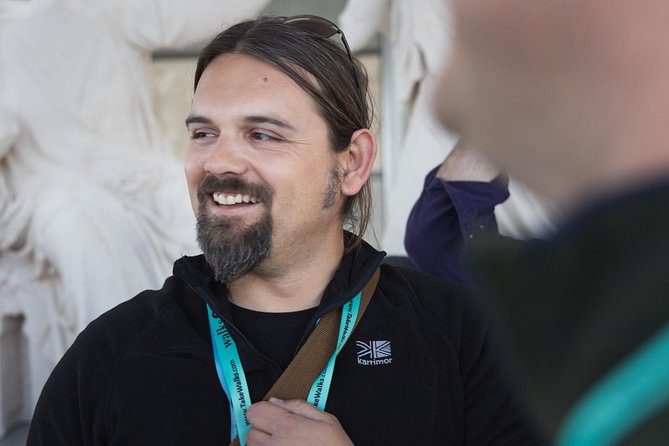
The strongest guide reports center on people who made the museum approachable. Katie is described as funny, warm, and able to keep teenagers interested. Jett has been praised for combining humor with background on the artists and their work. Kevin is noted for adding historical context, particularly in the Egyptian galleries. Other named guides include Rob, Ryan, Liz Banks, Lisa Banks, Stephane Z, and Phil.
Guide quality can vary from one departure to another, as it does with any walking tour. One group found it hard to hear the guide, particularly in a larger gathering, and suggested microphones or listening devices. If hearing every explanation matters to you, stay close to the guide and ask people not to spread out.
More Museums in New York City
- NYC: Empire State Building Tickets – Observatory & Museum
★ 4.7 · 25,757 reviews - New York City: American Museum of Natural History Ticket
★ 4.5 · 15,447 reviews - NYC: Museum of Modern Art (MoMA) Entry Ticket
★ 4.6 · 12,540 reviews
Starting among Egyptian tomb models
The tour begins in Ancient Egypt, and that is a strong choice. The small tomb models are among the most human objects in the museum. Rather than presenting a grand monument, they show tiny scenes of work, food production, household life, and ritual.
These models help you picture the world around the tomb owner. The point is not only that Egyptians prepared for the afterlife, but that they imagined familiar activities continuing there. A guide can point out details that you might otherwise pass without a second glance.
From there, you see Egyptian mummies and William, a small blue hippopotamus figure that serves as a Met favorite. The nickname makes the collection less formal, and the object gives the guide a natural way to explain Egyptian beliefs and burial practices.
The mummy displays can be fascinating, but they are not light entertainment. If your group includes young children or anyone sensitive to human remains, keep that in mind. The guide provides context, which can make the displays easier to understand, but the subject remains serious.
The Temple of Dendur and Central Park beyond it
The Temple of Dendur is the major Egyptian stop. This stone temple was built in ancient Egypt and now sits inside the Met, in a gallery with broad windows looking toward Central Park. Few museum settings are as memorable as an ancient monument framed by a modern New York view.
The temple gives you a sense of scale that the small tomb models cannot. You move from miniature scenes to a full architectural space, with columns, reliefs, and open water nearby. The guide can help you read the carvings and explain how the temple functioned.
You also get a view of Central Park and the Fifth Avenue setting around the museum. The park is not a separate sightseeing stop in the usual sense, but the view helps place the Met in its New York context. This is one reason the tour feels like more than a string of indoor rooms.
Do not expect a long pause here. The route has many departments to cover, and the temple is one part of a quick progression. If it becomes your favorite stop, note its location so you can return after the tour and spend more time with it.
Armor, the Antioch Chalice, and ancient Mediterranean art
The route then shifts to objects tied to power, belief, and legend. Henry VIII’s armor brings British royal history into the museum. Armor is easy to appreciate at a glance, but a guide can draw your attention to its design, the way it presents the wearer, and what it tells you about status.
The Antioch Chalice adds a different sort of intrigue. It has been linked by some people to the Holy Grail, but the important point is the story itself and the need to separate evidence from legend. The guide can explain why an object attracts a claim like that without treating a rumor as settled fact.
Next come Greek statues and Roman frescoes. These works show how the ancient Mediterranean world used the human figure, architecture, and painted decoration. The change from Egyptian burial culture to Greek and Roman ideas about beauty, gods, public life, and domestic spaces gives the tour a useful rhythm.
This part can feel fast. Two hours leaves little time for every major object, and you may want more background than the schedule allows. Still, the short sequence helps you see how different cultures approached similar questions about the body, the divine, and the world around them.
More to weigh up across New York City
- NYC: Circle Line 2h Harbor Lights Cruise Skip-The-Box-Office
★ 4.6 · 8,222 reviews - SoHo, Little Italy, and Chinatown 2-Hour Guided Walk
★ 4.6 · 566 reviews - 2-Hour Exotic Car Driving Experience in Las Vegas
★ 5.0 · 2,870 reviews - Rock Springs 2-Hour Glass Bottom Guided Kayak Eco Tour
★ 5.0 · 2,459 reviews
A turn toward Papua New Guinea
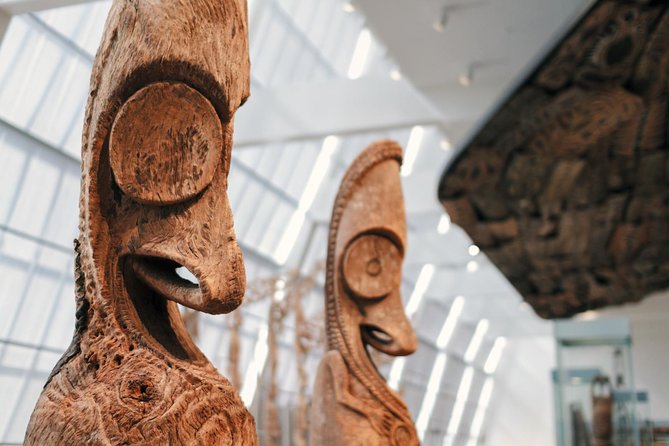
The stop in Papua New Guinea broadens the route beyond the best-known European and Mediterranean collections. That change is valuable because it reminds you that the Met is not simply a museum of Western masterpieces.
The exact object or objects shown can change with the guide and gallery conditions, but the purpose of the stop is clear: to introduce art from a different cultural setting and widen your idea of what a museum collection can contain. This also gives the tour a welcome change of pace after the ancient galleries.
You should not expect a long study of Papua New Guinea in this two-hour format. If that region is your main interest, tell the guide at the start and ask how much time can be given to it. Guides have sometimes tailored the route around requests from the group, though the core highlights still need to fit into the scheduled visit.
Monet, Van Gogh, and Rodin upstairs
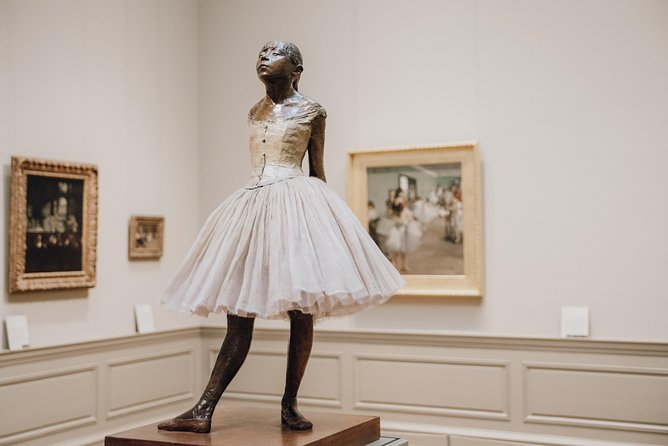
The second floor brings you to some of the names most people hope to see at the Met. Claude Monet’s Water Lilies offers a chance to look closely at the way paint, light, and water can blur into one another. It is familiar art, but familiarity can work against you. A guide helps you slow down and notice choices that reproduction cannot show well.
Vincent van Gogh’s expressive paintings provide another strong moment. Here, the guide may focus on the artist’s handling of color, brushwork, and emotion, along with the story behind a particular work. Several groups have valued this added background because it makes the paintings more personal and easier to remember.
Rodin’s The Thinker closes the art sequence on a bold note. You probably recognize the pose, but seeing the bronze in person gives the figure physical weight and presence. The guide can help you consider how the sculpture works as both an image and an object occupying real space.
This final stretch is likely to appeal most to first-time museum visitors. You get a clear look at major European art without spending the whole visit in one room. The limitation is that the tour cannot give each famous work a full lecture. Think of each stop as a doorway into a subject you can explore later.
What the two-hour pace feels like
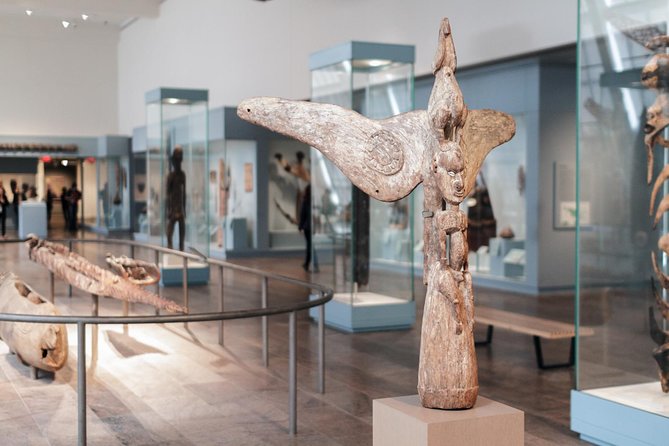
The itinerary covers a wide range, so expect steady walking at a moderate pace. This is not a sit-down talk in one gallery. You should be comfortable moving through the museum for two hours and keeping up with the group.
The pace is also the reason the tour works well as an introduction. You see enough of the Met to understand its scale and layout, but you are not asked to commit your entire day to a single collection. Several people have found two hours to be the right length, while others wished they had another hour once the visit ended.
I recommend thinking of the tour in two parts. First, let the guide handle the orientation and major stops. Then, after the group finishes back at the meeting point, return on your own to the galleries that interested you most. The included ticket makes the guided visit straightforward, but the experience itself ends where it began, so any later independent visit should fit your own plans.
The route may change. Galleries or individual objects can close or be absent without advance notice, so the guide may substitute another stop. That is normal for a working museum and not a reason to skip the tour, but you should avoid booking it with only one specific painting in mind.
Group size, guide style, and hearing the commentary
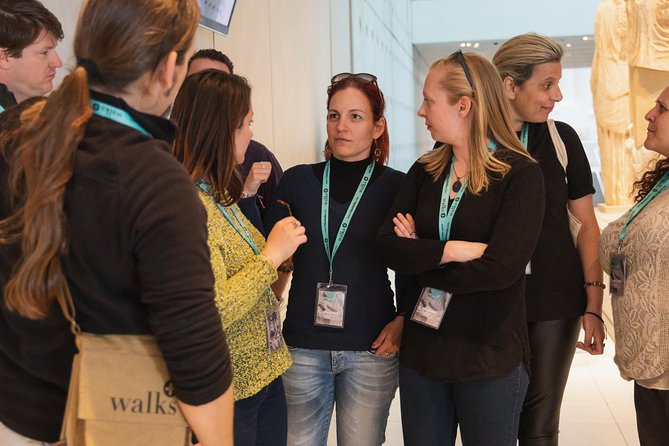
The small group is one of the tour’s strongest practical features. A group of around 10 gives the guide room to ask what you want to see and respond to questions. One group specifically appreciated being asked about preferred artists and time periods rather than receiving a fixed route with no flexibility.
The official maximum is 18, while the tour is described as limited to 15 for a more personal experience. That difference is worth noting. A smaller departure should feel easier for questions and movement, but you cannot assume every departure will be equally intimate.
The guides praised most often are engaging as well as informed. That combination matters in a museum. Facts alone can make two hours feel long, while humor and personal stories can help teenagers and adults stay focused. Katie, Jett, Kevin, Rob, Ryan, and Stephane Z are among the guides singled out for making the art clear, lively, or memorable.
The main concern is sound. In a crowded gallery, even a strong guide can be difficult to hear, and one group found this to be a real problem. Stay near the front, especially during busy periods, and speak up if you have missed a point. The tour information does not promise headsets or a microphone.
The $65 price and who gets good value
At $65, this is not the cheapest way to enter the Met, but admission is included, as is the local expert guide. The real purchase is not just the ticket. It is the saved time and the help choosing what deserves your attention in a museum too large to cover in one visit.
I see good value here for a first-time visitor, a short-stay visitor, or anyone who feels unsure about art museums. It also works well for families, since the route keeps moving and the guide can use stories rather than technical art language.
The value is weaker if you already know the Met well and prefer to set your own route. It is also less suitable if you want a long, detailed discussion of one period. A four-star assessment from one group put the tradeoff neatly: the tour gives a solid run through the museum, but a longer experience would provide more substance.
There is no hotel pickup or drop-off. You meet at the Metropolitan Museum of Art, 1000 Fifth Avenue, and the activity ends back there. A mobile ticket is provided, the tour is in English, and the meeting point is near public transportation.
Who should book this Met tour
I would choose this tour if you have two hours, want the major highlights, and would rather understand a smaller number of objects than wander past hundreds. It is particularly useful for people who say they do not know much about art, since the guide gives you a way into the collections without assuming prior study.
Families can also benefit. The route includes mummies, armor, legends, temples, and famous paintings, with enough variety to keep the visit from feeling like one long lesson. The upbeat style associated with guides such as Katie and Jett may work especially well for teenagers.
I would think twice if you need a slow pace, plan to focus on one department, or are bothered by the possibility of a changed route. The tour requires moderate walking, and the museum can be hard to hear in busy galleries. Anyone with mobility concerns should consider that before booking, since most participants need to walk at a moderate pace without difficulty.
Free cancellation is available if you cancel at least 24 hours before the local start time. Inside that window, the payment is not refunded and changes are not accepted.
Should you book the two-hour Met tour?
Book it if the Met feels overwhelming, your New York schedule is tight, or you want a lively introduction before exploring alone. The combination of Egyptian antiquities, the Temple of Dendur, ancient Mediterranean art, Papua New Guinea, Monet, Van Gogh, and Rodin gives you a useful cross-section rather than a narrow subject tour.
Skip it if you are a confident museum wanderer who wants complete control of your day. At $65, the guide is the reason to buy this experience. For the right visitor, that guidance turns a huge museum into a clear, memorable first visit.
FAQ
Where does the tour begin?
It begins at The Metropolitan Museum of Art, 1000 Fifth Avenue, New York, NY 10028.
Where does the tour end?
The activity ends back at the meeting point.
How long does the tour last?
The tour lasts approximately two hours.
Is museum admission included?
Yes. Pre-arranged Met Museum tickets are included.
What language is the tour conducted in?
The tour is conducted in English.
What is included besides admission?
A local expert guide and pre-arranged museum tickets are included.
Is hotel pickup or drop-off provided?
No. Hotel pickup and drop-off are not included.
How large is the group?
The experience is described as a small group limited to 15 people, with a maximum of 18 participants.
Can the route change?
Yes. Galleries and individual artworks may be closed or absent without prior notice, so the guide may modify the route.
Newly listed in New York City
- NYC: Brooklyn Graffiti & Street Art Walking Tour in Bushwick★ 4.8 · 492 reviews
- Hell’s Kitchen Guided Food Tour★ 5.0 · 494 reviews
- Manhattan Neighborhood Private Customized Walking Tour★ 5.0 · 498 reviews
- The Big Apple Helicopter Tour of New York City★ 4.5 · 498 reviews
- Harlem: Central Harlem Sunday Gospel with Locals★ 3.9 · 499 reviews
- Central Park TV and Movie Sites Walking Tour★ 4.5 · 499 reviews
- NYC: City Climb Skyscraping Experience Ticket★ 4.8 · 511 reviews
- NYC: JFK Airport to Manhattan or Brooklyn Private Transfer★ 4.0 · 522 reviews
New York City Tours, compared.


Empire State Building Tickets – Observatory & Museum
Read our review →


Statue of Liberty and Ellis Island Tour: All Options
Read our review →


New York CityPASS®: Save up to 41% at 5 Top Attractions
Read our review →Browse the lists this tour appears in