
Reviewed · NEW YORK CITY TOURS
American Museum of Natural History Admission Ticket
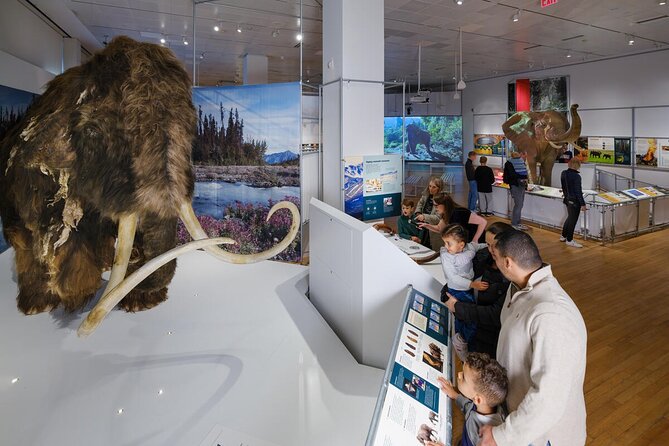
The American Museum of Natural History packs 13 billion years of the universe into a huge Upper West Side building. You can move from dinosaur skeletons to Asian elephants, ancient cultures, ocean life, gemstones, and the Rose Center for Earth and Space without leaving the museum.
I like the freedom to set your own pace, and I like how well the museum works for mixed-age families. The big blue whale and dinosaur halls grab children, while the science and cultural displays give adults plenty to study. The main drawback is the ticket exchange: a voucher may need to be converted at the museum, and some buyers have faced a long line.
Key points for planning your visit

- More than 40 permanent galleries: General admission covers a wide range of natural-world and space exhibits.
- Three to four hours is only a starting point: The building has four levels, and a careful visit can take most of a day.
- Classic highlights include the T. rex, Asian elephants, and 94-foot blue whale: These are strong first choices if your time is limited.
- Extra-cost attractions are not included: The Hayden Planetarium Space Show, giant-screen film, butterfly vivarium, Invisible Worlds, and ticketed exhibitions require separate admission.
- Pick up a paper map: The museum is large and easy to navigate poorly without one.
- A voucher is not always your final ticket: Allow time at the ticket desk unless your booking clearly provides direct entry.
Why this museum deserves a place in your New York plans
I think of the American Museum of Natural History as several museums joined under one roof. That is its great strength, and also the reason it can feel confusing. You are not simply walking through one orderly story. You are choosing among dinosaurs, mammals, oceans, space, human cultures, and scientific displays spread across a large building.
For a first visit, give yourself at least three hours. That is enough to see major highlights without racing, but not enough to read every display or visit every special attraction. If you have children, need indoor time on a rainy day, or enjoy science and natural history, you can easily spend much longer.
The museum works especially well for families with children and teenagers. Younger children can focus on the large animals and dinosaurs. Older children can follow the age of the universe, look closely at fossils, or compare animals from different regions. Adults get more from the visit if they slow down in a few galleries instead of trying to cover every corridor.
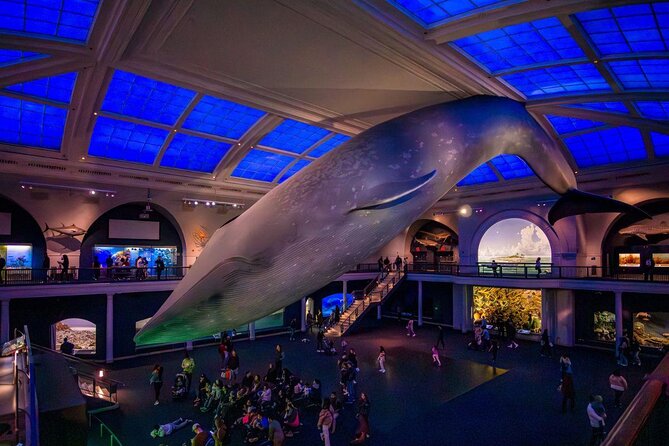
The building itself is part of the experience. You enter a major New York institution, then pass through rooms where the scale of the displays does much of the teaching. The effect is physical and memorable: a 94-foot whale model overhead, elephants arranged in a grand mammal hall, and enormous dinosaur skeletons that make familiar names feel newly real.
More Museums in New York City
- NYC: Empire State Building Tickets – Observatory & Museum
★ 4.7 · 25,757 reviews - New York City: American Museum of Natural History Ticket
★ 4.5 · 15,447 reviews - NYC: Museum of Modern Art (MoMA) Entry Ticket
★ 4.6 · 12,540 reviews
Starting at the Upper West Side entrance
You make your own way to the museum on the Upper West Side of Manhattan. The experience is self-guided, so you are not tied to a group, a guide, or a fixed walking route. That flexibility matters in New York, where your morning may begin late or your children may need a break sooner than planned.
At entry, you may need to exchange a booking voucher for the museum’s admission ticket. This is the most important practical warning. Several people have found that a QR code or reference number did not provide immediate entry, while direct museum ticket buyers moved through a shorter line.
The issue is not the museum itself, but the difference between holding a voucher and holding an admission ticket. If your confirmation says you must redeem it, plan for that step and arrive with extra time. During busy periods, the wait can be substantial, including reports of more than an hour. Check your booking details before leaving your hotel, and do not schedule a tight appointment immediately afterward.
Once inside, pick up a paper map at an entrance, information desk, or membership desk. The map is not optional if you want to see specific galleries. The museum covers four levels, and the layout can feel hard to follow even when you are paying attention.
The dinosaur halls: your best first stop
The dinosaur collection is one of the museum’s main reasons to visit. The Hall of Saurischian Dinosaurs includes a Tyrannosaurus rex skeleton, giving you the kind of immediate, large-scale display that works for children and adults alike.
If dinosaurs are high on your list, go there early. The museum can become crowded quickly, and popular galleries are easier to enjoy before the building fills. You can then move to other rooms while you still have energy and return to less urgent displays later.
The dinosaur halls are also a useful test of your visit style. You can walk through in 20 minutes, stop for the largest skeletons, and leave satisfied. Or you can spend much longer reading labels and comparing fossil forms. Do not assume that seeing the biggest skeletons means you have seen the whole collection.
Families should set one or two clear goals before entering. Children may want to find the T. rex, while adults may want time for other science rooms. A simple plan keeps the museum from becoming a long march through corridors.
Akeley Hall and the Asian elephants

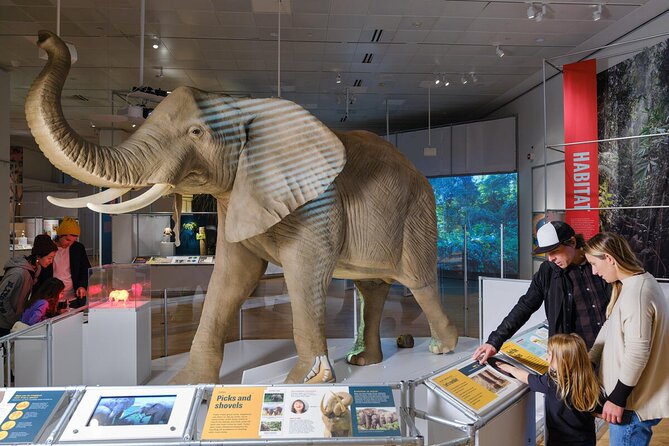
The Akeley Hall of African Mammals gives you a different kind of spectacle. The Asian elephants are among the memorable large-animal displays, and the hall presents the natural world at a scale that children can grasp quickly.
The animal exhibits are especially useful for a mixed group because they need little explanation to make an impression. A child can look at the size, shape, and setting of an animal, while an adult can spend time with the information beside it. You might find the taxidermied displays striking, detailed, or old-fashioned in presentation. That mixture is part of the museum’s long-standing character.
This is a good place to visit after the dinosaurs, when you want something visually different. It also makes sense for children who are less interested in fossils but excited by recognizable animals. Strollers and visitors using mobility aids can manage the museum, though the size of the building means you should allow time for moving between halls.
More historic sites around New York City:
- NYC: Starship Landmark 90 Minute Sightseeing Cruise
★ 4.6 · 3,666 reviews - Starship Landmark 90 Minute Sightseeing Cruise
★ 4.5 · 2,073 reviews - Top Rated Brooklyn Half-Day Food, History & Culture Tour via bus
★ 5.0 · 758 reviews - NYC: Speakeasy Drinks and Prohibition History Tour
★ 4.7 · 474 reviews
The blue whale in Milstein Hall
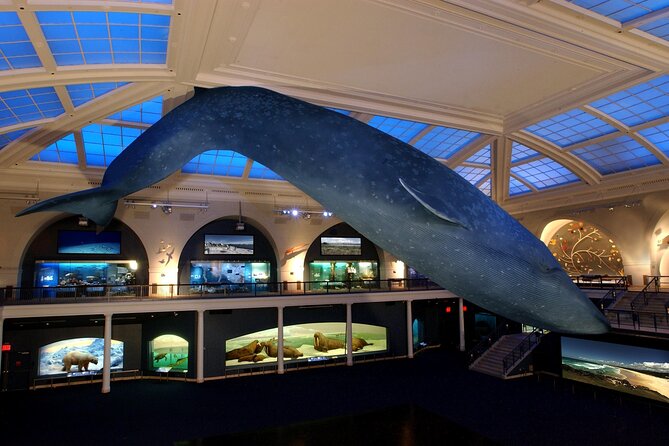
Milstein Hall of Ocean Life contains the museum’s 94-foot-long blue whale model, a centerpiece that gives the hall its power. The whale is not a small display you glance at on the way to another room. It changes your sense of scale as soon as you see it.
If you have only a few hours, make this hall one of your main targets. It offers a break from land animals and dinosaurs, and it helps younger visitors understand the size of the ocean’s largest creature in a direct way.
The hall is also a good place to manage different interests. One person can focus on the whale and other large marine displays, while another reads about ocean science. As with the rest of the museum, you will get more from it if you choose a few displays rather than trying to read everything.
Space, Earth, and 13 billion years
General admission includes the Rose Center for Earth and Space, where the museum broadens the story from life on Earth to the universe itself. The central theme reaches back roughly 13 billion years, giving your visit a much wider frame than a standard animal museum.
The Rose Center helps connect the separate rooms. Dinosaurs show one chapter of life on Earth. The mammal halls show another. Space exhibits place all of it within a much older story. You do not need a science background to appreciate the scale, but you should leave room in your schedule for displays that ask you to stop and think rather than simply look.
Do note the difference between the Rose Center and the separate Hayden Planetarium Space Show. The Rose Center is included with general admission. The planetarium show is not. The same applies to the giant-screen film, Invisible Worlds, the butterfly vivarium, and ticketed exhibitions.
That distinction matters when comparing prices. A $37 general admission ticket can be good value if you are happy with the permanent halls. It is not a complete pass to every attraction in the building. Families who expect a planetarium show or butterfly visit should check the available ticket options before booking.
The Richard Gilder Center and other permanent halls

General admission also includes the Richard Gilder Center for Science, Education, and Innovation. It adds another modern science focus to a museum already filled with established galleries.
You can also explore displays connected to gemstones and human cultures, including rooms presenting objects and monuments from places such as Greece, Mexico, Asia, and Egypt. The range is part of the appeal. A visit can shift from natural science to archaeology, art, and human societies within a few minutes.
I would not try to assign equal time to every subject. Choose the areas that fit your group. A teenager may prefer dinosaurs and space. A parent may want mammals or cultural collections. A couple marking a special New York trip might enjoy taking photographs of the building and displays, then continuing into Central Park nearby.
The museum can also be a good indoor plan before or after Central Park. Its Upper West Side location makes it easy to pair with outdoor time, though you should avoid cramming both plans too tightly if you intend to spend a full day inside.
How long should you stay?
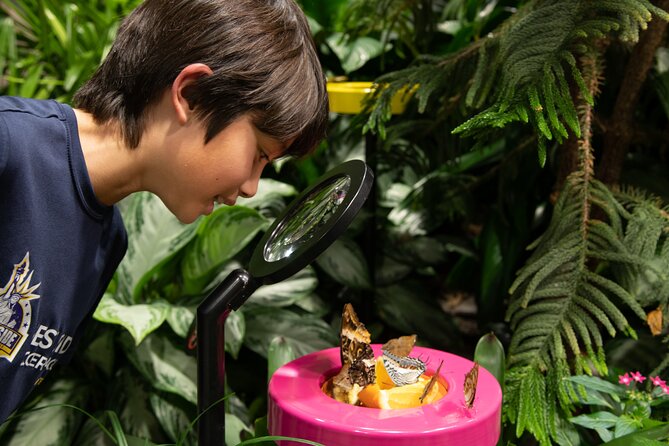
The stated visit time is about three to four hours, and that is a sensible working plan. It gives you enough time for several major halls, a bathroom or food break, and some unhurried stops.
Three hours can feel short if you want to cover all four levels. One practical approach is:
- Start with the dinosaur halls.
- Continue to the Akeley Hall and Milstein Hall.
- Visit the Rose Center for Earth and Space.
- Use the remaining time for the Gilder Center or a cultural collection.
If you have children, build in flexibility. The museum can be tiring because of the amount of walking and the hard floors. It is easy to lose track of time, and the map may require more attention than you expect. Mark your must-see rooms before setting out.
The museum can also become hot and humid in crowded halls. Going early helps, but it does not guarantee quiet galleries. Even early arrivals can encounter a busy building within about 30 minutes on popular days.
Food, strollers, and practical comfort
The museum has a food court with some gluten-free choices, including gluten-free pizza and brownies. That is useful for families who need to eat on site rather than leave and reenter.
Strollers are workable, and the museum is described as suitable for visitors using ADA access. Service animals are allowed. Most people can participate without special arrangements, but the building’s size and hard floors still call for sensible pacing.
Take the paper map at the start, and keep it handy. The museum is not always easy to read as a single route. Think of it as a collection of zones, not a simple beginning-to-end walk.
The museum is near public transportation, so you do not need to build your day around driving or parking. Since the visit is self-guided, you can arrive at a time that fits your schedule rather than meeting a guide at a set hour.
Is $37 a fair price?
At $37 per person, general admission can be a solid buy if you plan to stay for several hours and use the permanent halls. The price covers more than 40 exhibition galleries, the Rose Center, and the Richard Gilder Center. For a family, the total cost adds up, but the museum can fill most of a day without requiring several separate activities.
The value drops if you only want one famous display and plan to leave quickly. If you have limited time in New York, you should decide in advance which halls justify the ticket for you.
New York residents have a different arrangement: the amount paid for general admission is up to the visitor. That local option does not apply in the same way to out-of-town visitors, so check the museum’s current terms if you live in the city.
Remember that several popular attractions cost extra. If you add the planetarium, butterfly vivarium, giant-screen film, Invisible Worlds, or a ticketed exhibition, your final cost will be higher than $37. The base ticket is best understood as access to the museum’s permanent core, not every programmed attraction.
Who should book this admission?
I would choose this for families, science fans, dinosaur enthusiasts, and anyone looking for a substantial indoor New York activity. It is also a strong pick for adults who enjoy museums but do not want to follow a guided group.
It suits teenagers better than many family attractions because the displays are not limited to small children. Couples can use it as a half-day or full-day cultural stop, especially when paired with Central Park. Solo visitors may appreciate the freedom to linger in one hall and skip another.
I would hesitate if you have only an hour, dislike large museums, or need a guaranteed fast entry. The voucher exchange is the key concern. Buying directly from the museum may be faster when the priority is avoiding a redemption line, while this booking option may still suit you if its payment terms or cancellation flexibility matter more.
The cancellation policy is generous as long as you act in time. You can cancel for a full refund at least 24 hours before the local start time. Changes or cancellations within 24 hours are not accepted and are not refunded.
Should you book the American Museum of Natural History?
Yes, if you can give it three to four hours or more and want a broad, family-friendly museum with major dinosaur, mammal, ocean, and space displays. The T. rex, Asian elephants, blue whale, Rose Center, and Gilder Center make general admission worthwhile for many visitors.
Before booking, confirm how the voucher becomes an admission ticket and allow extra time for that exchange. Bring a paper map, choose your top galleries, and budget separately for the planetarium, film, butterfly vivarium, Invisible Worlds, and ticketed exhibitions. With those limits clear, this is one of New York’s strongest indoor choices for learning, scale, and a full afternoon under one roof.
FAQ
Where is the American Museum of Natural History?
The museum is on the Upper West Side of Manhattan in New York City.
How long does a visit take?
The estimated visit lasts about three to four hours, but the museum is large enough to occupy most of a day if you explore the four levels carefully.
What does general admission include?
General admission includes more than 40 permanent exhibition halls, the Rose Center for Earth and Space, and the Richard Gilder Center for Science, Education, and Innovation.
Are the planetarium and butterfly vivarium included?
No. The Hayden Planetarium Space Show, butterfly vivarium, giant-screen film, Invisible Worlds, and ticketed exhibitions are not included in general admission.
What are the main highlights?
Major displays include the Tyrannosaurus rex skeleton in the Hall of Saurischian Dinosaurs, Asian elephants in the Akeley Hall of African Mammals, and the 94-foot-long blue whale model in Milstein Hall of Ocean Life.
Do children under 3 need a ticket?
Children under 3 qualify for waived admission fees.
Can I cancel for a refund?
Yes. You can receive a full refund if you cancel at least 24 hours before the experience start time. Cancellations or changes made within 24 hours are not refunded or accepted.
Newly listed in New York City
- Official Private NYC Central Park Horse Carriage Ride Since 1970™★ 4.5 · 447 reviews
- NYC at Night: 3-Hour Luxury Bus Tour of Top Highlights★ 4.5 · 448 reviews
- From Manhattan: 5-Hour Bronx, Queens, and Brooklyn Bus Tour★ 4.7 · 451 reviews
- Private Guided New York City Tour by SUV★ 5.0 · 451 reviews
- Statue of Liberty Tour with Ellis Island and Immigration Museum★ 4.0 · 452 reviews
- NYC: Official Grand Central Terminal Tour★ 5.0 · 458 reviews
- Circle Line: NYC BEAST Speedboat Ride★ 4.5 · 458 reviews
- New York City: Sunset Yacht Cruise★ 4.9 · 461 reviews
New York City Tours, compared.


Empire State Building Tickets – Observatory & Museum
Read our review →

Statue of Liberty and Ellis Island Tour: All Options
Read our review →


New York CityPASS®: Save up to 41% at 5 Top Attractions
Read our review →Browse the lists this tour appears in