
Reviewed · MUSEUMS
NYC: 9/11 Memorial & Museum Timed-Entry Ticket
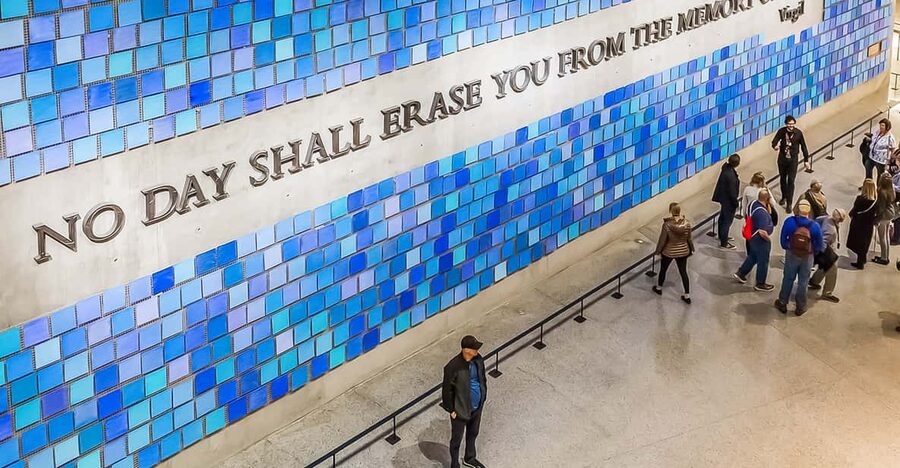
The 9/11 Memorial Museum does something difficult: it explains a world-changing tragedy through objects, voices, photographs, and personal stories without turning the site into a spectacle. Beneath the former World Trade Center footprints, you move through a quiet, carefully ordered account of September 11, 2001, the 1993 bombing, and the years before and after.
I like the timed entry, which takes much of the guesswork out of visiting one of New York’s busiest sights. I also like that the ticket includes the outdoor memorial, the Survivor Tree, and the Memorial Glades, so you can move from the museum’s detailed exhibits to the reflecting pools without buying another ticket.
The main consideration is emotional weight. This is not a quick attraction to squeeze between a deli stop and a shopping spree. The museum can take two to four hours, and some films, recordings, letters, and artifacts are painful to see and hear.
Key points to know before you go
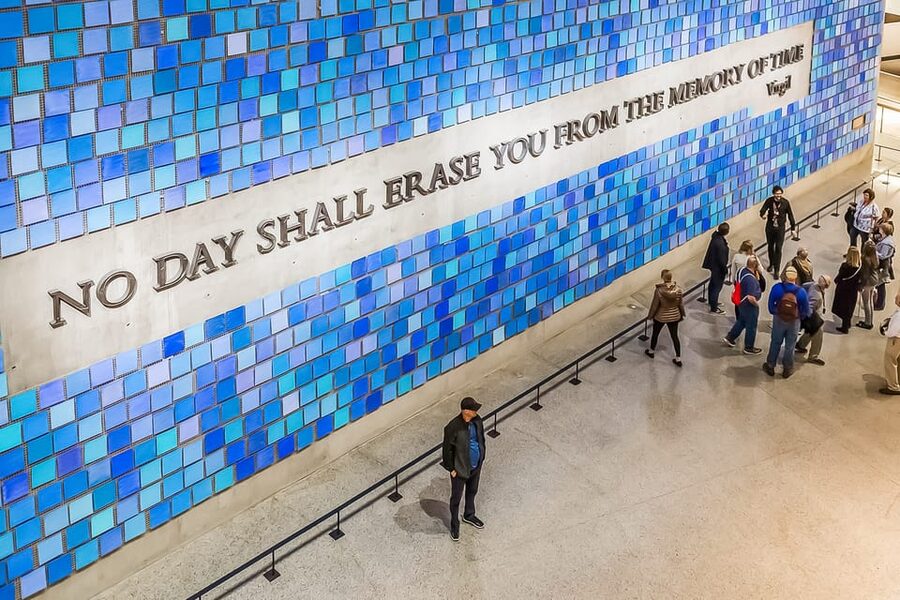
- Three permanent museum sections: Follow the events of 9/11, the history before the attacks, and what came afterward.
- More than 10,000 artifacts: Damaged objects, photographs, recordings, and personal material give the story a human scale.
- The names are part of the memorial: Nearly 3,000 people killed in the 2001 attacks and the six victims of the 1993 bombing are inscribed around the pools.
- The Survivor Tree adds a note of renewal: This remarkable pear tree survived the attack and now grows beside the memorial.
- Allow at least two hours: Four hours is realistic if you read the displays and watch the films.
- Bring patience for security: Everyone passes through airport-style screening before entering the museum.
Beginning at the twin reflecting pools
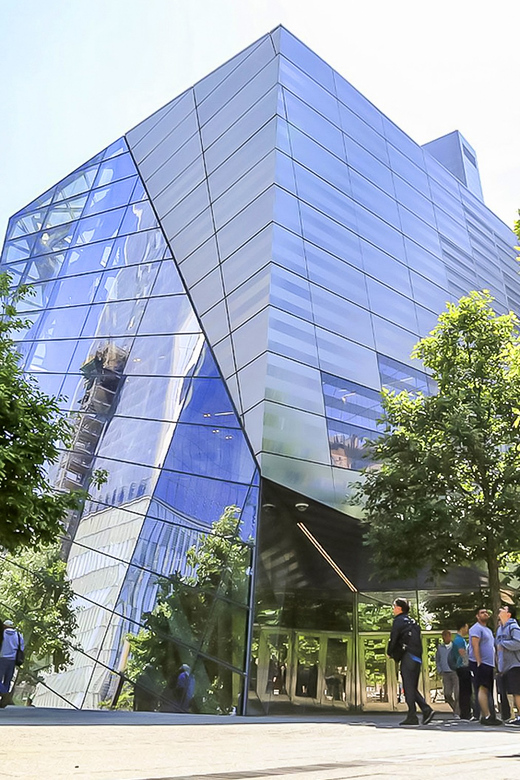
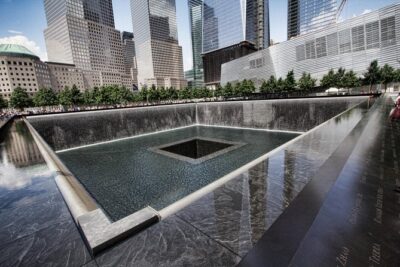
Start outside, even if your museum entry time is close. The National September 11 Memorial occupies the footprints of the two World Trade Center towers. Each nearly one-acre pool has a waterfall dropping into a dark central void, creating a powerful sense of absence.
The water is the first thing you notice. It keeps moving, yet the center appears unreachable. This contrast gives the memorial a quiet rhythm that helps you prepare for the museum below.
Bronze panels around the pools carry the names of those killed in the 2001 attacks at the World Trade Center, the Pentagon, and near Shanksville, Pennsylvania, along with the six people killed in the 1993 World Trade Center bombing. Take time to read some of the names rather than treating the pools as a photo stop.
The memorial is free, and you can visit it without entering the museum. Your ticket adds the indoor collection and exhibitions. If your schedule is tight, the pools still deserve a few thoughtful minutes. If you have more time, return after the museum, when the names and stories inside have given the outdoor space more meaning.
The site is quiet by design. You may see people taking photographs, but the mood is generally restrained. I would avoid loud conversation, selfies that treat the pools like a backdrop, or a rushed visit between unrelated sightseeing stops.
More museums around the USA:
- NYC: Empire State Building Tickets – Observatory & Museum
★ 4.7 · 25,757 reviews - New York City: American Museum of Natural History Ticket
★ 4.5 · 15,447 reviews - NYC: Museum of Modern Art (MoMA) Entry Ticket
★ 4.6 · 12,540 reviews
Security and the timed museum entrance
Your timed ticket provides contactless entry, but it does not let you skip security. Every visitor must pass through airport-style screening, so keep the arrival simple and allow a little extra time before the slot printed on your booking.
A timed entry matters here because the museum is a major New York attraction and the visit works best when you are not worrying about getting in. The ticket is valid for one day, with starting times based on availability. Meeting arrangements can vary by the option booked, so check your confirmation carefully before setting out.
The museum has coat-check facilities, free Wi-Fi, an on-site cafe, and interactive exhibit components. The cafe is useful because the visit can last much longer than planned. Still, I would not count on a quick coffee break to reset your mood. Many people need a quiet pause after the most intense sections.
Unaccompanied minors are not allowed. Children and teenagers can visit with an adult, but think about age and temperament before booking. Teenagers with an interest in history may find the museum unusually compelling. Younger children may struggle with the material, especially the recordings and personal accounts.
The Historical Exhibition: before, during, and after
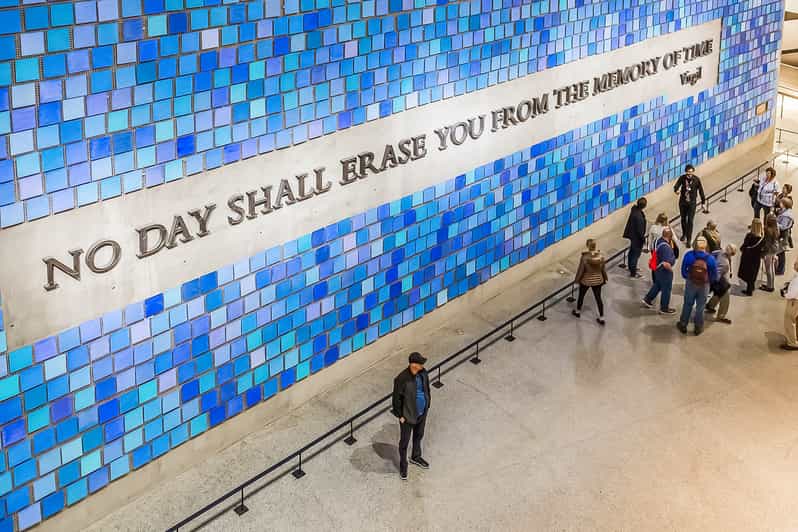
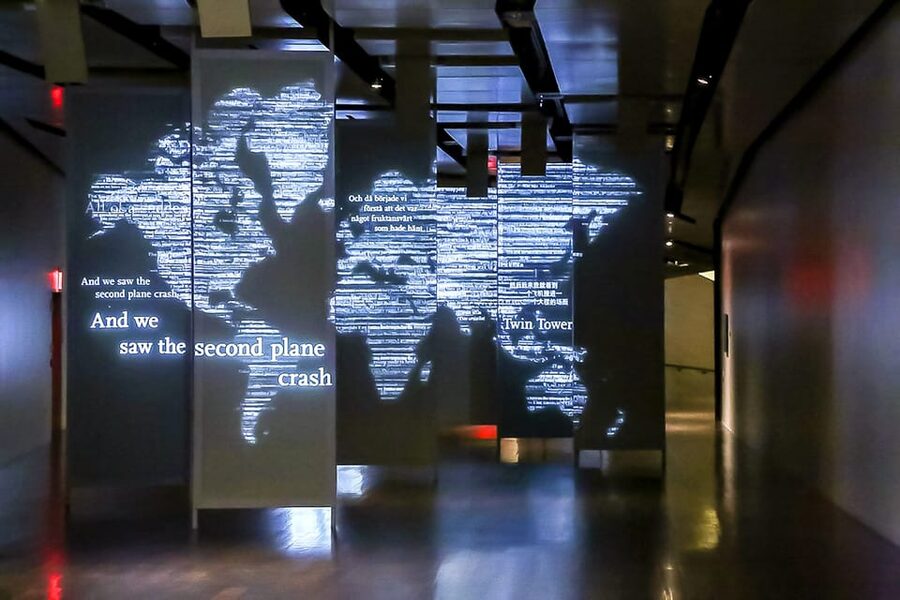
The Historical Exhibition is arranged in three parts: Before 9/11, the Day of 9/11, and After 9/11. This order is important. Rather than presenting the attacks as an isolated moment, the museum gives you the background needed to understand the event and then follows its effects beyond that single day.
In Before 9/11, you learn about the World Trade Center and the earlier bombing in 1993. The six people killed in that attack are also honored at the memorial. This section gives the site a longer timeline and reminds you that the story began before the images that shaped the world in 2001.
The Day of 9/11 section is the emotional center for many people. It covers the attacks at the World Trade Center and the Pentagon, along with the story of Flight 93. The account is not limited to the towers. You see how separate events unfolded across the country and how confused and frightening the day became.
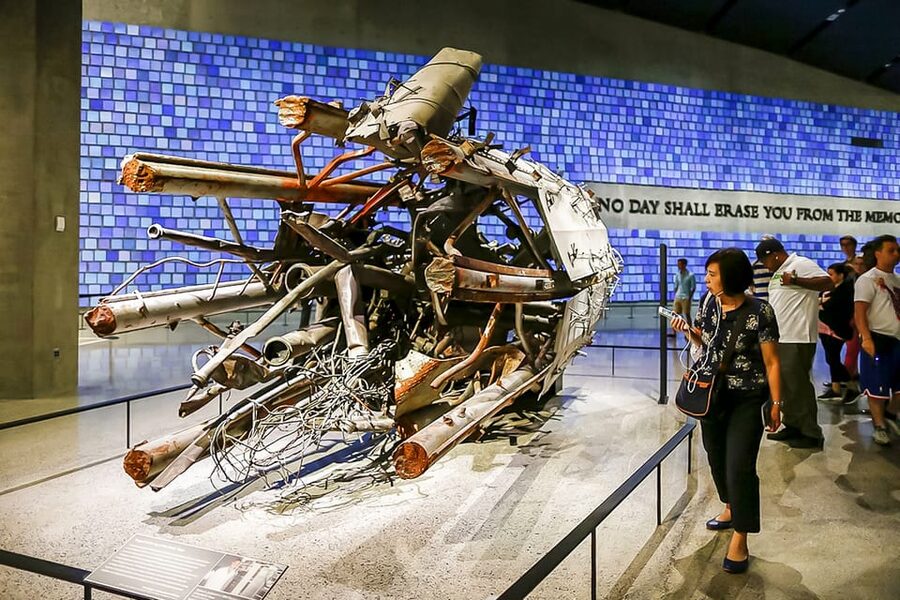
The museum uses artifacts and personal accounts to move beyond a simple sequence of times and places. You might see damaged objects, photographs, recorded voices, and material connected to rescue and recovery. Together, they show the event at human scale, where each item belonged to a real person, workplace, family, or emergency response.
This is where you should slow down. The museum contains more than 10,000 monumental artifacts, and reading every panel is not realistic for everyone. I suggest choosing the displays that hold your attention rather than racing through every line. You will get more from a focused two hours than from a hurried attempt to absorb everything.
The After 9/11 section follows the continuing effects of the attacks. It helps place the event in a wider setting and shows why September 11 remains such an important part of recent world history. If you remember watching the news that day, this section may bring back strong memories. If you were born later, it gives you a clear starting point for understanding what changed.
Short films and auditorium presentations add another layer. They are not background entertainment. They require attention, and you may want a pause afterward before moving on.
In Memoriam and the people behind the numbers
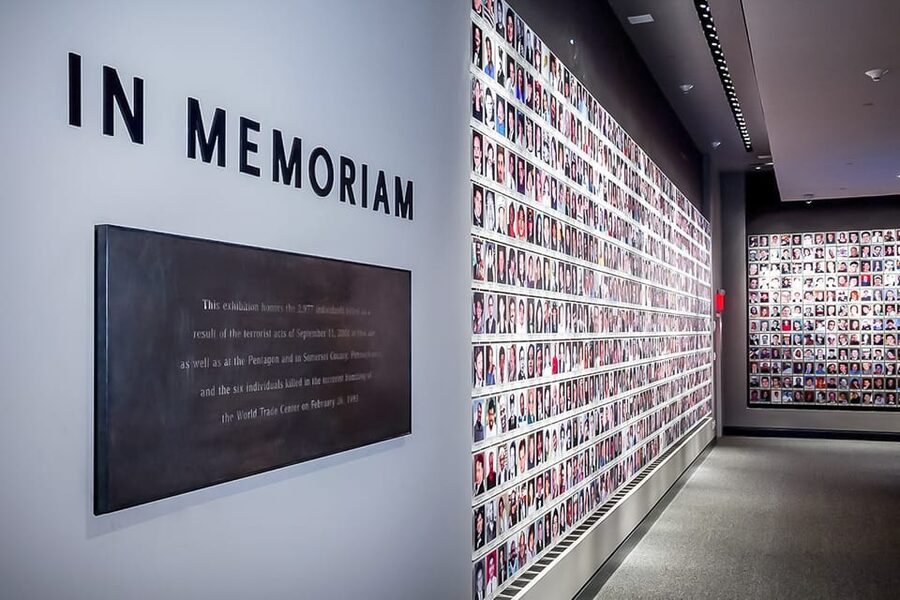
The Memorial Exhibition, called In Memoriam, honors the people who died on September 11, 2001, and in the February 26, 1993 bombing. It gives you a chance to learn about the men, women, and children rather than seeing only a number.
This section can be especially hard because names become faces and short biographies. The museum also includes personal material that shows how families and friends remembered those who were lost. Letters, including letters written by children, can be among the most painful things to encounter.
I find this focus valuable because large disasters can flatten individuals into statistics. Here, the museum keeps returning you to ordinary lives, relationships, plans, and unfinished futures. That personal touch helps explain why the memorial outside uses names rather than a general inscription.
Give yourself permission to move slowly or step away. There is no prize for finishing every section in one continuous push. The content is understandably heavy, and a thoughtful visit includes time to process what you have seen.
More to weigh up across the USA
- NYC: SUMMIT One Vanderbilt Tickets
★ 4.7 · 51,195 reviews - NYC: Empire State Building Observation Deck Tickets
★ 4.7 · 22,072 reviews - NYC: Edge Observation Deck Admission Ticket
★ 4.6 · 20,918 reviews - New York City: Top of the Rock Observation Deck Ticket
★ 4.6 · 14,488 reviews
Foundation Hall and the last column
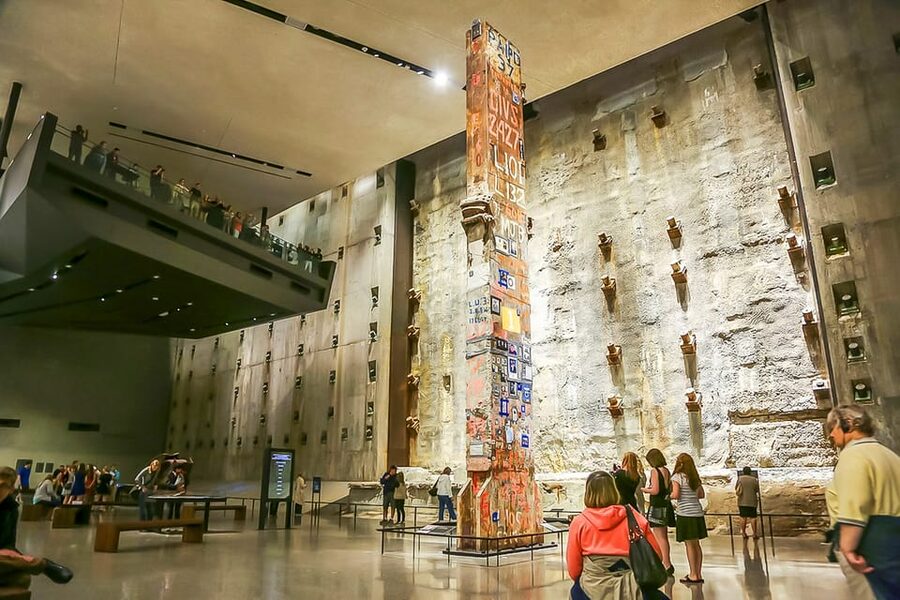
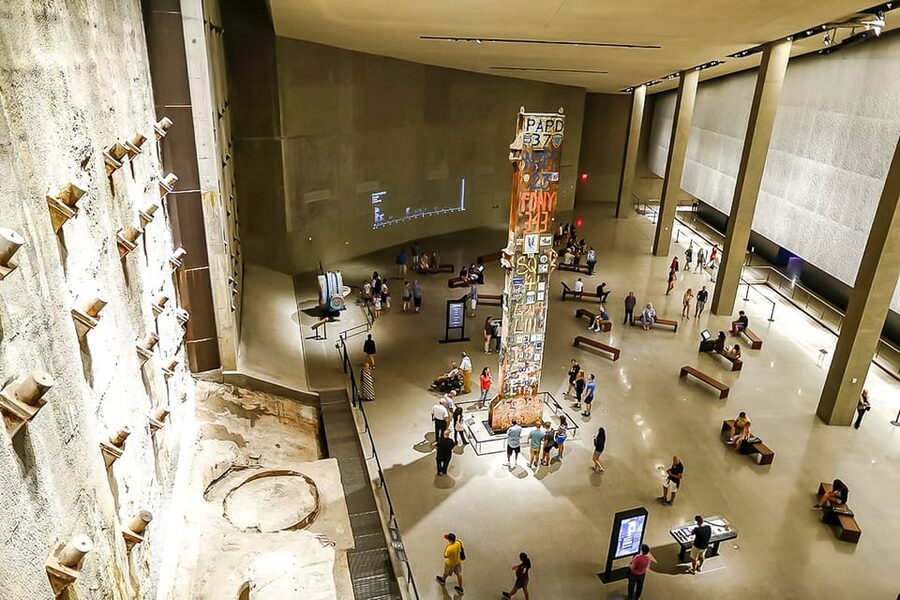
Foundation Hall is a massive room that contains two of the museum’s most important physical remnants: the last column and the slurry wall.
The last column was the final steel support removed from the World Trade Center site during the recovery and cleanup period. Its size and plain industrial appearance make it more affecting than a polished monument might be. It connects the museum to the actual structure that once filled the space above.
The slurry wall is another major remnant. It helped hold back the Hudson River during construction of the original World Trade Center foundations and survived the attacks. In Foundation Hall, the wall gives you a direct sense of the site’s scale, construction, damage, and survival.
This room is not about collecting one more photograph for your album. It is a place to notice the material itself. Steel and concrete can feel abstract in a history book. Here, they make the physical reality of the site easier to understand.
The Survivor Tree and Memorial Glades
After the indoor exhibitions, return to the outdoor grounds. The Survivor Tree is a Callery pear that survived the attack and was later cared for before being replanted at the memorial. Its continued growth gives the site a small but tangible sign of renewal.
Do not expect the tree to erase the grief of the memorial. Its importance is more modest and more believable. It survived, was tended, and grew again. That simple story gives you a moment of relief after the museum’s harder material.
The Memorial Glades are also included with your museum ticket. The glades provide another place to reflect and recognize the rescue, recovery, and response efforts connected with the site. The outdoor visit is not an add-on in spirit. It completes the movement from evidence and testimony to remembrance.
You can visit the Survivor Tree and Memorial Glades without rushing through them. Many people find the outdoor space easier to absorb after spending time underground. I recommend walking around the pools once more before leaving, then reading a few names with the museum still fresh in your mind.
How long should you plan?
The official activity lasts one day, but that refers to ticket validity rather than a fixed guided program. You choose an available start time and explore at your own pace.
Plan on at least two hours for the museum. That is enough for a meaningful visit if you read selectively. Three hours is more comfortable, and four hours is easy if you watch films, study the personal material, and take breaks.
One visitor arrived at 9 a.m. and found the museum quieter at the beginning of the visit than later in the day. That makes an early time slot appealing if you want more breathing room around the displays. Crowd levels can change, so treat this as a useful strategy rather than a promise.
The free outdoor memorial can be visited before or after your museum time. I prefer seeing the pools first, entering the museum for the full historical account, and then returning outside. You might choose the reverse if you need a calmer start.
Is the $25 ticket good value?
At $25 per person, this is a fair price for a major New York museum with a substantial collection and access to the memorial grounds. The value depends less on the number of hours than on your willingness to give the museum proper time.
You are paying for access to all current exhibitions, the three permanent sections, Foundation Hall, and the museum’s artifact collection. The outdoor memorial, Survivor Tree, and Memorial Glades are free, but the ticket makes it easy to combine the indoor and outdoor sites in one visit.
The ticket does not include a guided tour or an audio guide. Audio guide rentals are available for purchase at the museum. If you like context delivered in a clear sequence, the audio option may be useful. If you prefer reading and choosing your own pace, the timed ticket is enough.
A guided option may suit you if you want someone to explain the site as you walk. This ticket alone is a self-guided museum visit, so do not book it expecting a personal guide. The freedom is useful, but you must plan your own route and decide how much time to spend in each section.
Who will appreciate this visit most?
This museum suits adults, older teenagers, history students, and anyone who wants to understand the events beyond familiar television images. Teenagers who were not alive in 2001 can find the displays especially useful because the museum gives them a clear chronology and personal context.
It also suits people returning to New York after many years. If you remember the towers, the visit can be deeply personal. One former visitor who had stood on the North Tower’s 110th floor before the attacks described returning to the site decades later as extremely emotional. That reaction is understandable, and you should plan some quiet time afterward.
The museum may not suit a visitor looking for a light afternoon activity. It is not a casual stop, and the emotional impact can last after you leave. Families should decide together if children are ready for difficult images, recordings, and stories.
The memorial works for a shorter visit, but the museum needs patience. If your New York schedule is packed, do not book this for the final hour before dinner or a show. You may want time afterward to talk, sit, or simply walk.
Practical advice for a respectful visit
Wear shoes you can walk and stand in comfortably. The museum is extensive, and the displays reward time rather than speed.
Bring your booking confirmation and arrive ready for security. Since the entry process is airport-style, avoid treating the appointment as a last-minute dash from another attraction.
Keep your phone quiet and use it with care. Photography may be useful for remembering the architecture and outdoor grounds, but the memorial asks for restraint. The names are not decoration, and the museum is not a place for constant casual snapshots.
Consider buying an audio guide if you want more structure, since it is not included. If you prefer your own pace, read the sections that matter most to you and accept that you will not absorb every object in one visit.
If you have extra time, an outside tour can add context to the memorial grounds, but it is separate from this ticket. The museum itself is self-guided unless you book an option that specifically includes a guide.
Should you book the 9/11 Memorial Museum?
Book it if you want a serious, carefully organized account of September 11 and the 1993 bombing, not just a quick look at the reflecting pools. The strongest parts are the personal stories, the In Memoriam exhibition, the surviving structural pieces in Foundation Hall, and the chance to connect the museum with the outdoor memorial.
Skip it only if your schedule cannot spare at least two hours or if you are not ready for painful material. For most visitors with enough time, $25 is reasonable value for a major museum and a meaningful visit to one of New York’s most important sites.
Choose an early timed entry when possible, allow four hours if you like to read everything, and leave room afterward for a quiet walk. This is a place to remember, not rush.
FAQ
Does the ticket include the 9/11 Memorial outside?
Yes. The ticket includes access to the 9/11 Memorial, the Survivor Tree, and the Memorial Glades. The outdoor memorial itself also has free entry.
What exhibitions can I see with the ticket?
You can access the museum’s current exhibitions, including the three permanent sections: the Historical Exhibition, In Memoriam, and Foundation Hall.
How many artifacts are in the museum?
The museum displays more than 10,000 monumental artifacts connected with the events of 9/11.
Is a guided tour included?
No. A guided tour is not included with this ticket. The visit is self-guided unless you book an option that specifically says otherwise.
Can I buy an audio guide?
Yes. Audio guide rentals are available for purchase at the museum, but they are not included in the ticket price.
How long is the ticket valid?
The activity is valid for one day. Your timed entry is based on an available starting time.
Are children allowed to enter alone?
No. Unaccompanied minors are not allowed. An adult must accompany minors.
Newly listed in the USA
- The Maui Butterfly Farm Tour★ 5.0 · 446 reviews
- NON BUS 4 Winery Traverse City Wine Tour on Old Mission Peninsula★ 5.0 · 445 reviews
- New England Aquarium Admission Ticket in Boston★ 4.0 · 446 reviews
- New Orleans City Tour and Steamboat Natchez Harbor Jazz Cruise★ 4.0 · 446 reviews
- Alpaca and Llama Farm Tour★ 5.0 · 446 reviews
- Small-Group Laura and Whitney Plantation Tour from New Orleans★ 4.5 · 446 reviews
- Dreaded Dead Descent of the District: DC Ghost Tour★ 4.0 · 446 reviews
- Cañon City: Royal Gorge Bridge & Park Entry Ticket & Gondola★ 4.5 · 448 reviews
Museums, compared.
Empire State Building Tickets – Observatory & Museum
Read our review →
9/11 Memorial, Ground Zero Tour with Optional 9/11 Museum Ticket
Read our review →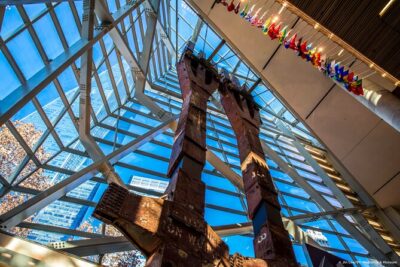

All-Access 9/11: Ground Zero Tour, Memorial and Museum, One World Observatory
Read our review →

Browse the lists this tour appears in